Kitabı oku: «No Good Brother»
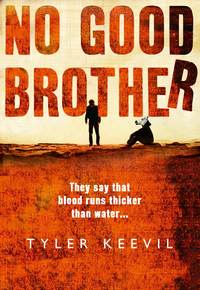
NO GOOD BROTHER
Tyler Keevil

Copyright
This novel is entirely a work of fiction. The names, characters and incidents portrayed in it are the work of the author’s imagination. Any resemblance to actual persons, living or dead, events or localities is entirely coincidental.
The Borough Press
An imprint of HarperCollinsPublishers
1 London Bridge Street
London SE1 9GF
www.harpercollins.co.uk
Published by HarperCollinsPublishers 2018
Tyler Keevil asserts the moral right to be identified as the author of this work
A catalogue record for this book is available from the British Library
First published by HarperCollinsPublishers 2018
Copyright © Tyler Keevil 2018
Excerpt from 'Highway Patrolman' by Bruce Springsteen. Copyright © 1982 Bruce Springsteen (Global Music Rights). Reprinted by permission. International copyright secured. All rights reserved.
Cover design by Claire Ward © HarperCollinsPublishers 2018
Cover photographs © Tim Robinson/Arcangel Images (man); Valeriy Shvestsov/Arcangel Images (man with horse mask); Shutterstock.com (all other images)
All rights reserved under International and Pan-American Copyright Conventions. By payment of the required fees, you have been granted the non-exclusive, non-transferable right to access and read the text of this e-book on-screen. No part of this text may be reproduced, transmitted, down-loaded, decompiled, reverse engineered, or stored in or introduced into any information storage and retrieval system, in any form or by any means, whether electronic or mechanical, now known or hereinafter invented, without the express written permission of HarperCollins e-books
Source ISBN: 9780008228880
Ebook Edition © November 2017 ISBN: 9780008228903
Version: 2018-10-16
Praise for No Good Brother:
‘Keevil’s writing is unmissable . . . quite simply a brilliant writer’
Viv Groskop, author of The Anna Karenina Fix
‘No Good Brother is a paean to brotherly loyalty and a meditation on the things we can change and the things we must learn to love regardless. It is also the funniest and most exciting book I’ve read in years. A grand adventure in the spirit of Mark Twain, it is reckless and wild and beautiful, like something dreamed up by Cormac McCarthy and Hunter S Thompson on a drunken camping trip. It’s as big and as perfect as the prairie sky’
D.D. Johnston, author of Peace, Love & Petrol Bombs
‘A tender and at turns thrilling novel about grief and the way it seeps unshakably into the lives of the living. Keevil’s storytelling is both elegant and meaty and his prose stunning as per; I could almost taste the bitter sea air of Vancouver’s North Shore’
Rachel Trezise, author of Fresh Apples
‘Quite a story. Keevil’s prose proceeds with the laconic madness of a patient horse, and the same ability to buck and kick’
Cynan Jones, author of The Dig
Dedication
For my brother
Epigraph
‘For I know that in me, that is,
in my flesh, dwelleth no good thing.’
Romans 7:18a
‘Man turns his back on his family,
well he just ain’t no good.’
Bruce Springsteen
Table of Contents
Cover
Title Page
Copyright
Praise for No Good Brother
Dedication
Epigraph
Chapter One
Chapter Two
Chapter Three
Chapter Four
Chapter Five
Chapter Six
Chapter Seven
Chapter Eight
Chapter Nine
Chapter Ten
Chapter Eleven
Chapter Twelve
Chapter Thirteen
Chapter Fourteen
Chapter Fifteen
Chapter Sixteen
Chapter Seventeen
Chapter Eighteen
Chapter Nineteen
Chapter Twenty
Chapter Twenty-One
Chapter Twenty-Two
Chapter Twenty-Three
Chapter Twenty-Four
Chapter Twenty-Five
Chapter Twenty-Six
Chapter Twenty-Seven
Chapter Twenty-Eight
Chapter Twenty-Nine
Chapter Thirty
Chapter Thirty-One
Chapter Thirty-Two
Chapter Thirty-Three
Chapter Thirty-Four
Chapter Thirty-Five
Chapter Thirty-Six
Chapter Thirty-Seven
Chapter Thirty-Eight
Chapter Thirty-Nine
Chapter Forty
Chapter Forty-One
Chapter Forty-Two
Chapter Forty-Three
Chapter Forty-Four
Acknowledgements
About the Author
Also by Tyler Keevil
About the Publisher
Chapter One
The end of this story is pretty well known, since people wound up getting killed and the trials were in the news. My brother Jake was portrayed in a lot of different ways. Some said he was just a patsy who had gotten caught up in the scheme of these upstart gangsters. Others said he did it for the money. Then there were the ones who actually believed he was an activist of some sort, or a gentleman robber, and I suppose it was easy to sympathize with that on account of what happened to him. But none of those versions is true, or entirely true. I intend to tell it straight and lay out how it all happened, and how I became involved.
It started when Jake showed up at the Westco plant and boatyard, the day we got back from herring season. That was the end of February, last year. A Monday. I was standing at the stern of the Western Lady across from Sugar, this giant Haida guy who shares the licence with Albert, the skipper. Sugar and I were the ones working the hold, but we had to wait around in the drizzling cold for the plant workers to get the hose and Transvac pump in place and line up the sorting bins. They were union guys and on the clock and in no hurry. Albert was up top, directing them from the wheelhouse.
‘Holy Mary,’ he yelled at them, which is about as close to swearing as he gets. ‘You fellows gonna move that thing or just hope it wanders down here by itself?’
‘Yeah, yeah,’ they said.
But they moved a little faster. Albert has that effect on people.
I rubbed my bad hand with my good one. The hand that got crushed hurts something fierce in the cold, even now, years after the accident. Sugar held the water hose with the steel nozzle cradled against his hip, casual as a gunfighter. While we waited, he directed it into the hold and let out a jet-blast of water, churning the fish. The herring, all belly-wet and slickly silver, were packed together in a soupy mix of blood and brine, still flecked with flakes of ice. It was a perfect-looking hold (Albert doesn’t over-fish and only ever takes his quota) but it still made me sad as hell to see. The herring had been in there for forty-eight hours and a lot of them were still half alive, still twitching. They gazed up from the depths of the hull with dull and desperate eyes that had no real understanding of their place or fate. Some of them were so ready to spawn they were already leaking roe: little yellow globules that glistened like fool’s gold.
I heard a vehicle pulling into the lot across the water from where we were moored. I looked over and saw Jake’s truck: a beat-up orange Toyota, twenty years old, with a muffler all shot to hell. I hadn’t seen my brother since Christmas. That hadn’t gone so well. We’d gotten in a fight – first with each other, then with some other guys – and he’d taken off for a while because one of them had been hurt pretty bad. Jake had a record and was worried that the guy might report it, maybe lay an assault charge on him. But nothing ever came of it. I’d talked to Jake on the phone before I headed out for herring season, and he’d gotten some new job that he claimed was legitimate. A cleaning job, was what he’d said.
Jake climbed out of the truck. He was wearing torn jeans and a bomber jacket and his red bandana. He came to the fence that separates the lot from the docks and leaned on it, his fingers hooked like talons between the chain-links. He spotted me and deliberately rattled the fence, like an ape in a cage. He was grinning like an ape, too.
Sugar asked, ‘He your friend?’
‘My brother.’
By then the union guys had manoeuvred the Transvac along our port side, but were still fiddling with the controls. I waved to get Albert’s attention.
‘Give me a minute, Albert?’
‘A minute is all you got.’
I vaulted the gunnel and landed clumsily on the dock, turning my right ankle but not badly. I made my way around the boatyard and up the gangway that connects the docks to the wharf. The water beneath reflected the cannery, but the image was all broken up by the dribbles of rain riddling the surface.
Jake waited for me at his truck, leaning back against the side, smoking a cigarette. As I came up he smiled. He’d lost one tooth when he was in jail, and still hadn’t bothered to get a cap. His hair was long and greasy and held back by the bandana. The bandana was faded and tatty as hell but it was the one Sandy had given him, years ago, so he would never replace it.
‘You look like a real fisherman, Poncho,’ he said.
‘And you look like an ex-con, Lefty.’
I removed my left work glove and we clasped hands, pulling each other into a hug. Jake and I always shake hands like that – with our left – because he’s left-handed and my right hand is the bad one. Two of the fingers are gone and the other three are all mangled, like the legs of a crab crushed under a rock. Whenever I shake hands with anyone else it’s always awkward, because even left-handed guys have learned to shake with their right.
‘You forgiven me for sucker punching you?’ he asked.
‘Let’s forget it.’
‘Close enough for me.’
‘How’d you know to come?’
‘Stopped by the cannery last week. They said your boat was due back this morning.’
I looked over at the boat. Albert was watching us from the wheelhouse, arms folded over his chest like a sentry. The union guys were passing the Transvac hose to Sugar.
‘We’re just about to empty the holds,’ I said.
‘What time do you get off tonight?’
‘We don’t get shore leave until the weekend.’
‘I need to talk to you before then.’
‘About what?’
He flicked his cigarette to the ground, between us, and twisted it out with his boot. ‘I just need to talk to you is all. Can’t you get away tonight?’
‘It’s boat policy. Nobody leaves till the boat’s stripped down. If Albert lets me go, the other guys will be choked.’
‘So sneak away.’
‘I share a cabin with the other deckhands.’
‘Ah, shit.’ He exhaled his last drag, which he’d been holding in. ‘Well, damn – I’ll be gone by this weekend.’
‘Where you going?’
‘That’s what I want to talk to you about.’
From the boat, Albert hollered to me across the water: ‘Timothy!’
He held out his hands, palm up, as if to ask what was going on. I waved.
‘Timothy?’ Jake said. ‘What is he, your dad?’
‘I got to go, man.’
‘Ask him. Tell him it’s important. You got wheels?’
‘Not any more.’
‘Walk down to the Firehall and meet me there, then.’
‘What the hell for?’
Jake just looked at me. He looked at me for a long time.
‘Oh,’ is all I said.
‘You forgot.’
‘No I didn’t.’
‘Goddamn liar.’
I started backing away. ‘Look, I’ll try to come, okay?’
‘Whatever. I’ll be there tonight, with or without you.’
He opened the door to his truck, and slid back behind the wheel.
I said, ‘If I can’t make it, I’ll call you.’
‘If you can’t make it, don’t bother.’
He slammed the door and gunned the engine. As I turned back towards the gangway I heard him peeling out, spinning his wheels as he left the lot.
On the Western Lady, Albert had come down from the wheelhouse and was helping Sugar lower the Transvac hose into the hold. I hopped onto a bollard and used that as a stepladder to clamber back over the gunnel of the Lady.
‘I got this, Albert,’ I said.
‘You sure? Because I can take over if you want to play with your friend.’
‘No, no – it’s all good.’
He grunted and stepped aside. The hose was about a foot in diameter and made of ribbed plastic. I positioned it so that the mouth dipped six inches into the soup of herring, then nodded at Sugar. He began blasting away with the water and we signalled for the dock workers to fire up the pump. The hose started to buck in my arms, wiggling amid the herring and snorting them up like the long nose of an anteater. The dark bodies flashed through the funnel, on their way to the sorter and the bins and a better place.
At around five we clocked off. Sugar went to clean himself up in the cannery washrooms, but I needed to talk to Albert. I took off my slicker and gloves and moseyed on into the galley. Evelyn, Albert’s wife, was standing at the stove, stirring something in a steel pot. She was a big lady, low-built and wide-hipped, and when we set our nets she directed us on deck while Albert navigated. She was pretty much the second-in-command on the Lady. Albert, he liked to joke that she was actually the head honcho, the big chief.
‘Smells good, Evelyn.’
‘You don’t.’
‘I know it.’ Even without the slicker, I still stank of herring. ‘What you got on there?’
‘Beef stew, and an apple pie.’
‘Hot damn.’
‘You mean hot darn.’ She pointed at me with her spoon. ‘Tracy’s coming for dinner.’
Tracy was their youngest daughter. She’d worked on the boat when I first started but had taken this season off to train for her sea captain’s certificate.
I said, ‘She mentioned something about that.’
‘She say anything else?’
‘What else might she have said?’
Evelyn smiled, and shook her head. ‘Just something we been talking about.’
She sounded sly, secretive, and raised a spoon of stew to give it a taste. She smacked her tongue theatrically, making it clear she intended to leave me wondering.
‘Say,’ I said, as if it had just occurred to me. ‘Is Albert about?’
‘Down in the engine room.’
‘Still at it.’
‘Always.’
I kicked off my boots and headed that way, down the short hall between the two cabins where we slept – one for Albert and Evelyn, one for us grunts – and down a short stepladder. The engine room was divided from the rest of the boat by a hatch, which was ajar. I pushed it open. Inside it was cramped and low and you had to hunch over as you walked to avoid cracking your head. Albert was lying on his back, shining a flashlight at the underside of some pipework.
‘Problems, Captain?’
‘Nothing that ain’t fixable. Leaking a bit of coolant.’
I hunkered down beside him, squatting on my haunches, and watched him work for a bit. He reached for a wrench lying next to him, fitted it to a nut on one of the pipes, and gave it a twist. He held his palm beneath the joint, waiting to see if that had done the trick.
‘Need a hand?’ I asked.
‘I’ll tell you when you get around to asking whatever it is you want to ask.’
‘Okay, then.’ I sat for a time, staring at the joint rather than Albert. ‘That fellow in the truck today – that was my brother.’
‘The troublemaker.’
‘He ain’t all that bad.’
‘Thought he did time in Ferndale.’
‘That was a while back.’
‘And?’
There was an oil rag on the floor at my feet. I picked that up and began wrapping it around my bad hand, for no real reason.
‘He’s only in town for a day, and wants to see me tonight.’
‘You don’t get shore leave till Saturday.’
‘I know that.’
‘Nobody leaves the boat until she’s in shape.’
‘I know that too.’
Albert shook his head and made a sound, sort of disgusted. At first I thought it was a reaction to what I’d asked, but he held up his hand, showing me the greenish glisten of coolant.
‘Washer must be shot.’
He went to work with his wrench again.
He said, ‘If I let you go, what do I tell the other guys?’
I didn’t have an answer to that, so I didn’t try.
‘Can’t very well let you go and keep them here.’
‘No sir. Reckon not.’
‘But you want me to make an exception, so you can meet your no-good brother.’
‘I told you – it ain’t that he’s no good.’
I said it sharper than I normally would have. It registered. I could tell by the way Albert paused, just for a second, in twisting that nut. Then he kept working it until it came loose, and with his forefinger fished out the old washer. He gave it to me. ‘Pass me another, will you? Should be in the top of the toolbox, front-left compartment.’
I found a new one and handed it over and waited while he fitted it. There was no use negotiating or haggling with him.
He said, ‘We’re having Tracy over for tea and pie.’
‘Evelyn told me.’
‘Did she now?’
‘She was acting pretty mysterious about something.’
He looked at me, and I could tell by the look that he was in on it, whatever it was.
‘It’s important to Evelyn. I suppose you want to skip that, too.’
‘Tracy is working the night shift, so won’t stay late. I could go after.’
He was twisting the nut back on, turning the wrench in swift rotations. On his upper forearm he had this tattoo of a heart, pink and sun-faded, which shifted with each movement.
‘I can’t give you permission to do that, Tim.’
I stared at the oil rag, at my bad hand.
‘I figured that would be the case,’ I said.
‘But if you slip away – say after we’re all down – I might look the other way.’
‘Thanks, Albert. Thanks for that.’
‘I ain’t doing you no favours. If you get caught, or they see you, I’ll come down hard on you just the same.’
He tightened the nut the last few turns, snugging it into place. On the last twist the wrench trembled with tension and the muscles in his forearm flexed. When it was done he nodded, satisfied, as if that had decided it.
Chapter Two
Before dinner, while we waited for Tracy, I hopped on dish duty. I wanted to get a head start, and I suppose make amends in advance for what I intended to do later. So I stood at the sink and scrubbed away at Evelyn’s pots and pans. In the window above the sink I could see the reflection of the others sitting at the galley table behind me, their images transparent and ghost-like. There was Sugar and Albert and Evelyn and Big Ben, Sugar’s nephew: a quiet kid with a buzz cut and a scar across his nose, who’d joined the crew the same season as me. The four of them were talking about hockey and listening to Gram Parsons. It was one of Albert’s scratchy old cassettes, and the ragged vocals always reminded me of Jake, the way Jake used to sing.
Evelyn still hadn’t said any more about her little secret. She’d told me I had to wait till Tracy got there. Since I was at the window I spotted her first: clambering over the port-side gunnel. Like her mother she was strong and solidly built and at ease on the boats and water. When she straightened up she saw me and smiled, her cheeks burnished red from the cold.
‘Company’s here,’ I said.
Albert got up and hurried to open the door for his daughter, reaching it just as she did.
‘Should have called out,’ he said. ‘Would have helped you aboard.’
‘I’m training to run this boat, Dad. Reckon I can board it myself.’
Big Ben shook her hand and Sugar told him that was no way to greet a lady, then demonstrated by wrapping Tracy up in a bear hug and lifting her right off the ground. He’d known her since she was six years old and could make that kind of thing seem completely natural. I shuffled over to join them, and when it came my turn to greet Tracy I hugged her as well, though with me it was different. I hugged her cautiously, as if she were a cousin or a formal acquaintance. I always worried, hugging her, that it would seem improper in front of Albert.
‘Let’s all sit down,’ Evelyn said.
‘I just got the pots to finish.’
‘Oh, leave the dishes, Tim. We have company.’
We sat around the galley table, pulling up a pair of extra chairs for Tracy and me. Evelyn put on her oven mitts – these mitts in the shape of flippers we got her two seasons back – and brought the stew over to the table, along with homemade buns and a bowl of salad. This was all dished out, plate by plate, and the plates were handed around the table to the person on the end: Sugar, in this case. That was how we did it. Everything we did on the boat had its own ritual, and eating dinner was no different.
As we ate we chatted about the herring season. Tracy had already heard from Evelyn that we’d made our quota, and that the rest of the company had, too. Sugar and Albert shared the licence but operated through Westco in a collective. We told her about where we’d cast our nets that year and some of the stories we’d brought back: the skiff that had run aground and the yahoos on the Western Rider who’d gotten gooned and overslept and nearly missed the fisheries window. We moaned a little about the weather and how hard Albert worked us.
‘Your dad sure gets his money’s worth out of his poor crew,’ Sugar said.
‘Don’t I know it,’ Tracy said.
‘These fellows,’ Albert said, shaking his head, ‘would sleep through a hurricane if I let them. They would sleep through the End of Days.’
After the stew came the pie, and when that was done we got out the cards and played High Chicago for pennies, which was another ritual. Sugar lost quickly, and after declaring bankruptcy he palmed the table-top to push himself up. He’s six-four and two-twenty, and in the close confines of the deckhouse he moved slowly, carefully.
‘You coming for a walk?’ he asked his nephew.
The way he said it wasn’t a question. Big Ben folded his hand and followed his uncle outside. We played a few more rounds and Evelyn made a pot of coffee and we got to talking about payday and the cheques we all had coming our way. Albert was going to install a new furnace in their place out in New West, and Evelyn, she was putting some of her share away for a trip to Palm Springs. But even then I had the feeling that it was all preamble. I was still waiting for whatever it was they were going to spring on me.
‘What about you, Tim?’ Tracy asked. ‘You got any big plans once this taskmaster sets you loose?’
‘Ah, you know me. I ain’t got much imagination.’
‘No raising Cain?’ She elbowed me. ‘No lady friend to buy pretty things for?’
‘Well, there is one.’ Evelyn stopped sipping her tea. They all looked at me, waiting. ‘Old woman by the name of Evelyn,’ I said. ‘Might need a new dishwasher.’
Evelyn got up and slapped me with her flipper mitt.
‘No sir,’ Albert said, playing along. ‘Nobody buys my woman a dishwasher but me!’
The joke ran its course, and as Evelyn settled back down she said, ‘Albert – why don’t you tell Tim. Tell him what we were talking about.’
‘Oh no,’ Tracy said.
Albert frowned at her, and cleared his throat, and then spread out one hand to stare at the fingernails. The cuticles were rimmed with black: a lifetime’s worth of engine oil and grease. He ran his thumbnail beneath the nail on his forefinger, as if removing some. Then he said, ‘You know we normally head up to our cabin in Squamish for a week at the end of season. Well, we’ll be heading up this Saturday, after we finish, and wondered if you wanted to come.’
‘Wow,’ I said, which was all I could think to say. ‘That’s real kind of you.’
‘Our boy Rick will be there, with his kids, and Tracy.’
Tracy was staring into her teacup, as if trying to read the leaves.
‘That would be really something,’ I said.
‘Of course,’ Albert added, ‘if you got other things going on …’
‘No. No I don’t got anything else. The only thing keeping me here would be my mother. If she needs me, I mean. Seeing as I’ve already been away for a while.’
‘Of course, Timothy,’ Evelyn said. ‘You’ve got to look after your family, too.’
‘It would only be for a few days,’ Albert said.
‘That sounds real nice.’
‘Think about it, anyway,’ Evelyn added.
‘I will. I really will.’
She stood up and began to clear the cups, even though mine was only half-finished.
‘Well,’ Tracy said, ‘I better get back. Shift starts in an hour.’
She was working security at a local college, while undertaking her training.
‘I’ll walk you out, if you like.’
The docks were quiet, aside from a few old-timers on one of the boats, drinking to celebrate the end of season, their voices and laughter echoing across the water. Tracy and I walked in silence until we crossed the gangway. Then she said, ‘I’m sorry about that. They like to play matchmaker.’
‘It’s a nice idea.’
‘Nice is an easy word.’
‘I mean it would be fun.’
‘Well, maybe it would be.’
We reached her vehicle: a classic Jeep that she’d salvaged from the scrap heap, and fixed up. She’d parked in the same spot that Jake had earlier. She unlocked the driver’s door and before she got in I hugged her again. In the dark, away from the others, I could have held onto her longer, and maybe I should have. But it was funny. I still acted the same way.
That night, it wasn’t hard to slip away. I just waited until Sugar and Big Ben were asleep (this was easy to determine because they both snore like bears) and then crept out of the cabin, eased open the galley door, and lowered myself down to the dock. Sneaking off felt shady and dishonest but those were feelings I generally associated with my brother, and any plan of his which involved me.
The Firehall, where we were meeting, is on the corner of Gore and Cordova, just a few blocks away from the Westco plant. It isn’t a firehall any more. It’s an arts centre and performance space now – a fairly well-known one. They produce shows of their own and also put on work by touring theatre and dance companies. The outside still looks like a firehall: worn brownstone walls, glossy red doors, and those high-arched windows.
The night I met Jake, a company called The Dance Collective was performing. The name was spelled in block capitals across the marquee, and on the A-frame board out front a series of posters listed the various dancers and their pieces. I walked cautiously up the wheelchair ramp and stood for a time outside the doors, peering in through the glass.
The place hadn’t changed much. On the left was the box office, and on the right was the bar – a classy-looking affair, with a marble bar top, chrome beer taps, and leather stools. On some of the tables platters of appetizers and hors d’oeuvres had been laid out: smoked salmon and pastries and little vegetable rolls. In the foyer thirty or forty guests – a mix of well-dressed artists, hipsters, and bohemian types – stood chatting and milling about. All of it looked so eerily familiar I felt like a ghost, lurking in the cold and haunting my old life.
I have to admit: I just about turned and walked away.
But my brother was in there, waiting for me. So I went ahead, passing through the glass doors and falling backwards into memory. I knew exactly where to find Jake too: hunched at the bar, ignoring the room and world.
I sat down next to him and he said, ‘So the old man let you loose.’
There were three empty bottles of Molson in front of him and he was already looking a bit belligerent.
‘He said he wouldn’t stop me, if I snuck off.’
‘Better make the most of it.’ He motioned to the bartender, signalling for service. ‘Two more Molson and two shots of Wiser’s.’
‘Only beer, for me,’ I said.
‘Forget that. You just got back from sea, sailor.’
‘I’ll be scrubbing holds at six thirty.’
The bartender – a slim, trim guy with a stud earring – looked at us in a way that made it clear he’d rather be serving anybody else.
‘Do you want the whisky or not?’ he asked.
‘I ordered it, didn’t I?’ Jake said. Then, to me: ‘Get this bartender. I been tipping him big and behaving myself and he still treats me like a dishrag.’
Jake folded a twenty in half and flicked it towards the guy. The bill fluttered in the air like a demented butterfly, before coming to settle in front of the bar taps. The bartender took it reluctantly and smoothed it out before slipping it into his till and pouring the drinks. When the whiskies landed in front of Jake, he nudged one towards me.
‘Drink up,’ he said.
‘I ain’t playing, Jake.’
He shrugged and scooped it up to knock back himself.
‘You been drinking here all night?’ I asked Jake.
‘Hell no. I saw the show.’
I looked towards the stage doors. A few of the dancers were coming out, now. You could tell by the way they dressed – tracksuits or tights and leggings – and also by how they held themselves: that particular upright posture, chins outthrust, heads perfectly level.
‘You watched the whole dance show on your own?’
‘Why not? I know more about it than most of these posers.’
The bartender, bringing over the beers, frowned when he heard that. Jake waggled his head and stuck out his tongue at him, as if to imply some kind of uncontrollable insanity.
‘Was it any good?’ I asked him.
‘It was hit and miss.’
‘Any unarmed turnips?’
Jake snorted and sprayed beer on the bar top.
Before one of our sister’s performances, we’d seen this guy do a modern dance in the nude. He’d swaggered up to the front of the stage, swinging his pecker like a little lasso, and announced that he was an unarmed turnip. That had been the benchmark, from then on, and the kind of thing that Sandy had to rise above: the legions of unarmed and untalented turnips.
‘No – no turnips, thank God,’ Jake said, wiping his mouth with his hand. ‘But hardly any of them were classically trained. You can tell. They just don’t have the range, like her.’
‘Nobody did.’
That wasn’t really true, but it was true enough, in our minds. My beer was still sitting there – I’d been eyeing it but hadn’t touched it yet. Now I reached for it, in a way that felt momentous. It tasted smooth and cold and nice as ice cream. I swivelled around on my stool and leant back against the bar to watch the crowd.
‘I ain’t been back here since,’ I said.
‘That’s because you’re trying to forget.’
‘I haven’t forgotten anything.’
‘Except the anniversary.’
‘I was at sea. The season was late, this year.’
‘On your boat with your little fishing family.’
‘They’re good people.’
‘They ain’t kin.’
‘I’m here, aren’t I?’
‘Your body is.’
A dancer came up to the bar beside Jake and ordered a vodka lemonade. Her hair was pulled back into a tight bun, so you could see where the roots tugged at her scalp, and she still had sparkles and stage make-up on her face.
Jake glanced sidelong at her, then down at her feet.
‘This is one of the real dancers,’ he said to me. ‘She’s done ballet.’
She looked at him, startled, still holding a ten up for the bartender.
‘How’d you know that?’
‘You’re standing in third position. Only ballet dancers do that.’
Jake said all that without looking at her. He said it in a calm and certain way that is difficult to describe and unlike how anybody else talks – at least unlike how they would talk to a stranger, off-the-cuff. She might not have liked it, but he had her attention, all right.
‘Did you enjoy the show?’ she asked.
‘I liked your dance, and a few of the others. But you want some advice? You need to work on your arabesques. You bend your back leg too much.’
She turned to face him more fully, almost as if she were squaring up to him.
‘It’s not ballet. Modern isn’t as strict as that.’
‘An arabesque is an arabesque.’
‘I can do a proper arabesque if I want.’
‘That’s what I’m saying.’
Her drink was ready, and she took it without thanking the bartender, as if it was an inconvenience or a distraction. She looked about ready to dash the vodka in Jake’s face.
‘You sure know a lot about it,’ she said.
‘Our sister used to dance. She used to dance here.’
The dancer put her drink down. She looked hard at Jake’s face, and then over to me.
‘Oh my God,’ she said. ‘You’re Sandra’s brothers, aren’t you?’
‘That’s right. Jake and Tim.’
‘I’ve met you. I danced with her. It’s Denise, remember?’
Without waiting for a reply, she hugged Jake, and then me. She started tearing up, so I patted her forearm, in a way that felt awkward, even to me.
‘It’s so good to see you. It’s been so long.’
‘Ten years,’ Jake said, tonelessly.
‘I still think about her.’ She was wiping at her eyes, now. All her mascara had run down her cheeks in black streaks and it was hard as hell, seeing that. I don’t know. It was as if she were crying for all three of us. ‘I was younger than her. She was the one we all looked up to. She was the dancer we all wanted to be.’
‘Me too,’ I said.
‘Oh – you wanted to be a dancer, too?’
Jake started laughing, and I had to explain that no – I meant I’d looked up to Sandy.
‘Of course. Everybody did.’
Denise took the straw out of her drink and threw it on the bar top and drank most of her vodka lemonade straight from the glass, knocking it back. When she finished, a little breathless, she asked, ‘What are you guys doing here, anyway?’
‘Just came down to see the place, again.’
‘Are you coming to the after-party? We’re going to the Alibi Room, I think.’
Jake said, ‘I got to take my brother somewhere. But we should meet up later.’
‘For sure.’
She pulled a pen from her purse, jotted down a number, handed it to him. Then she hugged Jake again, and me, longer this time – really squeezing the breath out of me. I could feel the strength in her body, thin and lithe as a wire cable, and she still smelled of sweat and activity, of a body in motion. All of that was so familiar, like hugging a memory or a dream.
‘I should mingle,’ she said. ‘But I’ll see you later.’
She took another look at us, not quite believing it, and moved off. We swivelled back to the bar and drank our beers in silence and after about five or six seconds Jake said, ‘Jesus.’
‘I know.’
I motioned to the bartender: two more whiskies. When he brought them this time he treated us with a kind of deference, his eyes downcast. He’d overheard some of it, I guess. I gave him another twenty and waved away the change and Jake and I knocked back the shots. I felt the belly-burn, that old familiar smoulder.
I said, ‘You said you wanted to take me somewhere.’
Two months before Sandy died, she auditioned for a dancing job in Paris with the Compagnie Cléo de Mérode, and landed it. At first I didn’t understand the significance of that. I just knew it meant she would be living in Europe for a while. But the full extent of her achievement was made clear to us at the celebration party. It was held at the house of one of Sandy’s dancer friends and all the people there were either dancers or choreographers or artistic types of one sort or another, aside from me and Jake and Maria, who he was still with at the time, and who has her own part in this story.
Jake and I were working the bar, mixing cocktails and pouring drinks and generally acting like jackasses. It was magical and heavenly to be surrounded by, and serving, all of these lean-limbed, long-necked women with perfect posture, who seemed to float from room to room and every so often stopped to order from us and teasingly flirt with us because we were Sandy’s little brothers and in that way were little brothers to them all.
At one point Sandy and Maria came up together, and Maria ordered them both a Bloody Mary. This was a unique opportunity because Sandy hardly ever drank, due to the demands of being a dancer, and even when she did it was seemingly impossible to get her drunk. Our sister was always focused, severe, in complete control – both of herself and us. She was the only one who could keep Jake reined in, seeing as our old man was no longer around, and our ma, well, she’d had it tough for a while. And since Sandy took care of all of us, she never relented in what I would call her vigilance.
That night we made a good go of it. Jake mixed the Bloody Marys and dumped a good splash of vodka in both. He served them the real way – over ice, with salt around the rims – and Maria scooped hers up and raised it high to toast and passed on what some local hotshot choreographer had just told her: he’d said that Sandy getting in with the Compagnie Cléo de Mérode was the same as if she’d won the gold medal of modern dance.
‘Gold medal winner,’ Maria repeated.
‘Solid gold sister,’ Jake said, and kissed her on the cheek.
Sandy laughed it off, but the phrase stuck with me, and the memory of the night. Sandy had two more Bloody Marys and sat Jake and I down, very solemnly, and laid out her plans for moving the whole family to Europe so we could stay together. Jake could make his music and I’d apprentice to be a carpenter and Ma would sit on our balcony and have coffee and croissants every morning. Maria claimed she wanted to come too and Sandy said that was fine, but she – Maria – would have to marry Jake and when they had kids Sandy would be the godmother. Then once Sandy hit thirty she would retire and marry a French plumber and start a family of her own and we would all move back home and buy an acreage in the Okanagan, and I could build houses for each of us and her husband would fit the plumbing and together we would set up polytunnels and vegetable fields and start our own farm.
She had all these plans, crazy but brilliant enough to believe in. At the time, we had an unquestioning faith that Sandy could shape our future through her force of will, and even now it doesn’t seem to me as if that faith was naïve.
Later in the night, when Jake and I had abandoned our posts at the bar, we built this makeshift sedan out of broomsticks and a kitchen chair. We put Sandy in that and hoisted her up on our shoulders and carried her around the party, with Maria clearing the way in front of us. When we passed everybody cheered and applauded, and Sandy played her part perfectly: sitting upright, looking stern and commanding as Cleopatra, our golden queen and champion.
Chapter Three
Jake had his truck at the Firehall but he was too far gone to drive (he was very particular about that, on account of what happened) and instead we took a cab down Granville and west on Marine Drive towards the Southlands area. There are some huge spreads out that way: big rancher-style houses with sprawling yards, which might have been smallholdings or farmsteads back in the old days. We cruised past those and I had no idea what we were doing, or why, but something in me – my brotherly pride, I suppose – refused to pester him about it.
Jake told the cabbie to drop us at a place called Castle Meadow Stables and Country Club. The sign out front was small and discreet: just a brass plaque mounted on a gateway beside a curving drive. We walked up the drive in the dark, crunching gravel beneath our bootheels. At the end of the drive was a parking lot, and the clubhouse. Over to the left were the stables, still and quiet at this time, and beyond them a field or paddock or what have you.
As we approached the front doors, I finally gave in and asked, ‘You going to tell me what we’re doing way the hell out here?’
‘Just getting a drink,’ Jake said, and pushed through the doors.
They opened into a foyer, leading on to the clubhouse and bar: a big room with low ceilings and hardwood floors. The walls were lined with wainscot panelling, and above the wainscot hung black-and-white pictures of old racehorses, presumably famous ones. The place felt like an old-time golf club, crossed with a western-style saloon. In one corner a cluster of video poker machines bleeped forlornly.
It was getting on near ten o’clock and the only other customers were a bunch of good old boys wearing plaid shirts and cowboy boots and, sitting a little apart, two younger guys in suits. At the bar Jake ordered us two more Molsons and two shots of Crown and asked the bartender to put it on his tab. The woman smiled at him and punched it into her screen, and I figured this was partly why we’d come out here – just for me to witness Jake order on a tab.
We sat down and knocked back our shots, which were tasting better and better. After being dry for so long it was going to my head and I felt very tender towards my little brother.
I said, ‘How’d you get membership in a place like this?’
‘I ain’t a member.’
‘How’d you get a tab, then?’
‘This is where I work.’
‘I thought you had a cleaning job.’
‘I do – cleaning stables.’
It took me some time to get my head around the notion of Jake cleaning stables, or being associated with that realm in any way. It just seemed so peculiar. But then, no more peculiar than delivering brake parts or laying paving slabs or working on a seiner or any of the other jobs we’d both done over the years.
‘So you’re like a stable boy?’ I asked.
‘Hell no. Stable boys actually look after the horses. They groom them and feed them and dress their injuries and crap. I’m not even really supposed to go in the stalls. I just clean the alleyways between the stalls, hose down the drainage troughs, carry loads of horseshit out back to the bin. Make sure the stable boys and trainers have everything they need.’
‘How in the hell’d you land a job like that?’
‘Connections I made inside. A lot of the gangsters are into horses.’
He nodded significantly at the two guys in suits. They were eating chicken wings and talking earnestly about something and didn’t appear drunk at all. If Jake hadn’t pointed them out I would have assumed they were businessmen.
‘What – they ride them?’ I said.
‘They ride them and breed them and race them. This is one of the places you can keep them, if you don’t have a ranch of your own. And I clean up their shit. Literally.’
‘I guess hard work is honest work,’ I said, ‘as Albert would say.’
‘Work sucks. But it’s something. And I get a tab.’
‘A tab you’ve got to pay.’
‘Not tonight I don’t.’
He looked up at the TV above us. There were half a dozen spread around the room. The screens were all the same size – thirty inches or so – and they were all showing the same image: a long shot of a racetrack in some exotic location, where the skies were dreamily blue and where everybody wore white linen clothing and wide-brimmed hats and carried parasols. It made me think of Monte Carlo or Casablanca. Some place that we’d never see, anyway.
‘Mostly it’s a farce,’ Jake said. ‘Hardly any of their horses get into real races, let alone win.’
‘But the bigshots need something to do with all that money, eh?’
‘You got it.’
We touched glasses and drained what remained of our beers. It was warm and flat and tasted almost soapy, like watered-down dish detergent. As I finished I heard a buzzer going off, and the TV screen images changed to a close-up of the starting gates, springing open. In the faraway country the horses were racing now. At a nearby table, this beefy guy with a mullet started shouting at one of the horses, telling it to come on, come on. But even before the home stretch he’d given up on that and sat watching morosely. He was all on his own.
‘How’s Ma?’ Jake asked.
‘No worse, but no better, either.’
‘I was thinking of going over there this weekend, if you want to come.’
‘I usually do, when I’m not on the boat.’
‘The model son.’
Jake picked up a bar coaster and drummed it repeatedly on the table, tapping out a rhythm that I recognized but couldn’t quite place. I knew he was holding something back.
I said, ‘Down at the plant you said you needed to talk to me.’
‘I’m going on a little trip and I just wanted to see you and Ma before I go.’
‘What kind of trip?’
‘Don’t worry about it.’
‘I’m not worrying.’
‘Worry about your other family, and your little fishing girlfriend.’
‘Her name’s Tracy. And she ain’t my girlfriend.’
‘Sure – she’s your mermaid.’
‘I don’t know what you got against them.’
‘Forget it. Tonight, I just want to have a good time with my big brother.’
Hearing that, more than anything else, made me start worrying in earnest. Jake hopped up and took our empties back to the bar and returned with another round of whisky and beer. This time when he knocked back his shot I left mine standing there.
‘Lefty,’ I said. ‘Are you in some sort of jam or what?’
‘I’m always in a jam, Poncho.’
‘How bad a jam?’
He folded his hands and rested them on the table. He looked at them for a long time and then he looked up at me. Greasy strands of hair hung out the sides of his bandana, and his jawline was shadowed with stubble. Then there was that gap tooth. But he still had this innocent look about him, somehow, which he hadn’t lost since childhood.
He said, ‘We never talked about my time inside.’
‘I wanted to.’
‘I’m not laying a guilt trip on you. I’m just trying to explain.’
Jake jerked his head at the mullet-haired race fan, as if implying he didn’t want the guy to overhear. Jake got up and I followed him out. He led me through the clubhouse to a set of glass doors that opened onto a patio overlooking the training grounds. They had tables and chairs out there, but no heaters or lights. Nobody was sitting in the cold.
We smoked in the darkness next to the paddock and Jake explained what he could. It was as if he needed the shelter of the shadows to let some of it out. He said that a lot of what you saw on TV and in films about being in jail was bullshit. But not all of it. It was true that sooner or later you ended up needing protection, and when you accepted that protection you were expected to repay the favour some other time.
‘Do you understand what I’m saying?’ he said.
I said I did, or thought I did. At the same time, I didn’t understand at all.
‘What do they want you to do?’
‘Just one thing.’
‘A big thing.’
‘Not so big I can’t handle it.’
‘And then?’
‘That’s it. I get paid and that’s it.’
I said, ‘It’s not legal, though.’
‘That goes without saying.’
I leaned my elbows on the railing, and stared at the empty field. It was mostly hard-packed dirt and on the far side a few show jumping obstacles seemed to hover in the dark.
I said, ‘I just don’t get it.’
‘It’s not complicated.’
‘I mean how this is happening. How this has happened to you. We’re not bad guys. We had a decent family. A pretty nice house, even. Hell, we had a fucking vegetable patch.’
‘That’s all gone and you know it. It’s as gone as that hand of yours.’
I flexed my broken fingers, feeling the sting of the cold. Sometimes, I almost get used to the injury. Other times it catches me off-guard and I see it for the first time, or I see how people react to it. Then I wonder: what the hell is this mangled thing at the end of my arm? But Jake was right. It had all happened and this was where we were at, him and me.
I tucked the hand in the pouch of my hoody, warming it.
I asked, ‘What exactly are you supposed to do?’
‘That’s hard to say, at this stage.’
‘Well, when will you know?’
‘By the weekend. Saturday. It’s happening Saturday.’
‘Why Saturday?’
‘It just has to be Saturday.’
‘I hope you don’t expect help from me.’
‘I don’t expect anything from you.’
‘I’m working till Saturday, and then I’m heading up to Albert’s cabin, with Tracy.’
‘I know you got your other life, now. I just wanted to let you know what’s going on in mine.’ He patted me, a little too hard, on the shoulder. ‘Come on. Let’s have another shot and play the slots.’
Chapter Four
By the time the clubhouse closed we’d lost about fifty bucks – most of it mine – playing video poker and since we didn’t have enough cash left to pay for another cab we had to ride the night buses back across town, by a route that seemed circuitous and convoluted to me in my drunkenness but which I now suspect was deliberate. Jake’s bartender friend had sold us a mickey of Seagram’s for the road and we passed that back and forth between us as we rattled along Victoria. We were sitting side-by-side and I could see our reflections in the window across from us. We looked pretty haggard: just a couple of bums, beat-up and worn-out.
‘Can you believe,’ Jake said, ‘that these places are worth a million bucks?’
He was looking beyond our reflections at the passing houses: one-storey clapboard or stucco boxes, with rusty fences and overgrown yards. But Jake was right about their value.
I said, ‘Every house in Vancouver is worth a million bucks or more.’
‘That’s what I’m saying.’
‘No way we’d ever be able to afford a place.’
‘You make decent money.’
‘It’s seasonal. And there’s Ma.’
We got out near Hastings and instead of waiting for another bus just started walking. By then it was past midnight and everything was closed except a few late-night pho noodle houses. A car tore down the strip and the passenger lobbed a half-empty can of beer in our direction. It skittered across the sidewalk at my feet.
‘We could go see Ma next weekend instead,’ I said. ‘After I’m back from the cabin and you’re all done with your “little trip”.’
Jake made a vague sound in his throat. ‘I might be gone for a while, with this thing.’
‘Where the hell you going?’
He took a long pull on his smoke, the flare illuminating his jaw and cheekbones. He exhaled using an old trick of his: blowing smoke through his gap tooth, which makes this eerie whistling sound, high and long and lonesome.
‘It don’t matter,’ he said.
‘Then it don’t matter if you tell me.’
‘You got any cash you can front me?’
‘I knew you wanted something,’ I said.
‘That’s me. Always mooching. I’m the mooch and you’re the Scrooge.’
‘I give you plenty.’
‘Like all the money you gave me to help me get back on my feet.’
‘You still sore about that?’
‘I know you had some.’
‘That was for Ma’s care.’
I pulled up my hood and cinched it tight, using it like blinders to block him out. I walked with my head down and my fists tucked in the pouch of my hoody, cradling my bad hand with my good one. We passed a rundown apartment block and a couple of empty lots and in time came to an intersection, where Jake stopped. I looked up. I hadn’t been paying attention and I couldn’t understand why we were waiting there when the walk light was green. On our right was a used car lot and on the corner across from us was an auto repair shop. I knew those places. I knew that intersection. Hastings and Clark.
‘Oh,’ I said. Just that.
Tied to a directional sign on the meridian, on our side of the intersection, was a bouquet of lilies in cellophane wrapping. Some of the petals had fallen off and lay on the concrete divider. I removed my hands from the pouch and stared at the street and the asphalt, which the rain had left all slickly glistening, like the surface of a dark pool. I figured this final stop had been part of the night’s plan – just as much as the Firehall, and the stables.
‘You put those flowers there?’ I said.
‘You sure as hell didn’t.’
He walked to the centre of the crossroads and uncapped our mickey and poured what remained of it out on the pavement, the liquor glinting gold in the light of the streetlamps and spattering into a small puddle. It was a melodramatic gesture and no doubt partly staged for my benefit. When he was done with the ritual Jake went over to the meridian and laid the empty bottle at the base of the sign, beneath the flowers. He picked up one of the petals.
‘Fucking cheap bouquet,’ he said, which struck me as a very Jake thing to say. ‘I spent fifteen bucks on these shitty flowers and the goddamn petals are already falling off.’
He tried to throw the petal, and of course it didn’t go anywhere. It just fluttered to the ground and landed in a puddle.
Before moving to France Sandy had several more shows to perform with her old company at the Firehall. On that night, the last night, I didn’t see her dance because I was working as a dishwasher at an Italian restaurant downtown. It was my day off but I’d offered to pick up a shift and of course that’s one of the things I can’t help thinking about, and hating myself for, because if I’d been at the show I would have waited for her and we would have driven home together, probably along a different route and definitely at a different time. Jake did see the show – we always saw her shows when we were free, even if we’d seen them a dozen times before – but he had Maria with him so didn’t wait around to say hello to Sandy afterwards, which I know is something that haunts him even more than my absence haunts me.
Since neither of her brothers was there after the show that night, Sandy changed and showered and had a glass of soda and lime with her friends and then left the Firehall at five past ten. She had a small white Nissan hatchback at the time and that was the car she was driving. She drove east on Hastings with her windows down, which she always did after a performance, even in winter, because it took hours for her core body temperature to fully cool down. She was going forty-five kilometres an hour, five klicks under the speed limit. I often think of those moments, of that drive with the open windows and the cold coastal air and the sea-brine stench of the city. In my mind and memory, I elongate that stretch, grant her just a little more time. I know she would have been filled with the feeling she always got after dancing, a feeling that she’d never been able to fully describe and which I can only partway imagine: riding that updraught of endorphins, gliding along like a hawk, the world all in focus, clear and sharp as cut glass. I let that elation last for as long as possible.
In reality she only made it ten blocks. At the Hastings and Clark intersection her car was hit broadside by a black Mercedes going a hundred and eight kilometres an hour. The whole front of her car was sheared away and the rest went spinning into the meridian. There is no doubt about any of this because it was not so late that there were no witnesses.
At that point she was alive but unconscious.
At eleven twenty-nine the emergency crew arrived. They examined the car and found that the driver’s footwell had collapsed inwards, crushing Sandy’s legs. The steering wheel was up against her sternum and most of her ribs were broken and her collar bone and breastplate and a lot of other bones, too. They had to use the jaws of life to cut her out. There was blood, of course. Her legs were mangled. They put a tourniquet on each, above the knee, and got her onto a stretcher and gave her blood and oxygen, and that was when she came to, waking into the nightmare of what remained of her life, and started to scream in pain and fear and shock.
Jake and I squatted together on the kerb and stared at the spot where all that had happened. There was nothing to say about any of it and so we didn’t, but simply sat with our elbows on our knees, hands clasped in front of us like two men praying to a saint. I thought vaguely about whether Sandy’s blood had reached the pavement, mingling with the oil and coolant from the destroyed car. If that had happened it had long since been washed into the gutter and down the drain and out through the sewers to the sea. There was no trace here of the sister we’d once had and that fact was brutal and eternal and unalterable.
Eventually Jake stood up and I did too. We crossed against the light and plodded on in a mute and morose daze. Jake was staying at the Woodland – this dive hotel further along Hastings – but instead of heading in that direction he walked with me towards the waterfront. Off to our right was the DP World shipping terminal, where industrial cranes loomed up like monstrous mechanical insects, soulless and indifferent. At Main Street we crossed over the railway tracks and circled back to the Westco plant parking lot. I could see the Western Lady in her berth, the windows dark.
Jake held out his left hand and I took it, and we shook formally, like strangers.
‘I’ll be seeing you, Poncho.’
‘Just tell me what you’re up to.’
‘I’m up to no good – what else?’
‘Seriously.’
He considered it, and said, ‘It’s better I don’t tell you if you’re not going to help.’
‘Do you need my help?’
He put his hands in his coat pockets and kicked the ground. He looked at the water, and at the sky, and then he looked back at me. His features were softened by shadow and in that one moment it was as if he’d aged backwards, losing some of the edge and hardness that prison had given him. Back before Sandy’s death, and all that came after. Back before what Jake had done and what he had become. And when he spoke, it was in the voice of that boy.
‘You’re my brother,’ he said. ‘I’ve always needed your help.’
He turned and walked away from me and then – maybe realizing that was a bit much, a bit too over the top – he flipped me the finger and called back: ‘Stay gold, Poncho.’
‘Nothing gold can stay.’
I watched until he merged with the darkness and faded out of sight.
Ücretsiz ön izlemeyi tamamladınız.