Kitap dosya olarak indirilemez ancak uygulamamız üzerinden veya online olarak web sitemizden okunabilir.
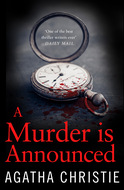
Kitabı oku: «A Murder is Announced», sayfa 4
‘Have they always made their home with you?’
‘Oh, dear no, only for the last two months. They lived in the South of France before the war. Patrick went into the Navy and Julia, I believe, was in one of the Ministries. She was at Llandudno. When the war was over their mother wrote and asked me if they could possibly come to me as paying guests—Julia is training as a dispenser in Milchester General Hospital, Patrick is studying for an engineering degree at Milchester University. Milchester, as you know, is only fifty minutes by bus, and I was very glad to have them here. This house is really too large for me. They pay a small sum for board and lodging and it all works out very well.’ She added with a smile, ‘I like having somebody young about the place.’
‘Then there is a Mrs Haymes, I believe?’
‘Yes. She works as an assistant gardener at Dayas Hall, Mrs Lucas’s place. The cottage there is occupied by the old gardener and his wife and Mrs Lucas asked if I could billet her here. She’s a very nice girl. Her husband was killed in Italy, and she has a boy of eight who is at a prep school and whom I have arranged to have here in the holidays.’
‘And by way of domestic help?’
‘A jobbing gardener comes in on Tuesdays and Fridays. A Mrs Huggins from the village comes up five mornings a week and I have a foreign refugee with a most unpronounceable name as a kind of lady cook help. You will find Mitzi rather difficult, I’m afraid. She has a kind of persecution mania.’
Craddock nodded. He was conscious in his own mind of yet another of Constable Legg’s invaluable commentaries. Having appended the word ‘Scatty’ to Dora Bunner, and ‘All right’ to Letitia Blacklock, he had embellished Mitzi’s record with the one word ‘Liar’.
As though she had read his mind Miss Blacklock said:
‘Please don’t be too prejudiced against the poor thing because she’s a liar. I do really believe that, like so many liars, there is a real substratum of truth behind her lies. I mean that though, to take an instance, her atrocity stories have grown and grown until every kind of unpleasant story that has ever appeared in print has happened to her or her relations personally, she did have a bad shock initially and did see one, at least, of her relations killed. I think a lot of these displaced persons feel, perhaps justly, that their claim to our notice and sympathy lies in their atrocity value and so they exaggerate and invent.’
She added: ‘Quite frankly, Mitzi is a maddening person. She exasperates and infuriates us all, she is suspicious and sulky, is perpetually having “feelings” and thinking herself insulted. But in spite of it all, I really am sorry for her.’ She smiled. ‘And also, when she wants to, she can cook very nicely.’
‘I’ll try not to ruffle her more than I can help,’ said Craddock soothingly. ‘Was that Miss Julia Simmons who opened the door to me?’
‘Yes. Would you like to see her now? Patrick has gone out. Phillipa Haymes you will find working at Dayas Hall.’
‘Thank you, Miss Blacklock. I’d like to see Miss Simmons now if I may.’
CHAPTER 6
Julia, Mitzi and Patrick
Julia, when she came into the room, and sat down in the chair vacated by Letitia Blacklock, had an air of composure that Craddock for some reason found annoying. She fixed a limpid gaze on him and waited for his questions.
Miss Blacklock had tactfully left the room.
‘Please tell me about last night, Miss Simmons.’
‘Last night?’ murmured Julia with a blank stare. ‘Oh, we all slept like logs. Reaction, I suppose.’
‘I mean last night from six o’clock onwards.’
‘Oh, I see. Well, a lot of tiresome people came—’
‘They were?’
She gave him another limpid stare.
‘Don’t you know all this already?’
‘I’m asking the questions, Miss Simmons,’ said Craddock pleasantly.
‘My mistake. I always find repetitions so dreary. Apparently you don’t … Well, there was Colonel and Mrs Easterbrook, Miss Hinchcliffe and Miss Murgatroyd, Mrs Swettenham and Edmund Swettenham, and Mrs Harmon, the Vicar’s wife. They arrived in that order. And if you want to know what they said—they all said the same thing in turn. “I see you’ve got your central heating on” and “What lovely chrysanthemums!”’
Craddock bit his lip. The mimicry was good.
‘The exception was Mrs Harmon. She’s rather a pet. She came in with her hat falling off and her shoelaces untied and she asked straight out when the murder was going to happen. It embarrassed everybody because they’d all been pretending they’d dropped in by chance. Aunt Letty said in her dry way that it was due to happen quite soon. And then that clock chimed and just as it finished, the lights went out, the door was flung open and a masked figure said, “Stick ’em up, guys,” or something like that. It was exactly like a bad film. Really quite ridiculous. And then he fired two shots at Aunt Letty and suddenly it wasn’t ridiculous any more.’
‘Where was everybody when this happened?’
‘When the lights went out? Well, just standing about, you know. Mrs Harmon was sitting on the sofa—Hinch (that’s Miss Hinchcliffe) had taken up a manly stance in front of the fireplace.’
‘You were all in this room, or the far room?’
‘Mostly, I think, in this room. Patrick had gone into the other to get the sherry. I think Colonel Easterbrook went after him, but I don’t really know. We were—well—as I said, just standing about.’
‘Where were you yourself?’
‘I think I was over by the window. Aunt Letty went to get the cigarettes.’
‘On that table by the archway?’
‘Yes—and then the lights went out and the bad film started.’
‘The man had a powerful torch. What did he do with it?’
‘Well, he shone it on us. Horribly dazzling. It just made you blink.’
‘I want you to answer this very carefully, Miss Simmons. Did he hold the torch steady, or did he move it about?’
Julia considered. Her manner was now definitely less weary.
‘He moved it,’ she said slowly. ‘Like a spotlight in a dance hall. It was full in my eyes and then it went on round the room and then the shots came. Two shots.’
‘And then?’
‘He whirled round—and Mitzi began to scream like a siren from somewhere and his torch went out and there was another shot. And then the door closed (it does, you know, slowly, with a whining noise—quite uncanny) and there we were all in the dark, not knowing what to do, and poor Bunny squealing like a rabbit and Mitzi going all out across the hall.’
‘Would it be your opinion that the man shot himself deliberately, or do you think he stumbled and the revolver went off accidentally?’
‘I haven’t the faintest idea. The whole thing was so stagey. Actually I thought it was still some silly joke—until I saw the blood from Letty’s ear. But even if you were actually going to fire a revolver to make the thing more real, you’d be careful to fire it well above someone’s head, wouldn’t you?’
‘You would indeed. Do you think he could see clearly who he was firing at? I mean, was Miss Blacklock clearly outlined in the light of the torch?’
‘I’ve no idea. I wasn’t looking at her. I was looking at the man.’
‘What I’m getting at is—do you think the man was deliberately aiming at her—at her in particular, I mean?’
Julia seemed a little startled by the idea.
‘You mean deliberately picking on Aunt Letty? Oh, I shouldn’t think so … After all, if he wanted to take a pot shot at Aunt Letty, there would be heaps of more suitable opportunities. There would be no point in collecting all the friends and neighbours just to make it more difficult. He could have shot her from behind a hedge in the good old Irish fashion any day of the week, and probably got away with it.’
And that, thought Craddock, was a very complete reply to Dora Bunner’s suggestion of a deliberate attack on Letitia Blacklock.
He said with a sigh, ‘Thank you, Miss Simmons. I’d better go and see Mitzi now.’
‘Mind her fingernails,’ warned Julia. ‘She’s a tartar!’
Craddock, with Fletcher in attendance, found Mitzi in the kitchen. She was rolling pastry and looked up suspiciously as he entered.
Her black hair hung over her eyes; she looked sullen, and the purple jumper and brilliant green skirt she wore were not becoming to her pasty complexion.
‘What do you come in my kitchen for, Mr Policeman? You are police, yes? Always, always there is persecution—ah! I should be used to it by now. They say it is different here in England, but no, it is just the same. You come to torture me, yes, to make me say things, but I shall say nothing. You will tear off my fingernails, and put lighted matches on my skin—oh, yes, and worse than that. But I will not speak, do you hear? I shall say nothing—nothing at all. And you will send me away to a concentration camp, and I shall not care.’
Craddock looked at her thoughtfully, selecting what was likely to be the best method of attack. Finally he sighed and said:
‘O.K., then, get your hat and coat.’
‘What is that you say?’ Mitzi looked startled.
‘Get your hat and coat and come along. I haven’t got my nail-pulling apparatus and the rest of the bag of tricks with me. We keep all that down at the station. Got the handcuffs handy, Fletcher?’
‘Sir!’ said Sergeant Fletcher with appreciation.
‘But I do not want to come,’ screeched Mitzi, backing away from him.
‘Then you’ll answer civil questions civilly. If you like, you can have a solicitor present.’
‘A lawyer? I do not like a lawyer. I do not want a lawyer.’
She put the rolling pin down, dusted her hands on a cloth and sat down.
‘What do you want to know?’ she asked sulkily.
‘I want your account of what happened here last night.’
‘You know very well what happened.’
‘I want your account of it.’
‘I tried to go away. Did she tell you that? When I saw that in the paper saying about murder. I wanted to go away. She would not let me. She is very hard—not at all sympathetic. She made me stay. But I knew—I knew what would happen. I knew I should be murdered.’
‘Well, you weren’t murdered, were you?’
‘No,’ admitted Mitzi grudgingly.
‘Come now, tell me what happened.’
‘I was nervous. Oh, I was nervous. All that evening. I hear things. People moving about. Once I think someone is in the hall moving stealthily—but it is only that Mrs Haymes coming in through the side door (so as not to dirty the front steps, she says. Much she cares!). She is a Nazi herself, that one, with her fair hair and her blue eyes, so superior and looking at me and thinking that I—I am only dirt—’
‘Never mind Mrs Haymes.’
‘Who does she think she is? Has she had expensive university education like I have? Has she a degree in Economics? No, she is just a paid labourer. She digs and mows grass and is paid so much every Saturday. Who is she to call herself a lady?’
‘Never mind Mrs Haymes, I said. Go on.’
‘I take the sherry and the glasses, and the little pastries that I have made so nice into the drawing-room. Then the bell rings and I answer the door. Again and again I answer the door. It is degrading—but I do it. And then I go back into the pantry and I start to polish the silver, and I think it will be very handy, that, because if someone comes to kill me, I have there close at hand the big carving knife, all sharp.’
‘Very foresighted of you.’
‘And then, suddenly—I hear shots. I think: “It has come—it is happening.” I run through the dining-room (the other door—it will not open). I stand a moment to listen and then there comes another shot and a big thud, out there in the hall, and I turn the door handle, but it is locked outside. I am shut in there like a rat in a trap. And I go mad with fear. I scream and I scream and I beat upon the door. And at last—at last—they turn the key and let me out. And then I bring candles, many many candles—and the lights go on, and I see blood—blood! Ach, Gott in Himmel, the blood! It is not the first time I have seen blood. My little brother—I see him killed before my eyes—I see blood in the street—people shot, dying—I—’
‘Yes,’ said Inspector Craddock. ‘Thank you very much.’
‘And now,’ said Mitzi dramatically, ‘you can arrest me and take me to prison!’
‘Not today,’ said Inspector Craddock.
As Craddock and Fletcher went through the hall to the front door it was flung open and a tall handsome young man almost collided with them.
‘Sleuths as I live,’ cried the young man.
‘Mr Patrick Simmons?’
‘Quite right, Inspector. You’re the Inspector, aren’t you, and the other’s the Sergeant?’
‘You are quite right, Mr Simmons. Can I have a word with you, please?’
‘I am innocent, Inspector. I swear I am innocent.’
‘Now then, Mr Simmons, don’t play the fool. I’ve a good many other people to see and I don’t want to waste time. What’s this room? Can we go in here?’
‘It’s the so-called study—but nobody studies.’
‘I was told that you were studying?’ said Craddock.
‘I found I couldn’t concentrate on mathematics, so I came home.’
In a businesslike manner Inspector Craddock demanded full name, age, details of war service.
‘And now, Mr Simmons, will you describe what happened last night?’
‘We killed the fatted calf, Inspector. That is, Mitzi set her hand to making savoury pastries, Aunt Letty opened a new bottle of sherry—’
Craddock interrupted.
‘A new bottle? Was there an old one?’
‘Yes. Half full. But Aunt Letty didn’t seem to fancy it.’
‘Was she nervous, then?’
‘Oh, not really. She’s extremely sensible. It was old Bunny, I think, who had put the wind up her—prophesying disaster all day.’
‘Miss Bunner was definitely apprehensive, then?’
‘Oh, yes, she enjoyed herself thoroughly.’
‘She took the advertisement seriously?’
‘It scared her into fits.’
‘Miss Blacklock seems to have thought, when she first read that advertisement, that you had had something to do with it. Why was that?’
‘Ah, sure, I get blamed for everything round here!’
‘You didn’t have anything to do with it, did you, Mr Simmons?’
‘Me? Never in the world.’
‘Had you ever seen or spoken to this Rudi Scherz?’
‘Never seen him in my life.’
‘It was the kind of joke you might have played, though?’
‘Who’s been telling you that? Just because I once made Bunny an apple pie bed—and sent Mitzi a postcard saying the Gestapo was on her track—’
‘Just give me your account of what happened.’
‘I’d just gone into the small drawing-room to fetch the drinks when, Hey Presto, the lights went out. I turned round and there’s a fellow standing in the doorway saying, “Stick your hands up,” and everybody gasping and squealing, and just when I’m thinking—can I rush him? he starts firing a revolver and then crash down he goes and his torch goes out and we’re in the dark again, and Colonel Easterbrook starts shouting orders in his barrack-room voice. “Lights,” he says, and will my lighter go on? No, it won’t as is the way of those cussed inventions.’
‘Did it seem to you that the intruder was definitely aiming at Miss Blacklock?’
‘Ah, how could I tell? I should say he just loosed off his revolver for the fun of the thing—and then found, maybe, he’d gone too far.’
‘And shot himself?’
‘It could be. When I saw the face of him, he looked like the kind of little pasty thief who might easily lose his nerve.’
‘And you’re sure you had never seen him before?’
‘Never.’
‘Thank you, Mr Simmons. I shall want to interview the other people who were here last night. Which would be the best order in which to take them?’
‘Well, our Phillipa—Mrs Haymes—works at Dayas Hall. The gates of it are nearly opposite this gate. After that, the Swettenhams are the nearest. Anyone will tell you.’
CHAPTER 7
Among Those Present
Dayas Hall had certainly suffered during the war years. Couch grass grew enthusiastically over what had once been an asparagus bed, as evidenced by a few waving tufts of asparagus foliage. Groundsel, bindweed and other garden pests showed every sign of vigorous growth.
A portion of the kitchen garden bore evidence of having been reduced to discipline and here Craddock found a sour-looking old man leaning pensively on a spade.
‘It’s Mrs ’Aymes you want? I couldn’t say where you’d find ’er. ’As ’er own ideas, she ’as, about what she’ll do. Not one to take advice. I could show her—show ’er willing—but what’s the good, won’t listen these young ladies won’t! Think they know everything because they’ve put on breeches and gone for a ride on a tractor. But it’s gardening that’s needed here. And that isn’t learned in a day. Gardening, that’s what this place needs.’
‘It looks as though it does,’ said Craddock.
The old man chose to take this remark as an aspersion.
‘Now look here, mister, what do you suppose I can do with a place this size? Three men and a boy, that’s what it used to ’ave. And that’s what it wants. There’s not many men could put in the work on it that I do. ’Ere sometimes I am till eight o’clock at night. Eight o’clock.’
‘What do you work by? An oil lamp?’
‘Naterally I don’t mean this time o’ year. Naterally. Summer evenings I’m talking about.’
‘Oh,’ said Craddock. ‘I’d better go and look for Mrs Haymes.’
The rustic displayed some interest.
‘What are you wanting ’er for? Police, aren’t you? She been in trouble, or is it the do there was up to Little Paddocks? Masked men bursting in and holding up a roomful of people with a revolver. An’ that sort of thing wouldn’t ’ave ’appened afore the war. Deserters, that’s what it is. Desperate men roaming the countryside. Why don’t the military round ’em up?’
‘I’ve no idea,’ said Craddock. ‘I suppose this hold-up caused a lot of talk?’
‘That it did. What’s us coming to? That’s what Ned Barker said. Comes of going to the pictures so much, he said. But Tom Riley he says it comes of letting these furriners run about loose. And depend on it, he says, that girl as cooks up there for Miss Blacklock and ’as such a nasty temper—she’s in it, he said. She’s a communist or worse, he says, and we don’t like that sort ’ere. And Marlene, who’s behind the bar, you understand, she will ’ave it that there must be something very valuable up at Miss Blacklock’s. Not that you’d think it, she says, for I’m sure Miss Blacklock goes about as plain as plain, except for them great rows of false pearls she wears. And then she says—Supposin’ as them pearls is real, and Florrie (what’s old Bellamy’s daughter) she says, “Nonsense,” she says—“noovo ar—that’s what they are—costume jewellery,” she says. Costume jewellery—that’s a fine way of labelling a string of false pearls. Roman pearls, the gentry used to call ’em once—and Parisian diamonds—my wife was a lady’s maid and I know. But what does it all mean—just glass! I suppose it’s “costume jewellery” that young Miss Simmons wears—gold ivy leaves and dogs and such like. ’Tisn’t often you see a real bit of gold nowadays—even wedding rings they make of this grey plattinghum stuff. Shabby, I call it—for all that it costs the earth.’
Old Ashe paused for breath and then continued:
‘“Miss Blacklock don’t keep much money in the ’ouse, that I do know,” says Jim Huggins, speaking up. He should know, for it’s ’is wife as goes up and does for ’em at Little Paddocks, and she’s a woman as knows most of what’s going on. Nosey, if you take me.’
‘Did he say what Mrs Huggins’ view was?’
‘That Mitzi’s mixed up in it, that’s what she thinks. Awful temper she ’as, and the airs she gives herself! Called Mrs Huggins a working woman to her face the other morning.’
Craddock stood a moment, checking over in his orderly mind the substance of the old gardener’s remarks. It gave him a good cross-section of rural opinion in Chipping Cleghorn, but he didn’t think there was anything to help him in his task. He turned away and the old man called after him grudgingly:
‘Maybe you’d find her in the apple orchard. She’s younger than I am for getting the apples down.’
And sure enough in the apple orchard Craddock found Phillipa Haymes. His first view was a pair of nice legs encased in breeches sliding easily down the trunk of a tree. Then Phillipa, her face flushed, her fair hair ruffled by the branches, stood looking at him in a startled fashion.
‘Make a good Rosalind,’ Craddock thought automatically, for Detective-Inspector Craddock was a Shakespeare enthusiast and had played the part of the melancholy Jaques with great success in a performance of As You Like it for the Police Orphanage.
A moment later he amended his views. Phillipa Haymes was too wooden for Rosalind, her fairness and her impassivity were intensely English, but English of the twentieth rather than of the sixteenth century. Well-bred, unemotional English, without a spark of mischief.
‘Good morning, Mrs Haymes. I’m sorry if I startled you. I’m Detective-Inspector Craddock of the Middleshire Police. I wanted to have a word with you.’
‘About last night?’
‘Yes.’
‘Will it take long? Shall we—?’
She looked about her rather doubtfully.
Craddock indicated a fallen tree trunk.
‘Rather informal,’ he said pleasantly, ‘but I don’t want to interrupt your work longer than necessary.’
‘Thank you.’
‘It’s just for the record. You came in from work at what time last night?’
‘At about half-past five. I’d stayed about twenty minutes later in order to finish some watering in the greenhouse.’
‘You came in by which door?’
‘The side door. One cuts across by the ducks and the hen-house from the drive. It saves you going round, and besides it avoids dirtying up the front porch. I’m in rather a mucky state sometimes.’
‘You always come in that way?’
‘Yes.’
‘The door was unlocked?’
‘Yes. During the summer it’s usually wide open. This time of the year it’s shut but not locked. We all go out and in a good deal that way. I locked it when I came in.’
‘Do you always do that?’
‘I’ve been doing it for the last week. You see, it gets dark at six. Miss Blacklocks goes out to shut up the ducks and the hens sometimes in the evening, but she very often goes out through the kitchen door.’
‘And you are quite sure you did lock the side door this time?’
‘I really am quite sure about that.’
‘Quite so, Mrs Haymes. And what did you do when you came in?’
‘Kicked off my muddy footwear and went upstairs and had a bath and changed. Then I came down and found that a kind of party was in progress. I hadn’t known anything about this funny advertisement until then.’
‘Now please describe just what occurred when the hold-up happened.’
‘Well, the lights went out suddenly—’
‘Where were you?’
‘By the mantelpiece. I was searching for my lighter which I thought I had put down there. The lights went out—and everybody giggled. Then the door was flung open and this man shone a torch on us and flourished a revolver and told us to put our hands up.’
‘Which you proceeded to do?’
‘Well, I didn’t actually. I thought it was just fun, and I was tired and I didn’t think I needed really to put them up.’
‘In fact, you were bored by the whole thing?’
‘I was, rather. And then the revolver went off. The shots sounded deafening and I was really frightened. The torch went whirling round and dropped and went out, and then Mitzi started screaming. It was just like a pig being killed.’
‘Did you find the torch very dazzling?’
‘No, not particularly. It was quite a strong one, though. It lit up Miss Bunner for a moment and she looked quite like a turnip ghost—you know, all white and staring with her mouth open and her eyes starting out of her head.’
‘The man moved the torch?’
‘Oh, yes, he played it all round the room.’
‘As though he were looking for someone?’
‘Not particularly, I should say.’
‘And after that, Mrs Haymes?’
Phillipa Haymes frowned.
‘Oh, it was all a terrible muddle and confusion. Edmund Swettenham and Patrick Simmons switched on their lighters and they went out into the hall and we followed, and someone opened the dining-room door—the lights hadn’t fused there—and Edmund Swettenham gave Mitzi a terrific slap on the cheek and brought her out of her screaming fit, and after that it wasn’t so bad.’
‘You saw the body of the dead man?’
‘Yes.’
‘Was he known to you? Had you ever seen him before?’
‘Never.’
‘Have you any opinion as to whether his death was accidental, or do you think he shot himself deliberately?’
‘I haven’t the faintest idea.’
‘You didn’t see him when he came to the house previously?’
‘No. I believe it was in the middle of the morning and I shouldn’t have been there. I’m out all day.’
‘Thank you, Mrs Haymes. One thing more. You haven’t any valuable jewellery? Rings, bracelets, anything of that kind?’
Phillipa shook her head.
‘My engagement ring—a couple of brooches.’
‘And as far as you know, there was nothing of particular value in the house?’
‘No. I mean there is some quite nice silver—but nothing out of the ordinary.’
‘Thank you, Mrs Haymes.’
As Craddock retraced his steps through the kitchen garden he came face to face with a large red-faced lady, carefully corseted.
‘Good morning,’ she said belligerently. ‘What do you want here?’
‘Mrs Lucas? I am Detective-Inspector Craddock.’
‘Oh, that’s who you are? I beg your pardon. I don’t like strangers forcing their way into my garden wasting the gardeners’ time. But I quite understand you have to do your duty.’
‘Quite so.’
‘May I ask if we are to expect a repetition of that outrage last night at Miss Blacklock’s? Is it a gang?’
‘We are satisfied, Mrs Lucas, that it was not the work of a gang.’
‘There are far too many robberies nowadays. The police are getting slack.’ Craddock did not reply. ‘I suppose you’ve been talking to Phillipa Haymes?’
‘I wanted her account as an eye-witness.’
‘You couldn’t have waited until one o’clock, I suppose? After all, it would be fairer to question her in her time, rather than in mine …’
‘I’m anxious to get back to headquarters.’
‘Not that one expects consideration nowadays. Or a decent day’s work. On duty late, half an hour’s pottering. A break for elevenses at ten o’clock. No work done at all the moment the rain starts. When you want the lawn mown there’s always something wrong with the mower. And off duty five or ten minutes before the proper time.’
‘I understood from Mrs Haymes that she left here at twenty minutes past five yesterday instead of five o’clock.’
‘Oh, I dare say she did. Give her her due, Mrs Haymes is quite keen on her work, though there have been days when I have come out here and not been able to find her anywhere. She is a lady by birth, of course, and one feels it’s one’s duty to do something for these poor young war widows. Not that it isn’t very inconvenient. Those long school holidays and the arrangement is that she has extra time off then. I told her that there are really excellent camps nowadays where children can be sent and where they have a delightful time and enjoy it far more than wandering about with their parents. They need practically not come home at all in the summer holidays.’
‘But Mrs Haymes didn’t take kindly to that idea?’
‘She’s as obstinate as a mule, that girl. Just the time of year when I want the tennis court mowed and marked nearly every day. Old Ashe gets the lines crooked. But my convenience is never considered!’
‘I presume Mrs Haymes takes a smaller salary than is usual?’
‘Naturally. What else could she expect?’
‘Nothing, I’m sure,’ said Craddock. ‘Good morning, Mrs Lucas.’
‘It was dreadful,’ said Mrs Swettenham happily. ‘Quite—quite—dreadful, and what I say is that they ought to be far more careful what advertisements they accept at the Gazette office. At the time, when I read it, I thought it was very odd. I said so, didn’t I, Edmund?’
‘Do you remember just what you were doing when the lights went out, Mrs Swettenham?’ asked the Inspector.
‘How that reminds me of my old Nannie! Where was Moses when the light went out? The answer, of course, was “In the Dark.” Just like us yesterday evening. All standing about and wondering what was going to happen. And then, you know, the thrill when it suddenly went pitch black. And the door opening—just a dim figure standing there with a revolver and that blinding light and a menacing voice saying “Your money or your life!” Oh, I’ve never enjoyed anything so much. And then a minute later, of course, it was all dreadful. Real bullets, just whistling past our ears! It must have been just like the Commandos in the war.’
‘Whereabouts were you standing or sitting at the time, Mrs Swettenham?’
‘Now let me see, where was I? Who was I talking to, Edmund?’
‘I really haven’t the least idea, Mother.’
‘Was it Miss Hinchcliffe I was asking about giving the hens cod liver oil in the cold weather? Or was it Mrs Harmon—no, she’d only just arrived. I think I was just saying to Colonel Easterbrook that I thought it was really very dangerous to have an atom research station in England. It ought to be on some lonely island in case the radio activity gets loose.’
‘You don’t remember if you were sitting or standing?’
‘Does it really matter, Inspector? I was somewhere over by the window or near the mantelpiece, because I know I was quite near the clock when it struck. Such a thrilling moment! Waiting to see if anything might be going to happen.’
‘You describe the light from the torch as blinding. Was it turned full on to you?’
‘It was right in my eyes. I couldn’t see a thing.’
‘Did the man hold it still, or did he move it about, from person to person?’
Ücretsiz ön izlemeyi tamamladınız.