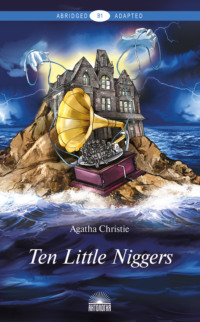
Kitabı oku: «Ten Little Niggers / Десять негритят»
© Берестова А. И., адаптация, сокращение, 2023
© ООО «ИД «Антология», 2023
Chapter 1
I
Mr. Justice Wargrave sat in the corner of a first-class smoking carriage, puffing at a cigar and reading the Times.
He glanced at his watch – another two hours to go.
He put the newspaper down and, in his mind, went through the information he had read in the papers about Nigger Island. At first, an American millionaire who was fond of yachting had bought it. He had built a luxurious modern house on this little island off the Devon coast. But soon that millionaire had put up the house and island for sale because, unfortunately, his new third wife was a bad sailor. Then, according to the newspapers, a Mr. Owen had bought it. After that the rumours of the gossip writers had started: in reality, Miss Gabrielle Turl, the Hollywood film star, had bought Nigger Island; she wanted to spend some months there free from all publicity; the island was to be an abode for Royalty?! Or – young Lord I… had surrendered to Cupid1 at last and had bought it for a honeymoon! Somebody knew for a fact that the Admiralty had purchased the island for some very hush-hush experiments!
Mr. Justice Wargrave took out a letter from his pocket. The handwriting was practically illegible but some words here and there were quite clear. Dearest Lawrence… so many years since I heard anything of you… must come to Nigger Island… the most picturesque place… remember… old days… communion with Nature… bask in sunshine… 12:40 from Paddington… meet you at Oakbridge. The letter was signed by Lady Constance Culmington.
Mr. Justice Wargrave remembered that he had last seen Lady Constance Culmington eight years ago. She had then been going to Italy to bask in the sun and be at one with Nature and the contadini2. Later, he had heard, she had gone to Syria where she intended to bask in yet stronger sun and live at one with Nature and the bedouin3.
Constance Culmington, in his opinion, was exactly the sort of woman who would buy an island and surround herself with mystery! His head nodded in approval of his logic. He slept…
II
Vera Claythorne, in a third-class carriage with five other travellers in it, leaned back and closed her eyes. It was very hot in the train. It would be nice to get to the sea! She thought she was lucky to get a secretarial post during her holiday. When you wanted a holiday post, it nearly always meant looking after a crowd of children – secretarial holiday posts were much more difficult to get. Even the agency hadn’t had much hope.
And then the letter had come. It was:
“Your name has been given to me by the Skilled Women’s Agency together with their recommendation. I agree to pay you the salary you ask and hope you will take up your duties on August 8th. The train is the 12:40 from Paddington and you will be met at Oakbridge station. I enclose five-pound notes for expenses.
Yours truly,
Una Nancy Owen.”
And the stamped address was the Nigger Island, Sticklehaven, Devon…
Nigger Island! The papers have been full of all sorts of hints and interesting rumours about it lately! Probably that was mostly untrue. But the house had certainly been built by a millionaire and was said to be absolutely the last word in luxury.
Vera Claythorne felt very tired after a hard term as a games mistress4 in a third-class school. She thought to herself – “If only I could get a job at some decent school.”
But then she thought that she was lucky to have even that. With a heavy heart she thought: “People don’t like a Coroner’s5 Inquest, even if the Coroner did acquit me of all blame!”
The Coroner had even praised her for her courage, she remembered. And Mrs. Hamilton had been kindness itself to her – only Hugo – (but she wouldn’t think of Hugo!)
Suddenly, though it was very hot in the carriage, she shivered and wished she wasn’t going to the sea. A picture rose clearly before her mind. Cyril’s head, bobbing up and down, swimming to the rock. Up and down – up and down. And herself, swimming in easy expert strokes after him – but knowing, only too well, that she wouldn’t be in time.
The sea – warm mornings spent lying out on the sands – Hugo – Hugo who had said he loved her.
She must not think of Hugo.
She opened her eyes and looked at the man opposite her. A tall man with a brown face, light eyes set rather close together and an arrogant almost cruel mouth.
She thought to herself:
“I bet he’s been to some interesting parts of the world and seen some interesting things.”
III
Philip Lombard, sizing up the girl opposite with his quick moving eyes, thought to himself:
“Quite attractive – a bit schoolmistressy perhaps…”
A cool customer6, he decided – and one who could hold her own – in love or war. He’d rather like to take her on.
He frowned. No, he’d got to keep his mind on the job.
What exactly was that job, he wondered? That little Jew had been damned mysterious. He had only said that a client of his had asked him to hand Lombard one hundred guineas in return for which Lombard would travel by train to Sticklehaven, Devon. The nearest to that place station was Oakbridge. There he would be met and motored to Sticklehaven where a motor launch would take him to Nigger Island.
“There you will hold yourself at the disposal of my client, Captain Lombard. My client assumes that your reputation is that of a good man in a tight place.”7
Philip had said thoughtfully:
“A hundred guineas, eh?”
His tone was casual as though a hundred guineas was nothing to him when actually he needed money very badly. But he had seen that the little Jew had not been deceived – that was the damnable part about Jews, you couldn’t deceive them about money – they knew!
Touching his small moustache, Captain Lombard said:
“You understand I can’t undertake anything – illegal?”
Mr. Isaac Morris had answered gravely, with a very light smile on his thick Semitic lips:
“If anything illegal is proposed, you will, of course, be absolutely free to leave.”
Damn the oily little brute, he had smiled! It was as though he knew very well that in Lombard’s past actions legality had not always been an absolutely necessary condition…
Lombard grinned himself.
He imagined that he was going to enjoy himself at Nigger Island.
IV
Miss Emily Brent was travelling in a non-smoking carriage. As usual, she sat very erect. She was sixty-five and she did not approve of lolling. Her father, a Colonel of the old school, had been particular about manners.
The present generation was so slack – in their manners, and in every other way.
Full of righteousness and firm principles, Miss Brent sat in her crowded third-class carriage and triumphed over its discomfort and its heat. Every one fussed over things nowadays! They wanted injections before they had teeth pulled – they took drugs if they couldn’t sleep – they wanted easy chairs and cushions and the girls neglected their figures and lay about half naked on the beaches in summer.
Miss Brent pursed her lips. She would like to make an example of certain people.
She thought about last year’s summer holiday. This year, however, it would be quite different. Nigger Island.
In her mind, she re-read the letter she had recently received.
“Dear Miss Brent,
I hope you remember me. We were together at Bellhaven Guest House in August some years ago, and it seemed we had a good time together.
I am starting a guest house of my own on an island off the coast of Devon. It will be a place where there is good plain food and a nice old-fashioned type of person. None of this nudity and gramophones half the night. I will be very glad if you could spend your summer holiday on Nigger Island – quite free – as my guest. Would early in August suit you? Perhaps the 8th.
Yours sincerely.
U. N. —”
The signature was rather illegible.
Emily Brent tried to remember the people at Bellhaven. There had been a Miss Olton – Ormen – No, surely it was Oliver! Yes – Oliver.
There was something about Nigger Island in the paper – something about a film star – or was it an American millionaire?
Of course, often islands went very cheap – they didn’t suit everybody. They thought the idea was romantic but when they came to live there, they saw the disadvantages and were glad to sell.
Emily Brent thought to herself: “Anyway, I will be getting a free holiday.”
As her income had lessened so much and so many dividends were not paid, that was indeed quite helpful. If only she could remember a little more about Mrs. – or was it Miss – Oliver?
V
General Macarthur was in a train that was just coming into Exeter where he had to change. Damnable, these slow branch-line trains! This place, Nigger Island, was really no distance at all as the crow flies8.
He didn’t know this fellow Owen. A friend of Spoof Leggard’s, obviously – and of Johnny Dyer’s.
The letter said: “one or two of your old cronies are coming – would like to have a chat over old times.”
Well, he would enjoy a chat about old times. He felt lately that fellows were avoiding him. All because of that damned rumour! Nearly thirty years ago now! Armstrong had talked, he supposed. Damned young pup! What did he know about it? Oh, well, no good wondering about these things! One imagined things sometimes – imagined a fellow was looking at you queerly.
Well, he would be interested to see this Nigger Island. A lot of gossip in the papers. Looked as though there might be something in the rumour that the Admiralty or the War Office or the Air Force had bought it.
Young Elmer Robson, the American millionaire, had actually built the place. Every earthly luxury.
Exeter! And an hour to wait! And he didn’t want to wait. He wanted to get on.
VI
Dr. Armstrong was driving his car across Salisbury Plain. He was very tired. Success had its punishment. He remembered the time when he had sat in his consulting room in Harley Street9, correctly dressed, surrounded with the most up-to-date appliances and the most luxurious furniture and waited – waited through the empty days for his venture to succeed or fail.
Well, it had succeeded! He’d been lucky! Lucky and competent of course. He was a good man at his job – but that wasn’t enough for success. You had to have luck as well. And he’d had it! An accurate diagnosis, a couple of grateful women patients – women with money and position – and word had got about. And now Dr. Armstrong was definitely a success. His days were full. He had little leisure. Therefore, on this August morning, he was glad that he was leaving London for an island off the Devon coast for some days. It was not exactly a holiday. He had received a letter quite vague in its terms, but there was nothing vague about the accompanying cheque. A huge fee. These Owens must be rolling in money. It seemed a husband was worried about his wife’s health but she did not want to see a doctor. And he did not want to alarm her. Her nerves —
Nerves! These women and their nerves! Well, it was good for business, anyway. Half the women who consulted him had only suffered from boredom, but they wouldn’t thank you for telling them so! And one could usually find something.
“A slightly unusual condition of the – some long word – nothing at all serious – but it just needs a simple treatment.”
Well, a good part of medicine was faith-healing. And he had a good manner – he could inspire hope and faith.
Fortunately, he’d pulled himself together10 in time after that business ten – no, fifteen years ago. He’d been going to pieces. The shock had pulled him together. He’d stopped drinking altogether. With a deafening blare of the horn an enormous sports car rushed past him at eighty miles an hour. Dr. Armstrong nearly went into the hedge. One of these young fools who rushed round the country. He hated them. That had been nearly a crash, too. Damned young fool!
VII
Tony Marston, rushing down into Mere, thought to himself:
“The amount of cars crawling about the roads is outrageous. Always something blocking your way. And they will drive in the middle of the road! Pretty hopeless driving in England, anyway… Not like France where you really could let out.”
Should he stop here for a drink, or drive on? Heaps of time! He’d have a gin and ginger-beer. Awfully hot day!
In fine weather this island place ought to be quite good fun. Who were these Owens, he wondered? Stinking rich, probably. Badger was rather good at nosing out people like that. Of course, he had to, poor old chap, with no money of his own.
Hope they’d have enough drinks. Never knew with these fellows who’d made their money and weren’t born to it. Pity that story that Gabrielle Turl had bought Nigger Island wasn’t true.
Oh, well, he supposed there’d be a few girls there.
Coming out of the hotel, he stretched himself, yawned, looked up at the blue sky and climbed into his car.
Several young women looked at him admiringly – his six feet of well-proportioned body, his curly hair, tanned face, and intensely blue eyes.
He started the car and rushed up the narrow street. Old men and errand-boys jumped for safety. The latter looked after the car admiringly.
Anthony Marston continued his triumphal progress.
VIII
Mr. Blore was in the slow train from Plymouth. There was only one other person in his carriage, an elderly sea-faring gentleman with a bleary eye. At the present moment he was sleeping.
Mr. Blore was writing in his notebook: “Emily Brent, Vera Claythorne, Dr. Armstrong, Anthony Marston, old Justice Wargrave, Philip Lombard, General Macarthur. Manservant and wife: Mr. and Mrs. Rogers.”
“That’s the lot,” he muttered to himself and closing the notebook, put it back in his pocket.
He thought that his forthcoming job ought to be easy enough and hoped that he looked right for the role he was to play.
He stood up and studied himself in the mirror. The face reflected there was slightly military, with a moustache. There was very little expression in it. The eyes were grey and set rather close together.
“Might be a major,” said Mr. Blore. “No, I forgot. There’s that old general. He’d unmask me at once.
“South Africa,” decided Mr. Blore, “that’s my line!”He’d been reading a travel leaflet about South Africa, and thought he could talk about it all right.
Fortunately there were all sorts and types of colonials. As a well-off man from South Africa, Mr. Blore felt that he could enter into any society unmasked.
He had been on Nigger Island in his boyhood… Smelly sort of rock covered with gulls – stood about a mile from the coast. It had been named Nigger Island because it resembled a Negro man’s profile.
The old man in the corner woke up and said:
“You can’t never tell at sea – never! There’s a storm coming.”
Mr. Blore objected:
“No, no, mate, it’s a lovely day.”
The old man said angrily:
“There’s a storm ahead. I can smell it.”
“Maybe you’re right,” said Mr. Blore pacifically.
The train stopped at a station where the old man was to get out. As he was quite drunk, Mr. Blore helped him to the door.
The old sailor stood in the doorway. He raised a solemn hand and blinked his bleary eyes.
“Watch and pray,” he said. “Watch and pray. The day of judgement11 is very close.”
Returning to his seat Mr. Blore thought to himself:
“He’s nearer the day of judgement than I am!”
But there, as it happens, he was wrong…
Chapter 2
I
A little group of people stood outside Oakbridge station. Porters with suitcases stood behind them. One of them called, “Jim!”
The driver of one of the taxis asked: “You’re for Nigger Island, maybe?” Four people said “Yes” – and then glanced quickly at each other.
The driver addressed Mr. Justice Wargrave as the senior member of the party:
“One of the two taxis here, sir, must wait till the slow train from Exeter arrives – there’s one gentleman coming by that.
Perhaps one of you wouldn’t mind waiting? You’d be more comfortable that way.”
Vera Claythorne agreed to wait at once.
Miss Brent and Mr. Justice Wargrave entered one of the taxis.
Captain Lombard said:
“I’ll wait with Miss —”
“Claythorne,” said Vera.
“My name is Lombard, Philip Lombard.”
The porters were piling luggage on the taxi. Inside, Mr. Justice Wargrave asked:
“Do you know this part of the world well?”
Miss Brent said:
“This is my first visit to this part of Devon.”
The judge said:
“I haven’t also been to this part of the world.”
The taxi drove off.
The driver of the second taxi asked:
“Like to sit inside while you’re waiting?”
Vera Claythorn and Philip Lombard decided to stay in the open air.
Vera said:
“I hope the weather lasts. Our English summers are so changeable.”
With a slight lack of originality Lombard asked:
“Do you know this part of the world well?”
“No, I’ve never been here before.” She added quickly, deciding to make her position clear at once, “I haven’t even seen my employer yet.”
“Your employer?”
“Yes, I’m Mrs. Owen’s secretary.”
Lombard said:
“Isn’t that rather unusual?”
Vera laughed.
“Oh, no, I don’t think so. Her own secretary was suddenly taken ill. She wanted a substitute, and the agency sent me.”
“And if you don’t like the post, when you’ve got there?”
Vera laughed again.
“Oh, it’s only a holiday post. I’ve got a job at a girls’ school. And I want to see Nigger Island very much. There’s been such a lot about it in the papers. Is it really very enchanting?”
Lombard said:
“I don’t know. I haven’t seen it.”
“Oh, really? The Owens are very fond of it, I suppose. What are they like? Please, tell me.”
Lombard thought: “Is it supposed that I know them or not?” He said quickly:
“There’s a wasp crawling up your arm. No – stay quite still.”
He made a convincing brushing off. “There. It’s gone!”
“Oh, thank you. There are a lot of wasps about this summer.”
“Yes, I suppose it’s the heat. Who are we waiting for, do you know?”
“I have no idea.”
At that moment they heard the sound of an approaching train.
II
A tall soldierly old man appeared at the exit from the platform. His grey hair was cut short and he had a neatly trimmed white moustache.
Vera came forward in a competent manner. She said:
“I am Mrs. Owen’s secretary. There is a car here waiting.” She added: “This is Mr. Lombard.”
The shrewd blue eyes of General Macarthur sized up Lombard.
“Good-looking fellow. Something just a little wrong about him…”
They got into the waiting taxi. They drove through the sleepy streets of little Oakbridge. Then they went down country lanes, steep, green and narrow.
General Macarthur said he lived in East Devon and this part of Devon was new to him.
Vera liked the scenery and said:
“It really is lovely here. The hills and the red earth and everything so green.”
Philip Lombard said critically:
“It’s a bit confined. I like open country myself. Where you can see what’s coming.”
General Macarthur said to him:
“You’ve seen a bit of the world, I imagine?”
Lombard shrugged his shoulders.
“I’ve traveled about here and there, sir.”
He thought to himself: “He’ll ask me now if I was old enough to be in the War. These old boys always do.”
But General Macarthur said nothing about the War.
III
They came to Sticklehaven – a mere group of cottages with a fishing boat or two on the beach.
In the rays of the setting sun they saw Nigger Island rising out of the sea to the south.
Vera said, surprised:
“It’s a long way out.”
She had pictured it differently, close to shore, crowned with a beautiful white house. But they could see no house, only the rock with its faint resemblance to a giant Negro’s head. There was something sinister about it. She shivered.
There were three people sitting outside a little inn: the elderly judge, Miss Brent, and a third man – a big bluff man who came forward and introduced himself.
“Decided to wait for you,” he said. “Allow me to introduce myself. Name’s Davis. Natal, South Africa’s my natal place, ha-ha!”
He laughed.
Mr. Justice Wargrave looked at him with active dislike. He looked as if he wished that he could order to clear the court. Miss Emily Brent was clearly not sure if she liked colonials.
Mr. Davis turned and held up a finger. In response to Davis’ gesture, a man came up to them and said:
“Are you ready to start for the island, ladies and gentlemen? The boat’s waiting. There’s two gentlemen coming by car, but Mr. Owen’s order was not to wait for them as they might arrive at any time.”
The party got up. Their guide led them to his motor boat.
Just as they all got into the boat and their guide was going to start the motor, they saw a car that was coming into the village down the steep country lane.
The car was so fantastically powerful and beautiful that it had all the nature of an apparition. In the radiance of the evening light a young man at the wheel looked not a man, but a young god, a hero god out of some Northern Saga.
He touched the horn and a great roar of sound echoed from the rocks of the bay.
It was a fantastic moment. It seemed that Anthony Marston was something more than mortal.
IV
Fred Narracott, looking at his passengers, thought to himself that this was a queer company. He’d expected that Mr. Owen’s guests would be all very rich and important-looking.
Quite different from Mr. Elmer Robson’s parties. Fred Narracott grinned faintly as he remembered the millionaire’s guests. That had been a party if you like – and the drink they’d got through!
This Mr. Owen must be a very different sort of gentleman. It was strange, thought Fred, that Mr. Owen had never been down here yet. Everything had been ordered and paid for by that Mr. Morris. The papers said there was some mystery about Owen. Mr. Narracott agreed with them.
Perhaps it was indeed Miss Gabrielle Turl who had bought the island. But he rejected that theory as he looked at his passengers. They could hardly have anything to do with a film star.
He sized them up objectively.
One spinster – the sour kind – he knew them well enough. She was a dragon, he could bet. Old military gentleman. Nice-looking young lady – but the ordinary kind, not glamourous – no Hollywood touch about her. That bluff cheery gent – he wasn’t a real gentleman. Retired tradesman, that’s what he is, thought Fred Narracott. The other gentleman, the thin hungry looking gentleman with the quick eyes, he was a queer one.
No, there was only one satisfactory passenger in the boat. The last gentleman, the one who had arrived in the car (and what a car!).
He was the right kind. Born to money, he was. If the party had been all like him… he’d understand it…
Queer business – the whole thing was queer – very queer.
V
The boat went round the rock. The south side of the island was quite different. It sloped gently down to the sea. Now at last they saw the house – low and square and modern-looking with rounded windows letting in all the light.
An exciting house – a house that lived up to expectation!12
Fred Narracott stopped the engine, they nosed their way gently into a little natural inlet between rocks.
Philip Lombard said sharply:
“Must be difficult to land here in bad weather.”
Fred Narracott said cheerfully:
“Can’t land on Nigger Island when there’s a southeasterly. Sometimes it’s cut off for a week or more.”
Fred Narracott jumped out and he and Lombard helped the others to get out. Narracott tied the boat to a ring in the rock. Then they went up the steps cut in the rock.
General Macarthur said:
“Ha, enchanting spot!”
But he felt uneasy. Damned odd sort of place.
As the party came out on a terrace above, their mood brightened. In the open doorway of the house a correct butler was awaiting them, and something about his appearance reassured them. And then the house itself was really most attractive, the view from the terrace magnificent…
The butler bowed slightly and said:
“Will you come this way, please?”
In the wide hall drinks stood ready. Rows of bottles. That pleased Anthony Marston. His mood improved a little. He’d just been thinking this was not his kind of company. How could old Badger have let him in for this?13 But the drinks were all right. Plenty of ice, too.
What was the butler chap saying?
“Mr. Owen – unfortunately delayed – unable to get here till tomorrow. Instructions – everything they wanted – if they would like to go to their rooms?.. dinner would be at 8 o’clock.”
VI
Mrs. Rogers showed Vera to her room upstairs. It was a delightful bedroom with a big window that opened upon the sea and another looking east. At one side of the room a door stood open into a pale blue-tiled bathroom. Vera was very pleased with it.
Mrs. Rogers was saying:
“I hope you’ve got everything you want, Miss?”
Vera looked round. Her luggage had been brought up and had been unpacked.
She said quickly:
“Yes, everything, I think.”
Mrs. Rogers asked her to ring the bell if she wanted anything. She had a flat monotonous voice. Her queer light eyes moved the whole time from place to place.
Vera thought:
“She looks frightened of her own shadow.”
Yes, she looked like a woman who walked in mortal fear.
Vera shivered a little. What on earth was the woman afraid of?
She said pleasantly:
“I’m Mrs. Owen’s new secretary. I expect you know that.”
Mrs. Rogers said:
“I haven’t seen Mrs. Owen – not yet. We only came here two days ago.”
“Extraordinary people, these Owens,” thought Vera. Aloud she said:
“What staff is there here?”
“Just me and Rogers, Miss.”
Vera frowned. She thought such small staff was not enough for so large a party.
Mrs. Rogers said:
“I’m a good cook and Rogers is handy about the house. If there’s to be large parties often perhaps Mrs. Owen could get extra help in.”
Mrs. Rogers turned and quietly left the room.
Vera went over to the window and sat down on the window seat. She was faintly worried. Everything – somehow – was a little queer. The absence of the Owens, the pale ghostlike Mrs. Rogers. And the guests! Yes, the guests were queer too. A strangely assorted party.
She got up and walked restlessly about the room. She stopped in front of the fireplace. On the mantelpiece there was a huge block of white marble shaped like a bear, a piece of modern sculpture in which was inset a clock. Over it, in a chromium frame, was a poem.
It was the old nursery rhyme that she remembered from her childhood days.
Ten little Nigger boys went out to dine;
One choked his little self and then there were nine.
Nine little Nigger boys sat up very late;
One overslept himself and then there were eight.
Eight little Nigger boys travelling in Devon;
One said he’d stay there and then there were seven.
Seven little Nigger boys chopping up sticks;
One chopped himself in halves and then there were six.
Six little Nigger boys playing with a hive;
A bumblebee stung one and then there were five.
Five little Nigger boys going in for law;
One got in Chancery and then there were four.
Four little Nigger boys going out to sea;
A red herring swallowed one and then there were three.
Three little Nigger boys walking in the Zoo;
A big bear hugged one and then there were two.
Two little Nigger boys sitting in the sun;
One got frizzled up14 and then there was one.
One little Nigger boy left all alone;
He went and hanged himself and then there were none.
Vera smiled. Of course! This was Nigger Island!
She returned to the window and sat again looking out to sea.
How big the sea was! No land could be seen from here – just blue water around everywhere.
The sea… So peaceful today – sometimes so cruel… The sea that dragged you down to its depths. Drowned. Found drowned. Drowned at sea. Drowned – drowned – drowned.
No, she wouldn’t think of it!
All that was over.
VII
Dr. Armstrong came to Nigger Island just as the sun was setting. On the way across he had chatted to the boatman – a local man. He wanted to find out a little about these people who owned Nigger Island, but the man Narracott knew curiously little, or perhaps did not wish to talk.
So Dr. Armstrong chatted instead of the weather and of fishing.
He was tired after his long motor drive. Yes, he was very tired. The sea and perfect peace – that was what he needed. He would like, really, to take a long holiday. But he couldn’t leave his practice for long: you were soon forgotten nowadays.
He thought:
“But this evening, I’ll imagine to myself that I’m not going back.”
There was something magical about an island. You lost touch with the world15 – an island was a world of its own. A world, perhaps, from which you might never return.
He thought:
“I’m leaving my ordinary life behind me.”
He smiled to himself and began to make plans, fantastic plans for the future.
He was still smiling when he walked up the rock cut steps.
In a chair on the terrace an old gentleman was sitting and the sight of him was vaguely familiar to Dr. Armstrong. Where had he seen that frog-like face, that tortoise-like neck, that hunched-up figure – yes, and those pale shrewd little eyes? Of course – old Wargrave. He’d given evidence once before him. Had great power with a jury – it was said he could make their minds up for them any day of the week. He’d got one or two unlikely convictions out of them. A hanging judge, some people said.
Strange to meet him… here – out of the world.
VIII
Mr. Justice Wargrave thought to himself:
“Armstrong? Remember him in the witness box. Very correct and cautious. All doctors are damned fools. Harley Street ones are the worst of them.” And in his mind he returned to a recent interview he had had with a suave personage in that very street.
Aloud he grunted:
“Drinks are in the hall.”
Dr. Armstrong said he wanted first to pay his respects to the host and hostess.
The judge said:
“No host and hostess. Very curious state of affairs. Don’t understand this place.”
Dr. Armstrong stared at him for a minute. When he thought the old gentleman had actually gone to sleep, Wargrave said suddenly:
“D’you know Constance Culmington?”
“Er – no, I’m afraid I don’t.”
“It’s not important,” said the judge. “Very vague woman – and practically unreadable handwriting. I was just wondering if I’d come to the wrong house.”
Dr. Armstrong shook his head and went on up to the house.
In his mind, Mr. Justice Wargrave turned to the two women in the house, the tight-lipped spinster and the girl. He didn’t care for the girl, heartless young hussy. No, three women, if you counted the Rogers woman. Queer creature, she looked frightened to death. Respectable pair and knew their job…
At that moment, Rogers came out on the terrace and the judge asked him:
“Is Lady Constance Culmington expected, do you know?” Rogers stared at him.
“No, sir, not to my knowledge.”
The judge’s eyebrows rose. But he only grunted.
He thought:
“Nigger Island, eh? There’s a nigger in the woodpile16.”
IX
Anthony Marston was enjoying his bath. Very few thoughts passed through his head. Anthony was a creature of sensation – and of action.
He thought to himself:
“Must go through with it, I suppose,” and thereafter dismissed everything from his mind.
Pleasantly hot water – presently a shave – a cocktail – dinner.
And after —?
X
Mr. Blore was tying his tie. He wasn’t very good at this sort of thing.
It worried him whether he looked all right. He hoped he did.
Nobody had been exactly pleasant to him… Funny the way they all looked at each other – as though they knew.
Well, he didn’t mean to fail in his job.
He glanced up at the framed nursery rhyme over the mantelpiece.
Neat touch, having that there!
XI
General Macarthur was frowning to himself. Damn it all, the whole thing was so strange! Not at all what he had expected…
He would like to make an excuse and get away. Throw up the whole business.
But the motor boat had gone back to the mainland.
He’d have to stay.
That fellow Lombard, he was a queer chap.
He’d bet the man wasn’t honest.
XII
Philip Lombard came out of his room as the gong sounded. He moved noiselessly like a panther. A beast of prey – pleasant to the eye.
He was smiling to himself. He was going to enjoy that week.
XIII
Emily Brent was reading her Bible in her bedroom, dressed in black silk ready for dinner.
“The Lord is known by the judgement which he executed: the wicked is snared in the work of his own hands. The wicked shall be turned into hell.”
She closed the Bible and went down to dinner.
Chapter 3
I
Dinner was nearly at its end.
The food had been good, the wine perfect.
They all had begun to talk to each other with more freedom and intimacy.
Mr. Justice Wargrave was being amusing in a sarcastic manner; Dr. Armstrong and Tony Marston were listening to him. Miss Brent chatted to General Macarthur; they had discovered some mutual friends. Vera Claythorne and Mr. Davis were talking about South Africa. Lombard listened to the conversation. Now and then17 his eyes went round the table, studying the others.
Anthony Marston suddenly pointed to little china figures in the centre of the round table.
“Niggers,” he said. “Nigger Island. I suppose that’s the idea.”
Vera asked:
“How many are there? Ten?”
“Yes – ten there are.”
Vera exclaimed:
“How interesting! They’re the ten little Nigger boys of the nursery rhyme, I suppose. The rhyme in a frame is over the mantelpiece in my bedroom.”
There was the chorus of voices:
“In my room, too.”
Vera said:
“It’s an amusing idea, isn’t it?”
Mr. Justice Wargrave grunted:
“Remarkably childish,” and helped himself to port.
Emily Brent and Vera Claythorne stood up and went to the drawing-room.
In the drawing-room, the French windows were open onto the terrace and the sound of the sea waves against the rocks came up to them.
Vera said:
“I don’t think this place would be very pleasant in a storm.”
Emily Brent agreed.
“I’ve no doubt the house is closed up in winter,” she said. “No servants would stay here.”
Vera murmured:
“It must be difficult to get servants anyway.”
Emily Brent said:
“Mrs. Oliver has been lucky to get these two. The woman’s a good cook.”
Vera thought:
“Funny how elderly people always get names wrong.”
She said:
“Yes, I think Mrs. Owen has been very lucky indeed.”
Emily Brent took a small piece of embroidery out of her bag and paused.
She said sharply:
“I’ve never met anyone called Owen in my life.”
At that moment the door opened and the men joined them. Rogers followed them into the room with the coffee tray.
The judge came and sat down by Emily Brent. Armstrong came up to Vera. Tony Marston went to the open window. Blore studied a statuette of a female figure. General Macarthur stood with his back to the mantelpiece. Lombard turned over the pages of Punch that lay with other papers on a table by the wall.
Rogers went round with the coffee tray. The coffee was good – really black and very hot.
The whole party had dined well. They were satisfied with themselves and with life. The hands of the clock pointed to twenty minutes past nine. There was a pleasant satisfied silence.
Into that silence, without warning, came The Voice…
“Ladies and gentlemen! Silence, please!”
They looked round – at each other, at the walls. Who was speaking?
The Voice went on – a high clear voice.
You are charged with the following indictments:
Edward George Armstrong, that upon the 14th day of March, 1925 you caused the death of Louisa Mary Clees.
Emily Caroline Brent, that upon the 5th November, 1931, you were responsible for the death of Beatrice Taylor.
William Henry Blore, that on October 10th, 1928, you caused the death of James Stephen Landor.
Vera Elizabeth Claythorne, that on the 11th day of August, 1935, you killed Cyril Ogilvie Hamilton.
Philip Lombard, that in February, 1932, you were guilty of the death of twenty-one men, members of an East African tribe.
John Gordon Macarthur, that on the 4th of January, 1917, you deliberately sent your wife’s lover, Arthur Richmond, to his death.
Anthony James Marston, that last year, upon the 14 th of November, you were guilty of the murder of John and Lucy Combes.
Thomas Rogers and Ethel Rogers, that on the 6th of May,
1929, you caused the death of Jennifer Brady.
Lawrence John Wargrave, that upon the 10th day of June,
1930, you were guilty of the murder of Edward Seton.
Defendants, have you anything to say in your defence?
II
The shocked silence was broken by a loud crash: Rogers had dropped the coffee tray!
And there came a scream and the sound of a falling body from outside the room. Lombard sprang to the door and quickly opened it. Outside, Mrs. Rogers was lying on the floor.
Lombard called Marston and between them they lifted up the woman and carried her into the drawing-room.
Dr. Armstrong helped them to lift her onto the sofa and bent over her. He said quickly:
“It’s nothing. She’s fainted, that’s all. She’ll come round in a minute.”
Lombard told Rogers to bring some brandy. Rogers slipped quickly out of the room. His face was white, his hands were shaking.
Vera cried out:
“Who was that speaking? Where was he?”
General Macarthur looked suddenly ten years older.
“What’s going on here? What kind of a practical joke was that?”
Blore was wiping his face with a handkerchief.
Only Mr. Justice Wargrave and Miss Brent seemed comparatively unemotional. Emily Brent, sitting very erect, held her head high. There were spots of dark colour in both her cheeks. The judge sat in his usual hunched-up pose. Only his eyes were active, moving round and round the room, puzzled, watching with lively intelligence.
Again Lombard took the initiative.
He said:
“That voice? It sounded as though it were in the room.”
Vera cried again:
“Who was it? It wasn’t one of us!”
Lombard looked slowly round the room. Suddenly his eyes stopped on the door near the fireplace. That door led into an adjacent room.
He entered that room and, at once, his satisfied exclamation was heard: “Ah, here we are.”
The others followed him. Only Miss Brent remained alone sitting erect in her chair.
Inside the adjacent room a table stood close to the wall of the drawing-room. On the table was an old-fashioned gramophone with a large trumpet. The mouth of the trumpet was against the wall. Lombard pushed the trumpet aside and they saw some small holes in the wall.
Lombard replaced the needle on the record and at once they heard again: “You are charged with the following indictments —”
Vera cried:
“Turn it off! Turn it off! It’s horrible!”
Lombard obeyed.
Dr. Armstrong said, with a sigh of relief:
“An outrageous and heartless practical joke, I suppose.”
Mr. Justice Wargrave murmured:
“So you think it’s a joke, do you?”
The doctor stared at him.
“What else could it be?”
The judge gently stroked his upper lip and said he wasn’tyet prepared to give an opinion.
Anthony Marston said:
“Look here, you’ve forgotten one thing: who the devil turned the gramophone on?”
Wargrave murmured:
“Yes, I think we must investigate that.”
He led the way back into the drawing-room. The others followed.
Rogers had just returned with a glass of brandy. Miss Brent was bending over Mrs. Rogers.
Rogers slipped between the two women.
“Allow me, Madam, I’ll speak to her. Ethel, it’s all right.
All right, do you hear? Pull yourself together.”
Mrs. Rogers’ frightened eyes went round and round the ring of faces. Rogers repeated:
“Pull yourself together, Ethel.”
Dr. Armstrong spoke to her gently.
“You’ll be all right now, Mrs. Rogers.”
She said:
“Did I faint, sir?”
“Yes.”
“It was The Voice – that awful voice – like a judgement —”
Her face turned green again.
Dr. Armstrong said sharply:
“Where’s that brandy?”
Rogers had put it down on a little table. Someone handed it to the doctor and offered it to Mrs. Rogers.
She drank it, choking a little and gasping. The spirit did her good. The colour returned to her face. She said:
“I’m all right now. It just – upset me.”
Rogers said quickly:
“Of course it did. It upset me too. Made me drop that tray.
Wicked lies, it was! I’d like to know —”
A dry little cough stopped him. He stared at Mr. Justice Wargrave and the latter coughed again. Then he asked:
“Who put that record on the gramophone? Was it you, Rogers?”
Rogers cried:
“Before God, sir, I didn’t know what it was. If I had, I’d never have done it.”
The judge said drily:
“That is probably true. But I think you’d better explain, Rogers.”
The butler wiped his face with a handkerchief. He said earnestly:
“I was just obeying Mr. Owen’s orders, sir, that’s all.”
Mr. Justice Wargrave asked the butler to tell them exactly what those orders had been.
Rogers said:
“I was to take the record from the drawer and put it on the gramophone. My wife was to start the gramophone when I’d gone into the drawing-room with the coffee tray. The record had a name on it – I thought it was just a piece of music.”
Wargrave looked at Lombard.
“Was there a title on it?”
Lombard nodded. He grinned suddenly, showing his white pointed teeth.
He said:
“Quite right, sir. The title was Swan Song…”
III
General Macarthur suddenly exclaimed:
“The whole thing is absurd – just absurd! Throwing accusations about like this! Something must be done about it. This fellow Owen whoever he is —”
Emily Brent interrupted. She said sharply:
“Yes, who is he?”
The judge spoke authoritatively:
“We will go into it very carefully. Rogers, I think you should get your wife to bed first of all. Then come back here.”
Rogers and Dr. Armstrong helped Mrs. Rogers to get out of the room. When they had gone, Tony Marston said he would like to have a drink. Lombard expressed the same wish. Marston went out of the room and returned a second or two later with a tray full of various drinks.
Everyone felt the need of a stimulant. Only Emily Brent asked for a glass of water.
Dr. Armstrong re-entered the room. He said he had given Mrs. Rogers a sedative. He saw the drinks and joined the others. A moment or two later Rogers re-entered the room.
And Mr. Justice Wargrave started the investigation.
The judge said:
“Now then, Rogers, what do you know about this Mr. Owen who owns this place?”
Rogers shook his head.
“I can’t say, sir. You see, I’ve never seen him.”
General Macarthur said:
“You’ve never seen him? What d’you mean?”
“My wife and I, sir, were employed by letter, through an agency. The Regina Agency in Plymouth.”
Wargrave said:
“Have you got that letter?”
“No, sir. I didn’t keep it.”
“Go on with your story. You were employed, as you say, by letter.”
“Yes, sir. We were to arrive on a certain day. Everything was in order here. Plenty of food and everything very nice.”
“What next?”
“We got orders – by letter again – to prepare the rooms for a house-party and then yesterday I got another letter from Mr. Owen. It said he and Mrs. Owen were delayed and it gave the instructions about dinner and coffee and putting on the gramophone record.”
The judge asked sharply:
“Have you got that letter?”
“Yes, sir, I’ve got it here.”
He took it out from his pocket.
“H’m,” the judge said. “Headed Ritz Hotel and typewritten.”
Blore said:
“Let me have a look.”
He examined the letter and murmured:
“Quite new – no defects. A standard paper – the most widely used make. You won’t get anything out of that. Might be fingerprints, but I doubt it.”
Wargrave stared at him with sudden attention.
Anthony Marston looked at the letter over Blore’s shoulder. He said:
“Got some fancy Christian names, hasn’t he? Ulick Norman Owen. Quite a mouthful.”
“The old judge said:
“Thank you, Mr. Marston. You have drawn my attention to a curious point.”
He looked round at the others and said:
“We are all guests of the owner of this house. I think it would help if each one of us explained exactly how that happened.”
After a moment’s pause Emily Brent spoke. She explained that she had received a letter with an illegible signature.
“I thought it was either Ogden or Oliver. I am acquainted with a Mrs. Oliver and also with a Miss Ogden. But I am quite sure that I have never met anyone of the name of Owen.”
She showed the letter to the judge. He read it and said:
“I begin to understand.”
Then Vera Claythorne explained how she had been employed through the agency.
Anthony Marston said he had got a telegram from a friend.
“Surprised me at the time because I had an idea the old boy had gone to Norway. Told me to drive up here.”
Wargrave nodded and turned to Dr. Armstrong. The doctor explained that he had been called in professionally.
“And you have not met the family before?”
“No. A colleague of mine was mentioned in the letter.”
The judge said:
“To give credibility… Yes, and that colleague, I suppose, was temporarily out of touch with you?”
“Well – er – yes.”
The judge turned to General Macarthur.
Pulling at his moustache, the General murmured:
“Got a letter – from this fellow Owen – mentioned some old pals of mine who were to be here. Haven’t kept the letter, I’m afraid.”
Wargrave said:
“Mr. Lombard?”
Lombard thought quickly whether to say the truth, or not.
He made up his mind.18
“Same sort of thing,” he said. “Invitation, mention of mutual friends. I haven’t kept the letter.”
Mr. Justice Wargrave turned his attention to Mr. Blore.
He said: “Amongst the names on the record was that of William Henry Blore. The name of Davis was not mentioned. What have you to say about that, Mr. Davis?”
Blore said:
“Well, I suppose I’d better admit that my name isn’t Davis.”
“You are William Henry Blore?”
“That’s right.”
“I will add something,” said Lombard. “You say you have come from Natal, South Africa. I know South Africa and Natal and I can swear that you’ve never set foot in South Africa in your life.”
Angry suspicious eyes turned to Blore. Anthony Marston clenched his fists.
“Any explanation, you swine?” he said.
Blore said:
“You gentlemen have got me wrong,” he said. “I’m an ex-C. I. D.19 man. I run a detective agency in Plymouth. I was put on this job.”
Mr. Justice Wargrave asked: “By whom?”
“This man Owen. I was to join the house-party as a guest.
I was given all your names. I was to watch you all.”
“What reasons?”
Blore said bitterly:
“Mrs. Owen’s jewels. Mrs. Owen! I don’t think there’s any such person.”
Again the judge stroked his upper lip, this time approvingly.
“I think you are right,” he said. “Ulick Norman Owen! In Miss Brent’s letter the Christian names are clear – Una Nancy – you notice, the same initials. Ulick Norman Owen – Una Nancy Owen – each time, that is to say, U. N. Owen. Or by a slight stretch of fancy, UNKNOWN!”
Vera cried:
“But this is mad!”
The judge nodded.
He said:
“Oh, yes. I’ve no doubt that we have been invited here by a madman – probably a dangerous homicidal lunatic.”
Ücretsiz ön izlemeyi tamamladınız.