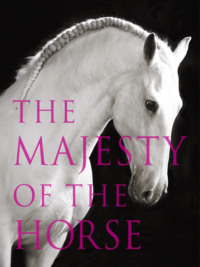
Kitabı oku: «The Majesty of the Horse: An Illustrated History»


CONTENTS
TITLE PAGE
FOREWORD By William Fox-Pitt
INTRODUCTION
1 | NOBLE BEGINNINGS
2 | MARTIAL GRACE
3 | SUBLIME POWER
4 | NEW WORLD SPLENDOR
5 | ENERGETIC GRANDEUR
6 | OUTSTANDING AGILITY
LIST OF SEARCHABLE TERMS
ACKNOWLEDGMENTS
ABOUT THE AUTHOR/PHOTOGRAPHER
CREDITS
COPYRIGHT
ABOUT THE PUBLISHER
FOREWORD
By William Fox-Pitt
The pleasure given to me by horses goes back to my childhood. I was brought up with horses and they have been a huge part of my life ever since. In my small sport of Three-Day Eventing there is no such thing as a typical horse. The variety of the horses that succeed is extraordinary given how specific the sport is. I ride Thoroughbreds, Irish Sports Horses, Belgian and Dutch Warmbloods, Trakehners, Selle Français and Anglo Arabs, most of them usually part bred in one way or another, but it is fundamentally their attitude and athleticism that counts and the good ones are just so generous.
This book is the most fantastic collection, demonstrating what incredible versatility the horse has. His physique, habitat, and duties are so varied and his existence is so entwined with ours—where would we be without the horse?
The compassion of the different breeds is fascinating and I love the expression shown; some wild, some highly trained, some hardy and rough, some relaxed and kind. Astrid and Tamsin have given awareness to several breeds whose existence would be largely unknown, each one being unique in its own way.
We can also see clearly the many ways in which the horse enriches our lives. My favorite is the Kazakh horse. His sense of duty is palpable, his life is tough, and his expression says it all. He clearly knows how vital he is to the livelihood of the Nomadic Kazakh people.
The variety in this fabulous book is sure to engage you whatever the reason you enjoy The Majesty of the Horse.

William Fox-Pitt
Equestrian
INTRODUCTION
The horse is an extraordinary creature, an enigma in an age in which so much has been unraveled. It embodies majesty, beauty, and spirituality, and though shaped by humans for thousands of years, it has retained an intrinsic wildness that remains untouched by domestication. The horse’s spirit, remote and beyond human comprehension, is both magical and humbling.
Horses roamed the earth long before humans did and have witnessed their end countless times on battlefields across the centuries. Of all animals, the horse has had the most profound influence on human history and development, and one that cannot be underestimated. Their influence on human cultures and their key role in wars, transportation, and agriculture lasted long into the twentieth century. Today, they no longer power societies but instead fuel our dreams through pleasure riding and equestrian sports.
Horses have performed at every level of society. They have worked the fields in step with farmers and have been the gifts of kings. They have been tools of political diplomacy and weapons of martial ferocity. Despite their natural instinct to flee danger, horses have fearlessly carried warriors into battle for centuries. Kingdoms have been won, and lost, from the back of a horse. The allure of their beauty, agility, and athletic prowess has made them status symbols and vehicles of power. Monarchs and leaders have aligned themselves with this noble animal, committing their painted and sculpted images to the annals of history as reminders of their own omnipotence.
The horse is man’s great sporting ally as no other animal is. Horses have raced with pounding hearts, leaped obstacles with courage, covered interminable miles with tenacity, and performed dancing steps with grace. They have fought, galloped, endured, and given their all. The horse has become an extension of the human ego, perhaps the greatest testament to the power of this extraordinary animal over the fragility of man’s desires. It is teacher and student, bending to human will, but imparting the greatest lessons in understanding and respect to those who listen.
The Majesty of the Horse follows the changing journey of horses and humans, tracing their spread and development around the world and examining in detail some of the most important and influential breeds. It is a tribute to the magnificence of horses across the globe.
1 | NOBLE BEGINNINGS


There is no other animal that has contributed on such a grand scale to the rise and spread of human culture as the horse. It was not the first animal to be domesticated—this is commonly believed to have been the dog around fourteen thousand years ago—but it has certainly been the most significant to humankind. Pragmatically, the horse has been a decisive and pivotal creature in early human development, but it is also touched by a certain sense of magic, shifting energy, and esoteric spirit that is unmatched in other domestic animals. In all its many shapes and sizes, the horse is a majestic being, a combination of fire and spirit, kindness and intelligence, speed and dexterity. Even when it is tamed and trained, there always remains a tiny spark of something wild.
The ancestor to the horse evolved approximately sixty million years ago in North America and spread down into South America and into Asia via prehistoric land bridges, then across to Europe and down into Africa. Sometime around the end of the last ice age (c. 10,000 years ago), the Bering Strait, a theorized land bridge joining Alaska to Russia, disappeared beneath the sea as waters rose with ice melt, and around one thousand years later horses became extinct in the Americas. It is generally held that horses were domesticated in Eurasia, considered the fountainhead of horse breeds, around six thousand years ago. It was here, and primarily in Kazakhstan and Mongolia, that horse breeding and horse cultures developed, with nomadic peoples spreading across the vast interior and taking their horses with them.
One theory to explain the development of different types of horse cites four primitive glacial and post-glacial horses as the ancestors to today’s horses. These are the Asiatic Wild Horse (Equus ferus przewalskii, or Equus caballus przewalskii), which is the world’s only truly wild horse still in existence; the Tarpan (Equus ferus ferus), which became officially extinct in the early twentieth century, but has been reconstituted using its close descendant the Hucul and Konik; the heavy Forest Horse (Equus caballus silvaticus), now extinct but the probable ancestor to the large, heavy, cold blood draft breeds of Europe; and the Tundra Horse, also extinct and not of great influence on modern horse breeds.
In the twentieth century, three experts on equine prehistory, led by J. G. Speed of Edinburgh, postulated a theory citing a further subgroup of four horse types that could account for all modern horse breeds. Speed suggested that, prior to horse domestication, four types of horse/pony had evolved: the first being Pony Type 1. This small pony (up to 12 hands high) lived in northwest Europe and was primarily descended from the Tarpan. Pony Type 1, also referred to as the Celtic pony, was tough, hardy, and weather resistant; its modern equivalents are the Exmoor Pony and the Icelandic Horse. The second postulated horse type is Pony Type 2, a larger version of Type 1 (up to 14.2 hands high) that lived in the frigid climate of northern Eurasia. This dun-colored, coarse-headed pony resembled the Asiatic Wild Horse, and its modern equivalent can be seen in the Highland Pony, the Norwegian Fjord, and the Noriker. Horse Type 3, one of the most significant of the four, was a desert horse with the desert characteristics that are seen in all modern equivalents. Type 3 was fine-boned and fine-skinned, lean and angular with no excess fat, and extremely resistant to the heat. It lived primarily in Central Asia and accounts for the desert horse breeds such as the ancient Turkmenian and the modern Akhal Teke. Finally, Horse Type 4 was small in stature and light in build, with a delicately chiseled, straight or concave profile and a high-set tail. This horse lived in western Asia and descended most probably from the Tarpan. Its modern equivalent is the Caspian and possibly even the Arabian. Speed’s theory is an oversimplification of horse evolution, but it gives the non-scientist a loose framework with which to consider this complicated subject. Of further confusion is the term “breed,” which is generally used to refer to types of horse that have been selectively bred by man and exhibit distinct characteristics. For purposes here, and to address ancient types of horse with naturally occurring similarities, the word “breed” is applied to both man-made and naturally occurring types with common traits.
There are two primary factors that contribute toward the development of different breeds of horse, and these are geography or environment, and human interference. The earliest horse breeds evolved to meet and thrive within their climatic and geographic habitat, such as the weather-resistant Exmoor pony and the mountain-dwelling Hucul. Following domestication, humans began to take these horses and impose a system of breeding in order to fix certain characteristics to suit their purposes. Sophisticated horse management dates back around three thousand years, and it was practiced by the pastoral nomads of the Eurasian steppes, such as the Cimmerians and the Scythians. Astonishing discoveries in the caves of Pazyryk, Siberia, provide evidence of the Scythian methods. Here, preserved through climatic conditions, numerous horses were found buried. The well-preserved horses exhibited clear types, for riding and draft, and, suggestive of breeding policies, they had also been castrated and fed on grains. Remnants of horse equipment such as saddle cloths, bridles, ornate headdresses for the horses, bits, and whips were also found and shed further light on this extraordinary and highly advanced equestrian culture.
Long before the Scythians, and around five thousand years ago, the nomadic people of the Central Asian steppes had centered their cultures around the horse. Horses were kept in large herds and would have provided a constant source of meat and milk. They were ridden, used for pulling loads, and probably also packed. Horse skin was utilized, sinew made into thread, and bones used as various tools. Importance and wealth were measured according to an individual’s horses. Horses were also entertainment: they were raced, and fast and furious games played.
These ancient Eurasian horse cultures spread, taking their horses and languages with them. In around 3,000 B.C.E., the Indo-European Hittites battled their way into what is now Turkey. The Hittites are credited with producing the first manual on horse training and management, written by Kikkuli c. 1360 B.C.E. In ancient Mesopotamia (Iraq), two important horse cultures existed, the Sumerians in the south whose empire ruled during the third millennium B.C.E., and in the north the Assyrians who held power from c. 2,000 to 612 B.C.E. Assyrian reliefs on the palace walls at Nineveh and Nimrod reveal a culture of expert horsemen who raced chariots, traveled, battled, and hunted from horseback, being able to shoot arrows at a gallop with no saddle. This skill was perfected many years later by the Parthians, who waged battles across the Persian (Iranian) borders. The Parthians were able to shoot arrows behind them (the parting shot) while at a flat gallop on their finely built desert horses, which bore much in common with the ancient Turkmenian, the Iomud, and the Akhal Teke.
Persia (Iran) was an important early center of horse breeding, and Persian horses were much sought after during the time of the Persian Empire (550–330 B.C.E.). In particular, there was the legendary Nisean horse, one of the superhorses of prehistory that was widely prized for use in the military. The Nisean could have developed from crossbreeding between the Tarpan, the Asiatic Wild Horse, Horse Type 4, and Horse Type 3. They were taller and faster than their contemporaries and contributed greatly toward Persian military dominance; it is possible that they were the ancestor of the Akhal Teke and Iomud through the ancient Turkmenian. It was also in Persia that the tiny Caspian horse evolved, a horse breed that is still in existence today. These diminutive animals were widely used in chariot racing and famed for their bravery and speed.
The use of horses in battle to win new territories and expand borders was one of the major factors in early horse breeding systems, because the dominance of land was a priority. Warring nomads such as the Scythians and Parthians, and much later Genghis Khan (c. 1162–1227), waged their wars from the backs of their horses, and consequently needed stock that was quick, agile, brave, and easy to mount. Other ancient cultures, however, adopted different methods. The early Greeks, for example, commonly rode to battle in chariots pulled by small chariot horses, but fought on foot. By around 550 B.C.E., the Greeks incorporated mounted archers into their military strategy, and began to breed larger, heavier horses to carry their soldiers and to pull heavier carts of equipment. Although Greece is not a country whose environment favors horse breeding, the Greeks were highly organized and educated in their endeavors. Most horse breeding took place in Thessaly in northern Greece, where the grass was better quality, and Thessalonian horses became very popular. They were bred for different activities, from riding to draft to packing, and it is believed that the versatile Noriker horse first developed here before being taken by the Romans over the Alps into Austria during their conquests.
With the spread of their empire across Europe, the Romans had one of the most far-reaching early influences over the development of horse breeds. They were not expert horse people, but they were like the Greeks: supremely organized and systematic in their approach to their horses. They bred a wide range of horses for specific purposes and established breeding centers across Europe. As they marched through the continent, they took their horses with them and those of the people they conquered, which led to a wide distribution of different types of horse across Europe. They were greatly impressed by the native British breeds and improved on these, particularly the Welsh ponies. It was during sustained Roman occupation of Britain (c. 43–410 C.E.) that the heavier Welsh Cob is thought to have been developed, and it was also at this time that the magnificent Friesian horse was introduced to British stock, when it was brought over with Friesian laborers to work on the construction of Hadrian’s Wall (c. 122). The Romans came across good horse stock when they conquered southern Italy, and even more so in their conquests of Spain and Numidia, an ancient Berber kingdom in North Africa. Spanish or Iberian horses and those of North Africa have had one of the most significant influences on modern breeds. The Roman Empire relied on its horses for long distance transportation of soldiers and supplies and for the delivery of important messages. Their horses had to be tough, fast, and strong; they developed horses of heavier weight and size, the predecessors to the modern draft horse, and horses of incredible speed, which were used in chariot and ridden races.
Across Central Asia, nomadic cultures improved on their horses, too, although they remained small in stature and unprepossessing to look at. Appearance was not a primary objective: these people needed horses to sustain their way of life, and, as such, the horses were bred as tough, fast, and able to subsist on small rations in a harsh environment. Warring tribes plagued the borders of China, which led both to the building of the fortification walls (The Great Wall) along the northern border and to the Chinese implementing their own systematic horse breeding program. The Chinese made enormous advances in horse harnessing, including developing the breast strap harnessing system for use in driving horses and the single horse hitch with lateral shafts. They were the first to drive in tandem and to develop the stirrup. The actual ancient likeness of Chinese horses can be seen in the tomb of Qin Shi Huang (259–210 B.C.E.). Within the tomb, around six hundred life-sized terracotta horses with carriages and soldiers were discovered. The horses bear much in common with Mongolian stock, although are marginally taller, and appear to be well fed and strongly built.
In the middle of the second century B.C.E., there was a concerted (and bloody) effort to improve Chinese horses under the rule of the Emperor Wu Ti (141–87 B.C.E.). He embarked on several missions to “obtain” large numbers of the much sought-after “Heavenly Horses” of Ferghana. These horses are believed to have been the ancient Turkmenian horse and were quality desert animals with a great turn of speed. Improving the quality of the Chinese horse was necessary both to aid military endeavors and for transport, as well as for entertainment purposes. Breeding exercises reached a peak during the Tang dynasty (618–907). By this time, the Chinese silk trade was well established, and horses were frequently traded for Chinese silk and tea, which saw the introduction of “foreign” horses into the Chinese horse industry. The founders of the Tang dynasty had intermarried with nomadic tribespeople who had become integrated into society. With the horse of central importance to the nomads, this value was in turn transferred onto the Tang, and it became the most horse-oriented period of Chinese history.
Horses from Ferghana and other Central Asian states were used on the mostly Mongolian-derived stock of the Chinese to improve the quality and size of the horses. It was also during this period that polo was introduced to China, possibly by traveling dignitaries from Persia. Horses became not only a means to an end for battle and transport, but suddenly they were also prized for their looks, elegance, speed, and ability to play polo. Surviving pottery models of Tang dynasty horses reveal a horse of great beauty, quite heavy through its frame, but light in the leg, and with a well-set and carried head and neck. Their tack was elaborate, and the horses were often decorated with ornate breast straps and cruppers in a manner not dissimilar to that seen in European horse equipment of the Middle Ages.
While the Tang dynasty flourished in China, farther west the Moorish invasions were sweeping across Europe. The threat of domination by the Islamic Empire led to a rapid turn around in floundering European cavalry tactics and, as a consequence, to the development of an entirely new warhorse, discussed in Chapter Two.
ASIATIC WILD HORSE
PREHISTORIC – MONGOLIA – RARE


HEIGHT
Up to 14 h.h.
APPEARANCE
A small, stocky horse of primitive appearance with a large, coarse head. Stocky, muscular neck, with a distinctive short, upright mane. Shoulders are straight, withers are flat, and chest is deep. Short, sloping croup and short legs with strong, dense bone. Hooves are narrow and oval, but very tough.
COLOR
Dun, often yellow, sometimes with dark markings such as a dorsal stripe and stripes on legs.
APTITUDE
Undomesticated
SOUTHWEST OF MONGOLIA’S CAPITAL, Ulaanbaatar, in the foothills of the southern Khenti mountain range, stretches the magnificent Hustai National Park. Here, amid the sublime steppe landscape of rugged hills, open river valleys, and dense forest, roams the Asiatic Wild Horse, Przewalski’s Horse, or the Taki as it is known to the local people. The herds of these small, primitive horses that live within the sanctity of the park represent a phenomenal international achievement in the reintroduction of these animals to their original wild habitat. Despite their unprepossessing looks, these horses are among the most important and are certainly the oldest living breed of horse that still exists in its original form. They also provide a link between modern horse breeds and the earliest horses that roamed the prehistoric landscape.
The breed hails from the vast steppes of Central Asia and in prehistoric times made its way into Europe, where its likeness was frequently recorded in cave paintings. From extraordinary images such as those at the Chauvet Cave in the Ardèche region in France, which date back approximately 30,000 years, we have a clear vision of just how little the breed’s appearance has changed in the intervening millennia.
The Taki is small, rarely more than 13 hands high, and typically has a coarse and heavy head. The coat is dun with dark legs (which can often exhibit zebra-type stripes), a dark mane and tail, and a pale underbelly. Unlike other horse breeds, the mane grows upright to a length of approximately 8 inches (20 cm), and the tail is more similar to that of a donkey, with short hairs on the upper part and long hairs at the bottom. Most significantly, these horses have sixty-six chromosomes as opposed to the sixty-four of the domestic horse. These differences from domestic horse breeds, combined with the intractable nature of the Taki, which is almost impossible to tame on any level, have led to some doubts that it is a direct ancestor to modern breeds. However, despite the difference in chromosomes, the Taki is able to reproduce with the domestic horse, and the resulting progeny are fertile, although they have only sixty-five chromosomes. When further crossed to a domestic horse, the progeny return to a sixty-four chromosome count. Given the extent and predominance of the Taki from prehistory and throughout the development of the horse, it seems likely that they have contributed at a founding level to some of the more primitive Eurasian horses such as the widespread Mongolian and the horses of Tibet.
Given the extent of its history, it is not surprising that there are many conflicting accounts of the Taki, whose past remains somewhat enigmatic. During pre- and ancient history, these horses were widespread through Central Asia and Europe, but as human cultures flourished and spread, the stout little horses found their natural environment shrinking. Because of their dominant wild nature, it is unlikely that they were favored for capture and domestication, though it is possible that foals might have been domesticated if caught at a young enough age. Far more significant was their value as a consumable, and as a consequence they were widely hunted, forcing them to retreat into increasingly remote areas.
It is unclear when the Taki first disappeared from central Europe, but the first documented mention of it was in the fifteenth century when it was described by Bavarian nobleman Johann Schiltberger (1381–c. 1440) in his unpublished memoirs. Schiltberger had been captured by the Turks in the Battle of Nicopolis in 1396 and passed to the great warlord Timur (1336–1405). After Timur’s death, Schiltberger was given to Chekre, a Tatar prince whom he accompanied on a number of missions across Central Asia. It was while he was with the prince in the Tien Shan mountains that he wrote about the Taki horses, providing the first known reference to them in literature.
The next mention of the horses occurs some three centuries later by John Bell (1691–1780), a Scottish adventurer and doctor. Bell was part of an embassy to China through Siberia and the Tatar deserts, and then attended Peter the Great (1672–1725) on his expedition to Derbend and the Caspian Gates; he recounted his experiences in 1763, providing a striking account of the Taki seen in southwestern Siberia: “There is, besides, a number of wild horses, of a chesnut color; which cannot be tamed, though they are catched when foals. These horses differ nothing from the common kind in shape, but are the most watchful creatures alive.”
It was, however, Nikolai Przewalski (1839–88), explorer and colonel of the Russian Imperial Army, who is most commonly cited as rediscovering the breed when he observed them on the edge of the Gobi Desert, picking their way through the Tachin Schah mountains in 1879. Przewalski was given a Taki skin by the local Kyrgyz people, and he in turn gave the skin to the zoologist J. S. Poliakov, who was the first to give the breed its scientific description and named it Equus ferus przewalski. As news of the existence of this wild breed spread, it became a sought-after specimen for collectors, which later proved to be of great significance for the breed’s survival.
In 1882, four Przewalski horses were captured by Russian naturalists in eastern Dzungaria close to the Gobi Desert, and in the following few years more horses were caught, including thirty-two for the Duke of Bedford. In 1902, the first pair of Przewalski horses were shipped to New York for the New York Zoological Society. The capture of these Przewalski horses and their subsequent arrival in zoos and private parks in Europe occurred at an opportune moment; the horses had been on the brink of extinction, and all living Przewalskis today are descended from approximately thirteen of those caught. The last Przewalski living in its natural habitat was seen in 1968 in western Mongolia—the small, prehistoric horses had been hunted into extinction in the wild.
Though Przewalski horses still existed in captivity, they were hard to breed in this environment, and by the 1970s the numbers of horses in captivity were dangerously low, prompting a move to reintroduce the Przewalski to its natural environment and return the horse to its roots. Several release programs were implemented, including one by the Przewalski Horse Reintroduction Project of China, who released a group into the Kalamely Mountains in the Xinjiang region of China in 1985.
Another process to save the Przewalski horse was begun in the late 1970s, with the formation of the Foundation for the Preservation and Protection of the Przewalski Horse (FPPPH) by Jan and Inge Bouman in Rotterdam, who organized a careful breeding plan of horses from different captive populations and developed a computerized studbook. Over time, the FPPPH established a number of semi-reserves in the Netherlands and Germany where the horses could be kept in large areas in semi-wild conditions while still being carefully monitored. In 1990, after several years of searching, deliberation, and international diplomacy, the Hustain Nuruu area of Mongolia was agreed upon as the right place for the Przewalski reintroduction project, and two years later, the FPPPH and a dedicated breeding program from Askania Nova, Ukraine, combined to release two groups of Przewalski horses back into the wild. The area was designated a national park in 1997. Thankfully the reintroduction of the important Przewalski has been successful, and in 2008 the breed was reclassified from being “extinct in the wild” to “critically endangered,” a significant achievement.
Although the Przewalski horse has suffered a tumultuous history and survives in small numbers, its relative the Mongolian horse thrives across the steppes of Central Asia and has played a key role in the development of many horse breeds through Asia and Europe. This small, tough horse may lack beauty and refinement, but it makes up for this with its striking constitution and the enormous influence it has had on other horse breeds by passing along its tremendous stamina and hardiness. Like the Przewalski, the Mongolian is primitive in appearance, often with a heavy, coarse head, and is notably stocky. The horses, which play a central role in nomadic life on the steppes, are bred and kept in large herds and are perhaps the ultimate of versatile breeds, used for draft purposes, riding, racing, meat, milking, and sports.
TARPAN
PREHISTORIC – POLAND, RUSSIA – EXTINCT IN TRUE FORM

HEIGHT
Up to 13.2 h.h.
APPEARANCE
A heavy head with a convex profile and long ears that angle slightly to the outside. Short neck, deep chest, flat withers, and a long back with a sloping croup. Shoulders are well conformed and sloping, and legs are long, fine, and notably strong.
COLOR
A primitive dun or grullo, with a dorsal stripe, black lower legs, and often zebra markings.
APTITUDE
Riding, light draft
THE PREHISTORIC CAVE PAINTINGS in Lascaux, France, depict, with astonishing detail, two very different types of horse. One type strongly reflects the characteristics of the Asiatic Wild Horse (Przewalski); the other type, seen in a striking procession of three fine-limbed, elegant horses, bears much in common with another of history’s important breeds, the Tarpan.
The Tarpan (Russian for “wild horse”) occupies a central role in the development of horse breeds and is widely considered to be a closer relative to the modern horse than the Przewalski. Despite their physical differences, the two breeds have occasionally been confused, primarily because both wild horses roamed across a slightly similar area. The Tarpan spread across western Russia and throughout Eastern Europe and formed the basis for the chariot-driving stock of ancient cultures, from the Greeks to the Egyptians, Assyrians, Scythians, and Hittites. The prepotency of its influence can be seen particularly in the light horse breeds of Eastern Europe and Eurasia, whereas the Przewalski’s influence spread through Central Asia, down into China, and east to Japan. In particular, the Tarpan can be connected to the magnificent but diminutive Caspian horse, though perhaps of greater significance is the link believed to exist at a founding level between the Tarpan and the desert breeds of Central Asia, and possibly even the Arabian. In Europe, the Tarpan’s influence can clearly be seen in the Portuguese Sorraia—which in turn formed the basis for the majestic Iberian breeds—and in the Romanian Hucul and Polish Konik.
The Konik is the closest descendant of the Tarpan, to which it bears a strong physical resemblance. In fact, it is largely to the Konik that the modern-day Tarpan owes its existence. Like the Przewalski, the Tarpan in its pure form was hunted to extinction—the last wild Tarpan was accidentally killed in 1879 during a capture attempt, and the last Tarpan in captivity died in a Russian zoo in 1909. Several attempts have been made to breed a reconstituted Tarpan, including one by the Polish government, which established breeding herds from stock that most closely resembled the Tarpan. These herds were primarily made up of Konik ponies, and in 1936 Polish professor Tadeusz Vetulani used these Koniks to establish a program to try to re-create the Tarpan. Around the same time, Berlin Zoo director Lutz Heck and Heinz Heck of the Munich Zoo also began a breeding regimen using Konik, Icelandic, and Gotland mares with a Przewalski stallion. Eventually a fixed type of Tarpan physicality was established, with the horses referred to as Heck horses. A Heck stallion and two mares were imported to the United States in the 1950s, where they now have a dedicated following. A further horse of Tarpan characteristics, the Hegardt, was developed in the United States by Harry Hegardt (and previously Gordon Stroebel) based on crossing Mustangs with Tarpan-like ponies, also probably of Konik descent.
Despite the Tarpan’s importance, it was not actually recorded and described until around 1768, when German naturalist Samuel Gottlieb Gmelin (1744–74) captured four of the wild horses in Russia. He provided a detailed account of its appearance, which was further recorded in a drawing of a Tarpan colt in 1841. In 1912, Helmut Otto Antonius, director of the Scholbrunn Zoological Gardens in Vienna and one of the first scientists to recognize the importance of the Tarpan in the development of modern domestic horse breeds, named the Tarpan Equus caballus gmelini in recognition of Gmelin’s description; now the breed’s correct scientific name is accepted as Equus ferus ferus.
HUCUL
ANCIENT – POLAND, ROMANIA, CZECH REPUBLIC, SLOVAK REPUBLIC – COMMON

HEIGHT
Up to 14 h.h.
APPEARANCE
Robust in build with a rectangular body frame; short, strong, clean limbs; and an attractive head with large, kind eyes. Strong back, with a well-formed, muscular croup. Heavy through the neck and front end, with a broad, deep chest.
COLOR
Chestnut, bay, black, or grullo, often with a dorsal stripe and zebra markings on the legs.
APTITUDE
Riding, light draft
STRETCHING IN A STEADY ARC across central and eastern Europe are the Carpathian Mountains, Europe’s largest mountain range and home of the highly prized Hucul, or Carpathian Pony. It was here among the rugged peaks and diving valleys that the Hucul, a direct descendant of the wild Tarpan, developed. It is also a meeting point of several countries, as the borders of Romania, the Czech Republic, Poland, Hungary, Ukraine, Serbia, and Slovakia come together, and many of these countries either claim the origin of the Hucul or raise and breed the hardy pony. The breed’s name derives from the Hutsuls, a Ukrainian culture of highlanders who rely heavily on their horses and whose history goes back many centuries. Despite being their namesake, however, the Hucul pony existed long before and was bred by the mountain tribes of Dacians, for whom the tough and enduring ponies were essential in everyday life, for transport, packing goods, and in warfare. Though they were and are ridden, the Hucul was most widely used in a draft capacity early in its history and was able to negotiate the forbidding, mountainous terrain where other horses failed. Bas-reliefs of Hucul-like ponies—showing little difference in physicality from their present form—appear on Roman monuments depicting battles between the Romans and Dacians. Even when the Dacians fell to the Romans in the battle of Sarmizegetusa in 106 C.E. they continued to breed their indomitable Hucul ponies.
Once the breed was established, the inhospitable and inaccessible mountain habitat of the Hucul contributed to maintaining its purity. The Hucul, which is noted for its quality, is thought to have developed directly from the Tarpan (it is described in early accounts as the “mountain Tarpan”), as well as through breeding with Oriental horses, Mongolian stock introduced to the area by nomadic tribes from Central Asia, and quite possibly even the Asiatic Wild Horse. Other than these relatively infrequent outside influences, the Hucul remained largely untouched until several attempts to improve the breed were made in the late nineteenth century through the introduction of other blood. Despite this, the innate Hucul characteristics—its extreme and virtually unequaled hardiness, its strength in relation to its size, and a certain air of quality not always seen in native mountain breeds—have perpetuated.
The Hucul is particularly prized in Poland and Romania, and it was in Romania that the first specialized stud farm was established at Rădăuţi in 1856, the primary aim of which was to produce Huculs for use in the Austro-Hungarian army. After some years, the stud activities floundered, but they were reactivated in 1876, and the program expanded to establish Pietrosul, Hroby, Ghoral, Gurgul, and Oushor bloodlines, with Ghoral being one of the most important and prodigious.
In 1922, thirty-three Huculs were sent to Czechoslovakia, where a new line of Gurgul horses was established, with the breeding still focused on producing horses for use in the military. The breed suffered enormous losses during both world wars, and after World War II, in light of increasing mechanization, Hucul numbers dwindled rapidly. In the 1950s, the State Forest Directorate at Murán Plain National Park in Slovakia made efforts to increase breed numbers, and then in 1972 the Czech Republic’s Association for Protection of Nature and Landscape founded the Hucul Club to implement a more effective preservation program. The initiative has been a great success, and Poland, Romania, Ukraine, Hungary, and Austria have all joined in, while the Hucul continues to be bred in Russia.
AKHAL TEKE
ANCIENT – TURKMENISTAN – RARE


HEIGHT
14.2–16 h.h.
APPEARANCE
Long through the body, narrow, and slight; fine boned with a sloping croup. The neck is long and slender, and set and carried high. Distinctive head with a dry “desert” quality, slightly hooded eye, and a narrow face. The mane and tail hair is thin and sparse and the coat very fine and silky.
COLOR
Great range, from metallic dun to black, bay, cream, or gray.
APTITUDE
Riding, racing, endurance racing, showing, dressage, jumping
THE AKHAL TEKE IS ONE OF THE OLDEST, most important, and purest of all living horse breeds, and yet it remains little known to the larger public. The significance of this breed, not only to the development of other light horse breeds from the Arabian to the Thoroughbred but also in historic and cultural terms, is monumental.
The breed is a descendant of the now extinct ancient Turkmenian, which was in effect the superhorse of pre- and ancient history. These horses evolved in the huge region of Turkestan, which stretches across Central Asia from the Gobi Desert in the east to the Caspian Sea in the west, and from Siberia in the north to Iran, Afghanistan, and Pakistan in the south. This area is considered the fountainhead of horse breeds, and one of the earliest areas where horse domestication occurred. These agile horses were subjected to both selective and indiscriminate breeding by different tribes, but the overriding qualities of speed, size, and endurance were at their foundation, and these are the qualities that have remained. They were also quite different from, and superior to, the small, stocky horses of the steppes, as typified by the Mongolian horse.
These tall, quick Turkmenian horses bear a close physical similarity to the postulated Horse Type 3 from which they most probably evolved. The Turkmenians’ speed and toughness made them highly sought after in the ancient world, since they provided an enormous advantage to the warring nomads of this vast steppe landscape. Through the fluid nature of early nomadic cultures, these horses were distributed across a vast area, and word of their excellence soon spread. They are known to have formed an important part of the horse culture of the Scythians, ancient warring nomads who originated in Persia (Iran), and are recorded as being used for racing from around 1000 B.C.E. Five hundred years later the same horses defined by their body type and attributes were widely used by the Bactrian horsemen in King Darius of Persia’s cavalry. The Parthians from northeastern Iran, famous for their horsemanship and battling alike, rode Turkmenian horses as they waged wars across the steppe territory from the seventh century B.C.E., and in Greece Alexander the Great’s father, Philip II of Macedon (382–336 B.C.E.) had acquired large numbers of Turkmenian horses from Ferghana, an area in eastern Uzbekistan that was a famous horse-breeding center in the ancient world. Alexander used these horses in his army, and it is widely thought that his own famous horse, Bucephalus, who is often described as a Thessalonian, was in fact a Turkmenian. Alexander went on to obtain his own huge herd of horses from the Persians that when crossbred to native European stock produced larger, stronger, and quicker animals. These crossbred horses were later in widespread use by the Roman cavalry, which in turn spread the Turkmenian blood across Europe.
The horses from Ferghana were held with special reverence in the ancient world. They were reputed to be the fastest horses of the time and often had a golden, metallic sheen in their coat, such that they were frequently referred to as the “Heavenly Horses” or “Golden Horses.” In fact, the coat color so prized in the ancient world is still a predominant feature of the Akhal Teke. These Golden Horses further exhibited “blood sweating” (the appearance of sweating small droplets of blood), which added to their magical allure. Many theories have surrounded the blood-sweating condition, but the most plausible explanation has been put forward by Louise Firouz (who died in 2008), a leading Caspian and Akhal Teke expert, who suggested that it is caused by a parasite that lives in the Gorgan and Ferghana rivers. At a certain time in the life cycle of the parasite, it hatches out through the skin of the infected animal, causing small spots of bleeding.
Given the extent and distribution of the ancient Turkmenian it is not impossible for this breed to have greatly contributed to the development of the Arabian, particularly the Muniqi (or Munaghi) Arabian, a racing strain. In view of the very great antiquity of the Turkmenian it is likely that this horse was one of the earliest hot-blooded horses, along with the Caspian, that evolved within the same geography. With the spread of this horse through Turkestan and down into Saudi Arabia and across to Africa it is a small step to consider it influencing the development of the Arabian and also the North African Barb, which in turn was fundamental to the development of the Iberian breeds. The Turkmenian was also influential in the development of the English Thoroughbred through the Thoroughbred foundation sire, the Byerley Turk, who is thought to have been a “Turk,” and through the large number of Turkmenian horses imported to England during the seventeenth and eighteenth centuries, when the Thoroughbred was evolving. The Turk, or Turkoman, breed is one of the modern descendants of the ancient Turkmenian horse, which also gave rise to the Akhal Teke and Iomud. Confusingly, the terms Turkoman and Turkmenian are often interchanged, with horses bred in Turkmenistan referred to as Turkmenian and those bred in Iran referred to as Turkoman. There is, however, little difference between them.
The Akhal Teke, directly descended from the ancient Turkmenian, and in a sense the modern reincarnation of this breed, has with little exception been bred pure. In the twentieth century there was the introduction of some Thoroughbred blood to the Akhal Teke, to try to increase the size of the breed, but this was a largely unsuccessful experiment. The Akhal Teke (meaning literally “pure” or “oasis” from the Teke tribe) has been bred by the Turkmene people systematically and stringently, living in the difficult desert climate in the oases of Turkmenistan. Ashkhabad, the capital of Turkmenistan, has been a center of breeding for the Akhal Teke and its ancestors since 1000 B.C.E. and is still a major breeding center, although the horses are also bred in Kazakhstan, Dagestan, Russia, and in the northern Caucasus, as well as in small pockets of the United States, the United Kingdom, and parts of Europe. Traditionally, only the fastest progeny were bred so that the qualities of speed and endurance are ultimately fixed within the breed. The horses are quite unique in appearance, particularly when compared with the European warmblood. The Akhal Teke should be a “meatless” animal: there should be no excess fat, and the horse’s muscle mass should be long and unpronounced. To condition the horses, the nomadic tribesmen would wrap them in thick felt blankets to sweat them out during the day, and work them in the mornings and evenings. The young stock would be started at just under two years old even though the breed does not mature until around five.
The Akhal Teke’s endurance is legendary; no breeds can match it in terms of speed and stamina. Like its relative the Iomud, the Akhal Teke is also able to exist on minimal water and food. Although most famous as an endurance breed, the Akhal Teke is extremely athletic and has a natural aptitude for jumping. The horses have also excelled in dressage, as demonstrated by Akhal Teke stallion Absent’s gold medal win in 1960 in Rome—they are one of the most talented and least recognized of breeds.
The Akhal Teke has tragically suffered a huge reduction in numbers, but efforts to stabilize and increase the breed since 1980 have been relatively successful, although it can still be considered rare.
Rarer still is the Iomud, a breed that is a close relative of the Akhal Teke but little known outside Turkmenistan, its country of origin. The Iomud has much in common with the Akhal Teke: it is a desert-bred horse with tremendous endurance and stamina, though it lacks the Akhal Teke’s quality and is not as fine or elegant. The Iomud has a heavier frame with a thicker, shorter neck and an attractive head. Its coat is fine and most often gray or chestnut, and the mane and tail hairs are sparse. Though not as fast as the Akhal Teke, the Iomud is famed for its quick recovery rate after endurance racing.
The Iomud’s extreme qualities are a product of both early breeding and the arid desert and semi-desert regions in which the horses are raised. As a result of these harsh conditions, Iomuds are extremely tough and able to exist on minimal rations of water. Early in the breed’s development, there would have been crossbreeding with other hardy breeds from the Central Asian steppes, such as the Mongolian and Kazakh, and it is likely that this influence continued throughout its history. There has also been some Arabian influence, and since the 1920s some Akhal Teke blood has been introduced to help preserve and improve the breed. Today, however, numbers are extremely low.
CASPIAN
PREHISTORIC – IRAN – RARE

HEIGHT
10–12 h.h.
APPEARANCE
A small, fine head with an Arabian-like look; the occipital bone gives a slightly hooded look. Nostrils are wide but low on the nose and the ears tiny. A very sloped shoulder and very defined withers, with markedly slender though dense bone in their legs. Extraordinarily tough, oval-shaped hooves.
COLOR
Bay, chestnut, gray, or black.
APTITUDE
Riding, light draft, showing, dressage, jumping
THE TINY, BEAUTIFUL CASPIAN is totally unique among horse breeds, and one of the oldest and most important breeds still in existence. All breeds of light horse are thought to descend from the Caspian and its ancestors, and as such it provides a tangible link between early Equus and the modern horse.
These exquisite creatures lived undiscovered in northern Iran for centuries, subsisting among the rocky mountains and dense forests and leading a largely undisturbed life until they were “rediscovered” in 1965 by the American Louise Firouz, who had established a small riding school in Iran. It was on a trip to the southern shores of the Caspian Sea, looking for suitable ponies to use in her school, that she came across three magnificent but tiny horses. Despite their diminutive size, they were decidedly horses and not ponies, exhibiting horse-like conformation and character; today the Caspian is still recognized as a small horse, not a pony. Firouz realized the importance of these animals, which bore a striking resemblance to those seen on the Seal of Darius (c. 500 B.C.E.) and other ancient artifacts, and instigated a five-year study of the horses in their environment. Through dedicated searches and study it was estimated that approximately fifty of these horses were living all along the south coast of the Caspian Sea. Because the area in which they were found was so large, it was also conjectured that they could not be totally purebred, but had retained the strong genetic base of their predecessors.
Extensive study and research has been undertaken into the history of the Caspian, and skeletal examination has revealed that the horses have certain unique characteristics among modern breeds, and that they also bear a significant resemblance to the postulated Horse Type 4, theorized by leading experts on equine prehistory F. Ebhart, J. G. Speed, E. Skorkowski, and R. d’Andrade. Further, many artifacts, such as the Seal of Darius, which depicts the Persian king in a chariot pulled by two minute but magnificent horses, and artifacts of the Oxus Treasure (fifth to fourth century B.C.E.) testify to the existence of a very small, fine and beautiful breed of horse in use during prehistory. Tracing this link reveals that it is possible that the Caspian and its ancestors were also the ancestors to the Arabian horse and the breeds of fine, desert horses that ranged across Eurasia from prehistory to the present. The frequency with which they are mentioned or appear in pre- and ancient history is not insignificant and attests to the great value placed on them. Despite their small size they were widely used for chariot racing and were as prized for their speed and endurance as they were for their appearance.
Unlike other breeds of horse the Caspian reaches its full adult height very rapidly, often within the first six months of life, and then gradually fills out and matures. They reach sexual maturity at under two years old, and most significantly mares tend not to ovulate after foaling for up to a year, which makes continuous breeding programs difficult. Louise Firouz established a stud for breeding the Caspian in Iran, but in 1976 her herd was attacked by wolves. To ensure the safety and continuance of the breed, which was extremely rare at that stage, some of her herd were flown to a stud in Shropshire, England, where they were successfully settled. Today the Caspian horse is a greatly refined model of its prehistoric ancestor, but retains the essential elements that make it such an extraordinary animal. They are wonderful athletes and make fantastic show ponies, but of more importance is their immense historic significance and their impact on the development of modern light horse breeds.
Ücretsiz ön izlemeyi tamamladınız.