Kitabı oku: «The Unlikely Adventures of the Shergill Sisters»


Copyright
Published by HarperCollinsPublishers Ltd
1 London Bridge Street
London SE1 9GF
www.harpercollins.co.uk
First published in Great Britain by HarperCollinsPublishers 2019
Copyright © Balli Kaur Jaswal 2019
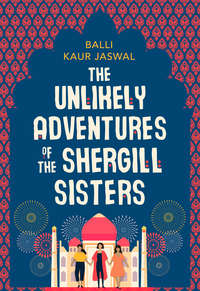
Jacket design: Holly MacDonald © HarperCollinsPublishers Ltd 2019
Jacket illustration © Shutterstock.com
Balli Kaur Jaswal asserts the moral right to be identified as the author of this work.
A catalogue copy of this book is available from the British Library.
This novel is entirely a work of fiction. The names, characters and incidents portrayed in it are the work of the author’s imagination. Any resemblance to actual persons, living or dead, events or localities is entirely coincidental.
All rights reserved under International and Pan-American Copyright Conventions. By payment of the required fees, you have been granted the non-exclusive, non-transferable right to access and read the text of this e-book on screen. No part of this text may be reproduced, transmitted, down-loaded, decompiled, reverse engineered, or stored in or introduced into any information storage and retrieval system, in any form or by any means, whether electronic or mechanical, now known or hereinafter invented, without the express written permission of HarperCollins.
Source ISBN: 9780008209933
Ebook Edition © June 2019 ISBN: 9780008325459
Version: 2019-04-05
Dedication
For Asher
Contents
Cover
Title Page
Copyright
Dedication
Prologue
Chapter One
Chapter Two
Chapter Three
Chapter Four
Chapter Five
Chapter Six
Chapter Seven
Chapter Eight
Chapter Nine
Chapter Ten
Chapter Eleven
Chapter Twelve
Chapter Thirteen
Chapter Fourteen
Chapter Fifteen
Chapter Sixteen
Chapter Seventeen
Chapter Eighteen
Chapter Nineteen
Chapter Twenty
Chapter Twenty-One
Chapter Twenty-Two
Chapter Twenty-Three
Chapter Twenty-Four
Chapter Twenty-Five
Epilogue
Acknowledgements
About the Author
Also by Balli Kaur Jaswal
About the Publisher
Prologue
My dearest children,
If you are reading this, you know the end has finally come for me. I hope that our final moments together were peaceful and that I had a chance to tell each of you how much I love you. If not, I hope that you know how much you have enriched my life. I am so very proud of each of you and the individual paths you have trekked in this world. I am blessed to have been witness to your triumphs and challenges, your heartaches and your successes. Guiding you from infancy to adulthood allowed me to live life over and over again, and in this way, I feel that I have stepped into so many worlds in the course of my brief stay in this universe.
There are matters to be discussed of course, involving the will and my estate, but these will come later. I trust that the lawyers will discuss the inheritance and the division of property and assets with you after the other formalities are taken care of. If you would like to be informed ahead of time, please see the attached.
Please take care of yourselves and each other. Make time, not just on special occasions, to come together and enrich your bond as a family. I have learned that the most important thing in life is that we show appreciation to our loved ones. Remember that nothing matters more than this.
This was the letter that Sita Kaur Shergill overheard the old woman in the next bed dictating over the phone. A few times, her voice quavered and she had to pause to sigh and sniffle. Sita had turned down the volume on her television to listen to the part about the lawyers – she was most interested in what this woman was leaving to her children, but ‘the attached’ was not available on this side of the partition. She had seen the children on their visits – two middle-aged sons who were possibly twins with vastly different diets and a handsome blonde woman who always repeated the same soothing words, ‘We’re here, Mum. We’re here.’ They often arrived separately but left together, squeezing each other’s shoulders and making light conversation about parking spaces or the declining quality of the hospital canteen’s coffee.
Sita pressed the buzzer on her remote control and when the nurse arrived, she requested a pen and piece of paper. These were the earliest hours of the morning, before visitors were allowed. It was the best time to think about dying. The pain encompassed her entire body, radiating from her toes to her temples and vibrating in her bones. Despite the morphine, the pain was always visible – she saw it edging in the shadows of her vision on the best days and wringing her frail body like a towel on the worst. Today she was feeling strong enough to sit up; the letter from the woman in the next bed had motivated her, and by some miracle, the nurses attended to her request within the minute.
My dearest daughters, she began. She stopped and frowned. When had she ever addressed her children as dears? She crossed out the line and began again. To Rajni, Jezmeen and Shirina. There – a command for their attention. She used to stand at the foot of the stairs and shout all three names even if she only wanted one of them to come down; she could always find something for the other two to do once they arrived. It only worked for a while, then Jezmeen started calling back: ‘WHICH ONE OF US SPECIFICALLY?’
To Rajni, Jezmeen and Shirina:
By now, I am dead. It is just as well because I’ve had enough of this ghastly life – all this working and suffering and trying to take care of myself for no bloody reason. Please enjoy your health while you have it because once your body betrays you, no comforts in the world will make up for your loss.
No, she couldn’t leave them with that. It was too honest. If these were her last words, they’d never forgive her. She folded the sheet and set it on her side table, weighing it down with the pen, and then she closed her eyes. How did she want to be remembered? She had been a wife, a mother, a widow and a grandmother. Sikh funerals didn’t include eulogies, so her daughters would be spared the task of scraping together a list of her meagre achievements. On some days, she thought she knew which of her daughters would remember her least kindly and on better days, she assured herself that all of them would at least agree that she had tried her very best.
Sita pressed the button to call for the nurse again. It took a while this time, but eventually the rail-thin girl with the tattoos and half her head shaved arrived. She was not as friendly as the Jamaican nurse who sometimes squeezed Sita’s hand and said, ‘You rest now,’ but she smiled when Sita asked her: ‘How old are you?’
‘I’m twenty-seven,’ she replied. There were zig-zag patterns shaved into the sides of the girl’s scalp. Sita wondered what man found this sort of thing attractive.
‘Have you ever been to India?’ she asked.
‘No,’ the nurse said, a bit regretfully, which pleased Sita.
‘If your mother asked you to do something for her, no matter what it was, would you do it?’ she asked.
The nurse slid Sita’s table down the bed so she could tug at the edge of the blanket, which was bunched up by her feet. Her fingers grazed the knuckles of Sita’s toes. ‘Of course I would,’ she said. ‘Now, is there something you need, because—’
‘What’s your religion?’ Sita asked.
Her question was met with narrowed eyes. ‘I do believe that’s a very personal question to ask.’
Sita frowned. There was a reason she liked the Jamaican nurse better. She wore a thin gold cross that hung just beneath the V-neck of her scrubs. ‘Ho, Lord,’ she wheezed quietly, stretching her back at the end of a long shift.
‘Can you hand me my pen and paper, please?’ Sita asked. As the girl reached into the drawer next to the bed, Sita’s heart leapt into her throat. Not there!
‘It’s right there, on the table,’ Sita snapped, pointing at the table, now out of her reach. Although the nurse was unlikely to pluck Sita’s jewellery pouch from where it was nestled between a prayer book and her mobile phone charger, Sita had lived long enough to know that you could never be too careful. The girl moved the table back and then left, probably to grumble and tell the other nurses that they were right, old Mrs Shergill needed to cark it already. Last week, Rajni had stormed into the nurses’ station and told them off for leaving Sita shivering during a particularly agonizing episode. ‘I don’t care if she’s already got a blanket, get her another one,’ Rajni nearly shouted, making Sita want to weep with gratitude and also chastise her daughter for making a scene.
The pain was inching into her body now, and she could sense that it was going to be a bad day. Her daughters would visit this afternoon – hopefully all three of them, since Rajni had called Shirina and informed her to fly over at once when it appeared that Sita’s remaining days were down to single digits. She had to write this letter before the strength leached out of her.
To Rajni, Jezmeen and Shirina:
If you remember correctly, when I was first diagnosed with cancer, I wanted to go to India to do a pilgrimage to honour the principles of our great Gurus. You and the doctors convinced me that this was a bad idea because my health was already so fragile, but I think it would have enriched my spirit, if not my physical condition.
I am attaching a list of the places that I would like you to visit on my behalf, after I am gone. They are in Delhi, Amritsar and beyond. The whole journey will take a week. You should go together and do all the tasks as instructed: seva, to serve others and preserve your humility; a ritual sarovar bath, for cleansing and protecting your soul from ailments; and a trek to the high peaks of spirituality, to feel appreciation for that body which carries you in this life. I would also like my ashes to be scattered in India.
There are also some places I’d like you to visit because I won’t have the chance to do so. Simple pleasures, like watching the sunrise at India Gate, and sharing a humble dinner together. I will outline the itinerary in more detail on the next page. Please do this for me. It will be a way of completing my journey in this world and continuing yours.
Love,
Your mother, Sita Kaur Shergill.
Sita’s vision began to blur as she read over the letter. There it was, the searing sensation in her bones. She squeezed her eyes shut and clutched the sides of her mattress. There was only so much morphine the nurses could administer in a day and no legal dose seemed to be enough to wash it all away. ‘We’re here, Mum, we’re here,’ she imagined her daughters saying, just like the blonde woman, as she presented the letter to them. Their faces would be awash with tears and they would take each other’s hands, united for once.
As the wave of pain subsided, Sita picked up her pen again and turned over the sheet to work on the itinerary. Agony was quickly replaced by nostalgia – Sita’s memories of India were stronger than ever. An end-of-life counsellor named Russ who visited last week said that it was common to remember the past vividly as death approached. ‘Think of it as a transition,’ Russ had said. ‘You are finishing one stage and entering another.’ Recalling those words, Sita considered her daughters’ journey to India. She would insist that they do this – no excuses, no backing out. It was a comfort to know that while they returned to her origins, she would be busy entering the afterlife. Who knew how long it would take to adjust to her new surroundings there, make friends, find out how the coffee machine worked? What if Devinder had also ended up in this new place? She had decades of catching up to do with her late husband, after she’d finished telling him off for leaving so suddenly.
Thoughts and memories of those early years of marriage and having children flooded Sita’s mind, reducing all remaining traces of pain to a dull ache that settled in her chest. Those were chaotic days – learning to be a wife and a mother, running a household and adjusting to life in a new country. When she finally got the hang of it all, her husband died. There was only a small fraction of Sita’s lifespan when her family was whole. She scribbled more items onto the itinerary. Her last trip to India had been nearly thirty years ago. In his explanation of the stages of grief, Russ had said that some people experienced an intense desire to turn back time. Although Sita prided herself on being too pragmatic for such wishes, she also hoped that her daughters found India just as she had left it.
There was something else Sita wanted to tell her daughters. It was a confession of sorts, for something she made up her mind to do after Russ left her bedside. She would have to find a suitable moment to tell them. It was not appropriate to write it down; she’d have to lower her voice and prompt her daughters to gather closer. They’d dismiss her at first, of course. ‘Mum, don’t be silly,’ Rajni or Shirina would say. ‘You’re kidding, right?’ Jezmeen would retort, because to Jezmeen, nothing was real, not even on a woman’s deathbed. Then they’d begin to protest, telling her she didn’t know what she was saying. That was by far the most frustrating thing about being terminally ill – everybody thought she was thinking through a haze of fear, a desperate need to cling to life. But death was the most certain thing in the world. To prove to her daughters that she was indeed being serious, she’d tell them to open the drawer and take out the jewellery pouch. Have a look inside. You see? Now, please don’t argue with your mother.
Chapter One
I would prefer that you take this journey during a cooler time of the year, but since Rajni can only travel during school holidays, you will need to go to India in July/August. Book your tickets and hotels quickly – I know my last trip to India was well over twenty years ago, but the last-minute bookings were very expensive.
Rajni was not built for fainting spells. Moments after Anil told her about the girlfriend, she considered pretending to faint, but she knew she’d throw her arms out at the last minute to break the fall. Nobody took a woman seriously if she staged her own collapses. A feigned faint, ha-ha.
So she stared at Anil as simple mathematical sums populated her mind:
36 – 18 = 18
The girlfriend was 18 years older than Anil.
36 ÷ 18 = 2
The girlfriend was exactly twice Anil’s age.
43 – 36 = 7
The girlfriend was only seven years younger than Rajni herself.
This last fact made her light-headed. The overpowering smell of half-eaten fish wasn’t helping. For dinner, she had baked three pieces of salmon because Omega Threes were supposed to make everybody live to a hundred. This girlfriend of Anil’s, did she know about the nutritional benefits of Omega Threes? Probably not.
‘Mum, come on,’ said Anil. All Rajni could do was shake her head. No, no, no. Tonight was supposed to be special: their last dinner together before she went off to India. If Anil had chosen this occasion to tell them about his girlfriend, then she was supposed to be … well, a girl. Somebody who called her Mrs Chadha and whose parents regarded Anil with a reasonable amount of suspicion until he won them over with good manners and clean fingernails.
Anil turned to Kabir. ‘Dad,’ he said in a slightly desperate way that made it clear to Rajni that they had already discussed this matter without her. Guilt rippled across Kabir’s expression. He stole a glance at Rajni.
‘You knew about this?’ Rajni asked Kabir. ‘For how long?’
Kabir had thin lips, which almost vanished when he was unhappy. ‘He came to me this morning,’ he said. ‘You were packing for your trip and I didn’t want to disturb you.’
Dinner time – morning = a whole day.
Rajni fixed Kabir with the kind of stare usually reserved for naughty students called into her office. ‘And how do you feel about this? Care to share your opinion?’
‘Obviously, I’m concerned, but Anil is old enough now to make his own decisions.’
‘Concerned? Concerned is how you feel about old Mrs Willis next door when she’s struggling to put her bins out. This is our son, Kabir. He finished Sixth Form mere weeks ago and now he tells us he wants to move in with a woman twice his age!’ Where did Anil even meet a thirty-six-year-old? A horrifying thought struck her. ‘She wasn’t a teacher of yours, was she?’
‘God, no,’ Anil said. Rajni let out a sigh. Thank goodness. She had always worried about Cass Finchley, a music teacher who swayed too suggestively on the edge of the dance floor while chaperoning school formals.
Kabir cleared his throat. ‘Anil, your mother and I just know you have a bright future ahead of you. We don’t want you squandering it on some … fling.’
‘It’s not a fling,’ Anil said. ‘We’re serious about each other.’
‘I’m sure you feel that way now, but there will be problems, son.’ Rajni used to find it touching when Kabir called Anil ‘son’. It was old-fashioned and charming and it brought a rush of warmth to her heart. Now he said the word like he was losing grip on its meaning.
‘There’s nothing we can’t work out, innit?’ Anil said.
‘Nothing?’ Rajni echoed.
Anil shrugged. ‘We’ve got the same cultural background. We get each other. People are always saying that’s the main thing.’
‘You’re from completely different generations. She’s a grown woman. You’re a boy! You might as well be from different planets.’
‘Nothing,’ Anil repeated tersely. With his jaw clenched like this, he looked so much like Kabir that Rajni wanted to suspend the argument and run for her camera. They say photos of the first-born child always outnumber those of subsequent children. As Anil was their first-and-only born, Rajni documented him thoroughly with no fears of sibling inequality. Their home was a shrine to Anil’s childhood: portraits and finger paintings, pencil marks on the wall charting his growth over the years.
Crises about Anil’s future were becoming an annual milestone. Last summer’s fight had been about Anil’s declaration that he wasn’t going to apply to university – he wanted to be done with education after completing Sixth Form. ‘They don’t teach you nothing you can’t learn on the internet these days, don’t they?’ Anil said. Rajni, head spinning from all the double negatives she had spent a lifetime correcting in her son, had left the room. When she returned, Kabir said he would talk some sense into Anil. It took months, but they finally arrived at a compromise: Anil would apply to university, but he could defer for a gap year. He was supposed to get a job during that time (his parents’ hope being that the gap year would help him to recognize the limitations of being without a degree), but then his grandmother had died and left him a small inheritance, turning the gap year into a paid holiday.
‘Think about this for a moment then, Anil,’ Kabir said. ‘She’s surely at an age where she wants to settle down.’
‘That’s why we’re planning on moving in together.’
‘But do you realize what this entails? For her?’
Anil clutched the back of the dining chair in front of him. His news had brought them to their feet, standing before their unfinished meals. A scaly whiff from the salmon hit Rajni in the nostrils again. She picked up the plates and brought them to the kitchen.
‘I understand exactly what Davina wants,’ Anil was saying. As Rajni tipped the scraps into the bin, she had an uninvited image of her son tumbling around in bed with an experienced woman. Stop it, she ordered her mind. She looked around the kitchen for something, anything, to focus on. There was a leaflet on the counter from the Jehovah’s Witnesses who came by yesterday evening. They were such a bother but she found it impossible to shut the door on their faces – those pallid cheeks and impressively starched shirt collars. ‘I’m busy at the moment but perhaps you can leave behind some literature,’ she had offered as a consolation for not wanting to be saved, even though the leaflet would find its way to the bin within a day or two. ALL SUFFERING IS SOON TO END, declared the header over a painting of a sunny green meadow. How nice to be so certain. The words brought Rajni only a brief shot of relief before she returned to reality.
‘A woman at that stage in her life is looking for a long-term partner,’ Kabir was saying to Anil.
‘This isn’t some kinda phrase, Dad.’ He meant ‘phase’. Rajni was too upset to correct him but she kept a mental note to educate him on the difference later.
‘Son, listen for a moment. I’m saying that Davina probably has bigger, more permanent plans.’
Rajni rushed back into the living room. ‘Tick-tock!’ she cried, startling her family. ‘That’s what everyone says to a woman in her mid-thirties whether she wants children or not. “Have one before it’s too late.”’ (In her case: ‘Have another one, you’re not just having one, are you? Finish what you started! Give the poor boy a sibling.’ As if she and Kabir didn’t try and try until sex became another routine household task like doing the laundry or paying the water bill.)
‘Yes,’ Kabir said. ‘Societal pressures. They’re bigger than you think, Anil, especially for adults.’
‘Look, the only person pressuring me is you. Davina and me are just fine.’
‘So if she wanted a baby tomorrow it would be okay? You’d give up all that travelling, your nights out with mates?’ Kabir asked.
That ought to give him a fright, Rajni thought, noting the swell of unease on Anil’s face. He’d been plotting his European holiday: skiing in Bulgaria; island-hopping in Greece; God-knows-what in Amsterdam.
‘I would. I am going to give it all up,’ Anil said quietly. He gripped the chair.
The room became still. Anil bit his lower lip and looked at his knuckles, which had turned white.
Kabir stared at him. ‘What are you saying?’
‘I am going to give it all up for her,’ Anil repeated.
‘Son?’
‘Mum. Dad. It’s not a big deal, alright? You have to promise not to overreact.’
The edges of the room began to blur and the floor tilted slightly. Rajni heard Kabir gently saying, ‘Okay, we promise. Now what is it?’
‘Davina’s pregnant,’ Anil said.
And then Rajni fainted.
The customer had seen a video online about how bronze highlighter could be used to take ten pounds off her face. ‘The girl just sweeps this brush across her face and suddenly she has cheekbones,’ she gushed.
‘Those videos are very helpful,’ Jezmeen agreed. ‘Lots of useful tips.’ Especially useful for a person like her, who had no experience doing make-up professionally. After being suspended from her job as a host on DisasterTube, one of the studio make-up artists had given Jezmeen the lead on this job. It was temporary, Jezmeen kept reminding herself. Everything would blow over, and she’d find another role soon. The last time Jezmeen checked online, the number of views on her video had hit 788, which was hardly viral, but her agent Cameron still believed they had to be cautious.
‘Lie low. Wait for the dust to settle,’ he had urged her. There was no end to his supply of banal encouragements whenever they spoke – ‘Take some time for yourself,’ was another favourite which roughly translated to: ‘Take the least humiliating job offer thrown your way and we’ll just have to wait for the anonymous masses on the internet to decide your fate.’
‘Are you going to use highlighter on me, then?’ Stella asked.
‘I’ve got other plans for you,’ Jezmeen said warmly. Starting with matching a more appropriate foundation to Stella’s skin tone. At the moment, she was less ‘Youthful Summer Glow’ and more ‘Fell Asleep in the Tanning Bed’.
As Jezmeen rubbed a wipe across Stella’s cheeks, she had a distinct sense of déjà vu. In another time in her life, Rajni used to apply make-up on her while she struggled to sit still and not turn to the mirror to see her reflection. Jezmeen remembered doing the same for Mum on the morning of Shirina’s wedding. The bridal make-up artist had chosen a deep-purple eye shadow and insisted on a crayon-thick line for Mum’s eyelids. Mum was horrified. ‘I can’t go to the temple like this,’ she’d gasped. ‘People will say …’ She didn’t finish that sentence; she rarely did. It was bad enough that people would say anything. ‘Jezmeen, get me some tissues,’ Mum had commanded. Helping to clean the make-up off Mum’s skin, Jezmeen had noticed the looseness of her cheeks, and the way her eyelids folded, and she vowed never to let herself grow old.
Jezmeen’s phone buzzed on the counter. ‘Excuse me, Stella,’ Jezmeen said, leaning over to see the screen. Message from Rajni. She ignored it. Rajni was likely panicking about the trip and asking everyone if they had taken their tetanus shots, or something similarly hysterical.
‘I’m going to use this primer on you,’ Jezmeen said. She showed Stella the bottle. ‘It’s a great base which keeps your make-up on for much longer during the day.’ Her phone buzzed again.
‘I’m so sorry,’ Jezmeen said. She shot a glare at her phone.
‘No worries, love. Your boyfriend must be anxious about you,’ Stella said.
Ha! If only there were an anxious boyfriend, or a boyfriend at all. Her last relationship had ended more disastrously than Stella could probably imagine.
‘Oh no, that’s my sister,’ Jezmeen said. ‘We’re going on a trip to India on Thursday and she’s probably just reminding me to pack sunscreen or something.’
‘A holiday! Just the two of you?’
‘The three of us. Our youngest sister’s flying there from Australia.’
‘That’s lovely,’ Stella said.
People always said this when Jezmeen mentioned having two sisters. Lovely. Cosy teas and long chats. Some sort of unbreakable bond. Stella’s smile was so bright that Jezmeen didn’t want to tell her how much she was dreading this trip with uppity Rajni and irritatingly perfect Shirina.
‘We’re going there for our mum,’ Jezmeen explained. ‘She passed away last November and we’re doing a pilgrimage in her memory and scattering her ashes there.’
‘Oh, that’s beautiful. What a tribute,’ Stella breathed. She reached out and clasped Jezmeen’s hand. Now Stella probably had an image of three dutiful daughters in matching loose white robes solemnly making their way up a misty mountain as they took turns carrying an urn filled with ashes. Again, inaccurate. Pilgrimages weren’t even a requirement of their religion (she had done some quick Googling on Sikhism, and sent all the links to Rajni as part of her continuing campaign to oppose everything her older sister wanted them to do), but after the cancer treatments stopped working, Mum had turned to all kinds of holy remedies. There were rituals she had been too weak to do, places she had been unable to visit for the last time, so her daughters were tasked with completing the journey. Jezmeen noticed that Mum had sneaked in a few itinerary items that involved the sisters simply spending time together, probably because she knew they wouldn’t bother to make the time otherwise. As far as Jezmeen saw it, this trip was less about spirituality and more about Mum forcing them to travel together.
This time Jezmeen’s phone rang. ‘For fuck’s sakes,’ she muttered.
‘Just answer it, darling. It could be important.’
‘Thank you, Stella.’ Jezmeen picked up the phone. ‘Rajni, I’m in the middle of work.’
‘Did you see my messages? You’ll have to find your own way to the airport. Something came up at home last night and … I just have some things to deal with. Kabir’s driving me there directly.’
‘Alright. Is that it?’
‘Yes.’ Rajni hesitated. ‘What time do you plan on leaving?’
‘I’ll be at Heathrow two hours before we fly, Rajni, don’t you worry about it.’
‘You’re still at work?’
‘Yes, and I have to get back to work. Bye now!’
Rajni had started saying something when Jezmeen hung up. She put the phone on ‘silent’ and turned back to Stella. ‘Now, I’ll be using two different concealers because we’re really working with two different shades of irregularities here.’
‘Do I mix these?’ Stella asked.
‘No, we’re using this one for under your eyes and this one for those blemishes on your chin.’ Jezmeen held up each bottle. While Stella inspected them, Jezmeen glanced at her phone. She had a funny feeling. Why did it matter to Rajni that she was still at work now if she was only flying out on Thursday?
‘I might need to write these down,’ Stella said, rummaging through her purse. ‘Otherwise, I’ll forget which one goes where.’
‘Here you go,’ Jezmeen said, handing her a pencil and a card with a face drawn on it. ‘Just draw an arrow to the eye area and write “Nude Secret 19”.’
Stella had careful penmanship. ‘Darling, you have such a lovely manner, has anyone ever told you that?’
Jezmeen smiled, surprised. ‘Thank you.’
‘I must take your name card. Do you do private sessions as well? My daughter’s looking for a good make-up artist for her wedding. It’s only next spring, but good services get booked up so quickly.’
Jezmeen’s smile faltered. Next spring! Her stomach contracted at the thought of still working at a make-up counter. No, no, it wasn’t possible. She was lying low and taking time for herself while the dust settled. People would move on. But Cameron said it wasn’t necessarily about her. ‘There’s a lack of roles for Indian actresses to begin with,’ he’d explained. ‘And directors can’t really afford any bad PR if they’re taking a chance on somebody new. So there’s just a lot working against you at the moment.’ What he avoided saying was that there was one Polly Mishra already. He knew that Jezmeen balked at the frequent comparisons between herself and that actress, who had overshadowed Jezmeen’s career as soon as she arrived on the scene.
While Stella labelled her card, Jezmeen stole a look at her phone. Three missed calls from Rajni in the last two minutes and a message:
‘You DO realize that we’re flying out tonight right?’
Jezmeen’s heart stopped. She nearly dropped her phone. She texted Rajni back:
‘YES of course I know. Just finishing up and leaving straight from work.’
How the hell had this happened? It was Thursday they were supposed to leave, not Tuesday. She had a vague memory of a conversation with Rajni about finding a cheaper flight for Thursday. ‘It’s at two a.m. though,’ Rajni had said. ‘I guess that’s alright.’ And something in her tone annoyed Jezmeen, so she had said, ‘Not all of us have school holidays, you know.’ Rajni had booked the Tuesday flight, then.
Or had Jezmeen just imagined Rajni giving in? Sometimes she had entire conversations with Rajni in her mind. She used to do this with Mum too – it was easier than fighting out loud. In the fantasy arguments, Jezmeen always emerged the winner, with the other person apologizing and sometimes even grovelling for forgiveness. They were leaving tonight, then. They were leaving tonight! She would have to call the manager and tell her something had come up – this could count for a family emergency.
‘What’s the primer called?’ Stella asked.
‘It’s just primer,’ Jezmeen replied. Shit, shit, shit. She didn’t even know where her suitcase was.
‘Oh dear,’ Stella murmured as the pointy end of her pencil punctured the card.
Oh dear indeed.
At Melbourne Airport, an elderly Indian couple were being seen off by their extended family. Shirina watched them move like a swarm of bees to the departure gate. ‘Do you think they’re returning home? Or going back to visit?’ Shirina asked.
Sehaj shrugged. ‘Doesn’t make a difference. They all have to go through the same gate.’ He was busy scrolling through his phone. Shirina glanced at his screen. Numbers and graphs. Work stuff, he’d mutter if she asked what was keeping him so busy.
‘They look like they’re going to visit. What do you think?’ Shirina asked, focusing on the family.
‘Don’t know,’ Sehaj muttered.
‘I’m just trying to make conversation,’ Shirina said. Sehaj seemed to remember himself then. He put the phone aside and tucked a stray hair behind her ear. ‘Sorry,’ he murmured, pressing his lips to her temple.
Shirina let her head sink into his chest. Finally, in this bustling international airport terminal, a small chance at intimacy before she left. The past couple of days had been filled with tense silences. She shut her eyes. Sehaj’s shirt smelled like a mix of cologne and that fabric softener his mother had recommended. Her life as a married woman smelled like pressed linens; it was the first thing she had noticed when she moved into the joint family home three years ago. His fingers stroked her hair. She thought she might start to cry, so she twisted away from him and then she felt a heavy weight rolling over her foot.
‘Ow,’ she said, drawing her foot back. It was a suitcase. The woman dragging it didn’t notice. She trotted off towards the gate in stilettos that looked like they were stabbing the ground with each step she took.
‘I’d say they live here and they’re going back for a holiday,’ Sehaj said, nodding at the elderly couple. ‘The family’s too cheerful.’
‘Why would all their kids and grandkids be seeing them off then?’ Shirina wondered aloud.
‘Long trip, maybe?’ Sehaj asked. ‘They might have a home there where they spend a few months out of the year.’
These were a few good months to spend away from Melbourne. Every day, boulders of grey cloud rolled across the skies and showered the city with icy rain. Nobody in England thought it got cold in Australia; even Shirina refused to believe it until she married Sehaj and came here. Now, whenever the news reported heatwaves in July in Europe, Shirina looked out the window at the slick wet roads and the tree branches bowing under the force of heavy wind and she thought, How is that possible?
‘How about them?’ Sehaj asked. He nodded at two young men. ‘Brothers? Best friends?’
‘Best friends,’ Shirina said, delighted that they were playing this game again. On their honeymoon, stranded in the airport due to a snowstorm in Istanbul (another city Shirina did not expect to have winter, let alone snowstorms), they had passed the time making up stories about strangers. Two and a half years wasn’t such a long time ago, but Shirina felt she needed to remind Sehaj of that carefree period in their lives.
‘Do you remember finally getting on that flight from Istanbul and sitting behind the Hollywood Spy Couple?’ Shirina asked.
Sehaj’s eyes lit up with recognition. ‘The ones who looked like movie stars and couldn’t keep their hands off each other?’ They had kissed and snuggled the entire flight – honeymooners, Shirina and Sehaj decided, although those two put other newlyweds to shame with their public caresses and sighs. Then, just before the plane landed, they moved to two empty seats on opposite rows and they disembarked separately. Shirina and Sehaj watched them step into different lines at Customs and then part ways without even acknowledging each other, the woman heading to the Underground, the man staying behind at Baggage Claim.
‘Definitely spies,’ Sehaj said. He liked his Cold War-era thrillers.
Shirina checked the time. She needed to go soon. New destinations and boarding times winked on the Departures screen. There were flights going to Berlin and Jakarta, Pretoria and Chicago – from where Shirina was standing, it was possible to go anywhere. This thought electrified her. It was like sitting in front of the laptop screen again, scrolling through profiles of eligible men, each one a window to a new future.
Sehaj’s body went tense, and her own stomach tightened. He looked like he was ready to say something.
‘I’d better get in there,’ Shirina said. ‘I told Jezmeen I’d get her some Duty Free stuff.’ It was a small, imperfect lie – when was the last time she and Jezmeen spoke? If Jezmeen needed something, she probably wouldn’t tell her.
‘Okay then,’ Sehaj said. He seemed distracted by his thoughts. They stood up and he took her bag. The Indian family was still hovering at the Departure gate and the elderly couple weren’t within view from here. ‘Excuse us,’ Sehaj said. The Indians didn’t budge. ‘Excuse us,’ he said again, this time with more force. They shifted a little bit, their conversation too engrossing to follow any orders.
‘Come on, people, it’s an airport. Get out of the way,’ Sehaj said. This caught their attention. Shirina took his hand but he pulled away and elbowed through the crowd. ‘Sorry,’ she murmured, her head down, but she was annoyed at the family as well. Now her pleasant moment with Sehaj was gone.
Shirina hugged her husband, hoping that this would dissolve his anger. His body was still stiff. ‘I’m sorry, Sej,’ Shirina said. How do some married couples fight all the time? she wondered. It was hard enough trying to get through this one conflict. Apologizing made her feel better. Even though she hadn’t done anything wrong, she was sorry for the situation.
Then Sehaj took something from his pocket. Shirina recognized the stationery – that stiff cream-coloured card, premier quality – and his mother’s handwriting. Shirina took in the name and address and stared at Sehaj.
‘You can’t come back unless you do this,’ Sehaj said, pressing the card into Shirina’s hand. He didn’t give her any time to respond before he walked off and disappeared into the crowd.
Chapter Two
Day One: Arrival in Delhi
Be patient. India is not going to be like London. The pollution and the bustling crowds will overwhelm you immediately. You girls always joked that I talked too loudly, and I turned everything into chaos. When you enter India, I want you to think about how it felt to leave this place and go somewhere as orderly as Britain, with ruler-straight rows of houses and trains that run on time. I also want you to understand how hard it was for me, adjusting to all of that quiet.
Rajni’s headache was returning, like fingers pressing against her skull. This newly built boutique hotel in Karol Bagh with its patio dining was far removed from the chaos of Delhi that they experienced on the journey from the airport – the hustling luggage handlers, the cab driver that dived into oncoming traffic to overtake his lane, the girls in tattered T-shirts that hung to their knees, dodging rickshaws and potholes with babies propped on their tiny hips. It had been a relief to finally arrive at the King’s Paradise Hotel in one piece, but a glance around the lobby during check-in confirmed that the pictures on the booking website had been aspirational – the doormen’s shoes left prints in the thin layer of plaster dust on the floor and there was some loud, clanging construction going on upstairs. The owner was putting finishing touches on the place, the staff explained as if their apologetic smiles could mask the strong smell of varnish that made Rajni’s head throb. They promised, however, that the hotel café was ‘one hundred per cent ready’.
The minute they sat down, Jezmeen began making fun of the menu. She pointed at a list of indulgent summer beverage offerings: an iced vanilla mango smoothie topped with whipped cream and seasonal fruits. ‘Isn’t that just a fancy mango lassi?’ Jezmeen mused. ‘Look at this one – an iced turmeric latte sprinkled with cinnamon and coconut shavings. That’s just haldi doodh with ice and some toppings, isn’t it?’
‘It sounds pretty good to me,’ Rajni said. She couldn’t believe she had complained about the warmer weather in London last week when it only hit 27 degrees. It was close to 40 here, a furious heat that seemed to demand an apology. If Mum wanted them to appreciate Britain, mission accomplished.
Jezmeen continued to read the menu aloud: ‘King’s Paradise Hotel Café is a true crossroads between the traditions of the East and the modern comforts of the West.’ She rolled her eyes. ‘So it’s for people who want to say they’ve been to India without having eaten the food or experienced the culture authentically.’
‘Could you not do that?’ Rajni said. She was annoyed enough with the hotel’s false advertising. ‘If I picked some three-star hotel with monkeys shitting in the lobby for the sake of authenticity, I’d never hear the end of it from you and Shirina.’ She only added ‘and Shirina’ to soften the blow. They both knew Shirina never complained about anything.
Jezmeen ignored her and held up the menu. ‘Our monkeys are very well trained not to shit in the lobby. They have their own toilets made of fair-trade ceramic by local artists and they wipe their own arses with organic cotton tissues hand woven by blind Himalayan nuns,’ she drawled.
‘Shut up,’ Rajni said but it felt good to smile. All through the flight, she didn’t stop replaying Anil’s revelation and its aftermath: the panic that seized his face as she collapsed; the lack of remorse once she recovered. ‘You’re being melodramatic,’ he’d cried, and it sounded so familiar that Rajni wondered if she’d fainted herself into a time warp where she was arguing with Mum. There had been a shouting match before Anil finally stormed out the door. Rajni and Kabir spent all of the next day fretting over his future. Anil finally returned about twenty minutes before they left for the airport, and he said, ‘Nothing’s going to come between us, right?’ For a moment, Rajni thought he was talking about their family. She nearly cried with relief. Then, as Anil began packing up his things, she understood.
Rajni felt the panic rising in her stomach again. Her son would soon have a new family with his thirty-six-year-old girlfriend. She pressed a hand to her chest and took a sharp breath.
‘Everything alright?’ Jezmeen asked.
‘Fine,’ Rajni said. Thank goodness for this trip. Let Kabir talk some sense into their son – she had done all she could (mostly fainting and shouting) to no avail. She looked past the hotel’s walled-in patio, where the foggy sky began. In the distance, a poorly tuned chorus of car horns pierced the atmosphere. The air smelled like burned rubber. Delhi. It couldn’t be helped, Rajni supposed, although she wouldn’t mind putting more mayhem at arm’s length for a while. She had no desire to go out into the city, not after her last trip here with Mum. ‘I know my last trip to India was well over twenty years ago, but the last-minute bookings were very expensive’ – in that part of the letter, Rajni could hear Mum’s pointed tone. It took her years to recover her losses from that trip, and an even longer time to forgive Rajni for what happened.
There was a young European couple in the pool. The deep-golden curlicues of a recent mehndi pattern showed strongly on the woman’s pale hands as they cut through the water, a postcard picture of holiday tranquillity.
Rajni pulled copies of the trip itinerary from her bag. She had typed up Mum’s letter and made duplicates for Shirina and Jezmeen. Perhaps it was overkill – Jezmeen’s expression told her as much – but she had gone ahead and highlighted the activities according to three categories: Spiritual, Tourism and Sentimental.
‘Was your laminating machine broken?’ Jezmeen asked dryly, flapping the paper at Rajni.
As a matter of fact, it was, but Rajni didn’t say so. ‘I thought we’d look this over together.’
‘Shouldn’t we wait till Shirina wakes up from her nap? She might have some suggestions.’
‘Mum set the itinerary,’ Rajni reminded Jezmeen. ‘It’s not like there’s any discussion or negotiating involved.’
‘I’m sure we can tweak it a little.’
Rajni stared at Jezmeen. No, they could not ‘tweak it a little’. This tendency to apply her own interpretation to Mum’s wishes had nearly got them all into massive trouble recently – had Jezmeen forgotten? No. Jezmeen matched her with an even look. She knew what she was doing; insisting that she was right.
‘Jesmeen, I think you’re missing the point—’
‘Can you call me Jezmeen, please?’ Jezmeen looked stricken all of a sudden. ‘With a zed? I changed it legally two years ago and you’re still the only person who calls me Jesmeen.’
‘I’ll try to remember,’ Rajni replied but she didn’t think she’d try too hard. She loved the name Jesmeen; Mum had let her choose it. It was the sort of privilege that came with being eleven when your younger sister was born. Two years ago, Jezmeen had gone through some crisis over turning thirty and sent out an email to close friends and family saying that she was legally changing her name. Rajni hadn’t paid too much attention – Jezmeen thrived on theatrical announcements – so she was surprised when Jezmeen followed through with it. What difference did one letter make? Rajni wondered, but she didn’t need to hear an explanation from Jezmeen, with all of the accompanying eye-rolling and pouting and the you-just-don’t-get-it looks.
Rajni pointed to the itinerary, her finger resting on the header, The Golden Temple, Amritsar. ‘If the purpose of this trip is to do a pilgrimage for Mum, then we’re following this itinerary,’ she tried again.
‘I get that, but I think there’s room to be flexible if, say, we don’t want to spend too much time in one place or we decide we want an extra day somewhere.’
‘It’s not that kind of trip,’ Rajni insisted.
Jezmeen plucked the sunglasses off her head and adjusted them on the bridge of her nose. She turned away so only her profile was visible to Rajni – those angular cheekbones, that small mole just at the top corner of her lip. The last time Rajni had stared so intently at her sister was at Mum’s funeral, when the bruise on Jezmeen’s cheek was just healing. There were no traces of it now.
‘We’ll have lots of quality time together, the three of us,’ Rajni added. Hearing the false cheer in her voice, she was grateful that she couldn’t fully catch Jezmeen’s reaction. They all needed to sit together and talk about what happened in Mum’s final hours – a calm and healing discussion now that they had some distance from all of it. Kabir had warned Rajni that it was naïve to think reconciliation would be so easy, but she reckoned it was all in the atmosphere. The banks of the gently rippling waters surrounding the Golden Temple in Amritsar were much more conducive to open-heart conversation than a Pret A Manger in London – and how often were the three sisters in the same place now that Shirina had moved to Australia? Rajni was determined that they could make peace and move on.
‘You know, pilgrimages aren’t even a requirement of the Sikh religion,’ Jezmeen said.
‘I’m aware of that,’ Rajni replied calmly. Jezmeen was not going to get under her skin. Of all people, Rajni knew the futility of rituals. She had been a teenager when Dad died and Mum began performing little ceremonies to improve their family’s fate. Rajni thought that luck and fate were one and the same – Dad’s death had been unlucky, but Mum saw connections to a greater plan that needed adjusting.
A waiter appeared at their table. He was young, with glossy gelled hair spiked upwards and a nametag that read ‘Tarun’. He probably didn’t think Rajni noticed his eyes lingering on the line of cleavage that ran into Jezmeen’s tight tank top.
‘I’ll have an avocado lime and cilantro smoothie, please,’ she said. Jezmeen made eye contact with Tarun and smiled.
‘Madam, I’m so very sorry but this drink is unavailable,’ he said.
‘Okay then,’ Rajni said, opening the menu. ‘I’ll have the … oh, this looks nice. The peach and strawberry daiquiri.’
Tarun looked embarrassed. ‘Madam, we don’t have any strawberries at the moment.’
‘That’s alright,’ Jezmeen cooed. Honestly, did she have to be such a flirt?
Rajni scanned the menu. ‘Here. This one.’ She pointed at the description that Jezmeen had been making fun of earlier. Below it, there was a picture of the iced vanilla mango smoothie with whipped cream and seasonal fruits. ‘I’ll have one. Jezmeen, you want one?’
‘No thanks,’ Jezmeen said. ‘I’ll just have a cup of chai.’
He smiled brightly at Jezmeen. ‘We have chai. So Madam, I repeat your order: one chai, one vanilla mango smoothie.’ He strutted off before Rajni could ask about the selection of seasonal fruit.
Rajni made another attempt with the itinerary. ‘It’s an early start tomorrow if we’re going to do the morning seva at Bangla Sahib,’ Rajni said.
Jezmeen did not respond. She was staring intently at her phone all of a sudden, her features scrunched in concentration. Moments later, she relaxed, but she continued to steal glimpses of the screen. ‘Are you connected?’ Rajni asked. ‘They still haven’t confirmed my account yet.’ The staff at the mobile phone kiosk in the airport had assured Rajni it would take less than ten minutes to verify her details, but here they were, nearly two hours later, and she still didn’t have any data.
‘I’m using the hotel’s WiFi,’ Jezmeen said. ‘So what are we doing tomorrow?’
‘We’ll cook and serve langar.’ It was the foremost thing on Mum’s itinerary, not that she could expect Jezmeen to have read it.
‘So Mum sent us to India to wash dishes,’ Jezmeen said. She looked up from her phone. ‘She must have taken some joy putting that task in the itinerary – make my daughters do housework like good girls.’
‘Men volunteer in the kitchen too,’ Rajni reminded her.
‘But when they go home, they get to put their feet up, don’t they?’
Rajni thought of Kabir and Anil sitting in their twin recliners watching football while she flitted around them, sometimes still wearing her blazer and work shoes. ‘Mmm,’ she said, which was her standard reply when she agreed but didn’t want to.
Her phone buzzed on the table. It was a message:
‘MRS RAJNI SHERGILL CHADHA. WELCOME TO INDIA. YOU HAVE SIGNED UP FOR 2 MB OF DATA AND FREE CALLS WITHIN INDIA. PLEASE CALL THIS NUMBER TO CONFIRM YOUR IDENTITY.’
‘Finally,’ she said.
After keying in her birth date and the special pin code, Rajni was connected to an operator who asked her for one last confirmation of her identity. ‘Your father’s name, Ma’am.’ Until she agreed to make this trip to India, Rajni hadn’t mentioned Dad’s name in years, but everybody here needed to know. The visa forms asked for his name; the customs officer required her to confirm it before letting her past the gates, and now she couldn’t register for a temporary mobile phone account without saying whose daughter she was. It didn’t matter that he’d been dead since she was a teenager. ‘Devinder Singh Shergill,’ she said. The operator processed this information and after a series of clicks and rapid typing, pronounced her connected.
‘When you and Shirina get your phones sorted, there’s an app that you should download,’ Rajni said. ‘FindMe. It uses the GPS to keep track of each other’s movements. I’ve used it on school trips.’ Supposedly it used up lots of data but it had saved Rajni from losing other people’s children, so the disadvantages were greatly outweighed by the benefits.
Jezmeen stared at her nails and picked at a cuticle with her teeth. ‘Why do we need that?’ she asked. ‘We’re going to be together all the time anyway.’ She made it sound like a prison sentence.
‘It’s a big country,’ Rajni replied. ‘A big, unpredictable country. It’s easy to get lost here.’
‘Isn’t that the point of coming to India?’ Jezmeen asked, nodding at the European couple in the pool. They were both floating on their backs now and gently flipping their toes. ‘To get lost? And then find ourselves again?’
Oh, you want to argue. This was what Mum would say if any of them were being contrary – it was a warning against proceeding any further with their case, whether it was extending a curfew or picking a quarrel for the sake of it, which was Jezmeen’s speciality. Rajni had to bite her tongue to keep from saying the same thing to Anil whenever he questioned her.
Jezmeen waved to somebody in the distance. ‘Hey, sleepyhead.’
Shirina entered the foyer wearing a brilliant turquoise caftan and white espadrille sandals that criss-crossed her slender ankles. It was the other women in the café who turned to stare. That was the difference between her two sisters, Rajni observed. Men looked at Jezmeen and hungered after her long legs; women took note of the details that assembled petite Shirina like a doll – the shiny shoulder-length hair, the bracelet that matched the bag.
And that ring! Rajni couldn’t help staring as if it was the first time she’d noticed it. Had Shirina’s diamond got bigger? Her white-gold wedding band sparkled as well, but the diamond engagement ring looked like something you saw on the news after a successful archaeological dig. Tacky, she’d thought immediately after seeing it the first time, even though she knew just how many carats it was worth. Shirina hadn’t said anything, of course; Rajni had looked up ‘huge diamond ring’ on the internet and trawled through pictures until she found one that matched, and then looked up its value. If it was true that a man spent three months’ salary on the engagement ring, then Sehaj was making very good money indeed – but then, they all knew that already. The heir to one of Australia’s largest family-owned property businesses was not going to skimp on accessories for his fiancée.
‘All caught up on your sleep?’ Jezmeen asked.
‘I’m getting there,’ Shirina said. As she settled at the table, Rajni noticed dark circles under her eyes. ‘Nice hotel, Raj,’ Shirina said, looking around. ‘It’s pretty quiet here.’
‘I’m so glad somebody appreciates my efforts,’ Rajni said, giving Jezmeen a pointed look.
‘That’s a lovely dress,’ Jezmeen said but Rajni noticed her studying Shirina as well. There was a small slump in her shoulders that the bright caftan could not disguise.
‘Thanks,’ Shirina said. ‘I’m afraid it takes me a while to get over the jet lag, so if I sneak off for another nap, don’t mind me.’
‘As long as you’re up at the crack of dawn tomorrow to serve at the temple,’ Jezmeen said.
‘That early?’ Shirina asked.
‘She’s exaggerating,’ Rajni said. ‘We’ll get up when we get up.’
‘Okay,’ said Shirina.
‘No later than nine though,’ Rajni added. ‘So how’s it all going, Shirina? You’ve been so quiet on Facebook.’
‘I don’t really do social media any more,’ Shirina said with a shrug.
Being a school principal, Rajni wasn’t crazy about it either but she used it to keep up with old friends and she found that Shirina had suddenly stopped posting pictures and status updates. Her last activity was a condolence message on her wall from an old classmate dated the day after Mum’s funeral. ‘How’s work?’
‘It’s good,’ Shirina said quickly. ‘Very busy lately. I’m glad to have some time off.’
‘Oh,’ Rajni said. That explained the dark circles then. She waited for Shirina to say more but she was leaning towards Jezmeen and staring right at her chest.
‘Is that a new tattoo, Jez?’ Shirina asked.
Jezmeen grinned and nodded. She pulled down the neck of her tank top to reveal a black letter Z with vines and tiny flowers woven through it. For heaven’s sakes, Rajni thought. ‘I’d been thinking about getting it ever since I made the name change official, but I didn’t know where to get it.’
‘“Where” as in the tattoo parlour or “where” on your body?’ Shirina asked.
‘Where on my body,’ Jezmeen said. ‘I didn’t want it to be too obvious, like on my forearm or something. Then I thought about some really secret places, like my inner thigh, but I wanted it to be a little more visible than that.’
‘Ouch. Inner thigh,’ Shirina said, wincing.
‘I like this spot,’ Jezmeen said. She kept her neckline low. Rajni couldn’t help herself.
‘You need to be a little careful, Jezmeen,’ she said. She knew what she sounded like and she didn’t care.
‘Oh, the instruments were all sterile. This was the same guy who did my first two tats.’
‘I mean, you need to be careful about …’ Rajni began to gesture at Jezmeen’s blouse and ended up waving at her whole outfit.
Jezmeen looked amused. ‘You don’t think I only packed shorts and bikini tops for this trip, do you? It’s Delhi. Supposedly we’re in India for religious reasons. I’ve got other clothes.’
‘I should hope so,’ Rajni said.
Shirina picked up the menu. ‘Hmm, these juices look refreshing.’ She waved over the waiter. He came bounding back.
‘Hello again, Tarun,’ Jezmeen said, flashing him a warm smile. Her tattoo was on full display and – Rajni was sure she did this just to spite her – she leaned forward slightly, exposing the deep line of her cleavage.
‘I’ll have the mint, green apple and carrot detox juice, please,’ Shirina said.
‘Madam, so sorry but unfortunately, we don’t have any carrots at the moment,’ Tarun said.
‘Just the green apple on its own would be fine,’ Shirina said.
Tarun looked very troubled. ‘I must apologize, Madam, but we are out of all fruits at the moment.’
Which meant Rajni’s mango smoothie with seasonal fruits would be made of what, exactly? ‘What do you have then?’ Rajni snapped. She handed him the menu. ‘Go on. Point it out for me.’
Tarun nodded at the menu, his features squeezed as if she’d challenged him to conjure all of the missing menu items. The look of concentration on his face made Rajni momentarily ache for Anil. It had been a while since she’d seen him so vulnerable. Something happened around the time he became a teenager, when his whole existence suddenly depended upon appearing tough and streetwise. After Rajni reluctantly conceded to letting Anil take his gap year to work, she couldn’t help pointing out that his regular outfits of hoodies and baggy pants weren’t going to impress any employers. ‘If they can’t except my authentic self, then I ain’t excepting their job offer,’ Anil replied. ‘Accept!’ Rajni had snapped, and walked off as Anil scowled and muttered, ‘It’s what I said, though.’
‘Madam, I really don’t know what to tell you—’ Tarun said.
‘It’s really alright, Tarun,’ Jezmeen said. ‘It’s not your fault.’
Tarun uttered another apology and scrambled away. ‘Really Raj, did you have to scold him like that?’ Jezmeen asked.
‘I’m sorry, but when I’m given a menu, I expect items I can actually order, not a wish list.’
‘He’s doing his best,’ Jezmeen said. ‘We’re in India. Adjust your expectations. You can’t throw your weight around like some colonial returnee. Nobody puts up with that nonsense any more.’
‘You think you can just blend in with everyone here? I’d like to see you try to walk outside wearing that outfit and all that make-up and showing off that tattoo.’
There. It was done. She couldn’t even create one day of peace with Jezmeen. ‘I don’t need another mother on my bloody case!’ Jezmeen used to shout when she was a teenager. Mother. Jezmeen always said this word like a foul word was supposed to come after it.
Shirina had a talent for taking herself out of these arguments. Rajni had noticed her training her eyes on the couple in the pool as they splashed each other playfully. Now, she picked up the itinerary. ‘Why don’t we talk about tomorrow?’ she suggested.
‘Yes, why don’t we?’ Jezmeen said. She took the itinerary from Shirina and studied it. Rajni knew it by heart, she had studied it so many times. ‘I was really hoping to take a side trip, but I guess that’s not on the schedule.’
Rajni sighed. ‘Where exactly were you planning on going, Jezmeen?’
‘There’s a music festival in Goa and then I thought I’d get a city fix in Bombay after getting through all these holy places. There are tons of cheap flights to the South.’
I’ll get to Vitosha Mountain in Bulgaria for skiing season and then spend a few days in Sofia. Anil and Jezmeen were alike in this funny way. They talked about places they hadn’t been to with such familiarity and confidence.
Like when Anil said, I’m going to give it all up for her. A shudder went through Rajni. What a fool, she kept on saying to Kabir. What a stupid fool our son turned out to be. They had spent all of Anil’s life trying to steer him towards a steady future, giving him every opportunity at success. More opportunities than children with siblings, Rajni and Kabir told each other over the years, a salve for the pain of being unable to have any more kids. Anil had all of their resources and attention. And although Rajni didn’t always understand her son – why, for example, did he insist on being from the streets when he grew up in a lovely Victorian terrace in North London? – she never expected his path to diverge this far from her expectations.
‘I’m afraid my plans have changed slightly as well,’ Shirina said. She pointed to the final item on the itinerary – the trek to Hemkund Sahib, where they were meant to scatter Mum’s ashes in Lokpal Lake. ‘I was going to email you about it but I thought it would be better to tell you in person.’
‘Tell us what?’ Rajni asked.
Shirina took in a deep breath. ‘It’s really a last-minute thing. Sehaj’s family – the extended family in Punjab – they haven’t met me yet. I agreed ages ago to visit their village at the end of July.’
Rajni stared at Shirina. Was she really telling them now that she would be skipping out on the most important part of the pilgrimage? The mountain trek would be the most strenuous part of their journey. Rajni hadn’t sent her sisters multiple links to websites about preventing Acute Mountain Sickness for Shirina to just opt out of going altogether.
‘I’m very sorry,’ Shirina said.
‘This is a crucial part of the journey, though. I’ve kept Mum’s ashes all this time and brought them to India so we could carry out her wishes. Can’t Sehaj’s family see you a few days later?’ Rajni asked.
‘They’re a huge family, people have already made plans to travel down. If I change the dates at the last minute, it’ll look bad.’
The last minute? Plans for this trip had been in the works since Mum’s death in November. Rajni saw an opportunity to lecture Shirina on priorities – she had missed her chance when Shirina returned to Australia so quickly after the funeral. But Shirina lowered her eyes, as if expecting to be scolded.
Rajni glanced at Jezmeen. There wasn’t much Rajni and Jezmeen agreed on, but Shirina’s marriage to Sehaj had united them, if only in a cursory way. They shared little observations about how Shirina had disappeared into her role. In that first year, every time Rajni sent a message to check in with Shirina, the replies were about Sehaj and his extended family – new business ventures, celebrations of other marriages. Jezmeen also reported to Rajni that she noticed Shirina had taken down all pictures of herself on social media in any skirts above the knee, or at parties where cocktail glasses and beer bottles were visible.
It was surprising, because although Shirina had always been obliging, she had never really struck Rajni as an aspiring conservative Indian trophy wife. In university, Shirina had been ambitious enough to do summer internships at PR firms where she wanted to work one day, and after graduation, she landed a good job, earning a salary in her own right. Rajni knew that all sorts of women chose the arranged-marriage route these days, not just the traditional ones who wanted to keep house and have babies right away, yet Sehaj’s wealth seemed to have bought a certain acquiescence from Shirina. ‘The ring would have cost him six digits,’ Rajni had confirmed to Jezmeen in a single-line email when Shirina got engaged, to which Jezmeen had responded, ‘OMG SERIOUSLY?’ Rajni was hoping to catch Jezmeen’s attention for another Can you believe this? moment, but Jezmeen was busy staring at her phone again. She thumbed urgently at the screen, her lips moving as she read something quietly to herself. Rajni was tempted to pluck the phone from Jezmeen’s hands and toss it into the pool.
‘Madam, your orders.’ Tarun arrived with a tray and two drinks that looked nothing like the pictures. ‘Thank you very much,’ Shirina said, clearing the itinerary from the table. Rajni took a sip of her smoothie. It was a mango lassi and it was sickeningly sweet, like drinking pure syrup. The rapid fire of a drill went off in the lobby, rattling her nerves.
‘Anything else I can get you, Madam?’ Tarun asked tentatively.
Yes. I’d like to fast forward to the end of this trip, please, Rajni wanted to say. Being a wife and mother was complicated enough. She didn’t want to be a daughter and a sister as well. I’d like this week to be over as soon as possible. Tarun wouldn’t be able to grant this request but there was nothing new about that.
Chapter Three
Day Two: Gurdwara Bangla Sahib
If the doctors had let me travel to just one place, it would be to this holy shrine to honour the memory of our eighth Guru, Guru Harkrishan. He was invited to stay here as a guest when it was the magnificent bungalow of a Rajput prince. During our Guru’s time here, an epidemic of smallpox and cholera swept over Delhi. Instead of resting in the comfort and safety of the bungalow, he went out to bring food and medicine to the suffering.
You will spend the morning serving others by working in the Gurdwara Bangla Sahib kitchen. Think about what this place once was and what it continues to represent – a home and a place of healing. It’s a symbol of selflessness, sacrifice and service. If only I could get there, I know I’d be better.
Jezmeen woke up the next morning to a ping! and she lunged for her phone, nearly knocking over the bedside lamp. She had set up a Google alert for searches of her name to keep track of what people were saying about her. So far, nobody had made the connection between the host of DisasterTube and the security footage from the Feng Shui restaurant in Soho showing a woman going berserk and causing more expensive property damage than she could imagine. Jezmeen still maintained she was acting in self-defence, although she knew that the video didn’t show the scale of the threat to her.
The alert that came up this morning was similar to those that had popped up yesterday while she was sitting by the pool with her sisters – somebody describing a clip he had seen on DisasterTube, and criticizing Jezmeen’s introduction of it. ‘Somebody tell Jezmeen Shergill to shut up already. God, she’s annoying!’ Yesterday’s alert had been kinder: an entertainment feature on celebrities who could be twins. There were the usual comparisons between Jezmeen and Polly Mishra, although this writer did refer to Jezmeen as a ‘fun and fabulous TV host’ and Polly as simply an ‘actress’. Was that a subtle snub at Polly? Jezmeen hoped so.
God, she’s annoying. Jezmeen knew better than to let comments from strangers online bother her, but she found herself clicking on that guy’s profile and searching for comments that he’d posted on other videos. It took a few minutes, but eventually she found another criticism. ‘Are we supposed to believe that this guy did it all without the help of steroids – LOL gimme a break,’ he’d posted under a video of a bodybuilder showcasing an impressive lifting routine using household objects. He was a serial troll, then. At least he wasn’t one of those guys who sent around a petition to get Jezmeen and Polly Mishra to have a naked boxing match. Those sorts of things cropped up every now and then. Outside the Tube station a few weeks ago, a man approached Jezmeen cautiously, saying, ‘I hope you don’t mind me saying, but you look a lot like Polly Mishra.’ Jezmeen had flashed him a gracious smile and said, ‘Yes, people say I look like her.’ It was the deep-set eyes and the sharp cheekbones, she’d been told. She and Polly Mishra also both wore their shoulder-length hair loose and slightly wavy, although Jezmeen distinguished herself with caramel highlights. The man replied, ‘Oh, I’m glad you’re not offended. I met her once and when I told her she looked like Jezmeen Shergill, she was very annoyed.’
Screw Polly Mishra, Jezmeen thought. She swung her legs over the side of the bed and sprang up with more enthusiasm than intended. Her head swam to cope with the sudden rush of blood and the room went dark momentarily. Gripping the bedside table, Jezmeen was taken back to the days of her hypochondria phase. Every minor glitch in her system had been a potential symptom of impending death. Could she be blamed? Dad’s death had been so careless and simple – he had slipped in the shower and hit his head, then carried on with his day. If he had gone to the doctor, a scan would have revealed the dangerous blood clot that resulted from the impact and killed him on the walk to his car after work several days later. Needless to say, Jezmeen was very careful when walking on slippery surfaces. But there was only so much she could do about inheriting weak, sickly genes from Mum. After Mum’s cancer diagnosis, Jezmeen had made multiple mammogram appointments, which she was then forced to cancel because she was informed that she was abusing the National Health Service.
After her shower, Jezmeen got dressed and went down to the lobby. Shirina and Rajni weren’t there yet, so Jezmeen stepped out for a moment into the haze of Delhi. The air was dense with noise and movement and the summer heat bore into her skin immediately. Horns blared incessantly here and the air was thick with dust. But this was also a city where a person could disappear – a thrilling possibility. In a frank evaluation of her career prospects after her contract wasn’t renewed, Jezmeen had considered packing up and moving to India because she had a chance of anonymity here, or at least starting over. But what did starting over mean? She had spent years flitting from one audition to another, landing only minor parts in commercials and extra roles in EastEnders. Her small chance at national visibility had arrived only nine months ago and then she had blown it over one moment of foolishness; there could be another decade of proving herself all over again.
The dizzying maze of shops, traffic and tea stands that made up Karol Bagh market was just around the corner. The King’s Paradise Hotel was tucked away at the end of a service alley. Next door, a row of crumbling shop houses sat obscured behind tangled telephone wires and crisscrossed bamboo scaffolding. A stray dog with jutting ribs crouched under a parked van to seek shade. One of the alley walls was adorned with fading pictures of Hindu goddesses, under a sign saying, ‘Do not disrespect.’ Jezmeen wondered if images of these deities really did anything to deter men from pissing on the walls, as they were intended. Judging from the acrid whiff of urine in the air, probably not.
A valet with gel-slicked hair approached her and asked if she needed a taxi. ‘In a moment,’ Jezmeen said, looking over her shoulder. Rajni was coming out of the lift, wearing beige linen pants and a flowy silk blouse which matched the scarf wrapped loosely around her neck for covering her head later.
‘Where is Shirina?’ Jezmeen asked. She self-consciously smoothed out the wrinkles in her own cotton kameez top. How did Rajni have the patience to press and iron everything, even on holiday?
‘She was still asleep when I called her room,’ Rajni said.
‘Must be the jet lag again,’ Jezmeen said.
The punishing heat burned through Jezmeen’s clothes. They returned to the lobby and sank into the plush sofas. The air bore the potent smell of disinfectant. At the reception desk, a woman wearing a red blazer held the phone to her ear. ‘This is your wake-up call, sir,’ she said and then she nodded and replaced the receiver.
‘Did you sleep well?’ Rajni asked.
‘A few hours,’ Jezmeen said. ‘You?’
‘I never sleep well in hotels.’
The television screen mounted on the wall flashed brightly. It was the morning news but the presenter only took up a small square on the screen. Banner ads rolled across the length of the screen and neon columns showed the latest stock market figures. It was like watching a casino machine.
‘I was watching one of those sing-along shows on TV last night,’ Jezmeen said. ‘Mum loved those.’
‘Mum and Dad used to watch them together,’ Rajni said. ‘Dad would hum along and Mum would shush him for ruining the song.’
Jezmeen smiled. ‘I think I remember that.’ It was hard to know which early memories were hers and which were constructed by Rajni’s recollections but she thought she could hear Dad’s off-key humming. She was only five years old when he died, and sometimes she envied Rajni for having known Dad for so many more years. Jezmeen longed to say things like, ‘I got my laugh from my father,’ or ‘My father used to say that.’ A sense of legacy would help her feel less lost, especially now that Mum was gone too.
‘I do the same thing now when those shows come on,’ Rajni said.
‘You hum along?’
‘I shush Kabir.’
No surprise there. ‘And does Anil watch as well?’
‘He did when he was little. Now he pops in his earphones and just watches whatever he wants on the iPad.’
That sounded like Anil – hypnotized by a world beyond his parents’ living room. Since he hit adolescence, Jezmeen had only seen about three emotions register on her nephew’s face: sullen, bored and enthralled (but only by whatever was on his phone). His intrigue factor had spiked only briefly over the weekend when she spotted him skulking around the perfume counter at the mall. Excited that he might have a girlfriend (and at the prospect of torturing Rajni with the info), Jezmeen had waited for him to leave before sidling up to the counter girl to get the scoop. ‘He wanted something mature,’ she sighed, throwing a sorrowful look at the Sugar N Spice line for teen girls. Jezmeen was disappointed too. All of that anticipation and Anil turned out to be buying a gift for his mother, whose birthday was next month.
‘Should we call Shirina again or something?’ Jezmeen asked. ‘She might have gone back to sleep.’
‘Give her ten minutes,’ Rajni said. She glanced towards the hotel lifts. ‘Do you think it’s weird that she didn’t tell us about visiting Sehaj’s family till yesterday?’
Jezmeen shrugged. ‘Maybe she got the dates confused. It sounds like she’s been really busy.’
Rajni frowned. She didn’t look satisfied with this response, and truthfully, neither was Jezmeen, but it seemed that Shirina had become another casualty to marriage, like so many other women Jezmeen knew. Appointments were never set in stone and they often brought their partners along to dinner at the last minute.
‘Is it just me, or does she look … different?’ Rajni asked.
‘She’s gained weight, hasn’t she?’ Jezmeen said. She wanted to sound concerned but she could hear the glee in her voice. Shame on you, a voice scolded Jezmeen.
‘I was thinking more about those dark circles under her eyes. She looks worn out.’ There was pleasure in Rajni’s tone as well. Jezmeen decided it couldn’t be helped. All their lives, Shirina never had a blemish – on her face or her character. If they had to be petty to find one – or two! – so be it.
‘I feel bad,’ Jezmeen said anyway. ‘Maybe something’s going on.’ That would certainly be interesting. After a lifetime of meeting parental expectations, Shirina was long overdue for a crisis. Develop a pill addiction. Join a cult. Something. It would certainly take the pressure off Jezmeen to be the default family screw-up.
‘I gained a bit of weight in the year after I got married as well,’ Rajni said. ‘If anything, it’s good to see some meat on her bones again. She was so skinny for her wedding. Near the end, she was on a steady diet of leaves and broth.’
Rajni had a point. Shirina had been a little obsessed with her figure. ‘I remember going over to Mum’s to help decorate the house for the wedding a couple of days before Sehaj’s relatives arrived. She’d bought all those fairy lights, which took ages to put up and we lost track of time and ordered pizza. Shirina ate one slice and then went to the gym for two hours,’ Jezmeen recalled. She had admired and secretly envied Shirina’s discipline. At an audition the next day, Jezmeen had to suck in her tummy to prevent the casting director from seeing the paunch created by her six slices. She didn’t get the role.
‘She’d tell us if she was pregnant, wouldn’t she?’ Rajni asked.
‘Shirina’s quite private about her life these days,’ Jezmeen reminded Rajni. Shirina hadn’t told them anything about searching for an arranged marriage online. She never even mentioned her courtship with Sehaj – all six months of it – until he came to London to meet her in person and proposed on their second date. Everything happened quickly from that point and nobody objected because Sehaj was such a catch – good-looking, wealthy, and from a respected family. Then she said yes, and moved all the way to Australia. If that wasn’t an effort to keep her distance from her family, Jezmeen didn’t know what was.
‘That’s not something she’d keep from us though,’ Rajni said.
‘Probably not, but I don’t think we’re necessarily the first to know about things with Shirina.’ Were we ever? Jezmeen wondered. For as long as she could remember, Shirina had preferred to keep her thoughts and emotions closely guarded. Next to her, Jezmeen always felt like she was exaggerating whenever she expressed her (admittedly wide and varied range of) emotions.
‘I wish it weren’t like that,’ Rajni replied.
Jezmeen shrugged. ‘It’s her choice,’ she said, although she had been hurt when Shirina announced her engagement. Why didn’t she even tell Jezmeen she was seeing someone?
‘It’s a shame if we can’t communicate. I’d like to think we can talk about things with each other.’
Jezmeen noticed that Rajni had turned to face her and was giving her a Meaningful Look. Oh, don’t you dare, she thought. They were not going to talk about Mum in the same space as speculating over Shirina’s weight gain. In fact, Jezmeen was determined to not discuss Mum’s final moments with anyone, least of all Rajni.
‘The weight gain is probably just a post-wedding thing,’ Jezmeen said. She made a deliberate shift towards the television screen and stared intently at it. The flashing graphics gave her an instant headache but at least Rajni couldn’t try to engage her in any more conversation. The newscaster wore a grim expression, which belied the brilliant hues of her sari and the ticker speeding across the screen announcing the engagement of two Bollywood stars.
When Shirina finally joined them in the lobby at 8.30 a.m., Jezmeen noticed the dark circles under her eyes were gone. Her lips shone with pink gloss and a touch of rouge, which brightened up her face. She was the only one of them wearing a traditional salwar-kameez, with her long hair also pulled back in a bun. The weight gain was still there though, a roundness in her cheeks that actually made her look – Jezmeen felt a twinge of jealousy – a little bit prettier.
It was a short distance from the hotel to the Gurdwara Bangla Sahib but the roads were already clogged with traffic by the time they left the hotel. The taxi could only inch along the wide boulevard under the Karol Bagh Metro bridge. The driver’s window was rolled down, letting in the sound of every puttering engine and trilling horn. People dodged around vehicles, taking their chances every time there was a pause in traffic. Heat shimmered atop the silver surfaces of street vendors’ carts as the taxi crawled along. Shirina’s mouth watered when she caught a whiff of pakoras being deep-fried in bubbling oil.
On the taxi’s dashboard, a multicoloured row of miniature plastic deities created a shrine to Hinduism. It looked like the dashboard of that taxi Shirina had taken home from after-work drinks in Melbourne one night, except it was populated with icons and symbols from all religions, plus one Pokémon bobblehead. Too much wine on an empty stomach had made Shirina chatty that night.
‘Do these guys join forces to protect you?’ she’d asked the driver.
‘Yes,’ he said with a laugh. ‘More religions, more power.’
‘What’s your actual religion then?’
‘I’m Muslim,’ he said. ‘From Somalia. You?’
‘Sikh,’ Shirina replied. ‘From Britain by way of India.’ She spotted a small card bearing Guru Nanak’s picture between a miniature Buddha and a little Arabic scroll on the dashboard and pointed him out. ‘He’s one of mine,’ she said. ‘My mum always said just think of God as your father but that’s wrong, I think.’ The words just kept tumbling out of her mouth. ‘My father died when I was just two.’
The outburst was met with silence. ‘Sorry,’ she mumbled.
The driver waited until he reached a traffic light before turning around, his warm, kind eyes meeting Shirina’s. ‘It’s okay,’ he said. ‘In my car, you have countless blessings.’
Now Shirina focused her attention on the sprawl of Delhi. Shops were stacked like uneven bricks with shouting block-lettered signs: ENGLISH LANGUAGE INSTITUTE; ALIYAH’S BEAUTY SCHOOL; ICCS TECH SOLUTIONS. Simpler services took place under the Karol Bagh Metro tracks – a barber arranged his tools on a low wooden stool and beckoned his first customer from a small crowd of men; a pair of toddlers, naked from the waist down, their limbs coated in soot, helped their mother sort through a pile of plastic bottles.
The road ahead narrowed and widened inexplicably, its borders determined by the debris that spilled out onto the edges – benches from chai stalls, a rusty abandoned wheelbarrow overflowing with rubbish. Rising behind them was a skyline of anaemic pink and beige buildings. The potholed surfaces of the road made Shirina jostle with her sisters in the back seat. A few times, she caught the driver looking at their reflections in the rear-view mirror and she realized his eyes were tracking the movements of their jiggling breasts.
‘Not obvious at all, mate,’ Jezmeen muttered but she shifted to occupy more space in the mirror.
‘You know what you’re supposed to say to put them in their place, right?’ Rajni said to Shirina. ‘“Don’t you have a sister? Don’t you have a mother?”’ Hearing these English words, the driver focused back on the road. ‘See? It works.’
‘So it’s our job to summon a woman the men own in some way?’ Jezmeen retorted.
This thought occurred to Shirina too but she suppressed it, knowing that this type of argument belonged in a different place. It was the sort of thing her friend Lauren from work would say. The driver’s eyes locked with Shirina’s. She adjusted her dupatta so it concealed her chest. An easy solution. Nothing needed to be said.
Worshippers and tourists were already milling about outside the gurdwara when they pulled up. ‘Water, water, cold cold water,’ called a man pushing a cart full of plastic bottles. Taut muscles bulged through the sheen of sweat on his skinny calves. A marbled walkway led the sisters away from the tangle of cars and people on the street. The temple was tiered and white like a wedding cake, finished with golden caramel on the domes. Nearby, the water of the sarovar rippled gently, catching flecks of sunlight.
First they had to deposit their shoes at a counter, which they swapped for metal tags. Then they returned to the gurdwara’s entrance and stepped in a shallow trough to clean their feet. They climbed the carpeted stairs and shuffled along with the crowd into the prayer hall. Ceiling fans and chandeliers dangled from the hall’s roof and the floor was covered in soft red carpet. At the centre was an elaborate golden trellis, its patterns delicate like embroidery. Three men sat cross-legged there, thumping on tablas and singing holy hymns. The Guru Granth Sahib lay open on a gilded platform, its pages framed by a thick garland of marigolds. Shirina found a small space to bow, touch her head to the floor and then slip her small tithing into the bank.
Pushing herself to her feet again, Shirina felt the discomfort of her padded body. This weight gain gave her an imbalance she was unused to. She stumbled slightly, and recovered. She sneaked a look at Jezmeen and Rajni to see if they had noticed, but they were pressing their own foreheads to the floor and making their donations. Hopefully she was concealing it well enough but if anybody asked, she’d say, ‘Just a bit of winter weight. I need to cut back.’ She’d laugh and look embarrassed so they’d know she was trying and hopefully, they would know to drop the subject. The other day, she had made the mistake of opening her wedding album again and afterwards, she was unable to look at herself in the mirror, saddened by her fuller cheeks and her collarbone fading behind a new layer of skin.
Shirina had wanted to dive into those photographs and make her wedding day come to life again. As soon as she and Rajni and Jezmeen found a place to sit, she closed her eyes and little snapshots of the ceremony rushed into her consciousness. Her hennaed feet poking out from under a full lengha skirt that floated as she stepped closer to the altar; the walk around the Holy Book with Sehaj as their guests looked on approvingly. Peering out from under her heavily jewelled dupatta, she had been so pleased to see the abundance of her husband’s guests – cousins, uncles, nephews, aunties, two sets of grandparents. They had flown a long way to see the firstborn son of the family get married, and when she presented herself in those glorious bridal adornments, she felt as if she had earned her place. She couldn’t help comparing them to her own threadbare family – a smattering of distant relatives, her widowed mother, two sisters, always bickering, never just listening to one another. ‘Do your family members get along?’ she’d asked Sehaj after they met on the Sikh matrimonial website and arranged a phone call. ‘We rarely argue,’ he’d replied. ‘What’s that like?’ she’d asked. He thought she was joking. He told her that he had always had a good relationship with his mother. ‘After my father died when I was sixteen, my mother and I became even closer,’ he said.
That was when Shirina decided she wanted to keep getting to know Sehaj. She reminded herself not to get her hopes up; there were countless stories on the arranged marriage message boards about men being nothing like the pictures and personas they presented online. During the next conversation, she asked if they could do a video call, and she was both relieved and thrilled to see that Sehaj’s handsome profile photo had not been altered or taken ten years ago during a fitter phase – there was not so much as a receding hairline to distinguish the live person on her screen from the one in the picture on her Successful Matches list on the matrimonial site. Not wanting to seem desperate though, Shirina waited for Sehaj to initiate the first in-person meeting. After a few months of chatting on the phone, he finally said he wanted to come to London to see her. Again, Shirina was relieved to see that Sehaj was real, and just as much a gentleman as he was on the phone. He opened doors for her, kissed her lightly on the cheek at the end of their first date, and told her he was looking forward to seeing her again.
At one point, Shirina was bold enough to ask how Sehaj was still single. He was certainly the most eligible bachelor on the matrimonial site, and his membership had been active for a year before Shirina came along. ‘There were other girls,’ Sehaj shrugged. ‘But they balked at the idea of living with my mother. I can’t compromise on that though. She’s family, and that’s what I’m here for – if I don’t look after her, who will?’ Shirina thought it was sweet. She only met her mother-in-law for the first time at the wedding ceremony. Mother had pressed her palms to Shirina’s cheeks so lovingly, and said, ‘You are our daughter now.’
Shirina opened her eyes. The hall was filled with people she didn’t know and her disappointment at being thrown back into the present was profound. She looked at her hands and noticed the flesh of her ring finger bulging around her gold wedding band. It was heat that made her fingers swell but she wiggled the ring, struggling at the knot of her knuckle. It was a relief that it came loose eventually, but she quickly pushed it back on. The men at the altar thumped the heels of their hands rapidly against the tight skins of their tablas. Each beat had an echo that bounced across the walls.
The memory that had surfaced in the cab was niggling at Shirina, filling the spaces between musical notes. She wished she knew how to pray but it was too late to learn now – it was like getting in touch with a neglected friend just to request a favour. And what could she pray for? That night had been her fault – for drinking so much, for stumbling up the driveway, for making the driver so concerned that he threw on his brakes and followed her. ‘You’re okay, one step at a time,’ he said, just a pace behind her, his hands hovering at her waist, braced for a fall but not actually touching her. She had struggled to find her keys so he reached into her bag to help her. She remembered leaning towards him, just to rest her head on his chest for a moment because she could fall asleep right there. The bag was squished between them. ‘Hey,’ the driver said with a nervous laugh. ‘Wake up.’ Then the door opened anyway.
Chapter Four
Purity of heart, soul and mind are all important for achieving spiritual healing. You should not be intoxicated at any point during this journey. Please try to refrain from drinking alcohol while in India. Please also dress modestly and be respectful to the culture. I happen to know of a very good tailor in Karol Bagh market – Madhuri Fashions – if you want something stylish but also suitable for this journey.
That part of Mum’s letter was definitely aimed at Jezmeen. She noted the word ‘try’ and congratulated herself for not drinking until she was back in her hotel room after their morning of service in the temple. Jezmeen opened the fridge door and surveyed the mini-bar. This tiny bottle of Grey Goose fit in her palm, so she was only sinning a little bit. She twisted off the cap, opened her mouth and tipped the contents down her gullet. The current crisis definitely warranted morning boozing.
Don’t Google yourself. The voice in her head was Cameron’s – he had just sent her an email, urgently asking her to call him. ‘Too late,’ she had replied after the incident with the teenage boys earlier. ‘I already saw it.’ She was screwed. The video had gone viral, and she had been identified. The internet was screaming with laughter over the irony of Jezmeen Shergill – the host of a television show which poked fun at people being caught doing embarrassing things on video – being caught doing something so embarrassing on video.
Cameron had warned Jezmeen that things would happen rapidly, but she could not have anticipated this. In the few hours since it had caught fire, there were mentions of her name on blogs, trolling comments, a particularly nasty thread on the National Geographic nature preservation forum and of course, there was the video. The first thing that came up when you searched for her name used to be TELEVISION HOST (to distinguish her from a paediatric dentist named Jezmeen Shergill in Birmingham). Now it was: TELEVISION HOST JEZMEEN SHERGILL BRUTALLY MURDERS ENDANGERED ANIMAL.
Needless to say, Jezmeen had compulsively typed her name into Google every few minutes today, while she was supposed to be doing seva. She was aware of Rajni watching and disapproving as she tapped away on her phone. Now she sat in the hotel, watching her notoriety multiply in the search result count. Another email from Cameron popped up: SERIOUSLY. DON’T GOOGLE YOURSELF. Easy for him to warn her against it; she’d searched for his name once and found only three hits. One, his earnest and suited LinkedIn picture from at least a decade ago (he had hair then), gave the impression that his early career was in real estate or insurance brokering.
‘Oh God,’ Jezmeen uttered aloud into the empty room. Her Wikipedia page – previously only consisting of a short paragraph outlining her modest career achievements – had been updated. The most objective account of Jezmeen’s incident was headed ‘Arowana Fish Controversy’.
On July 7th, 2018, Shergill was dining in Feng Shui restaurant in South London when she became involved in an altercation with her dining partner.
Feng Shui, which boasts a ten-foot aquarium, hosts its own rare Albino Arowana fish (valued at £35,000). The fish is known to be very sensitive to conflict and is prone to hurting itself when it is provoked or aggravated. The argument between Shergill and her partner took place near the aquarium, despite numerous attempts from the restaurant owners to ask them to respect the fish and move the argument outside. Onlookers reported that after the restaurant owner tried to steer Shergill away from the aquarium, she slammed her hand against the glass, causing the fish great distress. It leaped out of the water and onto the floor, where Shergill kicked it repeatedly.
This was the most objective version of events? It was lacking in some key details. For starters, the ‘dining partner’ had been Jezmeen’s boyfriend, Mark. Jezmeen had mistakenly thought that reservations at Feng Shui meant a proposal. She hadn’t allowed herself to consider the possibility that he might be breaking up with her. ‘You just don’t seem very happy with yourself,’ he’d said.
‘But my mum just died. I’m dealing with a lot,’ Jezmeen protested. It was an understatement, because Jezmeen couldn’t put in words how she felt about Mum’s death. The thought of death in general had always made Jezmeen desperately want to rewind time, even when she was little. After Dad died, she found it comforting to pretend he was just in hiding for a while, until Mum told her to knock it off. Mum’s death was still unreal to her. She was too old for fantasies of Mum’s absence being temporary, which was where alcohol certainly helped.
Mark shook his head. ‘It’s been like this for a long time,’ he said sadly, glancing pointedly at the bottle of wine, which had inched towards Jezmeen’s side of the table.
And did the restaurant owner really attempt to ‘steer’ Jezmeen away? Try, ‘grabbed her by the shoulders, leaving her no choice but to flail in self-defence, accidentally knocking on the aquarium.’ Also, she did not think that the restaurant owner was serious when he told her that the fish – a bloated, miserable old thing – was ‘emotionally vulnerable’. Those had been his words. It was only after the whole incident blew up that Jezmeen learned about the endangered Arowana fish and indeed its sensitive nature. Part of the reason there was so much interest in the incident was because although Arowanas were rumoured to be capable of putting themselves out of misery by flipping out of their tanks, nobody had actually captured it on video before. When Jezmeen and the restaurant owner started arguing, onlookers began filming, thinking they were just witnessing an entertaining tantrum. Now the death of the fish was taking on a life of its own.
Jezmeen sank back into the bed. She could feel the vodka working now – she had hardly eaten anything all day. After finding out that her video had gone viral, she had to return to the langar hall and wash old breakfast plates, which ruined what little appetite she had. Across the room, the dresser mirror presented an unflattering reflection, but not an unfamiliar one. If she clicked on Images, there’d be a few good headshots but even more stills from the videos: her brief and modest celebrity would turn into infamy now. She hadn’t been on television long enough to have a solid reputation to fall back on – she was an up-and-coming entertainment figure once, and Fish Slayer forevermore.
Jezmeen scrolled to the bottom of the Wikipedia page where her few acting roles were listed. Before she landed the DisasterTube hosting role, she had been a waitress on EastEnders – recurring for three episodes – and a receptionist in a television movie based on a real-life scandal in a London investment bank. Several other roles hadn’t made it to this résumé, though, and for the sake of beefing up her filmography, Jezmeen considered adding them. She had been a non-speaking extra in a few things, and what about that black-and-white student film she helped to direct ages ago? Then again, Jezmeen was grateful that some roles never made it to her page, like the short film for an amusement park in Taiwan, which people watched before getting on a rather racist Arabian Nights-themed ride. Never again, Jezmeen had vowed, after prancing around in that belly-dancer outfit and imploring roller-coaster riders to save her from her impending marriage to a cruel, moustached king. Then there were the countless runners-up, speaking parts that would have set her up for more opportunities, if she’d got them. ‘Second in line to be considered for Barista #2 in a romantic comedy starring Hugh Grant.’ ‘Was told voice too husky to narrate commercial for major adult nappy brand.’ (Initially, Jezmeen thought the director was complimenting her when he said, ‘“Ultra-absorbent” doesn’t usually sound so suggestive.’) Nobody looking at this page would know how Jezmeen Shergill almost became famous before killing that fish and clearly deserved another chance.
Jezmeen needed a distraction from reading about herself on the internet, or there was a risk of polishing off all of the mini-bar’s offerings before dinner time. She glanced at her open suitcase. In her haste to catch her flight from London at the last minute, she had thrown together a lot of clothes that really weren’t suitable for Delhi – the only appropriate bits were that long, mothball-scented cotton top she’d worn today, bought by Mum from a market in West London years ago, and her one pair of jeans which didn’t have fashionable rips in them. Please dress modestly. Mum had found a way to lecture her about her skimpy clothing from beyond the grave. That was why Jezmeen bristled when Rajni told her off for revealing too much skin yesterday – it was enough to hear it from Mum’s letter. Even though Jezmeen didn’t want to admit that her mother and sister were right, she really needed a more modest wardrobe than tank tops and cut-off denim shorts for this trip.
Jezmeen picked up the phone and dialled Rajni’s room number according to the instructions. The response was a siren-like dial tone. She pressed 0 for the operator.
‘Hi, how do I call another room?’ she asked when the receptionist picked up.
‘You dial their room number,’ she said in a tone that suggested Jezmeen was very thick.
‘I tried that … Never mind. Thanks,’ she said. After hanging up, she tried Shirina and by some miracle, got connected.
‘Hello,’ Shirina said.
‘Hey, it’s me. Want to do some shopping at the market?’
‘Okay. Where’s Rajni?’
‘Didn’t have luck calling her. I’ll knock on her door,’ Jezmeen said.
They hung up. Jezmeen did a quick check in the mirror and ran her fingers through her hair. Brushing it wouldn’t help much against the gritty air once they got outside.
Rajni’s room was at the end of the hall on Jezmeen’s floor. She knocked and waited, then knocked again. Eventually, there was a voice at the door. ‘Yes?’
‘Raj, it’s Jezmeen. Open up.’
The door opened a crack through which Jezmeen could see one reddish eye. ‘I was napping,’ Rajni croaked.
‘Shirina and I are going shopping. You coming?’
‘Uh … no thanks. I’m going to stay in.’
‘Come on, Rajni. You have to see some of India while you’re here. You don’t have to just do what Mum stated in her letter.’ Jezmeen thought about it. ‘In fact, this is a great way to honour her memory. Mum loved a bargain and never understood why I bought clothes from High Street stores when they sold every type of knock-off at the flea markets she loved going to.’
It was a joke, but Rajni’s reaction didn’t change. ‘I think I’m coming down with something,’ she said.
Jezmeen sighed. She tried to sympathize – after all, during her paranoia stage, she had driven herself to A&E over a chest pain that turned out to be nothing but a reflux reaction to some salsa. But Rajni’s aversion to India was so … wimpy. Ever since their pilgrimage plans were confirmed, Rajni had made a regular habit of forwarding cautionary articles. ‘Make sure you bring hand sanitizer from home – not sure if we can trust the local brands!’ read one subject line. ‘HAVE YOU SEEN THIS?’ read another. The email contained links to a story about a bridge that had collapsed in a rural northern town. Rajni’s India was a land of disasters.
‘We’ll go ahead then,’ Jezmeen said. ‘Hope you get better soon.’ Rajni sniffed loudly, mumbled her thanks and shut the door. Jezmeen stood there for a moment, contemplating her choices. Leave it or not? She knocked again. Rajni opened the door widely this time. Her eyes were puffy. It was clear that she’d been crying.
‘Oh, Raj. I’m sorry,’ Jezmeen stuttered. ‘I didn’t think …’
Rajni shut the door in her face.
Jezmeen stood in the hallway, stunned. She had never seen Rajni crying, not even during Mum’s funeral. Her eyes had been bloodshot but it was clear that she had taken the time to cry in private before the ceremony. Did Rajni also blink sometimes and see Mum leaning over the edge of her bed, reaching for her jewellery case? Jezmeen woke abruptly some nights because that moment played back in her dreams, the details slightly different each time. Her subconscious exchanged the pale-pink colour of the hospital-room curtains for a cheery yellow and moved the dresser a few inches away, so Mum struggled to reach it and gave up. But even when Jezmeen was aware she was dreaming, she could never wake up before Mum died. That conclusion repeated itself in an infinite loop.
Jezmeen knocked on the door. ‘Raj?’ You can talk to me, she was about to say, but could she? She didn’t know how they’d begin to talk about Mum’s death and she suspected she knew how it would end – yet another fight.
Bargaining required no shortage of confidence. You had to be assured that you were in the right from the start, and willing to walk away from the item because pride was more important than purchase. This was why Shirina tried not to get too attached to anything she saw at the market – she didn’t want to get into an argument like Jezmeen was having right now, which was verging on violence.
‘You’re expecting me to pay that much for these cheap chappal? Look at the workmanship. Look at these threads poking out.’ Jezmeen waved a shoe in the shopkeeper’s face. Rhinestones marched a path along overlapping plastic straps towards a shimmering plastic gem set in the centre. ‘Cut the price in half and we’ll talk.’
‘In half?’ the shopkeeper screeched. Shirina realized immediately that she’d underestimated him. He rolled up his sleeves as if listing the shoes’ attributes was just as physically demanding as making them. Jezmeen did not look intimidated. As they continued to argue, the centrepiece came loose from the sandal and plopped to the dusty ground between them.
‘We’re done,’ Jezmeen declared triumphantly, throwing her hands up and washing them clean of the sandals. She took Shirina’s hand and led her to another stall. It was like being children again, except Jezmeen had always left Shirina trailing far behind. She held on tight. This was not a place where she wanted to get lost. The market bustled with chaos and it was full of men wandering in packs, their eyes sometimes connecting with Shirina’s, at which point she hastily looked away. A stray dog with a ladder of ribs showing through his dingy fur weaved between two parked motorbikes at the side of the road. The row of shops seemed to stretch for miles, and where it ended, the main road was choked in peak-hour madness. She and Jezmeen had walked here, their feet traversing pavements that whittled into slivers and then vanished altogether, only to appear once more a few moments later.
‘Honestly, they were bloody ugly shoes, weren’t they?’ Jezmeen muttered to Shirina.
‘Why waste all that effort bargaining then?’ Shirina asked.
‘Sharpening my skills,’ Jezmeen said. ‘Look around. There’s so much to buy.’
It was overwhelming – the columns of sari fabric and their dizzying brocade patterns, entire wall displays of glittering bangles in every possible shade. In a magazine, Shirina had once seen a sari made up entirely of tiny squares of every colour. Every single shade and variation in existence. It was beautiful and novel, but also functional, the designer’s write-up explained. Women could wear the sari on their next trip to the tailor and pick out the exact colour they wanted from this wearable palette.
‘I do need a pair of cheap sandals though,’ Jezmeen said. ‘I don’t mind if they’re a little gaudy, although those were just hideous. I need a decoy for the temple.’
Shirina smiled. She remembered shoe decoys from when they were young. It was always wise to wear your least expensive shoes to the gurdwara lest they get ‘lost’ or swiped from the cubbies outside. But they had to be presentable as well – tattered old Converse runners did not complete the Punjabi ensemble.
‘Italian leather,’ Shirina said, in a high-pitched imitation of their childhood friend, Sharanjeet Kaur.
‘Custom-fitted with a one-of-a-kind in-sole,’ Jezmeen replied in a matching pitch.
‘Designed by our personal cobbler.’
Jezmeen and Shirina both laughed. This was how they used to be, kicking each other under the covers and listening out for Rajni’s footsteps. It was when Jezmeen started getting them into too much trouble that they started drifting apart. The first time Shirina told Sehaj she had sisters, she expected him to ask her what they were like, but he didn’t really want to know about them. He was an only child, and she envied his untethered existence. For Shirina, at least until she stopped following Jezmeen around, having a sister meant being complicit in schemes and being seen as part of a pair rather than an individual.
‘I wonder what Sharanjeet is up to these days,’ Jezmeen said. ‘What a bloody snob. Marries a rich guy and all of a sudden she’s name-dropping her designer at your wedding and talking about her holiday house in the South of France. And that fuss she made after the ceremony when she couldn’t find their shoes right away, like we had stolen them. Wasn’t that long ago that she was a restaurant hostess.’
‘I don’t think she came to the wedding for me,’ Shirina said. ‘She wanted to rub shoulders with Sehaj’s family.’ Shirina had been surprised at Sharanjeet’s appearance at all of her wedding events. A childhood friend who had disappeared once she got married, she was eager to reconnect with Shirina when she discovered whose family she was marrying into.
‘Have you stayed in touch since then?’ Jezmeen asked.
Shirina shook her head. ‘I know she named her daughter Chanel,’ she said.
Jezmeen rolled her eyes. ‘I saw pictures of Chanel on her Instagram account. I think Sharanjeet blocked me at some point, though. I haven’t seen anything from her in ages.’
‘I’m sure it’s all really superficial anyway.’ Shirina said this with a shrug, as if she had lost track of Sharanjeet as well. She didn’t want Jezmeen knowing that although she appeared inactive on social media, she still logged in to look up people like Sharanjeet, who publicized every inch of her privileged life. There were snapshots of designer bags and posed ‘deep-thinking’ pictures on the golden sands of Mediterranean beaches. The chorus of comments from Sharanjeet’s friends and followers was openly envious and admiring. With nobody questioning what Sharanjeet’s life was really like, Shirina felt petty doing so. Surely there were days when she fought with her husband or spent the afternoon simply waiting for the plumber to show up to fix the leaky tap was that driving her mad – but her pictures presented a life so unspoiled that Shirina didn’t mind only believing in this version of it.
‘You know who else recently had a baby?’ Jezmeen said as they followed the current of the crowd. ‘Auntie Roopi’s daughter. She added me on Facebook recently.’
‘Our old neighbour, Auntie Roopi?’
‘Yup, from across the street. We stayed with her one summer, but you’re probably too little to remember that. She had a cat that you desperately wanted to bring back to our house.’
Shirina vaguely recalled this cat, and the scent of channa masala bubbling on a stove in a kitchen that was bigger than theirs. She remembered going to Auntie Roopi’s house sometimes but didn’t remember living there. ‘Why did we stay with her?’
‘Mum and Rajni went to India together. It was shortly after Dad died. I think they were gone for about a month.’
An image was beginning to surface: tickling competitions with Jezmeen and the cat: the cat flicking its tail at their ankles while they struggled to keep straight faces. Shirina was about four or five, and they were over at Auntie Roopi’s, having lunch. Auntie Roopi let them watch cartoons while she bustled around the house with a vacuum cleaner. At one point, she crossed the living room, blocking the television for a moment while she peered through the curtains. ‘Your Mum’s still away,’ she said. ‘You can stay for dinner.’ But Mum was home all day, and the curtains of their house were always drawn, so Auntie Roopi was just saying that for their benefit. Shirina and Jezmeen came home eventually to find Mum lying in bed, in the same place she’d been when they left. Rajni had told them off afterwards for upsetting Mum, and said to Jezmeen, ‘I expect better behaviour from you from now on.’
It seemed that Jezmeen was remembering the same thing, because she said, ‘Rajni was so strict with us when we were little.’
With you, Shirina thought. She learned it was better to avoid trouble after that incident, even if it meant also avoiding Jezmeen. ‘I suppose she was just helping Mum,’ Shirina said. ‘She probably felt she needed to help raise us since Dad wasn’t around.’
‘Oh sure, lots of things had to change after Dad died,’ Jezmeen said. ‘But she used to be more fun. You wouldn’t know it now, but Rajni was cool. She had this stash of sparkly eye shadows and bold lipsticks – the sort of thing Mum probably wouldn’t let her wear, because I remember she always kept it hidden and didn’t tell me where it was. She used to put it on me sometimes, and we’d dance around in her room. I was probably four years old then.’
It didn’t sound like the Rajni that Shirina knew, and she was surprised to hear Jezmeen remember her this way. ‘What changed?’
Jezmeen shrugged. ‘I don’t know. Dad’s death, maybe? She and Mum fought a lot after that. There was also a visit from Dad’s older brother before that, and that sparked a couple of arguments. They went to India the summer after Dad died. I remember she was really quiet when she came back from India with Mum and then soon after that, she was taking charge and being Sergeant Rajni – all about following the rules. And I have been resisting her ever since.’
Jezmeen said this with some pride, but any mention of Shirina’s childhood, especially the teenage years, called to mind the sound of her sisters shouting. The arguments were so hostile and belligerent on both sides that it always felt as if the walls of their house were on the verge of collapsing. She had never fought with Rajni or Mum like that. She certainly refrained from taking every piece of bait her mother-in-law dangled before her; it was easier to say yes than to fight every battle. Life was so much more complicated if you always had to win. She recalled an Instagram post of Sharanjeet’s from Christmas last year – mulled wine, a stack of presents wrapped with gold ribbons and the soft glow of a fire in the background. Baby, it’s cold outside, but my love knows just how to keep me warm, the caption read, followed by a litany of hashtags: #winter #fireplace #mulledwine #xmascountdown #love #family #pressies #tiffanys #besthusbandever #besthubbyever #spoiled #butimworthit. Shirina had read the caption over and over again. Painstaking selection of filters enhanced the picture so she could almost hear the firewood crackling gently. Shirina had been so absorbed in the world of Sharanjeet’s life that she only vaguely registered Mother talking behind her. Look at me when I talk to you, Mother snapped, plucking the phone from her hand. It gave Shirina a small fright, because she hadn’t realized the conversation wasn’t over. Later, she told Sehaj about it, who frowned and said, ‘I’ll talk to her.’
‘Ah, there it is. Madhuri Fashions,’ Jezmeen said, nodding at a stall with magazine cut-outs pasted on its walls above a sewing machine. An elderly man stooped over the machine, tiny gold-framed spectacles perched on the tip of his nose. For his sake, Shirina hoped that the bargaining process would be reasonable. ‘I’ll be in there,’ she said, pointing to the bookshop next door.
Books were crammed into every space, making them impossible to remove. When a title caught Shirina’s eye, she extracted it with her fingernails. ‘Yes,’ the bookshop owner said. ‘Very good story.’
‘You’ve read this?’ she asked. It seemed unlikely. The title – Mister Right Now – was in raised pink lettering and didn’t exactly shout this man as its demographic.
‘I’ve read them all,’ he said.
Well, that was impossible. There were too many books here for one person to have read in a lifetime. There were books in German and some in Scandinavian languages too, left here by tourists probably. His earnestness was admirable though. Probably sensing that Shirina didn’t believe him, he started pointing to the spines of books and giving her a brief synopsis of each.
‘Very bad man starts a corrupt business. Mafia bosses turn against him. He becomes very good man.
‘This one: a family moves into a new house after the father loses his job and they find out it is haunted.
‘A scientist starts a research station in some faraway country and spends thirty years there trying to find out what happened to his lost love.’
Shirina was amazed until she realized she had no way of verifying his claim. She nodded. ‘Okay, okay,’ she said, signalling with a wave that she had given up doubting him.
‘Buy a book and I will also give you a numerology reading,’ the man said, pointing at a little sign next to his cash box. ‘When is your birthday?’
‘May 10th, 1990,’ Shirina said.
He repeated the date and tapped rapidly on a calculator. ‘Your life path number is seven,’ he said. ‘Seven is a good number.’
‘Oh,’ Shirina said. She waited for more, but he returned to the shelves and began smoothing out the stacks by jamming the spines of books even further in. ‘What does seven mean?’ she asked. She had never had a numerology reading before – they were like horoscopes, worded to suit every person in some way. But horoscopes were intriguing sometimes. The recognition of herself was thrilling.
‘For that, you must pay,’ the man said.
Shirina almost laughed. She reached into her purse and wondered if the man knew how lucky she was that Jezmeen wasn’t here. Once he took the money from her, he ducked back behind the counter again and opened up a slim silver laptop. Shirina’s eyes followed its path of cables across the floor where they tangled and disappeared behind a cotton sheet nailed to a ceiling beam, serving as a curtain. The man waited, staring intently at his screen and then went to that back room. He appeared moments later with a printout.
‘This is all the information about number seven,’ he said.
Great. So she had just paid for a Google search. His face did not betray any acknowledgement that he had ripped her off. The ink was still damp on the paper; he took care to hand it to her on two flat hands, like a platter. Some words jumped out immediately at Shirina: ‘sympathy’, ‘responsibility’. Then this sentence:
The number seven represents a person who will do anything to keep her family together. She keeps the peace and maintains harmony in situations of conflict.
This was why Shirina only read horoscopes once in a while in Cosmo or in the newspaper. If she subscribed regularly, their relevance became diluted. She saved them up and enjoyed the surprise of reading a description that matched her situation profoundly. The day before leaving Melbourne for Delhi, she had searched for her horoscope online – just one, she told herself, because it defeated the purpose to select the best of ten predictions.
You are at a crossroads but the power to make a decision is completely within your control. Consider the needs of your loved ones during this delicate time.
Words written so clearly that she could almost hear them.
Next door, Jezmeen was patiently standing with her arms stretched out while a silver-haired woman looped a measuring tape around her chest. ‘I’m getting a blouse made,’ she said when she saw Shirina.
‘They’ll be able to sew it that quickly?’ Shirina asked. They were only in Delhi for another day.
‘Yeah, I think that’s why Mum recommended this shop. She did like it when things could be done quickly. Hang on—’ She looked down. The woman was pressing the measuring tape to her collarbone, far above the neckline of the blouse in the picture. ‘I want it to look like that blouse,’ Jezmeen said, nodding at a picture on the wall. She sliced her hand across her chest to show exactly where the neckline should be. ‘And sleeveless, please. It’s too hot for anything else.’
The woman looked at her husband, who rose from a stool behind the counter. ‘Madam, we can do this neckline only.’
‘What do you mean?’
‘This is a decent neckline. You walk around in Delhi with anything lower, there will be trouble. You must also have sleeves.’
‘Yes, trouble,’ Jezmeen muttered to Shirina. ‘Mass erections. A city-wide catastrophe.’
Shirina didn’t think a decent neckline was such a bad idea though. Her own blouse buttoned up at the neck and hung loosely around her waist. She had given away a lot of her sleeveless clothes to the Salvation Army a few months after moving to Australia, when it became clear that Mother didn’t approve of them. The four-seasons-in-a-day weather in Melbourne was so unpredictable anyway that Shirina didn’t have much use for anything that revealed her arms.
The measuring tape dangled from the crook of the woman’s elbow. ‘You want the order, or you want to cancel?’ she asked impatiently.
‘If I told you I wasn’t going to wear this blouse in India, would you make it the way I want it? I’m going back to London.’
The woman shook her head with certainty while her husband retreated behind a small cabinet. He produced a clear plastic folder. It bulged with pieces of paper sticking out. Shirina patted the numerology paper in her pocket, relieved it was still there. It seemed that in the disarray of this market, there was no designated place for anything, and her printout fortune could very easily disappear into a stack of paper.
Ücretsiz ön izlemeyi tamamladınız.