Kitabı oku: «Through the Wall»
THROUGH THE WALL
Caroline Corcoran

Copyright
Published by AVON
A Division of HarperCollinsPublishers Ltd
1 London Bridge Street
London SE1 9GF
www.harpercollins.co.uk
First published in Great Britain by HarperCollinsPublishers 2019
Copyright © Caroline Corcoran 2019
Cover design by Claire Ward © HarperCollinsPublishers Ltd 2019
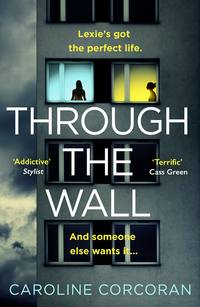
Cover photographs © Magdalena Russocka/Arcangel Images (apartment block), Shutterstock.com (women)
Caroline Corcoran asserts the moral right to be identified as the author of this work.
A catalogue copy of this book is available from the British Library.
This novel is entirely a work of fiction. The names, characters and incidents portrayed in it are the work of the author’s imagination. Any resemblance to actual persons, living or dead, events or localities is entirely coincidental.
All rights reserved under International and Pan-American Copyright Conventions. By payment of the required fees, you have been granted the non-exclusive, non-transferable right to access and read the text of this ebook on screen. No part of this text may be reproduced, transmitted, downloaded, decompiled, reverse engineered, or stored in or introduced into any information storage and retrieval system, in any form or by any means, whether electronic or mechanical, now known or hereinafter invented, without the express written permission of HarperCollins.
Source ISBN: 9780008335090
Ebook Edition © October 2019 ISBN: 9780008335106
Version: 2019-09-06
Dedication
To S, S and B, my team.
Contents
Cover
Title Page
Copyright
Dedication
Prologue
Chapter 1: Harriet
Chapter 2: Lexie
Chapter 3: Harriet
Chapter 4: Lexie
Chapter 5: Harriet
Chapter 6: Lexie
Chapter 7: Harriet
Chapter 8: Lexie
Chapter 9: Harriet
Chapter 10: Lexie
Chapter 11: Harriet
Chapter 12: Lexie
Chapter 13: Harriet
Chapter 14: Lexie
Chapter 15: Harriet
Chapter 16: Lexie
Chapter 17: Harriet
Chapter 18: Harriet
Chapter 19: Lexie
Chapter 20: Harriet
Chapter 21: Lexie
Chapter 22: Harriet
Chapter 23: Lexie
Chapter 24: Harriet
Chapter 25: Lexie
Chapter 26: Harriet
Chapter 27: Lexie
Chapter 28: Harriet
Chapter 29: Lexie
Chapter 30: Harriet
Chapter 31: Lexie
Chapter 32: Harriet
Chapter 33: Lexie
Chapter 34: Harriet
Chapter 35: Lexie
Chapter 36: Harriet
Chapter 37: Lexie
Chapter 38: Harriet
Chapter 39: Lexie
Chapter 40: Harriet
Chapter 41: Lexie
Chapter 42: Harriet
Chapter 43: Lexie
Chapter 44: Harriet
Chapter 45: Lexie
Chapter 46: Harriet
Chapter 47: Lexie
Chapter 48: Harriet
Chapter 49: Lexie
Chapter 50: Harriet
Chapter 51: Lexie
Chapter 52: Harriet
Chapter 53: Lexie
Chapter 54: Harriet
Chapter 55: Lexie
Chapter 56: Harriet
Chapter 57: Lexie
Chapter 58: Harriet
Chapter 59: Lexie
Chapter 60: Harriet
Chapter 61: Lexie
Chapter 62: Harriet
Chapter 63: Lexie
Chapter 64: Lexie
Chapter 65: Harriet
Chapter 66: Lexie
Chapter 67: Harriet
Chapter 68: Lexie
Chapter 69: Harriet
Chapter 70: Lexie
Chapter 71: Harriet
Chapter 72: Lexie
Chapter 73: Harriet
Chapter 74: Lexie
Chapter 75: Lexie
Chapter 76: Harriet
Chapter 77: Lexie
Chapter 78: Harriet
Chapter 79: Lexie
Chapter 80: Harriet
Chapter 81: Lexie
Chapter 82: Harriet
Chapter 83: Lexie
Chapter 84: Harriet
Chapter 85: Lexie
Chapter 86: Harriet
Chapter 87: Lexie
Chapter 88: Harriet
Chapter 89: Lexie
Chapter 90: Harriet
Chapter 91: Lexie
Chapter 92: Harriet
Chapter 93: Lexie
Epilogue
Acknowledgements
Keep Reading …
About the Author
About the Publisher
Prologue
Present
I sit, listening to the drip, drip, drip from a shower that only runs for a short time to prevent me from trying to drown myself.
There is a loud, unidentified bang at the other end of the corridor. A sob that peaks at my door and then peters out like a siren as it moves further away towards its final destination.
I slam my fist down on the gnarly grey-green carpet in frustration. Pick at a thread. Trace the initial that is in my mind: A. A.
A psychiatric hospital is such a difficult place in which to achieve just a few necessary seconds of silence.
Nonetheless, I try again, pressing my ear against the plaster and shutting my eyes, in case dulling my other senses helps me to hear what’s being said on the other side of that wall.
It doesn’t.
My eyes flicker open again, angrily. I look around from my position on the floor and take in what has now become familiar to me after my admission four weeks ago. The mesh on the windows. The slippers – not shoes – that are never far from my toes. The bedside table up there and empty of night creams, of tweezers, of the normal life of a bedside table.
And then I go back to trying to focus on what they – my imminent visitor and her boyfriend – are saying. Because it’s too good an opportunity to miss, when I can hear them, right there.
‘Both of them again,’ announces the nurse as she flings the door open.
She looks at me sitting there on the floor, raises her eyebrows. I stand up slowly, move back to the bed. If she thinks my behaviour is odd, she doesn’t say it. I imagine she gets used to behaviour being odd. Gets used to not saying it.
‘Just sorting out the paperwork and then we’ll let her in,’ she says. ‘He said he’s staying in the waiting room again. Not sure why he bothers coming.’
But he does. Every time it’s the two of them, in a pair like a KitKat.
I press my ear against the wall again, so hard this time that it hurts. But since when did pain bother me?
1
Harriet
December
I listen to them have sex, frowning at how uncouth it all sounds.
And then I think – what a hypocrite. Because here I am having sex myself. With a man who I think is called Eli. I wonder if the couple next door can hear us too; if they are having similar thoughts.
Over Eli’s naked, olive-skinned shoulder I glance at the TV. I have no idea who turned it on but they have put it on mute, a breakfast news segment on turkey farming. What an odd juxtaposition, I think, to all of this sex.
As Eli finishes, I look away, embarrassed, from the poultry, then pull my dress back down over my thighs.
‘I’d better head to work,’ he says, no eye contact. I barely have the energy nor inclination to nod.
‘Door’s unlocked,’ I reply, and he slips out without another word.
I exhale and reach down to the floor to pick up my glass then take a sip of amaretto and Coke. It’s 7 a.m. but I haven’t been to bed yet so it’s not quite as bad as it sounds. Plus, it’s there and I’m thirsty. The door slams.
I rest my head back against the sofa, look around. Half-full glasses, Pinot Grigio bottles, cigarettes stubbed out into old chocolate dessert ramekins. Crisps, squashed into vinegary hundreds and thousands on a cushion. Student scenes; not what I had thought my life would be at thirty-two.
I turn the TV off and return my attention to the couple next door. I think they are doing it on their sofa, this couple, because intermittently the arm of their furniture is knocking up against the wall. Sorry, wrong pronoun: it’s knocking up against my wall.
2
Lexie
December
‘Tom, we need to do it,’ I say. I have a provocative way like that.
He’s sitting on the sofa in his T-shirt and pants, shovelling in a spoonful of porridge with one hand and scrolling through social media with the other. I pull off my pyjama top without waiting for an answer because the stick said to do it and we are slaves to the stick. Tom knows this is compulsory even though he has tired eyes, will likely now be late for work and really wants that porridge.
But he goes away tonight for three days, so it’s now or not at all. Not at all – when you’re thirty-three years old and two years into trying for a baby – is not an option.
Tom takes off his pants one-handed without removing his eyes from his phone. You learn, when trying to get pregnant, to multitask in ways you could never imagine.
I move the porridge to one side, being careful to rest it somewhere where it won’t get knocked off. This isn’t ‘I have to have you now’ sex so much as ‘I have to have you now because the stick says so but we’ve obviously got time to move the porridge to one side because no one wants to get sticky oats on the DFS sofa’ sex.
‘Don’t worry,’ I whisper breathily. ‘We can be quick so you’re not late.’
Tom swallows a mouthful of porridge and waits until the last second to give up scrolling. Half an hour after he leaves I am still lying on the sofa, knickerless, with my legs up against the wall, hoping – as I always hope despite increasing evidence of its uselessness – that this gravity-boosting move helps to propel things along.
I was pregnant, once. It never happened again.
Now, I think of pregnancy as less of a yes or no thing, rather as something more cumulative. A spectrum, on which I am in a segment marked Unequivocally Unpregnant.
My underwear goes back on gingerly. Don’t upset the potential embryo. Don’t disturb the sperm.
I stand up. I can hear my neighbour, Harriet, moving around next door, ticking across her wooden floor in heels, keys rattling, front door opening.
I know I should feel embarrassed in case she heard something just now, but I’m so focused on my only current goal that I can’t muster up the pride to care.
Plus, I swear that I just heard the sound of sex coming from her flat, too. Hot morning sex, I think, that they couldn’t resist even though they were meant to be at work. The opposite of the type that we were ticking off on a to-do list through the wall.
3
Harriet
December
‘I cannot believe how many chain restaurants are in this neighbourhood,’ says Iris, using a tone for the words ‘chain restaurants’ that most people reserve for ‘terrorism training centres for toddlers’ and grinning widely through her astute observation. ‘You know?’
I know.
I take a large glug of wine and feel my cheeks singe. She thinks where I live is embarrassing. She thinks I’m embarrassing. Everyone here thinks I’m embarrassing. I have been taking extra wine top-ups this evening and the room is starting to spin. I stare at her, try to bring her into focus.
Really, I think, Iris should be trying to bring me into focus. Because the truth is that she – they – have no idea who I am. What I’m capable of, what my real name is and who the real me is. What is at my core and what I did, nearly three years ago before they knew me.
Anyway, I think, flooded with rage suddenly as they speak around me: I love Islington. Take somebody socially awkward and place them in the heart of one of London’s busiest areas and they will adore you. They will never need to make small talk with the butcher. They won’t have a favourite restaurant because they have sixty within walking distance and when they do, it will change hands and become a pop-up Aperol bar anyway. You can know no one and that doesn’t mark you out as odd: it’s simply the way things are. You can have a secret, because you can hide away.
I recover from the insult quickly. A couple of drinks later, I am talking with unwarranted confidence about British political turmoil in the Eighties while intermittently chair dancing to Noughties pop music. I’m very drunk – I’m often very drunk – and I’m laughing. But it is an empty laugh because I don’t know the people I’m laughing with.
Next to me on my sofa is a man named Jim, ‘incredibly talented’, gay, talks about being an introvert often and loudly. Opposite me is Maya, who has been nursing her glass of Pinot Noir for the last two hours, despite my best attempts to top her up, loosen her up, liven her up, something her up. On the floor, barefoot and knees pulled to their chests, are Buddy and Iris, who live in Hackney and were probably christened Sarah and Pete and who rarely leave the house without making sure a copy of Proust is sticking out of their bags. A Christmas hat sits joylessly atop Iris’s shiny brunette bob.
I look around at all of them and try to feel something but there is nothing. Or there is worse than nothing; there is a low-level stomach ache that tells me I feel awkward and sad and that this gathering in my home is the opposite of friendship.
Merry fucking Christmas.
Last month, I met all of the people currently squeezed into my lounge for the first time. I am a songwriter, we are working on a musical together and I invited them over for Christmas drinks. For God’s sake, I even wheeled out a box of Christmas crackers.
I do this with everyone I work with. We usually rearrange around four times and people’s excuses are vague, but I am persistent. They all capitulate, eventually.
I’m still trying to find something that makes me stop craving the city’s anonymity; something that claims me as its own, despite four years passing since I left my native Chicago. I’m trying, desperately, to be social. But sometimes I think the truth is that when you carry a history like the one I carry, you can never truly grow close to people. It’s too risky. Too exposing.
I pull a cracker with Buddy and lose.
But still, I keep trying.
‘So, Harriet, are you seeing anyone?’ asks Introvert Jim, loudly, bolshily, butting in rudely to my thoughts.
I shake my head, top up my wine.
‘No, Jim,’ I slur, matching him for loudness as my drink glugs into the glass. I forget to offer a top-up to anybody else. ‘I am single.’
Oh, I am very, very, very much single. Unhappily single. I am not content being me. I’m not joyous in my own company. I am awkward and I make terrible decisions and I want another half to make 50 per cent less me. I aim to dilute myself, like a cordial.
‘Karaoke!’ I say, fuelled by wine and the panic that people may leave, and Iris and Buddy find it ironic enough – like the Christmas hats – to join in. Maya slips into her denim jacket and slopes off, giving me a pitying look that sets a flare off inside me as she says goodbye. Jim can be persuaded once I find him a dusty bottle of tequila for a shot.
These colleagues may not be an immediate solution to my solitude, but perhaps one day it will come in the form of a man who one of them knows.
Plus my parties, alcohol-fuelled as they are, rarely begin and end at my colleagues.
It happens, always, as it is happening tonight. The door is propped open so that my guests can pop downstairs for cigarettes. I live next to the elevator and what I never envisaged – given how antisocial my neighbours are in daylight – is that late at night, people started coming in the other direction, too. Peering in to see what’s happening. Hearing a song that they like. Grabbing a beer.
So it could be one of those, too; an unknown neighbour who comes for the alcohol but stays for me. I might not be perfect, but I have things to offer. Enough to hope that one day, someone might invite me back, might claim me.
There are hundreds of flats in our tall, imposing tower block, and most of them are inhabited by men and women in their twenties and thirties who don’t have children and can get drunk on Tuesdays without much consequence beyond a hangover they have to hide under carbs the next day at their desk. If they live here even as renters then they are mostly paid well and work hard for long hours, so that their evenings take on a desperate quality. Enjoy it, make the most of it, drink it, snort it before you’re back in a meeting at 8 a.m.
The building, with its modern feel, feels to me like it aids this. The sparse, airy lobby is an anonymous retreat, painted head to toe in magnolia with just a desk for the concierge and a sole plant that never wilts but never grows. Is it fake? When I stare at it, I can’t tell. I wonder if people ask the same thing about me.
In the lobby is an unplaceable but specific scent that never alters. The temperature’s always exactly what you want it to be, whatever the season.
At times it reminds me of an airport. People pass through, collect their parcels, take off in the elevator up to the eighth floor, and there are so many flats that you can easily never see them again. Occasionally, it reminds me of somewhere darker: of the psychiatric hospital where I used to be a patient. A coincidence? Maybe this is what I want from a home, I think. Utter sterility.
Now, my neighbours traipse into my home, three, four, every half-hour. They are on their way back from their work drinks or their dinners and they stick their hazy heads in to see what’s happening. Someone – me, most likely – shoves a wine glass into their hand and the next minute it is 1 a.m., and a city banker in his early twenties who I’ve never seen before is kissing Chantal from the fifth floor and vowing to move with her to a hippy commune in Bali. Chantal, like me, is a rare exception in this building to the city-banker rule, but I’ll get to that in a minute. By day, my neighbours are antisocial and aloof; by night, they are debauched and overfamiliar, revelling in their freedom. Happy mediums are not what we do in Zone One.
Did I make an idiot of myself? Chantal will message tomorrow, inevitably.
The message will come from her sofa, where she lies every day thinking about retraining as a masseuse. Chantal was made redundant from her job in marketing a year ago and from a distance, it is clear that she is in a deep depression, which isn’t helped by the fact that her rich parents pay for her to lie still and be sad. She has no motivation to move. But at 1 a.m. Chantal is shining, lit by lamplight and Prosecco. At 1 a.m., Chantal and I are something approaching friends. At 1 p.m., we exchange awkward chat in the preprepared aisle in Waitrose.
‘I’d better head to …’ she will mutter, gesturing vaguely at some bread, or a door, or anywhere.
‘Yeah, I’d better get on, too,’ I’ll concur urgently before ambling back to my sofa.
But meeting somebody is a numbers game, that’s what my mom would say if we still spoke. If it wasn’t impossible for us to speak, after what I did. It’s a numbers game and I’m following that policy. Let the strangers in. Keep them coming.
The nights begin with wine offered politely and with small talk. And then they descend into strangers and a blurry chaos I spend most of the next day clearing up. It’s worth it, though – the mess is comforting. It gives me a purpose.
Again, tonight, my flat is full of unknown or barely known neighbours and the last of my colleagues who are heading home now at 2 a.m., slurring. As they wait for the elevator outside my flat I hear them through the door that’s been left, as ever, temptingly ajar.
‘She’s just a bit … much, you know?’ says Iris, her voice loud because she is drunk on the alcohol that I just gave her, for free, while she hung out in my home. She is talking about me.
Buddy concurs, as the world always has concurred on this. I’m a bit … much. I’m not quite the right amount. Not on target. Not the level of person you would ideally want. If I were a recipe ingredient, you’d tip a portion of me out, or balance me with salt. As I’m a person, I can’t be amended, so I remain a bit … much.
I sit against the wall behind the door listening to the rest of their thirty-second conversation on the topic of me before the elevator announces itself loudly. An hour later, when everybody else leaves, everything is quiet, and I hear a TV being switched off next door and the soft, kind padding of slippers on laminate floor.
I say goodbye to my next-door neighbour, Lexie, in my head. She never turns up at my parties, but I know her name because I have heard her boyfriend say it through the wall. And then I lie down on the sofa, mascara on the cushion from the start of tears that will go on and on and on until the moment that I finally fall asleep.
4
Lexie
December
I’m typing and deleting and at that moment, Harriet starts singing in a children’s TV presenter voice that is too loud, surely, to be normal. Was other people’s noise this irritating when I worked in an office? I’ve always loved sound; the radio on in the background, talking to friends over TV shows. Slowly though, I think, all the rules of me are changing. I throw a cushion at the wall.
I uncurl my legs from the sofa then head for the kitchen because I’ve been thinking about the flapjacks in the cupboard all morning.
I look down at myself, bottom half shrouded in Tom’s pyjamas. My own strain at the waist too much now to be comfortable.
I eat the flapjack. And then I lie back on the sofa and think. Is it right that Harriet can get to me so much? Is it normal? My relationship with my next-door neighbour, to anyone living in a place that isn’t a vast Central London contemporary apartment block with a concierge service that takes delivery of your online orders and helps out the lost Deliveroo driver roaming hundreds of identical corridors with a pad thai, would sound bizarre.
I know more about her existence than I know about most of my friends’. We are closely entwined. She is by far the person I spend most time with. I know about her boozy parties with their Prosecco glugged into friends’ glasses as they try to resist and go home but they can’t – they can’t because they’re having too much fun.
I know about Harriet’s love for karaoke as her friends laugh and groan that they have work tomorrow. But then the intro kicks in and they stay and there is whooping. More friends join them. The joy multiplies. And there is always so much noise.
Now, the piano. I put pillows over both of my ears, but her sounds – always there, competing against our quiet home – are impossible to drown out.
Harriet writes songs for musicals that thousands of people hum on the bus home from the West End. She’s interviewed regularly for industry websites, sounding intimidating-smart. She is successful and rich, I presume, if she lives here. In this building, Tom and I are the exceptions with our normal salaries, and we can only be here because Tom’s parents own our flat and they’ve let us rent it for way below market value.
I realise I’m googling her again. I look at the picture of Harriet on her professional website. She is tall, striking and handsome and she looks powerful. I like her mouth. I envy her smooth, silky blonde hair. At school, she was undoubtedly the popular girl; a person who wouldn’t have sought me out as a friend as I battled my fringe of frizz and Play-Doh thighs.
In her flat, which doubles as a studio, Harriet writes and rewrites lines, her bare foot on the pedal of her piano; painted, unchipped fingernails flicking up and down before she scribbles down what she’s created. Harriet is a creator, she creates, she is creative. Purposeful, she is often so lost in her work that she forgets her plans and is late as she dashes to meet friends for brunch. She picks up flowers at Columbia Road, to sit on top of her piano and make a bright home even more colourful. She knows her own mind and tastes, never decorating her flat with something generic from a chain store, and to men, she is the whole package: smart, buckets brimming full of fun and utterly gorgeous.
Oh, I’ve never met her, of course.
I saw her once getting out of the lift when I had taken the stairs during a low-level fitness drive. I’ve found her mail in our postbox and shoved it into hers, and sometimes, like now, I Google her name. And yet I feel, somehow, like I know her.
From my home-office, aka the sofa next to the wall, I see my next-door neighbour, Harriet’s, existence happening, and it is plump and full and bursting.
Meanwhile, I have been here for three hours now with the start of back pain, flapjack on my chin and only seven sentences of my 2,000-word copywriting project on the page.
I wipe crumbs from my lap. I am no Harriet.
Just getting on the tube, says Tom’s text, later. Curry?
As I reply, I notice the stain on my – his – pyjamas and mean to change, but then I get distracted looking at the Thai menu.
Curry is bad. Curry means my size 12 jeans will dig into my skin. Curry means that we are unlikely to have sex tonight, when we should be doing it any chance we get.
Our impromptu and erotic sofa sex didn’t reap rewards and now almost a month has passed.
My ovulation sticks don’t say we’re in the window yet, but Great Doctor Google, alongside freaking me out about everything I do, have ever done and will ever do in my life, suggested that the more, the better is currently on-trend in medical policy. The idea that there is an ‘on-trend’ in medical policy is a worry if I think about it, so I don’t and instead choose my side dishes. I add duck spring rolls to a list of things I worry are stopping me from getting pregnant. They have many, many companions on that list.
In reality, we have no idea yet why I’m not pregnant. We have no idea why I got pregnant once, miscarried, and why it never happened again. And why, two years later, we are still static, waiting to move on and realising that we were so sure that I would get pregnant again, we never even properly grieved.
With every month that passes, anxiety wraps itself around me more tightly as I convince myself that it’s my fault. Despite trying everything. Despite following Tom, who works away sometimes making TV documentaries, around the country to have sex at the right time. Despite once buying a sexy nightie from Figleaves lingerie and staying in a Travelodge in Hull for a whole bloody week.
But beating myself up is something that’s been happening more lately, increasing alongside calories and sleeping as I do other things less: see friends, pluck my eyebrows, wear clothing items without an elasticated waistband. Laugh.
Through the wall, to snap me out of my internal chatter, comes Harriet. She slams her piano in frustration and then I hear a phone ring.
‘Yeah?’ she says, brusque, like people who are busy do. I am not even busy in this, the week before Christmas, the busiest week there is.
It must be a delivery driver, because ten seconds later I hear her buzz someone up and answer the door, shrieking about the beauty of the flowers. An early Christmas present? From a boyfriend? A friend? Her mum?
I peel myself away from the wall and nestle into the sofa. I’m home so much now that I work for myself that Harriet constitutes a concerning amount of my human interaction.
I picture her in heels, phone snuggling into her palm, hopping into her taxi, running out to dinner, to lates at a gallery, to taste potent festive cocktails. And I’m reminded of the old me, the me before fertility worries happened and sprawled over my life.
I shuffle to our bedroom in my worn-out slipper boots and rummage around in the wardrobe until I find the box I’m looking for. It is, as they always are, an old shoe box, full of photos that were supposed to be filed away in albums that were never bought and now live sandwiched between thank-you cards and badges from hen dos and birthday invites and leaving cards filled with in-jokes and old ticket stubs.
Somewhere along the line I stopped being this person who inspired people to turn cards around and write up the sides, who brought on exclamation marks and capital letters and leading parentheses.
I picture myself in my old job at a women’s magazine, where I had a reputation for always coming up with the best interview ideas.
‘Lexie will nail it,’ people would say, and I had the confidence to agree. I shared in-jokes, suggested new places for lunch. And then I shrunk. Now, as people sing Christmas songs outside my window and eat their fifth turkey roast of the month, I am alone, again, waiting.
I don’t know how life became this limited little space. I don’t know when I crammed myself into a box that was only just big enough for me, because I used to be a Harriet, too. And I am envious.
5
Harriet
December
I’m halfway to a work Christmas meal – the kind where I preordered my soup, turkey, tiramisu in October – when I realise that I’ve forgotten my phone and have to head back to the flat.
I nearly trip when I get off the bus, swear under my breath.
I’m too clumsy and tall for these heels, and I make a note to switch them for sneakers when I get home, despite the fact that I will never rock a trainer in the breezy way I’ve seen other girls do – in the way Iris does – that bares a chic, non-icy ankle. How are the ankles of all of these people not freezing?
On me, a sneaker–jeans combo will look as though it belongs on an awkward thirteen-year-old on a school trip, not a thirty-something who should have mastered her classic look by now. I look down at myself: far from it.
I swipe my fob against the screen and pull the door to just as someone is getting in the elevator. I curse my timing, because there is an unwritten code in this building that no one shares elevators, when I notice the man who has beaten me to it.
His hair is dark, curly, wildly untamed. He shoves it impatiently out of his eyes with each hand, alternately.
And I breathe like I am due to jump out of a plane in two seconds because an alarm bell has gone off and is drowning out everything else.
It’s not just this man’s hair. It’s his dark eyes, it’s the hunching of his shoulders as he heaves his large rucksack onto his back and puts a takeout food bag on the floor. It’s the sigh he does, so internal for an external noise. It’s his long legs and his straight jeans and it’s his nose, slightly too Roman for most but not for me.
This man and my ex-fiancé, Luke, who used to live here in this flat and get in this elevator with me, do not share a passing resemblance. Instead, they are doubles. Identical. Interchangeable.
For once, I climb the stairs and slam the door of my flat behind me. But like the Thai spices, the man from the elevator has crept in anyway. I know – rationally, I know – that it wasn’t Luke, that it couldn’t be Luke, that my ex-fiancé isn’t here, in London, clutching his takeout in the elevator of my building. That after what happened, his former home is the last place he would ever come. But there is a part of my brain that the message hasn’t reached and that’s the part that is making my heart hammer into my chest, surely audible through the wall to next door, I think, as I realise I am leaning against it. I gasp for air.
After a few seconds I hear Lexie, her tiny voice quiet, gentle, the opposite of my own. A northern lilt, I sometimes think, though English accents are still not my forte.
‘Tom?’ she asks, raising her voice to carry into the kitchen. ‘Can you bring me a …’
But the end of the sentence falls away. As ever, there’s just enough wall between us to mask life’s detail.
But Tom. Not Luke, Tom. Tom from next door. I must remember that, when my heart starts racing, when my mind starts racing and at 4 a.m. Especially at 4 a.m. I pour a glass of wine, down it and – forgetting to switch my shoes – kick the generic flowers that were delivered from a generic former colleague to say a generic thank you out of the way and head out with my phone, trying to fight a feeling that Lexie from next door has stolen my Luke. That Lexie from next door has stolen my fucking life.
6
Lexie
December
‘I miss Islington,’ sighs Anais as I flick the kettle on and she yanks off a tan Chelsea boot in the hall behind me. ‘Bloody Clapton.’
I’ve known she was coming round for a week now – she had a Christmas lunch around the corner – but still I had run around flustered for five minutes before she arrived. Endeavouring to put on eyeliner, remember how real people (I haven’t really considered myself to be one of those since I started working from home) dress and shove piles of post into drawers. Tom’s been away for a week now. I am flailing.
‘Remember why you live in Clapton, though,’ I say, brandishing a mint tea box and something ridiculously expensive from Planet Organic at her, and she nods to the latter, of course, because we are middle-class Londoners. ‘You own your place. No chucking your money away on rent.’ I sigh. ‘We’ll be here forever, because Tom’s dad will never put up the rent and we’ll never get anything better so we’ll never have the motivation to get a mortgage.’
It’s not just Anais; I say this to everyone, all the time. It’s my only response to my self-consciousness over how lucky we are to have moved this year into a Central London flat that has its very own swimming pool in the basement.
It’s still such a surprise to me, too; my own parents have barely lent me twenty pounds in my life – they’re of the ‘learn the value of money’ school of parenting. I’ve been encouraged to be utterly independent. Which makes this whole scenario pretty ironic.
Now, for less rent than my friends pay in Zone Six hellholes, I live somewhere where there is no paint chipped in the communal areas but walls that are freshly covered in high-end magnolia once a year. Where cleaners spirit away dead flies or discarded ticket stubs with the speed of a five-star hotel and then fling the windows open so that the feeling is hospital sterility. Where every type of night and day life we could need is in walking distance.
Right now, Islington’s anonymity soothes me. I walk out of my flat with nowhere marked out as my final destination and I wander up the high street past hipster thirty-somethings with children dressed in fifty-pound jumpers on scooters. At weekends, I clamber onto the bookshop on the barge on the canal, picking out piles of worn, second-hand classics. I smell the brunch that’s being eaten in seven-degree cold on the pavement like we are in Madrid in July and I know that that wouldn’t happen anywhere else in this country, but does here, because we are in a bubble. Nothing is real. Nothing gets inside.
Round here, CEOs play tennis at Highbury Fields with their friends like they are fifteen. In summer, I watch thirty-somethings charging around a rounders circle with friends. At the pub, there will be no locals but there will always be someone who is twenty-two and excited, who has just discovered that they can get drunk on a Monday and eat an assortment of crisps for dinner without anyone telling them otherwise.
On sunny evenings, we drink gin and tonics in overpopulated beer gardens that spill onto pavements. For Christmas, I have bought everything I need within the radius of a ten-minute walk from my flat. We are spoilt children and I adore it. It’s not a feeling I’ve ever known before.
But by repeating my mortgage conversation on loop, it’s become true to me. I’ve started to care about ownership and getting my hands on an enormous loan that will never be paid off. Whatever I had, it turns out, I would look over my shoulder to see what someone else had and want it, too. This is me. Perhaps it is everyone.
And there are downsides to life in this part of London.
We’re transient because we know this isn’t where we will settle.
It does happen: I look up at the family houses that surround Highbury Fields and like everyone, I wonder who could possibly have that life, that real life, living here beyond their thirties and becoming a family here, becoming old. But there are bins outside, spilling out with pizza boxes and wine bottles and toilet roll holders and nappies. It’s real.
Most of us, though, will never be the 0.000001 per cent with their pizza boxes. If you’re thirty-nine, Islington looks at you sadly like you’ve stayed at the party a little too long. Perhaps you could have a quick Sunday afternoon picnic on the green on your way out but then yes, it will be time for you to head off to the suburbs.
Anais is doing just that and building a life. Where she goes to sleep, there are old food markets and boozers and there are people who have lived there forever, who sell vegetables loudly and look at you blankly when you talk about brunch. There are new people, sure, but it’s not like here. Here, heritage ebbs away every time a greengrocer’s becomes a gin bar and a rental notice goes up in the window of the old pub. We are all to blame: I spend Sundays strolling in between market stalls selling lockets and trinkets and soaking up the feeling of it all, and then I spend my money in Waitrose. I am part of the problem. I am at its heart.
‘Mortgages are overrated and I have no idea why everyone is so obsessed with them,’ Anais says as she rummages in her bag for the box of brownies she’s brought with her. ‘Very much like babies.’
I bristle. She puts the brownies on the side.
‘Salted caramel,’ I say, reading the label and trying to distract myself from the irritation that’s surging through me over her flippancy. ‘Thanks.’
Since we were at university together, Anais has been vehemently opposed to procreating and didn’t change her mind even when she met Rafael. He’s Spanish; she’s Barbadian. If you were the kind of person who wheeled out terrible clichés, you’d tell them they’d make beautiful babies.
I’m not and I don’t. If struggling to conceive has any upsides, it’s taught me emotional intelligence. I make promises to myself that whatever happens, I will never be one of those people who don’t consider for one second that by proffering their opinions on your position on having children, they might have just ruined your whole week. You don’t know. You never know.
Anais and I did our journalism postgraduate course together and while the rest of us only manage yearly get-togethers, Anais and I are still proper friends. Her: a political editor for a broadsheet. Me: a copywriter for various dull brands who pay me to produce words about their products. I’m currently writing instructions for a washing machine. This isn’t how I saw it going when I turned up ten years ago for my first day at university, clutching a copy of Empire magazine and declaring my intentions of becoming a film critic.
But I left my last job at a magazine because I returned home four nights out of five stressed and panicked about something that had happened to do with internal politics. The sort that at the time seem like the centre of the universe and really are part of some distant solar system that no one should care about, ever.
And, mostly, because Tom and I had been trying for a baby for two years and, since the miscarriage, nothing else had happened. I wanted to alter something. I wanted to relax, get some work-life balance and go to Pilates at 2 p.m. if I fancied it. The problem was that I rarely fancied it. The problem was that being at home alone all day without the distraction of those internal politics and a 10 a.m. meeting to prep for left me depressed and so anxious that a two-minute walk to the post office felt far beyond me. I zoned in obsessively on the absence of a baby. As time went on I grieved more, not less, for that baby who didn’t make it. I’m not saying that leaving my job was the wrong decision. But it certainly hasn’t been a quick fix.
‘It’s been such a ridiculous run-up to Christmas at our place,’ Anais says, taking her tea from me as she frames herself, beautiful, in the entrance to the kitchen. ‘I’m still so jealous of you working for yourself.’
And I look down at my one Official Seeing People outfit, pulled on two minutes before she arrived and to be discarded one minute after she leaves, and glance at her phone on the side, lighting up with messages and urgency, and I think sure, Anais, sure.
‘Working from home, all that flexibility.’
Then she comes up with a very specific example of this.
‘You can bake a potato while you work.’
That’s it. That’s what I was after when I held that copy of Empire. Baked potatoes. While I work.
‘You can go for a run at 3 p.m.’
Because I do. Often.
She pads in her tights through to the living room.
‘Jesus, what the hell is that noise?’ she says as she sips her tea. Something with fennel.
I head back to the kitchen.
‘Oh, just Harriet!’ I yell as I press my own teabag against the side of the mug and fish it out. I decant the brownies onto a plate then I follow her in and laugh, because she is stood, ear pressed to the wall, to listen to Harriet’s latest composition involving chickens and a farm.
‘Get away from there,’ I stage-whisper, even though we both know she probably can’t hear us over that level of farmyard-based noise. There is a chicken impression, in rhythmic form. We are folded, creased, with laughter.
When we calm down, Anais sits, doing a noiseless impression of someone earnestly singing an opera as she curls her feet under her on the sofa.
She leans and takes a brownie from the plate that is sat on our tiny coffee table.
‘Does she do that all the time?’ she asks.
I think about it.
Suddenly it seems weird that I have started to think this is so normal, this woman singing loudly about love, dreams, emotions and chickens. I hear her pound the piano in frustration. I hear her ARRRGGGHH out loud when something doesn’t go well. And I live alongside it, like her cellmate.
‘Yeah, pretty much. There you go, another downside of our Islington life. Successful music writers move in next door and sing weird songs about farmyard animals.’
We laugh, a lot, but then there is a lull.
‘So, how are you?’ I ask.
As I eat my brownie, she tells me about the new app Rafael just designed, a Korean place they’d tried at the weekend and the trip to Mexico they’ve just booked. And then, when I can’t stop her any longer with my questions, questions, questions, she asks me the dreaded one from her side: ‘How about you – any news?’
I mime a full mouth and take a second.
It’s loaded, that question, once you get into your thirties. It means ‘Are you getting married, having a baby, buying a house? Do you have an awesome, game-changing new job that pays you so much money you can buy in Notting Hill?’ And if you don’t, if none of those things exist, you feel like you have failed at news. Sometimes I think I want a baby partly so I can succeed at news.
‘Not really,’ I say before spinning some mundane work and a trip to the theatre with Tom’s parents into news.
Because you can’t actually have no news. We must be busy and rammed and manic and constantly doing, and no news isn’t allowed. I dust brownie crumbs off my chin and onto a plate.
After Anais leaves I change back into my – Tom’s - pyjamas and consider why I didn’t speak to her about The Baby Thing.
Every time we’ve done this and I’ve omitted it, I’ve surprised myself. Because that is my news. That’s my story. Anais is my friend and I am a sharer. And not mentioning it means I have a low level of nausea about the unknown elephant in the room every time we meet. I didn’t even tell her about my miscarriage. Anais, my best friend, doesn’t know that I was pregnant. Doesn’t know about the biggest thing that ever happened to me. That seems crazy now but at the time I had hoped it would be a footnote to some good news, to the best news.
Not telling Anais what is going on in my head also means that we are drifting. I know it and she knows it; I can feel the chasm getting wider but I can’t do what I need to do to close it. So why?
I come to this conclusion: once it’s out there, there’s no taking it back. Once you say you’re trying, that’s your thing. That’s the ‘news’ they mean. That’s the black cloud over my head that everyone will see.
‘Are you okay?’ Anais asked into my ear as she left, hugging me close. ‘You seem …’
But I avoided her eyes, shrugging out of our cuddle and seeing her out with some paint-by-numbers thirty-something rambling about a busy week and work worries.
I eat the rest of the brownies, alone, leaning over the kitchen sink. It’s a while before I hear from Anais again; definitely longer than normal.
Ücretsiz ön izlemeyi tamamladınız.