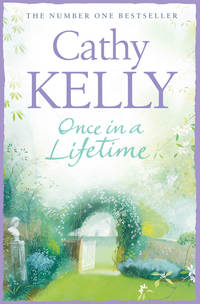
Kitabı oku: «Once in a Lifetime»
Once in a Lifetime
Cathy Kelly

Copyright
Published by HarperCollinsPublishers Ltd 1 London Bridge Street London SE1 9GF
www.harpercollins.co.uk
Published by HarperCollinsPublishers 2009
Copyright © Cathy Kelly 2009
Cathy Kelly asserts the moral right to be identified as the author of this work
A catalogue record for this book is available from the British Library
This novel is entirely a work of fiction.
The names, characters and incidents portrayed in it are the work of the author’s imagination. Any resemblance to actual persons, living or dead, events or localities is entirely coincidental.
All rights reserved under International and Pan-American Copyright Conventions. By payment of the required fees, you have been granted the non-exclusive, non-transferable right to access and read the text of this e-book on-screen. No part of this text may be reproduced, transmitted, downloaded, decompiled, reverse engineered, or stored in or introduced into any information storage and retrieval system, in any form or by any means, whether electronic or mechanical, now known or hereinafter invented, without the express written permission of HarperCollins e-books.
Ebook Edition © February 2012 ISBN: 9780007389346
Version: 2017-11-21
HarperCollinsPublishers has made every reasonable effort to ensure that any picture content and written content in this ebook has been included or removed in accordance with the contractual and technological constraints in operation at the time of publication.
For Dylan, Murray and John, with all my love
Table of Contents
Cover Page
Title Page
Copyright
Dedication
Prologue
1
2
3
4
5
6
7
8
9
10
11
12
13
14
15
16
17
18
19
20
Epilogue
Excerpt from The House on Willow Street
Prologue
Chapter One
Back Ads
About the Author
By the same author:
About the Publisher
Prologue
Star Bluestone had talked to bees all her life. She talked to her flowers too, murmuring to the rare yellow poppies she’d nurtured from seeds gathered in the old Italianate garden thirty miles away across the Wicklow hills. She and the young Kiwi gardener there had such great chats, he walking her through the orchard and reaching up to cradle a baby apple bud the way another man might touch a woman.
He understood that people who loved the soil talked to their plants and to the bees whose careful industry made their flowers bloom. Even though he was only thirty to Star’s sixty years, he didn’t think she was an eccentric old lady. Rather, he was impressed by Star’s encyclopaedic knowledge of plant life. His earnest, handsome face became animated when they talked.
When she watched this kind boy, Star always remembered fondly that good gardeners make good lovers. Nobody capable of the tenderness required to separate delicate fronds of fern for replanting would ever be heavy-handed with another person’s body.
It had been a few years since Star had lain in a man’s arms. She’d had many lovers, but the one she would remember for the rest of her life, the one whose memory was imprinted upon her skin, hadn’t been a gardener. He’d been a poet, although that wasn’t how most people knew him. To the world, he was a conventional man, handsome, certainly, with beautiful manners and an important job waiting for him. To her, he was the man who sat with her under the stars and recited poetry as he traced his fingers along her face and talked about their future.
That had been over thirty-five years ago. Star talked to flowers and her beloved bees in their white hives back then too.
When she’d been growing up, her school friends hadn’t understood why Star did this, but they didn’t question it. After all, Star was different in most things. So was her mother. Their mothers didn’t grow herbs with such skill or know how to brew potions of feverfew and camomile to soothe menstrual cramps, nor did they stand gazing up at the Midsummer moon.
Eliza Bluestone did, and that it picked her out from all the other mothers in the small town of Ardagh was both a blessing and a curse to Star. The blessing was the knowledge her mother gave her. The curse was that knowing so much made her separate from all her friends.
Eliza mightn’t have told her daughter all the wisdom in her huge, midnight-dark eyes, but that knowledge somehow transferred itself to Star anyhow.
When she was a lithe young girl of twenty, and wanted to dance with her friends and flirt with young men, being wise was an impediment. She just knew that few people would be lucky enough to meet their soul mate in a pub ten miles from their home. Finding the right man to be her husband was going to be hard because the Bluestone family–which meant Star and her mother–were hardly conventional and it would take a strong man to love them. In the same way, she knew that her friends would not all have the joy and happiness they expected in their lives, because not everybody could. It was obvious. To imagine anything else was folly.
Though, Star, like her mother, couldn’t actually predict what would happen in the world, she had enough wisdom to understand the rules of the universe. While her friends threw themselves blindly into everything and were surprised when the man they’d met at the club hadn’t called, or shocked that other people could be bitchy, Star was never surprised by anything.
As she grew older, Star’s ability with her flowers and her garden grew. Talking to her plants wasn’t the whole trick: caring for them with reverence was and Star did that, plucking weeds from around the orange-petalled Fire Dragon so it could breathe again, moving the old redcurrant bush away from the dry soil beside the shed, pausing occasionally in her labours to listen. For Star loved music. She never grew tired of hearing the distant singing of the church choir, even though she had never set foot in the building–this was another thing that set her apart from her friends. Star’s church was the trees and the mountains and the mighty roar of the sea. And although she loved church music, she loved the music of nature better. The song of the bees was, her mother had taught her, the Earth’s song. Melodic and magnetic, with the bees moving to some ancient dance they’d moved to long before man came calling. And was there anything more uplifting than the sound of pigeons under the eaves, skittering about and squabbling as they sheltered from the rain?
It was raining now. As Star lay in bed, she could hear the raindrops bouncing off the window panes. As usual, she had woken at six a.m.; in summer, she would have risen immediately to make the most of the golden sunrise, but on this cold February morning, dawn was at least two hours away–and it promised to be a murky one.
Danu and Bridget, her two cats, stretched on the bed beside her, making their morning noises. Bridget was a showy white ball of fluff, her magnificent fur requiring lots of brushing. Danu, the smaller of the two, was a rescued tabby who’d been given to Star the year before, the moment exactly right because Moppy, Bridget’s sister, had just died. Life had an odd way of doing that, Star knew: giving you what you needed when you needed it. Not wanted–your want didn’t come into it. Want and need were very different things.
Star lay in bed for a while, stroking the two cats, and staring out of her window at the dark shapes of the trees and shrubs in her garden. She could see the red maple tree she’d planted when she was twenty and lost in love.
‘Plant something to remind you of this,’ her mother had said, and Star had been surprised.
‘I’ll always remember,’ she’d said simply.
Everyone said she was at the peak of her beauty then, lush like her mother’s precious peonies, full-lipped, and with hair of spun gold–the Bluestone women always had golden hair, no matter what their fathers looked like–that fell about her slender waist. She’d secretly picked out her wedding dress with her best friend, Trish, and she knew that Danny and she would be so happy if they rented the house on the hill road. From there they could see the town and the sea, and he could be at his father’s garage, where he was one of the mechanics, in five minutes.
Still, she had liked the idea of a tree for them both and planted the red maple.
But, ‘I’m too young to settle down,’ Danny had told her not long after the tree was planted, when its roots had barely had time to unfurl into the earth and Star was still patting it each morning with joy at all it represented.
‘That’s not what you said before,’ Star replied, knowing in a painful instant that the wedding dress, a jewel she’d mistakenly thought was meant for her, would remain on the rail in Brenda’s Boutique.
‘It’s my mother,’ Danny said reluctantly. ‘It’s about the business, too. She said–’
‘She said you needed a better wife if you want to expand the garage. She said she didn’t want you marrying one of those atheist Bluestone women with their strange herbs and their unnatural hair.’
Star wasn’t bitter towards Danny. It wasn’t his fault. She should have known that he wasn’t a strong enough man to turn the tide of public opinion. Even in the mid seventies, when the rest of the Western world seemed to be enjoying free love and the Pill, the more conservative parts of Ardagh ate fish on Fridays, blessed themselves when they passed the church and remained unsure of the Bluestones.
Old Father Hely, the parish priest, and Sister Anne, headmistress of the Immaculate Mother of God Convent, had both been remarkably understanding about Eliza’s preference for her daughter not to practise the Catholic traditions. Learn them, yes. Eliza was all for learning and tolerance. She was fascinated by all religions: Catholicism, Protestantism, Hinduism, Buddhism, everything out there. But not practise. Eliza saw the central truth in the world around her, a world that had been there longer than any man-made religion.
‘We’ll take care of Star in school,’ Sister Anne said firmly. ‘You might not come to our church, but you understand Christianity, Eliza. I know how kind you are to those who need it. There are plenty here in town who trot along to Mass every day and still don’t love their neighbour,’ she added grimly.
‘Indeed, you’re right, Sister Anne. Nobody in this parish will ever hear me say a word against you,’ agreed Father Hely, who’d studied too much Christian history, from the Crusades to the Inquisition, to be doctrinaire when it came to unusual Eliza Bluestone with her earthly wisdom and her home-made elderflower wine.
However, not everyone in Ardagh agreed with Father Hely and Sister Anne, and many of the people who went to Sunday Mass and hung holy water fonts inside their front doors disliked the Bluestones because they were different. And clearly Danny’s mother fell into this category. Star hadn’t realised before quite how strong this dislike was. She herself didn’t care what or whom anyone worshipped and was astonished that other people could object to her views.
‘You’ll always have your tree,’ Eliza told Star the night Danny broke the news there would be no wedding. Mother and daughter sat in the hand-hewn walnut love-seat in their garden that overlooked the sea, and sipped rosehip tea.
Star gazed gloomily at the tree. And then looked around at all the other trees in the five-acre plot. The house, a higgledy-piggledy concoction of white clapboard with slanting roofs and an oriel window, was surrounded by trees: smooth-skinned, tall ashes, swooping willows, a graceful plane tree, a crowd of copper beeches by the vegetable garden, and another sharp-leafed maple that turned blood red in the autumn.
‘We have lots of trees,’ she said, suddenly understanding. She got up to touch the other maple. ‘You once said this was my dad’s tree?’
Star’s father had been the sort of man who preferred travelling to settling down. India was his favourite place in the whole world, especially the beaches of Goa, where a man could lie in the sun and not have to think about anything except what the human race was for and other philosophical questions.
‘I loved your father,’ Eliza said.
‘But he left?’
‘I planted the tree when we were in love,’ Eliza answered.
‘Then he left.’ Star got it. ‘What about the other trees?’ she asked, wondering how they’d never discussed this before. But then, her mother was a gentle and slow teacher: the lesson came when the lesson came, it would never be forced.
‘Two more I planted, both before you were born, before I met your father.’
Three loves.
‘And all these other trees?’ Star gestured.
‘My mother’s, her mother’s, all the Bluestone women have planted trees for as long as we’ve lived here.’
Star laughed then and ran around the garden, touching her hands to the bark of each of the precious trees. She loved this link with her female ancestors. It was like holding hands with all of them, listening to them laugh and talk, strong women who’d seen so much.
The trees, plants and flowers of her wild garden that gave such comfort to Star eventually provided the raw material for her livelihood. She designed and made tapestries embroidered and appliquéd with wools and silks hand-dyed from natural dyes. Star’s eye for nature meant her pictures were landscapes of hills and woodland glades, sometimes with a brightly plumaged bird peering out from the undergrowth, or a blossoming creamy magnolia positioned against a backdrop of verdant green, even the misty shape of a unicorn in the distance. For many years, she had sold her work in a tiny craft shop on the outskirts of Wicklow town and just about made a living out of it. Then someone had brought one of her tapestries to the attention of a buyer in Kenny’s department store in Ardagh.
Kenny’s were always on the lookout for new talent, the woman said, and Star’s exquisite artisan works would complement their homes department perfectly. The store didn’t deal in paintings: too complicated and time-consuming, but the Bluestone Tapestries were exactly what they were looking for. Within six months, Star’s tiny business had become a thriving cottage industry. That was five years ago. She had three employees now and they’d been working flat-out to complete their latest order for Kenny’s, which was where Star was bound that morning.
There were twenty hangings of all sizes ready in their moss-green tissue paper. She was dying to see what Lena, the buyer and one of the store’s directors, would think of her new departure, a large mermaid tapestry. Star hadn’t worked on many sea pictures before: the pigments were hard to make. It was easy to mix up rich loden greens and dusty ochres, but the pure blues and aquas for sea pictures had been more difficult. When she’d got into sea tapestries, she’d finally begun using hand-made dyes bought from artisans, although she still used the heads of pure blue hydrangeas to make rich blues, and her blackberries summoned up an inky purple that spoke of the ocean depths. Star had been in two minds about selling the mermaid tapestry at all. It would have looked so perfect on the wall in the kitchen, under the rail where the copper pots hung. But she’d hardened her heart and packed it up. The Bluestone Mermaid, with her foamy sea-green eyes and skeins of pale hair, needed to be out spinning her magic on someone else’s wall.
Star fed the cats, then made herself breakfast of fruit and yogurt, and stewed a cup of mint tea which she drank in the tiny conservatory. Breakfast over, she dressed. Her toilette never took long: she would shower, brush hair that was still as blonde as it ever had been, albeit with many strands of white, and apply a little kohl on her dark eyes. It was an unusual combination: pale hair, olive skin and dark eyes. Her old friend Trish, whom she sometimes bumped into in the supermarket, had grown round, and always wanted to know how Star remained as slim as ever.
‘It’s nothing I’m doing,’ Star would say. ‘My mother was the same, you remember.’
Trish nodded, remembering. And Star could almost read Trish’s next thought, which was that three children made a person put on weight, and Star, after all, had no children, and no grandchildren, and what was the point of being slim and sixty if you hadn’t the pleasure of a family?
Star would have loved to have children: the feel of a small, trusting hand in hers, a little girl of her own to sit with in the walnut love-seat and teach to plant trees. But that hadn’t been her path. She’d been given the gift of creating works of beauty, and the gift of making plants grow. Once, it might not have been enough. Now it was.
Besides, the women she’d helped in her life were almost like children to her. Star’s talent for collecting lost souls had given her mothering instinct a powerful outlet.
She dressed with speed, her clothes the colours of the garden she loved: pastels in spring, warm rosy hues in summer, golds when the leaves were turning in autumn, and the cool shades of a snowy landscape in winter. Today, it being February, she dressed in a cream woollen dress with a grey fitted coat and black high boots. She swept her hair up off her face and fastened it in a low knot at the base of her neck. Her everyday uniform was very different, loose skirts or jeans and T-shirts, but today, she needed to appear the smart businesswoman.
Kenny’s department store was an institution. The word had become a cliché, but Kenny’s truly was one. Established in 1924, when Europe was recovering from the Great War and Ireland was emerging on to the world stage, after the ravages of the Civil War, Kenny’s became the local byword for style. It was the place where all were welcomed, the moneyed classes and those who hoped one day to belong to the moneyed classes. Old Mr Kenny’s dictum was that every customer was to be treated with courtesy, working man and titled lady alike. Its combination of elegance and egalitarianism contributed to its success.
Over the years, so much of Ardagh had changed: entire streets had been transformed as old family businesses made way for high street chains and big conglomerates. The Classic Cinema, where Star and her friends had eaten popcorn and screamed their way through Jaws, was now a car park, and the Soda Pop where they’d drunk cheap coffee and occasionally had enough money to indulge in the house speciality–a banana split–had been demolished and a supermarket built in its place.
But Kenny’s never changed. It had been updated, with plenty of money spent, but the place looked and felt essentially the same: a graceful old-style Edwardian shop front that took up an entire block, with glossy small-paned windows and swing doors ornamented with shining brass fittings. A curlicued sign hung over every door: Kenny’s–Established 1924.
Star left her car in the car park behind Kenny’s, walked around to the delivery door at the back and pressed the bell. It was over an hour to opening, and most of the staff wouldn’t have arrived yet, but Lena had promised to be at the delivery door at eight. The door buzzed and Star pushed it open, pulling the small wheelie trolley, with its precious cargo of tapestries, behind her. The place was dark and there was nobody visible, so Star wasn’t sure who’d buzzed her in, but she began to walk in the direction of the back stairs to the offices, looking around for signs of life. The doors to the stairs were locked when she tried them. The only bit of light was coming from the double doors that led on to the shop floor. Perhaps that’s where Lena was.
Star pushed open the doors and breathed in the magical scent of Kenny’s.
After the gloom of the delivery area, it was like entering a beautifully lit jewel box. In the distance, she could hear the faint drone of a vacuum cleaner. The lights were on in the shop and the scents of perfume mingled with the smell of furniture polish and a faint hint of warm pastries wafting down from the café upstairs. She left her trolley against a wall and began to walk through this paradise, enjoying the sensation of being there all on her own.
Lena often chatted about the various departments. How David Kenny, the current owner, had said he wanted a very distinctive jewellery area, with unusual pieces from local craftsmen and women as well as the big brands. It was the same in the fashion department: there was a small section where young, just-out-of-college designers could display their clothes. The perfume and cosmetics halls, the most valuable space per square metre in any department store, were filled with all the usual brands, but pride of place went to Organic Belle, a range of skin products made entirely in a small village in West Cork.
‘David has a great eye for the next big thing,’ Lena confided. ‘Nobody had heard of Organic Belle when he brought them in two years ago; now they’re big in Los Angeles and some famous hotel chain wants the range in all their spas. They’re going to be huge. You should try the products. We’ve a lovely woman who works there, Charlie Fallon. She could help you.’
Star sensed that Lena thought she was the epitome of an eccentric artist, partly because she lived in such a remote spot, and partly because Star had said she rarely visited Kenny’s. Lena, who lived and breathed the store, and didn’t see how anyone else could fail to adore the place, was shocked.
‘You mean, you don’t shop there?’
‘I was there twice last year,’ Star pointed out.
‘But that was to see me,’ Lena said.
Consequently, she did her best to sell the notion of Kenny’s to Star, highlighting bits she thought Star might like, which included anything vaguely natural.
Passing the Organic Belle counters, Star inhaled the subtle scent of the brand’s best-selling balm: an instantly relaxing combination of lemongrass and lavender.
Star had seen Charlie, the woman Lena had spoken of, on one of her earlier visits. Although she didn’t exactly resemble her mother, Star was pretty sure that Charlie was the younger daughter of Kitty Nelson, a stalwart of the women’s feminist movement in the seventies and someone Star had known many years ago. It was the eyes: ever so slightly cat-shaped. But while Kitty’s eyes had been feline in every respect, particularly when it came to men, Charlie’s were soft and gentle. She would be a very different sort of woman to her feisty, femme fatale mother, Star instinctively felt.
Beyond the Organic Belle counters, lay the entrance to the food hall, and even though all the boxes of sweets and cookies were packed away, the lingering aroma of caramel and butter filled the air.
‘I love the food hall,’ Lena had explained, determined to make Star into a Kenny’s fan. ‘We sell proper food there. David realised there was a vast market for ready-to-eat gourmet food and since we’ve started selling the locally produced “I Made It Myself, Honest” range, sales have been enormous.’ People loved the food, Lena went on: simple produce expertly cooked with zero additives.
On her previous visits, Star had been into the homes department, which sold Irish pottery and glass. Star could never resist pottery, but she hadn’t been into the lingerie department, despite Lena explaining about their biggest seller: a range made by a former home economics teacher from Dublin who was fed up with trying to get comfortable suck-it-all-in underwear for women over size 18, and had designed her own range.
‘Fabulous idea,’ said Lena. ‘She made it all on her sewing machine, but when she went round the shops trying to get business, David was the only one to bite. And now look at it. We can’t keep it on the shelves and all the big stores in London want it too. What other man would see that there was a need for that?’ Lena asked.
Star smiled. Lena would have died with embarrassment if she’d thought she was implying that slender Star needed control pants.
‘And it’s not as if he has any experience with a wife at home looking for control pants every time she needs to dress up,’ Lena went on. ‘He’s married to Ingrid Fitzgerald, for heaven’s sake–she’s only a size 12. Has an incredible figure. So it’s pure business sense on his part. You have to admire that, don’t you?’
Star rarely watched television. She had one, but it was ancient and she really only turned on for the news. Even so, she knew who Ingrid Fitzgerald was. In a world where many political television interviewers were male, Ingrid stood out as the best of them all: highly intelligent, poised and adept at getting answers to the hard questions. And beautiful, too. Not the fleeting type of beauty that came from fluffed-up hair and a carapace of make-up, but a real, deep-down kind–lovely bone structure, intelligent eyes and an expressive, warm face.
And the thing was, Ingrid looked as if she was as lovely inside as she was out. Star had always been a very good judge of that. They were similar in age too, although Ingrid might be younger, Star thought. In another world, they might have been friends. Ingrid had two children, grown-up now, and her daughter, Molly, shared a flat with a girl Star had known when she was just a baby. Natalie was twenty-three now: Star kept count.
Natalie had nearly been born in Star’s house, and Star would never forget the frantic dash to hospital with Des, while Dara lay on the backseat howling in pain. Star had been one of the first people to hold the tiny baby with the head of curly dark hair and she’d felt what she always felt when she held a newborn–that they knew all the wisdom of the world.
Star had been part of Natalie’s world for little more than three years before Dara had died. Star, like everyone else in Dara’s circle of friends, had sworn to abide by Dara’s rules about her little daughter.
‘Let me go, don’t try to hold on to the past,’ Dara had insisted, fearing that the memory of her dead mother would darken Natalie’s future.
‘She deserves to know who you are,’ Star had pleaded. ‘Were,’ she amended sadly.
Dara had shaken her head fiercely. ‘It’s better this way,’ she said. The past could destroy people, and she didn’t want that for Natalie. What she wanted for her daughter was a new life with her father. ‘Des is wonderful, he’ll bring her up so well. Perhaps he’ll marry again, and they’ll be much happier without me like a spectre in the background.’
And so everyone who loved Dara had promised her that they wouldn’t be a part of little Natalie’s world, telling her how like her mother she was or recounting tales of the days before she was born. Though Star had only known Dara a few years–since that rainy day she’d found her lying in utter despair on the coast road–she was one of the few people who’d heard the heartbreaking story of Dara’s earlier life.
‘The past hurts,’ said Dara, determined to spare her beloved daughter the pain.
‘But knowing can bring about healing,’ Star replied. ‘You can transcend the misery: you have.’
But Dara was firm. For Star, who lived on instinct, staying out of Natalie’s life as she grew up had been one of the hardest vows she’d ever kept.
Her thoughts were interrupted by the sound of the double doors on to the street swinging shut. A blast of icy February air whirled in, along with a man in a long grey overcoat, the collar turned up. He was tall and broad-shouldered, and he walked at speed, as if there wasn’t enough time to do all he wanted in life.
From her position beside a display of jewelled clips and silk-flower hairclips, Star watched David Kenny pass though his department store. He didn’t survey his surroundings the way she imagined he normally did, those clever eyes noting every detail and marking it down in his memory if something needed to be changed. His eyes were focused on something else entirely, something inward. The closer he got, the more she could see the tension in his face. His hair was greying, salt and pepper around the temples. Distinguished, Star thought; that was the word for it. He reached the stationary escalator in the centre of the store and instead of climbing up, showing how fit he undoubtedly was, he jabbed a red button. The escalator hummed to life and he stood in perfect stillness as it bore him up to the next floor.
Star had heard that David Kenny, like his father before him, made a practice of walking through his beloved store every day, making sure all was well. All might have been well in the store this morning, but watching him now, Star was certain that all was not well with David Kenny.
Most people wouldn’t have noticed. Only someone who knew him well could detect the strain on his carefully composed face. Once, she’d known David Kenny better than she’d known any other human being. Now, the closest she got to him was when she reached a hand out in her garden and touched his tree, a rowan that had grown tall and strong in the thirty-five years since she’d planted it. She hadn’t talked to him since then, though she was sure he was well aware that she was Bluestone Tapestries. Lena’s initial attempt to arrange an introduction had been gently brushed away, with Star explaining that she ‘didn’t do corporate stuff’.
‘Oh, but David meets everyone,’ Lena said.
‘Not me,’ Star replied, smiling to show that she was happier that way. And she was grateful that David appeared to accept this, for he had made no attempt to meet her.
It wasn’t that she was angry with David. No. It hadn’t ended that way at all. It just wasn’t meant to be for her and the passionate young poet who’d written verses to her beauty, and made love to her as if he’d found his life’s meaning when their bodies were together. No, she wasn’t angry with him. Her life had worked out in its own way. Until now, she’d imagined David’s had too.
But seeing how tense he looked, she wasn’t so sure.
An old saying of her mother’s came to mind: ‘What’s meant for you will find you.’ Many people took that to mean good things, but Star was enough of a student of the universe to know that it could mean bad things too.
Whatever terrible sadness was touching David, Star hoped he was able to deal with it.
1
Be kind to other women. It really works–most of the time. And even on those days when it doesn’t, it’ll make you feel better inside.
That night, Ingrid sat at the beautifully laid dinner table in a grand old house, with her husband David and eleven other elegantly dressed couples, and wished with all her heart that she wasn’t there. The scent of the freesias in the crystal bowl in the centre of the table fought valiantly with the women’s perfumes, which were predominantly musky with the odd note of sharp florals. Ingrid loved scent, but she hated the heavy, cloying perfumes so many women wore at night, as if they were using pheromones to attract a caveman rather than attending a civilised dinner party with their husbands.
She reached across the snowy white tablecloth and pulled the bowl closer to her, leaning forward to smell the pure, clean flowers. Instantly, she was transported to her terrace on a late spring day, where she would sit revelling in the seclusion as she read the morning papers. Pity she wasn’t there now. Stop, she told herself. The evening wasn’t going to grow magically shorter by wishing it was over.
The problem was that these people were David’s friends. Odd how a couple could be married for thirty years and still have such disparate friends. They shared some, people they’d known all their married life, but their careers had brought them a collection of acquaintances from two completely different worlds.
Tonight was a night for David’s people, in particular their host, the owner of a large transport company, useful to Kenny’s. Three other businessmen whom David knew were also present: wealthy men with glamorous wives; women with beautiful hair and nails and wearing diamonds of every possible cut.
Looking around the table, Ingrid decided that the dinner party was entirely made up of successful men and their wives. There were no business women; Ingrid could spot them from fifty paces, for no matter how successful they were, they were never quite as polished as the wives of alpha men. Years interviewing the great and the good on Politics Tonight had taught her that it was rare for an alpha man to form a lasting relationship with a woman who had as much power as he did. People were probably amazed that she and David had stuck together; most men would have been uncomfortable sharing the limelight with a woman who made her living grilling politicians on live TV. But then, David wasn’t most men. He was, Ingrid thought, smiling across the table at him, special.
He caught her eye and smiled back, and she thought how well he looked in his grey suit and pale pink shirt. She knew he was tired because of the lines around his eyes, but nobody else would pick up on that. They’d see the usual handsome, charming David Kenny, the man who’d inherited the family firm and taken it on to a whole new level. In the same way, nobody looking at Ingrid would see a woman with a mild headache who didn’t want to be here. They’d see what she wanted them to see: a woman who’d pulled out all the stops with hair and make-up, yet remained modest in the diamond department. Ingrid felt that knuckle-duster rings were like push-up bras: you either liked them or you didn’t.
The only interesting thing about nights out schmoozing David’s business acquaintances was that Ingrid ceased to be Ingrid Fitzgerald, the television personality who’d kept her maiden name from her days as a radio producer; she was Ingrid Kenny, David’s wife. And sometimes, just sometimes, that made her deliciously invisible. Like now.
The man seated on her left turned to talk to her.
‘You’re Mrs Kenny, aren’t you?’ he said. He was sixty something, balding, with a weathered complexion that spoke of many hours spent outdoors, probably on the sea, Ingrid decided. His outfit, a blue blazer with gold buttons, had a hint of ‘Commodore of the Yacht Club’ about it.
‘Yes,’ said Ingrid gently, sensing that he had no idea who she was professionally. ‘I’m Ingrid, David’s wife.’
‘Marvellous business,’ the Commodore said, grabbing his glass of red wine. ‘Kenny’s–what a store. I don’t suppose you have time to be involved yourself, do you? I know what you ladies are like; so many other things to do, charities, committees…’ He smiled at her benignly. ‘My wife, Elizabeth–that’s her over there in the red–she’s on four committees. I don’t know where she finds the time.’
Elizabeth was a steely-eyed brunette, who was expertly made-up and wore an exotic beaded creation. She was watching Ingrid and her husband with interest. Ingrid reckoned that Elizabeth recognised her from the television and was just as sure that Elizabeth knew the poor old Commodore wouldn’t.
‘Well, I am involved in some charities,’ Ingrid said to her neighbour. She was a patron of an AIDS charity, on the board of a domestic abuse, and regularly hosted charity balls. ‘But I don’t have that much time, because I work too.’
‘Oh, really,’ said her neighbour airily, as if the notion of a woman working was highly eccentric and would never catch on. ‘And what is it you do?’
It was moments like these that Ingrid stored up to tell her friend, Marcella, whenever Marcella claimed that everyone and their lawyer knew who Ingrid was.
‘You’ve such a recognisable face,’ Marcella insisted.
‘It doesn’t work that way,’ Ingrid replied. ‘Famous is for film stars and singers, not people like me. People recognise me, they just don’t know where from. They think they must have seen me in the supermarket or something.’
The downside of her being on television a lot was going into Marks & Spencer’s and nipping up to the underwear department to find several people watching her with fascination as she searched among the briefs, trying to find a five-pack of knickers that suited her.
Anyway, here was this sweet man who clearly had no idea who she was and it was quite nice, although difficult to explain what she did without making it sound as if she was big-headed about it. She knew that some people in her position might have fixed him with a grim glare and told him she was one of the highest paid broadcasters in the State and could make politicians whimper for their mummies. But Ingrid preferred a low-key approach.
‘I work in television,’ she said simply.
‘Oh really! Interesting. My daughter worked in television for a while, researching stuff. It was a terrible job, awful pay and, goodness, there was no hope of really climbing the ladder. Only a few seem to make it,’ he went on.
‘Yes,’ echoed Ingrid, ‘only a few do seem to make it.’
Ingrid thought of her years climbing the television ladder. It had been challenging at times, but she hadn’t had to stiletto anyone in the groin to make it to the top–a fact that many people, interviewing her these days for newspaper profiles, found incredible.
‘It must be so much tougher for a woman,’ they said, eager to hear about glass ceilings, male-dominated power structures and male broadcasters bitching about her as they got subtly patted with Mac Face & Body in make-up.
‘The media–this part of it, anyway–is one of the few areas where women can do well easily,’ Ingrid would explain. But nobody appeared to believe that her own calm self-confidence and native intelligence had made it work.
‘What about you,’ she said politely to the Commodore, ‘what do you do?’
It was all the encouragement the Commodore needed. He was soon explaining the difference between a yacht and a boat, and Ingrid let her attention wander. Across the table, her husband seemed to be enjoying himself talking to a lovely woman who’d been introduced to her earlier as Laura.
She liked watching David. He was charming to everyone, not in a false way but in a way that said he was interested in other people. His father had been the same: always ready to talk to everyone in the store, from the cleaners to the general manager.
OK? David mouthed at her across the table.
Ingrid nodded imperceptibly. She was fine.
‘Sorry, you got stuck with Erskine,’ he said three hours later in the back of the taxi on their way home. He put his hand in hers and held it tightly, as they both sat back after what had turned out to be an incredibly heavy meal. Double cream with everything. Ingrid’s insides yearned for Pepto-Bismol.
‘Oh, don’t worry,’ Ingrid said. ‘He was quite nice really, but I’m now an expert on boats and if I ever need to interview anyone on the subject, Erskine is the man I will ask.’
David laughed. He had a great laugh, rich and deep, the sort that made everyone else want to join in. Out of the corner of her eye, Ingrid could see the taxi driver grin as well. They were undoubtedly the sort of customers the driver liked: polite, sedate, middle-aged people being picked up from one beautiful suburban house and whisked off to another, with no chance of anyone throwing up in the back of the cab or not having the money to pay him.
‘Erskine probably didn’t have a clue who you were, did he?’ David asked perceptively.
‘Not the foggiest,’ Ingrid said. ‘I may have left him with the impression that I made the tea in the television studios.’
‘Oh, you shouldn’t have done that!’ David laughed. ‘That’s cruel. I bet his wife knew, all right. She’s probably telling him the truth right now.’
‘No, it’s not cruel,’ Ingrid said. ‘He was terribly sweet and everything, but you know, he does live on this planet, he should be interested in politics.’
‘I’m quite sure he is interested in politics, darling,’ David replied mildly, ‘but not everyone watches television.’
It was an idea that Ingrid had heard many times before, but one that she could never quite grasp. She was of the opinion that people should know what was going on in the world, and television news and debate was an inherent part of that.
‘I’d say old Erskine sits at home reading copies of Yachting Man and books about naval battles from three hundred years ago,’ said David. ‘Happy in his own world. And why not?’
Ingrid shrugged. She and David would never agree on this one. He was able to forgive people for not wanting to read four newspapers a day, she wasn’t.
‘You were lucky,’ she said now, ‘sitting beside that gorgeous Laura person.’
‘She was a sweetheart,’ David said. ‘Although she did spend a fair proportion of the evening telling me about her daughter, who’d love to get some experience in the store and has lots of marvellous ideas for fashion design.’
‘God no,’ groaned Ingrid, ‘not another one of those.’
When she went to media parties, she was forever being cornered by people desperately pitching their CVs or their sons’ or daughters’ CVs in the hope of breaking into television via a personal introduction from the powerful and famous Ingrid Fitzgerald. When David went to parties, people told him about sons and daughters who were clothes designers or who had created a range of pottery that Kenny’s couldn’t afford to be without.
‘Did she sound OK?’ Ingrid asked.
‘She sounded very promising,’ David said. ‘I told her to send the CV to Stacey.’
Stacey O’Shaughnessy was his executive assistant. A wonderfully kind person who ran his office life as expertly as Ingrid ran his home life.
‘You’re a terrible old softie, do you know that, David Kenny?’ Ingrid said.
‘Right back at you,’ he said. ‘You could have flattened poor old Erskine by telling him exactly who you were, but you didn’t, did you?’
‘No,’ Ingrid said. ‘I wouldn’t be able to sleep at night if I was mean to the Erskines of this world, even though I disapprove of their ignorance.’
‘I’ll tell that to the Minister for Defence,’ murmured David.
‘Erskine is an old duffer who obviously inherited money and never had to do more than put on an old school tie to get on in the world. The Minister for Defence is a highly paid public representative who should know better than to write character references for a man on trial for rape, just because the accused’s parents happen to live in his constituency. There’s a difference,’ Ingrid said. She could feel herself getting heated again, the way she had before the programme in question. Ingrid never lost it on the show: then, she was coolness personified. She used her passion for her preparation, when she worked out how to phrase her questions in such a way her subject couldn’t avoid answering.
‘True. You were right to nail him,’ David said. ‘He deserved it.’
‘Yes, he did,’ Ingrid sighed, the flare of anger gone. At least David understood why she did what she did. She couldn’t bear injustice. The idea that a government minister’s character reference could hinder the conviction of a rapist incensed her. David knew her so well, he understood her crusading spirit.
‘Just here is fine, beside those big gates,’ David said to the taxi driver.
They got out and Ingrid found her keys in her handbag while David paid the driver. She was delighted to be home on the early side. It wasn’t even twelve yet. With luck, she’d be asleep before one and get up late the following morning; maybe the two of them could sitting in the conservatory with some coffee, reading the Saturday papers. She had just keyed the security number into the side gate when David joined her.
‘Lie-in tomorrow?’ she said, as they walked up the path to the house.
‘Sorry, afraid not,’ he said. ‘I’m going to have to go into the office for a couple of hours. I’ve an absolute ton of work on.’
‘Oh, David,’ she said, ‘you live in the bloody place.’ The words were out before she could stop them. Ingrid hated sounding whingey. Her own job could be all-consuming at times and if anyone understood how work could claim a person, she did.
‘Just for a few hours,’ he said, ‘all right? I’ll be back by two; three at the latest.’
‘OK,’ she said and squeezed his hand. ‘Sunday morning lie-in?’
‘Promise,’ he replied.
‘I’m holding you to that. I have my needs, you know,’ she added in a teasing voice.
‘I know all your needs, Ingrid Kenny,’ he said, ‘and wouldn’t the public love to, too!’ His voice trailed off mischievously.
The dogs greeted them as they opened the front door. While David went to switch off the alarm, Ingrid got down on her knees to pet them. ‘Hello, darlings,’ she said, ‘sorry we were out, but we’re back now.’
Somewhere in the back of her mind was the awareness that David hadn’t reacted in the way he normally did to her flirtatious reference to needs: once, he’d have grabbed her by the hand and taken her upstairs to bed. Instead, he’d made a joke about it.
He was tired, she told herself. She was too. She was so used to reading nuance into every sentence for work: it wasn’t fair to do it to poor David.
The duty dinner done, the weekend stretched ahead of her. She had no work, no functions to attend, no charity events, it would be one long, glorious rest and she was looking forward to it. Molly, their daughter, was coming for lunch on Sunday, which would be wonderful. If only Ethan was coming too…Ingrid felt the magnetic pull of her laptop in the study. She could just nip in and see if Ethan had emailed her from Vietnam, which was where he and the gang were now. But if he hadn’t emailed, that would make it four days since his last contact, and Ingrid found that, after three days, she went into a kind of slow panic if she hadn’t heard anything. No, she’d go to bed. If he hadn’t emailed, she wouldn’t sleep for worrying. Though even if he hadn’t emailed, it didn’t mean anything bad had happened, did it?
Ingrid woke alone the following morning, star-fished in their huge bed. Her hands reached over to David’s pillow and found nothing. He must have gone to the store, she thought drowsily, and wriggled further under the covers to doze again. The sheets felt warm, the bed was soft. She felt in the bed, her limbs a part of it. If she kept her eyes closed and allowed her mind to drift, she’d be asleep again.
After about five minutes, she knew that wasn’t going to happen. Her mental database had started up. Ingrid often wished there was some system whereby she could plug a USB cable into her head and connect it directly to the computer, so that all the stuff that rattled around in her mind could be magically transferred to her laptop hard drive instead. She could compose entire emails in her head, write letters, draft speeches, imagine exactly what she’d say to the opposition health spokesperson on the programme that night, all while lying in bed at five o’clock in the morning. Some of her best work was done in that perfect stillness of the pre-dawn. She’d once been asked to take part in a feature for a magazine about career women’s hints for success. She’d said the normal stuff everyone else did: about making lists and trying to be organised, doing grocery shopping on-line, catching up on phone calls on her phone headset in traffic…She did all those things, but she’d never mentioned the early-morning mental download. It sounded too manic, as if she was constantly switched on. But then, she was–her mind racing, scanning ideas, deleting them, speeding on to the next one. Like now.
Fighting it never worked. It was better to go with the flow. She needed to take the cream dress with the caramel beading on it to the dry cleaners, because she was going to need it for the Domestic Abuse Association’s dinner at which she was the guest speaker on Thursday night. It was a good dress, always worked; it didn’t matter whether she had put on a few pounds or not. Which reminded her, she hadn’t been to the gym all week and she needed two workouts and a swim to keep that awful middle-aged spread at bay. Ethan might have emailed. She sent a silent prayer that he had. Please God, please keep him safe.
She had to reply to the latest batch of emails from people looking for a start in the TV industry. She loved helping people, but sometimes she got so many emails that it was impossible to deal with them all. She liked to answer those ones herself, they weren’t something she could hand over to her personal assistant, Gloria. Gloria was wonderfully efficient, handled Ingrid’s diary and organised all the reams of research she needed for her job, but Ingrid preferred writing a lot of her letters herself. No journalist could let someone else write for them. Hell, that was another thing, she’d been asked to be a patron of a journalism course.
Ingrid had never attended a journalism course. She had come into the business by a rather circuitous route: after her politics degree she got her start in radio, working behind the scenes as a researcher, and then producing, before moving into television news and from there, taking the totally unexpected giant leap into presenting. She approved of journalism courses and approved of helping people, but there really wasn’t enough time. Her schedule was always hectic, too hectic for all the causes she wanted to support. And even though the children were grown up, she still needed to make time for her family.
Tomorrow, Molly was coming for Sunday dinner. As she lay in bed with her eyes closed, Ingrid smiled. Her darling daughter was the reason the beautiful cream dress needed a trip to the cleaners. Molly had borrowed it for a formal event two months before.
‘Mom, I’m really sorry, I meant to get it dry cleaned, only I knew I’d forget about it and it’d get left there, so I thought I better drop it back to you first and…’ she’d said.
‘It’s fine,’ Ingrid interrupted. ‘Honestly.’
And she meant it. Kind, wonderful Molly was twenty-three and hopeless at things like dry cleaning and having milk in the fridge, but she was a one-woman powerhouse when it came to campaigns to help other human beings. Molly’s ethical work made Ingrid feel like a capitalist pig. Molly was involved in so many causes that it was a miracle she found time to do anything. By day, she was press officer for Fight Poverty, an organisation that worked with disadvantaged children. At night and at weekends, she rattled tins for an animal shelter, and donated her services to a charity that funded a small school in Kenya and hoped to fund two more. She cared about her carbon footprint, cycled everywhere and owned two rescue cats. She didn’t care much about ironing her clothes or eating food before its best-before date. Her mother was endlessly grateful that Molly lived with Natalie, her best friend and a person with organisational skills to rival Madonna’s, otherwise both Molly and the cats would be in their respective hospitals with food poisoning.
If only Ethan, twenty-one and currently on a year-long trip around the world with a group of friends, had one person in his entourage to match Natalie, then Ingrid would sleep so much better at night.
Ethan was usually quite good at emailing home, although most of the time his missives were frustratingly short.
Hi Ma and Pa, having a brilliant time, weather not great but the people are. Don’t worry, we’re all fine. Love Ethan.
Ingrid, who looked at everything in the paper and had the news on practically twenty-four hours a day, could hardly bear to look at any story about twenty-something world travellers any more. When she came across stories about Vietnam and Thailand, she was terrified that she might see something that would spell impending disaster for Ethan. He was travelling with five friends, all big, strong lads, and clever with it, but that didn’t stop her worrying. At twenty-one, they were innocents abroad; a bunch of friendly Irishmen who thought the best of people, and had a smile for anyone. All it would take was for them to turn up in the wrong place at the wrong time, and who knew what might happen. No matter how hard she had tried to teach her children a little of her own cynicism, it hadn’t worked. Ingrid could imagine Ethan smilingly helping some sweet girl get on the plane, holding her rucksack to be kind–and he’d be the one caught with whatever drugs she was trying to smuggle. Nobody would believe Ingrid if she told them that her son didn’t do drugs, that he was a good kid, that he’d clearly been duped. She’d be like every other mother who protested her son’s innocence. And they’d say: ‘Of course she believes him, but we know he’s guilty.’
She couldn’t bear it. She had to get up and stop thinking like this.
Even if David had been there, Ingrid wouldn’t have told him about the anxiety. David simply didn’t seem to understand it.
‘Ethan will be fine, you know,’ he’d say, when she let herself go with a stream-of-consciousness rant against what could happen to six hopelessly naïve young guys. No, even worse, what was it David had said the last time?
‘You have to let him go, Ingrid. He’s an adult, not a little boy.’
She felt the rip of rage inside her again, the combination of anger and helplessness at knowing that she couldn’t give her son a quick hug, just for five minutes. That’s all she wanted: to jump on a plane to see him, to touch him, for five minutes, then she’d get back on the plane happy, because she’d know he was OK.
‘I have let him go,’ she hissed at David. ‘But he’s my son, I love him and he’ll always be a part of me, so I’m frightened.’
Then the analytical Ingrid Fitzgerald had taken over, the woman who had interviewed thousands of spin doctors and psychologists over the years, who knew how to skewer an interviewee but who never normally brought her interviewing skills home. ‘Letting go is not what I’m talking about,’ she said coolly. ‘You can let somebody go and still worry about them. I need to be able to share that with you, because if I can’t…well, we shouldn’t be together, should we?’
David had sat up straight then. He’d been lolling on the couch with an after-dinner brandy, idling through one of the many newspapers they had delivered to the house every morning. The sharpness of her words had hit him hard. Something flickered in his eyes: fear, Ingrid thought and she was glad she’d hurt him, glad she’d given him a kick to remind him that he had to work at this relationship too. Then, she’d done something she almost never did: she walked out of the room, because she didn’t want to talk to him any more. She loved David, absolutely. After thirty years of marriage, she still loved him, but she adored her kids. Children were the third point in the eternal love triangle. It’s a pity David didn’t understand that.
He’d apologised and she’d forgiven him, almost. Ingrid didn’t believe in nursing grievances or in letting old arguments take root, but it had been very hard to accept David’s apology without screaming at him that he didn’t understand her at all.
Molly and Ethan might be grown up, but they would always be her children, and when it came to protecting them she would kill with her bare hands if it came to that.
She turned the shower off, wrapped herself in a towel and faced herself in the mirror. She looked tired today, every inch of her fifty-seven years. It took longer in the make-up chair at the studio now to make her look like Ingrid Fitzgerald, longer to make those shrewd grey eyes appear open and alert, especially with that drooping skin above her eyelids. She’d had her skin lasered to reduce fine lines but the next step was an eye lift, something she was putting off. She’d seen too many women who were preternaturally young, and while photographic retouching could make surgery look good in photographs of movie stars, in real life, women could appear strangely wrong, as though their faces were denying the wisdom of the lines they’d earned. Only the best surgeons were able to make people look like themselves but better. Ingrid knew such a surgeon, but she was still scared. Regular Botox was an occupational hazard. She was fundamentally opposed to the very notion of that, too. But she was also a realist who liked her job. Youth had such power. She was lucky–and yes, she knew there was some luck in there–that current affairs was a medium where age was less important than in other television arenas. If her job had been presenting a chat show, she’d have been fired when she turned forty-three. But in her field, age and gravitas were valued among men and women. Yet who knew when that might change? Ingrid accepted the fact that one day, her face would be judged too old for television. All it would take was some focus group led by a twenty-one-year-old hot-shot pronouncing that young viewers switched off in droves at the sight of a post-menopausal woman, and that would be it. Ingrid Fitzgerald’s television career would be summarily over, except for voice-overs on history compilations or an occasional documentary. She was far too shrewd not to know that one day this would happen.
Still, there was nobody here to see her or her wrinkles today. God knew when David would be back. Off with his mistress, she thought, with a hint of bitterness: the store.
Down below, the dogs began to howl. They weren’t allowed upstairs, but when they sensed someone was up and wasn’t rushing down to play with them, they began to whine pitifully.
‘Be down in a minute,’ roared Ingrid. It was nearly ten, so it had been a lie in after all.
When she was ready, she hurried down and sat on the bottom step as the dogs nuzzled into her with frantic delight. ‘Don’t pretend that David didn’t let you out earlier, you little scamp,’ she said affectionately as Lucinda, a golden cocker spaniel, started her desperate-for-a-pee dance. Then Sybil, a black-and-white bitza they’d got from Molly’s dog shelter, began to do the dance too.
Ingrid opened the kitchen’s double doors into the garden and both dogs barely made it out before they sank to their haunches in prolonged peeing sessions.
Ingrid stared, puzzled. They clearly hadn’t been out. The only explanation was that David, up at the crack of dawn, had left without going into the kitchen for breakfast and the dogs hadn’t heard him. Occasionally, if Ingrid woke early, she found the dogs snoring peacefully in their baskets and had the pleasure of seeing them wake and sleepily wag their tails. They were both old and their hearing wasn’t as good as it had once been, rendering them pretty hopeless as guard dogs.
What was David doing, racing off so early on a Saturday that he hadn’t even had time for a coffee or to let the dogs out?
A flutter of disquiet beat in her heart. True, he’d always been obsessed with the store, even more so in the past five years since the expansion.
‘When you borrow that much money, you need to spend more time at work,’ David told her in the months after the store re-opened following its twelve-million-euro revamp, and he was there morning, noon and night. ‘Nobody else can do it but me, Ingrid. I have to be there. You know that.’
Ingrid, who normally felt a certain relief that David was the main shareholder of Kenny’s because she knew of other family-run businesses where there were constant arguments over each mug bought out of petty cash, wished for the first time that he had brothers or sisters to help him.
Ücretsiz ön izlemeyi tamamladınız.