Kitabı oku: «In the Shadow of Vesuvius»


Copyright
William Collins
An imprint of HarperCollinsPublishers
1 London Bridge Street
London SE1 9GF
www.WilliamCollinsBooks.com
This eBook first published in Great Britain by William Collins in 2019
Copyright © Daisy Dunn 2019
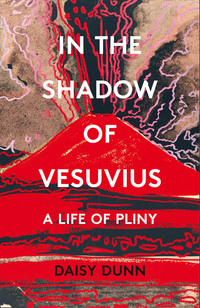
Cover image: Vesuvius, 1985 (screenprint in colours),
Warhol, Andy (1928–87) / Private Collection Photo © Christie’s Images / Bridgeman Images.
Daisy Dunn asserts the moral right to be identified as the author of this work
Maps by Martin Brown
Lines from ‘The Barn’ from Death of a Naturalist by Seamus Heaney reproduced courtesy of Faber and Faber Ltd.
A catalogue record for this book is available from the British Library
All rights reserved under International and Pan-American Copyright Conventions. By payment of the required fees, you have been granted the non-exclusive, non-transferable right to access and read the text of this e-book on-screen. No part of this text may be reproduced, transmitted, down-loaded, decompiled, reverse engineered, or stored in or introduced into any information storage and retrieval system, in any form or by any means, whether electronic or mechanical, now known or hereinafter invented, without the express written permission of HarperCollins
Source ISBN: 9780008211097
Ebook Edition © May 2019 ISBN: 9780008211103
Version: 2020-07-09
Dedication
For my grandparents, Don and Wendy Short
Contents
Cover
Title Page
Dedication
Copyright
Maps
Nota
PART ONE: Aut-
Prologue: Darker than Night
1. Roots and Trees
PART TWO: Winter
2. Illusions of Immortality
3. To Be Alive is to Be Awake
4. Solitary as an Oyster
5. The Gift of Poison
PART THREE: Spring
6. Pliniana
7. The Shadow of Verona
8. Portrait of a Man
9. The Death of Principle
PART FOUR: Summer
10. The Imitation of Nature
11. A Difficult, Arduous, Fastidious Thing
12. Head, Heart, Womb
13. After the Solstice
PART FIVE: -umn
14. Life in Concrete
15. Depraved Belief
Epilogue: Resurrection
Picture Section
Timeline
List of Illustrations
Footnotes
Notes
Select Bibliography
Index
Acknowledgements
About the Author
By the Same Author
About the Publisher
Maps


Nota
This book explores the ways in which the Plinys – Younger and Elder – thought about life, death and the natural world. It is a dual biography structured around the life of the younger, better-documented Pliny, whom I have pursued through his Letters together with his uncle Pliny the Elder’s extraordinary encyclopaedia, the Natural History. It is also a celebration of the enduring appeal of both men, their work and the treatment of their ideas through the passage of time.
Reading the Letters and Natural History in Latin is very involving and requires much to-ing and fro-ing between sources – from Roman histories to satires; from ancient Greek poetry and medical tracts to the writings of the Church fathers. Among Pliny the Younger’s regular correspondents were the historian Tacitus and biographer Suetonius, whose celebrated accounts of the emperors post-date his letters by a number of years and supplement several of his descriptions of events in Rome. There are also a good many surviving but largely forgotten inscriptions and archaeological remains which are relevant to the lives of the two Plinys. I have brought these together with the literary sources in order to provide a three-dimensional view of the world from which they came. All translations from the Greek and Latin are my own, unless indicated otherwise.
In the spirit of both Plinys, I have eschewed a strictly chronological narrative and followed rather the seasons of the Younger’s life, while drawing on the Natural History throughout. The shape of the book gives a flavour of Pliny the Younger’s year, which was structured slightly differently from ours. Julius Caesar had reformed the calendar in the first century BC because it had fallen out of step with the seasons – the discrepancy caused by the fact that it was based on the cycle of the moon. Caesar had it replaced with a solar calendar. There were now twelve months divided into thirty or thirty-one days each, with the exception of February which, as today, had twenty-eight, or twenty-nine every leap year. Although Pliny the Elder confessed that there was still little exactitude in ascertaining the proper time for a star to appear, or in marking the beginning of a new season when change is so gradual and weather so unpredictable, the Julian Calendar offered a stable framework. Pliny the Elder had winter begin on 11 November, spring on 8 February, summer on 10 May and autumn on 8 or 11 August.
PART ONE
PROLOGUE
Darker than Night
Lucky, I think, are those men with a god-given gift for doing what deserves to be written about or writing what deserves to be read – and very lucky are those who can do both. Through his own books and yours, my uncle will be one of these.
Pliny the Younger to Tacitus, Letter 6.16
The crisis began early one afternoon when Pliny the Younger was seventeen and staying with his mother and uncle in a villa overlooking the Bay of Naples. His mother noticed it first, ‘a cloud, both strange and enormous in appearance’, forming in the sky in the distance. Pliny said that it looked like an umbrella pine tree, ‘for it was raised high on a kind of very tall trunk and spread out into branches’. But it was also like a mushroom: as light as sea foam – white, but gradually turning dirty, elevated on a stem, potentially deadly.1 They were too far away to be certain which mountain the mushroom cloud was coming from, but Pliny later discovered it was Vesuvius, some thirty kilometres from Misenum, where he and his mother Plinia were watching.
The cape of Misenum was famous for its sea urchins and even more so for its harbour, which was home to one of Rome’s two imperial fleets.2 Its name preserved the memory of Misenus, trumpeter of Aeneas, who fought alongside Hector in the Trojan War and escaped the burning citadel only to perish ‘in a death he did not deserve’. ‘In his foolishness,’ said Virgil, ‘he happened to fill the waves with sound by blowing into a seashell, and summon the gods to a song contest.’3 Triton, son of the sea god Neptune, drowned him in his envy. It was in the course of gathering wood for Misenus’ funeral pyre, in the volcanic region of Cumae, that Aeneas discovered the golden bough that secured his entry to the Underworld.
Pliny the Elder, Pliny’s maternal uncle, was admiral of the fleet, in charge of maintaining and fitting out the boats which served predominantly ‘as protectors’ of the seas off Italy.4 On the morning the cloud appeared, he had risen early as usual, bathed, lunched, and was working when, at around midday, his sister came to tell him what she had seen. Abandoning his reading and calling for his shoes, he made his way to a higher vantage point for a better view.
Pliny the Elder was a historian and a naturalist as well as an admiral. He had recently finished writing his thirty-seven-volume encyclopaedia on natural history, a few passages of which were concerned with the world’s volcanoes. He had described Mount Etna in Sicily glowing through the night and ‘covering in frost the ash it ejects’ when snow lay over its surface.5 He had described, too, the volcano Cophantus in Bactria, north of the Hindu Kush, and Mount Chimaera in Lycia (in southern Turkey), where the fires allegedly grew when it rained but could be extinguished by earth or manure. He had written of a crater in Babylon that threw up flames like fish, and of volcanoes in Persia, Ethiopia, and the Aeolian islands. But not of Vesuvius. In the Natural History, Vesuvius is simply a vineyard-covered mountain watered by the River Sarno and visible from Pompeii.6 If Pliny the Elder knew it was a volcano at all, he thought it was extinct.
He gave the impression that the region of Campania was too green and well-watered to burn, with ‘plains so fertile, hills so sunny, glades so safe, woods so rich in shade, so many bountiful kinds of forest, so many mountain breezes, such fertility of crops and vines and olives, fleeces of sheep so handsome, bulls with such excellent necks, so many lakes, and rivers and springs which are so abundant in their flow, so many seas and ports, the bosom of its lands open to commerce on all sides and running out into the sea with such eagerness to help mankind!’.7 ‘Lucky Campania’, mused Pliny the Elder, was where Nature had gathered all her gifts.
The grapevines were especially famous. An ancient wall painting from the region shows the wine god Bacchus, dressed in a handsome bodysuit of grapes, surveying the vines on the lower slopes of a mountain – in all likelihood Vesuvius itself. An enormous snake, the ‘Good Spirit’ of vineyards, is depicted in the foreground of the painting. It was by snapping off these long, trailing vines, weaving them into ladders, and lowering themselves onto a plain beneath the slopes of Vesuvius that Spartacus and his men had managed to launch a surprise attack on the Romans, drive them back, and take over their camp during their uprising in 73 BC.8 Almost a century after Spartacus was defeated, the Greek geographer Strabo noted the presence of blackened stones towards the summit of the mountain and suggested that the ash of fires ‘since quenched’ had contributed to the fertility of the soil, as it had upon Mount Etna.9 If fires were responsible for the success of Vesuvius’s grapevines, however, there was no suggestion that they had not been extinguished for good. Vesuvius first erupted about 23,000 years before and had now been dormant for approximately 700 years – dormant, but as alive as the crops which enveloped it.10 Like a snake, it was now sloughing its skin.fn1
The process had begun perhaps two hours before Pliny’s mother first noticed it. A relatively small eruption had presaged the larger one that formed the cloud.11 Taller and taller the pine tree grew, propelled from its chamber and sucked up into the sky through convection.12 At its peak, it would reach a height of thirty-three kilometres.13 Pliny the Elder decided that this ‘phenomenon’ warranted further investigation. After taking in what he could from his lookout point he made up his mind to leave Misenum to draw nearer to its source. Earlier in the day he had given his nephew something to write. When he now asked him whether he wanted to accompany him, Pliny refused, insisting that he would prefer to stay behind with his mother in order to work. Pliny the Elder would go without him. He gave orders for a boat to be fitted out and was just leaving the villa when he received a written message from his friend Rectina, who lived beneath Vesuvius. Terrified, she was begging for his help, for there was now ‘no escape except by boat’. It was then, Pliny recalled, that his uncle ‘changed his plan and what he had begun as an intellectual pursuit he completed with all he had’.14 Admiral Pliny had the entire fleet at his disposal and launched the quadriremes – large, but surprisingly swift ships equipped with two banks of rowers, two men per oar – with the intention of bringing help not only to Rectina, but to as many on that populated shore as he could.
For several hours, the fleet held course across the Bay of Naples. Despite heading in the very direction whence others were now fleeing, Pliny’s uncle was said to have been so fearless that ‘he described and noted down every movement, every shape of that evil thing, as it appeared before his eyes’.15 To any sailors who survived to tell the tale of their admiral’s fortitude, the chance of reaching land in safety must have seemed increasingly remote as they proceeded across the water. First ash rained down on them, then pumice, then ‘even black stones, burned and broken by fire’. This was no hail storm. The fall of grey-white pumice is thought to have lasted eighteen hours in total.16 On average, it was falling at a rate of 40,000 cubic metres a second.17 By the time the quadriremes had come within sight of the coast, the pumice had formed island-like masses on the sea, impeding them from advancing any further. When the helmsman advised turning back, Pliny the Elder adamantly refused. ‘Fortune favours the brave,’ he said.
Although the pumice prevented them from reaching Rectina, they determined to put in where they could. Stabiae, a port town just south of Pompeii, lay about sixteen kilometres from Vesuvius. A contemporary image reveals the town’s harbour to have had long elegant promontories, criss-cross balustrades, sand-coloured pediments and towering columns crowned with sculptures of men.18 By the time the fleet arrived here, the columns would have been mere shadows, with evening falling across the bay.
As ash and pumice continued to pour down, Pliny the Elder went to find a friend, Pomponianus, who had already stowed his possessions aboard a ship, ‘set on flight if the opposing wind settled’. Pliny the Elder embraced him and requested a bath before joining him for dinner. ‘Either he was content,’ Pliny speculated later, ‘or he showed a semblance of contentment, which was just as great-hearted.’19 As his host and his household watched flames leaping from the mountain and lighting up the night sky, Pliny the Elder told them that they were witnessing merely ‘the bonfires of peasants, abandoned through terror, and empty houses on fire’.20 As if soothed by his own deception, he soon fell asleep. He was fifty-five years old, corpulent and had a weak windpipe.21 As the hot ash and pumice began to mount up on the pavement outside the doorway, his raw and narrow airways – call it asthma – for once proved to be a blessing. He might have been trapped inside had his noisy breathing not alerted Pomponianus’ household to his continued presence inside the house. Rousing him from his bedchamber, they gathered to make a final decision as to whether to stay put or leave while they still could. The weight of the pumice and repeated earth tremors had now begun to cause buildings to collapse. If they remained in the villa they might be crushed. If they ventured outside, then the pumice could still throw other structures down on top of them. About two metres of it would fall on the town of Stabiae alone.22
The inhabitants of Campania had felt the tremors for days, but they were used to these movements, this background noise. As Pliny observed, ‘they were not particularly frightening because they were so commonplace’.23 Over sixteen years had passed since the last truly devastating earthquake had struck, demolishing temples, baths and municipal buildings in Pompeii and the surrounding towns.24 Some citizens had fled after that earthquake and vowed never to come back.25 More had stayed, only to witness their neighbours wander in a sort of madness, their livestock – over 600 sheep – dying as noxious gases permeated the atmosphere.26 It would not occur to the people of Campania to connect these events with the eruption that was now taking place. It must have been inconceivable that what was unravelling so quickly had been set in train so many years earlier.
The earthquake of ad 63 had been as unexpected in its timing as it had in its force. Striking on 5 February, when Pliny the Younger was little more than a year old, it made a mockery of the ancient belief that earthquakes never happen in winter.27 Theories put forward over the past 600 years for the cause of earthquakes ranged from wrathful gods to the movement of water beneath the earth and activity of fire or air.28 Pliny the Elder, for his part, subscribed to a theory of ‘opposing winds’.29 He believed that the earth and all things upon it were full of life-giving breath; that winds lurked deep beneath the ground in even the darkest hollows and ravines. Left alone, these winds were quite content within their burrows. They would make room for any fresh air that tried to insinuate its way into their caverns by leaving through chinks in the earth.30 Strato of Lampsacus, a philosopher from the school of Aristotle, had discovered that hot and cold repel one another. The winds beneath the earth would do all they could to recede from the cool, incoming air. If they could find no chinks through which to escape, however, and air continued to filter in, then a mighty struggle would ensue. It was in the midst of this battle between winds that the earth burst open to relieve the pressure mounting inside. Neither Pliny the Elder nor anyone else yet knew of the existence of tectonic plates, but his theory showed an understanding of the role that opposing forces play in triggering earthquakes.
The winds theory even partially accounted for what happened next. It was rightly presumed that the sheep that died in AD 63 did so as a result of bowing their heads so close to the earth from which gases such as carbon dioxide and sulphur were now emanating. The death of livestock is a common occurrence in volcanic regions. In the spring of 2015, over five thousand sheep died in Iceland as a result of intoxication by volcanic sulphur. Humans hold their heads sufficiently high to inhale the poison in smaller doses. Their heady confusion tends to pass. But what no one realised in AD 63 was that this earthquake and gaseous release was evidence not of winds moving beneath the earth but of magma rising within Vesuvius. Earthquakes had continued to plague southern Italy over the next sixteen years of the younger Pliny’s life as – slowly – the volcano began to wake.
As the earthquakes started to intensify across the Bay of Naples, buildings seemed both to be swaying on their foundations and collapsing from their debris-laden roofs. Pliny the Elder remained sufficiently rational to realise that to stay inside, while the earth shook and the sky fell in, would be fatal. He, Pomponianus and the other men and women in the house at Stabiae gathered up pillows, strapped them to their heads, and ventured out into the darkness. Pumice is light and porous – formed, as it is, when gas bubbles expand and burst inside the rising magma, which then solidifies and rapidly cools – but a large piece of rock might easily have felled them.31
Back in Misenum, Pliny and his mother had made a similar decision. Pliny had gone to bed early only to be woken from a short sleep. Although pumice and ash were yet to fall here, the tremors had become so strong that objects and furniture were ‘not only being moved, but turned over’.32 Fearing accident or worse, they went outside and sat on a terrace that overlooked the sea. On the previous day Pliny had been too absorbed by his work to accompany his uncle out of Misenum. On this night, being absorbed by his work might have been – might yet be – his salvation. Summoning a slave to bring him Livy’s Ab urbe condita, a recondite history of Rome, Pliny resumed his note-taking. As he read about the foundation and development of Rome and its people – and as the earth continued to shake – Pliny focused solely on the work in hand. With retrospect he asked himself whether this was not an imprudent thing to have done (he was sufficiently circumspect to realise how he must have looked – to be scribbling while masonry was crashing to the ground), but in his heart he never doubted the wisdom of his act. He was doing precisely what he imagined his uncle would be doing, wherever he was.
Morning was now rising over Stabiae, but it was unlike any morning the people had known. It was like night, only ‘blacker and denser than all the nights there have ever been’.33 It was then that Pliny the Elder took a torch and made his way to the shore to see whether there was any chance of escape. The sea was wild. The wind was against them. And so he lay down on a cloth on the beach. He called out once, then a second time, for some cold water. He drank. Then something happened.
Fresh flames appeared and with them ‘the smell of sulphur that suggested there were more flames to come’. The people of Stabiae fled, among them Pliny the Elder’s companions. They had probably sensed the onrush of a nuée ardente – an avalanche-like ‘burning cloud’ of ash, gas and rock.34 The pine-tree cloud that Pliny and his family had witnessed from Misenum on the previous day had now collapsed into itself, too dense to be supported on its trunk any longer.35 Released from this collapse, a series of nuées ardentes had begun to sweep Campania at a minimum of a hundred kilometres an hour, making debris of whatever lay in their path.
Neither Pliny nor his uncle knew that deadly surges had already overwhelmed the town of Herculaneum. Pliny, sitting with his mother at Misenum, and his uncle, lying on a beach at Stabiae, were comparatively distant from the volcano. Stabiae lay sixteen kilometres to its south-east; Herculaneum, just seven kilometres to its south-west. Although Herculaneum had experienced little pumice-fall owing to the direction of the wind, the earthquakes had been catastrophic. In a bid to take cover, hundreds of its residents had made their way to the shore where a series of arched vaults, probably boat stores, was set back from the coast. Each vault was barely three metres wide by four metres deep. Those who could not fit inside one or reach their shelter in time – many men ceded their places to women and children – remained exposed on the coast.
The people of Herculaneum saw the avalanche coming. Huddled beneath the arches and spread out over the beach, they clung to each other. They were entirely helpless. As floods of volcanic matter hurtled towards them, they died upon impact with its heat. In its second stage, a nuée ardente produces pyroclastic flow, a current of magma and gas of around 400 degrees Celsius. Struck by a series of volcanic surges and flows, Herculaneum was buried deep beneath the layers of debris. The arches under which its inhabitants lay became their funeral vaults, shrouding their remains for the next two thousand years.
The panicking crowds at Stabiae were now witnessing what was probably the last of six pyroclastic surges. Two had already struck Herculaneum, a third hit Pompeii, a fourth overwhelmed any Pompeians who remained, and the fifth buried their city.36 Roused from his blanket on the beach, Pliny the Elder got up, leaning on two slaves for support. He managed to stand, but then he fell, defeated.fn2
Pliny later reasoned that his uncle died because the thick fumes and air had obstructed his fragile airways. He was probably right. The surge cloud from a nuée ardente is low in oxygen and would have filled his lungs with ash, asphyxiating him.37 When his body was discovered a few days later, it was said by whoever found and reported it to be intact and unharmed, with the look more of sleep than of death. The body of a victim of thermal shock does not look peaceful. It is rigid, the hands typically clenched like a boxer’s, the result of tendons contracting in the heat. Many of the bodies later uncovered at Pompeii would show signs of thermal shock.
Pliny and his mother were further away from the volcano and better placed to escape. By daybreak, the earthquakes at Misenum had become so severe that they threatened to bring the villa down on top of them, and they quickly decided to leave the town. As mother and son made their way through the streets they found themselves followed by a crowd, ‘favouring someone else’s plan to their own, which in moments of fear is akin to prudence’.38 Crowd mentality steered the refugees clear of the falling buildings and into the possibility of safety.
Pliny and his mother proceeded by carriage. They were joined by one of Pliny the Elder’s friends who had recently come to visit from Spain. As the earth tremored, they darted one way then another, their vehicles twisting and turning. Over the course of their journey, they witnessed scenes which defied explanation. The sea seemed to ‘be absorbed back into itself and sort of be pushed back by the earthquake’, leaving a trail of marine life stranded in its wake.39 This was either the beginning of a tsunami or simply a further effect of the force of the earthquakes. Inland, meanwhile, ‘a terrifying black cloud, burst by twisting, quaking flickers of flame, began to gape to show long fiery tongues, like lightning, only bigger’. The cloud descended upon the earth and covered the sea until neither the island of Capri, nor even the promontory of Misenum itself, was visible on the horizon. Ash began to fall, only lightly, and hardly noticeable at all against the thick gloom that pressed them from behind, spreading over the earth like a torrent. Pliny did not know it, but the cloud was very probably the edge of the nuée ardente that had already killed his uncle at Stabiae.40 Pliny the Elder’s friend urged Pliny and his mother on before fleeing the danger himself: ‘If your brother, if your uncle, is alive, he would want you to be safe; if he has died, he would have wanted you to survive him. So why do you hesitate in your escape?’
There was now little time. Pliny’s mother begged – ordered – her son to leave her behind, knowing she would slow him. She told him that she was ‘heavy in years and body and could die happy, if only she was not the cause of [his] death’.41 Reflecting on this moment, Pliny thought of Virgil and his description of the fall of Troy. In the poem, Aeneas’ wife, Creusa, follows behind him as they make their escape. By the time Aeneas reaches safety, she has gone.
Pliny’s mother stayed close by him as the ash fell. He took her firmly by the hand so as not to repeat Aeneas’ mistake. Leaving the carriages behind, they hurried on by foot while there was still enough light to see. At Pliny’s suggestion they left the main path so as not to be trampled by the crowd in the darkness. At one point they paused to rest and the cloud made night of day.
This day, which had struck the people at Stabiae as blacker than any night they had ever experienced, seemed to Pliny ‘not so much a moonless or cloudy night, but as if the lamp had gone out in a locked room’. He might still have been in his study had it not been for the screaming:
You could hear the wailing of women, the cries of babies, the shouting of men. Some were calling for their parents, others for their children, others for their partners, trying to make out their voices. Some wept for their own fate, others for those of their relations. There were some who prayed for death through fear of death. Many raised their hands to the gods; more reasoned that there were now no gods anywhere and that the night would last forever and ever across the universe.42
Was this the end of the world? Was this the ekpyrosis the Stoic philosophers feared, the fire that closed one life cycle and opened another? Was this the moment ‘Titan Sun casts out day’ and ‘a kind of death and chaos overcomes/ all the gods together and/ death sets itself upon itself …?’43
Pliny’s uncle had feared the coming of the conflagration. He had noticed that sons were now shorter than their fathers and taken this as a sign that the human seed had begun to dry in the approaching flame.44 If anyone needed proof of how dramatic the shrivelling of man had been, then he provided it in his description in his encyclopaedia of an ancient corpse measuring twenty metres tall that had been uncovered in a mountain on Crete. Split open during an earthquake, the mountain appeared to have yielded the body of a giant. Some believed it was Orion, whom Jupiter, king of the gods, placed in the sky as a constellation. Others said it was the remains of Otus, son of Neptune. But could it not have been human? The body of mortal Orestes, son of Agamemnon, had already been exhumed and measured at over three metres tall.fn3
Pliny the Elder had resorted to myth to explain the inexplicable and now the younger Pliny imagined himself inhabiting epic. The desperate women and infants of Campania were like the souls of the Virgilian Underworld. Pliny was Aeneas, who in Virgil’s poem is surrounded by the ‘overwhelming sound of wailing/ and weeping spirits of infants, whom the black day/ stole away, ripping them from the breast at the very threshold/ of sweet life, and plunged into bitter death’.45 He was in a living hell. He was not even particularly close to the volcano. He could only have imagined the depths of hell others had now entered. Pliny was as much a visitor to Misenum as Aeneas was to the Underworld. If only his escape could be as easy.
The people of southern Italy were not alone in their fear. The effects of the eruption were felt thousands of kilometres away, ‘the amount of dust so great, all in all, that some reached Africa and Syria and Egypt, and some reached Rome, and filled the air above and cast the sun in shade’.46 This dust would later spread ‘sickness and terrible pestilence’ among the survivors. Its sudden appearance overhead was bewildering, even to the people of Rome, who ‘did not know and could not imagine what had happened, but considered that everything had been turned upside down, and that the sun was vanishing into the earth, and the earth being raised to the heavens’.47 Some spoke of giants in the darkness, or spread false stories of the extent of the destruction. Others merely panicked. Pliny and his mother carried on, shaking themselves free of the ash that settled on their shoulders to avoid being ‘smothered and overcome by its weight’.48 Unlike so many of the people around him, Pliny did not cry, because even in these dire moments he could reason, and in reasoning, he found something close to belief. His belief became his consolation when he told himself, ‘Everything is dying with me, and I am dying with it.’
It was a few days before the darkness lifted. As it did, there was a glimmer of sunlight and Pliny’s vision was restored. His first impression, upon turning back to Misenum with his mother to await news of his uncle, was that ‘Everything had changed, buried deep in ash as if in snow.’49
ONE
Roots and Trees
Paper is made from papyrus that is cut into strips with a needle so as to be as wide as possible but very fine … Every sheet is woven on a board dampened with water from the Nile. The muddiness of the liquid serves as a glue.
Pliny the Elder, Natural History, Book 13
There was a time when it was thought there was only one Pliny, a curious conflation of the Elder, who died in the eruption of Vesuvius in AD 79, and the Younger, who survived it. The most important contribution the elder Pliny had made to history was his multi-volume encyclopaedia. The Natural History was astonishing for its breadth. Believing that ‘no book is so bad that there is nothing to be taken from it’, Pliny the Elder had crammed facts from as many as 2,000 different volumes into its pages, citing the research of Greek and Roman geographers, botanists, doctors, obstetricians, artists, and philosophers.1 Offering observations on everything, from the moon, to elephants, to the efficacy of ground millipedes in healing ulcers, Pliny the Elder had left behind an indispensable compendium of knowledge.
His nephew was no less versatile. Though commonly confused with his namesake through Late Antiquity and the Middle Ages, Pliny the Younger was an important figure in his own time.2 He survived the Vesuvius disaster to become a lawyer, senator, poet, collector of villas, curator of drains, and personal representative of the emperor overseas. He was also a prolific writer of letters, a couple of which contain his account of the eruption. It took a priest at the cathedral of Verona in the early fourteenth century to disentangle the orator who wrote these letters from the historian and admiral of the fleet who produced the encyclopaedia and perished beneath the volcano.3 Giovanni de Matociis, the author of a book on empire from Rome to Charlemagne, produced a critical essay which, though laden with errors, made the essential point. There was not one Pliny but two.
In around 1500, a complete manuscript containing over three hundred of Pliny the Younger’s letters – far more than de Matociis had known of – was miraculously uncovered in an abbey in Paris. The papyrus dated to the fifth century, making it one of the oldest classical manuscripts ever found (six leaves of it still survive in a library in New York). Aldus Manutius, one of the great publishers of Renaissance Venice, acquired it to produce a book of Pliny the Younger’s correspondence, for which there was now a considerable appetite.4 The discovery in 1419 of an incomplete manuscript in Verona (or possibly Venice) had prompted the first printed edition of the younger Pliny’s letters in 1471, two years after his uncle’s encyclopaedia was first published in print.5 The release of books by two Plinys in as many years was met with considerable emotion across Italy.
No sooner had the books been published than an intense intellectual dispute broke out between the cities of Verona and Como (ancient Comum) over the birthplace of the uncle and nephew. The Veronese priest de Matociis had been in no doubt that the pair were native to his home town. In the preface to his encyclopaedia, Pliny the Elder invoked Catullus, the love poet born in Verona in the first century BC, as his ‘fellow countryman’. Verona and Comum both formed part of former Gaul. The Veronese now seized upon these words as proof that Pliny the Elder was one of them. Rattled by their presumption and haughtiness, the people of Como, a town some 150 kilometres to Verona’s north-west, retrieved their copies of the Natural History and threw open its covers to reveal what was written in the frontispiece. Early editions of the encyclopaedia were prefaced by a biographical note which identified Pliny the Elder explicitly as a man of ancient Como.6 The Veronese refused to back down. The horror of having witnessed scholar after scholar, poet after humanist – Petrarch, Flavio Biondo, Lorenzo Valla, Niccolò Perotti – come out in support of Verona’s rivalrous claim eventually drove the people of Como to more extreme measures.7 In their determination to win this contest they commissioned a sculptor to produce larger-than-life-size statues of both Plinys, which they displayed prominently in their town centre. The Veronese responded by erecting a statue of the elder Pliny on the rooftop of their council building. If they could not have both Plinys they could at least have one. Standing among the most famous sons of ancient Verona – Catullus and Cornelius Nepos, the dedicatee of his poetry book, the architectural writer Vitruvius, and the poet Aemilius Macer – Pliny the Elder would watch over Verona’s Piazza dei Signori for ever after.8
If the people of Como were going to settle this dispute, they had no choice but to produce a definitive portrait of the lives of the Plinys in their ancient town. The task was taken up in the sixteenth century by a pair of polymaths: Paolo Giovio, a collector of art, advisor to the art historian Giorgio Vasari, and physician to Pope Clement VII, and his brother Benedetto, a notary, classical scholar, and historian.9 Gifted and imaginative, if not also highly impressionable, they were precisely what Como needed. Paolo put aside his copy of the Natural History, picked up the Letters and began to dream of constructing a novel kind of museum-villa in memory of Pliny the Younger. Meanwhile Paolo’s brother sought to deconstruct the Veronese claims to Pliny the Elder on textual grounds and to re-establish the connection of Pliny the Younger to the town through archaeology. It would take time and ingenuity but the Giovio brothers would prevail. The Plinys were men of ancient Como – and they were worth fighting over.
Pliny the Elder was born Gaius Plinius Secundus in Comum in AD 23 or 24. His family was of the second highest social order, the equestrians, which meant that he was wealthy, but not so illustrious in his birth as the Julii or Claudii or any of the other great patrician families who had filled the Roman senate for centuries.fn1 He began his career, as was customary for a man of his class, with a spell of military service, which he took to with assiduity. In AD 47, thirty years prior to his appointment as admiral of the fleet, he joined a campaign off what is now the Netherlands and found himself waging ‘a naval battle against trees’.10 He was on the lakes when he saw them. They were not rolling over the surface of the water, but floating towards him as upright as ships’ masts. It was terrifying. He recalled that the trees often took the men when they were least prepared, ‘driven by the waves as if purposely against our prows when we were moored at night’. The men had no choice but to confront the huge trunks head on.
It was typical of Pliny the Elder to seek an explanation for the peculiarities of the landscapes he encountered on his tours: it was because the trees on the banks attained such heights in their ‘determination to grow’ that they could be borne along vertically on their roots when they were torn up by the wind and waves. The description sounds fanciful but it is perfectly possible for a current to carry trees along on their roots. Many stumps were carried erect down river during the eruption of Mount St Helens in Washington State in 1980.11 It is thought that the petrified forests of Yellowstone National Park may also have developed as a result of trees being carried upright through water.12
The curiosity that drew Pliny the Elder towards Mount Vesuvius, and his death, was the product of a lifetime’s fascination with the natural world. Already as a young soldier he was making observations which he would incorporate into his Natural History. His description of trees floating across the lake was included in a section on the forests of Germania. It was a rare piece of reflection, for Pliny the Elder seldom paused to reminisce on his own experiences, and an important one, for it was in these woods, so thick that they ‘add to the cold with their shade’, that the Romans had suffered one of their most crushing defeats in recent history.
At the end of the previous century, the first Roman emperor, Augustus, had sent the Roman army into German territory in the hope of pushing their frontier north beyond the Rhine towards the River Elbe.13 Drusus, son of Augustus’ third wife Livia, enjoyed some formidable early successes in the campaign, but died in 9 BC following a fall from his horse. About fifty years later, Pliny the Elder dreamed that he had been visited by Drusus’ ghost. According to Pliny the Younger, it was as a result of this encounter, in which Drusus begged to be saved from ‘the injustice of being forgotten’, that his uncle went on to produce a twenty-volume account of the German Wars.14 The work is sadly now lost but proved useful to later historians, who referred to its passages on Agrippina the Elder, mother of the emperor Caligula, and her attainment of more power over the Roman army than the generals themselves.15
After Drusus died, his brother Tiberius, who would precede Caligula as emperor from AD 14 to 37, worked hard to pacify the Germanic tribes, but was recalled before the Romans could conquer all the territory they desired around the Rhine. The most catastrophic setback came in the autumn of AD 9 when a Roman legate named Varus was leading three legions through the thick Teutoburg Forest near the River Weser. Varus fatefully put his trust in a Germanic chieftain, who had formerly served with the Roman auxiliary, only to be attacked by his tribesmen.16 The Roman legions were destroyed. Although the Romans lost the land they had gained to the east of the Rhine, they managed to create a zone of provinces beneath the Danube and had made sufficient inroads to maintain troops across the Rhineland with centres at modern Mainz and Cologne. Over the following decades, insurrections, mutinies and plundering became increasingly common among the Germanic tribes, and it was in the interest of quelling the so-called Chauci that Pliny the Elder had found himself waging a war against trees in AD 47.
The Romans at home came to know the Germans by repute. They learned that they had wild blue eyes, reddish hair, large strong frames, little tolerance of thirst and heat, but natural resistance to cold and hunger owing to their climate.17 Their tribes did not live in cities but ‘scattered and far apart, wherever a fountain or plain or grove took their fancy’.18 Pliny the Elder at least had the good fortune to be confronting ‘the very noblest of the Germans, who elect to preserve their greatness through justice’.19 The Greater Chauci lived between the Elbe and Weser rivers and the Lesser between the Weser and the Ems. As the Romans’ commander, a severe but capable man named Gnaeus Domitius Corbulo, led the triremes up the Rhine channel, the rest of the fleet proceeded through a network of estuaries and canals.20 Pliny the Elder took one look at the territory and concluded that the Chauci were ‘a miserable people’ to inhabit country so flood-prone.21 He likened them in their huts on higher ground to sailors aboard a ship and then, as the waters receded, to victims of a shipwreck.
As he and his fellow soldiers set about sinking the tribesmen’s ships, Corbulo succeeded in subduing the neighbouring tribe of the Frisians, and made after the leader of the Chauci.22 No sooner had he put him to death than he received orders from Rome to withdraw his troops to the near bank of the Rhine.23 Rome was now ruled by Claudius, son of Drusus who had died in Germania. His rise to power had come about almost by accident when, in AD 41, the Praetorian Guard murdered his nephew Caligula and supported him to take his place. Though sickly, stammering, and frequently taken for a fool, Claudius was highly astute. The last thing he wanted was to stir up war among the very tribes he hoped to pacify. The Roman empire now stretched from Hispania in the west to Pontus (north-east Turkey) and Judaea in the east, and he had ambitions of extending it further still. By the end of his rule, Claudius would have succeeded in annexing Thrace, Lycia (in southern Turkey), Noricum (Austria with some of Slovenia) and Mauretania in north Africa. In the period when Pliny the Elder was in Germania, Claudius’ attentions were firmly focused on Britain. Knowing that it would be a tremendous coup to succeed where Julius Caesar had twice failed – in conquering the ‘remotest island in the west’ – Claudius had launched an expedition to Britain in the summer of AD 43 and returned to Rome in triumph the following year.24 Although it would be another forty years before the Romans had truly conquered England and Wales, Claudius had set the process in motion.
Germania, meanwhile, remained unsettled. In around AD 51, Pliny the Elder returned to the region to quell the agitations of another tribe, the Chatti. It was probably in this period that he began writing his book On Throwing the Javelin from Horseback. Like his histories of the German Wars, the work is unfortunately lost, but presumably set out the military techniques he had learned on the battlefield. His experiences might well have commended to him the German technique of hurling javelins at close quarters over the Roman tradition of firing them at long range.25 Later, in his Natural History, Pliny the Elder provided the merest glimpse into how he might have soothed his aching limbs after these exercises. There were hot springs at nearby Mattiacum, modern Wiesbaden, where the water, he wrote, remained warm ‘for three days’.26
Not everyone would have found military life conducive to writing, but Pliny the Elder happened to be posted under a commander who had literary ambitions of his own. Pomponius Secundus would one day be celebrated for the ‘erudition and polish’ of his plays, one of which was inspired by the story of Aeneas.27 Pliny the Elder later described him as ‘a poet and very distinguished citizen’ who was so self-restrained that he never belched.28 Although Pomponius failed to achieve war against the Chatti, he was greeted in Rome with triumphal honours, which were but ‘a fragment of his fame in the eyes of posterity, among whom the glory of his poems prevailed’.29 On visiting him at home, Pliny the Elder was impressed to find official papers in his collection dating from almost two hundred years earlier.30 These, and his experience of his command, left a lasting impression; a biography of Pomponius Secundus, written in his memory, is among Pliny the Elder’s other lost works.
Having returned from Germania, Pliny the Elder went to see Claudius put on a magnificent naval battle on a lake beside a mountain he had had bored through in central Italy. Keen to display his muscle against the backdrop of this spectacular feat of engineering, the emperor had the Roman triremes and quadriremes drawn up and boarded by an extraordinary 19,000 servicemen. Crowds from the nearest towns and from as far away as Rome arrived and filled the banks and hills ‘in their cupidity or duty to see the emperor’.31 Pliny the Elder’s eye, however, was drawn not to Claudius but to his fourth wife (and niece), the empress Agrippina the Younger, for she was dressed in a ‘cloak of woven gold without any other material’.32 Pliny the Elder never failed to notice a glint of luxury. He paused on Agrippina’s cloak as if it held a clue to her true character.
He would be among several historians to suggest that Agrippina was responsible for Claudius’ death a few years later. In the autumn of AD 54, the empress was said to have ordered Claudius’ plate of boleti (bolete, perhaps porcini) mushrooms to be poisoned because she feared he was grooming his natural son Britannicus as his successor rather than her own son Nero, whom she had had him adopt.33 Succession under the Julio-Claudian emperors was never without drama. Even the emperors who were fortunate enough to have natural sons had reason to fear the emergence of rival heirs. Pliny the Elder incorporated the rumour of Agrippina’s machinations into his encyclopaedia as little more than an illustration of the dangers of mushrooms. It was his belief that, if mushrooms were not spiked by a scheming empress or poisonous by Nature, then they could still become deadly by absorbing whatever happened to be in the soil where they sprang up. The nail from a soldier’s boot, a piece of old rag, even the breath of a snake in the soil could render a mushroom noxious as it rose ‘lighter than sea foam’ from its womb-like tunic.34 As far as Claudius’ mushrooms were concerned, the poison only spread. Agrippina’s act, Pliny the Elder quipped, gave the world a new ‘poison’ in the form of the teenage emperor Nero.
While initially Nero put on an honourable front – arranging an elaborate funeral for Claudius, abolishing some taxes and reducing others, hosting extravagant entertainments for the people – he soon lived up to Pliny the Elder’s assessment of him.35 First he had his stepbrother Britannicus poisoned. Then, after several failed attempts, he dispatched his controlling mother to her death. Then he killed his aunt. He then kicked his pregnant wife Poppaea to death when she reproached him for returning home late from the races.36 Around sixty years would pass before Suetonius recounted these murders in his Lives of Rome’s rulers, from Julius Caesar to Domitian. The Algerian-born biographer (he is thought to have come from the Romanised town of Hippo Regius) was head of the libraries at Rome and had access to the imperial archives. Even allowing for some bias in his account, it is clear that the latter part of Nero’s rule was deeply unsettled. If Pliny the Elder had hoped that he would have more freedom to pursue his literary interests after returning from his Germanic expeditions, then Nero’s impulsiveness showed him otherwise.
When a fire broke out in Rome in AD 64, the emperor was among those suspected of starting it. Nero is in fact thought to have been outside the city when the fire started, but this did not stop some historians from speculating as to why he might have been so eager to destroy it. ‘As if offended by the ugliness of the old buildings and by the narrow winding streets,’ wrote Suetonius, ‘he set fire to the city so openly, that several men of consular rank caught his attendants with tow and torches on his own estate but did not arrest them.’37 The city burned for six days and seven nights. To deflect blame, Nero selected a scapegoat. He became the first Roman emperor to persecute Christians, whom he was said to have punished less for the conflagration than for their ‘hatred of the human race’.38 ‘Believers’ were wrapped up in animal pelts and bitten by dogs, fixed to crosses, and used as human torches to light up the night sky over the imperial gardens. Amongst the Christians to die in Nero’s reign were the apostles Peter and Paul.
It was not only the early Christians but the Roman senators who feared for their lives as their role became increasingly redundant in the face of Nero’s autocracy. Political delatio or ‘informing’ became a profitable business in Pliny the Elder’s lifetime and would continue to plague Rome after his nephew entered the senate in the late eighties AD. A man who laid an accusation against another could achieve political advancement as well as money. If he succeeded in informing upon someone for maiestas, or treason, then he was entitled to at least a quarter of the defendant’s property (further funds went to the state treasury).39 An unscrupulous emperor was only too happy to accommodate such activity if it resulted in the downfall of a senator who threatened his power. Stability in Rome had always depended upon its citizens’ willingness to monitor each other. Informers might have stolen the people’s ‘commerce in speaking and listening’, but for some men that was a small price to pay for an emperor’s protection and the opportunity for self-advancement.40
Such was the climate when, in AD 65, a group of senators, equestrians, and members of the Praetorian Guard came together to hatch a plan to blot out Nero’s poison for good. Intent on killing him during the coming games, the conspirators gathered round a popular senator named Gaius Calpurnius Piso, who might have made an honourable substitute for Nero, if only the details of their plot were not leaked before it could be executed.41 No sooner had Nero learned what awaited him than he made after the conspirators. Among those to die for their alleged involvement in the plot were Nero’s former tutor, Seneca the Younger, Seneca’s poet nephew Lucan, and that ‘arbiter of elegance’ Petronius, a satirical writer who was accused of being friends with one of the conspirators.42
Pliny the Elder played no part in the conspiracy but grew increasingly cautious about what he wrote down. In the mid to late sixties AD, when ‘every kind of study that was a little freer or more creative was rendered dangerous by the servitude of the times’, as his nephew later put it, Pliny the Elder resorted to writing only what he was certain could not offend: an eight-book treatise on The Ambiguities of Grammar.43
Pliny the Younger, known here onwards as ‘Pliny’, was born in about AD 62 under Nero, the last of the Julio-Claudian emperors, matured under the Flavian dynasty – Vespasian, his elder son Titus, and younger son Domitian – and peaked under the emperors Nerva and Trajan. We know far more about him than we do his uncle because he wrote so profusely of his experiences. One of the great chroniclers of life, Pliny could be rather pompous and self-regarding, but he was also highly sensitive to the world around him. His surviving letters, which range from a couple of lines to several pages of Latin, provide a rare insight into the habits of his uncle and an unparalleled portrait of his own life at the very centre of things in the first and early second centuries AD.
This was a period in which an equestrian could advance very quickly through the ranks of society. One hundred and fifty years earlier, Cicero had felt marginalised as a ‘new man’ – the first in his family to enter the senate – in a world dominated by aristocrats. Pliny seems to have experienced no such prejudice as he proceeded in his career. He became a senator and went on to document what it was like to live and work under an emperor’s nose. Of the many rulers he lived under, Domitian, who reigned from AD 81 to 96, and Trajan, who reigned from AD 98 to 117, shaped his experience the most. Pliny’s letters post-date Domitian but frequently refer back to the events of his rule. Generally despised by the historians who described him, Domitian caused Pliny considerable unease, but must have supported him for him to have risen through the senate as he did. Pliny’s letters reveal his struggle to distance himself from the detested Domitian in the wake of his death. Trajan, by contrast, was an immensely popular ruler, his rise to power hailed in his own times as the beginning of ‘a very happy age’ in Rome’s history.44 Pliny exchanged over a hundred letters with the ruler and honoured him with an extravagant speech. The Panegyricus, which Pliny delivered in the senate house in AD 100, is highly prized because it is the earliest complete speech to have survived from ancient Rome since Cicero’s Philippics against Mark Antony of 43 BC.45
Pliny’s letters contain another important first: the earliest pagan sources on the tension between Romans and Christians.46 Pliny encountered what he called the ‘depraved and unbridled superstitio’ – a subversion of what he understood by ‘religion’ – after Trajan dispatched him to Bithynia, on the south coast of the Black Sea, one of the many provinces now ruled from Rome, in the last years of his life.47 Although Pliny could never have predicted that by the fourth century Christianity would be the central religion of the Roman empire, his understanding of its resilience as a faith must have influenced the way he engaged with the Christians he met.
After his uncle’s death in AD 79, Pliny became his beneficiary and worked hard to sustain his memory. He inherited his agricultural estate in the upper Tiber valley (in modern Perugia), and personal effects including 160 of his notebooks, double-sided and written in ‘the very smallest handwriting’.fn2 Pliny the Elder had once rejected an extraordinary offer of 400,000 sesterces for his notebooks in favour of leaving them to his nephew. And, as Pliny later reflected, ‘there were rather fewer’ notebooks at that time than there would be by AD 79. He also bequeathed his nephew his name.48 Pliny the Elder had no children by the time he died and Pliny had lost his father as a boy. Pliny the Elder therefore adopted him posthumously by bequest of his will. It was in recognition of his adoption that Pliny the Younger tended to use the name ‘Plinius’, after his maternal uncle, rather than ‘Caecilius’, after his natural father.
Pliny might have struggled to remember all the facts the Natural History contained, but through his uncle’s words he gained a certain perspective on the world and impetus to establish his place within it. Despite professing to be ‘very lazy’ by comparison with the elder Pliny, he was deeply influenced by his methods for dedicating as many hours of each day as possible to scholarship. Pliny was in a sense haunted by his uncle and the scale of his achievements, which seemed to exceed what was possible in a single lifetime. The Natural History, Pliny the Elder’s sole surviving work, was a seminal achievement. Although the Greeks had produced compendia, and at least two Roman writers anticipated him in creating encyclopaedic collections of their own, the Natural History was of another order entirely.49 The oldest extant encyclopaedia from the Graeco-Roman world, it is indigestible in its enormity. Pliny the Elder claimed that it featured 20,000 pieces of information – though it is now known to contain far more. He included a list of contents in an attempt to make it navigable. The labourer might turn to the pages on ‘Viticulture’, the artist to the sections on pigments. The Natural History was a book for everyman.
Pliny the Elder was in the midst of a discussion of insects when he paused to confess, ‘I am forever watching Nature and persuaded to think that nothing about her should be deemed impossible.’50 In many ways a testament to that thought, his encyclopaedia was a celebration of the peculiarities of Nature over the corrupting influences of materiality. Wealth in this period was concentrated in the hands of the varied few (senators, equestrians, fortunate freedmen – former slaves), but Pliny the Elder still feared for the damage it might cause the wider world.
Perhaps the most vivid symbol of temptation and human corruptibility in the encyclopaedia was the oyster. Pliny the Elder returned to it often, revealing its qualities and health benefits as well as its dangers. He had seen men plunder the earth for gold and gems as well as oysters and feared for the earth’s future stability. If fire, war and general collapse did not lead to the destruction of the world, then he believed that man’s greed would.51 He witnessed emperors construct monumental edifices, Nero’s Golden House with its revolving dining room epitomising the needless opulence to which the affluent might aspire. Meanwhile, treasures were being carried home from overseas and whetting – or so he imagined – Roman appetites for even more. Pliny the Elder recognised that ‘globalisation’ could bring improvements, particularly in knowledge, but also challenges. Just as we have come to realise that technologies and antibiotics can be destructive when we rely too heavily upon them, he believed that the easy availability of resources and foreign medicines would weaken Rome.
In his Natural History he encouraged his readers to preserve the natural world from destruction by explaining how it could help them. Concerned that knowledge of the healing properties of plants was by now broadly confined to ‘the rustics and illiterate’, he had undertaken to study as many specimens as he could first hand to describe to his more urban readers. ‘With the exception of a few,’ he inspected them under Antonius Castor, ‘the greatest authority in that art in our age’, who lived beyond his hundredth birthday.52 Pliny the Elder enjoyed some success in his mission to promote natural remedies over strange concoctions from the East. Many of his treatments and cures would be extracted and republished as early as the fourth century as the Medicina Plinii. Structured predominantly ‘a capite ad calcem’ – from head to heel, an arrangement that became standard in medieval medicine books – the Medicina Plinii survived into the fourteenth century and beyond and was even known in medieval England. Several guides from this date recommended the wearing of amulets made from animal body parts to prevent pregnancy. Contraceptive advice found in Pliny the Elder’s Natural History included the insertion of parasites from a spider’s head into a deer hide worn on a woman’s arm.53
In his uncle’s writings, therefore, Pliny inherited not only his pearls of wisdom, but also his warnings against the destructive forces of wealth and greed. Pliny was descended on both sides of his family from the Comum elite. Estimated to have been twice as wealthy as the average senator, he was forever at risk of descending into the life of luxury that his uncle had censured.54 But while Pliny was not immune from indulging in his wealth, he recognised that there was more to life. He is often at his most interesting in his letters when pondering the sort of life he wants to lead. While perennially attracted to the idea of a quiet retirement spent enjoying books, baths and country air, he also savoured the spice of Rome and had ambitions of becoming a famous poet. In addition to the agricultural estate that he inherited from his uncle, he had a home on the Esquiline Hill in Rome, another on Italy’s west coast, and several in his native Comum. He was forever darting between the city, coast, countryside and lake and adapting his daily routine to each. It felt as natural to him to change houses and rooms through the year as it did to the Roman general who asked Pompey the Great, ‘Do I seem to you to have less common sense than the cranes and storks and thus not to change my living arrangements in accordance with the seasons?’55 Believing that a man is happiest when he can be confident that this name will live forever, Pliny was strategic in the ways he divided his time. The problem was that he wanted eternal fame and daily contentment. His life would be in many ways an exercise in how to achieve both.
Ücretsiz ön izlemeyi tamamladınız.