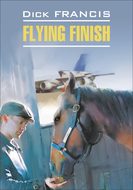
Kitabı oku: «Flying finish / Бурный финиш. Книга для чтения на английском языке»
Подготовка текста, комментарии и словарь Е. Г. Тигонен
© КАРО, 2010
Об авторе
Знаменитый английский писатель Дик (настоящее имя Ричард Стенли) Френсис родился в 1920 году в семье потомственных наездников, поэтому быть литератором не собирался. От любимой профессии жокея его отвлекла война. Френсис служил в военной авиации и, из любви к лошадям, самолет свой назвал Пегасом. В марте 1953 года он был представлен королеве Елизавете. Выступления на лошадях из королевской конюшни принесли ему международную известность, а падение лошади Девон Лох, на которой он выступал, сделало его намного известнее многих победителей Большого национального стиппл-чеза.
В 1956 году Дик Френсис стал спортивным обозревателем в газете «Санди Экспресс», а в 1960 году Дик и его жена Мери, имевшая некоторый литературный опыт, решили попробовать себя в жанре триллера. Супруги работали вместе: сначала сочиняли сюжет, потом Дик писал, а Мери правила. Так в 1962 году был создан роман «Фаворит». Но на обложке стояло лишь имя Дика – Мери категорически отказывалась афишировать свою роль в написании книги. Подобным же образом были написаны и остальные сорок романов.
Большинство произведений писателя посвящено скачкам и, скорее, их теневой стороне. Жокеи, бывшие жокеи и владельцы лошадей борются за чистоту и красоту этого прекрасного вида спорта, защищают его от тех, кто хочет на нем наживаться и ради наживы готов на ужасные преступления.
Главный герой всех романов Френсиса – человек не самой героической внешности, обычно находящийся в стесненных финансовых обстоятельствах, но всегда наделенный интеллектом, обостренным чувством справедливости, мужеством – и живучестью. Мелодраматическая линия, которая всегда сопровождает крутой детективный сюжет, неизменно приносила Френсису читательский успех, несмотря на настороженное отношение критики.
Мери умерла в 2000 году, и Френсис заявил, что отныне писать не будет, потому что жена была больше, чем его правой рукой – она была обеими его руками. Но в 2007 году вышла последняя его книга «Ноздря в ноздрю», в работе над которой принимал участие его сын.
Произведения Френсиса не раз были удостоены различных литературных премий. Он избирался председателем Ассоциации детективных писателей Великобритании и в 1996 году получил высшее звание среди американских детективных писателей – Grand Master.
Дик Френсис скончался 14 февраля 2010 года на Каймановых островах в возрасте 89 лет.
Chapter One
‘You’re a spoilt bad-tempered bastard,’ my sister said, and jolted me into a course I nearly died of.
I carried her furious unattractive face down to the station and into the steamed-up compartment of Monday gloom and half done crosswords and all across London to my unloved office.
Bastard I was not: not with parents joined by bishop with half Debrett and Burke in the pews1. And if spoilt, it was their doing, their legacy to an heir born accidentally at the last possible minute when earlier intended pregnancies had produced five daughters. My frail eighty-six year old father in his second childhood saw me chiefly as the means whereby a much hated cousin was to be done out of an earldom2 he had coveted: my father delighted in my existence and I remained to him a symbol.
My mother had been forty-seven at my birth and was now seventy-three. With a mind which had to all intents stopped developing round about Armistice Day 1918, she had been for as long as I could remember completely batty. Eccentric, her acquaintances more kindly said. Anyway, one of the first things I ever learnt was that age had nothing to do with wisdom3.
Too old to want a young child around them, they had brought me up and educated me at arms length4 – nursemaids, prep school and Eton – and in my hearing had regretted the length of the school holidays. Our relationship was one of politeness and duty, but not of affection. They didn’t even seem to expect me to love them, and I didn’t. I didn’t love anyone. I hadn’t had any practice.
I was first at the office as usual. I collected the key from the caretaker’s cubbyhole, walked unhurriedly down the long echoing hall, up the gritty stone staircase, down a narrow dark corridor, and at the far end of it unlocked the heavily brown varnished front door of the Anglia Bloodstock Agency. Inside, typical of the old London warren-type blocks of offices, comfort took over from barracks5. The several rooms opening right and left from the passage were close carpeted, white painted, each with the occupant’s name in neat black on the door. The desks ran to extravagances like tooled leather tops, and there were sporting prints on the wall. I had not yet, however, risen to this success bracket.
The room where I had worked (on and off) for nearly six years lay at the far end, past the reference room and the pantry. ‘Transport’ it said, on the half-open door. I pushed it wide. Nothing had changed from Friday. The three desks looked the same as usual: Christopher’s, with thick uneven piles of papers held down by cricket balls; Maggie’s with the typewriter cover askew, carbons screwed up beside it, and a vase of dead chrysanthemums dropping petals into a scummy teacup; and mine, bare.
I hung up my coat, sat down, opened my desk drawers one by one and uselessly straightened the already tidy contents. I checked that it was precisely eight minutes to nine by my accurate watch, which made the office clock two minutes slow. After this activity I stared straight ahead unseeingly at the calendar on the pale green wall.
A spoilt bad-tempered bastard, my sister said.
I didn’t like it. I was not bad-tempered, I assured myself defensively. I was not. But my thoughts carried no conviction. I decided to break with tradition and refrain from reminding Maggie that I found her slovenly habits irritating.
Christopher and Maggie arrived together, laughing, at ten past nine.
‘Hullo,’ said Christopher cheerfully, hanging up his coat. ‘I see you lost on Saturday.’
‘Yes,’ I agreed.
‘Better luck next time,’ said Maggie automatically, blowing the sodden petals out of the cup on to the floor. I bit my tongue to keep it still. Maggie picked up the vase and made for the pantry, scattering petals as she went. Presently she came back with the vase, fumbled it, and left a dripping trail of Friday’s tea across my desk. In silence I took some white blotting paper from the drawer, mopped up the spots, and threw the blotting paper in the waste basket. Christopher watched in sardonic amusement, pale eyes crinkling behind thick spectacles.
‘A short head6, I believe?’ he said, lifting one of the cricket balls and going through the motions of bowling it through the window.
‘A short head,’ I agreed. All the same if it had been ten lengths7, I thought sourly. You got no present for losing, whatever the margin.
‘My uncle had a fiver on you.’
‘I’m sorry,’ I said formally.
Christopher pivoted on one toe and let go: the cricket ball crashed into the wall, leaving a mark. He saw me frowning at it and laughed. He had come straight into the office from Cambridge two months before, robbed of a cricket blue8 through deteriorating eyesight and having failed his finals into the bargain. He remained always in better spirits than I, who had suffered no similar reverses. We tolerated each other. I found it difficult, as always, to make friends, and he had given up trying.
Maggie came back from the pantry, sat down at her desk, took her nail varnish out of the stationery drawer and began brushing on the silvery pink. She was a large assured girl from Surbiton with a naturally unkind tongue and a suspect talent for registering remorse immediately after the barbs were securely in9.
The cricket ball slipped out of Christopher’s hand and rolled across Maggie’s desk. Lunging after it, he brushed one of his heaps of letters into a fluttering muddle on the floor, and the ball knocked over Maggie’s bottle of varnish, which scattered pretty pink viscous blobs all over the ‘We have received yours of the fourteenth ult10.’
‘Goddamn,’ said Christopher with feeling.
Old Cooper who dealt with insurance came into the room at his doddery pace and looked at the mess with cross disgust and pinched nostrils. He held out to me the sheaf of papers he had brought.
‘Your pigeon11, Henry. Fix it up for the earliest possible’.
‘Right.’
As he turned to go he said to Christopher and Maggie in a complaining voice certain to annoy them, ‘Why can’t you two be as efficient as Henry? He’s never late, he’s never untidy, his work is always correct and always done on time. Why don’t you try to be more like him?’
I winced inwardly and waited for Maggie’s inevitable retaliation. She would be in good form: it was Monday morning.
‘I wouldn’t want to be like Henry in a thousand years,’ she said sharply. ‘He’s a prim, dim, sexless nothing12. He’s not alive.’
Not my day13, definitely.
‘He rides those races, though,’ said Christopher in mild defence.
‘And if he fell off and broke both his legs, all he’d care about would be seeing they got the bandages straight.’
‘The bones,’ I said.
‘What?’
‘The bones straight.’
Christopher blinked and laughed. ‘Well, well, what do you know? The still waters of Henry might just possibly be running deep.’
‘Deep, nothing,’ said Maggie. ‘A stagnant pond, more like.’
‘Slimy and smelly?’ I suggested.
‘No… oh dear… I mean, I’m sorry…’
‘Never mind,’ I said. ‘Never mind.’ I looked at the paper in my hand and picked up the telephone.
‘Henry…’ said Maggie desperately. ‘I didn’t mean it.’
Old Cooper tut-tutted and doddered away along the passage, and Christopher began sorting his varnished letters. I got through to Yardman Transport and asked for Simon Searle.
‘Four yearlings from the Newmarket sales to go to Buenos Aires as soon as possible,’ I said.
‘There might be a delay.’
‘Why?’
‘We’ve lost Peters.’
‘Careless,’ I remarked.
‘Oh ha-ha.’
‘Has he left?’
Simon hesitated perceptibly. ‘It looks like it.’
‘How do you mean?’
‘He didn’t come back from one of the trips. Last Monday. Just never turned up for the flight back, and hasn’t been seen or heard of since.’
‘Hospitals?14’ I said.
‘We checked those, of course. And the morgue, and the jail. Nothing. He just vanished. And as he hasn’t done anything wrong the police aren’t interested in finding him. No police would be, it isn’t criminal to leave your job without notice. They say he fell for a girl, very likely, and decided not to go home.’
‘Is he married?’
‘No.’ He sighed. ‘Well, I’ll get on with your yearlings, but I can’t give you even an approximate date.’
‘Simon,’ I said slowly. ‘Didn’t something like this happen before?’
‘Er… do you mean Ballard?’
‘One of your liaison men,’ I said.
‘Yes. Well… I suppose so.’
‘In Italy?’ I suggested gently.
There was a short silence the other end. ‘I hadn’t thought of it,’ he said. ‘Funny coincidence. Well… I’ll let you know about the yearlings.’
‘I’ll have to get on to Clarksons if you can’t manage it.’
He sighed. ‘I’ll do my best. I’ll ring you back tomorrow.’
I put down the receiver and started on a large batch of customs declarations, and the long morning disintegrated towards the lunch hour. Maggie and I said nothing at all to each other and Christopher cursed steadily over his letters. At one sharp I beat even Maggie in the rush to the door.
Outside, the December sun was shining. On impulse I jumped on to a passing bus, got off at Marble Arch, and walked slowly through the park to the Serpentine15. I was still there, sitting on a bench, watching the sun ripple on the water, when the hands on my watch read two o’clock. I was still there at half past. At a quarter to three I threw some stones with force into the lake, and a park keeper told me not to.
A spoilt bad-tempered bastard. It wouldn’t have been so bad if she had been used to saying things like that, but she was a gentle see-no-evil person who had been made to wash her mouth out with soap for swearing as a child and had never taken the risk again. She was my youngest sister, fifteen years my elder, unmarried, plain, and quietly intelligent. She had reversed roles with our parents: she ran the house and managed them as her children. She also to a great extent managed me, and always had.
A repressed, quiet, ‘good’ little boy I had been: and a quiet, withdrawn, secretive man I had become. I was almost pathologically tidy and methodical, early for every appointment, controlled alike in behaviour, hand-writing and sex. A prim dim nothing, as Maggie said. The fact that for some months now I had not felt in the least like that inside was confusing, and getting more so.
I looked up into the blue gold-washed sky. Only there, I thought with a fleeting inward smile, only there am I my own man. And perhaps in steeplechases16. Perhaps there too, sometimes.
She had been waiting for me as usual at breakfast, her face fresh from her early walk with the dogs. I had seen little of her over the week end: I’d been racing on Saturday, and on Sunday I’d left home before breakfast and gone back late.
‘Where did you go yesterday?’ she asked.
I poured some coffee and didn’t answer. She was used to that, however. ‘Mother wanted to speak to you.’
‘What about?’
‘She has asked the Filyhoughs to lunch next Sunday.’
I tidily ate my bacon and egg. I said calmly, ‘That coy spotty Angela. It’s a waste of time. I won’t be here anyway.’
‘Angela will inherit half a million,’ she said earnestly.
‘And we have beetles in the roof,’ I agreed dryly.
‘Mother wants to see you married.’
‘Only to a very rich girl.’
My sister acknowledged that this was true, but saw nothing particularly wrong in it. The family fortunes were waning: as my parents saw it, the swop of a future title for a future fortune was a suitable bargain. They didn’t seem to realise that a rich girl nowadays had more sense than to hand over her wealth to her husband, and could leave with it intact if she felt like it.
‘Mother told Angela you would be here.’
‘That was silly of her.’
‘Henry!’
‘I do not like Angela,’ I said coldly. ‘I do not intend to be here for lunch next Sunday. Is that quite clear?’
‘But you must… you can’t leave me to deal with them all alone.’
‘You’ll just have to restrain Mother from issuing these stupid invitations. Angela is the umpteenth unattractive heiress she’s invited this year. I’m fed up with it.17’
‘We need…’
‘I am not,’ I said stifly, ‘a prostitute.’
She stood up, bitterly offended. ‘That’s unkind.’
‘And while we are at it18, I wish the beetles good luck. This damp decaying pile of a house eats up every penny we’ve got and if it fell down tomorrow we’d all be far better off.’
‘It’s our home,’ she said, as if that was the final word.
When it was mine, I would get rid of it; but I didn’t say that, and encouraged by my silence she tried persuasion. ‘Henry, please be here for the Filyhoughs.’
‘No,’ I said forcefully. ‘I won’t. I want to do something else next Sunday. You can count me right out.19’
She suddenly and completely lost her temper. Shaking she said, ‘I cannot stand much more of your damned autistic behaviour. You’re a spoilt, bad-tempered bastard.’
Hell, I thought by the Serpentine, was I really? And if so, why?
At three, with the air growing cold, I got up and left the park, but the office I went to was not the elegant suite of Anglia Bloodstock in Hanover Square. There, I thought, they could go on wondering why the ever-punctual Henry hadn’t returned from lunch. I went instead by taxi to a small dilapidated rubbish-strewn wharf down in the Pool, where the smell of Thames mud at low tide rose earthily into my nostrils as I paid the fare.
At one end of the wharf, on an old bombed site, a small square concrete building had been thrown up shortly after the war and shoddily maintained ever since. Its drab walls, striped by rust from leaking gutters, badly needed a coat of ‘snowcem’; its rectangular metal windows were grimed and flaking, and no one had polished the brass door fittings since my previous visit six months ago. There was no need here to put on a plushy front20 for the customers; the customers were not expected to come.
I walked up the uncarpeted stairs, across the eight foot square of linoleumed landing and through the open door of Simon Searle’s room. He looked up from some complicated doodling on a memo pad, lumbered to his feet and greeted me with a huge handshake and a wide grin. As he was the only person who ever gave me this sort of welcome I came as near to unbending with him as with anyone21. But we had never done more than meet now and again on business and occasionally repair to a pub afterwards. There he was inclined to lots of beer and bonhomie, and I to a single whisky, and that was that.
‘You haven’t trekked all the way down here about those yearlings?’ he protested. ‘I told you.’
‘No,’ I said, coming to the point abruptly. ‘I came to find out if Yardman would give me a job.’
‘You,’ said Simon, ‘want to work here?’
‘That’s right.’
‘Well I’m damned.’ Simon sat down on the edge of his desk and his bulk settled and spread comfortably around him. He was a vast shambling man somewhere in the doldrums between thirty-five and forty-five, bald on top, bohemian in dress and broad of mind.
‘Why, for God’s sake?’ he said, looking me up and down. A more thorough contrast than me in my charcoal worsted to him in his baggy green corduroys would have been hard to find.
‘I need a change.’
‘For the worse?’ He was sardonic.
‘Of course not. And I’d like the chance of a bit of globetrotting22 now and then’.
‘You can afford to do that in comfort. You don’t have to do it on a horse transport.’
Like so many other people, he took it for granted that I had money. I hadn’t. I had only my salary from Anglia, and what I could earn by being frankly, almost notoriously, a shamateur jockey. Every penny I got was earmarked23. From my father I took only my food and the beetle-infested roof over my head, and neither expected nor asked for anything else.
‘I imagine I would like a horse transport,’ I said equably. ‘What are the chances?’
‘Oh,’ Simon laughed. ‘You’ve only to ask. I can’t see him turning you down.’
But Yardman very nearly did turn me down, because he couldn’t believe I really meant it.
‘My dear boy, now think carefully, I do beg you. Anglia Bloodstock is surely a better place for you? However well you might do here, there isn’t any power or any prestige. We must face facts, we must indeed.’
‘I don’t particularly care for power and prestige.’
He sighed deeply. ‘There speaks one to whom they come by birth. Others of us are not so fortunate as to be able to despise them.’
‘I don’t despise them. Also I don’t want them. Or not yet.’
He lit a dark cigar with slow care. I watched him, taking him in24. I hadn’t met him before, and as he came from a different mould from the top men at Anglia I found that I didn’t instinctively know how his mind worked. After years of being employed by people of my own sort of background, where much that was understood never needed to be stated, Yardman was a foreign country25.
He was being heavily paternal, which somehow came oddly from a thin man. He wore black-rimmed spectacles on a strong beaky nose. His cheeks were hollowed, and his mouth in consequence seemed to have to stretch to cover his teeth and gums. His lips curved downwards strongly at the corners, giving him at times a disagreeable and at times a sad expression. He was bald on the crown of his head, which was not noticeable at first sight, and his skin looked unhealthy. But his voice and his fingers were strong, and as I grew to acknowledge, his will and character also.
He puffed slowly at the cigar, a slim fierce-looking thing with an aroma to match. From behind the glasses his eyes considered me without haste. I hadn’t a clue as to what he was thinking.
‘All right,’ he said at last. ‘I’ll take you on as an assistant to Searle, and we’ll see how it goes.’
‘Well. thank you,’ I answered. ‘But what I really came to ask for was Peters’s job.’
‘Peters’s…’ His mouth literally fell open, revealing a bottom row of regular false teeth. He shut it with a snap. ‘Don’t be silly, my boy. You can’t have Peters’s job.’
‘Searle says he has left.’
‘I dare say, but that’s not the point26, is it?’
I said calmly, ‘I’ve been in the Transport Section of Anglia for more than five years, so I know all the technical side of it, and I’ve ridden horses all my life, so I know how to look after them. I agree that I haven’t any practical experience, but I could learn very quickly.’
‘Lord Grey,’ he said, shaking his head. ‘I don’t think you realise just what Peters’s job was.’
‘Of course I do,’ I said. ‘He travelled on the planes with the horses and saw they arrived safely and well. He saw that they passed the Customs all right at both ends and that the correct people collected them, and where necessary saw that another load of horses was brought safely back again. It is a responsible job and it entails a lot of travelling and I am seriously applying for it.’
‘You don’t understand,’ he said with some impatience. ‘Peters was a travelling head groom27.’
‘I know.’
He smoked, inscrutable. Three puffs. I waited, quiet and still. ‘You’re not… er… in any trouble, at Anglia?’
‘No. I’ve grown tired of a desk job, that’s all.’ I had been tired of it from the day I started, to be exact.
‘How about racing?’
‘I have Saturdays off at Anglia, and I take my three weeks annual holiday in separate days during the winter and spring. And they have been very considerate about extra half-days.’
‘Worth it to them in terms of trade28, I dare say’. He tapped off the ash absentmindedly into the inkwell. ‘Are you thinking of giving it up?’
‘No.’
‘Mm… if you work for me, would I get any increase in business from your racing connections?’
‘I’d see you did,’ I said.
He turned his head away and looked out of the window. The river tide was sluggishly at the ebb, and away over on the other side a row of cranes stood like red meccano toys in the beginnings of dusk. I couldn’t even guess then at the calculations clicking away at high speed in Yardman’s nimble brain, though I’ve often thought about those few minutes since.
‘I think you are being unwise, my dear boy. Youth… youth.’
He sighed, straightened his shoulders and turned the beaky nose back in my direction. His shadowed greenish eyes regarded me steadily from deep sockets, and he told me what Peters had been earning; fifteen pounds a trip plus three pounds expenses for each overnight stop. He clearly thought that that would deter me; and it nearly did.
‘How many trips a week?’ I asked, frowning.
‘It depends on the time of year. You know that, of course. After the yearling sales, and when the brood mares come over29, it might be three trips. To France, perhaps even four. Usually two, sometimes none.’
There was a pause. We looked at each other. I learned nothing.
‘All right’, I said abruptly. ‘Can I have the job?30’
His lips twisted in a curious expression which I later came to recognise as an ironic smile. ‘You can try it,’ he said. ‘If you like.’
Chapter Two
A job is what you make it.31 Three weeks later, after Christmas, I flew to Buenos Aires with twelve yearlings, the four from Anglia and eight more from different bloodstock agencies, all mustered together at five o’clock on a cold Tuesday morning at Gatwick. Simon Searle had organised their arrival and booked their passage with a charter company; I took charge of them when they unloaded from their various horseboxes, installed them in the plane, checked their papers through the Customs, and presently flew away.
With me went two of Yardman’s travelling grooms, both of them fiercely resenting that I had been given Peters’s job over their heads. Each of them had coveted the promotion32, and in terms of human relationships the trip was a frost-bitten failure. Otherwise, it went well enough. We arrived in Argentina four hours late, but the new owners’ horseboxes had all turned up to collect the cargo. Again I cleared the horses and papers through the Customs, and made sure that each of the five new owners had got the right horses and the certificates to go with them. The following day the plane picked up a load of crated furs for the return journey, and we flew back to Gatwick, arriving on Friday.
On Saturday I had a fall and a winner33 at Sandown Races, Sunday I spent in my usual way, and Monday I flew with some circus ponies to Germany. After a fortnight of it I was dying from exhaustion; after a month I was acclimatised. My body got used to long hours, irregular food, nonstop coffee, and sleeping sitting upright on bales of hay ten thousand feet up in the sky. The two grooms, Timmie and Conker, gradually got over the worst of their anger, and we developed into a quick, efficient, laconic team.
My family were predictably horrified by my change of occupation and did their best to pry me away from it. My sister anxiously retracted the words I knew I’d earned, my father foresaw the earldom going to the cousin after all, aeroplanes being entirely against nature and usually fatal34, and my mother had hysterics over what her friends would say.
‘It’s a labourer’s job,’ she wailed.
‘A job is what you make it.’
‘What will the Filyhoughs think?’
‘Who the hell cares what they think?’
‘It isn’t a suitable job for you.’ She wrung her hands.
‘It’s a job I like. It suits me, therefore it is suitable.’
‘You know that isn’t what I mean.’
‘I know exactly what you mean, Mother, and I profoundly disagree with you. People should do work they like doing; that’s all that should decide them. Whether it is socially O.K. or not shouldn’t come into it.’
‘But it does,’ she cried, exasperated.
‘It has for me for nearly six years,’ I admitted, ‘but not any more. And ideas change. What I am doing now may be the top thing next year35. If I don’t look out half the men I know will be muscling in on the act. Anyway, it’s right for me, and I’m going on with it.’
All the same she couldn’t be won over, and could only face her own elderly convention-bound circle by pretending my job was ‘for the experience, you know,’ and by treating it as a joke.
It was a joke to Simon Searle too, at first.
‘You won’t stick it36, Henry’, he said confidently. ‘Not you and all that dirt. You with your spotless dark suits and your snowy white shirts and not a hair out of place. One trip will be enough.’
After a month, looking exactly the same, I turned up for my pay packet late on Friday afternoon, and we sauntered along to his favourite pub, a tatty place with stained glass doors and a chronic smell of fug. He oozed on to a bar stool, his bulk drooping around him. A pint for him, he said. I bought it, and a half for me, and he drank most of his off with one much practised swallow.
‘How’s the globe-trotting, then?’ He ran his tongue over his upper lip for the froth.
‘I like it.’
‘I’ll grant you,’ he said, smiling amicably, ‘that you haven’t made a mess of it yet.’
‘Thanks.’
‘Though of course since I do all the spade work37 for you at both ends, you bloody well shouldn’t.’
‘No,’ I agreed. He was, in truth, an excellent organiser, which was mainly why Anglia often dealt with Yardman Transport instead of Clarkson Carriers, a much bigger and better known firm. Simon’s arrangements were clear, simple, and always twice confirmed: agencies, owners and air-lines alike knew exactly where they stood and at what hours they were expected to be where. No one else in the business, that I had come across at any rate, was as consistently reliable. Being so precise myself, I admired his work almost as a work of art.
He looked me over, privately amused. ‘You don’t go on trips dressed like that?’
‘I do, yes, more or less.’
‘What does more or less mean?’
‘I wear a sweater instead of my jacket, in and around the aircraft.’
‘And hang up your jacket on a hanger for when you land?’
‘Yes, I do.’
He laughed, but without mockery. ‘You’re a rum sort of chap38, Henry’. He ordered more beer, shrugged when I refused, and drank deep again. ‘Why are you so methodical?’
‘It’s safer.’
‘Safer.’ He choked on his beer, coughing and laughing. ‘I suppose it doesn’t strike you that to many people steeplechasing and air transport might not seem especially safe?’
‘That wasn’t what I meant.’
‘What, then?’
But I shook my head, and didn’t explain. ‘Tell me about Yardman,’ I said.
‘What about him?’
‘Well, where he came from… anything.’
Simon hunched his great shoulders protectively around his pint, and pursed his lips.
‘He joined the firm after the war, when he left the Army. He was a sergeant in an infantry regiment, I think. Don’t know any details: never asked. Anyway he worked his way up through the business. It wasn’t called Yardman Transport then, of course. Belonged to a family, the Mayhews, but they were dying out… nephews weren’t interested, that sort of thing. Yardman had taken it over by the time I got there; don’t know how really, come to think of it, but he’s a bright lad, there’s no doubt of that. Take switching to air, for instance. That was him. He was pressing the advantages of air travel for horses whilst all the other transport agencies were going entirely by sea.’
‘Even though the office itself is on a wharf,’ I remarked.
‘Yes. Very handy once. It isn’t used much at all now since they clamped down on exporting horses to the Continent for meat.’
‘Yardman was in that?’
‘Shipping agent,’ he nodded. ‘There’s a big warehouse down the other end of the wharf where we used to collect them. They’d start being brought in three days before the ship came. Once a fortnight, on average. I can’t say I’m sorry it’s finished. It was a lot of work and a lot of mess and noise, and not much profit, Yardman said.’
‘It didn’t worry you, though, that they were going to be slaughtered?’
‘No more than cattle or pigs.’ He finished his beer. ‘Why should it? Everything dies sometime.’ He smiled cheerfully and gestured to the glasses. ‘Another?’ He had one, I didn’t.
‘Has anyone heard any more of Peters?’ I asked.
He shook his head. ‘Not a murmur.39’
‘How about his cards?’
‘Still in the office, as far as I know.’
‘It’s a bit odd, isn’t it?’
Simon shrugged. ‘You never know, he might have wanted to duck someone40, and did it thoroughly’.
‘But did anyone ever come looking for him?’
‘Nope. No police, no unpaid bookies, no rampaging females, no one.’
‘He just went to Italy and didn’t come back?’
‘That’s the size of it41’, Simon agreed. ‘He went with some brood mares to Milan and he should have come back the same day. But there was some trouble over an engine or something, and the pilot ran out of time and said he’d be in dead trouble if he worked too many hours. So they stayed there overnight and in the morning Peters didn’t turn up. They waited nearly all day, then they came back without him.’
‘And that’s all?’
‘That’s the lot,’ he agreed. ‘Just one of life’s little mysteries. What’s the matter, are you afraid Peters will reappear and take back his job?’
‘Something like that.’
‘He was an awkward bastard,’ he said thoughtfully. ‘Stood on his rights. Always arguing; that sort of chap. Belligerent. Never stood any nonsense from foreign customs officers.’ He grinned. ‘I’ll bet they’re quite glad to see you instead.’
‘I dare say I’ll be just as cussed in a year or two.’
‘A year or two?’ He looked surprised. ‘Henry, it’s all very well you taking Peters’s job for a bit of a giggle42 but you surely can’t mean to go on with it permanently?’
‘You think it would be more suitable if I was sitting behind a nice solid desk at Anglia?’ I asked ironically.
‘Yes,’ he said seriously. ‘Of course it would.’
I sighed. ‘Not you too. I thought you at least might understand.’ I stopped wryly.
‘Understand what?’
‘Well… that who one’s father is has nothing to do with the sort of work one is best suited for. And I am not fitted for sitting behind a desk. I came to that conclusion my first week at Anglia, but I stayed there because I’d kicked up a fuss and insisted on getting an ordinary job, and I wasn’t going to admit I’d made a mistake with it. I tried to like it. At any rate I got used to it, but now… now. I don’t think I could face that nine-to-five routine ever again43.’
‘Your father’s in his eighties, isn’t he?’ Simon said thoughtfully.
I nodded.
‘And do you think that when he dies you will be allowed to go on carting horses round the world? And for how long could you do it without becoming an eccentric nut? Like it or not, Henry, it’s easy enough to go up the social scale, but damn difficult to go down. And still be respected, that is.’
‘And I could be respected sitting behind a desk at Anglia, transferring horses from owner to owner on paper, but not if I move about and do it on aeroplanes?’
He laughed. ‘Exactly.’
‘The world is mad,’ I said.
‘You’re a romantic. But time will cure that.’ He looked at me in a large tolerant friendship, finished his beer, and flowed down from the stool like a green corduroy amoeba.
‘Come on,’ he said, ‘there’s time for another along the road at the Saracen’s Head.’
At Newbury Races the following afternoon I watched five races from the stands and rode in one.
This inactivity was not mine by choice, but thrust upon me by the Stewards44. They had, by the time I was twenty, presented me with their usual ultimatum to regular amateur riders: either turn professional, or ride in only fifty open races each season. In other words, don’t undercut the trade: stop taking the bread and butter out of the professional’s mouths. (As if jockeys ate much bread and butter, to start with.)
I hadn’t turned professional when I was twenty because I had been both too conventional and not really good enough. I was still not good enough to be a top rank professional, but I had long been a fully employed amateur. A big fish in a small pond. In the new-found freedom of my Yardman’s job I regretted that I hadn’t been bolder at twenty. I liked steeplechasing enormously, and with fulltime professional application I might just have made a decent success. Earth-bound on the stands at Newbury I painfully accepted that my sister had brought me to my senses a lot too late.
The one horse I did ride was in the ‘amateurs only’ race. As there were no restrictions on the number of amateur events I could ride in, few were run without me. I rode regularly for many owners who grudged paying professional jockey’s fees, for some who reckoned their horses stood more chance in amateur races, and for a few who genuinely liked my work.
All of them knew very well that if I won either amateur or open races I expected ten per cent of the prize. The word had got around. Henry Grey rode for money, not love45. Henry Grey was the shamateur to end all shamateurs. Because I was silent and discreet and they could trust my tongue, I had even been given cash presents by stewards: and solely because my father was the Earl of Creggan, my amateur permit survived.
In the changing room that afternoon I found that however different I might feel, I could not alter my long set pattern. The easy bantering chat flowed round me and as usual it was impossible to join in. No one expected me to. They were used to me. Half of them took my aloofness to be arrogant snobbery, and the rest shrugged it off as ‘just Henry’s way.’ No one was actively hostile, and it was I, I, who had failed to belong. I changed slowly into my racing clothes and listened to the jokes and the warm earthy language, and I could think of nothing, not one single thing, to say.
I won the race. The well pleased owner gave me a public clap on the shoulder and a drink in the members’ bar, and surreptitiously, round a private corner46, forty pounds. On the following day, Sunday, I spent the lot.
I started my little Herald in the garage in the pre-dawn dark, and as quietly as possible opened the doors and drifted away down the drive. Mother had invited yet another well-heeled presumptive virgin for the week-end, together with her slightly forbidding parents, and having dutifully escorted them all to Newbury Races the day before and tipped them a winner – my own – I felt I had done quite enough. They would be gone, I thought coolly, before I got back late that evening, and with a bit of luck47 my bad manners in disappearing would have discouraged them for ever.
A steady two and a half hours driving northwards found me at shortly before ten o’clock turning in through some inconspicuously signposted gates in Lincolnshire. I parked the car at the end of the row of others, climbed out, stretched, and looked up into the sky. It was a cold clear morning with maximum visibility. Not a cloud in sight. Smiling contentedly I strolled over to the row of white painted buildings and pushed open the glass door into the main hall of the Fenland Flying Club.
The hall was a big room with several passages leading off it and a double door on the far side opening to the airfield itself. Round the walls hung framed charts, Air Ministry regulations, a large map of the surrounding area, do’s and don’ts48 for visiting pilots, a thumb-tacked weather report and a list of people wanting to enter for a ping-pong tournament. There were several small wooden tables and hard chairs at one end, half occupied, and across the whole width of the other end stretched the reception-cum-operations-cum-everything else desk49. Yawning behind it and scratching between his shoulder blades stood a plump sleepy man of about my own age, sporting a thick sloppy sweater and a fair sized hangover. He held a cup of strong coffee and a cigarette in his free hand, and he was talking lethargically to a gay young spark who had turned up with a girl-friend he wanted to impress.
‘I’ve told you, old chap, you should have given us a ring. All the planes are booked today. I’m sorry, no can do. You can hang about if you like, in case someone doesn’t turn up…’
He turned towards me, casually.
‘Morning, Harry,’ he said. ‘How’s things?’
‘Very O.K.,’ I said. ‘And you?’
‘Ouch,’ he grinned, ‘don’t cut me. The gin would run out.’ He turned round and consulted the vast timetable charts covering most of the wall behind him. ‘You’ve got Kilo November today, it’s out by the petrol pumps, I think. Cross country again; is that right?’
‘Uh-huh,’ I nodded.
‘Nice day for it.’ He put a tick on his chart where it said H. Grey, solo cross.
‘Couldn’t be better.’
The girl said moodily, ‘How about this afternoon, then?’
‘No dice.50 All booked. And it gets dark so early… there’ll be plenty of planes tomorrow.’
I strolled away, out of the door to the airfield and round to the petrol pumps.
There were six single-engined aircraft lined up there in two rows of three, with a tall man in white overalls filling one up through the opening on the upper surface of the port wing51. He waved when he saw me coming, and grinned.
‘Just doing yours next, Harry. The boys have tuned her up special52. They say you couldn’t have done it better yourself.’
‘I’m delighted to hear it,’ I said smiling.
He screwed on the cap and jumped down.
‘Lovely day,’ he said, looking up. There were already two little planes in the air, and four more stood ready in front of the control tower. ‘Going far?’ he asked.
‘Scotland,’ I said.
‘That’s cheating.53’ He swung the hose away and began to drag it along to the next aircraft. ‘The navigation’s too easy. You only have to go west till you hit the A-1 and then fly up it.’
‘I’m going to Islay,’ I smiled. ‘No roads, I promise.’
‘Islay. That’s different.’
‘I’ll land there for lunch and bring you back a bit of heather.’
‘How far is it?’
‘Two seventy nautical miles, about.’
‘You’ll be coming back in the dark.’ It was a statement, not a question. He unscrewed the cap of Kilo November and topped up the tanks.
‘Most of the way, yes.’
I did the routine checks all round the aircraft, fetched my padded jacket and my charts from the car, filed my flight plan, checked with the control tower for taxy clearance, and within a short while was up in the sky and away.
Air is curious stuff. One tends to think that because it is in visible it isn’t there. What you can’t see don’t exist, sort of thing. But air is tough, elastic and resistant; and the harder you dig into it the more solid it becomes. Air has currents stronger than tides and turbulences which would make Charybdis look like bath water running away.
When I first went flying I rationalised the invisibility thing by thinking of an aircraft being like a submarine: in both one went up and down and sideways in a medium one couldn’t see but which was very palpably around. Then I considered that if human eyes had been constructed differently it might have been possible to see the mixture of nitrogen and oxygen we breathe as clearly as the hydrogen and oxygen we wash in. After that I took the air’s positive plastic existence for granted, and thought no more about it.
The day I went to Islay was pure pleasure. I had flown so much by then that the handling of the little aircraft was as normal as driving a car, and with the perfect weather and my route carefully worked out and handy on the empty passenger seat behind me, there was nothing to do but enjoy myself. And that I did, because I liked being alone. Specifically I liked being alone in a tiny noisy efficient little capsule at 25,000 revs54 a minute, four thousand five hundred feet above sea level, speed over the ground one hundred and ten miles an hour, steady on a course 313 degrees, bound northwest towards the sea and a Scottish island.
I found Islay itself without trouble, and tuned my radio to the frequency – 118.5 – of Port Ellen airfield.
I said, ‘Port Ellen tower this is Golf Alpha Romeo55 Kilo November, do you read56?’
A Scots accent crackled back, ‘Golf Kilo November, good-afternoon, go ahead.’
‘Kilo November is approaching from the south-east, range fifteen miles, request joining instructions, over57.’
‘Kilo November is cleared to join right base for runway zero four, QFE 998 millibars. Surface wind zero six zero, ten knots, call field in sight.’
Following his instructions I flew in and round the little airfield on the circuit, cut the engine, turned into wind, glided in at eighty, touched down, and taxied across to the control tower to report.
After eating in a snack bar I went for a walk by the sea, breathing the soft Atlantic air, and forgot to look for some heather to take back with me. The island lay dozing in the sun, shut up close because it was Sunday. It was peaceful and distant and slowed the pulse; soul’s balm if you stayed three hours, devitalising if you stayed for life58.
The gold had already gone from the day when I started back, and I flew contentedly along in the dusk and the dark, navigating by compass and checking my direction by the radio beacons over which I passed. I dropped down briefly at Carlisle to refuel, and uneventfully returned to Lincolnshire, landing gently and regretfully on the well-known field.
As usual on Sundays the club room next to the main hall was bursting with amateur pilots like myself all talking at once about stalls and spins and ratings and slide slips and allowances for deviations59. I edged round the crowd to the bar and acquired some whisky and water, which tasted dry and fine on my tongue and reminded me of where I had been.
Turning round I found myself directly beside the reception desk man and a red-haired boy he was talking to. Catching my eye he said to the boy, ‘Now here’s someone you ought to have a word with. Our Harry here, he’s dead quiet, but don’t let that fool you… He could fly the pants off most of that lot60’. He gestured round the room. ‘You ask Harry, now. He started just like you, knowing nothing at all, only three or four years ago.’
‘Four,’ I said.
‘There you are, then. Four years. Now he’s got a commercial licence and enough ratings to fill a book and he can strip an engine down61 like a mechanic’.
‘That’s enough,’ I interrupted mildly. The young man looked thoroughly unimpressed anyway, as he didn’t understand what he was being told. ‘I suppose the point is that once you start, you go on,’ I said. ‘One thing leads to another.’
‘I had my first lesson today,’ he said eagerly, and gave me a rev by rev account of it62 for the next fifteen minutes. I ate two thick ham sandwiches while he got it off his chest63, and finished the whisky. You couldn’t really blame him, I thought, listening with half an ear: if you liked it, your first flight took you by the throat and you were hooked good and proper64. It had happened to him. It had happened to me, one idle day when I passed the gates of the airfield and then turned back and went in, mildly interested in going up for a spin in a baby aircraft just to see what it was like.
I’d been to visit a dying great-aunt, and was depressed.
Certainly Mr…? ‘Grey,’ I said. Certainly Mr Grey could go up with an instructor, the air people said: and the instructor, who hadn’t been told I only wanted a sight-seeing flip, began as a matter of course to teach me to fly. I stayed all day and spent a week’s salary in fees; and the next Sunday I went back. Most of my Sundays and most of my money had gone the same way since.
The red-head was brought to a full stop by a burly tweed-suited man who said ‘Excuse me,’ pleasantly but very firmly, and planted himself between us.
‘Harry, I’ve been waiting for you to come back.’
‘Have a drink?’
‘Yes, all right, in a minute.’
His name was Tom Wells. He owned and ran a small charter firm which was based on the airfield, and on Sundays, if they weren’t out on jobs, he allowed the flying club to hire his planes. It was one of his that I had flown to Islay.
‘Have I done something wrong?’ I asked.
‘Wrong? Why should you, for God’s sake? No, I’m in a spot65 and I thought you might be able to help me out’.
‘If I can, of course.’
‘I’ve overbooked next week-end and I’m going to be a pilot short66. Will you do a flight for me next Sunday?’
‘Yes,’ I said: I’d done it before, several times.
He laughed. ‘You never waste words, Harry boy. Well, thanks. When can I ring you to give you a briefing?’
I hesitated. ‘I’d better ring you, as usual.’
‘Saturday morning, then.’
‘Right.’
We had a drink together, he talking discontentedly about the growing shortage of pilots and how it was now too expensive for a young man to take it up on his own account, it cost at least three thousand pounds to train a multi-engine pilot, and only the air lines could afford it. They trained their own men and kept them, naturally. When the generation who had learned flying in the R.A.F.67 during the war got too old, the smaller charter firms were going to find themselves in very sticky straits68.
‘You now,’ he said, and it was obviously what he’d been working round to all along69. ‘You’re an oddity. You’ve got a commercial licence and all the rest, and you hardly use it. Why not? Why don’t you give up that boring old desk job and come and work for me?’
I looked at him for a long, long moment. It was almost too tempting, but apart from everything else, it would mean giving up steeplechasing, and I wasn’t prepared to do that. I shook my head slowly, and said not for a few years yet.
Driving home I enjoyed the irony of the situation. Tom Wells didn’t know what my desk job was, only that I worked in an office. I hadn’t got around to telling him that I no longer did, and I wasn’t going to. He didn’t know where I came from or anything about my life away from the airfield. No one there did, and I liked it that way70. I was just Harry who turned up on Sundays and flew if he had any money and worked on the engines in the hangars if he hadn’t.
Tom Wells had offered me a job on my own account, not, like Yardman, because of my father, and that pleased me very much. It was rare for me to be sure of the motive behind things which were offered to me. But if I took the job my anonymity on the airfield would vanish pretty soon, and all the old problems would crowd in, and Tom Wells might very well retract, and I would be left with nowhere to escape to on one day a week to be myself.
My family did not know I was a pilot. I hadn’t told them I had been flying that first day because by the time I got home my great-aunt had died and I was ashamed of having enjoyed myself while she did it. I hadn’t told them afterwards because I was afraid that they would make a fuss and stop me71. Soon after that I realised what a release it was to lead two lives and I deliberately kept them separate. It was quite easy, as I had always been untalkative: I just didn’t answer when asked where I went on Sundays, and I kept my books and charts, slide rules and computers, securely locked up in my bedroom. And that was that.
Chapter Three
It was on the day after I went to Islay that I first met Billy. With Conker and Timmie, once they had bitten down their resentment at my pinching their promotion, I had arrived at a truce72. On trips they chatted exclusively to each other, not to me, but that was as usual my fault: and we had got as far as sharing things like sandwiches and chocolate – and the work – on a taken-for-granted level basis.
Billy at once indicated that with him it would be quite quite different. For Billy the class war existed as a bloody battlefield upon which he was the most active and tireless warrior alive. Within five seconds of our first meeting he was sharpening his claws.
It was at Cambridge Airport at five in the morning. We were to take two consignments of recently sold racehorses from Newmarket to Chantilly near Paris, and with all the loading and unloading at each end it would be a long day. Locking my car in the car park I was just thinking how quickly Conker and Timmie and I were getting to be able to do things when Yardman himself drove up alongside in a dark Jaguar Mark 10. There were two other men in the car, a large indistinct shape in the back, and in front, Billy.
Yardman stepped out of his car, yawned, stretched, looked up at the sky, and finally turned to me.
‘Good-morning my dear boy,’ he said with great affability. ‘A nice day for flying.’
‘Very,’ I agreed. I was surprised to see him: he was not given to early rising or to waving us bon voyage73. Simon Searle occasionally came if there were some difficulty with papers but not Yardman himself. Yet here he was with his black suit hanging loosely on his too thin frame and the cold early morning light making uncomplimentary shadows on his stretched coarsely pitted skin. The black-framed spectacles as always hid the expression in his deep-set eyes. After a month in his employ, seeing him at the wharf building two or three times a week on my visits for instructions, reports, and pay, I knew him no better than on that first afternoon. In their own way his defence barriers were as good as mine.
He told me between small shut-mouthed yawns that Timmie and Conker weren’t coming, they were due for a few days leave. He had brought two men who obligingly substituted on such occasions and he was sure I would do a good job with them instead. He had brought them, he explained, because public transport wasn’t geared to five o’clock rendezvous74 at Cambridge Airport.
While he spoke the front passenger climbed out of his car.
‘Billy Watkins,’ Yardman said casually, nodding between us.
‘Good-morning, Lord Grey,’ Billy said. He was about nineteen, very slender, with round cold blue eyes.
‘Henry,’ I said automatically. The job was impossible on any other terms and these were in any case what I preferred.
Billy looked at me with eyes wide, blank, and insolent. He spaced his words, bit them out and hammered them down.
‘Good. Morning. Lord. Grey.’
‘Good-morning then, Mr Watkins.’
His eyes flickered sharply and went back to their wide stare. If he expected any placatory soft soaping from me75, he could think again.
Yardman saw the instant antagonism and it annoyed him.
‘I warned you, Billy,’ he began swiftly, and then as quickly stopped. ‘You won’t, I am sure, my dear boy,’ he said to me gently, ‘allow any personal… er… clash of temperaments to interfere with the safe passage of your valuable cargo.’
‘No,’ I agreed.
He smiled, showing his greyish regular dentures back to the molars. I wondered idly why, if he could afford such a car, he didn’t invest in more natural-looking teeth. It would have improved his unprepossessing appearance one hundred per cent.
‘Right then,’ he said in brisk satisfaction. ‘Let’s get on.’
The third man levered himself laboriously out of the car. His trouble stemmed from a paunch which would have done a pregnant mother of twins proud. About him flapped a brown store-man’s overall which wouldn’t do up by six inches76, and under that some bright red braces over a checked shirt did a load-bearing job on some plain dark trousers. He was about fift y, going bald, and looked tired, unshaven and sullen, and he did not then or at any time meet my eyes.
What a crew, I thought resignedly, looking from him to Billy and back. So much for a day of speed and efficiency. The fat man, in fact, proved to be even more useless than he looked, and treated the horses with the sort of roughness which is the product of fear. Yardman gave him the job of loading them from their own horseboxes up the long matting-covered side-walled ramp into the aircraft, while Billy and I inside fastened them into their stalls.
John, as Yardman called him, was either too fat or too scared of having his feet trodden on to walk side by side with each horse up the ramp: he backed up it, pulling the horse after him, stretching its head forward uncomfortably. Not surprisingly they all stuck their toes in hard and refused to budge. Yardman advanced on them from behind, shouting and waving a pitch fork, and prodded them forward again. The net result77 was some thoroughly upset and frightened animals in no state to be taken flying.
After three of them had arrived in the plane sweating, rolling their eyes and kicking out, I went down the ramp and protested.
‘Let John help Billy, and I’ll lead the horses,’ said to Yardman. ‘I don’t suppose you’ll want them to arrive in such an unnerved state that their owners won’t use the firm again? Always supposing that they don’t actually kick the aircraft to bits en route78.’
He knew very well that this had really happened once or twice in the history of bloodstock transport. There was always the risk that a horse would go berserk79 in the air at the best of times: taking off with a whole planeload of het-up thoroughbreds would be a fair way to commit suicide.
He hesitated only a moment, then nodded. ‘All right. Change over.’
The loading continued with less fuss but no more speed. John was as useless at installing the horses as he was at leading them.
Cargo on aeroplanes has to be distributed with even more care than on ships. If the centre of gravity isn’t kept to within fairly close specific limits the plane won’t fly at all, just race at high speed to the end of the runway and turn into scrap metal. If the cargo shifts radically in mid-air it keels the plane over exactly as it would a ship, but with less time to put it right, and no lifeboats handy as a last resort80.
From the gravity point of view, the horses had to be stowed down the centre of the plane, where for their own comfort and balance they had to face forwards. This meant, in a medium-sized aircraft such as Yardman’s usually chartered, four pairs of horses standing behind each other. From the balance point of view, the horses had to be fairly immobile, and they also had to be accessible, as one had to be able to hold their heads and soothe them at take-off and landing81. Each pair was therefore boxed separately, like four little islands down the centre of the plane. There were narrow gangways between the boxes and up both sides the whole length of the aircraft so that one could easily walk round and reach every individual horse to look after him.
The horses stood on large trays of peat which were bolted to the floor. The boxes of half inch thick wood panels had to be built up round the horses when each pair was loaded: one erected the forward end wall and the two sides, led in the horses and tied them up, added the back wall, and made the whole thing solid with metal bars banding the finished box. The bars were joined at each corner by lynch pins.82 There were three bars, at the top, centre and bottom. To prevent the boxes from collapsing inwards, each side of each box had to be separately fixed to the floor with chains acting as guy ropes. When the loading was complete, the result looked like four huge packing cases chained down, with the horse’s backs and heads showing at the open tops.
As one couldn’t afford to have a box fall apart in the air, the making of them, though not difficult, demanded attention and thoroughness. John conspicuously lacked both.83 He was also unbelievably clumsy at hooking on and tightening the guy chains, and he dropped two lynch pins which we couldn’t find again: we had to use wire instead, which wouldn’t hold if a strong-minded horse started kicking. By the end Billy and I were doing the boxes alone, while John stood sullenly by and watched: and Billy throughout made my share as difficult as he could84.
It all took such a time that at least the three frightened horses had calmed down again before the pilot climbed aboard and started the engines. I closed the first of the big double doors we had loaded the horses through, and had a final view of Yardman on the tarmac, the slipstream from the propellers blowing his scanty hair up round the bald patch like a black sea anemone. The light made silver window panes of his glasses. He lifted his hand without moving his elbow, an awkward little gesture of farewell. I put my own hand up in acknowledgement and reply, and fastened the second door as the plane began to move.
As usual there was a crew of three flying the aircraft, pilot, co-pilot and engineer. The engineer, on all the trips I had so far made, was the one who got landed with brewing the coffee and who could also be reasonably asked to hold a pair of horse’s heads during take-off. This one did so with far more familiarity than John.
The trip was a relatively short one and there was a helpful following wind, but we were over an hour late at the French end. When we had landed the airport staff rolled another ramp up to the doors and I opened them from inside. The first people through them were three unsmiling businesslike customs officials. With great thoroughness they compared the horses we had brought against our list and their own. On the papers for each horse were details of its physical characteristics and colour: the customs men checked carefully every star, blaze and sock85, guarding against the possibility that some poorer animal had been switched for the good one bought. France proved more hard to satisfy and more suspicious than most other countries.
Content at length that no swindle had been pulled this time86, the chief customs man politely gave me back the papers and said that the unloading could begin.
Four horseboxes from French racing stables had turned up to collect the new purchases. The drivers, phlegmatically resigned to all delays, were engaged in digging round their mouths with tooth picks in a solid little group. I went down the ramp and across to them and told them in which order the horses would be unloaded. My French vocabulary, which was shaky on many subjects, covered at least all horse jargon and was fairly idiomatic when it came to racing or bloodstock: at Anglia I had done quite a bit of work on French horses, and after six years knew my way round the French stud book87 as well as I did the British.
The drivers nodded, sucked their teeth and drove up the boxes in the right order. The first horse off (the last loaded at Cambridge) was a nondescript brown filly who was led into the waiting horsebox by the driver himself. He took her casually from my hand, slapped her rump in a friendly fashion, and by the time I led out the second horse he had already loaded her up and was on his way.
The other drivers had, more usually, brought one or two grooms with them, as they were to collect more than one horse. Billy took over leading the horses from the ramp, and I dismantled the boxes with John. This very nearly meant, in effect, doing it by myself. He dropped the bars, tripped over the anchorages on the floor, caught his fingers in the chains, and because of the paunch could do nothing which entailed bending down. Why Yardman employed him at all, I thought in irritation, was an unfathomable mystery.
We were supposed to be taking four horses back on the return trip, but by the time the last of our cargo had departed, not one of the four had turned up. When they were more than half an hour overdue, I walked over to the airport buildings and rang up one of the trainers concerned. Certainly he was sending two horses today he said, two four-year-old hurdlers which he had sold to an English stable, but they were not due at the airport until three oc’lock. Fifteen hundred hours88: it was typed clearly on his notice from Yardman Transport. A second trainer, consulted, said the same: and although I had no phone number for the third, I took it for granted that his notice had been identical. Either Simon, or more likely his typist, had written five instead of nought on all three. It was a bore, as it meant unloading at the end of the last trip when we would all be tired.
The day’s troubles, however, had barely warmed up89. On my way back to the plane I saw Billy and John standing beside it engaged in a furious argument, but they broke off before I was close enough to hear what they were saying. John turned his back and kicked moodily at the bottom of the ramp and Billy gave me his best insulting stare.
‘What’s the matter?’ I said.
Billy pursed his lips into an expression which said clearly that it was none of my business90, but after a visible inner struggle he did answer.
‘He’s got a headache,’ he said, nodding at John. ‘From the noise.’
A headache. That hardly explained the fat man’s hopeless inefficiency, his sullenness, his shifty manner or his row with Billy. Nor, I realised in some surprise, did it explain why he hadn’t spoken a single word to me the whole trip. But as repeating the question was unlikely to get a more fruitful answer, I shrugged and didn’t bother.
‘Get on board,’ I said instead. ‘We’re going back empty. There’s been a mix-up and we’ll have to take the French horses back next time.’
‘…’ said Billy calmly. He used a word so obscene that I wondered what he used for when he was annoyed.
‘I dare say,’ I said dryly. ‘Let’s not waste any more time.’
John lumbered unwillingly and morosely up the ramp91. Billy followed him after a pause, and I too let Billy get well ahead before I started after him. The spaces between us, I thought sardonically, were symbolic.
The airport staff removed the ramp, the plane’s crew returned from their coffee break, and we proceeded back to Cambridge. On the way we sat on three separate bales of straw along the length of the aircraft and didn’t even look at each other. John put his elbows on his knee and held his head in his hands, and Billy looked steadily and sightlessly at the cloud-dotted sky.
With all the sides of the boxes lying flat and strapped down on the peat trays the body of the aircraft seemed large and empty. In that state it echoed and was much noisier than usual, and I had some small sympathy for John’s head. The plane was adapted, by the charter company who owned it, for any purpose that was required. The regularly spaced anchorages on the floor were as often used for fastening passenger seats as boxes for animals, and the airline would fly sixty people on a coach tour type holiday to Europe one day and a load of pigs or cattle the next. In between they merely bolted or unbolted the rows of seats and swept out the relevant debris, either farmyard manure and straw or cigarette packets and bags full of vomit.
One was not allowed to sweep out manure on to foreign soil. The whole lot had to be solemnly carted back to England to comply with quarantine regulations. The odd thing was, I reflected again, that the peat trays never seemed to smell. Not even now that there was no live horse smell to mask it. Of course this plane was unpressurised, so that fresh air continually found its way in, but all the same it smelled less than an ordinary stable, even after a whole day in a hot climate.
The first person on the plane at Cambridge was a cheerful underworked bareheaded excise officer92 who had come there especially to clear the horses. He bounced in as soon as the cockpit ladder was in position, made a loud rude comment to the pilot and came back through the galley into the main cabin.
‘What have you done with them, then?’ he said, looking round at the emptiness. ‘Dumped them in the Channel?’
I explained the situation.
‘Damn’, he said. ‘I wanted to get off early93. Well, did any of you buy anything in France?’
John didn’t answer. I shook my head. Billy said offensively, ‘We weren’t given a sodding minute to get off the sodding plane.’
The Customs man in his navy blue suit glanced at me sideways in amusement. I gathered94 that he had met Billy before.
‘O.K.’ he said. ‘See you this afternoon, then.’
He opened the big double doors, beckoned to the men outside who were wheeling up the ramp, and as soon as it was in position walked jauntily down it and back across the tarmac towards the airport building. As we were now more or less up to schedule through not having to load and unload the French hurdlers, John and Billy and I followed him in order to have lunch. I sat at one table and Billy and John ostentatiously moved to another as far away as they could get. But if Billy thought he could distress me in that way, he was wrong. I felt relieved to be alone, not shunned.
By one o’clock the horseboxes bringing the next consignment had arrived, and we started the loading all over again. This time I got the groom who had brought the horses to lead them up to the plane. Billy and I made the boxes, and John belched and got in the way95.
When I had finished I went into the airport building, checked the horse’s export papers with the customs man and persuaded the pilot away from his fourth cup of coffee. Up we went again into the clear wintry sky, across the grey sea, and down again in France. The same French customs men came on board, checked every horse as meticulously as before, and as politely let them go. We took down the boxes, led out the horses, saw them loaded into their horseboxes, and watched them depart.
This time the French hurdlers for the return journey had already arrived and without a pause we began getting them on board. As there were only four we had only two boxes to set up, which by that point I found quite enough. John’s sole contribution towards the fourth journey was to refill and hang the haynets for the hurdlers to pick from on their way, and even at that he was clumsy and slow96.
With the horses at length unconcernedly munching in their boxes we went across to the airport buildings, Billy and John ahead, I following. The only word I heard pass between them as they left down the ramp was ‘beer.’
There was a technical delay over papers in one of the airport offices. One of the things I had grown to expect in the racehorse export business was technical delays. A journey without one of some sort was a gift. With up to twenty horses sometimes carried on one aeroplane there only had to be a small query about a single animal for the whole load to be kept waiting for hours. Occasionally it was nothing to do with the horses themselves but with whether the airlines owed the airport dues for another plane or another trip: in which case the airport wouldn’t clear the horse plans to leave until the dues were paid. Sometimes the quibbling was enough to get one near to jumping out of the window. I was growing very good indeed at keeping my temper97 when all around were losing theirs and blaming it on me. Kipling would have been proud.
This time it was some question of insurance which I could do nothing to smooth out as it involved the owner of one of the hurdlers, who was fighting a contested claim on a road accident it had been slightly hurt in. The insurance company didn’t want the horse to leave France. I said it was a bit late, the horse was sold, and did the insurance company have the right to stop it anyway. No one was quite sure about that. A great deal of telephoning began.98
I was annoyed, mainly because the horse in question was in the forward of the two boxes: if we had to take it off the plane it meant dismantling the rear box and unloading the back pair first in order to reach it, and then reloading those two again once we had got it off. And with Billy and John full of all the beer they were having plenty of time to ship, this was likely to be a sticky manoeuvre. The horse’s own grooms and motor boxes had long gone home. The hurdlers were each worth thousands. Who, I wondered gloomily, was I going to trust not to let go of them if we had to have them standing about on the tarmac.
The pilot ran me to earth99 and said that if we didn’t take off soon we would be staying all night as after six oc’lock he was out of time100. We had to be able to be back at Cambridge at six, or he couldn’t start at all.
I relayed this information to the arguing officials. It produced nothing but some heavy gallic shrugs. The pilot swore and told me that until twenty to five I would find him having coffee and after that he’d be en route for Paris. And I would have to get another pilot as he had worked the maximum hours for a long spell and was legally obliged now to have forty-eight hours rest.
Looking morosely out of the window across to where the plane with its expensive cargo sat deserted on the apron101, I reflected that this was the sort of situation I could do without. And if we had to stay all night, I was going to have to sleep with those horses. A delightful new experience every day, I thought in wry amusement. Join Yardman Transport and see the world, every discomfort thrown in.
With minutes to spare, the insurance company relented: the hurdler could go. I grabbed the papers, murmuring profuse thanks, raced to dig out the pilot, and ran Billy to earth behind a large frothy glass. It was clearly far from his first.
‘Get John,’ I said shortly. ‘We’ve got to be off within ten minutes.’
‘Get him yourself,’ he said with sneering satisfaction. ‘If you can.’
‘Where is he?’
‘Half way to Paris.’ He drank unconcernedly. ‘He’s got some whore there. He said he’d come back tomorrow on a regular airline. There isn’t a sodding thing you can do about it, so put that in your pipe and smoke it.’
John’s presence, workwise, made little difference one way or another. I really cared not a bent sou102 if he wanted to pay his own fare back. He was free enough. He had his passport in his pocket, as we all did. Mine was already dog-eared and soft103 from constant use. We had to produce them whenever asked, though they were seldom stamped as we rarely went into the passengers’ immigration section of airports. We showed them more like casual passes than weighty official documents, and most countries were so tolerant of people employed on aircraft that one pilot told me he had left his passport in a hotel bedroom in Madrid and had been going unhindered round the world for three weeks without it while he tried to get it back.
‘Ten minutes,’ I said calmly to Billy. ‘Fifteen, and you’ll be paying your own fare back too.’
Billy gave me his wide-eyed stare. He picked up his glass of beer and poured it over my foot. The yellow liquid ran away in a pool on the glossy stone floor, froth bubbles popping round the edges.
‘What a waste,’ I said, unmoving. ‘Are you coming?’
He didn’t answer. It was too much to expect him to get up meekly while I waited, and as I wanted to avoid too decisive a clash with him if I could I turned away and went back alone, squelching slightly, to the aircraft. He came as I had thought he would, but with less than two minutes in hand to emphasize his independence104. The engines were already running when he climbed aboard, and we were moving as soon as the doors were shut.
As usual during take-off and landing, Billy stood holding the heads of two horses and I of the other two. After that, with so much space on the half loaded aircraft, I expected him to keep as far from me as he could, as he had done all day. But Billy by then was eleven hours away from Yardman’s restraining influence and well afloat on airport beer105. The crew were all up forward in the cockpit, and fat useless John was sex-bent for Paris.
Billy had me alone, all to himself.
Billy intended to make the most of it106.
Chapter Four
‘Your kind ought not to be allowed107’, he said, with charming directness. He had to say it very loudly, also, on account of the noise of the aircraft.
I sat on a hay bale with my back against the rear wall of the cabin and looked at him as he stood ten feet in front of me with his legs apart for balance.
‘Your kind, of course,’ I shouted back, ‘are the salt of the earth.’
He took a step forward and the plane bumped hard in an air pocket. It lurched him completely off his balance and he fell rolling on to his side. With sizzling fury, though it wasn’t I who had pushed him, he raised himself up on one knee and thrust his face close to mine.
‘– you,’ he said.
At close quarters I could see how very young he was. His skin was still smooth like a child’s and he had long thick eyelashes round those vast pale blue-grey searchlight eyes. His hair, a fairish brown, curled softly close to his head and down the back of his neck, cut short and in the shape of a helmet. He had a soft, full-lipped mouth and a strong straight nose. A curiously sexless face. Too unlined to be clearly male, too heavily boned to be female.
He wasn’t so much a man, not even so much a person, as a force. A wild, elemental, poltergeist force trapped barely controllably in a vigorous steel-spring body. You couldn’t look into Billy’s cold eyes from inches away and not know it. I felt a weird unexpected primitive tingle away down somewhere in my gut, and at the same time realised on a conscious level that friendliness and reason couldn’t help, there that would be no winning over, ever, of Billy.
He began mildly enough.
‘Your sort,’ he yelled. ‘You think you own the bloody earth. You soft lot of out-of-date nincompoops108, you and your lah-di-dah bloody Eton.’
I didn’t answer. He put his sneering face even nearer.
‘Think yourself something special, don’t you? You and your sodding ancestors.’
‘They aren’t very usual,’ I yelled in his ear.
‘What aren’t?’
‘Sodding ancestors.’
He had no sense of humour. He looked blank.
‘You didn’t spring from an acorn,’ I said resignedly. ‘You’ve had as many ancestors as I have.’
He stood up and took a step back. ‘Bloody typical,’ he shouted, ‘making fun of people you look down on.’
I shook my head, got to my feet, and went along the plane to check the horses. I didn’t care for useless arguments at the best of times, let alone those which strained the larynx. All four hurdlers were standing quiet in the boxes, picking peacefully at the haynets, untroubled by the noise. I patted their heads, made sure everything was secure, hesitated about going forward to the galley and cockpit for more friendly company, and had the matter settled for me by Billy.
‘Hey,’ he shouted. ‘Look at this.’ He was pointing downwards with one arm and beckoning me with sweeps of the other. There was anxiety on his face.
I walked back between the last box and the side wall of the aircraft, into the open space at the back, and across to Billy. As soon as I got near enough to see what he was pointing at, the anxiety on his face changed to spite.
‘Look at this,’ he shouted again, and jabbed his clenched fist straight at my stomach.
The only flicker of talent I had shown in a thoroughly mediocre and undistinguished career at Eton had been for boxing. I hadn’t kept it up afterwards, but all the same the defence reflex was still there even after eight years. Billy’s unexpected blow landed on a twisting target and my head did not go forward to meet a punch on the jaw. Or more likely in this case, I thought fleetingly, a chop on the back of the neck. Instead, I gave him back as good as I got109, a short hard jolt to the lower ribs. He was surprised, but it didn’t stop him. Just the reverse. He seemed pleased.
There are better places for fighting than the back of an aircraft. The floor of that one was banded by the rows of seat anchorages, so that it was only a matter of time before one of us caught his foot in them and overbalanced, and it happened to be me, dodging away from a hand stretched at my throat, I went down flat on my back, unable to stop myself.
Billy fell deliberately and heavily on top of me, grinning fiercely with his own private pleasure, stabbing his elbows sharply into my chest and pressing me down hard on to the rigid anchorages. It hurt, and he meant it to. I kicked and rolled over, trying to get him underneath for a taste of it, but he was off like a cat at the crucial point and already aiming his boot as I stood up. I took that on the thigh and lunged accurately in return at his head. He just shook it briefly and went on punching, hard, quick, and with no respect for convention110; but the pleasure left his face when he continued to get everything back with interest111.
Thankful at least that he had produced no flick knife or bicycle chain I battled on, knowing in a cold detached part of my brain that I would gain nothing even if I won. Billy’s resentment would be greater, not less, for being slogged by what he despised.
I did win in the end, if anyone did, but only because he had a belly full of beer and I hadn’t. We were both very near to a standstill. I hit him finally very hard just below the navel, my fist sinking in deep, and he fell against the aft box112 retching and clutching himself and sliding down on to his knees. I caught hold of one of his wrists and twisted his arm up across his back.
‘Now you listen, Billy,’ I said loudly in his ear, panting to get enough breath, ‘I don’t see any point in fighting you, but I will if you make me. You can forget I’m an earl’s son, Billy, and take me as I am, and this is what I am.’ I jerked his arm. ‘Hard, Billy, not soft. As tough as necessary. Remember it.’
He didn’t answer, perhaps because he was showing signs of being sick. I yanked him to his feet, pushed him across to the lavatory compartment in the tail, opened the door for him, and shoved him through. As the only lock was on the inside I couldn’t make sure he stayed there, but from the sounds which presently issued from the open door, he was in no state to leave.
My own body ached from head to foot from his punches and kicks and from brisk contact with many sharp and knobbed edges, not least those spaced regularly on the floor. I sat down weakly on a straw bale and rubbed at a few places which didn’t do much good, and was suddenly struck by something very odd indeed.
My face was completely unmarked.
I had bashed my head against one of the metal bars on the rear box and there was a tender swelling a little above my right ear. But Billy, I remembered distinctly, had not once even aimed at my face; not at any point higher than my throat.
For someone in the grip of obsessive fury, surely that was extraordinary, I thought. The usual impulse in such a case was to ‘smash his face in’. Billy had actually taken pains not to113. I didn’t understand why. I thought about it all the way to Cambridge.
It was dark when we landed and the cabin lights were on. The cheerful customs man made his way through the plane, raised his eyebrows, and asked where my two mates were.
‘Billy is in there,’ I nodded towards the lavatory, ‘and John stayed in France. He said he was coming back tomorrow.’
‘O.K.’ He checked through the horse’s papers perfunctorily. ‘All clear,’ he said, and as an afterthought: ‘Buy anything?’
I shook my head, and he grinned, helped me open the double doors, and whistled away down the ramp as soon as it was in position.
Billy had locked himself into the lavatory and refused to come out, so I had to get one of the box drivers who had arrived to collect the cargo to help me unload the horses. Unloading was always quicker and easier than loading, but I had begun to stiffen up all over with bruises114, and I was glad when it was done. The helpful box driver led out the last horse, an undistinguished brown mare, and before turning back to tidy up I watched them step and slither down the ramp. That mare, I thought idly, was very like the one we had taken across in the morning, though the rug she wore might be misleading. But it couldn’t of course be the same. No one would ship a horse out in the morning and back in the afternoon.
I turned away and began slowly to stack the box sides and the bars, wished painfully that Billy hadn’t been quite so rough, and forgot about it.
The following day I went down to the wharf building and hooked Simon out for a liquid lunch115. We shambled down the road to the usual hideous pub and he buried his face in a pint like a camel at an oasis.
‘That’s better,’ he said, sighing, when a scant inch remained. ‘How did yesterday’s trip go?’
‘All right.’
His eyes considered me thoughtfully. ‘Did you have a fall on Saturday?’
‘No. A winner. Why?’
‘You’re moving a bit carefully, that’s all.’
I grinned suddenly. ‘You should see the other fellow.’
His face melted in comprehension and he laughed. ‘I imagine I have’, he said. ‘Billy has a sunset of a black eye116.’
‘You’ve seen him?’ I was surprised.
Simon nodded. ‘He was in the office this morning, talking to Yardman.’
‘Getting his version in first117, I suppose’.
‘What happened?’ he asked interestedly.
‘Billy picked a fight.’ I shrugged. ‘He resents my existence. It’s ridiculous. No one can help what his father is. You can’t choose your birth.’
‘You feel strongly about it,’ Simon observed, ordering another pint. I shook my head to his invitation.
‘So would you, if you had to live with it. I mostly get treated as a villain or a nit or a desirable match, and not much else.’ I was exaggerating, but not unduly.
‘That last doesn’t sound too bad,’ he grinned.
‘You haven’t had half the debs’ mums in London trying to net you for their daughters,’ I said gloomily, ‘with your own mother egging them on.’
‘It sounds a wow.118’ He had no sympathy for such a fate.
‘It isn’t me they want,’ I pointed out. ‘It’s only my name. Which is no fun at all. And on the other end from the wedding ring I get bashed around for exactly the same reason.’
‘Very few can feel as strongly as Billy.’
I looked at him. ‘There were the French in seventeen eighty-nine119, remember? And the Russians in nineteen-seventeen120. They all felt as strongly as Billy’.
‘The English like their aristocrats.’
‘Don’t you believe it. They don’t mind them from the social point of view because titles make the scandal sheets juicier. But they make damn sure they have no effective power. They say we are a joke, an anachronism, out of date, and weak and silly. They pretend we are these things so that we are kept harmless, so that no one will take us seriously. Think of the modern attitude to the House of Lords, for example. And you – you still think it funny that I want this sort of job, but you wouldn’t think so if my father was a… a farmer, or a pub-keeper, or a schoolmaster. But I’m me, here and now, a man of now, not of some dim glorious past. I am not an anachronism. I’m Henry Grey, conceived and born like everyone else, into this present world. Well, I insist on living in it. I am not going to be shoved off into an unreal playboy existence where my only function is to sire the next in line, which is what my parents want.’
‘You could renounce your title, when you get it,’ Simon pointed out calmly. He spotted a pin on the bar counter and absent-mindedly tucked it into his lapel. It was such a habit with him that he sported a whole row of them, like a dressmaker.
‘I could,’ I said, ‘but I won’t. The only good reason for doing that is to stay in the House of Commons, and I’ll never be a politician, I’m not the type. Renouncing for any other reason would be just a retreat. What I want is for people to acknowledge that an earl is as good as the next man121, and give him an equal chance’.
‘But if you get on, they say it’s because of your title, not because you have talent.’
‘You are so right. But there’s a prince or two, a few dukes’ sons, and some others like me, all in the same boat just now, and I reckon that our generation, if we try hard enough, might in the end be treated on our own terms. Have some more beer.’
He laughed and agreed.
‘I’ve never heard you say so much,’ he said smiling.
‘It’s Billy’s fault. Forget it.’
‘I don’t think I will.’
‘You know something odd? I’m covered with bruises, and there isn’t a single one on my face.’
He considered, drinking.
‘He’d have got into trouble if he’d marked you for all to see.’
‘I suppose so.’
‘I gather you haven’t told Yardman?’
‘No.’
‘Why not?’
I shrugged. ‘I think he expected it, or something like it. He was ironic when he gave me the job. He must have known that sooner or later I would come up against Billy. And yesterday, he knew Billy would be after me122. He warned me, in his way.’
‘What are you going to do about it?’
‘Nothing.’
‘But what if you find yourself on another trip with Billy? I mean, you’re bound to, sometime123.’
‘Yes, I know. Well, it’s up to him entirely124. I wouldn’t start anything. I didn’t yesterday. But I did tell him plainly that I’d fight back any time. And I am not, repeat not, leaving here because of him.’
‘And you look so quiet and mild.’ He smiled one-sidedly, looking down into his again empty glass. ‘I think,’ he said slowly, almost it seemed to me sadly, ‘that one or two people in Yardman Transport have miscalculated about you125, Henry’.
But when I pressed him to explain, he wouldn’t.
With no more export trips to be flown until Thursday, I went the next day, Wednesday, to the races. Someone offered me a spare ride in the novice chase and for some reason it fretted me more than ever to have to refuse. ‘I can’t,’ I said, explaining thoroughly so that he wouldn’t think I was being rude. ‘I’m only allowed to ride in fifty open races a season, and I’m already over the forty mark, and I’ve got mounts booked for Cheltenham and the Whitbread and so on. And if I ride too much now I’ll be out of those, but thank you very much for asking me.’
He nodded understandingly and hurried off to find someone else, and in irritation two hours later I watched his horse canter home to a ten lengths win126. It was some consolation, however, when immediately afterwards I was buttonholed by a large shrewd-faced man I knew very slightly, the father of another well-occupied amateur jockey. Between them, father and son owned and trained half a dozen good hunter chasers which they ran only in amateur events with notoriously satisfactory results. But on this particular afternoon Mr Thackery, a large-scale farmer from Shropshire, showed signs both of worry and indecision.
‘Look,’ he said, ‘I’ll not beat about the bush, I’m a blunt man, so I’m told. Now, what do you say to riding all my horses until the end of the season?’
I was astonished. ‘But surely Julian… I mean, he hasn’t had a bad fall or anything, has he?’
He shook his head. The worry stayed in place. ‘Not a fall. He’s got jaundice. Got it pretty badly, poor chap. He won’t be fit again for weeks. But we’ve a grand lot of horses this year and he won’t hear of them not running just because he can’t ride them. He told me to ask you, it’s his idea.’
‘It’s very good of him,’ I said sincerely. ‘And thank you, I’d like to ride for you very much, whenever I can.’
‘Good, then.’ He hesitated, and added, ‘Er… Julian told me to tell you, to ask you, if ten per cent of the prize money would be in order?’
‘Thank you,’ I said. ‘That will be fine.’
He smiled suddenly, his heavy face lightening into wrinkles which made him look ten years younger. ‘I wasn’t sure about asking you, I’ll tell you that, only Julian insisted on it. There’s no nonsense about Henry, he said, and I can see he’s right. He said Henry don’t drink much, don’t talk much, gets on with the job and expects to be paid for it. A pro at heart127, he says you are. Do you want expenses?’
I shook my head. ‘Ten per cent for winning. Nothing else.’
‘Fair enough.’ He thrust out his hand and I shook it.
‘I’m sorry about Julian’s jaundice,’ I said.
Mr Thackery’s lips twitched. ‘He said if you said that, that he hoped for the sake of our horses you were being hypocritical.’
‘Oh, subtle stuff128’. I pondered. ‘Tell him to get up too soon and have a relapse.’
The next afternoon I went on a flight to New York.
With Billy.
The ice between us was as cold as the rarefied air outside the pressurized stratocruiser which took us. Yardman, I reflected, wasn’t showing much sense in pushing us off together so soon, and on a two-day journey at that129.
The wide cold stare was somewhat marred by the blackish streaks and yellow smudges left by my fist, and Billy was distinctly warier than he had been on the French journeys. There were no elementary taunts this time; but at the end of everything he said to me he tacked on the words ‘Lord Grey,’ and made them sound like an insult.
He tried nothing so crude as punching to make my trip memorable; instead he smashed down one of the metal bars as I was fixing a guy chain during the loading. I looked up angrily, squeezing four squashed right fingers in my left hand, and met his watchful waiting eyes. He was looking down at me with interest, with faintly sneering calculation, to see what I would do.
If anyone else had dropped the bar, I would have known it was accidental. With Billy, apart from the force with which it had landed, I knew it wasn’t. But the day had barely begun, and the cargo was much too valuable to jeopardise for personal reasons130, which I dare say he was counting on. When he saw that I was not going to retaliate, or at least not instantly, he nodded in satisfaction, picked up the bar with a small cold private smile, and calmly began putting it into place.
The loading was finished and the plane took off. There were thick dark red marks across my fingers an inch below the nails, and they throbbed all the way to America.
With us on that trip, looking after a full load of twelve horses, we took two other grooms, an elderly deaf one supplied by Yardman, and another man travelling privately with one particular horse. Owners occasionally sent their own grooms instead of entrusting their valued or difficult animals entirely to Yardman’s, and far from resenting it I had learned from Timmie and Conker to be glad of the extra help.
The horse involved on this occasion had come from Norway, stayed in England overnight, and was bound for a racing stable in Virginia. The new owner had asked for the Norwegian groom to go all the way, at his expense, so that the horse should have continuous care on the journey. It didn’t look worth it, I reflected, looking over at it idly while I checked the horses in the next box.
A weak-necked listless chestnut, it had a straggle of hair round the fetlocks which suggested there had been a cart horse not far enough back in its ancestry131, and the acute-angled hocks didn’t have the best conformation for speed. Norway was hardly famed for the quality of its racing any more, even though it was possibly the Vikings who had invented the whole sport. They placed heaps of valued objects (the prizes) at varying distances from the starting point: then all the competitors lined up, and with wild whoops the race began. The prizes nearest the start were the smallest, the furthest away the richest, so each rider had to decide what suited his mount best, a quick sprint or a shot at stamina132. Choosing wrong meant getting no prize at all. Twelve hundred years ago fast sturdy racing horses had been literally worth a fortune in Norway, but the smooth skinned long-legged descendants of those tough shaggy ponies didn’t count for much in the modern thoroughbred industry. It was sentiment, I supposed, which caused an American to pay for such an inferior looking animal to travel so far from home.
I asked the middle-aged Norwegian groom if he had everything he wanted, and he said, in halting, heavily accented English, that he was content. I left him sitting on his hay bale staring mindlessly into space, and went on with my rounds. The horses were all travelling quietly, munching peacefully at their haynets, oblivious to rocketing round the world at six hundred miles an hour. There is no sensation of speed if you can’t see an environment rushing past.
We arrived without incident at Kennedy airport, where a gum-chewing customs man came on board with three helpers. He spoke slowly, every second word an ‘uh’, but he was sharply thorough with the horses. All their papers were in order however, and we began the unloading without more ado133. There was the extra job of leading all the horses through a tray of disinfectant before they could set foot on American soil, and while I was seeing to it I heard the customs man asking the Norwegian groom about a work permit, and the halting reply that he was staying for a fortnight only, for a holiday, the kindness of the man who owned the horse.
It was the first time I too had been to the States, and I envied him his fortnight. Owing to the five hours time difference, it was only six in the evening, local time, when we landed at Kennedy, and we were due to leave again at six next morning; which gave me about nine free hours in which to see New York. Although to my body mechanism it was already bedtime, I didn’t waste any of them in sleeping.
The only snag to this was having to start another full day’s work with eyes requiring matchsticks134. Billy yawned over making the boxes as much as I did and only the third member of the team, the deaf elderly Alf, had had any rest. Since even if one shouted he could hear very little, the three of us worked in complete silence like robots, isolated in our own thoughts, with gaps as unbridgeable between us as between like poles of magnets. Unlike poles attract, like poles repel. Billy and I were a couple of cold Norths.
There was a full load going back again, as was usual on Yardman trips from one continent to another. He hated wasting space, and was accustomed to telephone around the studs when a long flight was on the books, to find out if they had anything to send or collect. The customers all liked it, for on full long distance loads Yardman made a reduction in the fares135. Timmie and Conker had less cheerful views of this practice, and I now saw why. One’s body didn’t approve of tricks with the clock. But at the point of no return136 way out over the Atlantic I shed my drowsiness in one leaping heartbeat, and with horror had my first introduction to a horse going berserk in mid-air.
Old Alf shook my shoulder, and the fright in his face brought me instantly to my feet. I went where he pointed, up towards the nose of the aircraft.
In the second to front box a solidly muscled three-year-old colt had pulled his head collar to pieces and was standing free and untied in the small wooden square. He had his head down, his forelegs straddled, and he was kicking out with his hind feet in a fixed, fearful rhythm. White foamy sweat stood out all over him, and he was squealing. The companion beside him was trying in a terrified way to escape, his eyes rolling and his body pushing hard against the wooden side of the box.
The colt’s hooves thudded against the back wall of the box like battering rams. The wooden panels shook and rattled and began to splinter. The metal bars banding the sides together strained at the corner lynch pins, and it only needed one to break for the whole thing to start disintegrating.
I found the co-pilot at my elbow, yelling urgently.
‘Captain says how do you expect him to fly the aircraft with all this thumping going on. He says to keep that horse still, it’s affecting the balance.’
‘How?’ I asked.
‘That’s your affair,’ he pointed out. ‘And for God’s sake do something about it quickly.’
The back wall of the colts’ box cracked from top to bottom. The pieces were still held in place by the guy chains, but at the present rate they wouldn’t hold more than another minute, and then we should have on our minds a maddened animal loose in a pressurised aircraft with certain death to us all if he got a hoof through a window.
‘Have you got a humane killer137 on board?’ I said.
‘No. This is usually a passenger craft. Why don’t you bring your own?’
There were no rules to say one had to take a humane killer in animal transport. There should be. But it was too late to regret it.
‘We’ve got drugs in the first-aid kit,’ the co-pilot suggested.
I shook my head. ‘They’re unpredictable. Just as likely to make him worse.138’ It might even have been a tranquilliser which started him off, I thought fleetingly. They often backfired with horses.139 And it would be quite impossible in any case to inject even a safe drug through a fine needle designed for humans into a horse as wild as this.
‘Get a carving knife or something from the galley,’ I said. ‘Anything long and sharp. And quick.’
He turned away, stumbling in his haste. The colt’s hind feet smashed one broken half of the back wall clean out. He turned round balefully, thrust his head between the top and centre banding bars, and tried to scramble through. The panic in his eyes was pitiful.
From inside his jerkin Billy calmly produced a large pistol and pointed it towards the colts’ threshing head.
‘Don’t be a bloody fool,’ I shouted. ‘We’re thirty thousand feet up.’
The co-pilot came back with a white handled saw-edged bread knife, saw the gun, and nearly fainted.
‘D… don’t,’ he stuttered. ‘D… d… don’t.’
Billy’s eyes were very wide. He was looking fixedly at the heaving colt and hardly seemed to hear. All his mind seemed to be concentrated on aiming the gun that could kill us all.
The colt smashed the first of the lynch pins and lunged forwards, bursting out of the remains of the box like flood water from a dam. I snatched the knife from the co-pilot and as the horse surged towards me stuck the blade into the only place available, the angle where the head joined the neck.
I hit by some miracle the carotid artery.140 But I couldn’t get out of his way afterwards. The colt came down solidly on top of me, pouring blood, flailing his legs and rolling desperately in his attempts to stand up again.
His mane fell in my mouth and across my eyes, and his heaving weight crushed the breath in and out of my lungs like some nightmare form of artificial respiration. He couldn’t right himself over my body, and as his struggles weakened he eventually got himself firmly wedged between the remains of his own box and the one directly aft of it. The co-pilot bent down and put his hands under my armpits and in jerks dragged me out from underneath.
The blood went on pouring out, hot sticky gallons of it, spreading down the gangways in scarlet streams. Alf cut open one of the hay bales and began covering it up, and it soaked the hay into a sodden crimson brown mess. I don’t know how many pints of blood there should be in a horse: the colt bled to death and his heart pumped out nearly every drop.
My clothes were soaked in it, and the sweet smell made me feel sick. I stumbled down the plane into the lavatory compartment and stripped to the skin, and washed myself with hands I found to be helplessly trembling. The door opened without ceremony, and the co-pilot thrust a pair of trousers and a sweater into my arms. His overnight civvies.
‘Here’, he said. ‘Compliments of the house.141’
I nodded my thanks, put them on, and went back up the plane, soothing the restive frightened cargo on the way.
The co-pilot was arguing with Billy about whether Billy would really have pulled the trigger and Billy was saying a bullet from a revolver wouldn’t make a hole in a metal aircraft. The co-pilot cursed, said you couldn’t risk it, and mentioned ricochets and glass windows. But what I wanted to know, though I didn’t ask, was what was Billy doing carrying a loaded pistol round with him in an underarm holster as casually as a wallet.
with half Debrett and Burke in the pews – (зд.) в присутствии половины британской аристократии
[Закрыть]
to be done out of an earldom – (разг.) отобрать вожделенный графский титул
[Закрыть]
age had nothing to do with wisdom – возраст не имеет ничего общего с мудростью
[Закрыть]
at arms length – (зд.) на расстоянии
[Закрыть]
comfort took over from barracks – (разг.) царил казарменный комфорт
[Закрыть]
A short head – (зд.) Отстал всего на голову
[Закрыть]
All the same if it had been ten lengths – (разг.) Ничего бы не изменилось, отстань я на десять корпусов
[Закрыть]
robbed of a cricket blue – (зд.) его не включили в команду по крикету (голубой – цвет спортивной формы Кембриджа)
[Закрыть]
the barbs were securely in – (разг.) колкости достигли цели
[Закрыть]
ult – сокр. от лат. ultimo, прошлого месяца
[Закрыть]
Your pigeon – (сленг) Это по вашей части
[Закрыть]
a prim, dim, sexless nothing – (разг.) надутое, скучное, бесполое ничтожество
[Закрыть]
Not my day – (разг.) Не везет мне сегодня
[Закрыть]
Hospitals? – (зд.) Больницы проверили?
[Закрыть]
the Serpentine – (зд.) цепь прудов в Лондонском Гайд-парке
[Закрыть]
steeplechases – лошадиные бега по пересеченной местности (с препятствиями)
[Закрыть]
I’m fed up with it. – (разг.) Я сыт по горло.
[Закрыть]
while we are at it – (зд.) раз уж мы об этом заговорили
[Закрыть]
You can count me right out. – (разг.) Можешь на меня не рассчитывать.
[Закрыть]
to put on a plushy front – (разг.) создавать видимость приличия (процветания)
[Закрыть]
I came as near to unbending with him as with anyone – (разг.) с ним мне было общаться проще, чем с кем бы то ни было
[Закрыть]
a bit of globe-trotting – (разг.) мир посмотреть; попутешествовать
[Закрыть]
was earmarked – (разг.) был на счету
[Закрыть]
taking him in – (разг.) приглядываясь; рассматривая его
[Закрыть]
was a foreign country – (разг.) был для меня загадкой
[Закрыть]
but that’s not the point – (зд.) но дело ведь не в этом
[Закрыть]
a travelling head groom – (разг.) старший конюх-транспортировщик
[Закрыть]
Worth it to them in terms of trade – (разг.) Им это выгодно в деловом отношении (с точки зрения бизнеса)
[Закрыть]
when the brood mares come over – (разг.) когда надо перевозить племенных кобыл
[Закрыть]
Can I have the job? – (разг.) Так вы берете меня (на работу)?
[Закрыть]
A job is what you make it. – (разг.) Работа – это то, что ты из нее делаешь.
[Закрыть]
had coveted the promotion – (разг.) мечтали о продвижении по службе
[Закрыть]
I had a fall and a winner – (зд.) я один раз упал с лошади и один раз выиграл
[Закрыть]
aeroplanes being entirely against nature and usually fatal – (разг.) аэропланы были ошибкой природы и потому смертельно опасны
[Закрыть]
may be the top thing next year – (разг.) может войти в моду в следующем году
[Закрыть]
You won’t stick it – (разг.) Ты долго не продержишься
[Закрыть]
I do all the spade work – (разг.) Я делаю всю черновую работу
[Закрыть]
You’re a rum sort of chap – (разг.) Странный ты парень
[Закрыть]
Not a murmur. – (разг.) Ни звука; ни словечка.
[Закрыть]
he might have wanted to duck someone – (разг.) может, он хотел от кого-то спрятаться
[Закрыть]
That’s the size of it – (разг.) Ну, в общем, да
[Закрыть]
for a bit of a giggle – (разг.) для развлечения
[Закрыть]
I don't think I could face that nine-to-five routine ever again – (разг.) я даже и подумать не могу о том, чтобы снова высиживать положенные рабочие часы
[Закрыть]
thrust upon me by the Stewards – (зд.) так уж решили распорядители скачек
[Закрыть]
for money, not love – (разг.) за деньги, а не за красивые глаза
[Закрыть]
round a private corner – (разг.) скрытно; тайком; не привлекая внимания
[Закрыть]
with a bit of luck – (разг.) если повезет
[Закрыть]
do’s and don’ts – (разг.) правила (что можно, а что нельзя)
[Закрыть]
the reception-cum-operations-cum-everything else desk – (разг.) стол дежурного, он же рабочий, он же для всего прочего
[Закрыть]
No dice. – (сленг) Ничего не выйдет.
[Закрыть]
the opening on the upper surface of the port wing – (техн.) отверстие в верхней части левого крыла
[Закрыть]
have tuned her up special – (разг.) отладили от души
[Закрыть]
That’s cheating. – (разг.) Да ну, шутишь.
[Закрыть]
revs – сокр. от revolutions, обороты (двигателя)
[Закрыть]
Golf Alpha Romeo – международное военное обозначение букв алфавита
[Закрыть]
do you read – (воен.) слышите меня? как слышно?
[Закрыть]
over – (воен.) конец связи
[Закрыть]
soul’s balm if you stayed three hours, devitalising if you stayed for life – (разг.) бальзам для души – часа на три, и вечная спячка, если тут жить
[Закрыть]
all talking at once about stalls and spins and ratings and slide slips and allowances for deviations – (разг.) все наперебой болтали о потере скорости, штопоре, тяге, скольжении на крыло и поправках на девиацию
[Закрыть]
could fly the pants off most of that lot – (сленг) может дать сто очков вперед любому
[Закрыть]
can strip an engine down – (сленг) может собрать и разобрать мотор
[Закрыть]
gave me a rev by rev account of it – (разг.) подробно, вплоть до каждого оборота двигателя, рассказывал о полете
[Закрыть]
got it off his chest – (разг.) облегчал душу
[Закрыть]
you were hooked good and proper – (разг.) вас это зацепляло раз и навсегда
[Закрыть]
I’m in a spot – (разг.) у меня трудности
[Закрыть]
I’m going to be a pilot short – (разг.) мне не хватает одного пилота
[Закрыть]
the R.A.F. – сокр. от Royal Air Force, ВВС Великобритании
[Закрыть]
in very sticky straits – (разг.) в очень трудном положении
[Закрыть]
what he’d been working round to all along – (разг.) к чему он, собственно, и вел разговор
[Закрыть]
I liked it that way – (разг.) такое положение вещей меня устраивало
[Закрыть]
that they would make a fuss and stop me – (разг.) что они поднимут шум и запретят мне летать
[Закрыть]
I had arrived at a truce – (разг.) у нас установилось перемирие
[Закрыть]
he was not given to early rising or to waving us bon voyage – (разг.) было не в его привычках вставать рано и желать нам доброго пути (bon voyage – фр. счастливого пути)
[Закрыть]
rendezvous – (фр.) встреча
[Закрыть]
expected any placatory soft soaping from me – (разг.) ожидал, что я буду лебезить и заискивать перед ним
[Закрыть]
which wouldn’t do up by six inches – (разг.) которое не сходилось у него на животе сантиметров на пятнадцать
[Закрыть]
The net result – (разг.) В результате всего этого
[Закрыть]
en route – (фр.) по пути
[Закрыть]
a horse would go berserk – (разг.) лошадь может взбеситься
[Закрыть]
as a last resort – (разг.) на крайний случай
[Закрыть]
soothe them at take-off and landing – (разг.) успокаивать их при взлете и посадке
[Закрыть]
The bars were joined at each corner by lynch pins. – (разг.) Поперечины крепились на каждом углу штифтами.
[Закрыть]
John conspicuously lacked both. – (разг.) Джон явно не обладал ни тем, ни другим
[Закрыть]
made my share as dificult as he could – (разг.) затруднял мою работу как мог
[Закрыть]
every star, blaze and sock– (разг.) каждую звездочку на лбу, метины и «чулки» на ногах
[Закрыть]
no swindle had been pulled this time – (разг.) на этот раз все обошлось без надувательства
[Закрыть]
the French stud book – (зд.) книга французских племенных скаковых лошадей
[Закрыть]
Fifteen hundred hours – (воен.) Пятнадцать часов, три часа дня
[Закрыть]
had barely warmed up – (разг.) еще не закончились; продолжали сыпаться
[Закрыть]
it was none of my business – (разг.) не моего ума это дело
[Закрыть]
lumbered unwillingly and morosely up the ramp – (разг.) угрюмо и неохотно взобрался по трапу
[Закрыть]
excise oficer – (разг.) таможенный чиновник
[Закрыть]
wanted to get off early – (разг.) хотел пораньше освободиться
[Закрыть]
I gathered – (разг.) Я так понял
[Закрыть]
got in the way – (разг.) путался под ногами
[Закрыть]
even at that he was clumsy and slow – (разг.) и даже это он делал медленно и неуклюже
[Закрыть]
I was growing very good indeed at keeping my temper – (разг.) Я научился сохранять самообладание
[Закрыть]
A great deal of telephoning began. – (разг.) Начались бесконечные телефонные переговоры.
[Закрыть]
ran me to earth – (разг.) спустил меня с небес на землю; вернул к действительности
[Закрыть]
he was out of time – (зд.) кончается его рабочее время
[Закрыть]
on the apron – (разг.) на специальной погрузочной площадке
[Закрыть]
I really cared not a bent sou – (разг.) мне было абсолютно наплевать
[Закрыть]
dog-eared and soft – (зд.) измятый и с загнутыми страницами
[Закрыть]
with less than two minutes in hand to emphasize his independence – (зд.) всего за пару минут до отлета, чтобы подчеркнуть свою независимость
[Закрыть]
well afloat on airport beer – (разг.) хорошо подогрет пивом, выпитом в аэропорту
[Закрыть]
intended to make the most of it – (разг.) намеревался развлечься по полной (выжать из ситуации максимум)
[Закрыть]
Your kind ought not to be allowed – (зд.) Таких, как ты, давить надо
[Закрыть]
soft lot of out-of-date nincompoops – (сленг) слюнявые допотопные идиоты
[Закрыть]
I gave him back as good as I got – (зд.) ударил его изо всех сил (ответил ему таким же ударом)
[Закрыть]
with no respect for convention – (разг.) не заботясь об условностях
[Закрыть]
to get everything back with interest – (разг.) получать сдачу, да еще и с процентами
[Закрыть]
fell against the aft box – (разг.) отлетел к заднему стойлу
[Закрыть]
had actually taken pains not to – (разг.) очень старался не попасть по лицу
[Закрыть]
I had begun to stiffen up all over with bruises – (разг.) мышцы начали деревенеть там, где расцветали синяки
[Закрыть]
a liquid lunch – (сленг) обед с выпивкой
[Закрыть]
a sunset of a black eye – (разг.) жуткий синяк под глазом
[Закрыть]
Getting his version in first – (разг.) Первым хочет рассказать свою версию о случившемся
[Закрыть]
It sounds a wow. – (разг.) Звучит классно (великолепно, потрясающе).
[Закрыть]
the French in seventeen eighty-nine – Французская буржуазная революция
[Закрыть]
the Russians in nineteen-seventeen – Октябрьская революция
[Закрыть]
an earl is as good as the next man – (разг.) граф такой же человек, как и все; ничем не хуже других
[Закрыть]
Billy would be after me – (разг.) Билли будет задираться (приставать, нарываться на драку со мной)
[Закрыть]
you’re bound to, sometime – (разг.) когда-нибудь да придется
[Закрыть]
it’s up to him entirely – (разг.) это его дело; ему решать
[Закрыть]
have miscalculated about you – (разг.) сильно заблуждались на ваш счет; недооценили вас
[Закрыть]
his horse canter home to a ten lengths win – (разг.) его лошадь пришла первой с преимуществом в десять корпусов (опередив остальных на десять корпусов)
[Закрыть]
A pro at heart – (разг.) В душé профессионал
[Закрыть]
subtle stuff – (ирон.) тонкое замечание
[Закрыть]
at that – (разг.) к тому же
[Закрыть]
to jeopardise for personal reasons – (зд.) идти на риск (рисковать) из-за личных обид
[Закрыть]
there had been a cart horse not far enough back in its ancestry – (разг.) в недалеком прошлом в роду у нее была ломовая лошадь
[Закрыть]
a quick sprint or a shot at stamina – (зд.) короткий забег или проверка на выносливость
[Закрыть]
without more ado – (зд.) без всяких задержек
[Закрыть]
with eyes requiring matchsticks – (разг.) глаза просто слипались (хоть спички вставляй)
[Закрыть]
made a reduction in the fares – (разг.) делал большие скидки
[Закрыть]
the point of no return – (воен.) точка невозвращения (до достижения этой точки самолет в случае необходимости может вернуться на родной аэродром; после нее, независимо от экстренности ситуации, он должен искать другое место приземления)
[Закрыть]
a humane killer – (разг.) средство для безболезненного умерщвления животных
[Закрыть]
Just as likely to make him worse. – (разг.) Может разъярить его еще больше.
[Закрыть]
They often backfired with horses. – (зд.) На лошадей они часто действуют не так, как ожидается.
[Закрыть]
I hit by some miracle the carotid artery. – (разг.) Каким-то чудом я попал в сонную артерию.
[Закрыть]
Compliments of the house. – (зд. ирон.) Подарок от фирмы.
[Закрыть]
Ücretsiz ön izlemeyi tamamladınız.