Kitabı oku: «Against My Will»

Copyright
HarperElement
An imprint of HarperCollinsPublishers
1 London Bridge Street
London SE1 9GF
www.harpercollins.co.uk
First published by HarperElement 2020
FIRST EDITION
© Sophie Crockett 2020
Cover layout design © HarperCollinsPublishers 2020
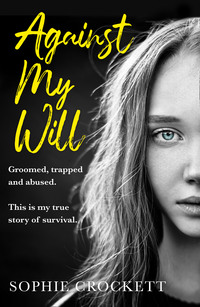
Cover photograph © Alexander Vinogradov/Trevillion Images (posed by a model)
A catalogue record of this book is available from the British Library
Sophie Crockett asserts the moral right to be identified as the author of this work
All rights reserved under International and Pan-American Copyright Conventions. By payment of the required fees, you have been granted the nonexclusive, non-transferable right to access and read the text of this e-book on screen. No part of this text may be reproduced, transmitted, downloaded, decompiled, reverse engineered, or stored in or introduced into any information storage retrieval system, in any form or by any means, whether electronic or mechanical, now known or hereinafter invented, without the express written permission of HarperCollins e-books.
Find out about HarperCollins and the environment at
www.harpercollins.co.uk/green
Source ISBN: 9780008347734
Ebook Edition © January 2020 ISBN: 9780008347741
Version: 2020-11-30
Dedication
For Mammy – for always being there.
This book is dedicated to every woman who has been failed by the system. We are all survivors and must stand together.
Epigraph
‘I may not be a lion but I am a lion’s cub and I have a lion’s heart.’
Elizabeth I of England, Wales and Ireland
Author’s Note
Recounting the events you are about to read has not been easy. As someone with Asperger syndrome and a sufferer of post-traumatic stress disorder, revisiting these episodes in my life has been a harrowing experience. Some events are like blocks in my head, others like a continuous flow. At times it has felt like someone else’s life, or a dark movie. In order to protect the identities of innocent parties, where appropriate, some of the names have been changed.
Contents
1 Cover
2 Title Page
3 Copyright
4 Dedication
5 Epigraph
6 Author’s Note
7 Contents
8 Prologue
9 Chapter 1
10 Chapter 2
11 Chapter 3
12 Chapter 4
13 Chapter 5
14 Chapter 6
15 Chapter 7
16 Chapter 8
17 Chapter 9
18 Chapter 10
19 Chapter 11
20 Chapter 12
21 Chapter 13
22 Chapter 14
23 Chapter 15
24 Chapter 16
25 Chapter 17
26 Chapter 18
27 Chapter 19
28 Epilogue
29 Moving Memoirs
30 About the Publisher
LandmarksCoverFrontmatterStart of ContentBackmatter
List of Pagesiiiivvviiix12345679101112131415161718192021222324252627282930313233343536373839404142434445464748495051525354555657585960616263646566676869707172737475767778798081828384858687888990919293949596979899100101102103104105106107108109110111112113114115116117118119120121122123124125126127128129130131132133134135136137138139140141142143144145146147148149150151152153154155156157158159160161162163164165166167168169170171172173174175176177178179180181182183184185186187188189190191192193194195196197198199200201202203204205206207208209210211212213214215216217218219220221222223224225226227228229230231232233234235236237238239240241242243244245246247248249250251252253254255256257258259260261262263264265266267268269270271272273274275277278279280281282283284285286287288289290291292
Prologue
I woke at 7 a.m. to the same thought that hit me every morning. It wasn’t just a bad dream. It was reality. I was in the same bedroom, in the same house, with the same monster sleeping beside me. My nightmare continued.
And, like every morning, the second sensation to hit me was how cold I was. I was naked, of course, because he hated me wearing clothes.
Then it registered how much my body ached. Not just the odd muscle twinge or stiffness, but bone-shattering, soul-searing agony. I had been sure he was going to kill me last night. He’d come close many times during sex: forcing my legs so wide I thought they’d snap out of their sockets; pushing my head so far into the pillow from behind that I nearly suffocated; tightening the grip around my neck until I was sure the breath that squeezed out would be my last.
But no. Here I still was. Surviving.
Sex makes it sound like it was consensual. Let’s call it what it was. Rape. Repeatedly. Every day. That’s what happens when you live with a psychotic sex maniac. He would be like a wild animal, sticking his fingers into my eyes, screaming into my face and trying to rip the hair out of my head. He was so violent I thought at times that my neck or back would break as he threw me around, all the time shouting his commands, ‘Do this! Do that! You’re not moving enough!’ Then shoving me into the position he wanted. Me, compliant, lifeless almost – like the ragdoll he wanted me to be, my body covered in bruises and bite marks.
All the time I would think to myself, Nothing lasts forever, nothing lasts forever, everything’s got to come to an end. That was the only thing that saw me through it, the mantra I kept repeating over and over and over.
It’s got to stop at some point.
Everything comes to an end.
Nothing lasts forever. Nothing lasts forever.
On mornings like this, with another day in hell stretching out before me, it was hard to believe it wouldn’t be like this forever. Every day seemed the same. Sex, humiliation, excruciating pain, the debasing of my very soul. Day after endless day.
The monster stirred beside me. He got up.
‘Today’s the day we die,’ he said, calm but menacingly. He left the room and went downstairs.
My senses tingled. I forgot about the abject pain. He wanted us to die together. He told me that most days. Only he could decide when, where and how. He didn’t want me to be with anyone else. It was part of his many contradictions. He wanted us to be together. Together, together, together. It was all I heard. He demonstrated this by making sure he was with me every moment of every day. And I mean every moment.
I wasn’t allowed to go anywhere alone. He stuck to me like a leech, always touching me. If I needed to go to the bathroom, he insisted on coming, watching me or, worse, even urinating while I sat on the toilet. He wished we could be ‘sewn together’, and he carried me around like a baby and insisted on feeding me from his plate.
Now it was like being together in this life wasn’t enough.
‘Today’s the day we die.’ My mind buzzed with the possibilities of what he meant. Waiting around to find out seemed the least favourable option, but there was nowhere to run or hide. I thought about escaping out of the window. I was one floor up. I’d survive the fall and at least I would be out of the house. How far away would I be able to get before he came after me?
Before I could put any plan into action, he came up the stairs with the same Rambo-style hunting knife he had threatened me with before. His eyes flickered manically. He closed the bedroom door.
Oh my God, I thought, this is it. I am going to die.
‘What are you doing?’ I said, trying to reason with him, keeping my voice steady. ‘Put it away now.’
He stood there naked, waving the knife in my face. I tensed, waiting for the lunge. Instead he grabbed hold of his genitals.
‘I’m not big enough for you, am I?’ he sneered.
Instinctively, I tried to move his hand away, but I grabbed the blade and sliced my hand open. He twisted me around and pinned me to the bed, his 16-stone frame crushing my body, which was barely half his size. I couldn’t move from the neck down. He had the knife to my throat. Sweat was pumping off me. If I showed any fear, though, I was sure he would push the blade into me.
I tried to remain as calm as possible. I knew what he wanted more than this sudden blood lust. It was what he always wanted. Somehow I managed to talk soothingly, longingly – whatever it would take to instigate sex.
He released his grip, put the knife on the bed. While he was distracted I pushed the knife off the bed with my foot.
He grabbed me and put me in a headlock. We fell off the bed with such force it was sent flying across the floor on its wheels. He still had my head in his grip.
‘I’ll do anything, please,’ I said. ‘Just leave me alone.’
He got to his feet, still holding me around the neck, and dragged me downstairs. He was rambling about this fantasy he had of me being abused as a child. It wasn’t true, but he would go on about it constantly.
‘I wished I’d known you as a kid,’ he panted. ‘I would have totally fucked you.’
He was beyond sick. I kept trying to remain calm. I knew that showing any emotion would make this perilous situation even worse. I was shaking, though. My brain went dead. I felt numb, like I was not part of my body anymore.
Knock, knock.
What was that? There was somebody at the door. Thank God.
He answered it. It was Mum. Had she just happened to be passing? Had she sensed my distress? What a relief it was to see Mum’s face, but I could see the worry in her eyes. She knew something serious was happening.
Don’t say anything, Mum, I thought to myself. Don’t say anything.
She reached in and tried to grab me.
‘Come on, now,’ she directed her words to him. ‘Sophie is coming with me.’
‘She’s not going fucking anywhere,’ he said, grabbing me by the back and pulling me in. He slammed the door shut and locked it.
‘I’m going to get your father and sister!’ I heard her shout.
He moved me towards the stairs, but I knew if I went up there I would never come down again.
‘I need to go to the toilet,’ I pleaded.
He came into the bathroom with me. I slowed everything down, trying to take as long as possible. He twitched impatiently.
My dad wasn’t well. He had suffered a heart attack brought on, I told myself, by my refusal to leave this monster. Like my older sister, Leanne, and my younger brother, Jason, my parents had tried everything to prise me away from him, but they didn’t understand coercive control. They didn’t know how he had manipulated me, taken advantage of my extreme vulnerability. I might have been 17 when I met this 30-year-old, but I was effectively a child, which was the way he liked it.
Asperger syndrome had made me a prisoner of my childhood. When I finally ventured out into the real world I met a monster who wanted to keep me caged in his prison of darkness. He isolated me from the people I loved, convinced me he was good for me and then, when I realised the true extent of his evil, controlled me with violence and my fear that he would kill my family if I disobeyed his commands.
I had treated my family terribly, but now they were my only salvation. Luckily, they only lived a few streets away. It wasn’t long before I heard them back at the door. I was afraid of what he might do, but the delay had momentarily calmed him down. To my relief he opened the door to them. The shock and fear in their eyes were clear to see – but so too was the determination to get me out of there. I was still naked.
‘I need to go and get dressed,’ I told them.
He followed me upstairs. In the bedroom he came so close I could smell his rank, stale breath.
‘I could break your neck now and no one would know,’ he whispered. His hands made a snapping motion.
This was not over. I knew that. Even if I managed to slip past him and out of the house, this was not the end. Not by any stretch of the imagination.
Chapter 1
A nursery school, near Mountain Ash, 1996
I knew immediately something was wrong. It didn’t look right and the second I took a sniff, Oh my God. It was disgusting. And they wanted me to drink this? No way.
I tried to explain to my teacher: this milk was not right. But she wasn’t interested. It was like she didn’t care. ‘Drink it,’ she said. And then louder still, ‘Drink it!’
It tasted even worse than it smelled. To this day I can taste it. I only have to look at a milk bottle and it brings the horrid memories of that day flooding back. It is one of my earliest memories, but it is so vivid it’s like it was yesterday. I was only three years old and in nursery.
Just being there terrified me. I hated being separated from my mum. I didn’t like the other children, the noise they made and the fact that they came up to me asking if I wanted to play. Every day the school provided milk for us to drink. Even on a good day it was warm and creamy and not very pleasant, but that day, even at such a young age, I could tell it was off. The other children gulped theirs down and went back to doing whatever it was they were doing. I sat there, trembling and crying, wishing it was over and I could be back in my mother’s loving arms.
‘I can’t drink this,’ I spluttered through sobs.
‘Just drink it, Sophie!’ the teacher said, getting more agitated. The louder she got, the more I cried. ‘You’re not leaving that seat until you drink it all.’
The only way to make this terrifying confrontation end was to drink the foul-smelling, rank-tasting liquid. Slowly, retching with every mouthful, I forced it down. Three hours later the teacher allowed me to move.
‘There,’ she said. ‘That wasn’t so bad, was it?’
She had no idea. I haven’t been able to look at a glass of milk since, let alone drink one. I still bear the emotional scars.
By the time I was three it was already apparent that I was different. And to understand how I ended up in the clutches of such a monster when I was just a teenager, it is important to know the challenges of my childhood.
I was the second child of Stephen and Helen Crockett. They had met as teenagers in Mountain Ash, a former mining town in the Cynon Valley in south Wales. Helen was 17 when she got together with Stephen, who was two years older and worked as a labourer and was a reservist with the Territorial Army. She fell pregnant a year later and they married a short time after, and then Helen gave birth to Leanne, my older sister. Money was always hard to find and it was difficult to put food on the table, but theirs was a happy marriage and they’ve been together now for 36 years.
I came along in 1993 and immediately presented a host of new challenges for my parents. I cried a lot and was a very anxious baby. It couldn’t have been easy for my mother, who fell pregnant again while I was still little. The birth of my brother Jason completed our family. For any parent, having two children under three would be testing enough, but our closeness in age only highlighted how peculiar I was.
My condition first showed itself through my anxiety over the smallest things. Leaving the house in general was a big deal. I would burst into tears. But doing something like going to get my haircut would turn into a massive experience. I would erupt in a hysterical outburst. It was like the terror someone might feel at having to jump out of an aeroplane. It was that frightening for me.
My mum and dad were always very supportive and tried their best to alleviate my anxiety, but they often found themselves on their own. The understanding of childhood behaviour and its underlying causes was very limited back then.
Our two grandparents – my grandfather on my dad’s side and my grandmother on my mum’s – did not get me at all. They couldn’t begin to understand my problems. They just thought I was being silly.
‘Look at Jason,’ they used to say to me. ‘He’s younger than you and he’s not making a fuss.’
That became a theme. At an early playgroup I was so upset that Jason had to hold my hand the entire time. The assistants were forever saying, ‘Your brother’s younger but he’s looking after you. It should be the other way around.’
I would sit there crying, wanting to go home. I didn’t want to be separated from my mum and I didn’t want to interact with the other kids. I was aware of that from a very early age. I never played with other children. I just couldn’t get it. I didn’t like play, I didn’t like being around strangers, I didn’t like the smell of the building or the other kids being loud. It felt so enclosed: all the other kids screaming, the teaching assistants being near me. I just wanted to be left on my own. It was all too much.
The same went for the children in our street. My mother encouraged me to interact, but I just didn’t like the idea of playing with them.
By the time I went to the nursery where my ordeal with the milk took place, it was the same. I didn’t understand why I had to go to these places. Once there, I was able to calm down, and I grew a little more accepting of my surroundings as long as I was left alone. At playtime I used to sit and put different headbands on, looking in the mirror. The other children did try to involve me, but I preferred my own company. This probably doesn’t sound very nice, but I found from a very early age that other children weren’t the same as me. They didn’t get me and couldn’t understand why I simply didn’t want to talk to them.
I would do anything not to go to nursery. I would deliberately fall down the stairs. My parents would rush to my aid and comfort me, and wonder how such a thing could happen. I always told them it was an accident. My appeals for attention didn’t always have the desired effect, however. I used to stand on drawing pins and embed them into the heel of my foot. My mum would notice me hobbling around and ask what the matter was. When I showed her she scolded me for being so silly. Given that my older sister hadn’t behaved in such a manner, it must have been confusing and distressing for them.
When I started primary school it was a nightmare. I didn’t have any friends and nearly every aspect of it terrified me. It added vast amounts of pressure. I hated school so much because of the teachers’ lack of understanding. School was the worst possible environment for someone with my anxieties. I hated the noise, the smells, the idea of so many people in such a small space. When a teacher showed me the toilets I immediately thought, I can’t use that, something that’s used by all these other people – no way. I developed a phobia of germs and using public toilets that I still suffer from to this day.
When we had to sit on the carpet we always had to sit next to someone – even that made me uncomfortable. I hated eating with everyone at tightly packed tables. Even when I wasn’t hungry they made me eat it all. I didn’t understand why I had to eat if I wasn’t hungry. Why couldn’t I just have something later? Why was everything so regimented, so forced and tense? I spent a long time looking out of the window, planning my escape so meticulously, although I never had the guts to actually try it.
Sometimes, during playtime, the teachers put a movie on, and if it was something I didn’t want to watch, like the Mr Bean film, they made me sit and watch it anyway. I didn’t understand why I couldn’t do something else. I wondered what the point of it all was.
The way my brain worked was not compatible with the way the teachers taught. They hated it when I corrected them on something, and would shout at me. If I didn’t understand something, they would keep repeating themselves but with raised voices.
It didn’t help when a girl flooded the toilet and blamed me. Even though I protested my innocence, nobody believed me, so they made me sit in the corner for hours. I was only six and I felt persecuted. My anxiety hit new heights. Every morning I erupted in violent rages, screaming, lashing out and holding on to doors. The thought of going to school made me so stressed that I was physically sick. My hysterics left me wheezing and out of breath. The doctor referred me to a chest consultant who diagnosed asthma and prescribed me multiple inhalers.
At school I wanted to be on my own. At home, at night time, it was the opposite. I didn’t like being left on my own in the dark and I had trouble sleeping, often lying awake for most of the night. If I did eventually get to sleep, I’d suffer frighteningly real night terrors and wake crying and screaming. Mum took to sleeping with me to help comfort me. Every night before I went to sleep my mum and I clutched hands and she’d say, ‘Hand to hand, together we stand.’ When I couldn’t sleep she’d sing to me until the early hours of the morning.
During the day I used to love carrying Mum’s nightdress around with me because it had her ‘Mammy smell’ on it. I would breathe it in and it would comfort me. If I was having a really stressful night, my dad would take me downstairs and put old drama series like Secret Army or I, Claudius on the television until it was morning. This was especially hard for him, as he would then have to leave to go to work.
Despite their best efforts to soothe me, night time continued to be a particularly challenging time. My mother would routinely have to sleep with me in my bed until I was 16. I sometimes tried to copy her loving gesture. When Jason was still young, about four, he would climb into bed with me when it was time for his afternoon nap. I read to him and smoothed his hair until he went to sleep, just like my mother did for me.
My parents would take my brother and me to my grandfather’s house in nearby Penrhiwceiber once a week for an hour or two, just so they could have some time on their own. My grandfather couldn’t cope with me, though. If I didn’t want to do anything, he made a big deal of it. And on the rare occasion when we spent the night there I would be walking up and down the landing because I couldn’t sleep. He would yell at me, which just made me more anxious.
In the summer we would sometimes go to Porthcawl on the south-Wales coast and rent a caravan. It wouldn’t be relaxing, though, as I had a massive sand phobia. My parents would worry about me the whole time. I would be anxious about going there. They tried to accommodate my brother because he liked doing all the fun stuff, like going to the arcades, while I would stay outside, terrified to go in because of the noise and lights.
Even family days out presented problems. Once, we visited a stately home, where guides showed you round and told you how things would have looked back in the day. The guides wanted to involve the children with costumes and activities, designed to bring the period to life. It was too much for me. I wanted to leave straight away.
If we visited somewhere, more often than not we would have to leave halfway through. My parents tried to calm me down at first, but when they could see I was getting increasingly anxious they realised it was better just to leave. Jason was always understanding of my situation, but Leanne found it harder to accept. Her attitude was similar to that of my grandparents: I was being indulged and my parents needed to be stricter with me. It led to a lot of tension between us.
Life wasn’t always stressful, however. In the summer Mum and Dad would take Jason and me for chips from the local fish shop and go up one of the many mountains not far from us, perhaps Maerdy Mountain or Brecon, to eat them. On other occasions we would make a trip to Craig-y-nos country park to feed the ducks and swans. Jason would play football with my father in the field while Mum and I sat talking or just looking at the scenery. I enjoyed going out for walks in nature. We had a Dalmatian dog, Ben, and I liked taking him for a walk in the fresh air, listening to birdsong and watching the seasons change.
I used to love being taken to our local library in Mountain Ash. It was something my parents did with Jason and me every week. There was something so special about going in and choosing another new book to read. I would spend ages finding one. I looked forward to that day every week.
For my birthdays Mum would hold a little tea party with cake, but I didn’t have parties like other children my age. There would just be a simple opening of the presents. I liked getting books, and I started collecting dolls. When I was very young I started collecting Cabbage Patch Kids dolls. I dressed them up in nightclothes and tucked them into a bed I made for them every night. As I got older I probably wasn’t into the same toys and games as other children. I was into fairies and fantastical figures, especially those drawn by Brian and Wendy Froud, who worked on the puppets for The Dark Crystal movie and helped create the character of Yoda for Star Wars. I enjoyed using my imagination and playing on my own, but I also started to become aware of the world around me. At the age of five I regularly came home from school for lunch. One day Mum served me a chicken leg and chips. I stared at it, thinking.
‘Mam,’ I said, ‘is this the leg of a chicken?’
‘Yes.’
‘An actual leg of an actual chicken?’
‘Yes,’ she said.
‘I can’t eat this,’ I said. ‘What do you call people who don’t eat these things?’
‘A vegetarian,’ Mum said.
‘Well, I’m going to be one of them.’
Since then I’ve never touched meat. Once I’d made that connection between animal and plate, I just thought, Oh my God, no.
I have massive respect for my parents because they didn’t try to dissuade me or patronise me. They never lied to me, either, by serving something and telling me it wasn’t meat. They just accepted it and told me the truth, even if it meant making something special for me at mealtimes. My grandparents, on the other hand, just thought they were indulging me. They thought they should be stricter. They would serve me food and claim it wasn’t meat. I might have been young but I wasn’t stupid. I knew it was.
I was a challenge, and not just for my family. Once I’d calmed down and accepted – to a degree, at least – that I had to be at school, I found learning came easily to me. I was the first in my class to write my name and the first to read a book. I wanted to push on and learn more, but the teachers just wanted to hold me back so the other children could catch up. Instead, I read whatever I could lay my hands on at home. A particular favourite was the What Katy Did series by Susan Coolidge, about a girl who is always getting up to mischief until a horrible accident leaves her bedbound. I loved the idea of a very big, close family unit and Katy and Clover, her sister, being best friends. It contrasted with my own experience, with our small extended family and an older sister I annoyed with my outbursts. Leanne and I might have struggled to form a really close bond anyway because of our age gap, but at times I felt she didn’t seem to understand my anxiety. I think she thought I put it on to get attention. I also shut myself off with my reading. I enjoyed stories like Heidi and Black Beauty but quickly moved on to adult books, fiction and non-fiction.
Once I became interested in a subject it quickly turned into an obsession. Space intrigued me from a very young age. I just loved the idea of being so small in a huge solar system that never seemed to end. It gave me a feeling that the problems I was facing were not really a big deal, because look how small I was in the universe. I could gain a little perspective sometimes, which helped calm me down.
Another obsession was Queen Elizabeth I. I can’t remember what sparked my interest, but I loved the fact that she was a strong woman who had opposition against her but always took on the challenge. She was the underdog who few people thought would rule, yet she became one of the most successful monarchs Britain has ever seen. I loved this particular quote: ‘I may not be a lion but I am a lion’s cub and I have a lion’s heart.’ She wasn’t to be underestimated. I also loved the way she turned fashion into a power statement – she just screamed power – and the symbolism in Elizabethan paintings, which told people she was all-seeing and all-knowing.
It was during this obsession that my dad took me to Waterstones. When we asked about a book on Elizabeth, the assistant said, ‘Do you want me to find you a children’s book?’
‘No,’ I said. ‘I want the one by David Starkey.’ The historian had written a biography on the Tudor monarch to accompany a TV series.
I can still picture the look of surprise on her face. I was only seven. That year my dad also bought me my first copy of A Christmas Carol by Charles Dickens, and I would read it every Christmas.
As if my anxieties and eccentricities weren’t enough for my family to contend with, I began to sense that there was more to the world around me than what other people saw. I started to have what can only be described as psychic experiences. Clearly, thanks to my anxiety, I was more sensitive to my environment than your average child. But it was more than that. I could sense that people were trying to reach me – that spirits were communicating with me. At first it scared me. I was hearing voices, feeling presences around me that other people weren’t aware of. I told my parents, but they didn’t understand and thought it was just my imagination. I knew this wasn’t one of my obsessions. There was something to this. I was still a very young child when these experiences became more common and scary.
I sensed the spirit of an elderly lady who seemed to take delight in frightening me. One day I was sitting in my brother’s pushchair in the passageway in our house when she kicked it full force and I was thrown into the front door. My mother came running.
‘What have you done?’
‘It wasn’t me. It was the old lady,’ I said.
The look on her face told me she didn’t believe me. My parents weren’t that open to the idea of spirituality at that time.
The elderly woman wasn’t the only thing I experienced. I’d hear heavy boots walking up and down the stairs in the night, and the door would open on its own and shut again. Items in my bedroom would also rearrange themselves.
Trying to make sense of the spirit world was one thing. But for my parents, the real world was challenging enough and there were more pressing issues for them to contend with. My dad was starting to struggle. As well as working as a labourer on building sites, he had been doing shifts driving a taxi. There were times when I hardly ever saw him. But then he started to develop mental-health problems and had to give up work. Money had always been tight, despite his best efforts, and when he was no longer able to work we were under even more pressure. We became very poor. We couldn’t afford the things other children take for granted, like ice creams on sunny days. Our coal was donated by charities. The council house we lived in was falling down, literally. The roof leaked and it was waterlogged. The council deemed it uninhabitable, so we went to the top of the housing register as a priority case to move. They found a house for us in Aberdare, another former mining town ten minutes’ drive away. It meant moving schools.
We were assigned social workers to assess our general wellbeing. My parents discussed with them how hard it was getting me to go to school. Mum wanted me to stay at home, but they said I needed to be socialised and going to school would sort that.
There was only one school that would take both Jason and me, which was a bit of a trek from where we lived. There were schools closer to where we lived in Trecynon, but my parents were keen for us to be together. If I’d thought my time had been hard at my last school, it was nothing compared to this place. At first I thought it might not be too bad. My teacher was nice and showed me some compassion. But after I moved on to a new teacher, I was on my own. The rest of the teachers didn’t even try to understand me. All it would have taken was a few little concessions on their part to alleviate some of my anxiety, but they weren’t interested. In fact, it was the opposite.
I had developed a phobia of being in the water. Swimming wasn’t compulsory but they liked to take us to the pool. I really didn’t want to go. They made such a fuss about it. To people who love swimming, it might sound like I was just being difficult, but when you are that age and beset with crippling anxiety it is a big deal. They seemed to think I was just trying to get out of it. When they did eventually relent and say I didn’t have to get in the water, they made me take my school books and sit by the side of the pool and do some work. I felt like such a pariah and thought I was going to be sick in the stifling heat and the clawing smell of chlorine.
I would have lunch in the canteen, where children were expected to eat everything on their plates. On one occasion I wasn’t hungry so I left some food. One of the dinner ladies called me back.
‘Sophie Crockett, you haven’t finished!’ she shouted. I tried to say I wasn’t hungry but she wouldn’t listen.
I burst into tears, ran out of the room and locked myself in the toilet, refusing to come out for the rest of the day. I must have spent three hours in there. I was too scared to come out until I could go home.
I hated school so much I would cry and beg my parents not to make me go back. At night I would lie awake sobbing at the thought of it the next day.
‘Please don’t make me!’ I begged every morning. It led to terrible outbursts.
We now know that children with autism are prone to outbursts. Mine were nearly all related to school. I just hated it. I felt the school didn’t care. They didn’t have the patience. It was a horrible time.
I enjoyed schoolwork mostly, but mathematics scared me. I developed a big phobia around it, but the teachers didn’t help. If I didn’t understand something, instead of showing me a different way they’d show me the same way but louder. I thought, You just said that and I didn’t understand it.
Every day at 11 a.m. our maths lesson began. As the time approached I started to stress. My mind would go blank and I’d panic when the paper was put in front of me. I used to hide in the toilets or, if I couldn’t get out of the classroom, I would write down anything just to get it over with, and then my work would come back with a big cross on it.
There were two girls in the class who picked on me. At first they said if I helped them with English they would help me with maths. They used to copy my English work, but the teacher thought it was me copying them. The girls blamed me. It was always the same. No one would believe me. My maths didn’t improve, and it got to the stage where I wouldn’t come out of the toilets or I would get a headache and beg to go and sit in the library, where it was quiet.
The library became my sanctuary. It was there that I confined myself when my class was away on a trip, the thought of which scared me. I read all kinds of books, including the Ramayana, the ancient Indian epic fable of heroism and tragedy, and several by Charles Dickens too. My favourite was Little Dorrit, his commentary on society’s treatment of the poor. It might not be one of his most famous, but it’s a very understated novel and, to me, a truly wonderful book.
I enjoyed reading poetry too, particularly the works of William Wordsworth. By the time I was eight I could recite all the lines to his most famous work, ‘Daffodils’, which many people know only by its opening line, ‘I wandered lonely as a cloud’.
I spent so much time in the library that it became a running joke with the teachers. They’d walk past and make snide comments like, ‘In the library again, Sophie?’ They probably had no idea the effect their comments had on me, but it felt like they were mocking me and they wounded me deeply.
My whole school experience was exhausting. I never knew what might trigger my anxiety attacks. The uniform was polo shirts, cardigans and trousers, which I was happy with because I wasn’t in the least bit fashion conscious and I liked the fact that everyone wore the same thing. In summer, however, the girls wore gingham dresses. I hated mine, as it wasn’t the same as the other girls’. It was made of a looser fabric, and I was convinced it made me different when the last thing I needed was to give the other girls any excuse to single me out.
Despite all these issues, I was still one of the top students. The teachers might not have recognised it, but when the class sat a literacy test I scored the highest, with a reading age of 18. I was proud of my work and strived to do well, but my condition, or whatever it was that affected me so severely, was getting out of control. I was desperate to stay off school. Every day was a battle. Sometimes I would get to stay off or I would go every other day if I could be dragged in.
It got to the point where my mum and dad stopped forcing me to go anywhere. It seemed that the things other children enjoyed were denied to me because of my extreme anxiety. I was just locked in myself. I was nine years old and felt like an alien – that I didn’t fit in with this world around me. And on top of that was my belief that I could see spirits around me and hear what they were saying. People seemed to be contacting me, telling me they had passed on. They appeared before me. It was scary. Why were they communicating with me? It was a deeply disturbing and difficult time.
Against this backdrop of worsening behaviour, my parents, who had been trying to keep my issues secret, hoping it was a stage I’d eventually grow out of, decided to ask for help. They went to the doctor I had seen about my asthma. He referred me to a mental-health team, and for a while I was seen by a number of psychiatrists all over the region. One suggested I take Ritalin, the drug used to treat children with attention deficit hyperactivity disorder, while another suggested I start the contraceptive pill to stop me from going through puberty. My parents flatly refused.
It felt like no one had an explanation. That was until we were referred to Dr Latif, an expert in autistic spectrum disorders at the University Hospital of Wales in Cardiff. I felt incredibly anxious and worried before I saw him, as I did with anyone I didn’t know. My legs were actually knocking together and my hands were shaking.
I had a habit of walking on my toes, as I didn’t like the feel of my heels on the floor, and as soon as I walked in he pinpointed it straight away: ‘You have Asperger syndrome.’
He asked me a couple of questions, but I couldn’t answer him, as I had terrible difficulty in communicating with strangers at the time and I couldn’t make eye contact. This only seemed to confirm his diagnosis.
Asperger syndrome, or Asperger’s, he explained, is a form of autism. People who have it are often above average intelligence but can display learning difficulties. As with other forms of autism it is a spectrum condition, so while people with it might share certain challenges, it will affect them in differing ways.
‘With Asperger’s,’ he said, ‘you will see, hear and feel the world differently to other people.’
That immediately struck a chord. Here, finally, was someone who understood what I was going through. I could see the relief on my mum’s face. Throughout my childhood she had shown nothing but unconditional love, but there were many times when she’d questioned what exactly was the matter with me. We had all wondered, many times. Now there was an explanation.
Dr Latif explained that although Asperger syndrome was something I would have for life, and was not a condition that could be cured, it could be managed. It was a fundamental part of my identity that needed to be accepted and understood.
He gave my mum advice on how to manage the condition and advised her to buy books on Asperger’s. He said he would write to the school explaining the diagnosis and advising ways in which they could help alleviate my anxiety.
At last there was a name for what I had. The impact that had on me was massive. Maybe I wasn’t such an alien after all. Surely this would make a difference, I thought. My teachers would understand, the other children might begin to accept me more. It could be a new beginning for me. It was a massive relief for us all, because now my parents could get help. They had been in the dark until then, but now they thought, Okay, it’s a condition we can read about and get our heads around. The more they read about the condition, the more they felt reassured, as I had all the key traits of Asperger’s.
Any optimism we had was sadly short-lived. My mum and dad got in touch with an autism support group. I went along hoping it might be a chance to meet people in a similar position, but it wasn’t like that. Autism covers a broad spectrum and I didn’t feel the people there were like me at all. I still found it hard to relate to them. It was as if the imaginary barrier that stopped me from interacting with other people was still in place.
Autism understanding in society was still in its infancy. Progress was being made but the pace was slow for those of us going through it. A form of help was there, but if you couldn’t cope with that, there was no alternative. As for my school, we persevered, hoping they would implement some kind of strategy to make my time there bearable. But it was no use. I felt very depressed.
However, one of the benefits of getting an Asperger’s diagnosis was that my parents could look at other options – like home schooling. Eight months after our first meeting with Dr Latif, a plan was in place. I would never have to go back to school again. Instead I’d be tutored at home, potentially offering an end to the anxiety that had crippled my development so far.
I was thrilled. I was convinced that this would signal a new start, a chance to live a better life.
I couldn’t have been more wrong.
Chapter 2
This was the life. No school, no horrible teachers or girls picking on me. A chance to push on at my own pace, no longer shackled by the limitations of the curriculum or held back by the slowest in the class. And, most importantly, it was the solution to my ever-increasing anxiety.
That was the dream, anyway. The reality was very different.
Although it was a blessed relief not to have to go into school, provision for home schooling was very limited. The local authority just did not know how to handle it. They could only provide a tutor for one hour every day. As I was technically still of primary-school age, it meant they sent teachers for my age, not my capacity.
I was ten but already reading challenging adult books and developing what would become a lifelong passion for Russian literature, especially works by Fyodor Dostoevsky and Anton Chekhov. I read Shakespeare and, although on the whole I thought he was overrated, I enjoyed Macbeth. This was purely down to the character of Lady Macbeth, who I saw as a very strong, determined woman who knew exactly what she wanted and how to use her husband to get it.
I continued to develop interests in a variety of topics. My fascination with strong women extended to Emmeline Pankhurst, the political activist whose inspiring work helped women win the right to vote. The women’s rights movement fascinated me and sparked a passion inside me for activism. Being outside of the school environment meant I grew a little braver about venturing outside of my comfort zone. I got involved with Animal Aid, leafleting around the town for issues like animal testing and writing for its children’s paper on why I decided to become a vegetarian. My dad accompanied me as I went from door to door. I think he respected me for wanting to do something to try to change people’s attitudes.
All of my knowledge came from reading and forming my own opinions. I didn’t watch television. Most children are happy to plonk themselves in front of the box, but for as long as I can remember I’ve viewed television as a form of brainwashing. I had the same disdain for games consoles. My sister and brother loved playing computer games, but I thought they were a waste of time. I was content with my doll collection. These were antique twentieth-century dolls, not for playing with but to display. I wasn’t interested in contemporary television programmes. I preferred learning about history and was intrigued by the elegance and style of other periods, not in Britain but abroad – like the lavish costumes worn by Marie Antoinette, the last French queen before the revolution, or the Japanese geishas and how their clothing and make-up changed depending on their seniority and experience. I even dabbled in making my own jewellery.
For a while I was the happiest I’d ever been. Left to my own devices, I could be content and amuse myself. Within the family there was greater understanding of how I saw the world. But that didn’t mean there wasn’t the odd blow-up. Attempts to include me in family activities still often ended in tears. I remember going with my dad, brother and sister to the cinema to see the animated movies Ice Age and Monsters, Inc. Most people would just think of these films as harmless family fun, and I did try to enjoy them, but the reality was that I couldn’t stick the cinema; it was too sensory, too dark and loud, too in-your-face. I accept that it wasn’t fair on my brother and sister, but I just wanted to leave. So that was it. We all had to. It caused a bit of tension, understandably, but we were all still trying to come to terms with my Asperger’s and working out ways to manage the extreme reactions I had.
One place I enjoyed going to, where I didn’t experience anything like the same blow-outs, was the ballet. The Coliseum Theatre, which hosted regular performances, was close to where we lived. Going to watch the dancers move with such grace and elegance captivated me. I loved classical music as well. It reflected and influenced my moods. And I liked the reserved atmosphere of the theatre. I felt like I was entering a different world, one that did not impose itself on me.
My parents were delighted that I’d found something I could enjoy without feeling anxious. They had almost given up on trying to get me involved in some sort of activity or club. I was not sporty and anything that involved interacting with other children was not an option. When they asked if I wanted to take up ballet-dancing lessons I felt excited, but the thought of being in a class with other girls who might judge and look down their noses at me filled me with fear. My parents investigated, however, and found a dance teacher who was willing to offer private lessons. It would just be the teacher and me, no other children to stress or distract me. I was nervous at first. The thought of anything new brought out the old anxieties, but I loved watching ballet so much that the prospect of actually learning how to dance like that was a magical dream.
The teacher was firm but encouraging, and once I got over my initial nerves I started to really enjoy the lessons. I pleasantly surprised everyone by how easily I picked it up. As with my other obsessions, I threw myself into the practice 100 per cent. It was blissful respite from my everyday existence.
I continued to have my psychic experiences. I could feel, see and hear spirits. This continued to concern my parents, who had hoped it was a passing phase and thought it was just my imagination running away with me. They didn’t understand it, but I was becoming more intuitive and they couldn’t really deny it anymore. To people who don’t believe, it might sound strange, but I could see angels. They appeared before me, and just as people might imagine; I could see their wings. The one I saw most often was my mother’s guardian angel, called Jasmine. I saw her wearing a pink dress. She had long, brown curly hair with flowers in it and her wings had pink tints to them. She had a calming presence about her.
Some of the spirits were from relatives of mine who had passed on, but often they had no connection to our family. Sometimes the spirits had messages from the other side. I would amaze people by saying something only they would know. For example, my father’s mother always called him ‘Chick’ as a child, and nobody but him knew this. When I said, ‘Granny says, “Hello, Chick,”’ he was flabbergasted.
As with my autism, the longer it went on, the more my parents thought they’d better seek an expert opinion. Paul Hanrahan was a well-known medium from a television programme called Ghost Detectives and also a friend of a friend of my grandmother. They got in touch and he came to meet me. I was quite anxious because this was someone new. I didn’t speak to him but he looked at me intently.
‘You have a very, very bright light,’ he said. ‘You’re incredibly gifted psychically.’
He told my parents he knew of spirits at this location and that he too had seen them just as I had described them.
‘Sophie is a very special person,’ he told my parents. ‘She’s clearly an indigo child. To be as gifted psychically is rare.’ People can see things all the time, yet they always doubt their senses, but he believed I was clairvoyant, someone with supernatural ability; clairsentient, as I could feel psychic energies; clairaudient, capable of hearing messages; and claircognisant, an ability to sense the future. He said I possessed a very rare gift, but he wasn’t in the least surprised. Many children can display spiritual powers.
Indigo children, he explained, are supremely empathetic, curious and strong-willed – traits I had already demonstrated – and often considered strange by other adults and their peers. The concept of indigo children had been coined in the 1970s by a psychic, after the colour of their aura, but it had gained credibility since the 1990s. Once my parents better understood what I was capable of, they began to embrace it.
I got more and more into spirituality. I learned how to read tarot cards. I began using a dowsing crystal to tap into my sixth sense and answer questions that were puzzling me. I could see people’s auras and learned how to interpret the different colours to tune into their emotional energy. And because I felt the presence of spirits, I became something of a psychic medium, doing readings for people using messages I was hearing. I gave readings to my mum, dad, aunt, grandmother and even a great-uncle who I never saw. After I had a dream about a lady who said her name was Glenis, my mother told my grandmother, who immediately recognised the significance. Glenis was my great-uncle’s wife. I had never heard of her or seen any photographs of her, but I described her exactly as she was. Since that day my great-uncle believed in spirits.
We found out there was a church in Ferndale, about a 15-minute drive away over the valley in Rhondda, which held spiritualist meetings. We paid it a visit and the people there were really nice and welcoming. We started to go quite regularly, and it became a little outing for my brother and me. I felt quite at home there and enjoyed the singing, the prayers and the psychic readings.
Paul Hanrahan even wanted me to join his psychic circle – a group of like-minded experts who gave spiritual readings. I was still only ten years old, though, and due to my condition this wasn’t an option.
I was in a contented place. Two years on from my Asperger’s diagnosis and a year after quitting school, I was feeling a little less anxious and quite optimistic about life in general. Sadly, it would not last.
It was approaching Christmas when my dad and I went out to go shopping for presents for my mum. From out of nowhere a car appeared in front of us at a junction. There was nothing my dad could do. We crashed into it, the impact throwing me forward. My head exploded in pain. I was so shocked at first that I didn’t know what had happened. When I came to my senses I realised my face had smacked off the airbag that had inflated on impact. My dad was slumped forward on his.
Oh, good lord, I thought. Please, no.
I couldn’t breathe between sobs. I thought he was dead. Within seconds, though, he started to come round. My nose was in agony. The medics who were quickly on the scene confirmed it was broken. And when they told me Dad was going to be okay I began to calm down, but I was badly shaken. When we’d had time to digest what had happened we realised there was nothing my dad could have done. The other driver had just pulled out in front of us. She appeared unhurt.
Our physical scars soon healed, but the incident would have psychological repercussions for years to come. The woman initially denied responsibility for the accident, and we were lucky that a group of builders working on a house nearby saw what had happened and told the police they’d seen her pull out without looking.
After thinking I could control my anxiety, that incident sent me backwards. Whenever my dad left the house I was terrified he would be in another accident. My GP said I was suffering from post-traumatic stress disorder. After the legal wrangling that followed I was awarded a significant sum in compensation, money that would be held in a trust for me until I turned 18. It was one positive to take from the highly distressing incident. And then another episode unsettled me even further.
One of my home-school tutors was an older woman called Mary who took a shine to me. She was in her sixties, and dressed quite shabbily, though she lived in a large house in Pontypridd, about 12 miles away. While some other teachers just turned up, took me through some exercises and left, Mary was intrigued by me. She saw potential in me that no other teacher had recognised before, and was amazed by my reading capacity and intelligence for my age. She was more willing to move away from the curriculum and have more meaningful conversations about a broad range of topics. I enjoyed her visits and thought, finally, here was someone who understood me.
But then it took a turn.
Mary invited me to her house for a change of scene and wanted to take me to the theatre. My mum and dad were concerned she was overstepping the mark, but they were afraid to say the wrong thing so went along with it. Mary was getting me out of the house, after all. It was surely a positive thing, right?
Mary was very snobby. She would make comments about shelf-stackers in supermarkets as though they were beneath her and talked about ‘stupid’ people. She was quite a eugenicist, who would have happily seen certain types of people discouraged from reproducing. She started to become fixated with me, weirdly obsessed. When we were alone she said, ‘You know, Sophie, you are better than your parents. You could achieve so much more if you weren’t with them.’
I had been flattered when she’d made comments about how special I was, but this was too much. It was like she was trying to turn me against my family.
Once, when she was in our house, she spied my mum and dad’s magazines on the table. She picked them up and said, ‘Who reads books like this, Sophie?’
‘My parents, but I occasionally glance through them as well,’ I said, feeling defensive.
‘Yes,’ she said, ‘but you wouldn’t buy them now, would you?’
She made comments about the many photographs of pets we had in frames on the wall, saying it was weird and they should be confined to photo albums. And she used to discourage me from engaging with my mental-health nurse, who she thought was a ‘stupid, blonde bimbo’.
She thought I was a very gifted child who needed specialist care. Without my family’s permission she got in touch with Christ College boarding school in Brecon to enquire about me going there. I knew she was a bad influence and she made me feel uncomfortable, but I grew attached to her because she was the first person to help me get my confidence back in my academic abilities.
Then she wanted me to go to London with her and stay with her son. It all started to get creepy.
‘I wish you were my granddaughter,’ she told me. ‘We would be able to spend a lot more time together and I could teach you so much about the world.’
It was like she saw me as a way to fill a void in her life. One day the snow was so bad she couldn’t get her car out, so she wouldn’t be able to keep her appointment to see me. But rather than accept it, she walked the ten miles in the driving snow to my house just to see me for a couple of minutes.
That was the final straw as far as my parents were concerned. They could see that an extremely unhealthy relationship was developing. They spoke to one of the psychiatrists who’d seen me about my anxiety attacks. He immediately agreed with them that it was weird. He reported what was going on to the local authority and Mary stopped coming to the house after that. We were glad to bring an end to what was a strange episode, but it was unsettling.
Mary had a strange energy around her, and it was disturbing to think that someone could come to my home and fixate on me. Already it was clear that I had attracted some obsessive characters. But it was to get a lot worse.
Chapter 3
Blending steely determination with more than a little natural grace, I moved through the ballet moves, concentrating hard to maintain perfect posture throughout. Glissade through assemblé to relevé, I loved the combination of discipline and elegance, and the pursuit of producing something beautiful.
‘Excellent, Sophie,’ my dance teacher said. ‘You move beautifully. Well done.’
Ballet was such a revelation for me. I felt that I belonged there. The long trips to the school didn’t faze me, and for a couple of years I loved dancing. I quickly reached quite a high standard, practising hard to pass my exams and move through the grades. It seemed like no time before I was dancing en pointe, just like the ballerinas I’d so admired at the Coliseum. I was enjoying it so much that I was even looking ahead and considering going to the prestigious Northern Ballet School in Manchester to continue my development, even though it was precisely the type of leap into the unknown that would usually have had me panicking. That’s how seriously I was taking it.
That was until one day, when my teacher sat me down on the floor and said, ‘You could be such a good dancer, Sophie,’ she paused, her eyes scanning my already slender frame, ‘if you lost some weight.’
She said it so very casually, like it was just another step I had to learn. For any girl to be told that – even one without autistic traits – is dangerous. Some people might be able to brush off a comment like that and not take it seriously. Someone like me, however, prone to obsessive behaviour and with an addictive personality, immediately took it to heart.
I went home and looked at myself in the mirror. Anyone else standing beside me would have seen a thin little girl. But as I examined myself I thought, Maybe she has a point. I pulled at my stomach and examined my arms and legs. Had I got fatter? I wanted to please my teacher. If I wanted to become a proficient dancer then I had to take on board what she said.
Okay, I thought, I have to lose weight.
My confidence in my body was already shaky. I had a keen interest in fashion and at one stage dreamed of being a model, but there were parts of my body I had issues with, and wearing a leotard and tights in a room full of mirrors, you notice these things more. I admired very skinny models and ballet dancers and had in my head the quote by George Balanchine, co-founder of the New York City Ballet and one of the world’s most influential choreographers: ‘You can only dance if you can see the bones.’
My teacher was always quite intense. She was so strict she could have been straight out of a Russian ballet company. I liked her discipline, though, and I responded to the challenges she set for me. She used to be a dancer and still choreographed for a ballet company. She knew what it took to reach that standard. I wanted to be a dancer, just like her, which was why I took her very seriously when she made those comments and others about the way I looked.
I didn’t tell anyone about our conversation or how I was thinking, but in the days and weeks that followed I started to look at the food put in front of me. Suddenly it didn’t look like a wholesome, nutritious meal, lovingly prepared by my mum anymore. Instead, I imagined every morsel adding rolls of lumpy fat to my body. It was completely irrational, I know, but it seemed a perfectly sensible attitude at the time. I began calorie-counting everything, cutting out any treats and limiting myself to around 500 calories per day.
I thought I was doing well, but not long after, when I arrived for my lesson, my teacher’s eyes scanned my body again. I immediately felt self-conscious. Had I overindulged? I thought I was being good. How did she know? Was it that obvious? I went home even more determined to show her that I could lose weight – and fast.
At night I exercised in my bedroom, doing hundreds of sit-ups and press-ups. But when I checked myself again in the mirror it wasn’t enough. I just looked the same. I sat down on the floor feeling wretched. I needed to do more. I went into the bathroom, took my toothbrush and shoved it as far as it would go down my throat. I gagged at first; I wasn’t sure if I could go through with it. I pushed it further back. That did the trick. I slumped over the toilet as my stomach emptied into the pan. That was much better! I was now far more pro-active in my quest for skinniness.
At first no one noticed. You can get away with saying you’re not hungry or that you’ve ruined your appetite by eating too many snacks during the day. Quickly, though, like the other things in my life I’d become fixated on, it became an obsession.
I started picking at my food, cutting it into small pieces, making it look like I was tucking in as normal, but when no one was looking I discreetly tipped it into the bin. I’d take meals up to my bedroom when I could. Food became the enemy. I hated the idea of eating anything. I used to look at my meals, things I’d previously loved eating, and think, No, I don’t want to eat that, think what it will do to me – no way.
As I starved myself of nutrients and energy, I became lethargic and ill. That helped because the first thing to go when you feel off colour is your appetite. The weight dropped off me. I was always slender but soon I was really skinny. Still it wasn’t enough. Whenever I looked in the mirror, all I’d see was a fat girl.
I wrote notes to myself about how big I was and took a marker pen and scrawled on my stomach the word ‘Fat’. I wrote the same on my arms and legs, on any part of my body I didn’t like. If I felt hungry I looked at the words and I wouldn’t eat.
At dance class I hoped my teacher would notice the effort I was making. She did and praised me for it. One weekend, though, I lost control and ate a treat. At my next lesson she somehow knew.
I started logging on to pro-anorexia websites, where I found a raft of clever ideas – despicable, of course, for a young girl to view, but when you have an eating disorder your personality changes completely and these disturbing websites spoke to the new me. I imagined food as vomit or being maggot-infested. I brushed my teeth right before having to eat in an effort to put me off my meals. If I felt really hungry, I punched myself in the stomach – punishment for it making me feel that way.
During one mealtime my parents got suspicious and encouraged me to eat up. I kept saying, ‘I am not hungry,’ over and over. They had a go at me, telling me I was wasting away. To keep them off my back I ate everything on my plate. As soon as I was done I rushed to the bathroom and reached for my toothbrush. I started to gag and then brought my entire dinner back up. That felt good. Like I was winning.
Even though I was getting weaker and weaker, I kept pushing myself, both to do well at ballet and to get even thinner. My parents reached out to the mental-health team, which had previously supplied the psychiatrists to assess my anxiety attacks. A crisis team came to visit me at our house.
A mental-health nurse tried to offer practical solutions. ‘Why don’t you join a gym?’ she said. ‘That would help you gain confidence and reinforce positive connections with food, because it provides the energy you need to be healthy.’
It looked like she was helping, but my parents weren’t present for what else she said.
‘You know, Sophie,’ she said, when we were alone, ‘there are parts of my body I don’t like. I hate my thighs, for instance.’
She was probably just trying to help by showing that most people have insecurities over their bodies, but I looked at her and saw someone really thin already. Her words had the opposite effect. They reinforced my own attitudes.
A psychiatrist I saw told my mum and dad to follow me upstairs after a meal and sit outside the door in case I made myself sick. This didn’t help either, as it made my toilet phobia worse. And being pushed to eat just made me detest mealtimes even more, which led to huge arguments with my parents, as they were so concerned about me and didn’t know what to feed me or what to do.
The psychiatrist also advised them to remove all the mirrors from the house because every time I looked in one I saw a huge, obese creature looking back. It didn’t make much difference; even though I was getting so thin I felt constantly ill, I still thought I was fat. In my mind the weight loss wasn’t happening fast enough. Without mirrors to examine myself in, I obsessively checked myself against my clothes, and was elated when I got a size-four top and it was a little too big for me. I felt so happy then – but still it wasn’t enough. I was addicted to losing weight.
My actions seem crazy and irrational to me now, but back then I was locked into a course of action and nothing would persuade me otherwise. I ordered diet pills over the Internet without my parents knowing. At night I lay in bed stroking my hip and rib bones, feeling pleasure that I was achieving something.
My health rapidly deteriorated further. I felt dizzy and struggled to concentrate on anything for any length of time. My schoolwork suffered. As I entered my teenage years I didn’t much rate my tutors anyway. After the episode with Mary, the local authority sent me primary-school teachers who again taught me according to my age rather than ability, and I felt stifled and uninspired. It didn’t help that I continued to starve myself and immediately ran to the bathroom to throw up if I did eat a meal. If I had to go outside, I carried a toothbrush in my bag in case I needed to stick it down my throat to bring up anything I’d eaten.
My parents were at their wits’ end – first the anxiety, then the overly attentive tutor and now this. An eating disorder, the kind of thing they’d only read about or watched on television. Yet here it was, happening to their daughter, and they felt powerless to stop it and even less able to understand it.
They took me to the doctor. He saw I was in the grip of anorexia nervosa and bulimia, but also said I was clinically depressed – bipolar, in fact – capable of experiencing highs but also devastating lows. He suggested putting me on medication. No way! Ever since I was a young child I’d had a phobia about taking drugs. There was no way I was putting pills down my throat.
He was right, though – I was depressed. I was sinking deeper and deeper into a black hole of my own making, because my addictive personality had latched on to my teacher’s negative attitude to food. Still, I didn’t let on to my parents or the health professionals about the root cause of my behaviour, and so we kept going to ballet.
Yet rather than praise me for my dedication, my dance teacher turned on me. One day I couldn’t get on my pointes enough – probably due to a lack of energy because I was so skinny. She grabbed me by the hips and shoulders and shook me. I came home feeling broken, my body covered in bruises.
Ballet was no longer fun. It had been the only source of joy in my life, but it had turned sour. I sank lower. I hated ballet, I hated my teacher, but worst of all I hated myself. I hated the fact that I was the way I was. I hated being condemned to forever living as a prisoner to my condition. I wasn’t in control; I was at the mercy of the Asperger’s that ruled my mind. I hated my life. I felt cursed. If I was in tune with the spirit world, it wasn’t able to help me. Medication wasn’t the answer. I needed to find something else to relieve the pain in my head, to ease the blockage of self-loathing.
I felt an overwhelming need for release. Instinctively, I went to the bathroom and saw one of my dad’s Bic razors. I pushed it against my leg – to my eyes the fleshiest part of my thigh, even though it was stick thin. I pushed the blade deeper into my leg, watched as it broke the skin. It felt good. It was exactly what I needed.
As the blood oozed from the perfect cut it was like a valve had been opened, and all the tension was seeping out of me. It was amazing. I had never heard of self-harming. I wasn’t even aware it was a concept. I just knew I’d found something that eased my pain.
But, like my quest to be as thin as possible, my desire to cut myself became an obsession. I gouged my skin at every opportunity. Every time I cut myself I told myself I deserved it. It wasn’t like punishment, though. This was so, so sweet. I could breathe again.
I had a compulsion. Every time I got stressed I’d reach for the razor blade. It got to the point where I carried a razor blade in my handbag just in case. I always made the cuts on my leg because I could cover them up. I certainly wasn’t doing this for attention. That was the last thing I wanted. I never showed anybody my scars. I was ashamed of them. I didn’t want anyone to know what I was doing.
Once I got into it, I did quite a lot of damage. I got carried away, slicing and searching for patches of virgin skin. I was a mess, physically and mentally.
I turned to poetry, penning my own verse to try to put my pain into words. One poem from that time was called ‘Maze of the Mind’.
Distorted image that was once so true.
Failure to recognise oneself.
Loathing of this shell I carry.
Losing my inner self.
Which image is honest?
Which image is truth?
Am I not as real as you?
My mind is a maze of twists and turns.
That no longer has substance.
A nothingness has sucked life dry.
A blackness has engulfed me.
Mental suffocation but physically well.
Screaming in frustration yet sitting calm and still.
‘How are you?’ they say.
‘I’m well,’ I reply.
But I feel already dead.
Being in such a distraught state presented the perfect opportunity for a predator to pounce. My psychic senses might have been clouded to any potential danger, but someone else claiming to have spiritual powers spied an opportunity to prey on an impressionable victim.
Chapter 4
It looked harmless enough. Fun, even. And I hadn’t exactly enjoyed many fun times before we paid a trip to Brecon. I was with my parents and sister, and my primary reason for going there was to visit a bookshop. On the opposite side of the street was a spiritual crystal shop hosting a fair for all kinds of psychic practices. My kind of place, surely?
Once we went inside I saw that a psychic artist, who I will call Phil, was offering readings through art.
‘I’d like to get this,’ I said.
My parents shrugged and said it was fine, if that was what I wanted. Phil seemed perfectly nice and showed me upstairs to a small room where he did his artwork, while my family waited downstairs. He talked quietly and asked me some questions to get a sense of who I was so he could tune in and contact my spirit guide. He asked for some personal information, my name and phone number. I gave these to him without thinking much of it. Phil then explained that he would tune in to my spirit and channel it through his artwork.
I sat there, quite intrigued. He was sketching the figure of a man, but with large wings. As he was drawing he edged closer and closer towards me. I felt uncomfortable so I got up. He stood up too and I backed against the wall. He moved right in front of me, his large frame blocking the stairs. I started to feel scared. He was so close I could feel his breath on my face. He put his hand against the wall next to my head.
‘You’re a very special girl, Sophie,’ he said, pinning me against the wall.
I didn’t know what was going on. But I knew this wasn’t right. Before he could do or say anything else, I slipped under his arm and ran down the stairs. My parents were still there, waiting for me.
‘What’s wrong?’ my dad said, seeing the look on my face.
‘I don’t know,’ I said, truthfully. I really didn’t know what had just happened.
I looked back up the stairs and Phil was there holding the drawing. ‘Sophie, you forgot your picture,’ he said.
He came down casually behind me, smiling as if nothing had happened. He chatted to my dad a little bit about mundane things and said everything went well. All the time I just wanted to get away.
On the journey home my parents could sense something was wrong. They kept asking me what, but I just replied, ‘I don’t know.’
Back at the house I looked at his half-drawn picture to see what meaning I could glean from it. Not much. A short while later my phone buzzed with a message. It was Phil. He asked how I was and said he was sorry I ran off. Why was he contacting me? He knew I was only 14, but I looked much younger. I was confused. My brain couldn’t work out whether it was normal for a middle-aged man to contact a young teenage girl. Shut away in my house, with none of the interactions with boys that other girls my age might get at school and parties, I was completely naïve.
It didn’t feel right, but I didn’t know what to do. I texted him back: ‘I’m fine.’
The texts kept coming. He said he liked me, that he was sorry he hadn’t been able to finish his sketch. He said he was only trying to help me. He had seen something special in me and wanted to help me understand more about what it meant.
I suppose I was flattered that this older man was paying attention to me. But it made me uncomfortable. This couldn’t be how normal people behaved, could it? What was normal anyway?
I was still in the grip of my eating disorders and depression, so to become withdrawn and quiet wasn’t new, but still my parents sensed something else was going on. They asked me repeatedly what was up, but I said nothing. I was too scared to tell them about what had happened upstairs at the spiritual fair or the texts. Maybe they would blame me. Maybe I was doing something wrong.
The texts became more frequent and the tone changed. Phil was clearly fascinated by me.
‘Can you send me some photos of you,’ he said in one text.
I didn’t want to. He started pressurising me. I sent him one photo but he came back immediately. That wasn’t what he wanted. He wanted something much more explicit – a photo of me in my underwear.
I was completely innocent. Not being at school meant I had missed out on sex education. In the books I’d read the sexual element was implied rather than explicitly detailed. I was very young in the head with regards to sexual relations, but it still felt wrong. I felt I had to do what he said, though. When I didn’t respond he called me. He spoke so confidently and smoothly, as if this was the most normal thing in the world and it was me who was being weird and difficult by not sending him what he wanted.
It felt wrong and strange to do it, but I took a photo of myself in my underwear. Why would anyone want that? I didn’t want to send it to him, but I felt like I had to because he was putting me under so much pressure. Reluctantly, I sent it. If I’d thought that was going to satisfy him, I was wrong. It only escalated further. He quickly demanded more pictures, even more explicit ones.
Next, he phoned me. ‘Guess what I’m doing right this moment,’ he said. I had no idea. I couldn’t even begin to imagine.
The idea of relationships was confusing for me. I had a skewed idea of what one should be like because my brain is wired in a very strange way. I just don’t know what is normal and what is not. I felt I had no option but to keep sending provocative photographs over text to him.
This type of correspondence went on for quite a while. I kept it secret, though. I wasn’t sure what would happen if I told anyone. Then one day he phoned me: ‘I’m coming to Brecon. I want you to meet me.’
Now I was scared. I had felt almost detached from it before, conducting things over the phone, but meeting up would suddenly make it real. Brecon was 30 miles away, so it would take some effort for me to get there.
‘Come and meet me,’ he persisted. ‘I’ll get the bed ready.’
That was it. It hit me in the face then. I can’t do that, I thought. I was scared. I still didn’t know what to do. All I knew was that I wanted it all to stop. I couldn’t think of what else to do, so I threw my phone in the bin. My parents thought it strange that I had lost my phone, but I refused to let them in on the real story. I was quite shaken by the whole experience, and it made me question his motives. Was he really a genuine psychic or was it all a sham? I suspect it was the latter.
The episode with Phil came at a terrible time, when I was full of self-loathing and wasting away physically. I was starving myself. My health really deteriorated. I had little-to-no energy, but I would still push myself to exercise for hours at a time. My hair started falling out and my nails stopped growing. My periods became very irregular and eventually stopped altogether. I started getting spots and my hair was always greasy. At my lowest points, as well as cutting myself, I’d pull out clumps of hair.
Despite my physical and mental torment, I felt like I was achieving. I felt in control, like I was doing what I was supposed to do. It might sound strange, but I felt happiness at the suffering and pain, because I thought, You can’t get what you want or be happy unless you go through pain.
For my mum and dad it was torture. They just couldn’t understand why I would do this to myself. They continued to take me to see my psychiatrist. He kept pushing me to take antidepressants. I confided in him about my need to self-harm. He took out a toy doll and said, ‘Pull the hair out of this.’
I looked at him like he was mad. How was that the same as pulling your own hair out?
‘Put tomato ketchup on your legs,’ he said, in response to the scars I was making. How could I compare the two? Self-harming was a pain I was willing to endure to take my mind off other things. The idea of putting ketchup on my leg just sounded strange. I just thought about how sticky I’d get, which repulsed me.
I was developing obsessive-compulsive disorder, and had started to value cleanliness above nearly everything else. The thought of willingly smearing ketchup on my legs was a no-no. Among my many daily rituals was obsessive hand-washing. I washed them over and over in the hottest water to kill the germs, until my hands were red. I had other rituals too, like doing specific hand movements a certain number of times. I’d turn around a certain number of times too, because I believed that if I didn’t do it something bad would happen. I lay awake half the night doing hand gestures over and over again, because if I didn’t do them 300 times I was certain something really bad was going to happen. There had been nothing to spark this. It was just something I had convinced myself of.
My OCD feels like something that has always been there. I can’t remember how or when it started. I just always had to do things. In the 1990s the condition, like Asperger’s, wasn’t that understood. In rural Wales there just wasn’t the health-care provision to advise on it.
In the grip of this mental maelstrom, my weight plummeted. I was down to six stone. My clothes hung off my skeletal shoulders. It became deadly serious then. The psychiatrist was clear about what action was needed.
‘Sophie, you have a stark choice to make,’ he told me. ‘You can either stop dancing and go on antidepressants, or go to a psychiatric hospital where they will look after you.’
The thought of going to hospital terrified me. It was no choice, really. Reluctantly, I agreed to the medication. He prescribed the antidepressant fluoxetine, known more commonly as Prozac, for my desperately low mood, and diazepam, or Valium, for the anxiety. Despite my age, they prescribed a high dosage because my situation was so serious. We were at the point where they needed to do something or there was a risk I could do something really stupid.
The medication had an immediate effect. My mood lifted and I felt less inclined to cut myself, and with the edge taken off my anxiety, everyday things seemed less stressful. For the first time I thought I could go out, and that was a big deal. I went to the pharmacy by myself and, although it sounds like such a small thing, to someone who had effectively been locked inside all her life it was massive. It was like climbing Mount Everest.
As I’d done before when I’d been feeling depressed, I tried to articulate my feelings in poetry. One from that time was called ‘My Time Is Now’.
My time for living is now.
I will no longer sleep,
As I have awakened from my long-lasting slumber.
It is too late to turn back.
The gate has closed.
My path is fixed.
Now out into the world I go!
With a smile on my face and love in my heart.
From my love I must depart.
Save your tears.
Do not cry.
Look into your memories for comfort from me.
Do not weep for you see I am already gone.
It was still a struggle, as those words demonstrate, but slowly I was engaging with the world around me. I could walk in the park near my house, go down into the town centre. By this point I was 16 and only beginning to sample things that everyone else took for granted.
The more my mood lifted, the more I wanted to meet people, so I looked to see if there were groups I could join. After years locked in my private universe, I was venturing out into the real world. What I didn’t know was that evil was waiting.
Ücretsiz ön izlemeyi tamamladınız.