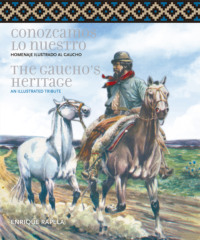
Kitabı oku: «Conozcamos lo nuestro - The Gauchos's Heritage»


www.editorialelateneo.com.ar

/editorialelateneo

@editorialelateneo


El gaucho, arquetipo del ser nacional

Lo conocí, lo vi y allí estaba. Solo, como casi siempre. Al lado mío, tan cercano que yo también me creí que era como él. Mentira, me faltaba tanto aprender. ¿Cómo iba yo a saber que un día me podría apenas parecer a quién? Y me fui arrimando lento, con todo el miedo de no ser prudente. Es que a veces, el atrevimiento comete algunos errores, esos de los sinsabores de quien mastica un pasto amargo sin saber que ya lo hizo un Gaucho.
Es el gaucho el que hizo todo en esta tierra argentina. Es el gaucho, el único arquetipo del ser nacional. Es el gaucho quien dejó el apelativo “gauchaje” y “gauchada”, puesto que uno trata grupos de gente, el otro lo de la “ayudada”, de los que siempre dan sin importarles nada.
A veces insisto en que ser gaucho no es solo saber pialar, andar en botas, lucir una rastra, andar todos los días en alpargatas de soga y ensillar…, más bien es un sentir, eso de sustituir y no pedir.
Antes de definir al gaucho, de determinar lo que para nosotros son sus lujos, usos y costumbres, es muy importante el decir del trabajo de Enrique Rapela. Es él quien va de una posta de una estancia a un esquinero. De un molino a un carruaje. De un alambre estirado a la matera. Quien nos pinta el lazo del lado izquierdo del anca, la manea, el recado o la encimera. Es que lo dibuja con pasión, un estilo que no queda otra opción.

ENRIQUE RAPELA, CON EL QUE TODOS APRENDÍAMOS
Fue Enrique uno de esos tipos que nos enseñaba a dibujar las cosas nuestras. Para mi edad, el plumín, dibujante, pintor, acuarelista, guionista e impresionista de la escuela de la pintura gaucha argentina, era de esos escritores ilustradores que seguíamos día tras día en revistas como El Tony y tiras en los diarios (La Razón).
Fue uno de los creadores de la historieta gaucha; claro que era autodidacta porque no había escuela, pero vencía como otros pintores costumbristas, haciendo de todos los días el tema gaucho con total conocimiento de sus costumbres e historia. Idoneidad, educación campera, rigurosidad y dedicación lo hicieron un referente para que “conozcamos lo nuestro”.
Sus historias, tiras, hoy llamadas comics, así lo denotan. Como “Cirilo el Audaz”, “Cirilo el Argentino”, “El Huinca” y “Fabián Leyes”. Tuvo, además, evocaciones históricas sobre nuestro canto, ejércitos, batallas, uniformes de combatientes. Es que desde chico, en la estancia La Carolina (Roque Pérez), se contagió del aire, la historia y sus gauchos, siempre legendarios.
Se animó, como su Cirilo El Audaz, a la técnica de la acuarela en un fuerte tono varonil y sin abandonar los colores de la patria .“Continuará…” decía la tira de Cirilo en La Razón y, de alguna manera, lo copiaba a Hernández con las andanzas de nuestro mayor poema: El gaucho Martín Fierro.
Dibujo y texto. Texto y dibujo. El artista se convierte en guionista, dibujante y casi cronista. En fin, todo lo narra.
La síntesis, una sola, el gaucho.
TODO ESTO ES TRADICIÓN
La tradición no es un recuerdo melancólico del pasado, es un proceso permanente que no termina nunca… y es por eso que los hombres hacemos hoy la tradición del mañana. Es que nuestra raza nació de una raza muy vieja y de una tierra muy nueva. Entonces, al salpicarse de rojo el damasquinado suelo (por el hierro damasquino) nació nuestro ser original, que es el gaucho.
Todavía quizá tengamos que recordarlos, pero no son otros que españoles e indios. Allí está el criollo, es decir el gaucho: hombre de la tierra y sobre todo soldado en la Campaña del Desierto, con los Colorados de Monte, con los Infernales de Güemes y, fundamentalmente, con los conquistadores de América, es decir, los Granaderos de San Martín.
Y es cierto, el gaucho fue el primer soldado. No existían guapos para acompañar a las milicias y fue don Juan Manuel de Rosas quien se valió de sus gauchos para avanzar en la frontera sur, tal cual don Julio Argentino Roca. Quizá, después del gran don Martín Miguel de Güemes y por sobre todos, el más grande entre los grandes, quien los entrenó en el Plumerillo para cruzar el Ande: el Gran Capitán, don José de San Marín.
Es por todo lo que decimos que el gaucho no deja de ser una amalgama de tierra y hombre. La sangre, siempre presente. Derramada, inhiesta, escarlata, morena, omnipresente. La tierra: recuperando como tantas veces el final, elevando su espiga por recordar, la hacienda por cortar y los lanares por ramonear.
Si creen que la tradición o el gaucho son cosas del pasado, ¡les vamos a explicar que no y por qué!: la gauchada no es olvidada. Nuestros paisanos siguen viviendo sus lujos, usos y costumbres.
EL GAUCHO, LUJOS Y COSTUMBRES
El gaucho hoy mantiene “lujos y costumbres”. Les voy a contar ese malentendido, lo de “vago y mal entretenido”. Jamás fueron vagos, sino por el adjetivo de distancia, es decir por vagar, librarse, pasear, alargar. Lo de mal entretenido, solo por juegos, aguardiente y alguna baraja para entretenimiento. Fueron los de la guerra, la yerra, el trabajo, la fragua, la tierra, la doma, la patrona, el caballo, la pampa, el estero y la montaña. Son nuestros paisanos un desparramo de colores, gustos y folclores distintos. Son el buen gusto en la fiesta, en el baile, la comida y la vida.
Una vez me preguntaron si alguno es distinto del otro y le dije sin dudar que sí. No es lo mismo el hombre del llano, la estepa, la montaña, el cerro, la puna, el río, el estero y cuanto más. ¿Cómo van a comer lo mismo en el río que en la pampa, a cantarle parecido al llano o a la montaña? ¿No es igual recitar tranquilos un poema y un grito? ¿Cómo se va a arropar el hombre de una canoa, el del quebracho del chaco o el del frío surero? No es lo mismo encontrar carne de guazuncho, dorado, colas de yacaré, lisas, peludos o un pescado de la Patagonia, salado y que está bien. O criar cordero al lado de la mejor carne, la de vaca. Gallina, patos y pollos, lo que quede en la sartén. Mucho bicho que camina va a parar a la cocina y la vizcacha en escabeche también, pues es una carne madrina.
Es por eso que seguimos comentando el campo, es decir, el único terreno de nuestros paisanos. Y si nos referimos a su tradición, volvemos a los usos y costumbres.
Es imposible que un gaucho de la montaña vista como el de la pampa. Son otros los colores, son otros los calores. Hay que pelear con distintos sinsabores. Y, en el Norte, andaban con el aplomo del sol, sandalias y sudor. En la Mesopotamia con polainas y, en la pampa, botas de cuero. Pañuelo golilla en Corrientes; arriba del cuello, allá en la pampa. Sombrero halado en Cuyo, más chico en Buenos Aires y, con mucho orgullo el chambergo, siempre destacado y quieto en San Antonio de Areco.
Si no se viste igual es por la patria grande, tampoco se ensilla igual, en esta tierra distante. ¿Cómo no voy a poner un recado de bastos, en el llano de la pampa o un basto medio pato, allá en donde la cueca manda? Arzones allá en el norte o una cangalla Malvinera y esos campos despejados, en donde música no hubiera. Un mandil que ya no existe, lujo y Perico Ligero. Un cojinillo de oveja, marrón y cuidado, en la sombra del alero. Un poncho Pampa enrollado, en el anca del overo y el lazo, como siempre, en el costado izquierdo.
MÚSICA Y LETRA
Entonces, como hablamos de la olla, el fuego, el viento, el barro o la cacerola. También podemos dedicarnos al decir, porque no se siente lo mismo, cuando hay letra, geografía y un sentir. ¿Cómo va a cantar, entonar y versear alguien de allá en Misiones, que otro de la montaña, la estepa o la llanura? Si uno mira el río lejos, el otro el mar azulado, la selva en el campo de al lado, la llanura interminable y la montaña, que a veces suele ser Ande.
Y allí la poesía, el canto y la melodía: cueca, ranchera, milonga, chamamé, polca, chacarera, tonada, chamarrita, cifra, algo de un paso doble, un cielito, otro infiernito, el gaucho entona otra cosa y versea despacito.
La Virgen Madre es una constante en el sentir gaucho. Como también los hijos, el Tata, el boliche, el “vidrio”, el tabaco, el farol, el charqui, la salmuera, el mate, la galleta o la yerra. Y decimos esto porque el gaucho no descansa, trabaja hasta los domingos en una yerra, con el cordero en la cruz y las criadillas en el rescoldo, debajo de la parrilla. Asado, jineteada, carrera cuadrera o diversión cualquiera. También porque el campo lo requiere y lo sabe más que nadie.
Los animales comen el pasto que por suerte a veces crece y, si no se los cuida, nada florece. El campo es una fábrica sin francos. Esa que precisó siempre de una fajina diaria y hasta un peón de guardia.
Apenas unos vicios que ignoran los absurdos. Pero ¿si podemos?, por qué no un lomo de carne, otros lomos de naipes, un puchero de marucha, taba cargada, bochas lisas y rayadas y si quedara alguna duda, aguardiente con ruda.
Total, siempre habrá un buen decidor, una suerte de pastor que bien podría decir que en una esquina cualquiera tropezó y cayó mi potro, que el hombre que tome vino, no llame borracho a otro.
Tan libre es el gaucho, que no lo entienden. En los pueblos prometen “desfiles gauchos” y los gauchos no desfilan, los gauchos pasan. Nadie los manda, se mandan así mismo con el bien, la bonhomía, la decencia, el buen gusto, sus lujos y costumbres. Por eso es que hablamos del arquetipo del ser nacional, de esa amalgama de tierra y hombre.
UN SIMPLE DÍA DE GAUCHO
En las madrugadas, un bife arde en la matera, cerca de los tamariscos, antes de ensillar y ajustar la encimera. Después vendrá el día y la tierra, la porfía, cosas que en el campo hace tiempo conocía. Y luego, solo un momento para descabezar un sueño. Un rato más de campo; tarde, mate y sereno, porque con el rocío hay que arrancar de lleno…
Es por eso que les digo que si el gaucho no es un mito ni una leyenda, ayudemos a desterrar la idea de su fantasiosa muerte.
“Al gaucho que llevo en mí, como la custodia lleva a la hostia” (Ricardo Güiraldes, es decir, Don Segundo Sombra).
MARIANO FRANCISCO WULLICH
Periodista del diario La Nación, recorrió cinco años la Argentina para “Crónicas del País”. Jefe de Cartas de Lectores, autor del Rincón Gaucho y secretario de Cierre de Redacción. Cubrió la guerra del Líbano y los viajes antárticos: estaba embarcado cuando se incendió el rompehielos Almirante Irízar. Publicó los libros Nuestra Argentina, El caballo, Don Emilio Solanet y el prólogo del Martín Fierro (Sancor).
The gaucho, archetype of the national being
I knew him, I saw him and there he was. Alone, like almost always. By my side, so close that I also believed I was like him. A lie, there was so much I had to learn. How was I to know that someday I could hardly resemble whom? And I was getting closer slowly, afraid of not being cautious. Because, sometimes, the boldness makes some mistakes, like someone who chews bitter grass without knowing that a Gaucho have already done that.
The gaucho is who did everything in this Argentine land. The gaucho, the only archetype of the national being. The gaucho, who left us the nouns gauchaje and gauchada, the first one denoting a group of people; the second one, the “help” coming from those who always give without worrying for anything else.
Sometimes I insist on the fact that being a gaucho is not only to know how to lasso an animal, wear boots, wear a rastra, wear everyday alpargatas and saddle a horse…, it is rather a feeling, that thing of substituting and not asking anything.
Before defining a gaucho, determining what are, for us, their luxuries, customs and habits, it is really important to talk about Enrique Rapela’s work. He goes from an estancia to an esquinero [corner post in a fence]. From a mill to a wagon. From an extended wire fence to the matera [gathering place for countrymen]. He paints for us the lasso on the left side of the rump, the hobble, the tack up to the encimera [piece of the tack that goes over the rest]. That is what he draws with passion, a style without another option.
ENRIQUE RAPELA, THE MAN WHO TAUGHT US ALL
Enrique was one of those guys who taught us how to draw our stuff. For people of my age, he was the nib, the draftsman, the painter, the scriptwriter and the impressionist of the school of the Argentine gaucho painting; he was one of those writers and illustrators we followed day after day in magazines like Tony and cartoons in newspapers (La Razón).
He was one of the creators of the gaucho’s cartoon; of course, he was a self-taught person because there was not a school for that, but he won, as other costumbrist painters, treating every day the gaucho topic with full knowledge of tradition and history. Aptitude, countryside education, accuracy and dedication turned him into a referent for “The Gaucho’s Heritage”.
His stories, cartoons —called comics today— show all these characteristics. For example, “Cirilo el Audaz”, “Cirilo el Argentino”, “El Huinca” and “Fabián Leyes”. He also had historical evocations of our songs, armies, battles, soldiers’ uniforms. The reason for this was that, since he was a child, in the estancia La Carolina (Roque Pérez), he grabbed the air, the history and its gauchos, always legendary.
He brought himself, as his Cirilo el Audaz, to the technics of watercolor with a strong masculine tone, without abandoning the colors of his homeland. “It will continue…” said Cirilo’s cartoon in La Razón and, in some way, he copied Hernández and the adventures of our main poem: El gaucho Martín Fierro.
Drawing and text. Text and drawing. The artist becomes a scriptwriter, a draftsman and almost a chronicler. In short, he narrates everything.
The synthesis, just one: the gaucho.
ALL THIS IS TRADITION
Tradition is not a melancholic memory of the past, it is a permanent, endless process… and that is the reason why human beings are building today tomorrow’s tradition. Our race was born from a very old race and very new land. So, when the Damascene floor (due to Damascene iron) was splashed with red, our original being —the gaucho— was born.
Maybe we still have to remember this, but our ancestors are none other than Spaniards and indigenous people. Thus, the Creole was born, that is, the gaucho: a man from the land and mainly a soldier in the Campaign of the Desert, with the Colorados del Monte, with the Infernales of Güemes and, essentially, the Grenadiers of San Martín.
And that’s true: the gaucho was our first soldier. There were no tough guys to accompany the militia, and Juan Manuel de Rosas took advantage of his gauchos to advance into the Southern frontier, as well as Julio Argentino Roca. Maybe, this happened after the great Martín Miguel de Güemes and, above all, the greatest among the great, the general who trained them in Plumerillo to cross over the Andes: the Great Captain, José de San Marín.
That’s the reason why we say that the gaucho is a fusion between land and man. The blood, always present. Spilled, erect, scarlet, dark, omnipresent. The land: recovering the end as so many times, raising its spike to harvest, the cattle to cut and the sheep to graze.
If you think that traditions or the gaucho are things from the past, we are going to explain that it is not true and why!: the gauchada is not forgotten. Our countrymen are still living with their luxuries, their customs and their habits.
THE GAUCHO, LUXURIES AND HABITS
The gaucho still has today his “luxuries and habits”. I am going to tell you about this misunderstanding, that thing about the gaucho being “vago y mal entretenido” (lazy and full of bad habits). The gauchos were never lazy, they were “vagos” just in the sense of roaming, wandering, being fee. The bad habits have to do with gaming, alcohol and some gambling for fun. They were the people for the war, the branding, the hard work, the forge, the land, the taming, the wife, the horse, the Pampas, the lagoon and the mountain. They are our countrymen, a scattering of different colors, tastes, and folklore. They are the good taste at the party, in the dance, in food and in life.
Once they asked me if one is different from the other and I said without hesitation that they are. It is not the same a man from the plains, the steppe, the mountain, the hill, the puna, the river, the lagoon, etc. How are they going to eat the same food near the river or in the Pampas; to sing the same songs to the plains or to the mountains? It is not the same to quietly recite a poem or shout. How the man of the canoe, the man from the quebracho in Chaco or the man from the Southern cold weather is going to be dress? It is not the same to find meat of gray brocket, river tiger, yacaré’s tails, lizas, armadillos or any fish from Patagonia, salted and that is okay. Or raising lamb next to the best meat: beef. Hens, ducks and chickens, whatever is in the frying pan. Every animal that walks ends up cooked, and also the marinade vizcacha.
That’s why we keep talking about the countryside, that is, the only land of our countrymen. And, if we refer to their tradition, we come back to their customs and habits.
It is impossible that a gaucho from the mountain wears the same clothes as one from the Pampas. The colors are different, the weather too. They need to fight different troubles. And, in the North, they moved with the aplomb of the sun, with sandals and sweat. In the Mesopotamia, with leggings, and, in the Pampas, with leather boots. Lower neckerchief in Corrientes; higher, in the Pampas. Large brim hat in Cuyo, smaller brim in Buenos Aires and, very proudly, the chambergo, always prominent and quiet in San Antonio de Areco.
If they do not dress the same, it is because of the large country, and they do not saddle the same way either, in this remote land. How am I not going to put a tack with cushions in the plains of the Pampas, or a duck tail tack there where the cueca orders it? Saddle trees in the North or a malvinera saddle and those clear fields, where there is no music. An apron that does not exist anymore, luxury and perico ligero. A brown and neat sheep cushion, under the eaves shade. A Pampa poncho rolled up on the rump of the overo and the lasso, as always, on the left side.
MUSIC AND LYRICS
So, as we talk about the pot, the fire, the wind, the mud or the pan, we can also talk about the ways of saying, because we do not feel the same when there are lyrics, geography and a feeling. How is somebody from Misiones going to sing, modulate and compose verses? And someone from the mountains, or the steppe or the plains? If one looks at the river far away, the other at the blue sea, the forest in the next field, the endless plains, the mountains, which sometimes could be the Andes.
And there the poetry, the singing and the melody: cueca, ranchera, milonga, chamamé, polka, chacarera, tonada, chamarrita, cifra, a paso doble, a cielito, another infiernito, the gaucho sings another thing and slowly composes verses.
The Virgin Mother is a constant in the gaucho’s feeling. Also, his children, the Tata, the boliche, the “vidrio”, the tobacco, the lampost, the charqui, the brine, the mate, the galleta or the branding. Because the gaucho does not rest, he works even on Sundays in a branding, where the lamb rests in the cross shaped grill and the calf´s testicles on the embers, under the grill. Asado, jineteada, carrera cuadrera or any kind of entertainment. Also because he demands it and he knows all that better than anybody.
The animals eat the grass that, fortunately, sometimes grows and, if it is not taken care of, nothing prospers. The countryside is a factory without holidays. It always needs the daily work and a worker on duty.
Just some vices that absurd people ignore. But if we can? Why not a filet, some cards, a stew with rump steak, the loaded taba, plain and stripped bochas, and, if there were some doubts, aguardiente [moonshine] with ruda [ruta].
Anyways, there will always be a good “sayer”, some kind of shepherd who can say that, in any corner, my horse stumbled and fell, that the man who drinks wine cannot call another one a drunk.
So free is the gaucho that he is misunderstood. In some villages, “gauchos’ parades” are promised but the gauchos do not parade, the gauchos pass. Nobody gives them orders, they only respond to themselves with wellness, bonhomie, integrity, good taste, their luxuries and traditions. That is the reason why we talk about the archetype of the national being, of this fusion of land and man.