Kitabı oku: «The Way Back Home»
Praise for The Way Back Home
‘Brimming with emotional drama and packing a huge twist, this story will keep you guessing until the very end’ Heat
‘I was gripped from the start and raced through to the end in one long sitting’ Sara Lawrence, Daily Mail
‘A lovely read that keeps you anticipating a twist that is nicely unexpected … I couldn’t put it down‘ Sarah Broadhurst, Lovereading.co.uk
‘A very telling and enjoyable take on contemporary life’ Woman and Home
‘If you like emotional family dramas with a twist you’ll love this’ Daily Express
‘Freya North has given us another poignant tale – you won’t be able to put this one down’ OK
‘An intriguing tale that keeps you absorbed from cover to cover.’ Candis Magazine
‘It is a story of reflection and redemption – a tender tale that seems to have come from the very heart of this author’ New Books Magazine
‘Packed with love, lies and drama’ Woman Magazine
Acclaim for Freya North
‘Secrets will make you smile, sigh and cheer as this story proves love can be found in the most unexpected places’ Sunday Express
‘Darkly funny and sexy – literary escapism at its very finest’ Sunday Independent
‘The novel’s likeable central characters are so well painted that you feel not only that you know them, but that you know how right they are for each other … the beauty of the North Yorkshire countryside contrasts convincingly with the bustle of London’ Daily Telegraph
‘Freya North has matured to produce an emotivenovel that deals with the darker side of love – theseare real women, with real feelings’ She
‘A delicious creation … sparkling in every sense’ Daily Express
‘A distinctive storytelling style and credible, loveable characters … an addictive read that encompasses the stuff life is made of: love, sex, fidelity and, above all, friendship’ Glamour


COPYRIGHT
Published by HarperCollinsPublishers Ltd
1 London Bridge Street
London SE1 9GF
www.harpercollins.co.uk
First published in Great Britain by HarperCollinsPublishers 2014
Copyright © Freya North 2014
‘The Waste Land’ © Estate of T.S. Eliot printed with permission of Faber & Faber Ltd.
Don’t You Cry
Words & Music by Richard Hawley
© Copyright 2009 Universal Music Publishing MGB Limited
Universal Music Publishing MGB Limited
All Rights Reserved. International Copyright Secured.
Used by permission of Music Sales Limited.
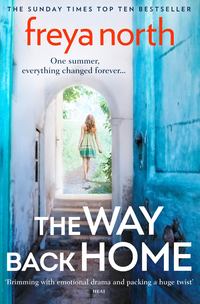
Cover photography © Paul Knight/ Trevillion
Images (main image); Getty Images (girl, path)
Freya North asserts the moral right to be identified as the author of this work.
A catalogue copy of this book is available from the British Library.
This novel is entirely a work of fiction. The names, characters and incidents portrayed in it are the work of the author’s imagination. Any resemblance to actual persons, living or dead, events or localities is entirely coincidental.
All rights reserved under International and Pan-American Copyright Conventions. By payment of the required fees, you have been granted the non-exclusive, non-transferable right to access and read the text of this e-book on screen. No part of this text may be reproduced, transmitted, down-loaded, decompiled, reverse engineered, or stored in or introduced into any information storage and retrieval system, in any form or by any means, whether electronic or mechanical, now known or hereinafter invented, without the express written permission of HarperCollins.
Source ISBN: 9780007517800
Ebook Edition © May/June 2014 ISBN: 9780007507696
Version: 2016-11-11
DEDICATION
In loving memory of Hannah Berry 1983-2013
Beautiful, funny and brave. We miss you.
www.beatingbowelcancer.org
CONTENTS
Cover
Praise for The Way Back Home
Title Page
Copyright
Dedication
Chapter One
Chapter Two
Chapter Three
Chapter Four
Chapter Five
Chapter Six
Chapter Seven
Chapter Eight
Chapter Nine
Chapter Ten
Chapter Eleven
Chapter Twelve
Chapter Thirteen
Chapter Fourteen
Chapter Fifteen
Chapter Sixteen
Chapter Seventeen
Chapter Eighteen
Chapter Nineteen
Chapter Twenty
Chapter Twenty-One
Chapter Twenty-Two
Chapter Twenty-Three
Chapter Twenty-Four
Chapter Twenty-Five
Chapter Twenty-Six
Chapter Twenty-Seven
Chapter Twenty-Eight
Chapter Twenty-Nine
Chapter Thirty
Chapter Thirty-One
Chapter Thirty-Two
Chapter Thirty-Three
Chapter Thirty-Four
Chapter Thirty-Five
Chapter Thirty-Six
Chapter Thirty-Seven
Chapter Thirty-Eight
Epilogue
Reading Group Questions
Q&A With Freya North
The Story of Windward
Keep Reading
Acknowledgements
About the Author
By the same Author
About the Publisher
When I was …
When I was born there were already other children at Windward. None was beyond toddling age and, as such, we were grouped together pretty much like the clumps of perennials in the garden, or the globs of paint on a palette in one of the studios, or the music which drifted from the top rooms – discordant notes that, as a whole, wove together into a quirky harmony of sorts. We were who we were, the children of Windward – a little ragtaggle tribe further defining the ethos and eccentricity of the place.
I wasn’t born in a hospital. I was born at Windward but I wasn’t born in my home. I was born in Lilac and George’s apartment with Jette assisting my mother, ably helped by all the other females there at the time, whether permanent or itinerant, mothers or girls, lesbians, lapsed nuns and even an aged virgin. I know all about a woman called Damisi who was visiting at the time though, it seems, no one really knew where her connection lay. She was a doula, apparently, and I know the story off by heart – how she had all the women breathing and bellowing to support and inspire my mother to relax. It worked – I know I was as easy a birth as it’s possible to have, slipping out into the Windward world to a backing track that was practically a bovine opera. Some of the other children heard – how could they not – and often, they mooed at me. I didn’t mind – it seemed my own special herald. However, when I first heard a similar sound emitted by a cow it scared me senseless.
When I was five, Louis, who was always very old but never seemed to age, hosted my birthday party in his apartment. We didn’t know he knew magic. He took pennies from behind all our ears – it was probably the first time any of us had coins of our own. He gave me a piggy bank to keep mine in – to start saving the pennies, he explained. I thought I had to save the coins from some fate that would otherwise befall them.
When I was ten, my birthday party was a disaster. I’d been at the local school for three years, been to the parties of my classmates – pink and proper, simultaneously joyous and lively and yet fastidiously organized. That’s all I wanted – a party like that. A neat cake with the right number of candles. My parents got it wrong. There were only nine candles. Someone – probably my mother – had put a tenth one in, but had decided that it was incorrect. Ten? That’s wrong. That small dent in the beige icing of my lopsided, inedible cake was to me a sinkhole of indifference. It struck me then that perhaps not everyone loved everyone.
When I was fifteen –
When I was fifteen something terrible happened.
CHAPTER ONE
Oriana
To Oriana, it seemed so small. So ridiculously and unnervingly small that she felt compelled to rub her eyes. It had to be an illusion – the truer, more sensible, more realistic proportions would surely be reinstated after a good blink. But there it was still, nestled in a fold of land which looked soft enough to be made of fabric. Like biscuit crumbs in a scrunched napkin, there was the small town outside which she’d grown up. She pulled the hire car in to the verge. She didn’t want to get out, she wanted to avoid familiar smells that might make it seem real. She didn’t want to hear anything that might say well! welcome back, duck. She wanted to believe that she had no history with this mini place and no need of it. It looked silly, being so small. Not worth a detour. Certainly not worth a visit. Not worthy, even, of a drive right through. This wasn’t Lilliput. This wasn’t romantic. This was Nowhere. Nowhere, also known as Blenthrop, Derbyshire. The worst thing about this bastard place striking Oriana as being so small was that it made the rest of the world feel so vast. And suddenly she felt isolated, acutely alone and terrifyingly far away from the place she’d called home for so many years, the place she’d left only the previous day. God Bless America, she said under her breath though she knew she’d never go back.
Driving to her mother’s house was easier because she’d never lived there. There was little to recognize, nothing to flinch at; she was unknown and that was preferable to intrusive welcomes and waves, however warm and well meaning Blenthrop folk might be. The further she drove from her childhood home, the longer the space she could finally create between her ears and her shoulders. As she relaxed a little, the car seat felt more comfortable and her headache lifted. Really, jet lag had nothing to do with the tension and now that the anxiety had dissipated, Oriana let the genuine tiredness billow over her the way her mother used to waft her duvet when she was a little girl, giggling in bed waiting for it to land. They call it a comforter in the United States, she thought. My mum’s gone all sheets and blankets because she says it makes the bed look ‘properly made’. My mom – the all-American girl who’s now as small-town English as they come.
The tiredness, the tiredness. Should she pull over? Half an hour left to Hathersage. Open the window. Turn the radio up another notch. Drink Coke. Pinch yourself awake. Pinch yourself that you really are here again, eighteen years on. Kick yourself, wondering if it’s a stupid idea, really.
* * *
Oriana’s mother didn’t know what to do. Her daughter was sleeping and though she’d told her mother not to let her, under any circumstances, what was Rachel to do? Her daughter, wan and sunken-eyed, too thin. Rachel looked in at the front room. Oriana was curled embryonically into a corner of the sofa, her hands tucked tightly between her thighs, the tips of her socks hanging limply a little way off her toes; the heel of her right sock was twisted to her ankle, as if her shoe had wanted to cling onto her feet. Her hair looked lank and flat and her lips were chapped. She wasn’t wearing earrings. She’d spilled something on her top. This wasn’t jet lag, Rachel sensed. This was exhaustion.
Rachel had done that trip back to America often enough since she herself emigrated from there aged nineteen. She knew well that, though jet lag made you feel discombobulated, it didn’t make you look like that – how Oriana had looked on arriving an hour ago. When Rachel had opened the door to her daughter, she read in half a glance all the unrevealed secrets and sadness that had slipped unnoticed between the lines of her sporadic emails. On her doorstep, Rachel saw how the crux of it all was suddenly writ large over Oriana’s face, her general scrawniness. The details, however, remained concealed. She was shocked. How could she have known nothing? She was ashamed that, once again, a mother’s instinct had failed her.
‘I’ll give her another ten minutes,’ Rachel said, unsure.
‘That’ll make it forty winks,’ Bernard said. ‘I’ll be popping out now. Just round the block.’ And he kissed his wife who, just then, really did love his habit of explaining life with sayings and clichés. Bernard Safely. Had ever a person had a more appropriate surname?
‘Two shakes,’ Bernard told her though they both knew that his walk around the block would take far longer than two shakes of a lamb’s tail. She watched him through the bubbled-glass panel of the front door as he walked away. The distortion made him appear to have no bones, amorphous as jelly. Her ex-husband, Oriana’s father, referred to Bernard as spineless. Through the warped glass, he did indeed look so. Rachel felt disloyal. She rarely thought about Robin these days. She supposed she’d have to, now Oriana was back, even if she didn’t want to. She’d see him in her daughter’s crooked smile, her high cheekbones, the way her gaze darted away while she talked but focused fixedly on whoever spoke to her. Father and daughter both had the ability, without realizing it, to make one feel simultaneously inconsequential and significant.
‘Oriana Taylor,’ Rachel said quietly and then, in a whisper, ‘Oriana Safely.’
It didn’t flow. It didn’t work. It would never have worked. She’d always be Oriana Taylor, daughter of Robin. The Robin Taylor. Would they mention him? She and her daughter had managed for eighteen years to skirt issues as if they were dog mess on the pavement.
* * *
Malachy
An ex-girlfriend had described it as Saturn Returns. Malachy hadn’t a clue what she meant. That dream you have, she’d said, you might not have it often but it’ll always recur – like Saturn Returns, with similar cataclysmic fallout. It makes you introverted and horrid to be around.
He’d ended the relationship soon after. She was a bit too cosmic for Malachy and she talked too much anyway. If he had the dream, the last thing he needed was a load of astrobabble bullshit. A warm body cuddling next to him, soothing him, taking his mind off it – that’s what he required. Saturn Returns. She never knew that a prog-rock band of that very name had formed in his childhood home, exploded onto the music scene for a couple of years in the late 1970s and then finally imploded back at the house in 1981. He never told her, even though the band had jammed in the very place where Malachy currently lived.
Last night, the dream had once again hijacked his sleep, apropos of nothing. In the woods, with his brother Jed, their teenage bodies of twenty years ago encasing their current souls. They were out at summer dusk, shooting rabbits. A large buck running away, stopping, turning and facing him. Delicate eyes and soft silver pelt conflicting with the anomalous fuck-you gesture of lope-long ears rigid like two-fingered abuse. Malachy pulled the trigger and smelt the saltpetre and heard the harsh crack and felt the kick and experienced the extreme pain as half his world went dark.
He’d often wondered whether the rabbit was some kind of metaphor. He’d tried to analyse why in the dream he didn’t shout for help; why his brother was there only at the start. And he never knew whether he killed the rabbit, the little fucker. The pain cut the dream short, always. And he always woke up thinking, but it didn’t happen like that, it didn’t happen like that. And he’d be cranky and introverted for a good while after because he knew that he’d much rather it had happened like in the dream.
Stupid dream. Malachy left his bed and showered. Dressed, he snatched breakfast, yesterday’s post in one hand, toast in the other. What he really wanted to do today was write his novel, not go to work. Business was slack this time of year – early March, thick frost, too cold for tourists, too close to Easter for more hardy holidaymakers; too close to Christmas and Valentine’s and Mother’s Day for locals to fritter any more of their money. The irony was Malachy could very well not open the gallery because, after all, he owned it – but the fact that he owned it compelled him to keep it open, never take time off, never get sick. Tuesday to Friday, 10 till 6. Saturday 10 till 5. Summer Sundays 11 till 2. Closed Mondays. If the gallery was as quiet as he anticipated, he’d work on his novel from there today. He left the apartment, glancing guiltily at the house. He ought to do the rounds, really. He hadn’t done so for a couple of days.
Paula de la Mare waved at him, before she hopped into her car, belting down the drive. Malachy followed, absent-mindedly creating acronyms from the letters on her car’s registration plate. At the bottom of the drive, she turned right, taking her girls to school. Malachy followed her a little way before joining the main road into Blenthrop.
Some idiot had dumped litter in the doorway of the White Peak Art Space; yesterday’s chips lay like flaccid fingers in the scrunch of sodden paper. He rummaged in his satchel for something suitable like a plastic bag. Phone. An apple. Slim leather diary (he refused to use his phone for anything other than calls). A tin of pencils, a spiral-bound notebook and a flashdrive. He had no plastic bag. The toe of his shoe would have to do. He shoved the takeaway detritus into the gutter and opened up the gallery.
It was always the weirdest feeling. It never diminished and it engulfed Malachy the moment he entered. The immediate stillness and quiet of the space contradicted by the undeniable sensation that, up until that very moment, they’d been alive; the paintings, the sculptures. If he’d turned up a minute earlier, or sneaked in through the back, he was certain he’d have caught them at it. Now, as every day, they were just figures frozen into their canvases, others quite literally turned to stone, bronze or, in the case of Dan Markson’s work, multicoloured polymer. It was like the characters in his novel – Malachy sensed they existed without him but whenever he returned to the manuscript, he found them exactly where he’d left them.
In the gallery, he straightened a couple of frames and adjusted the angle of a spotlight that was glaring off the glass of a watercolour. There were few emails to respond to and within the hour Malachy felt justified in inserting the flashdrive and clicking on the folder called ‘novel’, selecting from within it the file called ‘novel10.doc’.
‘Tenth draft in only fifteen years.’
He said it out loud, with contrived loftiness, laughed and took the piss out of himself, receiving the abuse well. All residual effects of the dream had gone, the details were forgotten. Until the next time.
* * *
Jed
None of his girlfriends knew this, but whenever Jed had sex in the morning, he always had Ian Dury playing in his head. He’d grown used to the soundtrack. It wasn’t a distraction and it didn’t irritate him; it was a brilliant song after all – as sexy in its funk as it was funny in its lyrics. It had started with Celine. She had been French, intense and passionate, and when she’d purred in his ear in the middle of his sleep, wake up and make love with me, that’s what kicked it all off.
Jed knew his current relationship was on the way out; from fizz to fizzle in eight months. It had been as awkward as it had been depressing last night, to be the only non-conversing table in a packed and buzzing restaurant. They checked their phones, ate, gazed around the room, checked their phones again, eavesdropped on other people’s conversations and barely looked at each other. Fiona went to bed when they arrived back at his flat. I’m tired, she’d said, as if it was Jed’s fault. He’d sat up late, finishing off the red wine he’d opened the night before, even though he’d forgotten to put a stopper in it and it really didn’t taste very good. Jed had thought, I’m too young to be one of those couples that go out for dinner and don’t speak. And then he thought, I’m too old to be frittering away time on a relationship like this. I have a headache, he thought, collapsing into bed and drifting to sleep before he could remember to kiss her goodnight let alone check she was even there.
But he woke, horny. It was natural, chemical. Ian Dury was goading him to have a proper wriggle in the naughty, naked nude. He sidled up to Fiona, his cock finding the soft dale between her buttock cheeks to nestle in. Unlike Ian Dury, however, it wasn’t lovemaking he wanted. Just a fuck. She moved a little, her breathing quickening as he ran his hand along her thigh, up her body, a squeeze of her breast before venturing downwards and between her legs. She was warm and moist and she let him manoeuvre her so that he could work his way into her from behind. No kissing. She had a thing – paranoia – about morning breath, which initially he’d found charming, then irritating but today just useful, as he didn’t want kissing and eye contact. He just wanted to come because soon enough she’d be gone.
She dumped Jed in a stutteringly over-verbose phone call that lunch-time. It’s not you, it’s me. I just need some space. Let’s just be friends. It’s fine, he kept saying, I’m fine with it. I agree. If something of such little substance was finally over, it really didn’t warrant this level of analysis or justifying. Don’t worry, he told her, don’t worry. I feel the same.
‘You feel the same?’ She sounded affronted, as if her self-esteem was dependent on him being crushed.
Jed sensed this. ‘I mean,’ he qualified, ‘if you’re sure. Take all the time you need.’
‘I’m sure,’ she said.
‘OK,’ he said, ‘OK.’ And for her benefit, he dropped his voice a tone or two. ‘Take care,’ he said.
‘You too,’ she said. ‘Friends?’
‘Friends.’
He had too many of these ‘friends’ with whom he had mercifully minimal contact. None had truly made the transition from girlfriend to friend. None had even re-formed into useful booty calls. Ultimately, none meant that much to him because none was the one who got away. He hadn’t seen her for such a long time, not since she moved to America a decade and a half ago.
CHAPTER TWO
Nine o’clock. Oriana felt pleased with herself. Apart from a vaguely recalled period of wakefulness in the small hours and despite the nap that her mother had tricked her into taking the previous afternoon, she’d slept through the clash of time zones and she’d slept well enough for it to feel truly like morning. There was no need to count the hours backwards and figure out what the real time was. She accepted that nine in the morning, GMT, was now the true time in her life. She looked at the dressing gown her mother had laid out for her. It was white towelling and had the crest of a hotel embroidered in navy on the breast pocket. My mum has become one of those people who actually buy the hotel robe. She didn’t know whether she should laugh or cringe at this. She did know she’d rather get dressed than put the thing on. This wasn’t her home and it wasn’t a hotel and she wasn’t comfortable mooching about in borrowed towelling robes. She opened the bedroom door and listened hard. The house appeared to be empty but still Oriana padded quietly, self-consciously, along the corridor to the bathroom. She thought, this is the type of carpet I fantasized about as a child. The colour of butterscotch and as softly dense and bouncy as a Walt Disney lamb. And the bathroom itself; warm, bright and spotless, with hotel toiletries placed neatly on the sink and the bath – additional prerequisites of her childhood dreams. And yet she could not remember her mother ever yearning for such things.
Showered and dressed with her hair in a towel turban, Oriana made her way downstairs. Stairs that don’t creak or groan, she mused, make one feel light and dainty. When she was young, her father had called her Fairy Elephant – such was the inadvertent noise she’d make even crossing the hallway of her childhood home. It was only when she was at the base of the stairs that she realized she wasn’t alone in the house. From behind the glazed door leading into the kitchen, she could hear the radio tuned low to something middle of the road. It must be Bernard. Had it been her mother, the volume would have been high on a talk show and Rachel would be joining in, or, as Bernard would have described it, having her tuppence worth.
‘Morning.’
Bernard looked up from the crossword and a mug of tea. He smiled his uncomplicated smile. ‘Good morning, love,’ he said. ‘Breakfast?’
Last night, Oriana had been too tired not to feel sick after a couple of mouthfuls and prior to that, she’d only snacked on the plane.
‘Yes, please.’
‘What would you like?’
She looked blankly around the kitchen. She had no idea, really.
‘Toast and tea?’ Bernard suggested. ‘Poached egg?’ He could hear hunger in her inability to decide. He chuckled. ‘Sit yourself down – have a look at six across.’
She couldn’t concentrate on crossword clues and watched Bernard at the stove. ‘I had a special poaching pan,’ she said, ‘in America.’
Bernard had a spoon, a saucepan of boiling water and a perfected technique.
‘Fancy that,’ he said, his tone genial.
Poached to perfection, Oriana thought, as she tucked in.
‘More toast?’
Oriana nodded because Bernard’s toast was cut into triangles, buttered thickly and placed in a toast rack. The taste was as comforting as it was delicious. English salty butter and builder’s tea. She had to concede that some things just didn’t travel well across the Atlantic.
‘What do you have for breakfast,’ Bernard asked, ‘over there?’
Oriana wondered why he was using the present tense. Being tactful, probably. She’d told them both last night that she was back in the UK for good or for whatever. She shrugged. ‘I used to just grab something,’ she said, ‘from a stall or a bakery, on my way to work.’
Bernard filled her mug with a strong brew the same colour as the brown teapot. He used a tea strainer. The tea strainer had a little holder of its own and the teapot was returned to a trivet on the table. He did like things just so, Bernard. Oriana knew that in itself was what had attracted her mother to this ordinary, gentle man. Her father placed used tea bags on windowsills and tore into loaves of bread with his hands and teeth. Her father once told her that plates were for the bourgeoisie.
‘You take your time,’ Bernard said and she knew he meant way beyond her eating breakfast at his table. ‘Your mother’ll not be long.’ And he returned to his crossword, instinctively knowing when to pour more tea, when to glance and smile. Privately, they both reflected that they liked this time, just the two of them. They’d rarely had it. They barely knew each other. Rachel, who could have been the conduit, had kept them separate.
After breakfast – and Bernard had insisted she went nowhere near the washing-up (plenty of time for that, love) – he sent Oriana out for a walk, explaining painstakingly the route around the block. His pedantry with directions had infuriated her when she’d been a teen. Boring old fart. Mum – he’s such an old woman! Now, though, she liked it. It was one less thing to think about – which way to go – because in recent months which direction to take had consumed her entirely. Today was a day just for putting one foot in front of the other, for allowing the sidewalk to turn back into a pavement, for acknowledging that driving on the left was actually right, for accepting that cars were tiny and the traffic lights and postboxes were different, more polite somehow, and that this was Derbyshire, not San Francisco, and that was the end of that.
* * *
‘Where is she?’
‘She’s out for a walk – just round the block. The Bigger Block. I told her the way.’
‘But round the block doesn’t take an hour, Bernard, not even the Bigger One, not even when your knee’s playing up.’
‘She’ll be fine.’
‘Something’s happened to her.’
‘Here? In Hathersage?’
‘Not here in Hathersage, Bernard. Out there – over there.’ Rachel gesticulated wildly as if America, her own homeland, was an annoying fly just to the left of her. ‘Something happened,’ she said. ‘That’s why she came back. That’s why she looks the way she does.’
‘Well,’ said Bernard, ‘she had a good breakfast. You can’t go far wrong on a full stomach.’
Rachel rolled her eyes and left the house.
The cacophony of tooting and the screeching of tyres tore into Oriana’s peaceful stroll.
‘Get in, honey!’ Her mother was trying to open the passenger door while leaning across the gearstick, buckled as she was by her safety belt and hampered by her capacious bag on the passenger seat. Rachel now had the door open and was lying on her handbag.
‘Oriana – get in.’
For a split second, Oriana actually thought about sitting on top of her – if the urgency in her mother’s voice was anything to go by. But Rachel had managed to straighten herself and hoick the bag into the back by the time Oriana sat herself down.
Her mother was agitated. ‘You can’t take an hour to walk around the block!’
‘Can’t I?’
‘No!’
‘No?’
‘No! Not without telling someone you’re going for a long walk.’
She’s serious, Oriana thought. She’s utterly serious. All those years when she didn’t know where I was and didn’t care what time I was back.
It was so preposterous. Surely her mother could see that? However, the irony appeared not to have confronted Rachel. But there again, Rachel had reinvented herself and parcelled away the past when she’d left Robin for Bernard. The car radio was on and Rachel bantered back vitriolically at the callers and the presenters, having her tuppence worth, all the way home.
CHAPTER THREE
‘I thought I’d come this weekend.’
‘Good morning, brother dear. Alone?’
‘Yes,’ Jed told Malachy. ‘Alone.’
‘You’re on your own, then? Again?’ Malachy looked at the phone as if Jed could see his expression which was playfully arch.
‘Yes,’ Jed laughed at himself. ‘Again.’
‘Which one was it?’
‘Fiona – the lawyer.’
‘Did I meet Fiona the lawyer?’
‘No,’ Jed said. ‘We were only together about eight months.’
‘Jesus – have I not seen you for eight months?’
‘Piss off – of course you have. I just didn’t bring Fiona to the house, that’s all.’
Malachy considered this. But there was no pattern to which girlfriends Jed brought home. Sometimes it was girls he wanted to impress, other times it was girls he wanted to unnerve, as if their reaction to the house was the ultimate litmus test.
‘Fine,’ said Malachy. ‘It’ll be good to see you.’
Mildly frustrated with Jed for making him late setting off for work, Malachy cursed his brother under his breath. Not that he was expecting any clients. But still. He had standards and opening times and a novel to write and a business to run. And, now, his younger brother descending on him for the weekend. Which would mean long nights and bottles of wine and philosophizing and reminiscing and arguing and irritation and laughter. Malachy jumped into his car, noting that the de la Mares had long since left on the school run.
* * *
Oriana looked at her phone, deflated. The number she’d rung was unobtainable – the fact that it still had a name ascribed to it made this seem all the more blunt. How could she not have known that Cat had changed her number? Oriana tried the number again and then chucked the phone on the sofa in frustration before slumping down and reaching for it again as if giving the gadget a third and final chance.
Rachel pretended not to notice. ‘Do you want to use the proper phone?’ she asked, referring to the landline. She and Bernard shared one mobile ‘for emergencies’ and it rarely left the drawer of the desk in the hallway. If it was mobile, how could it be grounded and trustworthy?
‘I was just trying Cat,’ Oriana said, ‘but I think she’s changed her number.’
‘And she didn’t give you her new one?’ Rachel employed extravagant indignance on her daughter’s behalf but it backfired.
‘If she’d given me her new number, I wouldn’t be phoning her old one.’
Bernard looked up, aggrieved, and immediately Oriana regretted her snappiness.
‘Sorry.’
She vaguely recalled a mass-text from Cat with a new number a few months ago. She’d been on a stolen weekend with Casey, just outside Monterey, in their favourite fish restaurant, the sides open to the sea, a breeze from the surf bringing an ephemeral saltiness to the food. She remembered being so in the moment, so desperate for no interruption, for time to slow down, for the day to stretch and belong only to them, that when the text came she glanced at it and discarded it.
‘Sorry,’ she said to her mother and, privately, to Cat.
‘I thought she was living in the US too?’
‘She was – Colorado – but she came back about a year ago.’
‘You could phone Django,’ her mother suggested, but they both knew how the phone could ring at Cat’s uncle’s place and he might answer it, if he felt like it, or not, if he didn’t. Usually, he’d rage across the house simply to bury the phone in the sofa cushions to shut the damn thing up.
‘Seven, four, nine,’ Oriana chanted, ‘six, eight, two.’ Django McCabe’s phone number was one of the few still inscribed into her memory. She’d known it from a time long before SIM cards made memorizing numbers outdated and pointless.
‘He’s poorly, you know,’ Rachel said, ‘from what I’ve heard.’
Oriana thought, I could always drive over there – I loved Django. But she didn’t want to. When one had lived away from one’s roots for so long, returning always revealed such an unexpected acceleration in the ageing of those left behind. Her mother. Bernard. They always looked so much older than she anticipated. And Django – whom Oriana remembered so vividly and fondly as robust and larger than life – she simply didn’t want to see him shriven and ill and aged.
Facebook. In recent weeks, she’d stayed sensibly away from Facebook much as she’d avoided Alice Trenton in the school playground – the cool girl, the mean girl; get too close and you’re trapped. Facebook was similar, thrilling and oppressive in equal measure. The choice was between Django and Facebook. The former brought with it intimacy, the latter intrusion, and Oriana wanted to steer clear of both. There again, Facebook afforded her invisibility. She reached for her iPad which, at her behest, Bernard had gingerly had a play on the night before, his index finger out rigid while his remaining fingers and thumb were scrunched into a fist, as if merely pointing at the screen might deliver an electric shock.
Facebook. She signed in. Sixteen trillion notifications and a newsfeed jammed with peculiar app suggestions and people she hardly knew gloating about virtual farms and aquariums and poker games; photos of babies and smiling and beaches and the wild and wacky times that apparently defined everyone else’s lives. She typed in ‘Ca’. And sure enough, up came ‘Cat McCabe’ but, just above her, ‘Casey’ too. He was minute, his photo hardly recognizable at this size. Do not click on ‘Casey’. There is no need and there is no point.
With the iPad on her lap, Oriana pushed her hands under her thighs and stared and stared at the screen until the wave of nausea passed and she felt her breathing regulate. She should have unfriended him. She was aware that, if she did so now, he probably wouldn’t even notice. She clicked on Cat and sent a message.
I’m back in Derbyshire – call me! I can’t find your new number xxxx
A little white lie on Facebook was so pale it practically didn’t exist.
Bernard announced he was off out for a stroll. It was only when Rachel cleared her throat for the second time that Oriana realized there was something brewing.
‘Cup of tea, Mum?’ Clever.
‘No. Not now.’ It wasn’t tea brewing. Rachel appeared awkward and spoke fast. ‘I was saying to Bernard last night how lovely it is to have you home. And we both want you to know you can stay as long as you like and take all the time you need – you know, to find a job and your feet and somewhere to live and what it is that you want to do.’
‘Thank you.’ It suddenly seemed prudent to sound genuine, guileless. But from Rachel’s penetrating stare, Oriana knew she saw right through it.
Oriana felt irked. Four days in the last five years, a similar average over the past eighteen years, and already she’s had enough of me. ‘What you mean is, it’s been nice seeing me but you think I should get a job, ship out and get on with it.’
Rachel tutted. ‘Honestly – why must you be so defensive?’
Oriana thought, I’ve got to get out of here. Then she thought, but I have nowhere else to go. ‘I’m sorry,’ she said and it wasn’t to apologize, it was to qualify. ‘It’s just it sounded like you don’t want me here.’
‘It’s not that,’ her mother said, ‘but I really don’t know what you’re even doing here.’
For years, Oriana had felt better about her relationship with her mother by believing, quite categorically, that her mother had been in the wrong. Now it was obvious that in this current situation, Rachel was actually quite right. ‘Why have you come back?’ she asked. ‘Why give up a charmed life? What happened to Casey – I’m assuming you guys are through?’
Oriana sighed and shrugged as if it was no big deal and just a tiresome topic. ‘It was time for a change,’ she shrugged. ‘It was hard for a while – but I’ve moved on. And I don’t really want to talk about it.’
‘And you’re OK?’
‘It was my call. I’m fine.’
‘You’re sure?’
‘Look at me!’
‘You’re thin.’
‘Thin’s good! I’m fit.’
‘You’re too thin – for you.’
‘Nonsense. I eat like a horse – you’ve watched me! Two poached eggs and toast for breakfast. Seconds at supper. Bernard’s “nice biscuit” at regular intervals throughout the day.’
‘You look like you’ve been in the wars,’ Rachel said in Bernard’s voice. Her transatlantic accent might have been tempered by four decades of Derbyshire, but some phrases would simply never suit her.
‘Mother, I’m fine,’ Oriana said. ‘Casey is fine too. We’re still great friends – but I had to come back. You know – work, tax, stuff. And I’m thirty-four.’
‘Time waits for no man.’ Rachel channelled Bernard again. She felt irritated. Her daughter had just said emphatically, convincingly, that she was fine. The thinness, the paleness – perhaps that was just how Oriana in her thirties was meant to look. ‘Now you’re back – for good – will you go see Robin?’
The name hung like a dead man on the gallows, and silent, loaded looks swung back and forth between mother and daughter.
‘Now you’re back – you ought to.’
‘Why would he even know that I’m back?’
‘He doesn’t. He wouldn’t.’ Rachel paused. ‘But this isn’t a holiday, a flying visit. You have a duty.’
Oriana had to take a moment. A knot of accusations and retorts were loaded onto the tip of her tongue and aimed dangerously at Rachel. She bit it.
‘You don’t keep in touch? At all?’ Rachel said.
‘You know I don’t. You know that.’
‘I just thought—’
‘Well, don’t.’
‘You’re a lot older now, Oriana – and he’s not getting any younger.’
‘What’s that meant to mean?’
‘It means—’
‘Have you seen him?’ Oriana made the notion sound just as preposterous.
‘No – but that’s different.’
‘How so?’
‘He’s your father – for all his faults, he is still your father.’
How long? When was the last time? Oriana rifled through fading memories, their chronology confused, as if sifting through a disintegrating pile of documents.
‘Louis Bayford’s funeral,’ Oriana said.
Her mother paused. ‘That was the last time I saw him, myself. But you didn’t stay. You left straight after the service. You disappeared. He never knew you were there.’
Nor did Malachy or Jed. Oriana plucked at the seam on a scatter cushion. That funeral. Five years ago? Six? She had sat at the back of the church, away from everyone, hiding down into her coat, fighting the urge to stare at the backs of their heads, Jed and Malachy; praying neither would turn and see her. She couldn’t even remember seeing her father there.
She’d left as soon as she could – to avoid him not so much as them.
CHAPTER FOUR
The doorbell had never worked and the knocker had fallen off many years ago. There had been a cowbell once – but that was now by the hearth because Django McCabe found it the perfect surface off which to strike Swan Vestas when lighting the fire. A bitterly cold March day meant knocking on the old wooden door was not an option – even in balmy weather, bare knuckles on dense wood was a painful thing and, because of the door’s thickness, pointless anyway. So Oriana did what everyone did, what she’d always done – she opened the perennially unlocked door, stepped inside and called out knock! knock!
It was Cat’s suggestion to meet here, at the old house. She told Oriana that Django was ill though you wouldn’t know it. That it would do him good to have a guest, that he’d cook up a storm in her honour. Their phone call had been brief, excited, fond. The arrangement had been made for today, Thursday, a week to the day of Oriana’s return.
‘Knock knock?’
Django appeared, resplendent in Peruvian cardigan and citrus yellow corduroys. His hair was the colour of gunmetal and platinum and his beard was in a goatee, styled to a rakish point. On his feet, the clogs Oriana remembered so well. She had the strangest urge to run to him, to hold on tight, as if she’d just imbibed a Lewis Carroll potion that had hurled her back to childhood. From the kitchen came drifts of Classic FM, something manipulatively rousing like Elgar or Vaughan Williams. Also, wafts of an olfactory clash of ingredients. Everything about Django McCabe, about his household, was centred on the happy collision of seemingly disparate elements. It was a thoughtful serendipity. It was unbelievably genuine. In America, when holding court amongst her friends and telling them of her crazy technicolour upbringing, Oriana had shamelessly appropriated many of the details from here and transposed them to her home at Windward.
‘Oriana Taylor,’ he marvelled, taking her hand with great reverence. ‘Oriana Taylor. Well, heavens to Betsy.’
‘Hey, Django,’ she said and she felt as if she was ten, or seven, or fourteen. The slab stone floor underfoot, the peculiar and lively smells from the kitchen, the creak of the house, and the balding kilim in the middle of the floor. It was familiar and a comfort because while her life had gone on regardless, all this had remained just as it should be.
And then Cat appeared with a beaming smile and arms outstretched. ‘Oh my God, Oriana!’
‘Oh my God, Cat – you’re pregnant!’
There’d been no need for apologies or excuses or even explanations for the silent months. Their friendship had never lapsed, it had simply loitered where they’d left it whilst time had flung forward.
‘So,’ said Oriana, ‘it can be done.’
They were curled at opposite ends of the sagging Chesterfield sofa.
‘Yes,’ said Cat, ‘you have sex at the right time and bam! baby on board.’
‘I meant the move back to the UK?’ And, just momentarily, the gleam left Oriana’s eyes.
‘Are you not back for good, then?’
‘For better, for worse,’ Oriana shrugged.
‘It’s amazing how fast you’ll settle back into the groove. And Casey?’
Being evasive with her mother was one thing. With Cat, it was unthinkable.
‘No.’
‘No?’
‘No more Casey. But it’s all fine – bless him.’ She was rattling off the words like a mantra. ‘Moving back here is the best thing I could do for him too. I mean, I know the United States is huge – but there’s space and then there’s distance. Sometimes, you need more than merely miles to move on. Sometimes you need time zones.’
‘And you’re OK?’ Cat pressed, because Oriana’s voice had been expressionless. ‘Really OK?’
‘I am dandy.’ But still Cat was regarding her. ‘We’d come to the end. It was my call.’
‘When?’
‘A while back,’ said Oriana. ‘Well, three, four months.’
‘Poor Casey though, having left his—’
‘I need a glass of water, a cup of tea.’ Oriana had both in front of her but her mouth was suddenly dry. If Cat could just leave the topic while she went to fetch a drink. ‘Want anything?’
‘More space!’ The baby was wedged under her ribs. ‘How’s your ma?’
‘Suburban,’ Oriana said, returning. ‘You wouldn’t believe it.’
Cat shook her head. ‘I haven’t seen her for years. No one has. I still find it bizarre – how she traded one life for another so diametrically opposed. How is Boring Bernard?’
Oriana flinched at the moniker they’d given him as teenagers. ‘Do you know, he’s just – normal.’
Cat thought about it. ‘I suppose we confused normal with boring.’
‘That’s because both of you grew up not really knowing any normal people,’ said Django, suddenly appearing with a wooden spoon that appeared to be covered in sweet-smelling tar. ‘Which was a blessing and a curse. For my part, I apologize. Come on, lunch.’
The kitchen. How she’d always loved the McCabes’ kitchen. Despite the size of her own childhood home, Oriana’s family kitchen had been pokey. And it had been underused. As unconventional as the McCabes’ household had been – three young girls living with their eccentric uncle – it had always felt fundamentally stable to Oriana. And Django – as bonkers and outspoken as he was, he always put food on the table. The ingredients were peculiar, but mealtimes were sacred; they sat down as a family to eat. Throughout her life, she’d often arrived there hungry and wanting. And she’d always left nourished.
‘Is that cannabis?’ said Oriana.
‘No – but I used quite a lot of oregano. And a splash of Henderson’s Relish.’
‘Not in the dish,’ said Oriana, ‘there. On your windowsill.’
They all regarded the plants. Cat rolled her eyes.
‘Medicinal,’ Django defended himself. ‘Your husband’s the doctor, Catriona – he’s done research.’
‘You could get busted!’ Oriana said.
‘I am busted,’ said Django. ‘I have cancer. Prostrate.’
‘Prostate,’ said Cat quietly.
‘It’s very slow growing,’ said Django rather proudly. He tapped at the bowls in front of them. ‘Now look – eat up. I’ve been experimenting. If Tabasco is hot enough to blow your socks off, just imagine what it can do to cancer cells. They thought I was a goner. I’ve proved them wrong.’
This was a home where discordance was joyful, where love and hope provided the bedrock for whatever was dumped on top. Oriana felt more settled than at any other time since her return.
‘And will you be visiting Robin now you’re back?’
‘Unlikely,’ Oriana said.
‘So why did you return?’ Django pushed.
‘Sorry,’ Cat said to Oriana, under her breath. But it was fine.
‘It was time.’ She shrugged, paused, continued quietly. ‘Some things came to an end. Job. Lease. Other stuff.’
Django liked her ambivalence. He wasn’t very good at ambivalence and he admired it in others.
‘Can’t be easy, living where you’re living.’
Oriana shrugged. ‘It isn’t.’
‘Seconds,’ said Django and it wasn’t a question. He gathered the bowls and took them back into the kitchen to refill. Cat excused herself and disappeared upstairs.
Alone at the table, Oriana thought about her mother. She didn’t doubt that the woman cared about her, in her own way which could be detached and could be dramatic and was always self-centred. But she knew and her mother knew that the Hathersage house was no place for her.
‘Here.’ Cat returned with the local paper. ‘Just look at this.’
An apartment at Windward was up for sale.
‘That’s the last place on earth I’d live,’ said Oriana.
‘You couldn’t afford it anyway – they go for a fortune, these days.’
They peered at the pictures which, though in colour, were grainy. The main one was of the house – obviously taken during the summer months. There were four smaller photographs of interiors. Oriana considered them for some time.
‘I’m not even sure which one this is,’ Oriana said. ‘No one had a hi-tech kitchen like that when I was there.’
‘It’s Louis’, isn’t it?’ said Django, back.
‘Is it?’ said Oriana, grieving for Louis anew.
‘Look.’ He jabbed a finger at the final photo. ‘Where’s that then?’
The girls looked.
‘The oriel windows,’ Oriana said, ‘right at the top. But it can’t be Louis’.’
They read the details.
‘How on earth did they make three bedrooms out of his apartment?’ Oriana read on. ‘Two bathrooms, one en suite?’ She looked up at Cat and Django. ‘I loved it when it was Louis’. It was my place of choice for tea. It was always so genteel.’
Django laughed. ‘Fabulous old queen.’
Oriana turned to Cat. ‘Do you remember – after school – going for toast and to do homework at his kitchen table because it was so much quieter than downstairs?’
Cat looked at the details anew. ‘I can’t believe that this is Louis’ place. And yes, of course I remember.’
‘I practically lived there during exams,’ Oriana said.
‘Well – between Louis’ and ours,’ said Cat.
‘Two bathrooms and three bedrooms,’ Oriana marvelled again.
‘Crivens,’ Django murmured at the guide price.
‘Will you visit?’ Cat asked.
Oriana looked at her with exasperation.
‘I meant Windward,’ Cat said cautiously. She thought about it. It hadn’t been so long ago that she and Django had been estranged. However temporary it had been, it was hideous at the time. Oriana looked tired. Behind the smile and the teeth-whitening and Bobbi Brown cosmetics, it took an old friend little time to detect a degree of emotional exhaustion.
‘What’s the point? I haven’t spoken to my father in years. I rarely heard from him before that anyway. And I don’t know anyone there any more.’
It was only after Oriana had left, when Cat and Django were reviewing her visit, that they realized none of them had mentioned the boys. Not once. Not even when poring over the details of the apartment that had come up at Windward. The Bedwell brothers. Malachy and Jed. And Cat wondered whether they, like Robin, were dead to Oriana too.
Ücretsiz ön izlemeyi tamamladınız.