Kitabı oku: «Fools Rush In»
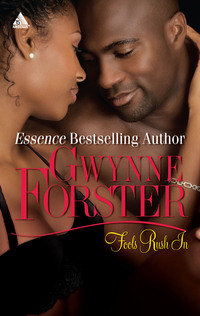
Fools Rush In
Fools Rush In
Gwynne Forster

www.millsandboon.co.uk
MILLS & BOON
Before you start reading, why not sign up?
Thank you for downloading this Mills & Boon book. If you want to hear about exclusive discounts, special offers and competitions, sign up to our email newsletter today!
SIGN ME UP!
Or simply visit
signup.millsandboon.co.uk
Mills & Boon emails are completely free to receive and you can unsubscribe at any time via the link in any email we send you.
To my husband, whose love and unfailing
support sustain me and enrich my life, and to
Karen Thomas, my editor, whose helpfulness,
competence and upbeat approach make writing a
pleasure and deadlines a less ominous thing.
Contents
Chapter 1
Chapter 2
Chapter 3
Chapter 4
Chapter 5
Chapter 6
Chapter 7
Chapter 8
Chapter 9
Chapter 10
Chapter 11
Chapter 12
Chapter 13
Chapter 14
Chapter 15
Chapter 1
Justine let the white vehicle take her weight as she stood alone at the edge of the crowd, staring at the gutted Falls Church, Virginia motel in which, hours earlier, her faithful and loving husband of four years had perished with his white mistress. Perspiration matted her hair even as she tightened her jacket against the early fall chill. Her dry, tearless eyes stung their sockets as she gazed at the burned-out ruin still ripe with the smell of singed carpet, incinerated furniture, odoriferous rubbish, and charred flesh. Shivers coursed through her at the sight of the smoke-darkened glass and fragmented windows. Blackened bricks that had once gleamed red in the sunlight mocked her with their message of gloom and death.
“They shore musta been busy,” a female voice declared, “if they was the only ones in there that couldn’t hear the fire alarm.”
“You tell it, girl,” another agreed.
The only love she had even known. Why couldn’t she cry? Echoes shouted at her from the black ruins that jeered contemptuously at her. “Love ya, Baby!” He said it that way every time he left her. “You be ready for me, Baby.” She opened the crumpled note that he’d left tacked to the refrigerator and read it again. “Sorry I couldn’t reach you at work, Baby, but the company’s got an emergency of gargantuan proportions, and I’m on my way to Boston to straighten things out. May take a couple of days, but I’ll call you. Explain it all when I get back. You be ready for me. Love ya, Baby. Your devoted husband, Kenneth.” Boston! And here he was, dead in a Falls Church, Virginia motel.
She looked up and stared in horror as men approached her wheeling gurneys carrying one long, black plastic bag and one shorter bag, each tied securely. Dazed, she would have touched the remains of her husband if an ambulance worker hadn’t jumped between her and the lifeless object. Her fist pummeled the man’s chest until he held her hands to restrain her and folded her shaking form to his body until she gained control. She looked at the note, read it again, shredded it into bits, and let the wind have it. Then she turned from the horrifying scene where Kenneth Montgomery had perished with his lover, rested her hand on her belly—distended with their eight-months-along unborn child—and walked away. Thirty-five minutes later as she drove the Ford Taurus home, the first pains of a premature birth began….
Justine’s screams awakened her, and she sprang forward in bed, tugging the sheet to her as though to protect herself, and gazed rapidly around her bedroom. It wasn’t a dream. If only it was. If only that morning had never been, and she could sleep through one night without reliving it exactly as it had occurred that awful day. For nearly twelve months, that scene had been her constant companion, filling her thoughts during the day and her dreams at night. She wiped the perspiration from her face with her left hand and shook her right fist.
“I won’t let you do this to me. I won’t let you destroy my faith in human beings. You with your goodness, your humanitarianism, and your love for the common man. You for whom I ruined my relationship with my father. You treacherous bastard. You robbed me of my child. You…
“My child. Why did I…?” She rested her head on her raised knees and folded her arms around them. What had she done? She jumped from the bed, got dressed, rushed to the social service department of the hospital in which she’d given birth, and paced in front of the door for an hour and a half until the workers arrived at nine.
Maybe if she said if often enough, they’d do something. “I want my child back. I was sick. You can’t do this to me.” Her screams reverberated through the social service department of Alexandria, Virginia’s Presidents Hospital. She tightened the woolen stole that she wore to ward off the September chill and leaned across the social worker’s desk, oblivious to the tears that wet the corners of her mouth.
“I…I’ll sue you. I’ll…”
“You signed the papers, Justine. You couldn’t stand the sight of that baby and it was our duty to protect her.”
“But I was sick, and you knew it.”
“You said you didn’t want the baby. We know you sustained an unusually deep postpartum psychosis; many women do. Some of them have killed their babies when the psychosis was a deep one like yours. We thought you’d never come out of it. A week ago, I’d have sworn you never would. Your refusal to look at the child, and your insistence that we do whatever the law allowed, left us no choice, but to do as you said. Your therapist agreed.”
She stormed out of the social service department and, nearly blinded by her tears, made her way to the maternity ward to find the doctor and nurse who had taken care of her when she developed an embolism following the birth.
“After about a week,” the nurse told her, “you became withdrawn, refused food, wouldn’t talk to anybody, and wouldn’t take the baby. You refused to take the baby with you when we discharged you. We had a conference with you and your therapist, and when the therapist asked you what you wanted us to do, you said, ‘Suit yourself.’ I’ve never known postpartum psychosis to last as long or to be as deep as what you’ve been experiencing. Look at you now. You’re a changed woman; I can see that. But it’s too late. We can’t help you.”
Nurse Jane Wilkerson watched Justine’s heavy steps as she left them. “What else could we all have done?” she asked the doctor who had joined her. “Every time she saw that child, she sank deeper into depression, screaming and crying like we were beating her. I never felt so sorry for anybody in my life.”
“Yeah. I don’t think many women could handle learning that her husband died in a tryst with a woman he’d had a steady affair with since before he met her, and especially not if she was eight months pregnant.”
“Are you saying…? You’re joking.”
“Wish I was. Alexandria’s a small town, and the upper middle-class African American community here is minuscule. Marian Iverson had been Kenneth Montgomery’s mistress for at least twelve years—since their college days, I’m told. Uninterrupted. Long before he met Justine. But he couldn’t marry a white woman and run for congress in that all-black district he claimed to represent. African-American women don’t seem able to hack that from us black guys; though, believe me, they take whoever they please.”
“Well, I’ll be. Can you beat that? I never would have thought it of him. And such a distinguished man, too.”
“Yeah. But if his wife didn’t know about it, he must have done his best to be good to her. Poor fellow just got caught.”
Jane Wilkerson adjusted a blond curl beneath her crisp white cap and walked off, more certain than ever that being single and staying that way made good sense.
Justine walked aimlessly out of the building as a white Cougar pulled up, and the Washington, D.C. license plate on another white car flashed through her mind. Eleven months earlier, she’d just left her therapy session when a man walked out of the hospital carrying a newborn baby, and the woman beside him had seemed to drag her steps. They got into a white Mercedes, and the man held the tiny form wrapped in a little pink blanket as the woman drove them away. She hadn’t associated them with her child, but the scene had made her curious about it, and she had run back inside and asked the social worker’s secretary if they’d found an adoptive family for her baby.
“Yes,” the woman had beamed, “they just left. Now you can relax and get on with your life.”
Not one emotion had made its presence felt. She hadn’t tried to understand her unusual behavior, her lack of concern that her child had a new mother. She and Kenneth had planned to have three children—one every two years—but he wasn’t there and he’d lived a lie. Every time he’d held her and made passionate love to her, telling her that he loved her, that she was his world; he’d lied. He’d made a mockery of her love. She shivered, wondering if he had laughed with his mistress about his unresponsive wife, frantic to climax with him only to have it elude her every time. If only he were alive so she could despise him!
She shook off the unpleasant memories and gathered her wits. She’d get her child back, no matter what anybody said or did. They shouldn’t have let her sign those papers, knowing she had an illness fairly common among women who had just given birth. She couldn’t undo the past, but she was back to her old self now, and getting her child would be her number one priority. Her child would be hers again. She’d find her and nobody was going to stop her from getting her back. She remembered the license plate number now—dredging it up from the bowels of her subconscious mind. At the time, she’d thought that only someone rich and famous would have the number GDB 1800. She wrote it down and headed for Indiana Avenue and the municipal building in northwest Washington.
Hours passed while first one official and then another treated her to a dose of government bureaucracy, bouncing her from office to office. Anxious and frustrated, she called one of Kenneth’s fraternity brothers in the mayor’s office and, an hour later, had the information that she wanted. That car belonged to G. Duncan Banks, an investigative reporter for The Maryland Journal, a paper in Baltimore.
She searched in the Library Of Congress, the internet, and records of the Society of Professional Journalist, learning all she could about the man whom she believed called himself the father of her child. The information she treasured most concerned his character and his address. He lived in affluent Tacoma Park, at the edge of the Maryland/District line. Now, what could she do with that information? She couldn’t drive up to his house and demand her child, because he had a legal right to the child, but he’d hear from her. And soon.
Duncan Banks stretched his long frame out on the floor beside Tonya’s crib, his mind idling while his eleven-month-old adopted daughter’s chubby brown fingers examined his right thumb. She had wedged herself so deeply into his heart that he hated being away from her. He couldn’t understand how Marie, his ex-wife, could have agreed to their adopting a child if she hadn’t wanted one. He understood her disinclination to interrupt her career as a rising criminal lawyer in order to have a baby, but it hadn’t occurred to him that she hadn’t wanted to be a mother. And she’d quickly tired of it.
“I just can’t spend the rest of my youth taking care of somebody else’s kid,” she had announced. “I’m sorry.”
Every time he thought about that night when she’d asked out, pain seared his heart. “What about the indescribable, boundless love you feel for me? Your words. What about that?”
She looked him straight in the eye—insolent as usual when caught out. “Love doesn’t conquer all, Duncan. You’re old enough to know that.”
“No, but money does. Doesn’t it? Now that I’ve paid for your law degree and your career is humming and you can support yourself in the manner to which I have accustomed you, it’s bye, bye birdie, eh?”
She had the grace to be flustered. “Don’t be crude.”
“And don’t you be so high-handed.”
She was right; love didn’t conquer all. He wouldn’t let himself think about how he’d loved her or that his heart threatened to explode in his chest And when she lowered her lashes in that way she did when she wanted to control him with her body, make him forget whatever she’d done and make love to her, he’d clenched his fist.
Her lashes swept down over her large brown eyes—eyes that made a man stare at her beautiful brown face—and then came up slowly. “I’m not planning to ask for much of a settlement.”
“Smart girl. Collect your clothes. If you ask for more, I’ll take back that mink. Trust me.” He looked away to hide from her the pain he knew his face reflected. He’d loved her—really loved her with every atom of his being. “If you’re going, Marie, don’t draw it out.”
Three hours later, the door had closed on his dreams. But what the hell! The day before yesterday, he’d shot a perfect game of pool. From now on, nothing would surprise him.
For months, he had sensed a widening rift between them, a drifting away from each other, though he’d done everything he could think of to turn their relationship around. Nothing he did had touched her. He had thought that a baby would bring them closer. He wanted a family, and if she didn’t want the burden of bearing their own he’d take what he could get. Many babies needed parents he’d told her and she had agreed to their adopting Tonya. He’d been satisfied so long as he had a child to love and to raise. But he couldn’t take care of an eleven-month-old baby girl.
Duncan pulled his mind back to the present, got off the floor, and leaned over Tonya’s crib. “I’ll advertise for a wife,” he told his laughing daughter. “If the woman’s intelligent, loves children, and promises to spend the rest of her life being sweet to you, that’s as much as I want; I’ve had it with love—biggest hoax ever foisted on a man.” She raised her little arms to him, and he lifted her into his embrace.
“Daaaaddy,” she sang, clapping her little hands together. He sat with her in the rocker beside her crib and rocked her while he sang Brahms Lullaby, her favorite song. When she fell asleep, he put her into the crib and rolled it into his office so that he could work and keep an eye on her.
He had no luck advertising among his friends. Dee Dee Sharp, the feature editor of The Maryland Journal, told him she could get him someone to keep the baby, that she only had to drop a hint and even society women might show up if they knew he was single. He shook his head and went on to Wayne Roundtree’s office. Wayne owned the paper.
“Get a wife,” Wayne advised. “Tell her you want a marriage of convenience. You’ll take care of her and she’ll take care of your child. No emotional involvement.”
Duncan’s look of incredulity brought a wicked grin from Wayne. “Who’d fall for that?” Duncan asked him. “She’d have to be ninety and have all the beauty of a wet field mouse.”
Wayne leaned back in his high-back swivel chair. “Wake up, man. A lot of women would like a soft life, especially if they’re childless, out of work, down on their luck, jilted maybe, and—”
“Naaah, man, I can’t hack that.”
“But you said you’d had it with women. This way, your emotions won’t get you in trouble, and you might luck up on a great gal.”
“Is that you talking? I didn’t think you believed there was such a woman.”
“No? Well, that shows how well informed you are. Think about it.”
“Man, I haven’t the slightest notion how to go about a crazy thing like that.”
“Why not ask Dee Dee to stick a line in her column. Trust me, you’ll spend the next six months interviewing twelve hours a day.”
“Heaven forbid.” He passed Dee Dee on the way out of the building and wished he could close her grinning mouth. “The boss told me you’d be by to see me. I’ve got just the idea.”
“Do you DC ladies know that a prominent, recently divorced gentleman with the initials DB is in the market for a wife who’ll be a good mother to his baby daughter? Send your love letter to P.O.Box 0001, Washington, D.C. 20017,” Dee Dee wrote in her Thursday column. Duncan read it the next day and considered moving to Alaska. Letters arrived by the dozens and, though the procedure embarrassed him, he interviewed applicants, but didn’t like any of them.
“Maybe getting a nanny is easier,” his best friend, Wayne Roundtree suggested several weeks later. “Marriage can be such a permanent thing, man. Get a good nanny.”
“To sleep in and take over my house? No thank you.”
Wayne shrugged. “What have you got now? A cleaning woman who comes in every day at a time of her choice, leaves when she gets ready, won’t answer the phone, and avoids anything that isn’t six feet tall, male, and human.”
Duncan couldn’t help laughing. “Mattie’s a real number, but I’m used to her and when I need her in a pinch to look after Tonya, she doesn’t let me down. Besides, Tonya never stops laughing when she’s around Mattie.”
Wayne’s left eyebrow went up. “Big deal. Neither do I. Tonya probably thinks Mattie’s an oversized rag doll. Every time she looks at the woman, she’s seeing a different color of hair.”
Duncan’s white teeth flashed against his dark face. “Took me a while to look at her and keep a straight face, but she’s good as gold.” He walked over to the big picture window with its tinted glass and ecru curtains and looked down on Charles Street. His hand fingered the change in his right pants pocket. Maybe a nanny was best. He didn’t really want to be married. Not then. Not ever again. But Tonya needed a mother on whom she could depend, not a nanny who might leave at a minute’s notice.
He whirled around and started out of Wayne’s office. “Man, I don’t care who decorated your office, it would look a lot better without these fancy curtains.”
“No argument here. My sister-in-law found me a decorator, and that’s what she put there.”
“You mean Adam’s wife?”
“Who else? Adam’s my only brother. He’s a lucky man. Our families strew their path with one obstacle after another, but they persevered. She was made for him. You and I should be so lucky. Forget about that wife business, and hire a nanny.”
“Yeah. You may be right, man.” Duncan threw Wayne a high five and headed for the heart of West Baltimore, where he put in at least a weekly appearance at CafeAhNay—a local bar, restaurant, and billiards hangout on Liberty Street—to keep up his contacts. As an investigative reporter, he needed to maintain good relations with his sources.
Several days later, Mattie stopped Duncan when he walked into the house after work. “Mr. B, you know I think you’re a good man, but you also know I don’t do no full time housework and no babysitting. I just been doing all this work ’round here to help you out. And I’m good and sick of all these women that’s started calling here axing about you. It ain’t my business, but having all these women chase you ain’t a proper atmosphere for a baby girl. A sweet little tyke, she is, too. All the same, Mr. B, you know me and phones don’t get along. I wish you’d get a nanny for Tonya. I’ll help you out, but I ain’t happy doing it.”
He patted her shoulder “I’ve decided to do that, Mattie. Just bear with me.”
He stared at her two front teeth, a perfect tribute to Bugs Bunny. “Mr. B, there ain’t a woman nowhere what can resist you when you looks helpless like that. If I wasn’t old enough to be your mother, and if I didn’t have my Moe, I’d be in trouble. You make sure you get somebody me and Tonya can get along with, now.”
“I’ll do my best,” he said and rushed past her to find a place where he could laugh in peace. She hadn’t noticed that he had gaped at her orange hair, front teeth, red lips, and purple dress. She’d called it “looking helpless.”
Justine listed her house with a real estate agent and began packing her things. She’d leave that torture chamber in which she’d lived with Kenneth, that brick and mortar vessel of pain and horror, if she had to give it away. She couldn’t bear it any more than she could stand the pitying eyes of her neighbors and the thoughtlessness of the store clerks and delivery men who seemed to enjoy greeting her with, “So sorry to hear about Mr. Montgomery, Ms. Montgomery. It sure was a tragedy.” As if they had decided among themselves how best to remind her that her husband would be alive if he hadn’t been unfaithful to her.
She left the real estate office, bought a copy of The Washington Post at the corner drugstore, and went home, where she made a cup of coffee, went into the guest room, pulled off her shoes, and sat on the bed. She hadn’t been in the master bedroom—the den of lies whose walls probably still echoed his false shouts of ecstasy in her arms—since the day he died, and she never wanted to see the inside of it again. The cleaning woman had removed her things and had packed his and taken them away. She flipped through the want-ads to check the job offers. She had to change her life, but resuming her profession as a clinical psychologist held no interest. She sat forward, more alert than in almost a year. Duncan Banks had advertised for a nanny and had given a postal address. She knew he’d gotten a divorce. Did she dare? She rushed to the phone, ignoring his request that the application be made in writing.
“Duncan Banks, speaking.”
“Mr. Banks, this is Justine Taylor. I’d like to apply for the position you advertised in The Washington Post.”
The voice, soft and refined, set him back a bit. He expected a person applying for a job as babysitter to be somewhat raw around the edges.
“I prefer applications in writing, Miss Taylor.”
“I know, but I figured I’d get a lead on the other applicants. I need a job, and I can provide good references. If I have to sleep in, I’d like to visit your home before we talk business.”
That made sense. He gave her his address and realized that he hoped she’d suit him. “When can you come out?”
She didn’t hesitate, and he liked that. Coyness in women had always put a sour taste in his mouth. “This evening, if you’d like. Say, a couple of hours from now?”
He glanced at his watch. “Perfect. I’ll get Tonya ready for bed, but she’ll still be awake when you get here.”
Justine hung up, fell back across the bed, and kicked up her heels. She made no attempt to squelch the scream of joy that peeled from her throat. She had spoken with him, and she would see her child. She rolled over and said a prayer of thanks. She’d never wanted anything as badly as she wanted that job and the chance to nurture her own child, to know that her baby was well cared for and loved. Tonya. He’d named her daughter Tonya. She liked the name. Her heart thundered as it raced inside her chest like a runaway train. She didn’t trust herself to drive in that state. After all this time. And all the pain. Maybe she was being given another chance. She didn’t mislead herself into believing that what she was about to do was fair to herself, Tonya, or Duncan Banks, but what choice did she have? If she’d been a well woman, she wouldn’t have given up her child for adoption. As a psychologist, she understood what she’d gone through and considered herself fortunate to have survived that awful trauma. She telephoned a deacon of her church who had a notarized letter of recommendation ready for her when she stopped by his house. She’d chosen him because he knew her only by her maiden name. The nursery school at which she’d volunteered since before her marriage and where she was known as Miss Taylor provided her second reference.
She styled her hair in a French twist, and in spite of the sweltering August heat, dressed carefully in a conservative beige silk suit and olive-green blouse, added brown accessories, debated the advisability of wearing lipstick, decided to apply it, and headed for her door. The phone rang and she almost didn’t answer it fearing that Duncan Banks was calling to cancel their appointment.
“Hello, Justine, this is Big Al. My sister is your real estate agent, and she tells me you’re changing your life, selling your house, and leaving Alexandria for DC. Can’t say I blame you, honey. How about doing that column I’ve been pestering you about?”
“Oh, Al. It’s great to hear from you. Just because I wrote a gossip column for The Hill Top when we were at Howard U doesn’t mean I can write a column for the lovelorn.”
“’Course you can, babe. You’ve got two degrees in psychology and plenty of horse sense. How about it?”
“How much of my time will that take?”
“Practically none. Three columns a week. For each one, you answer a minimum of three letters and write some family values stuff. You say the word, I’ll put the notice in tomorrow, and bingo. End of the week you’ll have dozens of letters. Just give me a P.O. box number.” She thought for a second. She needed time to consider the risks. “I like the idea right now. Who knows, I may someday be syndicated. Tell you tomorrow.”
“Two things. You’ll be Aunt Mariah, and you will not tell anybody—I mean not one soul on earth—that you write that column. We gotta have secrecy. Otherwise, it’ll be a total flop. Call me tomorrow before ten. See ya.”
Justine walked on liquid legs to her car, got behind the wheel, and slumped against it. She had to go through with it. No matter what conditions she found or what she faced, she had to do it. She had to be with her child. She had read Duncan Banks’s columns. Who hadn’t? But she’d never seen him. Please God, don’t let him be a slob, but the smiling, happy man she’d seen leaving the clinic that day carrying a newborn baby. Her shaking fingers stuck the key in the ignition, and she didn’t know how she did it, but she managed to release the brake. “Mind over matter,” she repeated aloud.
The drive along the Shirley Memorial Highway, over the Fourteenth Street Bridge, and on up Sixteenth Street didn’t soothe her nerves. Horns honked, drivers darted in and out of lanes breaking traffic rules, but she managed to keep her wits until she turned into Primrose Street at the edge of Maryland and stopped. Her nerves rioted throughout her body. She sat in the car until she could control the trembling that shot through her, making her skin crawl and her teeth chatter. In minutes she would see her child. She took a handkerchief from the glove compartment and dabbed at her tears.
Calmer now, she walked up the long, winding bricked walk to the modern white stone building whose enormous glass windows were more off-putting than welcoming. Trembling fingers rang the bell, and the jitters commenced again. Duncan Banks opened the door, and she stared at him, wondering if she’d lost her mind. He was the man, all right. The same tall, dark man. And what a man. Not that she cared, she’d finished with men. But even in her baffled state, she had the sense to recognize male perfection. And danger. As if his stature and facial features weren’t enough to sabotage a woman’s will, he opened his mouth and released a deep, sonorous, velvet timbre.
“Hi. You must be Justine Taylor. Come on in. I’m Duncan Banks.”
She found her voice and marveled at its even tenor. “Yes. I’m Justine. I’m glad to meet you, Mr. Banks.”
His smile had the effect of termites hard at work on the foundation of a shingled building. “I’m glad you agreed to come today. I’ve got an assignment that’ll take me away from home, and I have to be sure Tonya’s taken care of. Tell me about yourself.”
She told him as much as she wanted him to know, and she’d prepared herself for his misgivings. So when he commented that she seemed too polished to be working as a nanny, she countered that she was down on her luck and seeking to change her life.
He raised an eyebrow “What precisely do you mean?”
Don’t forget that he’s an investigative reporter, she reminded herself. “I plan to write, and this job will support me while I work at it. I know it may be years and years before I have any success,” she added, to allay his qualms about impermanence, “but this way, I needn’t worry about bills and a place to stay.”
She must have said the right thing, because he nodded and a smile surfaced around his mouth. She pulled her gaze from it as quickly as she could and asked some questions so he’d know she was a careful, responsible person.
“Where would I sleep?”
“The guest room faces Tonya’s room. You’d sleep there. It has a private bath and a small anteroom that you could use either for a dressing room or a little office. Did you bring your references?”
Electricity shot up her arm when his fingers brushed hers as he took the letters that she handed him. His gaze was that of a man who’d just had a surprise, one that he didn’t necessarily welcome. Well, it was time she got some of her own back. She’d been reacting to him ever since he’d opened that door. Where did he sleep? She wondered, but didn’t have the nerve to ask.
“Do you think I could see Tonya? Or is she asleep?”
His apparent pride in his daughter gave her a sinking feeling, even as it warmed her heart. He’d never give up that baby. Never. So she had better play her cards right.
“Come with me.” He raised his long frame from the big wing chair that had no place in a modern setting and headed down the hall. She looked away from Duncan for fear that the guilt curdling her stomach would blaze across her face, and she had her hands full, so to speak, controlling the wild anticipation that danced within her at the promise of seeing her child.
His leisurely smile only heightened her anticipation of the wonder awaiting her. “She’s wide awake, but she whispers to her bears so they don’t growl at her. I don’t know where in the devil she got that. Probably from Mattie.”
Her joy bordered on hysteria, and she didn’t think she could move another step, but she did. Icy marbles frolicked through her veins, and she had to bite her lips to control their quiver.
“Hi, Baby,” his deep voice began when Tonya looked up at him, threw the bear aside, and smiled. “You have company. This is Justine.” Tonya climbed to her feet with the bars on the crib for support and raised her little arms. Stunned disbelief spread over Duncan’s face. “She’s asking you to pick her up? Shy as she is with strangers? Can you beat that?”
If her life had depended upon it, Justine couldn’t have said where she got the strength to reach down and pull her child into her arms. “Juju,” Tonya said, pulling at Justine’s dangling gold earrings. Justine gazed into eyes identical to her own and, in spite of her efforts to retain her sanity and maintain a professional demeanor, she hugged the child to her bosom and kissed her cheek, all the while praying for composure.
“Juju,” Tonya repeated. Then, as if she’d had enough, she wiggled aside and raised her arms to Duncan. “Daddy. Daddy.”
He took the baby, held her with one arm and opened one of the references. Justine didn’t have to be told that she’d get the job if he liked what he read.
He folded the second letter and stuffed it in his left trouser pocket. “If these check out, we’re in business. Tonya seems to like you, and that’s my main concern. When could you start?”
She hadn’t gotten that far. “I need two or three days to get my stuff stored and settle my lease, but I’m fairly certain I could be here Saturday morning.”
He seemed to hesitate. “How do you expect to care for an active baby while you’re writing?”
“I’ll write while she’s asleep. If an idea pops up at any other time, I may make a few notes so I’ll remember it. Whenever I have to choose, Tonya will come first. I give you my word on that.”
His reddish-brown eyes seemed to penetrate her soul, and she knew she was looking at a man who relied on his own judgment, who didn’t need the words of others for his peace of mind. “You’re hired. Be here Saturday morning and do your best to make a hit with Mattie.” His grin nearly knocked her off balance.
“Who’s Mattie?”
The grin broadened. “If I was sure, I’d tell you. Suffice it to say she comes in every day to do the cleaning and cooking. She’ll surprise you, but take my word, she’s harmless.”
He moved toward the bed to put Tonya back in it, but she didn’t want to go there and reached for Justine.
“Juju.”
Duncan laughed aloud “Oh, no, you don’t. Think you’ve got an ally, do you? You’re going to bed, and that’s final.” He glanced at Justine. “This little devil thinks she can wind me around her little finger.”
“Can she?”
His sheepish expression grabbed at her feminine being. “Yeah. I guess so.”
He kissed Tonya, but she yelled, “Juju.”
Justine leaned over and kissed her cheek. She had to get out of there before she broke beneath the strain of it all.
“I’ll show you your room. Of course, you’ll have the freedom of the house. Your friends are welcome.” He ran his right hand across the back of his neck and stopped walking. “My child means everything to me, Justine. I’ve decided to postpone that assignment a few days and stay home until she gets used to you, though I think she’s already decided that she likes you.”
He opened the door to a large bedroom that faced Tonya’s and was decorated in mauve and violet blue. She would not have chosen those colors, but she found the effect appealing. A king-size bed bore a violet-blue silk spread and, except for a copy of Botticelli’s “Spring” that hung beside a large mirror, mauve adorned everything else in the room.
“Like it?”
She caught the anxiety in his voice, and realized that he wanted her comfort and contentment “Yes. Very much.” A smile claimed his incredible eyes, and she had to shake herself out of the trance into which they quickly dragged her. She had to get out of there.
“I’d better be going. Thanks for your confidence. I’ll see you Saturday. Oh. Do I get a day off?”
“Yeah. I nearly forgot that. Sunday for sure, and we’ll work out something else. Okay?”
“Fine.” She wanted to avoid his extended hand, but accepted it along with the feeling that she knew would come with it. “Good-bye, Mr. Banks.”
“Duncan. Good-bye, Justine.”
He’d said good-bye, but he didn’t stop looking at her. A hammer began pounding her insides. Had he seen the resemblance? Had he noticed that Tonya had her eyes? Why was he staring at her? She forced a smile and reached for the doorknob, but his hand shot out to open the door and landed on her own. He didn’t move it, but looked down into her face with a strange and indefinable expression.
“Goodnight,” he said at last, and opened the door.
She made her way to her car, got in, and sat there for a good half hour before she found the strength to drive away. Over and over she told herself that he hadn’t seen the resemblance, but she didn’t see how he or anybody else could be so unobservant.
Justine released the brake and started home, reliving the feel of her baby in her arms, pulling her earrings and pinching her nose. A screech of somebody’s automobile brakes called her attention to the red light she’d shot through, and she eased up on the accelerator. Shocks scooted up her spine as she recalled the soft flesh of little fingers on the back of her neck, the child’s joyous laughter, and Duncan Banks’s indulgent words, “Some daughter you are. Ready to chase after the first stranger who comes along.” She, a stranger to her own child. She attempted to pull out of the center lane, but a honking horn impeded her effort to get to the roadside and wipe the tears that blurred her vision.
When at last she reached the brown brick Tudor house in which she’d lived with Kenneth Montgomery, she parked in front of it, too drained to put the car in the garage. Sane enough not to sit in a car alone on a dark street at night, she dragged her weary body into the house she’d come to hate, changed her clothes, and washed her tear-stained face. The flashing light on her answering machine got her attention. Her real estate agent had a buyer for the house, a diplomat who didn’t bargain, and two co-op apartments in Washington for her inspection. Thank God, she could put Alexandria behind her. If she wasn’t certain the buyer would object, she’d walk away from that house and leave everything in it except her clothes.
Duncan stuck his hands in the pockets of his trousers, fishing for change, and toyed absentmindedly with what he found there, something he did when he was thoroughly discombobulated. He tried to figure out his reaction to Justine Taylor, the strange feeling he got the minute he opened the door and looked at her. He’d swear he’d never seen her before, yet something in him said he knew her, had always known her. As if she’d somehow sprung out of him and had found her way back to where she belonged. It wasn’t sexual, at least he didn’t think so, though when he’d opened the door, she’d reacted to him as woman to man. But she had quickly controlled it. A refined woman. He’d give her that.
Tonya, too, had sensed something special about her. Granted, you couldn’t miss her warmth and sincerity. And she was pretty easy on the eyes. For a second, he let himself imagine what she’d look like if she pulled her hair out of that old-lady’s twist in the back of her head. He shrugged. A little too plump for his taste, but she had the height, around five-six, he guessed, to carry it. But why did he feel as if he knew her? He played with the change in his pocket and dismissed the thought. Some people had the kind of face that cropped up everywhere.
He started to Tonya’s room to check on her and stopped. Dee Dee’s notice had been in the paper more than a month, and Justine hadn’t answered it. So she wasn’t looking for a husband. Thank God for that. Accustomed to examining both sides of an issue or a fact, he considered the possibility that Justine hadn’t answered the ad because she didn’t read Maryland papers. Well, his daughter liked her, and that settled it as far as he was concerned. If Justine Taylor possessed any unsavory traits, Mattie would detect it at once, he could count on that. But he’d gotten good vibes from Justine—honesty, warmth, femininity, and self-confidence, traits he admired in a woman. And she clearly loved children. He phoned his sister.
“Banks speaking.”
Duncan took a deep, impatient breath. If only he could knock some sense into his sister. “Leah, I’ve told you a few million times to stop calling yourself by our last name. It’s too masculine.”
“And I’ve told you not to call me Leah. I can’t stand that name.”
“Then change it, for Pete’s sake. Oughta be easy, since nobody but the family knows what it is.”
“Duncan, did you call me to fight with me? I’m sleepy.”
“When will you have an evening free? I want to ask some people over. Seems like I owe everybody I know an invitation to dinner.”
“I’m always free. Promise to invite some men who still have their own hair on their head. And I’d like to see their chests before I see their bay windows.”
Duncan was used to his sister’s cynicism, but he couldn’t resist trying to change her. “Leah, your attitude needs refining. Learn to judge a man by the content of his character—to quote a famous one—instead of his girth and how much of his scalp you can see.”
He imagined that she tossed her head and shrugged her left shoulder. She was the only person he knew who did that. “Thanks for nothing, brother dear. Most of us women like a guy we can get our arms around, if need be. Besides, Martin Luther King was talking about kids; I had in mind cool brown brothers over the age of thirty.”
She never failed to amuse him—the best dose of anti-tension medicine to be had anywhere. Laughter flowed out of him. “Trust you to twist it your way. How about it?”
“Improve your list of men friends, and you can count me in. And no cigars. Why do newspaper men like those hideous things?”
“I don’t smoke.”
“Everybody needs at least one virtue. Good for you”
“All right. All right. You’ll be glad to know that I just hired a nanny for Tonya.”
“You mean you’ve given up the idea of marrying somebody to mother her? It’s a dumb idea, anyway.”
“No, I haven’t, Miss know-it-all, but I haven’t found anyone who suits me, and I needed somebody to look after Tonya. So I hired Justine Taylor.”
“Well, this I’ve got to see. Is she good-looking?”
Trust Leah to focus on a side issue. “Among other attributes. See ya.” He hung up and called Wayne Roundtree in Baltimore.
“Say, man, I hope I’m not disturbing you,” Duncan said when Wayne held the receiver a long time before speaking.
“Nah. I had to shake a couple of pests a few minutes ago, and I fully intended to hang up the minute I recognized either one of them. That’s the life of a managing editor. What’s up?”
Duncan trained his ear in the direction of Tonya’s room. No, she wasn’t crying, only talking. “I just hired a nanny. She won’t be on the job ’til Saturday, and I want to spend a few days at home after she starts to be sure she and Tonya get on. So I’d like to postpone work on that municipal bribery case.”
“Okay, but I hope it doesn’t break in The Sun or The Afro-American. What does she look like?”
“Who?”
“You know who I mean. This nanny you hired.”
Duncan leaned back in the big barrel chair, propped his left knee over his right one, and grinned. “Not worth a backward glance, man. And, I’m going to introduce her to Listerine mouthwash the minute she walks back into this house.”
His ears hummed with Wayne’s roar of laughter. “No kidding. She must be a knockout. When can I come over for…well, for dinner?”
“Come to think of it, I’m planning a dinner party soon as my sister can get over here to help me. I owe everybody I know an invitation.”
“Count me in. I have to meet this poor unfortunate nanny you hired. Let me know when you can get on that case.”
“Will do. In a couple of days, I’ll fax you my story on ward politics.”
“Right on, man.”
Duncan hung up and went into Tonya’s room to turn out the lamp beside her bed and put on her night light. It worried him that she feared the darkness so much. Maybe having Justine—someone who’d be with her all the time—would give her a greater sense of security. Justine. Why had he felt so comfortable with her? He’d swear that she had in some way been a part of his life.
Chapter 2
Justine took an old purse from a shelf in her closet and, for the first time in twelve months, looked at the picture taken of Tonya at birth. The little red spot at the top her right ear was now brown, but it was there, the final proof that she had found her baby. She needed to talk with someone, anybody. But who? She couldn’t expect another person not to divulge a secret as ripe for gossip and, at the same time, as potentially damaging as hers. She replaced the photo and lay down and, for the first time since Kenneth’s death, she slept through the night, and no horrible memories invaded her dreams.
She rose early the next morning and began preparing for life as her child’s nanny. Her first act was to phone Big Al, editor of The Evening Post. “You’re on, Al,” she squeaked out, less sure of her decision than when she’d made it. “As of now, I’m Aunt Mariah. I have to get a post office box. I’m moving to Tacoma Park, Al. You’ll get it all by fax sometime tomorrow.”
“Right. Soon as I get your P.O. address, I’ll tell the world not to be troubled any longer,” he crooned in his booming voice. “Aunt Mariah will solve all their problems. Just give ’em horse sense, babe. That’ll do it every time.”
The next three days were the busiest that she could remember, but knowing she was putting her life in order, folding the page that had been Mrs. Kenneth Montgomery, and beginning a life with her child—however impermanent it might prove to be—energized her and buoyed her spirit.
She got a post office box, closed the deal with the buyer of her house, and bought one of the co-op apartments that her agent reserved for her inspection. Then, she sent the fax to Al, and told her agent to find a tenant for her new apartment. That done, she invited the Salvation Army to come over to her house and take whatever it could sell, except for her blankets and Kenneth’s expensive clothing, which she planned to divide among the homeless men along “East of the River.”
She’d been determined to do it herself, and her stomach rolled from the stench of stale wine, the rags that served as the men’s bedding, the unwashed bodies, and the refuse that some more privileged citizens had thoughtlessly strewn along the street. Their gratitude shamed her, but she persisted until she’d given out all of the blankets, gloves, sweaters, and other clothing. Still, a sense of guilt wouldn’t let her leave the men without food. She counted them, went to the nearest McDonald’s, and got eleven bags of coffee and hamburgers and gave one to each man.
“I would ask the good Lord to bless you,” an older man said to her, “but it looks to me like he’s already done it.”
“You bet,” she answered, feeling good for the first time since she’d parked her car beside the rubble-strewn vacant lot two blocks away. She waved them good-bye and headed home.
Time crawled while her desire to see Tonya escalated. She examined the hands on her watch, thinking that it had stopped. Twice, a coffee cup slipped from her fingers and splattered the brown liquid on her legs and around where she stood. She turned off the radio, unable to tolerate music; even the soft strings of a Mozart quintet jarred her nerves.
Saturday morning arrived and she had to face another truth. The prospect of seeing Duncan Banks again excited her, though not as much as the thought of living with her child, but she gave herself a quick lecture and put Duncan out of her mind.
The response to her single ring of Duncan’s doorbell gave her one of the biggest shocks of her life. Canary-yellow hair—or was it a wig?—topped the tiniest woman she had seen in years. Perhaps ever. And that small face wore enough make-up to camouflage a couple dozen fashion models. If that weren’t enough, the two prominent upper front teeth that decorated the copper-colored woman’s generous mouth—now curved into a smile—sent pictures of Bugs Bunny flashing through Justine’s mind. What on earth?
“Quit staring and come on in,” was the way in which Mattie Swindell introduced herself. Justine resisted asking why she patted her hair when the hair spray on it wouldn’t allow it to move. “I just got it done yesterday,” Mattie explained, oblivious to the fact that Justine hadn’t uttered one word. “It’ll look good like this for two or three days. Where’s your things?”
“They’ll be here later. I’m Justine Taylor.” No wonder Duncan had said he wasn’t sure who she was.
“I know who you are. Mr. B told me to expect you.” Justine had almost gotten her breath when heavy footsteps on the stairs sent her pulse into a tailspin. If she didn’t get a grip on herself, she’d fail before she started. She took a few deep breaths and looked toward the foot of the stairs. “Don’t gasp, girl,” she told herself, when her gaze took in his open-neck yellow T-shirt, white canvas Dockers, and toeless sandals. He stopped within two feet of her, his sleepy, reddish-brown eyes the focal points of the most breathtaking smile she’d ever seen.
“Welcome. What did you do to yourself? I’ve been expecting that nice prim lady who came here the other night.” The fingers of his left hand toyed with the back of his neck. Then he shrugged his right shoulder. It was a series of gestures she’d seen him display several times when he’d interviewed her. A dimple transformed his right cheek, and she wouldn’t have been surprised if she’d melted right there.
“I don’t mind the change, but I hope Tonya recognizes you. She’s asleep, and she should be after waking me up at five o’clock this morning.”
She didn’t tell him he’d done a number on her, switching from gentleman reporter to an advertisement for carnal joy. “My work clothes,” she said of her blue slacks and mauve-pink silk jersey shirt. “Unless you want me to wear uniforms.” She let her grimace give him her view on that matter.
“Whatta you want with a uniform?” Mattie interjected. “I shore don’t intend to put on one.”
Once more, his gaze seemed to bore into her. “Uniform? Not for me, but do whatever makes you comfortable. We’re all equals here. I see you’ve met Mattie,” he said, changing the subject, and she could have sworn she saw a meddlesome twinkle in his eyes. “Just take good care of my child. That’s all I want.” He winked at her, and the drum started its roll in her chest.
As if he wasn’t aware of his effect on women. Well, she would not give him the satisfaction of knowing that she was susceptible to his taunting virility. “Thanks. Maybe I’ll wear jeans; they’re more comfortable.”
His raised eyebrow suggested that he didn’t believe her, and he was right. She’d never pulled a pair of jeans over her ample hips, because she prided herself on having sense and taste, and she hated walking behind overly-endowed female bottoms that threatened to work their way out of stretch jeans. She’d just been testing the water. She’d wear cotton pants.
Hoping to distract him from any evidence she’d given of her background, she added, “I’m very casual.”
His tongue poked the right side of his jaw. “If you say so.” He turned to the other woman. “I’ve got to run down to the Library of Congress, but I should be back shortly after twelve, Mattie. A sandwich will do.” He started for the door, checked himself, and walked back to Justine. “Seems I’m short on manners this morning. Mattie will get you settled. See ya.”
Justine was thinking that she had to watch herself with Duncan Banks when she realized that Mattie was speaking to her. “When he says sandwich, I cook him a hot meal. What do you want for lunch?”
“A sandwich and a glass of milk or—”
“I ain’t got no two percent milk in the house, and I don’t expect you need whole milk. First thing you got to do is get down to a size ten. You must wear a sixteen. My sister is a nursemaid for this rich woman in the Watergate Apartments who wears a ten. I swear a size two. One of us has to make use of those designer clothes she throws away. Can you take tea?”
A full-throated therapeutic laugh flowed out of Justine, and she hugged the little woman as best she could, considering the differences in their size and height. “Mattie, I think I’m going to love you. I’d better tell you, though, that I do wear a fourteen…well, sometimes, and not after holidays. I get plenty of appreciative looks at my size sixteen, and I’m satisfied. How long have you worked here?”
“Me? I’ve worked for Mr. B on and off for the last six or seven years. Why you ask?”
“Just curious. You like him?”
“He’s a real sweetheart…’til you mess up, that is. And then he’s got a real long memory. I mean long, honey.”
Unaccountably, shivers raced down her back, and her fingers gripped the back of the chair near where she stood.
Mattie went on in a sing-song voice. “One thing you better be sure about and that is not to utter one word of what goes on in this house. That’s his law. He’s had me understand that a hundred times. He values his privacy and, being a reporter and writing things about people, he has to keep hisself to hisself.”
“He needn’t worry. I know how to be discreet.” When Mattie stared up at her with both eyebrows raised, Justine amended her remark. “I know how to bridle my tongue.”
“Discreet, huh? Well, hush my mouth.”
Anxious to see Tonya, but afraid to reveal her longing to Mattie, Justine guarded her voice and spoke in casual tones. “You think Tonya is still asleep? She’s awfully quiet.”
“If she ain’t, she oughta be. Mr. B said she singing loud as you please five o’clock this morning and didn’t stop ’til he gave her her breakfast. But soon as she got her oatmeal down, she started noddin’. Gimme your bag. Did Mr. B tell you your room is facing his? Soon as we get rid of your stuff, I’ll show you around. This is one big house.”
Just what she needed. She wouldn’t be able to stick her head out of her room without taking the rollers out of her hair and getting fully dressed. Well, she’d asked for it. How was she to have known that Duncan Banks could spin the head of the most devoutly virginal woman? Best thing she could do would be not to care what he thought of the way she looked. She’d seen her own quarters and Tonya’s room, but Mattie didn’t open Duncan’s door. Instead, she ushered her into the office that adjoined his bedroom. Soft beige tones and Royal Bokhara carpets in his office, in the hallway, and on the curved stairs. Mattie didn’t pause at Tonya’s room, and no sound came from it, so she didn’t have an excuse to go in and fill her arms with her baby.
An arresting peaceful decor was all she could think of as they began Mattie’s tour of the first floor. “Mr. B loves to sit in this big lounge chair with his hands behind his head and think. I declare that man can do more thinking than anybody I ever saw.”
Mattie wasn’t a slouch at thinking, Justine mused, taking in the tall cactus plants on either side of a huge picture window that were among the few things of nonutilitarian value in the living room. Everywhere, masculine taste. What was it about James Denmark’s “Honky Tonk” that made Duncan Banks want it on his living room wall? She studied the painting of the itinerant guitar player, but got no clues. But it didn’t tax her mind to understand his attraction to Ulysses Marshall’s “Between Mother and Daughter.” She turned quickly away; the painter had given them identical faces.
“These here pieces only been here ’bout a month. He took his time getting things for this living room,” Mattie said, gesturing toward the comfortable beige leather sofas and chairs that rested on a cheerful Tabriz Persian carpet woven in beige, brown, and burnt orange colors. She noticed that the dining room was a place for eating, not for show. A walnut table, eight matching chairs, and a sideboard sat on a Royal Bokhara carpet. No curtains graced the windows.
“I’ll see the kitchen when I get my sandwich,” Justine told Mattie. One thing she had to ask, though, because she hadn’t seen any evidence of a woman’s touch was, “How long has Mr. Banks lived here?”
Mattie’s method of clearing her throat was unique. And loud. “Well, ’bout four months, I’d say. Why?” And she let it be known that her yellow hair topped a fast mind. “’Cause everything’s new? Mr. B’s been a bachelor since Tonya was four months old, and he been living here since Tonya was four months old. Anything else, ask Mr. B. We’d better go downstairs. That’s where Mr. B spends most of his time, ’cept when he’s in his office or off someplace.”
She could find her way around Duncan’s house on her own, and she hoped she had years in which to do it; what she wanted right then was to see Tonya. “Thanks for the tour, Mattie. I’d better see about Tonya.”
But Mattie wouldn’t be denied her opportunity to show Justine who ran Duncan’s house. “Tonya’s fine. Let’s get this over with. I can’t spend all my time giving out tours.” Justine saw no junk or apparent storage areas in the basement. One large, wood-paneled room held an enormous television, a recliner, and what looked like the original Nordic Track machine. A refrigerator, bar, and pool table filled a far end of the room.
“This is gonna be Tonya’s recreation room soon as Mr. B decides how he wants it fixed up,” Mattie said, after opening the door to an empty little room with windows on three sides of it. “He can’t figure out what color to put in there. Maybe you got some ideas.” Indeed she did. Soft, pastel colors lifted the spirit, though she thought greens too cold for babies. But she didn’t voice her opinion. She could too easily slide back into the skin of Dr. Justine Taylor Montgomery, clinical psychologist.
“I’ll think about it.”
“You reminds me of some kind of teacher, Justine. Ain’t no babysitter I ever saw talk like you. ’Course, it ain’t my business, Mr. B’s satisfied, and you seems nice enough.”
Tonya’s shrill cry served notice that she had awakened. “There’s the bell, honey. When she starts crying, she means business. Thank goodness, she’s all yours now.”
Justine’s throat constricted at the prophetic words. She had to force herself to walk up the two flights of stairs, when she wanted to run. When she crossed the threshold of that room, she would change her life for all time. At last she would mother her child, and from that moment onward, Tonya would be hers. She tiptoed into the nursery, looked at Tonya sitting up in bed, and smiled.
“Tonya, darling. Do you remember me? Justine.”
Fear curled around her heart. Had that other night been a fluke? She wondered, as Tonya looked up at her with wide inquiring eyes.
She tried again, less confident now. “Darling, don’t you remember Juju?”
“Juju?” Tonya pulled herself upright and lifted her arms to Justine. “Juju.” A smile claimed her little face, and Justine leaned over to take Tonya into her embrace.
“Honey, you must be a magician.”
Startled, Justine turned so quickly that she hit her head against the side of the bed bars, but Mattie shook her head in wonder and didn’t notice.
“What kind of sandwich? Chicken? Low sodium, low fat cheese? Lean, low sodium ham?”
For a moment, she wondered whether Duncan’s housekeeper was operating a health farm. Her glance lingered on Mattie until her eyes widened. It had to be the light. No, that hair really was fire-engine red. Good Lord, was the woman driving on four wheels?
“I decided this isn’t my yellow day,” Mattie explained after noticing Justine’s prolonged stare. “I learned long ago that hair does things to a person’s mood. Now take you. You ought to make yours a light blond or something. Anything but this dreadful neither black nor gray nor anything else these black women walk around with. Make it pretty so the men will notice you, honey.”
Justine laughed. Mattie seemed to have a prescription for everything. “Let Tonya and me get to know each other. We’ll be down soon.”
“Looks to me like she been knowing you all her life, the way she’s acting. Content as a little bee buzzing roses. Never seen the beat of it. That child never did like strangers. ’Course, you do have a nice way about ya.”
Justine breathed deeply as the door closed behind Mattie and prayed she wouldn’t be caught out. She picked up the baby and walked over to the rocker, and Tonya’s little arms curled around her birth mother’s neck. When the baby kissed her cheek, as Justine had seen her do to Duncan, a bottomless well of emotion sprang up in her, and love such as she had never felt for another human being gushed out of her. She stumbled to the rocker and slumped into it, barely avoiding sitting on the floor.
Was this what she had missed as a child? Was this feeling that she would gladly give her life for the baby in her arms what mothers had projected to the confident and self-possessed schoolmates of her early youth? Not once had she felt such love. Not from Kenneth, nor her Godfather, and certainly not from her father or his sisters to whose care he had entrusted her. Tonya cooed and wiggled, demanding her freedom. She couldn’t release her. Not yet. Softly, she began tossing, but tears choked her, and she closed her eyes and rocked.
Ücretsiz ön izlemeyi tamamladınız.