Kitabı oku: «Lies of a Century»
Heiko Schrang
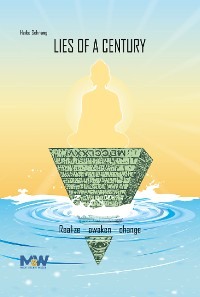
Lies of a century
Realize – awaken – change
Macht-steuert-Wissen Publishing
Heiko Schrang
Lies of a century
Realize – awaken – change
1st English Edition
© Macht-steuert-Wissen Publishing House, Muehlenbecker Land, Germany, 2013
ISBN: 978-3-9815839-2-2 (ePUB-Version)
ISBN: 978-3-9815839-4-6 (Kindle-Version)
You will find further information about this book on our website: http://www.macht-steuert-wissen.de
Cover design:
Eliane Mietke, Media and graphic design, Berlin
© Macht-steuert-Wissen Publishing House, Muehlenbecker Land, 2012
Translation from German to English: Thomas Bauchinger
Editing: Jim Tolley
All rights reserved. Visit us online at: www.macht-steuert-wissen.de
Bibliographic information of the national library 'Die Deutsche Nationalbibliothek' in this publication is indexed in the Deutsche Nationalbibliografie; detailed bibliographies are available online at: http://dnb.ddb.de
MSW – Macht steuert Wissen is a registered trademark at the German patent office.
The author does not take any responsibility for absoluteness of the content since he only provides his subjective view and encourages everyone to balance it with his or her own beliefs about the world.
He does not accept any kind of responsibility for damages that arise from false interpretation of any kind. The information provided in the book is based on intensive research. Despite these efforts mistakes may have happened. Any liability claims of any kind are ruled out.
THE AUTHOR
Heiko Schrang, born in 1969, began sending out around 1,000 newsletters to interested customers in 2009. Meanwhile he publishes as an author on the well-known stock market online service wallstreet:online as well as on MMNews and has his own blog at Goldseiten.de. His articles at wallstreet:online are among the most frequently read.
His newsletters are currently being sent to readers worldwide and 500,000 people have read his publications in 2012 alone.
Further information is available at: www.macht-steuert-wissen.de
This book is dedicated to the people who have inspired me: John Lennon, Mahatma Gandhi, Jim Garrison, the XIV. Dalai Lama and everyone who is searching truth and the meaning of life.
ACKNOWLEDGMENT:
My special thanks go to my assistant, Bente Rode, who has with her dedication and drive, participated substantially in the completion of this book. Many thanks also to my lectors Jens Walter and Rene Krueger for their support as well as to my children, Maximus and Aurelia Schrang, who have had to share our time together with this book.
FOREWORD BY MICHAEL MROSS
(German stock market specialist who worked as a presenter for CNBC among others)
Investigative journalism is experiencing a period of growth which I am able to easily observe in the increasing numbers of people reading my own website MMNews.
I appreciate Heiko’s work and regularly publish his articles on my website.
Heiko has a concise and easy to grasp writing style of presenting even complex economic and political relationships, which has gained him a broad reader base, ranging through all facets of society.
At first I was skeptical, as I had so far never encountered a book that was able to connect complex political topics with spiritual ones. And yet this is precisely what makes this book so enticing.
It is left to the reader whether he or she reads the entire book from cover to cover or chapter by chapter. However, those who decide to read the entire book, follows the idea of the author that the solution to the problems in our society rests within ourselves also and that it is down to the responsibility of the individual in order to change the whole.
In this way you will increase your knowledge in two areas by reading this book.
Enjoy the read! Michael Mross
PREFACE OF THE AUTHOR
My constantly growing readership has encouraged me to write a book about the topics that I tackle in my newsletter. I thought the time was ripe to inform even more people about the topics that affect us all and are, by and large, concealed by the mainstream media.
With nearly half a million readers in the year 2012 I assumed that publishing companies would greet me with open arms. In the beginning it did indeed look that way since the publishers had smelled a chance to make money. Once I had presented my manuscript however, I started much to my surprise, receiving one rejection after the other. I was told that the topics were too sensitive for the publishers. I would have had to get rid of 40 percent of the contents in order for the book to be published, according to the publishing houses.
This reminded me very much of different times when censorship existed in Germany. This has shown me once again that strong dependencies exist between politics, big business and the media, which I have often pointed out in my publications. For this reason I have decided to publish the book myself.
The research for this book has not always been easy, as the facts that really are interesting and sensitive are not usually found in the established media. They belong to the big and powerful that have no interest in the spreading of this information, as their actions would otherwise be exposed.
It is that information that has always interested me, for example with what money highly indebted nations start wars in the first place since even rebels need weapons and do not fight without pay.
The question is now who is behind those that finance the mercenaries and rebels? No guerillas or army can fight without weapons, supplies and provisions. Even the child armies from Africa we hear about need food and ammunition. When looked at closely you find the same names financing the supplies time and time again. In any war situation they usually supply both sides, to their own advantage.
That can only work if they are closely aligned with politicians, big business and the media and find their supporters among their ranks. Since the media often report about the hot spots, it seems that this occurs objectively, which is not the case.
The same game is played during elections where the citizen is given the impression that he or she really is able to influence politics.
This has the semblance of a theatre play. The protagonists on the stage play their role and can only be differentiated by the audience through colors (red, blue, green, etc.). If they play their part well, they manage to engage the audience into the play, paving the way for the crowd polarizing itself over the proceedings. Drastic disputes occur between the single audience members whether red is better than blue or yellow better than green.
There is however one person who is entirely impartial as to who the individual audience members favor and support because every audience member has paid the price of admission – the owner of the theater.
With his takings he pays the actors on the stage who act out their roles according to a script.
If elections were able to change anything they would not be permitted.
I invite you to come with me on a journey into the past in order to get to know the owners of the theater, to come out of your dream world like Sleeping Beauty in the fairy tale and – as far as you wish to do so – to change your life.
„Men occasionally stumble over the truth, but most of them pick themselves up and hurry off as if nothing ever happened.“
Winston Churchill (1874 – 1965)
HOW TO CREATE MONEY OUT OF NOTHING
„When a government is dependent upon bankers for money, they and not the leaders of the government control the situation, since the hand that gives is above the hand that takes.
Money has no motherland; financiers are without patriotism and without decency; their sole object is gain.“
Napoleon Bonaparte (1769 – 1821)
One of the best-kept secrets that are not taught at any university is the fact that the American FED (Federal Reserve Bank) is not a public institution, but a private bank that was founded in the year 1913.
The plan was agreed upon in 1910 at a place called Jekyll Island in the state of Georgia. The draft law of the private bankers (Aldrich Plan[1]) introduced the foundation of a central bank (Federal Reserve). Under the leadership of the high finance groups like the Rothschild’s and Rockefeller’s they succeeded in creating a private central bank with the sole right to issue its own currency, which became legal tender and which the US government still had to underwrite in the early beginnings.
At this point the most important shareholders of the FED[2] were:
- The Rothschild banks in Paris and London
- Rockefeller’s Chase Manhattan Bank in New York
- Goldman Sachs Bank in New York
- Lazard Brothers Bank in Paris
- Israel Moses Seif Bank in Rome
- Warburg Bank in Amsterdam and Hamburg
- Lehman Bank in New York
- Kuhn Loeb & Co. Bank in New York
This enterprise must have been unconstitutional. Article 1, Section 1 and Section 8 of the US constitution says very clearly: The sole right to print money rests with the state!
With the founding of the FED, the US politicians of the time have, as minions of a consortium of international bankers, handed over their power to them.
Also in 1913 the 16th amendment to the constitution[3] was passed, allowing the government to tax the personal income of the citizens of the US.
This is how the international bankers have granted themselves indirect access to the private wealth of American citizens. The private bank FED functions according to a very basic principle: They produce “Federal Reserve Notes” = Dollar bills, these are then loaned to the US government for obligations (certificates of indebtedness) to the US government, which then serve the FED as a security.
The FED who in turn receives annual interest on them holds these obligations. The interest payments by the US taxpayer increase steadily while the FED has merely loaned money to the US government and earned high interest rates for itself. Their service in return: Cotton printed on in color called dollars. The member of congress Charles A. Lindbergh Sr. (1907-1917), the father of the famous pilot, called this law: “The worst legislative crime of the ages”. The finance system was handed to a group that is only after profits. The system is private and is only used for the purpose to generate the highest possible profit from the use of other people’s money.”[4]
On November 21st, 2002 even the current chairman of the Federal Reserve Benjamin Shalom Bernanke admitted candidly: ”The U.S. government has a technology, called a printing press (or today, its electronic equivalent), that allows it to produce as many US dollars as it wishes at no cost.”[5]
This system that is very lucrative for its initiators has as a result that since the founding of the FED the purchasing power of the dollar has been reduced by 98 percent.
The amount of money in circulation “M3”, determined by the FED itself, is no longer published since March 2006. It became an obvious problem: While in the last 30 years the amount of goods has only quadrupled, the amount of money in circulation has gone up by a factor of 40.[6]
The interesting part here is that this scam has hardly been noticed by anyone. Add to that the fact that the FED has a lien, private and public, on all property of the entire United States of America through obligations of the US government. Countless trials to reverse the FED law have remained without effect.[7]
The first person that tried was John F. Kennedy. Shortly before his murder by a supposedly crazy lone gunman, he wanted to lay the foundation for the US government to issue its own debt-free currency. Had he succeeded, the US government would no longer have been dependent on money created through public borrowing.
On June 4th, 1963 John F. Kennedy signed a presidential document “Executive Order Number 11110", replacing and repealing the previous document "Executive Order Number 10289", which enabled the creation of the “Federal Reserve”. President Kennedy wanted to return the production of bank notes under the powers of the state. He intended to return the natural power to produce state money for the benefit of the entire nation and without interest, for the circulation of money in the USA back to US congress.[8]
There are assumptions that the first legal act of office of his successor, Lyndon B. Johnson, was to repeal "Executive Order 11110“ on his way back from Dallas to Washington while still on the presidential plane.[9]
Meanwhile, an increasing number of nations are trying to withdraw themselves from this fraud by conducting their trade in Euro currency. In the year 2000, Iraq started to sell its oil in exchange for Euros instead of US dollars. Further, he exchanged his foreign currency reserves to Euro by selling all of the dollars he held. If other oil producing nations had followed the example of Iraq, the USA would have experienced significant losses.[10]
This fact explains the conflicts with Iran and Syria.
Meanwhile, we have come to the point that even the former chairman of the Federal Reserve Alan Greenspan explained openly: “The US banking system is a complete fraud, and we need much tougher regulations against this fraud. Things have been done which were surely illegal and in some cases even criminal. Fraud is a fact. Fraud creates great instability in competitive markets.”[11] By saying that, he expresses what the US member of congress Ron Paul has stated years ago about the FED: “it’s an immoral institution, because we have delivered to a secretive body the privilege of creating money out of thin air; if you or I did it, we'd be called counterfeiters, so why have we legalized counterfeiting?”[12]
That is why Ron Paul is right: If any citizen prints money it is called a forgery and punished with the full force of the law. If central bank does it, it is called “increasing the money supply”.
Interestingly, the printing of a $100 bill only costs the FED a few cents. The state in turn accepts a loan from the FED over the value of $100. Furthermore, the state and along with it its citizens are responsible for paying back this loaned sum along with the accumulated interest.
There were times when politicians showed remorse over their wrong decisions, if only shortly before their death. President Woodrow Wilson, who helped introduce the Federal Reserve System, later regretted when he said: “A great industrial nation is controlled by its system of credit. Our system of credit is concentrated. The growth of the nation, therefore, and all our activities are in the hands of a few men.”[13]
Shortly before his death he was reported as having said that he was deceived and had betrayed his country.“[14]
The servitude through the credit system that Wilson spoke of, rests on compound interest and therefore on exponential growth.
EXPONENTIAL GROWTH – IS INTEREST UNCONSTITUTIONAL?
„ Now, money was invented chiefly for the purpose of exchange, and, consequently, the proper and principal use of money is its consumption or alienation, whereby it is sunk in exchange. Hence, it is by its very nature unlawful to take payment for the use of money lent, which payment is known as interest.“
Saint Thomas Aquinas (1225-1274)
Our monetary system is based on the principle of interest and compound interest and only very few ask themselves the question as to what implications this system has on them personally. When we look at the exponential interest growth model, we will soon realize that it cannot grow to immeasurable proportions. Further still, such a system by definition will inevitably experience a total collapse.
Let us illustrate this with an example: If Joseph had deposited for Jesus in the year 0 A.D. $0.01 at an interest rate of 5 percent p.a., he would have gathered a grand total of $10,000 after only 297 years. In the year 439 A.D. it would have been $10m dollars. After 1466 A.D. the deposited sum could have only been measured by an amount of gold with a mass equal to the entire sphere of our planet. After the year 1749, it would already have come to 1 million times the sphere of our planet and today his inheritance would amount to 2 billion times of our planet’s volume in gold.[15]
We realize that every system based on interest can work for some time, but also that it through the compound interest effect eventually leads to an exponential build-up of the amount of money in circulation in the late phases of this system. This is true for both, wealth and debt. Since the development tends toward the direction of infinity while there cannot be infinite debt, a collapse of the system is inevitable. The fact that a system based on interest leads to a crash, crises or wars - which is sufficiently documented in our history books. Paul C. Martin details an impressive summary of this phenomenon in the appendix of his book with the title “3000 years of history – 3000 years of revolution and crash”.[16]
Another example of illustrating this exponential growth better is the following:
Let us assume that the amount of water lilies in a lake, starting with only one, had doubled every year.
After 30 years a quarter of the lake’s surface is covered by water lilies.
When will the water lilies cover the entire lake? The answer is: After only two years! When the number is doubled every time, then after one year half of the lake is covered and a further year later all of it.
For 30 years the water lilies could be seen as an adornment of the lake, but after only two further years there is no more free space on the lake’s surface.
By using this example we are able to observe the immense explosiveness inherent to exponential growth. Unfortunately, most economists do not accurately assess this.
An exponential curve develops, which is only slow in the beginning and then picks up pace very rapidly. This is why compound interest must be seen as dangerous.
The time for a doubling of a debt due to compound interest is (at least approximately) easy to calculate: One only needs to divide the number 72 by the current interest rate to get to a time specification. At 6 percent interest, debt doubles every 12 years. After 24 years the original debt has already quadrupled. The American economic historian John L. King for example called interest “the invisible wrecking machine” of the so-called free market system.[17]
Interest in its truest sense of the word is a heavy burden on any national budget. We are able to see this in the interest payments that Germany has to pay on its debt which have become the second largest item on the federal budget.[18] Good for the creditor banks, but bad for the taxpayer.
The tax promises given by politicians – usually before the election – about the reduction of debt, or the proposed lowering of the budget deficit are nothing more than lip service that are, due to the described compound interest effect, impossible to put into action. As long as the monetary and economic structures are not changed significantly, they are doomed to fail. The relentless growth of interest and capital normally overtake them and gobble them up.
Prof. Dr. Dieter Suhr, professor for public law, legal philosophy and computer law, judge at the Bavarian Constitutional Court, researched the question of whether interest is unconstitutional. He presented suggestions that significantly swayed from mainstream thinking. He continued in the economic theories by Pierre-Joseph Proudhon, Silvio Gesell and John Maynard Keynes.[19]
Professor Suhr investigated the question as to whether the fact that property is transferred from the debtor to the creditor (bank), the guarantee of ownership written into German basic law is violated. Our constitution however, especially protects that property that arises from personal work and effort. This is why the current interpretation of § 950 BGB is by implication no longer compliant with our constitution.[20]
It positively turns the protective priorities on their heads since it grants more protection to that property which is created from ownership through interest than the one created through hard work.
Professor Dr. Margrit Kennedy summarized the revolutionary achievements of Professor Suhr as follows:
„If a constitution guarantees equal access of individuals to all services of the government – and the monetary system can be seen as such – then it is illegal, when in this system 10 percent of the population continue to receive more out of this service than they pay into it while at the same time 80 percent of the population continue to receive less of it than they pay into it.”[21]
Since high finance shows no interest in changing the prevailing monetary and economic system, whose beneficiaries they are, the theses of Professor Suhr are heavy attacks against the foundations of their profits.
Professor Dieter Suhr was not able to pursue his theses further because he just so happened to die a rather strange death during a hiking and sightseeing holiday in Crete on August 28th, 1990 at the age of 51. It is interesting to note that other important business leaders like Mr. Herrhausen and Rohwedder between 1989 and 1991 also “happened to die”. There is one connecting thread linking the three, it is the fact that they after the fall of the Berlin wall and long before the introduction of the Euro created alternative concepts to the prevailing monetary and economic system. They became a danger to the beneficiaries of the existing concept and the powers that had no interest in a strong Deutsche Mark currency.
BONN’S BETRAYAL OF THE DEUTSCHE MARK
„There were only very few informers, but their numbers were sufficient to bring indescribable joy to all people.”
Fritz Wöss (1920 - 2004)
What has long been known as a well-kept secret, Germany, as a prize for the reunification had to abolish its Deutsche Mark currency. This has now been revealed by the mainstream media to the unsuspecting part of the population as news. The German weekly magazine Der Spiegel reported in 2010, after the Euro had become, against the will of the people, a firmly-anchored means of payment, that France had made the abolition of the Deutsche Mark a precondition as a prize for reunification.[22] It is interesting to note that these claims were made for years by those same media representatives and politicians who had denounced the introduction of the Euro as a conspiracy theory. The magazine CODE[23], for example, was censored, although it had on already on its frontpage for February 1992: The loser is once again called Germany – Bonn’s betrayal of the Deutsche Mark. At this point all details on this topic had been published.
What the official media continued to keep secret was the fact that the French president François Mitterand blackmailed Helmut Kohl. His supposed buddy and self-proclaimed builder of the House of Europe made the reunification dependent upon the abolition of the Deutsche Mark and the fact that an appointment was made to agree on a new single currency.[24]
According to hitherto secret documents from the archive of the German Department for Foreign Affairs, Mitterand warned bluntly: “Germany may soon stand as isolated as back in 1913”. Furthermore, he is supposed to have declared to the Spanish PM Felipe Gonzalez as early as 1987: “The power of the Germans is reflected in the Deutsche Mark. It is a very strong driving force, much stronger than the reflexes of the banker and even that of politics.”[25]
In 1988 he explained to the Council of Ministers: “The Germans are a great people who lack certain attributes of sovereignty and enjoy a reduced diplomatic status.
Germany compensates for its weakness through economic strength. In some sense, the Deutsche Mark is its nuclear power.“[26]
In this context it is worth mentioning the assassination of the chairman of Deutsche Bank, Alfred Herrhausen, on November 30th 1989. He was one of the closest councilors of Helmut Kohl and contributed significantly to his ten point program. In high political circles, the assassination, which was allegedly committed by the RAF (Red Army Fraction), was perceived to be a clear message to Chancellor Kohl. He should not get the idea that Germany would regain its sovereignty through the reunification.
On December 9th 1989, a mere few days after the fall of the wall at the summit in Strasbourg, Helmut Kohl succumbed to the pressure and joined the French in their efforts. He voted in favor of using the government conference for the creation of the fiscal union. The result of the summit he called: “All-in-all a success”. What he really thought about it, he reported in the early summer of 1997 to a small round of people: Back then “I had gone through the darkest hours of my life”. He is also reported to have said in this conversation that the unification in two years would be an economic adventure.[27]
The demise of the Deutsche Mark was sealed.
Many economists, among them Professor Dr. Wilhelm Hankel and Professor Dr. iur. Karl Albrecht Schachtschneider, at the time, spoke of payments to foreign countries increasing in times to come and that a European currency with a common monetary and interest policy would be impossible. Should they be forced through, despite these difficulties, it would cause additional transfer payments to the other EU countries.[28]
Similar to then, in July 2012 another set of 160 economists stood up around Hans-Werner Sinn auf, to criticize in an open letter the entry into a banking union which would mean a common responsibility for the debt of the banks in the Euro Zone.[29] Among the minions of the banking system, most of the party representatives in the German Bundestag parliament, these warnings hit on deaf ears once again. The suicide mission, led by Chancellor Angela Merkel and Nicolas Sarkozy, and later François Hollande, attempted to pretend that they had the crisis tightly under control.
Some of these economics professors then, in 1998, not without good reason spoke of “a Versailles without a war”.[30] As a result, many people came to the conclusion that the Maastricht treaty would come to be judged as the third capitulation of Germany to France in less than a century.
Anatole Kaletsky, finance journalist at the Times, on November 19th, 1996 described it as a natural successor to the treaty of Versailles and Potsdam.[31]
In reality, it was the secret government of the EU, the ERT (European Round Table of Industrialists) behind the decisions that eventually led to the abolition of the Deutsche Mark[32]. Only few are aware of this organization having published a roadmap to a monetary union in the spring of 1991, that had a striking resemblance to the treaty reached in Maastricht in December of 1991.
As so often we heard nothing about this in the official media. Once the Euro had been decided on, Der Spiegel magazine dared to report in 1998 that Helmut Kohl had, according to the minutes, admitted in a confidential meeting to US Foreign Secretary James Baker on December 12th, 1989 that he took this decision “against German interests”.[33]
THE EURO – CONSPIRACY AGAINST DEMOCRACY
“We decide on something, leave it lying around and wait and see what happens.
If no one kicks up a fuss, because most people don't understand what has been decided, we continue step by step until there is no turning back.” [34]
(Jean-Claude Juncker)
With these words the Luxembourgian head of government Jean-Claude Juncker explained the ideal procedure in EU politics during an interview with Der Spiegel.[35]
This is the pattern that EU bureaucrats follow in almost all of their decisions; the same goes for the decision to introduce the Euro in 1991. It is the most important project of the Eurocrats to destroy the nationalities, with catastrophic consequences for the people of Europe. Juncker should know how to deal with a “herd”: From the beginning he was presiding over the “Euro Group”, a panel of all countries with the Euro currency.
In reality however, the Euro has already failed because all of the promises made by politicians regarding the construction and stability of this artificial currency have already been broken. Not one of the central promises made to voters at the introduction of the Euro has been kept. Besides the broken promises, laws were broken in ever shorter frequencies in order to finalize new rescue packages which ultimately only served to maximize the drop height.
Among those are the determined limits for state deficits and public debt as well as the political independence of a European Central Bank, the ban on financing foreign state deficits and the most important point: The liability exclusion of every member state for the debt of another.
The minion of high finance, Juncker, said among other things: “We have come together in a common destiny for good or for evil”[36] and in the German newspaper Frankfurter Allgemeine Zeitung: „When it becomes serious, you have to lie“.[37] This is probably what he did in December 2009 during a congress of the European people’s party (EVP). He said that a “public bankruptcy of Greece is entirely impossible”. He went on to state that therefore no supporting measures from other EU states should be necessary.
The wrong-way drivers in Brussels tried by any means possible to put into action the goals they were given. As a side effect they managed to completely do away with democracy. The larger goal that is behind the European Union is the complete dissolution of national states. One of the architects of this idea was the Frenchman Jean Monnet (1888-1979), founding father of the process and founder of the “Action Committee of the United States of Europe”. Back in those days he already maintained repeatedly that “Europe’s nations should be guided towards the super-state without their people understanding what is happening. This can be accomplished by successive steps each disguised as having an economic purpose, but which will eventually and irreversibly lead to federation.”[38]
His spiritual heirs continue to pursue this vision.
We have already established that there are very different interest groups behind the EU bureaucrats. Also in the case of the Euro we keep bumping into the legendary Bilderberger Group.
In an interview with the internet newspaper EU Observer, the honorary president of the Bilderberger Conference and former EU Commissioner Etienne Davignon explained that the powerful Bilderberg Group has helped to create the Euro: “As we had debates over the Euro, people at Bilderberg Conferences were able to explain why it was worth taking risks…[39]
Basically, the Euro was merely the Trojan horse for accomplishing the real goals. At the end of January 2012 the minions of high finance, the heads of state, proclaimed where the journey will lead. A council of governors elected by nobody, consisting of finance ministers of the Euro Zone and a directorate elected by nobody, decide over the distribution of hundreds of billions of Euro in tax money. This should above all benefit the banks.
The head of the European Central Bank (ECB) and former Vice President of Goldman Sachs, Mario Draghi, substantiated these plans in a third-party article in the German newspaper DIE ZEIT (August 29th, 2012), in which he voiced his support for an end to the sovereignty of the parliaments of Europe.[40] This would then be tied to the old democratic order and comes close to a dictatorship in Europe.
According to Professor Dr. Wilhelm Hankel there are two sure-fire ways of destroying with the middle-class of any society:
1. Freeing the banks from all oversight, creating lawless areas and providing the banks with a permit to create money out of nothing via the means of loans.
2. A monetary union, as in the case of the Euro.
This way, so Hankel, is by far the most effective. Since the Monnet’s vision has become a reality by now, the Euro can be viewed as a total success for its initiators since politics is always based on deceit and also consists of the art of hindering people from being in control of the things that affect them.
CAUTION! EURO BILLS (Y) SOON WORTHLESS!
„ It is well enough that people of the nation do not understand our banking and money system, for if they did, I believe there would be a revolution before tomorrow morning.“
Henry Ford (1863 – 1947)
We have been living with the Euro since January 1st of 2002, but only very few have ever thought about the true meaning of those letters and numbers on the bills.
On the example of Greece it is plain to see that the end of the Euro experiment is nearing its end, even if it was suggested that the Euro could survive by a series of emergency measures.
In the meantime many corporations are preparing for the case that Greece may leave the monetary union. In December 2011 the German travel giant TUI asked Greek hotel operators to sign new contracts. The following passage was cited in the German newspaper Sueddeutsche Zeitung: „If the Euro should no longer be the currency (…) TUI reserves the right to pay the sum in a different currency. The exchange rate depends on what the government will provide.”[41]
As mentioned before, only very few people think about whether all the Euro bills are the same. Each Euro bill is allocated to a different country, and the deciding characteristic is the serial number that is located on the top right of the backside of the bill. This so-called “country code” lets the insider know which central bank has ordered the printing of the respective bill.[42] The letter X, for example, is for Germany, Y for Greece, M for Portugal, V for Spain and S for Italy.
Professor Dr. Max Otte wisely recommended back in 2009 that bills with serial numbers starting with Y, V, M, and S should be brought back into circulation as quickly as possible, according to the Financial Times.[43] [44]
Should Greece leave the community of Euro countries, what would happen to the bills of the Greeks (Y) that are in the hands of private individuals? There is a plan by the member of the scientific committee of the Ministry of Commerce, Charles Blankert, who also happens to be economics professor at the Humboldt University in Berlin. In a study (according to German tabloid Bild Zeitung)[45] he suggests that all bills with a Y before their serial number should be valid as the new Greek currency immediately upon Greece’s exit from the currency union and would therefore lose their value with immediate effect. Owners of bills of Greek origin within the remaining Euro zone would therefore be immediately affected, according to this study.
Regardless of the Y-bills, a much larger issue arises for the inhabitants of those Euro countries in that those who have gotten themselves into financial problems, as was the case with Greece and Spain, could have their cash withdrawn from their banks in large numbers.
The problem here is that there are substantially more entitlements to money among our banks than there is actual physical money.
In other words, there currently are about 900 billion Euros of bills and coins in circulation. With a German cash wealth of about 5 trillion, this means that there would only be about 2,000 Euros in cash at the disposal of every German citizen. Due to a range of assurances and supposed guarantees by politicians like Chancellor Merkel or Peer Steinbrück, etc. who live according to the motto: “It does not matter what was accomplished, but what is told to the public”, many citizens believe that they could at any time withdraw their savings from the banks.
That is not so since in reality we have a fiat money system (money created out of nothing), and that as a result of that, savings in our accounts do not physically exist. When it comes down to it, they are nothing more than a nice little piece of paper – an account balance – on which some numbers are printed.
Since we in Germany have already been in this position before, it is about time to learn from history and not believe in the statements of our politicians. Ultimately, most politicians are nothing but puppets with much greater powers behind them pulling their strings.
EC, EU AND THE SECRET POWER IN THE BACKGROUND
"A constitution usually protects citizens from politicians. It sets limits to what the elected may decide on between elections. The EU Constitution and the Lisbon treaty are different. It protects politicians from the influence of voters."
Jens-Peter Bonde, *1948[46]
We Europeans have a government that hardly anyone knows, that most do not want and that are intangible to them; in other words, that are even more unintelligible to the voters than our party representatives are already. From a legal perspective, the EU is a hybrid, a legal monster that is very hard to grasp because it is neither a federation of states nor a federal state. For example, the EU has, in contrast to NATO, no treaty that is valid for any amount of time. Out of the Amsterdam treaty came the Maastricht treaty, then the Nice treaty came along out of which the Lisbon treaty evolved. In the end it is always only an alteration of the previous treaties that are always agreed upon in quick succession, so that nobody knows what is valid at any point in time. It is evident that every one of these treaties only ever lasts for a few years; even though commonly international law treaties are implemented for a duration of 20 years and that a possibility of extension is granted once they expire.
In the case of the EU one would have to speak of a democratically not legitimized council dictatorship because the decisions made within the EU are made in committees, councils and commissions. Originally in 1957, it was the EEC[47], then the EC[48], which had been so tainted at that point already with negative associations like milk lakes and Butter Mountains, subsidy fraud so that it became the EU[49]. The name sounds more capacious and better, European Union has a ring to it not unlike the USA, however the basic construct of the EC continues to exist and has never been disestablished, it was simply a name change. Democracy never was the goal of the initiators of the community. Jean Monnet[50], one of the founding fathers of the European Union, said it very plainly: “I hate democracy!It is totally uncomfortable”.[51]
And Jacques Delors, the former president of the EU Commission verbalized it like this nearly 20 years ago: “Had we done it democratically, we never would have come this far.” He went on to say that 50 percent of all laws in the EU come out of Brussels, in respect to economic laws it is 80 percent. In other words, the not exactly unimportant economic laws decisions are made in Brussels by a margin of 80 percent, and then the elected party representatives, namely the parliaments of participating countries are disconnected.[52]
One of the darkest chapters of the EU was pushed into the background that one had to undertake pretty substantial research in order to stumble upon it. In the year 1999 a vast amount of strong accusations regarding deceit, corruption, nepotism and mismanagement were made against the EU Commission.
The Belgian newspaper „La Meuse“ for example was one of the press bodies, which uncovered several scandals of the Commission. The publisher of the paper happened to be robbed and beaten up by masked and armed men.
This however was not an isolated case; many others that had reported about the internal fraud and corruption affairs of the EU Commission were intimidated with violence. Among them the Belgian businessman André Hardy, who had half of his teeth beaten out of his mouth with a baseball bat after he decided to blow the whistle on the company Perry Lux with which he cooperated in Brussels. The EU Commission had hired illegal employees via the Luxembourgian company and its offshore subsidiaries, making millions of Euros disappear in the process.[53]
What also disappeared was the entirety of the bills and receipts of the Office for Humanitarian Aid for the years from 1993 – 1995. The total sum was estimated to have been 2 billion Deutsche Mark. In the meantime two things have changed: First of all we now have a different EU Commission and secondly such events are no longer reported on in the media.
There is however one EU rebel left: Nigel Farage, who does not mince his words as an MEP and openly speaks and protests against the forced EU dictatorship. He asked the President of the European Council, Herman van Rompuy: “Who elected you? (…) Sir, you have no legitimacy for this job…”[54]
It was this sort of questions with which Nigel Farage made himself very unpopular at the council dictatorship in Brussels. One could see the plane crash of a small two-seater plane in which he was travelling and survived with injuries in this context.
The EU regents, who were attacked by Farage, are really only minions in the end who act out what they are told by their handlers. Behind the EU exists – unbeknownst to the public – a secret shadow government, the so-called “European Round Table of Industrialists”, founded by 17 leading European industrialists in 1983, that has continued to exert huge influence over the happenings in the EU up to the present day.
In the year 1986, the alliance between the EC Commission and the ERT (the power of corporations) had been agreed upon, which played a major role in the increasing centralization of Western Europe. Already in 1985 the ERT demanded that the single European Market was to be completed with a single currency.
What few people know is that in the spring of 1991, the ERT published a detailed roadmap for a European currency union. This in turn had astounding similarities with the Maastricht treaty that was reached in 1991.
Especially interesting in this context is the overlap of people involved in both the ERT and the Bilderberger Group that is shrouded in legend. In the steering committee of the Bilderberg Group there always were ERT people. Those in want of a steep political career needed to hope for an invitation to a meeting of one of these groups in order to then act according to the motto: “Don’t bite the hand that feeds you!”
One example: The President of the Bilderberger Conference in 2011, EU Commissioner and Head of the CFR, Mario Monti, became the new strongman in Italy. He is a new face to the voting public with the hope to lead it out of the financial crisis, under the same guise as always. He is not the only beacon of hope to the common man because there is also the President of the European Central Bank, Mario Draghi, as well as Loukas Papadimos, the head of the transition government in Greece.
One thing connects these three men, the common former employment at the investment bank Goldman Sachs that was heavily involved in the financial crisis.
THE GOLDMAN SACHS CONSPIRACY
„The real menace of our republic is the invisible government, which, like a giant octopus, sprawls its slimy length over our city, state and nation. At the head is a small group of banking houses generally referred to as 'international bankers.' This little coterie of powerful international bankers virtually runs our government for their own selfish ends.”
John Francis Hylan (1868 – 1936)
An interview by the BBC in the autumn of 2011 was the cause of much upheaval and outrage in the world of banking and politics.[55]
The TV station questioned the stock trader Alessio Rastani about the economic crisis in Europe. He, amongst other things, said: “Governments cannot solve this crisis.” And then he went on to say something ‘monstrous’: “Not governments, but Goldman Sachs rules the world.” With this statement he breached the unwritten laws of the banking world. Immediately afterwards a campaign of vicious backbiting and slander ensued via the established media, in which the Daily Telegraph particularly excelled. The paper accused him of being an “attention seeker” who only deals in stocks as a hobby.[56]
Goldman Sachs is more than a bank. It is an invisible empire with assets under management of 700 billion, which is more than twice the budget of the nation of France.
The dubious Goldman Sachs activities attracted public attention for the first time during the Abacus scandal in 2007. Abacus was a risky mortgage loans that Goldman Sachs was bundling and selling on to their clients. This maximum risk product was given an AAA rating, as the safest investment product.[57] The scandal was that Goldman Sachs itself speculated on the decline of these papers, thereby betting against their own clients. Half a year later it ended in mass insolvencies of the American property owners and Abacus dropped in value. This resulted in Goldman Sachs losing its investments.
Even worse, in the same year Goldman Sachs was so audacious as to engage in highly speculative trades betting on the insolvency of American households.[58]
In autumn 2008 the situation changed dramatically and it appeared as if the entire system of financial capitalism threatened to collapse. Especially grave was that the strongest competitor of Goldman Sachs, the Lehman Brothers bank, was nearly facing bankruptcy. The American finance minister Hank Paulson refused to help, citing his unwillingness to spend taxpayer money on the rescue of Lehman Brothers as the reason for his decision.
On September 19th, 2008 the Securities and Exchange Commission (SEC) had imposed a ban on naked sales of about 800 financial titles. Bear Stearns and Lehman Brothers were ruined by naked sales, but the SEC did not view this as a cause to react. Unlike than with Goldman; after their own share price came under the same kind of pressures and sank by 20 percent in only three days, the ban on naked sales was lifted by SEC boss Christopher Cox, a former Goldman Sachs employee.
The Goldman Sachs competitors Bear Stearns, Lehman Brothers and Merrill Lynch were liquidated and Goldman Sachs along with J.P. Morgan Chase & Co. left the insolvency massacre on Wall Street victoriously in the autumn of 2008. Unlike its competitors, Goldman Sachs was able to enjoy billions in rescue packages by the Bush administration.
At the same time the largest US insurance company AIG was facing bankruptcy as well. The explosive part is that if AIG had collapsed, Goldman Sachs would have lost about 10 billion Euros.
This sum represents no less than the exact sum of the loan that was granted to the AIG by the former Goldman Sachs boss Hank Paulson himself. He, in his role as finance minister, led secret talks with his former right hand at Goldman Sachs, Lloyd Blankfein. Blankfein, by now himself chairman of Goldman Sachs and Finance Minister Hank Paulson made the decision to rescue AIG.
The government, in reality the taxpayer, now accepted the debt as its own and paid for it. Without any losses incurred, Goldman Sachs was returned its 10 billion Euros.[59]
At the end of 2008, just as the banking world found itself in its worst crisis, Goldman Sachs made a profit of 1.5 billion Euros and was able to profit brilliantly from the demise of its main rivals.
When Greece’s entry to the Euro Zone was being discussed during the year 2000 and 2001, the New Yorker banks were immediately at hand. They supported the left of center government of Konstantinos Simitis with the required reduction of his budget deficit. They further re-organized their credit accounting in the dimensions of 15 billion Euros as well as employed a variety of financial sleight of hand trickery to conceal the additional loans from Brussels. In other words they helped Greece to fake their balance sheet.
In doing so, they misled the European Office of Statistics Eurostat in order to hide the real budget deficit only to make it re-appear once Greece was accepted into the Euro Zone.
In well-informed circles it is assumed that Goldman Sachs not only helped Greece, but also Italy to hide parts of its national debt in order to comply with the admission requirements of the Euro Zone. It is alleged to have been Draghi, the current head of the European Central Bank, and in the case of Greece, its Prime Minister Papadimos. In this time frame, the President of the Bilderberger Conference of 2011, EU Commissioner and head of the CFR, Mario Monti, succeeded the former Italian PM Silvio Berlusconi in his office.
There is one thing connecting the three men, the common former employment for the investment bank Goldman Sachs and the common goal of an EU fiscal union in which national sovereignty no longer exists.
Mario Draghi for example was at Goldman Sachs (Europe), Vice President and Head of the department that shortly before he was heading it, helped Greece sugarcoat its balance sheet with a financial instrument called Swap[60], in order to conceal its national debt.
In order to reach their goals, Goldman Sachs continued to place its own people in high offices time and time again.
Romano Prodi for example was a consultant at Goldman Sachs, prime minister of Italy and later president of the European Commission.
In that time of cover-up maneuvers by Goldman Sachs, the man who was presented as a beacon of hope for the Greeks by the lobby, Loukas Papadimos, was the governor of the Greek national bank.
The fact that Mario Draghi got the blessing of the Members of the European Parliament (MEPs) was appointed as Head of the European Central Bank could be seen as the greatest coup of Goldman Sachs in Europe. The entanglement of their interests with politics is quite obvious. Bush’s Finance Minister Hank Paulson as well as Clinton’s Finance Minister Robert Rubin both came from Goldman Sachs. Obama’s Finance Minister Timothy Geithner and his Secretary of Commerce Robert Hormats also belong to the chosen few who at one point used to work for Goldman Sachs. Not to forget that Robert Zoellick, President of the World Bank was once a Director at Goldman Sachs.
The former leaders of Goldman Sachs, who are partly to blame for the worst excess in the world of finance, are now appointed to solve the financial crisis. They impose austerity measures on their population that are supposed to be inevitable. One should be allowed to wonder whether they really are the right people to solve the crisis or whether we appointed the arsonists to act as the fire department.
Critics accuse the European lobby network of the US bank Goldman Sachs that it operates like a type of free mason lodge. To varying degrees the new president of the European Central Bank Mario Draghi, Italy’s head of state Mario Monti and Greek’s head of the transitional government Loukas Papadimos are figureheads of this tightly knit network.[61]
Since the establishment of the FED in 1913 governments came and went, Goldman Sachs as one of the co-founders of the FED remained and stands for the best money making machine that has ever come out of global capitalism.
Goldman Sachs is a financial empire on the sunny side that through their limitless greed for profits has turned the world into a giant casino. This even happens in the name of god, as Goldman Sachs head Blankfein phrased it: “I am merely a banker doing god’s work? [62]
Their god seems to be after more and more money. Driven by their insatiable greed for profit, they do business with anyone, no matter whether it is friend or foe.
| GOLDMAN SACHS: | |
|---|---|
| Hank Paulson: | Former Finance Minister of the USA, former CEO of Goldman Sachs |
| Christopher Cox: | Formerly worked at Goldman Sachs, now Head of the SEC |
| Lloyd Blankfein: | CEO of Goldman Sachs |
| Mario Draghi: | Former VP at Goldman Sachs International, 2006-2011 President of the Italian National Bank, since November 2011 President of the European Central Bank |
| Loukas Papadimos: | Formerly worked at Goldman Sachs, former Greek Prime Minister and former VP of the European Central Bank |
| Mario Monti: | Formerly Goldman Sachs, Italian Prime Minister |
| Robert Rubin: | Formerly Goldman Sachs, Finance Minister under Clinton, Advisor to Timothy Geithner |
| Timothy Geithner: | Formerly Goldman Sachs, US Finance Minister |
| Robert Hormats: | Formerly Goldman Sachs and Secretary of Commerce under Finance Minister Timothy Geithner |
| Robert Zoellick: | Director at Goldman Sachs – former President of the World Bank, was part of both Bush administrations, Senior and Junior |
| Alexander Dibelius: | German Head of Goldman Sachs and Advisor to Chancellor Angela Merkel |
| Peter Sutherland: | Works in international business affairs at Goldman Sachs, former EU Commissioner |
| Petros Christodoulou: | Formerly Goldman Sachs, now Head of the Greek Debt Office |
| Charles de Croisset: | Formerly Goldman Sachs, supervises the French equivalent of the SEC |
| Mark Patterson: | Lobbyist for Goldman Sachs and Advisor to Timothy Geithner |
| E. Gerald Corrigan: | Former Head of the FED and Goldman Sachs |
| Otmar Issing: | “International Advisor” to the US investment Bank Goldman Sachs, former Chief Economist of the European Central Bank |
| All of them were employed either directly at or as advisors to Goldman Sachs | |
THE FINANCING OF THE NAZIS
„Profit rules the world”
Aristophanes (some time between 450 and 444 B.C. – 380 B.C.)
When it comes to dealing with one’s own past, Germany is not a contender for first place. In the last ten years you were able to witness that not one day has passed where the media did not in one form or another were talking about the time between 1933 and 1945. One could easily get the impression that the whole of German history took place in those 12 years alone.
It is interesting to note that even the smallest details are reported, but not about how Hitler rose to power and Germany’s arms build-up was financed at the time. The names that we hear in the media are usually limited to German companies like Thyssen, Krupp, Flick, etc. Was the Nazi economic miracle between 1933 and 1939 even possible? In other words the surface is treated to a high gloss polish, but the core of the issue is never ever discussed. In any case it should be obvious that no indebted nation in the world is in the financial position to continue a path of war for very long. Any country intending to go to war needs to turn to international bankers in order to obtain the funds required for such undertakings. This was no less true back then than it is at present.
Due to the Treaty of Versailles and the associated terms imposed on Germany, it was highly indebted and had to pay enormous sums in reparations to its neighbors. In the end this led to the collapse of the German currency and in its last consequence to the chronic inflation in the year 1923. The international bankers fell over themselves to help out by implementing the DAWES Plan[63] and the YOUNG Plan[64] and transferring huge amounts of money to Germany in 1924. Without these loans it would have been impossible for Germany to build up a war machine of such gigantic proportions. Professor Carroll Quigley, historian at Georgetown University in Washington, D.C. reported:
„It is notable that this system (The Daves and Young Plans) were implemented by the international bankers and that the lending of these funds to Germany has been extremely profitable.”
In the year 1929 three large corporations on Wall Street took hold of some of the key positions in the German economy. General Motors Corp. bought up German car manufacturer Opel (also known as Vauxhall) in Rüsselsheim, International Telephone & Telegraph Corp. (ITT) bought the German telephone network and General Electrics, which had already made an agreement with AEG in 1922, intensified its activities.
Des Griffin wrote in his book[65]: The highest diplomatic US representative in Hitler Germany after 1933 was ambassador Dodd. On August 15th, 1936, more than three and a half years after Hitler’s power grab, Dodd reported to US president Roosevelt: “we currently have more than 100 US companies, subsidiaries or co-operation agreements.”
These companies were directly involved in the build-up of the German war machine. In fact, the German subsidiaries Ford and Opel supported Hitler’s war effort with full knowledge and support of their American parent companies and profited from it significantly.[66]
Shortly before the beginning of the war for example, Opel which is a wholly owned subsidiary of General Motors, built a new factory in Brandenburg at the Havel river which manufactured the best truck in the world at the time. Without the “Opel-Blitz” the invasions into the East and into Africa would not have been possible. The profits were diverted to their parent company via Switzerland, Portugal and Turkey in the form of foreign currencies, precious metals. During this time the Allied Forces had spared that particular factory.
„When, after landing in Normandy in 1944, American soldiers started to move forward towards the Rhine River, they were astonished to see that the German forces were using the same type of trucks and military vehicles as they did themselves.“[67]
This model of co-operation only lasted up to the point where it became obvious in Jalta that the location would be in the soon to be Soviet-occupied zone. The manufacturing plant was taken out with a very exact targeted air strike.[68]
The well-documented evidence of the fact that American banking and industrial circles played a major role in the rise of Hitler and the Third Reich are not accessible to the public.
One name is inseparably linked to the business activities of the Nazi time – I.G. Farben. It is a corporation that controlled the entire world of chemistry and pharmaceuticals. It was operating in 93 countries. In late 1929 it came to a merger between Standard Oil (Rockefeller’s corporation) and I.G. Farben. Standard Oil signed over 546,000 of his shares to I.G. Farben.
I.G. Farben soon became the largest industrial corporation of Europe and the largest chemical company in the world. Its international connections were quite obvious when taking a look at its board members. There were Max and Paul Warburg[69], who owned large banks in Germany and the USA.
Also on the board was C.E. Mitchell, who became chairman of the ‘Federal Reserve Bank’ and of ‘National City Bank’ as well as H.A. Metz from ‘Bank of Manhattan’. Hermann Schmitz, president of I.G. Farben, at the same time was on the board of Deutsche Bank as well as the Bank of International Settlements (BIS), which was founded in 1930 by Hjalmar Schacht and could be viewed as the central bank of central banks.
Represented at the BIS were mostly eminent Wall Street institutions, among them Rockefeller’s investment bank Chase Manhattan Bank, J.P. Morgan’s investment bank JP Morgan & Co., Clarence Lapowski’s investment bank Dillon, Read & Co. which were united by one thing, a strong interest in dealing with Germany.
The Air Force would not have been able to fly their planes without certain chemical products (e.g. tetraethyl lead) that were only produced by Standard Oil, General Motors and DuPont before then being sold to I.G. Farben.[70]
It was the same with oil. The German newspaper Frankfurter Allgemeine Zeitung reported on February 11th, 1999 in its article “Oil for the Führer” that Hitler’s troops could not have been able to occupy France without continuing oil deliveries from America.[71]
As can be seen in the mineral oil statistics of the high command of the Wehrmacht, the US delivered more than a million tonnes of oil to Hitler in 1937, a quarter of Germany’s entire oil imports of during that year alone. How immensely important these deliveries were is revealed by a letter of the Supreme Commander of the German navy Grand Admiral Raeder from June 27th, 1940: “Without these oil imports neither the navy nor the economy would be in possession of the required oil right now.”[72]
One would have thought that the American oil deliveries had been stopped as soon as the war began, but that was not the case.
In the long classified import overviews of the Third Reich’s authority for oil we do not only see single shipments, but rather a detailed list proving that Germany imported a range of urgently required oil products between September 1939 and the summer of 1949, among them regular gasoline, diesel, heating oil, engine lubricating oil and motor oils.
In May of 1940 of all points in time, while German tanks crossed the border to France, the urgently required motor oil and engine lubricating oil was imported from the United States. As files from the Third Reich’s authority for oil document, 100 percent of the German demand was covered in this way.[73]
The oil deals of the American industry made up part of a cabinet meeting in Washington, in the presence of President Roosevelt and Foreign Minister Hull in 1940.
This is where the then current undersecretary Summer Wells stated that “oil from Mexico, Colombia and Venezuela was being distributed via Spain to Germany” and that “we should not lose our stake in this deal” In September of 1941 the American share of German motor oil imports was at a staggering 94 percent.[74]
This is one factor in how the German war effort was being allowed to literally run like a well-oiled machine for the involved American companies.
A name that comes up in this context, besides Rockefeller, Harriman and the I.G. Farben directors, the bankers Paul and Max Warburg, was that of Senator Prescott Bush, the father of former president George Bush and grandfather of George W. Bush.
Prescott Bush was in business with the German Luftwaffe (Air Force) and continued financial transactions via Union Banking Corporation. In doing so, he violated a law that makes trading with the enemy illegal. He was never charged for this crime. The German industrials Fritz Thyssen and Friedrich Flick conducted their bank transactions through Bush’s Union Bank.[75]
With the support of Prescott Bush and Felix Warburg (banking house Kuhn Loeb and Co.) the later Foreign Minister John Foster Dulles organized the debt reorganization for German companies. That way he made possible the transition to arms manufacturing, for which Bush and Warburg earned enormous sums of money.
As previously mentioned, I.G. Farben was the lynchpin of the business deals that were made with Germany. It is interesting to note that the main manufacturing plants of German defense companies, under the leadership of I.G. Farben, remained intact by almost 80 percent until after the war. It is however very likely that the Allied Forces knew where precisely these manufacturing plants were located. If this has really been the case, the war could have been ended many years earlier by the destruction of these factories through the Allied Forces. This in turn would mean that the profiteers of the war had no interest in a quick end to the war.
Charles Higham, former reporter at the New York Times, in his book “Trading with the enemy” points out the fact that the US government had attempted to cover up the involvement of Prescott Bush and other leading American heads of finance and industry in the support of Hitler.
The government feared that a persecution of these persons “would have made for a public scandal” and “would have demoralized as well as have provoked strikes and perhaps even mutiny among the armed forces”.
Furthermore, the government according to Higham believed that “the prosecution and conviction would have made it impossible for the board members of these companies to support America’s war efforts”[76]
The profits from WWII were not the only thing profitable from the viewpoint of the victorious powers. There was something else, which has long remained in the dark, something that has mesmerized people and put them under a spell through its mystical sheen since the dawn of time: GOLD!
Ücretsiz ön izlemeyi tamamladınız.