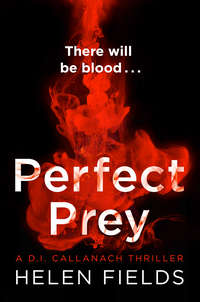
Kitabı oku: «Perfect Prey: The twisty new crime thriller that will keep you up all night»


Copyright

Published by Avon an imprint of
HarperCollinsPublishers Ltd
1 London Bridge Street,
London, SE1 9GF
www.harpercollins.co.uk
First published in Great Britain by HarperCollinsPublishers 2017
Copyright © Helen Fields 2017
Cover photographs © Alamy
Cover design © Black Sheep 2017
Helen Fields asserts the moral right to be identified as the author of this work.
A catalogue copy of this book is available from the British Library.
This novel is entirely a work of fiction. The names, characters and incidents portrayed in it are the work of the author’s imagination. Any resemblance to actual persons, living or dead, events or localities is entirely coincidental.
All rights reserved under International and Pan-American Copyright Conventions. By payment of the required fees, you have been granted the non-exclusive, non-transferable right to access and read the text of this e-book on screen. No part of this text may be reproduced, transmitted, down-loaded, decompiled, reverse engineered, or stored in or introduced into any information storage and retrieval system, in any form or by any means, whether electronic or mechanical, now known or hereinafter invented, without the express written permission of HarperCollins.
Source ISBN: 9780008181581
Ebook Edition © July 2017 ISBN: 9780008181598
Version: 2018-02-08
Dedication
For Brian and John - the dads and grandads - reading their newspapers in the great beyond, and wondering what all the noise down here is about. With love from those who will never forget you.
Table of Contents
Cover
Title Page
Copyright
Dedication
Part One
Chapter One
Chapter Two
Chapter Three
Chapter Four
Chapter Five
Chapter Six
Chapter Seven
Chapter Eight
Chapter Nine
Chapter Ten
Chapter Eleven
Chapter Twelve
Chapter Thirteen
Chapter Fourteen
Chapter Fifteen
Chapter Sixteen
Chapter Seventeen
Chapter Eighteen
Chapter Nineteen
Chapter Twenty
Chapter Twenty-One
Chapter Twenty-Two
Chapter Twenty-Three
Chapter Twenty-Four
Part Two
Chapter Twenty-Five
Chapter Twenty-Six
Chapter Twenty-Seven
Chapter Twenty-Eight
Chapter Twenty-Nine
Chapter Thirty
Chapter Thirty-One
Chapter Thirty-Two
Chapter Thirty-Three
Chapter Thirty-Four
Chapter Thirty-Five
Chapter Thirty-Six
Chapter Thirty-Seven
Chapter Thirty-Eight
Chapter Thirty-Nine
Chapter Forty
Chapter Forty-One
Chapter Forty-Two
Chapter Forty-Three
Chapter Forty-Four
Chapter Forty-Five
Chapter Forty-Six
Chapter Forty-Seven
Chapter Forty-Eight
Chapter Forty-Nine
Chapter Fifty
Chapter Fifty-One
Chapter Fifty-Two
Chapter Fifty-Three
Chapter Fifty-Four
Chapter Fifty-Five
Chapter Fifty-Six
Chapter Fifty-Seven
Chapter Fifty-Eight
Chapter Fifty-Nine
Chapter Sixty
Chapter Sixty-One
Chapter Sixty-Two
Chapter Sixty-Three
Chapter Sixty-Four
Chapter Sixty-Five
Chapter Sixty-Six
Chapter Sixty-Seven
Chapter Sixty-Eight
Chapter Sixty-Nine
Chapter Seventy
A Few Words on the Darknet
Acknowledgements
About the Author
Keep Reading …
About the Publisher
PART ONE
Chapter One
There were worse places to die. Few more terrifying ways of dying, though. It was an idyllic summer backdrop – the cityscape on one side, the ancient volcano Arthur’s Seat silhouetted in the distance. The music could be felt before it was heard, the bass throbbing through bones and jiggling flesh. Sundown came late in Edinburgh in early July and the sky was awash with shades of rose, gold and burnt orange. Perhaps that was why no one noticed when it happened. Either that, or the cocktail of drink, drugs and natural highs. The festival was well underway. Three days of revellers lounging, partying, loving, eating and drinking their way through band after band, bodies increasingly comfortable with fewer clothes and minimal hygiene. If you could take a snapshot to illustrate a sense of ecstasy, this would have been the definitive scene. Washing through the crowd, jumping as one, as if the multitudes had merged to create a single rapturous beast with a thousand grinning heads.
Through the centre of it all, the killer had drifted like smoke, sinuous and light-footed, bringing a blade to its receptacle like a ribbon through air. The slash was clean. Straight and deep. The extent of the blood loss was apparent on the ground, the wound too gaping for hands to stem the flow. Not that there had been time to get the victim in an ambulance. Not that anyone had even noticed his injury before he had almost completely bled out.
Detective Inspector Luc Callanach stood at the spot where the young man had taken his last breath. His identity had not yet been established. The police had pieced together remarkably little in the hour since the victim’s death. It was amazing, Callanach thought, how in a crowd of thousands they had found not a single useful witness.
The young man had simply ceased his rhythmic jumping, crumpling slowly, falling left and right, forwards and backwards, against his fellow festival-goers, finally collapsing, clutching his stomach. It had annoyed some of them, disrupted their viewing pleasure. He’d been assumed drunk at first, drug-addled second. Only when a barefooted teenage girl had slipped in the pool of blood did the alarm ring out, and amidst the decibels it had taken an age for the message to get through. Eventually the screams had drowned out the music when the poor boy had been rolled over, his spilled entrails slinking closely in his wake like some alien pet, sparkling with reflected sunshine in the gloss of so much brilliant blood.
The uniforms hadn’t been far away. It was a massive public event with every precaution taken, or so they’d thought. But making their way through the throng, police officers first, then paramedics, and clearing an area then managing the scene, had been a logistical disaster. Callanach looked skywards and sighed. The crime scene was more heavily trodden than nightclub toilets on New Year’s Eve. There was enough DNA floating around to populate a new planet. It was a forensic free-for-all.
The body itself was already on its way to the mortuary, having been photographed in situ for all the good it would do. The corpse had been moved so many times by do-gooders, panicked bystanders, the police, medics, before finally being left to rest on a bed of trampled grass and kicked-up dirt. The chief pathologist, Ailsa Lambert, had been unusually quiet, issuing instructions only to treat the body with care and respect, and to move him swiftly to a place where there would be no more prying cameras or hysterical caterwauling. Callanach was there to secure the scene – a concept beyond irony – before following Ailsa to her offices.
In the brief look Callanach had got, the victim’s face had said it all. Eyes screwed tight as if willing himself to wake from a nightmare, mouth caught open between gasp and scream. Had he been shouting a name? Callanach wondered. Did he know his assailant? He’d been carrying no identification, merely some loose change in his shorts, not even so much as a watch on his wrist. Only a key on a piece of string around his neck. However swiftly death had come, the terror of knowing you were fading, of sensing that hope was a missed bus, while all around you leapt and sang, must have seemed the cruellest joke. And at the very end, hearing only screams, seeing panic and horror in the sea of eyes above. What must it have been like, Callanach wondered, to have died alone on the hard ground in such bright sunlight? The last thing the victim had known of the world could only have been unalleviated dread.
Callanach studied the domed stage, rigged with sound and lighting gear, and prayed that one of the cameras mounted there might have caught a useful fragment. Someone rushing, leaving, moving differently to the rest of the crowd. The Meadows, an expanse of park and playing fields to the south of the city centre, were beautiful and peaceful on a normal day. Mothers brought their toddlers, dog walkers roamed and joggers timed the circuit. Strains of ‘Summer is A-Coming In’ sounded in the back of Callanach’s mind from a screening of the original version of The Wicker Man that DI Ava Turner had dragged him to a few months ago. He’d found Edward Woodward’s acting mesmerising, and the images of men and women in animal masks preparing to make their human sacrifice had stayed with him long after the projector had been switched off. It wasn’t a million miles away from the circus in the centre of which this young man had perished.
‘Sir, the people standing behind the victim have been identified. They’re available to speak now,’ a constable said. Callanach followed him to the edge of the field, leaving forensics constructing a temporary shelter to protect the scene overnight. Leaning against a tree was a couple, wrapped together in a single blanket, their faces tear-stained, the woman shaking visibly as the man comforted her.
‘Merel and Niek De Vries,’ the constable read from his notebook. ‘A Dutch couple holidaying here. Been in Scotland ten days.’
Callanach nodded and stepped forward for quiet privacy.
‘I’m Detective Inspector Callanach with Police Scotland,’ he said. ‘I know this is shocking and I’m sorry for what you witnessed. I’m sure you’ve explained what you saw a few times now, and you’ll be asked about it many more. Could you just run over it for me though, if you don’t mind?’
The man said something to his wife that Callanach couldn’t follow, but she looked up and took a deep breath.
‘My wife does not speak good English,’ Niek De Vries began, ‘but she saw more than me. I can translate.’
Merel rattled off a few sentences, punctuated with sobs, before Niek spoke again.
‘She only noticed him when the girl screamed. Then Merel bent down to shake him, to tell him to get up. He was on his knees, bent forward. We thought he was drunk, sick maybe. When Merel stood up again her hand was covered with blood. Even then, she says, she thought maybe he had vomited, ruptured something. Only when everyone stepped back and we laid him out, did we see the wound. It was as if he had been cut in two.’ Niek put one hand across his eyes.
‘Did you see anyone before he fell, near him, touch him, push past him? Did anyone seem to rush away from the area? Or can you describe any of the people standing near you in detail?’ Callanach asked.
‘Everyone was moving constantly,’ Niek answered, ‘and we were watching the stage, the band, you know? We don’t have any friends here so we were not really looking. People were jumping up and down, screaming, going this way and that to get to the bar or the toilets. We were just trying not to get separated. I hadn’t even noticed the man in front of us until he fell.’
‘Did he speak at all?’ Callanach asked.
Niek checked that question with Merel.
‘She thinks he was already unconscious or dead when she first spoke to him. And anyway, the noise was too much. She would not have heard.’
‘I understand,’ Callanach said. ‘Officers will take you to the police station to make full written statements and then transfer you to your accommodation.’
‘Not British?’ Merel stuttered, addressing Callanach directly for the first time.
‘I’m French,’ Callanach replied, ‘well, half French, half Scottish. I apologise if my accent’s hard to understand.’
‘Le garçon était trop jeune pour mourir.’ The boy was too young to die, she said, continuing in French although Callanach found he was hearing it in English, so fast had his translation become.
Merel De Vries recalled one other thing. Above the music, a woman laughing in the crowd, so loud she could hear it even as she’d bent down to help the victim. What struck Callanach as odd was Merel’s description of it. That it wasn’t a happy laugh. In her words, it had echoed of malicious.
Chapter Two
‘The cut came from a single weapon, but the implement would have been customised by skilled hands,’ Ailsa Lambert said. ‘Two perfectly paired scalpel blades must have been bound together with a spacer between them creating a gap of four millimetres. The combination would have rendered the wound impossible to close or suture, even had he been in hospital when he’d been attacked. The twin incisions are …’ she paused as she picked up a flexible measure, ‘twenty-eight centimetres in length. They have pulled apart substantially, causing a gaping wound resulting in massive trauma. His organs then moved, sliding down and forward, so that much of what should have been in his abdominal cavity exited his body as he fell and rolled. Some of it even has identifiable shoe marks from those around him. Blood loss caused his heart to stop.’
‘I get it,’ Callanach said wearily. ‘Not much doubt over cause of death. Anything else I need to know?’
‘Tox screen will be a while. He has no other visible injuries, seems superficially healthy, his lungs tell me he wasn’t a smoker, good boy,’ she patted the corpse’s hand with her gloved one and smiled grimly. ‘But this weapon, Luc, this weapon wasn’t designed for self-defence. And you can’t pick it up at the hardware store either. Someone crafted it, adored it. The cut was deep, even, and yet very little force seems to have been required to puncture far into the abdominal cavity. Whoever did this took pride in it, thought about efficiency, understood the mechanics of it. This was no impromptu stabbing or weapon grabbed in the heat of an argument.’
‘An assassination then?’ Callanach asked, bending over the body and taking stock.
‘More like a ritual, if you ask me,’ she said. ‘This was dreamed up, practised and perfected.’
‘How old is he?’
‘Between eighteen and twenty-two, I think. Five feet, eleven inches. Active, no spare fat, good muscle mass but not one of those types who live at the gym. Size ten shoe. Brown hair, hazel eyes. No defence wounds. Never saw it coming.’
‘So he didn’t recognise his attacker as a threat when they came for him?’
‘Most unlikely. You don’t look well yourself, Luc. Are you sleeping?’ Ailsa asked as she peeled off her gloves and made notes.
‘I’m sleeping just fine,’ he lied.
‘Eating properly? You’re pale and you have broken blood vessels in your eyes.’
‘I’ll phone you tomorrow for the tox results,’ he evaded. ‘Anything before that and you have my mobile number.’
‘Give my regards to DI Turner, would you? I haven’t seen her for an age. I used to catch up with her mother regularly at an opera appreciation group but I haven’t bumped into her recently either,’ Ailsa said, stretching her back. In her mid-sixties, tiny and birdlike, she was a force to be reckoned with.
‘I’ll pass that on,’ he said, stripping off his own gown and dropping it into the bin outside the door.
On his return to the station, a grim welcome party sat around in the incident room. Callanach looked directly to Detective Constable Tripp.
‘Just following up a lead from a phone call, sir,’ Tripp said. ‘Young woman called in to say she and her boyfriend got separated at the festival. He hasn’t turned up yet. I’ve sent a car to pick her up.’
‘Did she give his name?’ Callanach asked, grabbing coffee as he sat at a computer.
‘Sim Thorburn,’ Tripp replied, pressing a couple of keys and waiting for a photo to load, one step ahead as ever. Some new social networking site popped up in seconds with a multitude of larger than life photos. In each one, the lad was smiling, laughing, his expression carefree and guileless. In the last, he was hand in hand with his girlfriend. Without a doubt, it was the same hand that Ailsa Lambert had been patting a short while ago.
‘That’s him,’ Callanach said. ‘So what do we know?’
‘At the moment, everything that’s on his home page. He didn’t bother with privacy filters, so it’s there for the world to see. He’s twenty-one, Scottish, lives in Edinburgh.’
‘Police record?’
‘Not that we can find.’ A phone rang behind Tripp and someone passed him a note. ‘The girlfriend’s here, sir. And DCI Begbie wants to see you as soon as you’re done.’
‘Of course he does,’ Callanach said, standing up. ‘Do you have any idea where DI Turner is, Tripp? Only Ailsa Lambert was asking after her.’
‘Off duty,’ DC Salter shouted from the corridor. ‘Said something about maybe being in late tomorrow too. Did you want me to get a message to her, sir?’
‘No thanks, Salter,’ Callanach shouted after her. ‘It’s nothing that can’t wait.’ Unlike Sim Thorburn’s girlfriend, no doubt already suspecting the worst but who’d be downstairs holding out for a miracle. She would be imagining some mistake, hoping perhaps that in spite of the evidence, her boyfriend had met some friends and wandered off without telling her. Any number of excuses for his disappearance would be going through her mind. Until she saw Callanach’s face, he thought. People knew the second they looked at you.
‘I’m sorry,’ he said, as soon as he saw her. Introductions were pointless. She wouldn’t remember Callanach’s name in a few seconds’ time, anyway.
‘You can’t be sure that it’s him yet,’ she whispered. ‘You haven’t even asked me about him.’
‘We found several photos on an internet site of the two of you together.’ He held out an example that Tripp had printed off in anticipation. ‘Is this Sim?’
She sobbed and took a step away from the photo as if the paper itself was a weapon.
‘Have you seen him?’ she asked. Callanach pulled a chair out for her and she sat.
‘I have. I’m sure it’s him.’
‘What … what …’ she couldn’t say the words.
‘He received a knife wound. It proved fatal. It would have been very fast. The ambulance didn’t have time to get to him.’
‘A knife wound? I thought maybe a ruptured appendix or a blood clot or … he was stabbed? It’s not him. No one would do that to Sim.’
‘He wasn’t in any trouble that you knew of? It might be something as simple as a family feud, money problems, someone settling an old score?’
‘Don’t be so stupid!’ the girl snapped. It was an understandable reaction given what she was going through. What she didn’t understand was how cold the trail would get with every passing minute. ‘He was a charity worker. He earned minimum wage and still spent every spare moment doing extra unpaid voluntary service.’
‘Can you tell me more about that?’ Callanach asked.
‘He worked in the homeless shelters, ran the soup kitchens in the city, organised fundraising. Sim was the gentlest, kindest person you could ever meet. He gave away every last penny. It was the only thing we ever argued about.’
‘And you didn’t see anything strange yesterday? No one following him?’
The girl shook her head, shock taking hold. Callanach knew he’d got all he was going to get from her by then. He handed over to Tripp to organise the formal identification of the body and obtain family details. Callanach had to get a lead, and fast. Somewhere, the man or woman who had slaughtered Sim Thorburn had undoubtedly already hidden the weapon and neutralised any incriminating forensic evidence.
‘Salter,’ Callanach shouted on his way towards the incident room. ‘Find out who’s controlling the footage from the concert. I want it available tonight. And try to keep the Chief off my back for a while, would you? I’ve got work to do.’
‘So have I, Detective Inspector,’ DCI Begbie said, appearing in the doorway. Lately he seemed larger every time Callanach saw him. It wasn’t healthy, putting on weight that fast. The Chief hadn’t been exactly slim when Callanach had joined Police Scotland, but now he was working his way towards an early grave, for no apparent reason. ‘Is something wrong, DI Callanach?’ Begbie asked. He realised he’d been staring at Begbie’s straining shirt buttons.
‘No, sir, just distracted.’
‘Frankly, that’s not very reassuring. What leads have we got?’ Callanach tried to find a way to express the completely negative nature of the case so far, and struggled to answer. ‘That good, huh? Well, somebody must have seen something. Thousands of potential witnesses and we’re stuck. Bloody typical. Have media relations organise a press conference. Might as well do it immediately. We can’t have people scared on the streets. There’ll be a rational explanation for this. No one walks up to a complete stranger and slashes them. Get answers, Callanach. I want someone in custody in the next forty-eight hours.’
‘Chief …’
‘Got it. You don’t like doing press conferences. Duly noted.’ Begbie walked off, puffing as he went. Callanach considered following to ask if his boss was all right, then recognised that for the career-ending move it would be and made his way back towards the incident room. He was starving, but the idea of a fish and chip supper being consumed straight from newspaper was making him queasy. There was no prospect of getting home for twelve hours and the healthiest food at the station was probably an out of date packet of crackers abandoned at the back of a cupboard. Callanach was getting his thoughts together to lead a briefing when someone thrust a carrier bag into his hand.
‘Stop looking at everyone else’s food as if they’re eating poison. It’s off-putting. You’re not doing anything to help your reputation for French snobbery,’ DI Ava Turner said, pushing a fork into his free hand. ‘Prawn salad. Not home-made, so you’re safe from my pathetic efforts.’
‘I thought you were off duty and not coming in until late tomorrow. Have you been demoted to the catering division?’
‘You can always hand it back,’ she said, checking her phone and frowning.
‘Too late.’ Callanach ripped open the packaging and tucked in. ‘Ailsa Lambert was asking after you. Do I take it that Edinburgh’s elite social circle is not functioning properly?’ he smiled.
‘How do you tell someone to shut up in French?’ she responded without looking up from her phone. Ava had spent much of her career trying to distance herself from the privilege she was born into. The expectation that she would become a doctor, lawyer, actuary or similar – at least until she settled down and produced grandchildren for her eager parents – had spawned a rebellion landing her in the grimy world of policing. But even at work she couldn’t escape the fact that her family’s closest friends included the upper levels of Police Scotland brass, politicians, CEOs and even the city’s chief forensic pathologist.
DC Salter interrupted, handing over two pages of A4 and checking her watch. ‘DCI Begbie said he knew you were busy so he’s organising the press conference for you.’ Salter was trying not to smile. Turner ruined the effort by laughing out loud. ‘I’ve written out some notes for you, sir. Media will be gathered in about an hour.’
‘Wow. Reduced to using the media circus already? This time tomorrow morning women will be swooning over your face on the front cover of every paper. So Police Scotland’s pin-up detective is getting back out there, is he?’ Ava said. Callanach had been with the Major Investigation Team in Edinburgh for eight months, and in that time Ava had never missed an opportunity to make fun of him. His distant career as a model made him a particularly easy target.
‘It wasn’t my idea,’ Callanach muttered. ‘Merde!’
‘Language,’ Ava admonished.
‘I thought you couldn’t speak French,’ Callanach said.
‘You’ve been mistaking my ignoring you for failing to understand you. It’s a different concept,’ Ava said.
‘Do you not have work to do?’ Callanach asked, shaking his head at her, watching the grin spread across her face. Ava was the sort of woman who left men wrong-footed. She looked innocent enough, her long brown hair a tangle of curls, with grey eyes that shifted colour depending on the light. But she could cut to the chase in a second. Being direct seemed to be the only way she knew. When he’d arrived from France his head had been a mess. Too much had happened for him to walk away unscathed emotionally. The last few months had been curative, and Ava had played a large part in that, mainly because with her he could just be himself.
‘Earth to Callanach,’ Ava said, waving her hand in front of his face. ‘I was only teasing. It’s that bad then? You’ve really got nothing to go on?’
‘Less than nothing,’ Callanach said.
‘DI Turner!’ Begbie shouted from the corridor.
‘I’m off duty, sir,’ Ava shouted back. ‘In fact, I’m not even in the building. You’re imagining me.’
‘Too bad for you I have such an active imagination. Get a squad over to Gilmerton Road. There’s been another murder.’
Chapter Three
The house in Gilmerton was an unpretentious semi-detached, with a plain but carefully tended garden and a Mini in the driveway. A high wooden gate allowed access to the rear garden. The upper windows of the property were small, but at one corner, presumably where the internal staircase ran, an unusual slit of window spanned both floors to look out over next door’s driveway. Two uniformed officers had been posted at the gates and the circus of forensics, pathology, and photography had yet to properly begin. The area was peaceful, the streets asleep.
‘What happened?’ Ava Turner asked the officer guarding the front door.
‘A neighbour heard some loud banging followed by a couple of screams, phoned it in. There was no answer when we knocked so we went round the back and found the kitchen door open. Body’s in the bedroom, ma’am. Do you want me to come in with you?’
‘No, stay put. And keep people off the garden. Who’s the victim?’ Ava asked.
‘Mrs Helen Lott, mid-forties, lived alone as her husband passed away a while back, apparently. Neighbour was quite friendly with the deceased. We haven’t told her what we found yet …’
‘Good. Where the hell are the rest of the team?’
‘All still over at The Meadows dealing with the murder at the festival. No one was expecting a second murder on the same night,’ the officer said, rubbing his hands together. Even in July, Scotland was no place to stand outside in the small hours.
‘Bloody right. That’s Edinburgh’s murder quota for the whole year. God almighty, the press will have a field day,’ Ava muttered, already making her way along the narrow path to the rear of the property.
The lock on the back door had been sliced through. If it was a burglar, then it was a highly professional job as opposed to the usual smash-and-grab, taking whatever was nearest to the window. The perpetrator had paid a lot of money for decent tools, and must have known what he’d need. Ava pulled gloves and shoe covers from her bag and made her way in through the kitchen door, careful not to disturb anything as she went. The lock had been broken, although there hadn’t been any chain or secondary security. She cursed how cheaply people valued their lives.
The house was dark, as it would have been when the intruder crept through. Ava kept the lights off, imagining how the killer had moved and navigated the property. There was enough light from a street lamp to make it easy. None of the stair floorboards were squeaky. There was every chance the killer had got all the way to Helen Lott’s bedroom without disturbing her at all. Dark smudges on the stair carpet and a glistening trail on the handrail were an insight into the scene that was about to unfold.
The smell of vomit was noticeable from halfway between floors, beginning as a sharp twang, growing riper and more meaty as she got closer. Something else, too, when Ava pushed open the door to the main bedroom. A rotten smell. Human faeces.
In the bedroom, she turned on the light to allow a detailed view, taking an involuntary step back from the carnage on the floor. The body was difficult to see at first, hidden as it was by a wooden chest of drawers. Clothes had tumbled out everywhere, hiding all but the woman’s right foot and right arm. Ava tiptoed across and peeled the corner of a jumper away from the face. Blood had erupted from her mouth, nose and ears. The vomit was already crusting on the carpet and in the wrinkles and folds of her skin. The victim’s eyes, a vivid and unusual shade of blue, bulged in their sockets, and stared somewhere over Ava’s shoulder as if watching, terrified, for her attacker to return. There was very little white remaining in her eyes, the haemorrhaging like crazing on an antique vase. Her neck and face were swollen solid, a deep shade of purple. It was as if she had been painted from the neck up by an angry toddler in all the colours of fury.
The chest of drawers, a broad, weighty piece, lay across her body. Its position there was no accident. Ava looked carefully at the damage. The chest’s back panel, which now faced the ceiling, had been smashed in, the sides caving inwards. Faint bootprints marred the floral pastel bed linen. The attacker had jumped from the mattress onto the chest, adding to the murderous crushing pressure that had squeezed the breath from the victim’s lungs as she’d lain terrified beneath it. Helen Lott’s visible leg was twisted to an unnatural angle, and the nails of her free hand were bloodied and hanging. Ava folded the hand upwards to where the nails would have made contact with the chest of drawers. Sure enough, corresponding scratch marks ran down the polished surface. The poor woman would have been conscious then, enough to have done all she could in those last desperate minutes to fight her way out. Death would have been the only kindness, Ava thought. Mrs Lott would have been grateful when the darkness finally swallowed her.
‘Oh, my dear,’ a small voice came from the doorway, ‘what on earth is this, now? I was just saying to Luc earlier how I was missing you. I certainly didn’t mean to see you under these circumstances.’
‘I need as much as you can tell me about the killer. Single assailant or a gang, was there a weapon? Just give me enough to get started, Ailsa,’ Ava said.
The pathologist, covered head to foot in a white suit, making her appear smaller than ever, opened her bag and withdrew a thermometer and a variety of swabs.
‘It’s a difficult scene, not much room. Keep your squad out until I’m done. Get me some decent lighting and I’ll need the photographer immediately.’
‘That’s fine,’ Ava said, as Ailsa knelt next to the body.
‘She’s still quite warm, so the attacker, singular or plural I can’t say, hasn’t gone terribly far yet,’ Ailsa said, photographing with her own tiny camera as she went, shining a light in Helen Lott’s eyes, ears and mouth. ‘Death was within the last forty-five minutes, that’s the best I can do for now. I’d put money on the perpetrator – if it was one person acting alone – being male and very large. This took an absolutely extraordinary amount of strength and overwhelming rage. No weapon other than this furniture was required to cause these injuries. Whoever it is must be covered in blood though. They’ll be keeping out of sight until they’ve cleaned up. This blow to the face, you see the swelling and discoloration here,’ Ailsa pointed to the side of Helen Lott’s head, ‘probably fractured the cheekbone, maybe the jaw too, and would have put her on the floor so that the furniture could be pushed on top of her. The weight of the furniture forcing the air from her lungs, combined with the fractured jaw would have prevented her from screaming. That might have been incidental or planned, no way of knowing. It’s an unusual crime scene. Very personal. I’ve never seen a crushing death outside of a car or industrial accident before. And these blood spatters here and here,’ Ava followed Ailsa’s eyeline outwards from the chest of drawers along the carpets to the walls and wardrobe, ‘suggest to me that the crushing wasn’t a single continuous force.’
‘Meaning what?’ Ava asked.
‘Meaning, I’m afraid, that whoever did this jumped again and again, causing individual injuries and almost explosive bleeds each time they landed. When we’ve moved the furniture and the body, we’ll see a star shape coming out around her.’
‘Bastards,’ Ava said, hands on hips, hanging her head.
‘I bet you don’t let your mother hear you speak like that,’ Ailsa said, smiling gently. ‘Now let me take care of Mrs Lott.’
Ava went back down the stairs, turning each light on as she went, issuing orders through her radio. Technicians were carrying lights and sheets in before she’d even reached the kitchen door. Ava walked out onto the street and looked around. It was a quiet residential area, devoid of CCTV and not wealthy enough for any of the residents to have invested in their own surveillance systems. It would have been obvious that the house was occupied, so late at night with a car on the driveway. The burglar – if it was a burglary gone wrong – would have been cautious about the residents.
‘Officer,’ Ava called to the uniform she’d spoken to on the way in. ‘Is there anything obvious missing or any sign of ransacking?’
‘Handbag with purse in it still on the kitchen table, ma’am. Other than that we didn’t want to disturb too much.’
She went back to her car and dialled Begbie’s number.
‘Turner here. It’s a bad one, Chief. Female victim, living alone. Crushed to death with a piece of her own furniture.’
‘You’ve got to be bloody kidding me,’ Begbie sighed. Ava could almost see him scratching his head as he tapped his pen on the desk. He sounded exhausted. ‘Sexual assault?’
‘No idea. And we won’t have confirmation until Mrs Lott has been taken in for a full autopsy. The torso and two limbs have been pretty comprehensively flattened.’
‘Suspects?’
‘Nothing yet. Pathologist’s still with her. Everyone was over at The Meadows so it’s taken a bit longer than usual to get going. Almost certainly a male attacker. Not sure if there’s more than one. It’s brutal, a lot of force. We have a bootprint. Officers are with the neighbour taking a statement. After the incident at The Meadows, the press will—’
‘I know, I know,’ Begbie said. ‘But they’ll have to be told. They’ll find out soon enough anyway. Better from us.’ Ava could hear the Chief’s heavy breathing down the phone. His chest sounded as if it was chugging between words.
‘Sir, nothing else will happen tonight. Maybe you should just go home. Callanach and I are both available to take calls.’
‘Don’t you start too, Turner. If I wanted another woman nagging me, I’d have committed bigamy long ago. Just seal off the scene and bring back some useful bloody info. The very least I expect is one hundred per cent more than Callanach’s turned up from The Meadows. Not that that’s setting the bar very high, mind you.’
Chapter Four
Callanach sat with an expressionless video editor, and tried to avoid the pile of newspapers that some helpful person had left on his desk. What he needed to do was sift through the footage from four different cameras and see if anything recorded might resemble a lead. Thankfully the timelines were such that the job, initially at least, was a limited one.
The first two tapes were from static cameras, no operators. They both covered the front areas of the crowd, and the place where Sim Thorburn had been standing was a distant blur. The remaining footage was more difficult to navigate. One camera operator had been moving around on the stage, intermittently filming the band and looking out at the crowd. The second camera operator had been on a cherry picker crane to give more dynamic angles. It was painfully slow to sit through, but finally the first glimpse of the thankfully tall Niek De Vries emerged amidst the masses.
‘Stop it there,’ Callanach said, leaning forward and peering hard at the screen. ‘That area, can you make the section larger?’
The editor pressed a few keys and leaned back, hands behind his head.
‘Is that it?’ Callanach asked. ‘It’s too blurry.’
‘Yeah, you know that stuff in films where they can suddenly zoom in and it all goes super-sharp and you can see inside people’s pockets and read what’s written on a note? That’s all bollocks,’ the editor said. ‘There’s one picture, it consists of a certain number of dots. You can see closer but then it gets less sharp. If I had a pound for every time I’ve had to explain that.’
‘Zoom back out then, left a bit,’ Callanach said. ‘That’s Sim,’ he said. ‘Play it from there.’
As the screen came to life, Callanach could see Sim bouncing up and down, in and out of the line of sight. It was sketchy, but unmistakably the victim. He was bare-chested, like many of the men in the crowd, having presumably shed his T-shirt in the heat of the sun and the crowd. Sim was singing along, one arm in the air pumping in time to the music. He looked relaxed and happy. Behind him and slightly to the right stood Merel De Vries.
‘He has absolutely no idea what’s coming,’ Callanach said to himself. The camera began to shift to the right, and Sim’s face edged towards the far side of the screen. ‘No,’ Callanach shouted. ‘It’s just about to happen. Freeze the frame or something.’ The editor tapped the space bar. Callanach searched the picture but found nothing new. ‘Let it play,’ he said. Another tap and away slid Sim’s face, about to shift fully out of frame as he seemed to bump into the body of someone passing in front of him. ‘Stop! Right there. That’s it.’
Callanach’s mind filled in the blanks. The subtle shift of a body through the crowd, slipping the knife out of a pocket, pulling off the sheath, sliding the razor-sharp blade along Sim’s naked stomach as they passed, ready with a cloth to clean up and avoid bloodying anyone else. Slipping quietly away before the victim had hit the floor. They would have moved in a zigzag through the crowd. Taking a straight course through the masses, directly out of the area, would have been too obvious.
‘Play it back again,’ Callanach ordered. On a second view, it was clearer that Sim’s head hadn’t even turned. There had been no distraction, no conversation, no recognition. Had there not been the movement of a few blurred pixels, dark in colour, vague in shape, passing just in front of the lower half of Sim’s face before he’d fallen, it might have been murder by ghost. ‘You’re going to tell me we can’t improve that section of the picture, aren’t you?’ The editor simply raised one eyebrow. ‘I need the best quality print-off you can get of all the frames when his face and that blur are in sight.’
Tripp entered, holding a document that he was reading as he walked.
‘Forensics, sir. Just came through by email. Nothing on it.’
‘What do you mean nothing?’ Callanach asked.
‘Only what you already found out at the autopsy. Victim had no drugs in his system, trace amounts of alcohol. Healthy, no previous injuries except what looks like a childhood broken leg. He was clean. Cause of death as you’d expect,’ Tripp said.
‘Any new information since the press conference?’ Callanach asked.
Tripp looked edgy. ‘You’ve not heard, sir? You turned your mobile off again, then, did you?’ Callanach’s hand went to his pocket and came out again clutching a black screen. ‘Someone started a media site, people have been uploading every bit of festival footage from their phones. There are thousands of hours to view. Other than that, no useful leads. Then there’s the public outcry. I think DCI Begbie may have barricaded himself into his office. Media relations have been trying to get hold of you. Some journalist wants an interview.’
‘Do you think it will help?’
‘Not my call, sir. But I think one of the papers dubbed you Police Scotland’s answer to Brad Pitt, so maybe you won’t want to …’ Tripp’s voice faded out.
‘That’ll be all, thank you Tripp. Is the DCI available?’
‘He said only for people with good news,’ was Tripp’s parting reply.
‘Seems like we’re all going to have a disappointing day then,’ Callanach muttered.
He walked into Begbie’s office to find the Chief handing a bundle of files to a plain-clothes officer he hadn’t seen before.
Begbie pointed to a seat which Callanach decided not to bother taking.
‘No idea how long we’ll be here, I’m afraid,’ the plain-clothes officer continued, ignoring Callanach’s presence. ‘Obviously we’ll be working with your regional squad. We may also need a few of your men for on-the-ground inquiries.’
‘I’m afraid that as of yesterday all my lot are taken,’ Begbie growled, eyes closed. ‘Unless Callanach here has some unexpected news for me.’ Callanach stared out of the window. ‘Well then, you can have what office space you need, all the facilities, local knowledge to your heart’s content. Manpower is your problem.’
The officer made a non-committal noise, which Begbie ignored as he flicked the switch on the small kettle he kept in his room, presumably to minimise the need to walk the few yards along the corridor to make tea. Callanach took the opportunity to study the newcomer. The accent was recognisable as upper-class English, and the corresponding attitude was clear from the tone of his voice plus the slight upward angle at which he held his head.
‘Right, I’ll be getting along then. We’ll review our requirements and revisit the manpower issue at a later date, DCI Begbie.’ He left without a thank you, not quite bothering to ensure the door was shut. Callanach finished the job for him.
‘Anything I should know about, sir?’ Callanach asked.
‘Not today,’ Begbie muttered. ‘Got a suspect yet?’
‘Dark hair. Short, slight build, but that’s a guess as the crowd wasn’t disturbed by the murderer passing through. Could be male or female. My best description would be something along the lines of Professional Grade Murderer.’
‘Thank you Detective Inspector, be sure never to repeat those words in front of another living being. DI Turner is currently in her office trying to organise an investigation into a man she has, much like yourself, already named inappropriately. You may have a Professional Grade Murderer on your hands; Turner has The Crusher. Almost certainly male, heavy, strong, brutal and a raving psychopath if the autopsy details are anything to go by.’
‘Two in one night? Isn’t that unusual for this area?’
‘Unusual? It’s a disaster of monumental proportions, is what it is! Do you know what the headlines said this morning?’ Callanach still hadn’t braved the papers. ‘No? Well, let me halve my burden by sharing it with you. “Not safe on the streets, not safe in our homes. Edinburgh’s Night of Monstrosities”. Not catchy but pretty bloody appropriate, don’t you think?’ Begbie threw himself into the chair behind his desk so hard that it skidded backwards half a metre. ‘And I don’t have the money in the budget to pay for any overtime for the remainder of the year! Do something about it, man. I’ve got two bodies in the morgue and I daren’t so much as answer the phone.’
Callanach didn’t wait to have Begbie vent any further. It sounded as if Ava was having an even worse day than him. He wandered in the direction of her office for some mutual bemoaning of fates, not bothering to knock. As he opened the door there was a sudden parting of bodies, Ava stepping quickly backwards and banging her hip on the corner of her desk, the man she was with looking more annoyed than embarrassed to have been interrupted. Callanach recognised him as the plain-clothes officer who had recently departed the Chief’s office.
‘Begbie didn’t introduce us. Seems he’s having rather a busy day. I’m DCI Edgar,’ he said.
‘Callanach,’ he replied, holding out his hand and shaking the detective chief inspector’s. ‘I interrupted. Apologies.’
‘No, you didn’t. What was it, Luc?’ Ava asked, brushing hair away from her face.
‘Thought I’d just see how you’re doing. The Chief said you’ve picked up a rough one.’
‘That’s the best kind, isn’t it?’ Edgar chipped in.
Ava made her way to the other side of her desk and sat down.
‘Joseph’s here from the National Cyber Crime Unit in London. An attack is imminent and there’s intelligence that it’s being organised from Edinburgh.’
‘Probably best to limit the spread of the information, Ava. I gather Callanach has matters of his own to worry about.’
‘I do,’ Callanach said, ‘so I’ll catch you later. Good to meet you.’ He closed Ava’s door, grimacing, and wiping the palm of his right hand on his trousers as he went.
Chapter Five
‘Some bastard leaked the autopsy summary!’ Ava yelled, slamming Callanach’s door and throwing herself into a chair. ‘Which means either someone in Ailsa’s office or a police officer here is responsible, as if this wasn’t bad enough already.’
‘Have you slept?’ Callanach asked.
‘Listen to this.’ Ava ignored his question, tearing open the newspaper she was clutching and beginning to read. ‘“Helen Lott, a forty-six year old palliative care nurse, was deliberately crushed to death in her own bedroom.” Of all the monsters I’ve ever dealt with, who would want to kill a nurse who looks after terminally ill patients? “Injuries included multiple fractured ribs and sternum, a collapsed windpipe and severe damage to internal organs, resulting in internal bleeding and asphyxiation. A neighbour alerted police after loud noises were heard coming from the property late at night. The autopsy report suggests that the murder was torturous and orchestrated to cause as much pain to the victim as possible. Mrs Lott will be sadly missed by work colleagues and patients alike, who have described her as nothing short of an angel who had dedicated her life to nursing.” Did you know there’s graffiti about the murders emerging on walls across the city? God only knows who started that off. And we’ve just been notified that concerned citizens are planning a Take-Back-The-Night-style protest march. Like we don’t have enough policing to do already. What the fuck is going on?’
‘Have you reported the leak?’ Callanach asked.
‘Of course I have. We’ve got two officers interviewing anyone with access to the information at the city mortuary, and a member of our technical services team is checking the digital route the document took from there to us to make sure the breach didn’t come from Police Scotland’s end. On top of that, all the usual media outlets have been contacted to see if anyone approached them offering the article for money. No joy there so far. Why is the first thing that happens always the last thing you need?’ Ava huffed.
‘You want coffee?’ he asked.
Ava shook her head. ‘Sorry about yesterday. With Joe. It was …’ her voice dwindled.
‘None of my business,’ Callanach said.
‘Joe and I were friends at University. He phoned me a few weeks ago to say he was likely to be posted here. You know how sometimes you just pick things up where you left them as if no time had passed at all …’
‘Forget it. You want to get something to eat on the way home? If I don’t get a shower soon my clothes are going to sue me for hygiene abuse.’
Ava looked down at her hands.
‘It’s fine,’ Callanach said, Ava’s unspoken plans hanging in the air between them. ‘I’ll catch you tomorrow. And don’t worry about the papers. New story every day, remember?’
That turned out to be good advice. In spite of the endless coverage afforded by two murders in one night, the media headlines the next day focused on an altogether different target.
The largest incident room was taken up with an array of well-dressed plain-clothes officers, freshly washed and scrubbed, who obviously had not been up all night watching endless mobile phone footage and scanning photos with no results.
‘Something happen overnight?’ Callanach asked Sergeant Lively as he passed by.
‘Fuckin’ snobby idiots strutting around, acting like they own the place. Hunting a bunch of nerds no one in their right mind gives a damn about. Makes you look almost like a frigging native.’
‘Look almost like a frigging native, sir,’ Callanach reminded him. Lively sniggered.
‘Aye, whatever.’ Lively wandered off, stuffing a sandwich into his mouth. Callanach and he hadn’t hit it off since day one. A long-in-the-tooth sergeant with decades in the job, Lively had his own preferred candidate pegged to fill the role of Detective Inspector when Callanach had transferred in. It was a fair assumption that Lively had overseen a campaign of piss-taking posters and nasty rumours that had undermined Callanach until he nailed his first case with Police Scotland. He and the detective sergeant had finally progressed from coming close to blows, to tolerating one another, although the verbal abuse hadn’t stopped. At least the influx of Scotland Yard’s finest had provided a favourable comparison.
Callanach’s phone was ringing as he reached his office. He took the call as he threw his jacket onto the desk. It was too hot for any sane person to be wearing more than shorts and a T-shirt. Shirts and ties were one of the drawbacks of promotion.
‘Callanach,’ he said.
‘DI Callanach, I’ve left several messages for you,’ was the opening line. ‘This is Lance Proudfoot. I’m the editor of an online news and current affairs blog. I was hoping to get a statement about the festival murder.’
‘How did you get this number?’ Callanach asked.
‘Switchboard put me through.’
‘That’ll be a career-shortening decision then,’ Callanach said, imagining the conversation he’d be having later with the idiot who had answered the phone. ‘No statements. You had everything we’re giving out at the press conference.’
‘To be fair to the young lady on your switchboard, I may have given the impression that I was a family member,’ Lance said. Callanach sighed. ‘And your media office occasionally forgets to invite the online press to your conferences, hence the need for a certain level of … inventiveness about sourcing information.’
‘I’m not sure you and I are equally content to supplement the word inventiveness for the term lying, Mr Proudfoot. And I’m afraid I have to get on with some work,’ Callanach said.
‘So you can’t comment on last night’s hacking scandal either then? Only I heard that Scotland Yard had sent a crack team of investigators to Edinburgh.’ The last phrase was heavily laced with sarcasm. It was all Callanach could do to stop himself agreeing. Instead, he opened a news site on his mobile and scanned the headline. A group calling themselves The Unsung had hacked into the accounts of various bankers and investors recently awarded some jaw-dropping bonuses, and transferred the funds. ‘Brilliant bit of anti-establishmentarianism,’ Lance continued.
‘Looks like plain old theft to me,’ Callanach replied.
‘I beg to differ. The hackers transferred the funds into the accounts of several good causes, anything from children’s hospices to animal shelters. Only took twenty-five per cent of each bonus, too, so they weren’t even greedy about it. They were just making a point about the obscenity of the highest paid compared to the desperate underfunding of non-profit-making causes,’ Lance said.
‘Well, it’s not a Major Investigation Team case, I’m afraid, so yet again, no comment,’ Callanach said, itching to put the phone down, only the journalist on the other end was proving remarkably hard to get rid of politely.
‘Ah, so they have called in the cavalry. Doesn’t surprise me at all,’ Lance said. Callanach mentally kicked himself for his indiscretion. ‘Take benefits away from single mums and the disabled and there’s not one politician available for comment. Nick some cash from a load of fat cats and the government mobilises.’
‘It’s still a criminal offence. We don’t get to make judgement calls about the morality of the crimes we investigate,’ Callanach said.
‘You’ve got to admit it was clever though. Now the losers have to report each unauthorised money transfer as a crime, which is how the press gets the details of the offences. Then the so-called victims have to ask for their money back from each charity. What would you do, DI Callanach? Say you got a four million pound bonus on top of already inflated wages, three million is still in your bank account. You going to make a spectacle of yourself and insist that the local war veterans’ society gives you your million back? Named and shamed doesn’t even start to describe how little love the public have for these guys. Quite some stunt, isn’t it?’
Callanach didn’t answer. Quite some stunt indeed. It certainly explained the peacocking going on in the incident room.
‘Anyway, I’m just after one comment on the record,’ Lance continued. ‘The public want to know that their city is safe. Will you not take the opportunity to reassure them?’
‘This is a murder investigation,’ Callanach said. ‘Not a game and not a publicity opportunity. Have some respect.’
‘Listen, I do this because I care about getting news stories out. I don’t work for a paper that’ll edit my words to meet the owner’s political agenda, or to maximise advertising revenue potential. I’m my own boss and I take responsibility for what I write. Do me a favour. Just one line. We’re not all bad, you know.’
Callanach brought up Lance Proudfoot’s online profile. His news blog had nearly one hundred thousand followers and it looked as if his feed was picked up by some of the bigger media outlets. He sighed. It was worth keeping the popular press onside. And there was always the possibility that it might actually prove useful.
‘Fine,’ Callanach said, feeling resigned. ‘But unnamed. An anonymous source inside the police. The festival attack appears motiveless. Whilst the majority of murders are committed by persons known to the victim, this does not appear to be the case. We ask the public to remain vigilant and for anyone with any information to come forward as soon as possible.’
‘That’s all?’ Lance asked.
‘Don’t push your luck,’ Callanach said. ‘Use my name and we never talk again.’
‘Does that mean I can call you if I have more questions?’
‘No, it doesn’t. And the next time you lie to switchboard to get put through, I’ll have you arrested.’ Finally common sense kicked in and Callanach hung up, flicking back to the news headlines and reading the hacking story more thoroughly.
Ava’s friend DCI Edgar was going to have his work cut out wading through the mire of public relations mud about to rain down. The Unsung may have committed grand scale fraud and theft, but it was hard to imagine many people condemning them. And it was a big enough story, just about, to deflect the media’s attention and provide some breathing space while they made headway on the murders. Couldn’t have happened to a nicer guy, Callanach thought, wondering how long Joe Edgar would be using Edinburgh as an investigative base. He reached for his coffee and for an unlit Gauloises cigarette to suck.
Ücretsiz ön izlemeyi tamamladınız.