Kitabı oku: «Psychotherapy», sayfa 16
While I have dwelt on Ramon y Cajal's theory, because for years it has been familiar, of course I must reëcho his own warning that it is, after all, only a theory. It presupposes an active interposition of the glia cells between the axon of one neuron and the dendrons of another. This cannot be demonstrated. A third theory of mental operations, then, has been suggested, and the English school, so ably led by Sherrington ("Integrative Action of the Nervous System," London, 1903) and McDougal ("Synapse Theory of Fatigue," Brain, 1910) has deservedly attracted wide attention. They contend that all the phenomena can be more simply explained without postulating the movement required for the Duval Theory or the glial activity of Ramon y Cajal's hypothesis. They consider that each nerve cell has, as it were, a certain potential energy which it sends forth in nerve impulses. These are transferred from neuron to neuron through the synapse. If what we might call, to borrow a figure from electricity, the voltage of the cell impulse be sufficient to overcome the resistance at the synapse, the impulse passes from neuron to neuron. In fatigue the potential energy of the cell is gradually dissipated. The impulses become feebler till they cease to pass. This occurs in the state we usually experience as tiredness and in analogous states such as sleep, unconsciousness, narcosis and the like. Obviously this theory can be elaborated and applied parallel with the neuroglia theory except that here we are substituting synapse resistance for the hypothetical, undemonstrated action of the glial cells. But, as the latter seems a simpler process upon which to explain the various phenomena, especially to those not familiar with very recent developments in nervous histology and studies in nervous mechanism, and as it merely involves a question of the nature of the resistance and not of its site, I have used it for explanatory purposes without advocating either theory in the present state of our knowledge.
CHAPTER V
BRAIN CELLS AND MENTAL OPERATIONS
While the theories of neuronic action we have discussed do not represent absolute knowledge, they are at least suggestive and helpful in psychotherapy. Whenever there are disturbances of mental operations, patients are likely to become very solicitous, lest these represent organic and incurable changes. The application of Ramon y Cajal's neuroglia theory serves to bring out the fact that most of them can be very well explained as merely functional, due to passing disturbances of activity, and not necessarily to tissue changes. When patients become possessed of the fear that certain nervous symptoms portend definite injuries to the nervous system, this unfavorable suggestion keeps them from using, to its proper and full extent for repair and convalescence, the nervous energy which they possess. This disturbing influence can be counteracted by a straightforward exposition of Ramon y Cajal's or the newer English theory of brain mechanism.
Patients become very much disturbed if they observe a failure of certain faculties in themselves, and are prone to think that such a failure means serious exhaustion or enduring change. The power of attention is one of the faculties often disturbed in neurotic cases and causes patients needless solicitude. Disturbances of memory are the next most alarming elements in these cases. There are then many forms of mental distraction, absorption and preoccupation that sometimes frighten neurotic individuals who have become solicitous about themselves. Though only passing incidents, due to overattention to themselves and their ills, real or fancied, and the consequent lack of concentration of mind on a particular subject, the patients fear serious deterioration of their mental condition, or at least of mental control. The neuroglia theory of mental action throws a light on all these phases of mentality that serves to lessen the solicitude of patients and enable them to understand that, in spite of their fears, there is nothing but functional disturbance. The condition can be readily explained and it admits of complete restoration to health.
ATTENTION
Even more important, perhaps, than any other of the functions attributed to the neuroglia cells, is the rôle they may play in enabling the individual to concentrate attention on a particular subject, or at least to use a particular portion of his brain, by bringing about a more active circulation in that portion than in any other, Ramon y Cajal attributes this power to the perivascular neuroglia cells. Every capillary in the brain has thousands of these little pseudopod prolongations. When the cells in a particular region contract, the blood vessels of the part are pulled wide open and a larger supply of blood flows more freely, stimulating the nerve cells by which it passes and supplying them with nutrition for the expenditure of energy that they may have to make. This is the physical process that underlies attention. When too much, that is, too long-continued attention is paid to any subject, without diversion of mind, the capillaries may easily acquire the habit of being open, and cells the custom of contraction, so that relaxation does not readily take place. Something of this kind is the most important element in the etiology of many functional nervous disorders.

FIG. 18.—AN ARTERY FROM THE CEREBRAL CORTEX.—One can see numerous fine fibers passing over to the brain substance (Obersteiner).
Ease and Pleasure in Mental Operations.—On the other hand this same set of ideas explains many things otherwise difficult of understanding. For instance, we all know that habit enables us to apply ourselves to a particular subject with ever growing ease. What was extremely difficult for us at the beginning, may after a time become comparatively easy, and later even positively pleasant. Study, that is application of mind, is, at the beginning, for most people, not agreeable. If persisted in, it almost inevitably becomes a pleasure. Hard exercise of any kind is, at the beginning, sure to require great energy of purpose, and requires some subsidiary motive of approbation or reward to make us persist in it. But what was a distinct labor at the beginning becomes pleasant after a while. This may be applied to the neuroglia cells apparently as well as to the muscle fibers. On this theory, the reason for the gradual acquirement of an intense pleasure in the intellectual life becomes easy to understand.
Dangers of Over-attention.—The danger of concentration of mind on one's self, quite as much as on any other subject, becomes clearer when this theory is accepted as explaining the physical basis of the mental operations involved in attention. If people allow thoughts of themselves and of their physical processes constantly to occupy their minds, gradually that portion of the brain ruling over these becomes over-fatigued and fails to respond to the calls for relaxation. Insomnia may develop readily as a consequence of continued solicitude and prove to be, as the worst forms of insomnia so often are, quite unamenable to direct drug treatment, because, even during the enforced sleep that comes from drugs, dreams with regard to self and the supposed ills may still occupy the overworked portion of the brain. Nervous people are, most occupied with those parts of the brain which have something to do with the omission and transmission of trophic influence to particular parts of the body. As a consequence of the persistent hyperemia, too many trophic impulses are sent down. These cause an exaggeration of physiological function, in the stomach, the heart, or some other important organ. Hence these organs may become oversensitive.
For all these reasons, this theory of attention, of the great Spanish investigator, deserves to be well known by those who hope to treat neurotic affections, especially functional diseases of the brain, and therefore I prefer once more to give it in his own words.15
Ramon y Cajal's Theory of Attention.—Under usual conditions, the motor apparatus of the gray matter suffices for the explanation or the varied course of association of ideas and of the reaction produced by voluntary motion. But as soon as attention is concentrated upon an idea, or a small number of associated ideas, there enters into the problem, besides the active retraction of the neuroglia of the corresponding part of the brain, a new factor—the active congestion of the capillaries of the over-excited region. As a consequence of this, the energy of emotion reaches a maximum. The heat and metabolism of the hyperemic parts is increased, which, of course, makes these parts capable of more work.

FIG. 19.—NEUROGLIA CELLS OF THE SUPERFICIAL LAYERS OF THE BRAIN FROM AN INFANT AGED TWO MONTHS (method of Golgi). A, B, C, D, neuroglia cells of the plexiform layer; E, F, G, H, K, R, neuroglia cells of the second and third layers; I, J, neuroglia cells with vascular pedicles; V, blood-vessel. (Ramon j Cajal.)
This congestion of various parts of the brain has been experimentally observed by a number of physiologists. It can be best explained by considering that the will has an influence upon the nerves which produce a dilatation of the blood-vessels in different parts of the cerebral cortex. The process of attention, however, by which intellectual activity is concentrated upon a limited number of ideas, seems to be but very little under the control of the sympathetic nerve endings.
As a matter of fact, the capillaries of the brain are wanting in nerves and smooth muscle fibers. Hence they are not under the control of the sympathetic system. Only the relatively large arteries of the pia mater, which possesses a tunica muscularis are under a certain limited control of the sympathetic, which is able to produce in them an incomplete and not very well limited congestion. One of the difficulties of the problem of the activity of the sympathetic is best realized when we recall that vasomotor activity is usually involuntary. The process of attention, however, is entirely conscious and voluntary.
In the hypothesis that we have given, most of the difficulties disappear. Under the influence of the will, the pseudopod branches of the neuroglia cells, which end in the walls of the capillaries, contract. As the result of this, the bloodvessels, all of which are surrounded by lymph spaces, dilate, and this dilatation may proceed to such an extent that the vessels occupy the whole of the lymph spaces. Thus we can easily understand how the very limited congestions which are necessary for the concentration of thought upon a single idea may be brought about.
The perivascular lymph spaces which exist in the brain seem to be for the purpose of making these limited hyperemias easier. At the same time they serve a very useful purpose in preventing pressure or concussion, such as might be caused upon the neighboring nerve cells by too great dilatation of the blood vessels of a part.
It is needless to add that we do not consider the hypothesis that we have advanced to be absolutely without objection. On the contrary we believe that, owing to the difficulty of the problem and our, as yet, extremely slight knowledge of the anatomy and physiology of the nerve protoplasm, any theory as to the special mechanism of psychic processes is sure to be faulty. Rational hypotheses, however, which are supported by well-known facts, are not only justified, but are often fruitful of suggestive ideas. A scientific hypothesis often gives a new direction, suggests an untried method of observation, or hints at new ways of experiment, and, though it may not lead directly to truth, always brings us closer to methods of investigation and of criticism that are invaluable. Even though our further investigations should not confirm our hypothesis, the result will not be less positive. Negative conclusions lessen the number of possible hypotheses and therefore diminish the possibility of error in future investigations.
MEMORY
It is evident that some of the physical mechanisms that are employed for the lower grade mental processes at least can be explained on the neuroglia theory. Memory we share to a great extent with the animals, and for this the physical processes can be rather interestingly studied. We have all had the experience of being unable to recall a word when we wanted it. Commonly the word is a proper name with which there are not many direct connecting ideas, so that, somehow, we seem unable to trace the word to its depository in the brain. Occasionally we are sure that we know the first letter of the word. Sometimes we are able to name this letter, and, if we do so, the rest of the word will usually turn up a moment later. At times, however, the word fails to come and we grope for it. Then if we stop deliberately seeking it, the word will often after a longer or shorter time, come up spontaneously.
This experience is familiar to everyone. It is especially frequent with public speakers. Certain words have a habit of slipping away just when we want them. At times by beginning a sentence confidently, even though there is a feeling that there is a missing word ahead, the word will turn up in time. Often it will not, and then a weak circumlocution must be indulged in. If it is a proper name, a description may have to be substituted, sometimes a confession may have to be made that the name will not come and the audience, unless it is very young, will sympathize with the speaker.
If we accept the idea that the memory has a definite location in the brain, the process is easily understood. Just how we cannot say, but somehow brain cells serve as the media by which our memory processes revert to knowledge that has been previously stored up. If now we assume that the repetition of things known is accomplished by bringing brain cells into connection with one another, and with the organs of speech, it is easy to understand that somehow the connection with a particular cell or set of cells cannot be secured at a given moment. This delay prevents us from being able to repeat things that we know, and know that we know, though we cannot somehow get at them. The will fails to reach the proper insulating plug of a neuroglia cell, which, if acted upon, would put a cell or group of cells in communication with others. As a result the message from it cannot flow down. We feel that we have it on the tip of our tongue, as we say, that a little effort may bring it to us and sometimes that effort succeeds. If there is any disturbance of consciousness by secondary motives, however, as by the excitement of public speaking or the flustering that comes to some people when they try to introduce even old-time friends and forget their names, then we cannot control the brain processes and memory fails. We do not for a moment think of attributing this failure of memory to the faculty of memory itself. We have the feeling that there is some mechanical obstacle. Ramon y Cajal's theory enables us to understand this obstacle better, perhaps, than any other.
An interesting phase of this lapse in memory helping us to a revelation of something of the physical process which underlies the faculty, is the fact that it implies a very intricate machine. Recalling has become such an obvious incident that we do not think of the complexity of action involved. Many things are brought together, and relations of all kinds serve to recall various facts and names and dates. Some of these relations are most bizarre. Particular names recall a definite series of facts. A color will bring up a scene or the memory of an individual. An odor will recall scenes long since apparently forgotten and will set trains of thought at work that are quite unexpected. Sometimes we wake in the morning with a name or a fact on our lips that we have been looking for for several days.
UNCONSCIOUS CEREBRATION
Some people actually learn to depend on unconscious cerebration. A man, for instance, who has to make an address on a particular subject or to write an article, will record that fact on a tablet and after gathering a few basic thoughts in connection with the subject proposed, will put it aside for the time being. He is confident that various illustrations and thoughts in connection with the subject will occur to him at intervals during the next few days, and that he will thus without direct labor accumulate an amount of material for use. In the early morning hours he may find that thoughts on it come to him unbidden. Sometimes he will find these thoughts precious germs, that will develop during the course of the following days, and will be of great help to him. If he is worried and preoccupied with other things very much, this may not happen, but under ordinary circumstances he can continue routine occupations which demand practically all of his time, yet continue to develop the subject selected for his paper or address. The more he has occupied his mind with the subject at the beginning, the more will this unconscious cerebration continue.
ABSTRACTION OF MIND
Features of the mechanism of mental operations are brought out in certain phenomena of abstraction of mind, which show how the attention can be so short-circuited that sensations from the periphery utterly fail to penetrate to the consciousness. Most men have had the experience of taking out their watches, looking at them, and then putting them back. Presently somebody asks what time it is. Unable to recollect what it was that they saw, they have to look again. There is no doubt that they meant to observe the time.
The same thing is true for practically all the senses. A pickpocket takes advantage of our being occupied with many other feelings in the midst of the jostling in a crowd on a car, or before a show window, or he has a confederate add to the sensations already streaming up to us, calling attention particularly to the other side of the body, and then inserts his hand into our pocket and extracts what he finds. Sometimes we have a faint memory of something having happened to that pocket, but our attention was occupied elsewhere.
In hearing we have the same experience. When thoroughly occupied with a book, a person may talk to us or ask us a question and we have no idea of what was said, sometimes utterly failing to hear the voice; sometimes we hear the sound of the voice, but do not comprehend the meaning of the words.
When we are unprepared for a question we nearly always have to have it repeated to us. Sitting in a railroad train, if the person behind us, whom we did not expect to talk to us, asks a question, it is very probable that on the first asking we shall not notice it at all, considering that it is addressed to someone else. On its repetition, it may appeal to us as addressed to ourselves, but even then we readily lose its significance because our attention has not been called to the wording of it soon enough to enable us to comprehend it thoroughly. These experiences, so familiar that we have probably all had them at some time or other, indicate how universal is the power of the mind to concentrate itself upon itself to the extent of neglecting sensations from the outer world, even though they may pass the periphery of the organism and manifestly affect the first neuron of the chain that leads up to our brain and consequently to consciousness. They do not reach the center with sufficient intensity to be understood, and a conscious act of attention must be made before we comprehend their meaning.
PREOCCUPATION OF MIND
This is true, not only for ordinary sensations, but even for such as would ordinarily be presumed to be so insistent in their call that they could not be neglected. The concentration of mind necessary for this is not common to all mankind; it is possessed only by a few individuals whose intellect represents the larger portion of their personality. Certain of the great investigating scientific geniuses have had the faculty of so concentrating their attention upon the questions with which their intellects were engaged, that even the call of appetite did not make itself felt. Newton was one of these. Over and over again, he was known to neglect to take his meals, even though they were brought to him, and, occasionally, he would entirely forget whether he had taken a meal or not. But Newton is not an extreme exception. Most of the great mathematicians have had experiences of this kind and, indeed, mathematics seems to be that special branch of intellectual work which most readily brings about a preoccupation of mind sufficient to completely shut out the outer world for the time being. Archimedes, the great ancient mathematician, lost his life because of preoccupation with mathematical problems that kept him from telling the Roman soldiers, who had strict orders to spare him, who he was.
Complete absorption of mind to the exclusion of all external sensations is not, however, confined to the mathematicians. Mommsen, the historian, was famous for his fits of mental abstraction. Once he patted a school-boy on the head and asked whose boy he was, to be told rather startlingly, "Yours." Lombroso, the criminal psychologist, was subject to abstraction in almost as great a degree. Men have become so preoccupied in study as not to appreciate the significance of warnings, indicating that a serious accident was about to happen, such as a fire or the fall of some object that they should have avoided, or some other danger to themselves. The tendency to such abstraction is responsible for many accidents on busy city streets. When so preoccupied, painters walk off scaffolds, and such preoccupation of mind is extremely dangerous, not only for the man himself, but for those who are working with him.
Everyone knows that a slight headache frequently disappears in pleasant company. There is sometimes the suspicion, though it is quite unjustified, that because a person has a headache which can be cured by engaging in a favorite occupation, the headache is more imaginary than real. The common experience with toothache shows the falsity of this opinion. There is no imagination in regard to toothache, yet it, too, except in very severe cases, will be so modified as to be quite negligible if the victim has some mental occupation that is very absorbing. Pains of other kinds that are just as real, may be modified in the same way. I have known a boy to suffer enough from the presence of an unsuspected kidney stone to give up play and come into the house, yet he could be made entirely to forget his discomfort by a game of checkers. On account of the ease with which the pain was thus dispelled, the suspicion was harbored that his ache was more imaginary than real. The ache continued and at the end of about a year there was an acute exacerbation which justified an operation, and the stone was removed.
In all these instances there is evidently a question of the unmaking, or at least imperfect making, of connections between the peripheral and central neurons, because of the existence of connections between different portions of the brain itself which take up the attention. This attention to mental things may become exaggerated, and must be guarded against, but it represents a valuable psychotherapeutic remedy. Whenever the peripheral connections are unmade, external sensation is unfelt. Even though the peripheral neuron may be suffering to some extent, this is true. It is this law of attention that must be taken advantage of for psychotherapeutics. People who are liable to be too much concerned with their sensations, must be taught to occupy themselves with interests that will absorb the attention. Central neurons can, except under very serious circumstances, be made to connect with one another so intimately as to bring about the neglect of many bothersome external sensations.
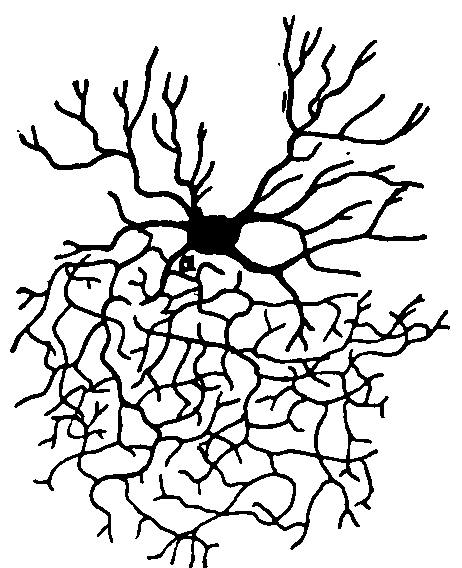
FIG. 20.—COMPLEXITY OF CELL OF THE CENTRAL NERVOUS SYSTEM. A Golgi cell after Andriezen. (Barker.)
On the other hand, when the connections with the periphery are well made, external sensations flow in on us to the exclusion of thought and then even simple sensations may be exaggerated so as to become painful. Anything that attracts our attention so much that we cannot think quietly about it, is likely to be a disturbance rather than a pleasure. Music is distinctly pleasant, yet very loud music becomes painful. The reason is that the peripheral neuron is so much disturbed that these excessive vibrations are communicated to other neurons connected with it and they are unable to occupy themselves with anything except this over-strenuous sensation. A very bright light has something of the same effect, and the same thing is true for all the other senses. A pleasant odor, if over strong, becomes disgusting. A very sweet taste is cloying. This over excitation of neurons may come from without, or may come from within. If the central neuron is so much occupied with itself, and the sensation that is flowing into it, that it is prevented from making such connections as would communicate and distribute the sensations properly, then the sensory phenomenon becomes painful, though it may not be exaggerated in the peripheral neuron.