Kitabı oku: «The Bride of the Unicorn»
Praise for USA TODAY bestselling author
KASEY MICHAELS
“[A] hilarious spoof of society wedding rituals wrapped around a sensual romance filled with crackling dialogue reminiscent of The Philadelphia Story.”
—Booklist on Everything’s Coming Up Rosie
“A cheerful, lighthearted read.”
—Publishers Weekly on Everything’s Coming Up Rosie
“Michaels continues to entertain readers with the verve of her appealing characters and their exciting predicaments.”
—Booklist on Beware of Virtuous Women
“Lively dialogue and characters make the plot’s suspense and pathos resonate.”
—Publishers Weekly on Beware of Virtuous Women
“A must-read for fans of historical romance and all who appreciate Michaels’ witty and sensuous style.”
—Booklist on The Dangerous Debutante
“Michaels is in her element in her latest historical romance, a tale filled with mystery, sexual tension, and steamy encounters, making this a gem from a true master of the genre.”
—Booklist on A Gentleman by Any Other Name
“Michaels can write everything from a lighthearted romp to a far more serious-themed romance. [Kasey] Michaels has outdone herself.”
—Romantic Times BOOKreviews, Top Pick, on A Gentleman by Any Other Name
“Nonstop action from start to finish! It seems that author Kasey Michaels does nothing halfway.”
—Huntress Reviews on A Gentleman by Any Other Name
“Michaels has done it again…. Witty dialogue peppers a plot full of delectable details exposing the foibles and follies of the age.”
—Publishers Weekly, starred review, on The Butler Did It
“Michaels demonstrates her flair for creating likable protagonists who possess chemistry, charm and a penchant for getting into trouble. In addition, her dialogue and descriptions are full of humor.”
—Publishers Weekly on This Must Be Love
“Kasey Michaels aims for the heart and never misses.”
—New York Times bestselling author Nora Roberts
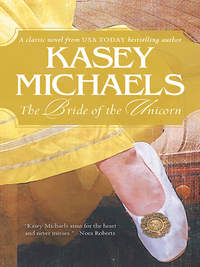
The Bride of the Unicorn
Kasey Michaels
 www.millsandboon.co.uk
The Bride of the Unicorn
CONTENTS
PROLOGUE
BOOK ONE
CHAPTER ONE
CHAPTER TWO
CHAPTER THREE
CHAPTER FOUR
CHAPTER FIVE
CHAPTER SIX
BOOK TWO
CHAPTER SEVEN
CHAPTER EIGHT
CHAPTER NINE
CHAPTER TEN
CHAPTER ELEVEN
CHAPTER TWELVE
BOOK THREE
CHAPTER THIRTEEN
CHAPTER FOURTEEN
CHAPTER FIFTEEN
CHAPTER SIXTEEN
CHAPTER SEVENTEEN
CHAPTER EIGHTEEN
CHAPTER NINETEEN
CHAPTER TWENTY
CHAPTER TWENTY-ONE
EPILOGUE
PROLOGUE
1801
Evil is easy, and has infinite forms.
Blaise Pascal
And doom’d to death, though fated not to die.
John Dryden
“CAROLINE, DO SIT STILL, CHILD. It’s enough that this coach is rocking as if John Coachman were blind as well as deaf and can not see the ruts, without your bouncing to add to the jostle.”
“Felling ill again, pet?” Henry Wilburton, seventh earl of Witham, and soon to become a father again at the advanced age of forty-six, looked adoringly at his young wife, who was still dealing with the fractious three-year-old. “We shouldn’t have stayed so long. Silly children’s party.”
Lady Gwendolyn pulled Caroline closer to her on the wide velvet seat, tucking the carriage blanket around the colorfully embroidered hem of the child’s gown and the chubby legs that refused to remain still, then hastened to reassure her husband. “Nonsense, Henry. It was a delightful evening. I’m much improved now. It was ill-advised of me to have sampled the syllabub, that’s all. At least not until I am past this third month. My reaction to sweet creams was much the same with Caroline, remember?”
“Vividly, my dear, vividly,” Lord Witham answered, stretching forward from the facing seat to pat her hand. “I suppose I will simply have to cosset you outrageously for these next months, a chore I admit I look forward to with great delight.”
“You are the very best of husbands, Henry—and I vow to hold you at your word. I rather enjoy being cosseted.” She reached across her daughter to lift the leather flap over the window and peered out into the darkness brightened only by the coach lamps riding high on either side of the driver’s box, then frowned. She hadn’t been entirely truthful with Henry about the state of her stomach. A lingering queasiness was still giving her fits, and she could barely wait to be out of the swaying coach and on solid ground again. “Are we nearly home? I believe I see raindrops on the pane.”
“Very nearly, pet. Caro, my rambunctious little lamb, why don’t you sing us the song your mama has just taught you? You remember—‘Now Is the Month of Maying.’”
“No, Papa,” Caroline answered with a mulish pout squeezing her small, perfect features. “Caro’s tired,” she said as she burrowed her blond curls against her mother’s breast.
Lady Gwendolyn chuckled at this not uncommon display of temper. “Willful little beast, isn’t she, darling? We can only hope our unborn son will have half Caroline’s starch. Boys should be—What’s that? Henry? That was a shot, I’m sure of it!”
She watched as the earl immediately cocked his head toward the window to his left, then frowned at the unmistakable report of a second pistol shot. He opened his mouth to warn her to take hold of the strap, but it was already too late for her to have time to obey him.
A heartbeat later all three occupants of the coach tumbled to the floor when John Coachman, whose deafness might not have alerted him to the noise, hauled mightily on the traces, then put on the brake as two dark-cloaked riders plunged out of the trees and directly onto the roadway in front of the horses, calling: “Stand and deliver!”
Caroline immediately began to wail, sounding not hurt but angry, as if overcome by a mighty indignation born of finding herself sprawled inelegantly on the floor, wedged partially beneath her mother’s body. Lady Gwendolyn couldn’t blame her, for she too was feeling the effects of being tossed about like so much flotsam.
“Are you all right? Good. Quiet her, Gwen,” Lord Witham ordered as he helped his wife back onto the seat, then reached into his pocket and withdrew a small purse that contained ten or twelve gold pieces. “I have enough on my plate being robbed, without Caro’s bawling to add to the chaos. Damned depressing, you know. I was told this road was clear of high-toby men. I’d give half my fortune to be able to turn my pistols on them, but it’s best not to put up a struggle. Give me your jewels, sweetheart, and I’ll step outside and deal with the wretches. We’ll be out of this and home safe and dry in a trice, I promise you.”
Lady Gwendolyn, forgetting her nausea and fatigue, fumbled to remove her diamond earrings and the matching bracelet the earl had given her just that past Christmas. She handed them over, then laid a hand on her husband’s arm. “Filthy beasts. I won’t give them my rings, Henry,” she told him firmly, “nor shall they have my beautiful pendant. There are some things that simply cannot be replaced.”
Lord Witham’s smile was eloquent with love, so much so that Lady Gwendolyn felt herself dangerously near to tears. “Anything can be replaced, my sweet,” she heard him say, “except you and our dearest Caroline. Now hurry, my pet,” he added, frowning. “We can’t have the rascals catching more than a glimpse of either you or the child. You are both too beautiful by far, and I don’t wish to tempt them.”
Tamping down what she considered to be a reasonable rise of hysteria, Lady Gwendolyn slipped the rings from her finger for the first time since her husband had placed them there on their wedding day, and laid them in his hand. She was just raising her hands to her throat to slip the pendant up and over her head when the off door was flung open and a man wearing a full face mask gruffly ordered Lord Henry to leave the coach.
“Henry, no! For the love of heaven, don’t leave us.” Lady Gwendolyn felt her bravado desert her, and she clung fiercely to his arm, but he gently shook himself free of her grip, smiled reassuringly yet again, and stepped down into the road.
Left alone with her child, who was now wide-eyed and quiet, Lady Gwendolyn willed herself not to fall to pieces. People were robbed every day on the king’s highways. The lack of safety in these enlightened times was a national disgrace, as she had heard when the subject was discussed earlier, at Sir Stephen’s party for his youngest son’s birthday.
But people weren’t just robbed of their valuables, Lady Gwendolyn remembered. Sometimes, if they resisted, they were shot—killed! A man had met that terrible fate trying to defend himself just last month, somewhere near to London. Shot dead, he had been, and scarcely a mile from his estate.
Not that anything so terrible would happen to them. After all, this wasn’t London. This was Sussex. This was a civilized countryside. And her dearest, bravest Henry was cooperating with the highwaymen.
And yet…
Lady Gwendolyn was so frightened, no matter how reassuring her husband’s smile had been, and longed to do something to help him. Her hands went to her throat and the gold chain that still hung there. It wouldn’t do to have the highwaymen discover her wearing it and believe they had tried to hide some of their valuables. She quickly removed the pendant and chain and hung it around Caroline’s throat, prudently stuffing its length inside the collar of the child’s dress. No one, not even a highwayman, would be so basely cruel, so dastardly, as to search an infant!
But it wasn’t enough. There had to be something else—some other way to help. Henry had asked her to do something, something about Caroline. Yes, yes. She remembered now. He had wanted her kept quiet and concealed; he had distinctly said so. She looked down at the child, to see that Caroline’s little chin was quivering, as if she were about to burst into tears once more.
That wouldn’t do. That wouldn’t do at all!
And then Lady Gwendolyn was struck by an inspiration that would both keep her daughter quiet and hide the pendant from the highwaymen. Henry would be so proud of her for thinking of it! Why, at the next party they attended, Henry would hold court at the dinner table, recounting their brush with highwaymen and his wife’s brilliance.
Leaning forward, she raised the velvet-covered seat her husband had just vacated and surveyed the small, roughly lined compartment usually reserved for extra luggage. “Here, my darling,” she whispered, lifting Caroline and placing her small body in the compartment. “You hide in here for now, until Papa comes back. Be very quiet, please, so you can surprise him when I tell you to come out again. Can you do that, Caroline? Can you be a big girl and play this game for Mama?”
“A game, Mama?” Caroline repeated, visibly brightening. “Caro play a game?”
“Yes, darling! What a good girl you are. You are my sweet, darling Caro. Now give Mama a kiss.”
She hugged the child, clinging to her desperately, fearfully, for a moment before motioning for Caroline to bow her head so that the seat could be lowered back into position. Then Lady Gwendolyn sat down on the seat, daintily spread out the satin skirt of her gown, took a deep breath, and dared to push aside the leather curtain and peek outside.
It was raining steadily now, a drenching downpour, but the flickering light from the coach lamps provided her with a vague, distorted view of what was transpiring in the roadway.
She saw Henry standing no more than three feet from the door to the coach, his back to her, his hands raised, as one of the highwayman held a pistol leveled at his chest.
A second robber stood nearby, and she could see her jewels glinting in one gloved hand as he aimed a pistol up at the box, at John Coachman, an old man so timid and defenseless that Lady Gwendolyn had more than once suggested to her husband that the man was getting past it. And it was true. If John had only had the ears to hear the first shots he might have sprung the horses and they would be home and dry now, as her dearest Henry had promised, instead of sitting stranded on the roadway, in the clutches of these nefarious highwaymen.
Lady Gwendolyn shuddered, her feelings of helplessness returning. What was taking so long? Surely it was almost over now. Or were they planning to search the coach anyway? But why would they do that? They already had her jewels. They already had all of Henry’s money.
She pressed her fingers against the cold pane, wishing she could touch her husband, wishing she could hear what was being said, wishing she were stronger or smarter or braver.
And then the robber holding her jewels raised his pistol slightly and fired, the flash of powder visible a heartbeat before the earsplitting report that caused her entire body to flinch uncontrollably.
She heard rather than saw John Coachman’s body tumble into the roadway, for she was already looking toward her husband, who had dropped his hands and turned toward the coach, toward her.
“Gwen!” she heard him shout as he took a single step in her direction, his beloved face pale and frightened in the dim light. “Get out the other side. Run! Run into the trees!”
Run? Take Caro and leave him? Never! And yet, even if she had wanted to obey him, she could not have done so.
She couldn’t move.
She couldn’t breathe.
All she could do was watch, horrified, paralyzed, her fingers still locked behind the windowpane, as another shot rang out and Henry was flung forward heavily, to fall against the side of the coach, then slide away from her, to the ground.
“Henry—no!” Lady Gwendolyn reached for the latch, disregarding the earl’s warning, forgetting her child, not caring for her own safety. She threw open the door her husband, her protector, had closed behind him a minute earlier—a lifetime ago.
Her hands braced on either side of the opening, she struggled with the damning reality of seeing her husband lying just below her feet, his body facedown in the mud, a dark, ominous stain spreading on the back of his jacket. “Henry. Oh, my dear God—Henry!”
She raised her head and screamed at the highwaymen, her voice high-pitched with mounting hysteria. “We gave you all our money—all our jewelry. We gave you everything! And you killed him. There was no reason, no need. Why? Why did you do this?”
The man who had discharged his second pistol into the seventh earl of Witham stripped away his dark mask, revealing wickedly grinning features as he advanced in Lady Gwendolyn’s direction. “Good evening, Gwen. Beastly weather, isn’t it?”
She stared at the man as his face was revealed in the flickering light of the coach lamps, unable to understand either his presence or his actions. She then looked down at her husband’s body and shuddered convulsively before turning uncomprehending eyes back to Lord Henry’s killer. “But why? Why?”
She continued to watch as the man—this man she knew, this man she had trusted—took another step forward and slowly pulled a third long-barreled weapon from his belt….
BOOK ONE
A QUESTION OF HONOR
October 1815
Chance is a nickname for Providence.
Sébastien R. N. Chamfort
CHAPTER ONE
We die only once, and for such a long time!
Molière
LORD JAMES BLAKELY trusted his nephew did not view the scene now unfolding for his benefit as particularly jolly. Such interludes were by right supposed to be off-putting, damn it, deadly solemn and hung heavy with foreboding. Later—once the body had grown stiff and cold—there would be ample time for Morgan Blakely to perform a jig on his grave.
If he could.
For now, however, Lord James, in his own way, and in his own good time, would dance.
He had set up the particulars for this occasion with infinite care—planned his starring role down to the last detail. The gloomy, barnlike bedchamber suited his purpose perfectly, for he knew it had never been the most advantageous stage setting for any save moribund frolic.
Lord James had long ago opted to take his physical pleasures in somewhat less inhibiting surroundings, the more baseborn his partner the better. That sort of female did not take exception when the play turned rough. At least they had never shown their distaste—not for the heavy blunt he’d paid down to indulge his appetites.
And if he’d ruined one or two of the round-heeled bitches for the business, well, what of it? Nothing lasted. Nothing lived forever.
And he should know. He could see the demons gathering now, hovering in a far corner, high against the ceiling, rubbing their clawlike hands together and licking slimy, reptilian lips; eager to snatch him up, slash out his soul, and pitch it down, down, into the very bowels of the earth.
But not yet. No. He still had time. He still had something he had to do; a last, perfect mischief that would render his damnation tolerable.
Lord James moistened his parched, fever-cracked lips and looked about the room, searching out his audience of one.
The chamber was particularly musty this October evening, its bog-water green velvet draperies shut tight, its heavy Tudor furniture hulking ponderously against the tapestry-hung walls, the wretchedly ineffectual fire in the oversized grate hissing rather than crackling.
The price of good wood could beggar a man. The smoke and sizzle of green wood might make living plaguey uncomfortable, but it was more than good enough to die by.
The world outside the drafty windows couldn’t have been any more appropriate, nature helping him with his scene-setting. It had been raining all day; a heavy, drenching, reminiscent downpour that had set all the usual damp patches on the ceiling to showing themselves to disadvantage while lending to the stale, musty air another aroma to ponder: mildew.
The only sound Lord James heard was that of rainwater splashing tinnily into a half dozen pails set at irregular intervals on the threadbare carpet—along with his own decidedly evil chuckling and intermittent coughing, as he had just completed entertaining his guest with a little tale about a liaison he’d once had with the local rat catcher’s daughter.
Vulgarity was so comforting, such a glaringly human vice in the midst of this tawdry business of dying. He, Lord James Blakely, rapidly fading but still cheerfully malevolent, would do his damnedest to make his passing as miserable for his guest as possible. He might be only a few days or hours away from being put to bed with a shovel, but was that any reason to alter by so much as a hair the habits of a lifetime?
“The rat catcher’s daughter. My congratulations, Uncle, for you are nothing if not consistent,” Morgan Blakely said now, as Lord James went off in another paroxysm of high-pitched giggles. “I have always so enjoyed your feeble attempts at humor. You really should have written them all down somewhere, for the sake of posterity, you understand. But then, you did write some things down, didn’t you, some little tidbits of information—and then forwarded them directly to France via one of the less discriminating smuggling gangs that frequent the coast.”
Lord James’s face blanched, his enjoyment decimated, and he looked furtively at his nephew. “You know about that?” he asked, his handkerchief still pressed to his mouth, a string of spittle dribbling from his chin.
Morgan spoke in a deadly sweet drawl, his distaste for his uncle maddeningly obvious in the relaxed stance of his long, leanly muscled body. “Dear me, yes,” he answered, smiling for the first time since he’d entered the bedchamber.
Lord James gritted his teeth, shaking with fury. “When? How?”
“Must I really indulge you? Oh, very well. I have known since before Waterloo, since shortly after my return from France. As for the how of it—you do remember my mission during the war, don’t you, my area of operation? Tell me, Uncle—was the money you received for selling secrets all the sweeter for the thought that the information you forwarded to Bonaparte could have meant the end of your brother’s son? I’ve occasionally wondered about that possibility—in idle moments, you understand.”
Morgan knew. Cold-hearted bastard! If only I had my pistol, I’d shoot him square between those mocking devil-black eyes, and consign him to hell before me!
But Lord James didn’t have his pistol. He was dying; defenseless in front of the man he had planned to bring low, now with more reason than simple hate to goad him. Was there no justice? No justice at all?
Lord James’s eyes slid away from his nephew’s face. He felt himself growing weaker by the moment, and still he had not begun to tell Morgan the reason he had summoned him. Instead, Morgan had taken center stage, had muddled the plot with a last-minute alteration to the script. Lord James had wondered why his contacts on the Continent had dried up three years ago—and with them nearly his sole source of income. Morgan had done it. His own nephew!
Yet why was he surprised? Shouldn’t he have known that Morgan was behind it—his maddeningly secretive nephew with the heart of stone and ice water in his veins?
Suddenly it became important to Lord James that his nephew understand the horrors he had been through, the very valid reasons for his treason. “This house took all my money, always has. Decrepit pile, the bane of every younger son! Why else do you think I agreed to work with Bonaparte? But my contact stopped asking for my help, stopped sending all that lovely money.” He tried to lift himself onto his elbows. “Because of you. All because of you!”
Morgan raised a perfectly manicured finger to stroke at one ebony eyebrow. “Ah, your contact, at the War Office. Thorndyke, wasn’t it? Yes, that was his name. George Thorndyke. He became very useful, once we were able to supply him with secrets we wished passed along—through other channels, of course. I could not have the family name involved. Having one’s own uncle hanging from a gibbet could be a tad embarrassing, you understand. I did tell you that poor Thorndyke is dead these past two months or more, didn’t I? I know you’ve been out of touch here in Sussex, dying and all.”
“Thorndyke’s dead?” Lord James narrowed his eyes as he glared at Morgan. “What did you do?”
“Uncle—how you wound me. You know I am not a man of violence. Thorndyke died suddenly. Hanged himself in his study only hours after I left him, as a matter of fact. And we’d had such a lovely visit, too. It was a most depressing funeral. You can count yourself lucky to have missed it.”
Lord James’s once large frame, now ravaged by illness, seemed to shrink even more under his nephew’s casually spoken words. It didn’t matter now. He couldn’t be hurt now, carted away for treason. Yet he had to know. “Who else? Who else knows?”
“Actually,” Morgan answered, “nobody.” He pulled over a chair and positioned it at his uncle’s bedside before sitting down. “I thought it prudent to keep your dirty linen in the cupboard.”
“Your father,” Lord James spat grudgingly, his ravaged face pinched into a condescending sneer. “Your endlessly ungrateful idiot of a father. You did it for him.”
“For my father, yes,” Morgan answered shortly. “I discovered that, at the time, I wasn’t willing to sacrifice his good name in order to exercise a paltry justice on you. But that is neither here nor there now, as your sadly wasted body has saved me from suffering through another interview such as the one I had with Thorndyke—just to tie up all the loose ends now that the war is over, you understand. Dearest Uncle James—and I trust I have deduced correctly: that is a death rattle I hear in your throat, isn’t it?”
Lord James looked at his nephew, seeing the dangerous facade the world saw, the darkly handsome, impeccably dressed gentleman of fashion whose sartorial splendor could never quite disguise the fact that Morgan Blakely could be a very, very dangerous man.
“I’ve always hated you, Morgan. If it weren’t for you, I would have inherited all my brother’s wealth. I had so counted on that. Instead, all my plans have come to naught. And now I am dying, while my holy brother still lives, mumbling his prayers on his makeshift altar while you live high on the Blakely money. There is no justice in this world.”
“I see no need to make my father any major part of this discussion.”
Lord James’s temper flared. “Of course you don’t! I thought I had summoned you—but you were coming anyway, weren’t you? To be sure of my death? And you’re here to watch me die, not to discuss my hypocrite brother. My brother! Loves his God more as each new dawn brings him closer to his own day of reckoning. Funny. Don’t remember Willy spouting scripture when we were young and tumbling everything in sight. Even shared a couple of ’em.”
“That will be enough.”
Lord James ignored his nephew’s warning and continued: “Hung like a stallion, your sainted father, just like you. Hypocrite! That’s what our Willy is. You don’t like his praying and penance any better than I, do you, nevvy? Serves no purpose, does it, when we both know there is no God. You and me, we know. Only the devil, nevvy, only the devil. Believe it, nevvy. There is a devil. It’s him or nothing. He’s sent some of his fellows on ahead to welcome me. See ’em? Over there—hanging from the ceiling like bloody bats. The sight would set Willy straight on his knees for sure, bargaining for angels.”
A muscle twitched spasmodically in Morgan’s cheek. “Your mind is going, Uncle, otherwise I would have to take you to task for your obscenity. However, I see no crushing need to remain here and listen to your ramblings. If you wanted me here for some purpose other than to allow me the faint titillation of watching you shuffle off this mortal coil I suggest you organize your thoughts and get on with it.”
“Ah, yes. Indeed, let us return to the reason for your presence, and hang this distasteful business about spies and Thorndyke and your so damnable, so patient revenges. Poor nevvy—this is one death scene you cannot manipulate to your own designs. Morgan Blakely is not omnipotent this night!”
Morgan inclined his head, not in acquiescence but in obvious condescension.
Nevertheless, the smile was back on Lord James’s face, not that it was an improvement, for years of dissipation had taken a permanent toll even before this last illness struck him down. But all was not lost. His darts had begun to hit home. His adversary was attempting to leave the field—although not before telling him about Thorndyke, not before indulging himself with at least one surgically precise parting shot. Well, he had taken that shot, and now it was time to get to the real crux of this bizarre meeting.
“All in good time, nevvy. You had me worried there for a moment, admitting that you had allowed sentiment to keep you from turning me over to the government, but you’re still the same, all right! Cold to the bone. No wonder we hate each other so—we’re two peas in a pod. Killed your share and more, haven’t you? And liked it, too, didn’t you, boy? The devil’s deep in you, just as he is in me.”
His smile faded and he became intense, for he knew he was about to close in for the kill. “But you’ve got bits of your mother stuck in you, too. A soft side, a silly, worthless part of you that actually cares. That’s why I sent for you. You’re vulnerable, and I like that. I can use that. Listen closely, nevvy. You think you know me, but you don’t. Selling secrets to Boney was child’s play, something to do to pass the time. How do you think I’ve survived all these years? I ran through my wife’s money in less time than it took to bury her along with the puling brat she’d died trying to birth—good riddance to bad rubbish—and I had to poke about, looking for another, more reliable source of income.”
Morgan held out his left hand and inspected his fingertips, frowning over a small cut at the tip of his index finger. “How utterly fascinating, Uncle. I am, of course, hanging breathless on your every word,” he drawled with patently deliberate nonchalance.
“Damned impertinent bastard!” Lord James accused hotly, struggling to rise from his pillows. “Never have I met your like! Never!”
“No, no,” Morgan corrected, his tone insultingly amiable. “I’m your image, Uncle, remember? ‘Cold to the bone,’ as I believe you said. Oh, dear. Is that the gong calling me to dinner? What a fortunate escape. Never fear that I shall find my meal inadequate. I took the precaution of bringing a basket with me from Clayhill.” He rose slowly, pushing the chair back to its former position, the cool precision of his movements galling Lord James. “If you should chance to expire while I’m dining, please consider this our last tender farewell. Good evening, Uncle.”
Morgan was nearly at the door before Lord James spoke again, for it took him that long to regain his breath after his last outburst. He had to say this now—say what he wanted to say, what had to be said—or else Morgan would be gone for good, and James would have died for nothing. If he could not leave behind some festering evidence of his malevolence, the only legacy of a childless, bitter man, it would be as if he had never lived….
“That’s it. Run away. No one can capture the Unicorn!” he called out, his voice loud in the quiet room. He lay back against the pillows, listening to the drops of rainwater splash into the pan nearest the bed, waiting for Morgan’s response, but not really expecting any.
“I’ve always thought it the height of irony that you were the Unicorn,” he continued when he felt enough time had elapsed to build the suspense he desired. “England’s greatest spy. My nemesis. And so modest about it. If I had not broken the codes that made up the messages I delivered to the smugglers, I might never have guessed. Even Wellington never figured out which was which, did he? Pompous, posturing dolt! But I recognized you immediately, recognized myself as I could have been—would have been if Saint Willy hadn’t been born first. So, yes. Yes! I did know my treason could mean the death of you. It was part of the joy of the moment! Jeremy’s death was no more than an accident of good fortune. But the war is over. Napoleon is banished. And still you cling to your secrecy, still you stand quietly and allow another to claim all your glory.”
Lord James paused for a moment, then smiled. “I hold the key to that man’s destruction, nevvy,” he continued quietly, liking the hint of menace in his voice. “Would you like it? What would you and your patient revenge do with the perfect tool for that man’s destruction? Shall that key be my parting gift to you, your legacy?” He lifted one skeletal hand, indicating the bedchamber and all of the house. “Along with this decrepit pile, of course.”
“You’re lying,” Morgan said, his hand on the door latch, his back still turned toward the bed. “You have nothing I want. You were a most deplorable traitor, Uncle, barely worth the effort it took to ferret you out. You say you knew my identity, yet you seemed surprised to learn that I, in turn, had caught you out. But I will admit your dramatics are interesting, if a trifle lacking in style—especially that little bit about Jeremy. Perhaps you should have devoted yourself instead to penny press fiction.”
His nephew didn’t believe him! He was going to leave!
Sudden panic lent Lord James new strength. “I’m not lying, damn you! Think, nevvy. As the twig is bent! Willy can tell you. I was always what I am now, capable of anything for the sake of a few gold pieces. Trading in secrets was my only mistake, a miscalculation of old age and greed, but not my only source of income. I was better when I was younger, sharper.”
“Hence this splendor in which you live, Uncle,” Morgan taunted, spreading his hands as if to encompass the faded ugliness of the bedchamber before opening the door. “I’ll ask one of the servants to come sit with you. Obviously you are now slipping toward delirium.”
“No! I’m telling the truth. I swear it.” James clawed his way to the side of the bed, the better to see his nephew, the better to allow his nephew to see him. “You cannot know all the things I’ve done, the vile, dastardly crimes I’ve committed.”
“Cannot and do not care to know.”
Lord James sneered. “Oh, nevvy, how far you have to fall from that perfidious pinnacle of indifference you perch on. You do care. You will care, because I hold all the cards now, all the answers to your schemes that you still do not admit to, even to yourself. You want revenge, nevvy. Damnation, man, you may even deserve it!”
“Perhaps you’re right. But it will be in my own time, Uncle, and in my own way.”
“Of course. I should have realized that you wouldn’t wish my help, even if I am trying, in this feeble way, to atone for any indirect connection I might have had with dear Jeremy’s death. I understand, nevvy.” Lord James began to pick at the coverlet, his eyes averted from Morgan. “But then, there is still the matter of the child.”
Lord James held his breath as Morgan let go of the latch and turned, his dark eyes narrowed as he stared straight into his uncle’s grinning face. “Child? What child?”
“What? Did you say something, nevvy? I cannot hear you very well, and the room grows dim. Come closer, nevvy. Come close so that I can give you my last confession.”
He heard Morgan’s footsteps and smiled into the frayed collar of his nightshirt. He counted to ten, slowly, then began to speak once more. “Once upon a time,” he began, then chuckled at his own wit, the laughter turning into a wet cough that left bits of blood on his already soiled handkerchief.
“Once upon a time, nevvy,” he continued, “there was a man like me, a man who found himself where he should not be, while another man, a lesser man, usurped his rightful place. We met, this man and I, no more than once or twice, and we bemoaned our fate together over several bottles of wine. Perhaps more than several bottles.”
“Go on,” Morgan urged, pulling the chair back over beside the bed. “Continue your fairy tale.”
Lord James shot his nephew a searing look, reveling in the lack of necessity to hood his dislike for the younger man. “I have every intention of continuing,” he said shortly. “We chatted idly, without real purpose—until the day the man’s circumstances changed and it became imperative for him to take steps to protect himself. He tried to enlist my help, but I refused. Why should I do for him what I might have done for myself?” He shook his head. “I only wonder why I never did it for myself when I was younger…when we all were younger. I only wonder….”
Morgan stood. “And I can only wonder, Uncle, why I am allowing a perfectly good roasted chicken to continue to lie downstairs untasted in my dinner basket.”
“No! Don’t go! You must hear the rest. I did not help the man, but I know what he did.” Lord James lowered his voice conspiratorially. “I followed after and watched—then fired my pistol to scare them off before they’d finished. He was even so stupid as to lift his mask and show his face, to crow about his success, so that he knew I saw him plain. That was a great help to me, almost as great a help as the child. After all, nevvy, what good is it to know something if you cannot turn a profit from it, hmm?”
“Uncle, I haven’t the faintest notion what you’re talking about.”
“Of course you don’t,” Lord James agreed, feeling very satisfied with himself. “As one of those Greeks scribbled so long ago, nevvy, ‘The fox knows many things, but the hedgehog knows one great thing.’ You look surprised. Did you think I was a total barbarian? I know something of the classics. You, nevvy, are like the fox, but I am the hedgehog. Blackmail, which depends on knowing a single great thing, would never occur to you. But it occurred to me.”
Lord James rubbed his palms together, gleefully remembering the long-ago night of his greatest brilliance. He could see it as clearly as he could see his nephew’s strained features. Maybe more clearly. “I waited until after the shot that silenced the woman before I fired my own pistol, frightening them off. And then I waited longer still, until I was sure they had gone, before riding in. I found the child on the ground—muddy, her mother’s blood mixing with the mud and rainwater on her face and little dress. The father was half sunk in the mud—back shot! But I digress. Bit me, the little hellion did, when I pulled her away from the bodies just as her mother breathed her last. I could have killed the child then—snapped her neck like a dried goose bone—but I didn’t. I needed her, you see.”
“The child?” Morgan’s voice was hushed, as if he wished to ask the question but did not want to interrupt. Which was as it should have been. It was time the boy paid his uncle a little respect.
“Yes, of course, the child. I put her in a safe place. Not a very nice place, I suppose, but you must remember—I could just as easily have disposed of her. Suddenly I had all the money I needed, although the fool never knew it was his occasional drinking companion who was taking a share of his new wealth. All the money I could ever want, delivered to a safe address at the beginning of each new quarter. Such a gentlemanly, civilized arrangement—for a time.”
He stopped his story once more, to cough, and to contemplate the injustices of his life.
“The payments stopped a few years ago,” he continued swiftly, not caring for this part of the story, “when the man demanded more proof and ordered me to produce her. I couldn’t, for they told me she had reached her teens and left the orphanage where I had so gladly deposited her that first night. That was careless of me, wasn’t it, nevvy? Misplacing the brat like that, if in truth she had left the orphanage. Luckily I already had Thorndyke—or unluckily, depending upon how you consider the thing. But this is the chit’s house by rights, not yours as is stated in my will, considering that the blunt I got from blackmailing her parents’ killer is what kept this place going for so long. This hulking money-eater and several grand estates scattered all over England that were deeded in her name by her father—all are hers. She’s a rich orphan, this missing heiress I spared in my generosity.”
“You have proof of this dastardly crime, I imagine?”
“Proof? Imbecile! You demand proof from a dying man?” Lord James could not hide his elation, sure all his hooks had sunk home with deadly accuracy. Now, at last, his little play was falling out as he had planned. It almost made his dying worthwhile, to be able to leave the noble Morgan behind to ruin his life trying desperately to right his uncle’s wrong.
Now it was time to reel out the line a few feet before hauling his newly caught fish in once more. “Never mind, Morgan. I shouldn’t have mentioned it,” he said, pressing back against the pillows. “Obviously you’re not interested in my heartfelt confession. Why would you want to help me atone, in this the house of my death?”
Morgan rose from the chair, his cool composure discarded, his eyes flashing fire. Grabbing hold of his uncle’s nightshirt with both hands, he half dragged him up from the bed so that Lord James had to turn his head to hide a triumphant smile. “Enough of this nonsense! This is no game we’re playing, not anymore. No more dancing around the facts, Uncle. I need to hear you say the name. I need to hear the proof from your own lips. Damn you, man, answer me!”
Now, Lord James thought. Now is the time to take my exit—now, while he believes me. He began to cough, racking coughs that had him spitting small specks of blood that tasted of rust and maybe even the dirt that would soon cover his mortal shell. There were two Morgans hovering above him, menacing him with their flashing dark eyes. Defiance flashed in Lord James’s own eyes. “You—you’re the smart one, nevvy. You already know the names!”
Morgan’s desire to kill was apparent, but Lord James knew his nephew’s need for information would take priority, leashing his bloodlust, at least for the moment. “The child? Is she still alive? Surely you must know something. Where could she have gone?”
“A whorehouse, if she was smart,” Lord James answered, feebly trying to push his nephew’s hands away. “Chopping turnips in someone’s kitchen if she was stupid. Unless she’s dead. You know the way of orphanages. It’s a hard life. Even harder than mine has been. Maybe that’s why I lost touch. Or maybe I was lied to. Maybe the little brat is feeding worms. What were you hoping for, Unicorn—to lay your head in the lap of a virgin? I’d like that too, for you’d have to die to do it.”
Morgan released his grip on the nightshirt, which allowed James to slump back against the pillows, gasping for breath. “You’re lying, old man. Your story is full of holes. I don’t believe a word you’re saying. You’ve just taken bits of well-known truth and conveniently twisted them around for your own evil motives.”
Was he lying? Lord James couldn’t remember. He had told so many lies. Was this the truth? Yes. Yes, of course it was the truth. He hadn’t made this story up, designed it from bits of truth woven together with clever lies, to fashion a tapestry of revenge against his brother’s son. Had he? Oh, Christ—had he?
But wait. He remembered now. He had proof!
Lord James dragged himself to the edge of the bed, knocking over a candlestick as he groped on the nightstand for the proof that would seal his nephew’s fate, the one piece of evidence that would start him on what Lord James sincerely hoped would prove to be the path to his destruction. The path to destruction for all of them—and the revenge Lord James longed to see, if only from the other side of the grave.
His fingers closed over the pendant, and he fell back against the pillows, holding it out so that the long gold chain swung free. “Here! Here is your proof! I found it around the child’s throat. Take it, nevvy. And then think, damn you. Think!”
Morgan ripped the pendant from his uncle’s hand and held it up so that its gold chain twinkled dully in the candlelight. “It can’t be. I won’t believe it. You could have commissioned a copy. It would be just like you, for you’ve never done one genuine thing in your life. Uncle. Uncle? Do you hear me?”
Lord James was scarcely able to speak. Everything was suddenly moving too fast. Morgan was confusing him. He had wanted to enjoy this moment, draw it out, savor Morgan’s frustration, then leave him with the Gordian knot of the puzzle he had set him. But now he could barely think clearly, and his ears were full of the sound of rushing water.
Fear invaded his senses, washing away the elation, the thirst for revenge. This was real. His death—so long contemplated but never really believed in, never before comprehended for what it represented—was upon him. The pain in his chest was suffocating, pushing him down into a yawning blackness, a total nothingness that terrified him by its absence of recognizable reality.
This was all wrong. He had been wrong. Nothing was playing out as it should. The play was not the thing. Revenge wasn’t sweet. Not at this cost. Never at such a cost. He wanted to live. Longer. A second more. A minute more. Forever. Why? Why should he die?
Oh, God, but he was frightened. More frightened than he had ever been in his life. God? Why had he thought of God? Why had that well-hated name popped into his head? Could there really be a God? Could there be an alternative to nothingness, a substitute for hell? No wonder they had cried, those people he’d killed over the years. It was the terror that had made them cry! The terror of the unknown, the fear of the God he had sworn did not exist.
It was all so real now.
He had been wrong. His revenge against his brother and Morgan wasn’t worth this agony. He didn’t want to go to hell. If there was a hell there had to be a heaven. Why hadn’t he seen that? Morgan was the smart one. Why hadn’t he seen that?
Lord James didn’t want to spend the rest of eternity burning, burning, burning….
Morgan had to find the girl for him! He had to seek redemption for his poor uncle’s most terrible sin, save him from the demons. He’d tell Morgan everything he wanted to hear, tell him now. Tell him the chit’s name; tell him everything he wanted to know; hold nothing back. Confession. He’d give his genuine confession. Confession was good for the soul.
He grabbed at his nephew’s sleeve, trying to anchor himself to life for just a while longer. “Morgan? Could we be wrong? Is there a God? Oh, what if Willy’s right? What if there is a God? What if there is? What if I’m telling the truth? Am I lying? I can’t remember anymore. Help me, Morgan! I can’t remember the truth!”
“Not now, old man,” Morgan said, his voice tight. “Truth or lie, you have to tell me the rest of it, and then I’ll judge for myself.”
“Judge? We’ll all be judged! Save me, Morgan! Save my immortal soul! You already know the name. Check—check the orphanage in Glynde,” Lord James rasped, vainly trying to pull Morgan closer. “In Glynde,” he repeated, his eyes growing wider and wider as he stared up at the ceiling in horror. The demons had migrated, to circle just above him. They were grinning in avid expectation, their long, pointed fangs glinting in the candlelight, the unearthly whoop-whoop-whoop of their black bat wings sucking the air from his lungs.
Lord James heard a sound coming to him as if from a distance. What was it? Oh, yes. Morgan. His dear nevvy was yelling, still asking for proof, his carefully constructed facade of civilization stripped away just as Lord James had foreseen it—yet he could not take pleasure in the sight. For one of the demons was on his chest now, resting on its bony, emaciated haunches, its birdlike legs folded at the knee as it dug razor-sharp talons into him, letting all the remaining air bubble out his mouth, to be followed by a rising river of blood.
“You know. You…must only remember,” Lord James whispered, his voice clogged with blood, with mounting terror. “The murders…our neighbors…the missing child…the searching…”
The play couldn’t be over; the finale had to be rewritten. Yet the curtain had come crashing down…too soon. Too soon. He couldn’t do anything right, even die.
“No one ever told me! I didn’t know!” Lord James shrieked, his voice suddenly strong in his last agony. He felt himself beginning to choke, drowning in the hot liquid that rushed from his ears, from the tin pots—from everywhere in the universe—to pour into his lungs. He clutched at Morgan with a strength born of impossible panic, tearing at the fine white linen of his shirtfront. It had to be the truth. There was a girl—there was! Wasn’t there? “Find her, nevvy—or I’m damned…or we’re both forever damned! Willy…brother…pray for me!”
CHAPTER TWO
Men use thought only to justify their wrongdoings,
and speech only to conceal their thoughts.
Voltaire
THE SUN SHONE BRIGHT as Morgan Blakely and his father, William, duke of Glynde, walked away from the family mausoleum at The Acres, the duke’s ancestral Sussex home. Each man was dressed in funereal black with an ebony satin armband, and each carried his hat while following behind the young minister who had conducted a mercifully short ceremony in the village church.
The duke appeared more than usually frail and wiped at his eyes with a large white handkerchief already banded on all four sides with a thin ribbon of black satin, as if his wardrobe was perpetually prepared for mourning—which, in a way, Morgan realized, it probably was. His father had buried his wife, both his sisters, one of his sons—and now his twin, James—in somewhat less than fifteen years.
Morgan though it must be a depressing way to live, surrounded by all that dying.
He sighed silently and glanced back up the hill at the impressive Italian marble structure that held all his relatives save the one at his side. How long would it be before he took this walk alone, leaving his father’s mortal remains locked behind those airless walls of veined pink stone?
Would his father forgive him—truly forgive him—before he died?
Would he, Morgan, forgive himself? Could he live with himself? Why did he live at all, with Jeremy dead? Were thoughts of revenge enough to keep a man alive? They hadn’t been enough for Uncle James.
But his father was speaking, and for once his tone held no censure, no pity. “It was quite a lovely service, wasn’t it? I had never supposed that the Reverend Mr. Sampson could discover so many pleasant things to say about our dearest brother James.”
“Indeed. I find it remarkable that anyone could summon up a single kind thing to say about the man, Father. And hauling his carcass here to The Acres for interment in the mausoleum is decidedly unnerving, as we have only succeeded in walling him up. Frankly, I would have much preferred to snuggle the bastard twelve or more feet belowground with a boulder or two piled atop his chest, on the off chance he should try to rise again.”
“Morgan! Keep a civil tongue in your head, if you please. We have just buried a man. My brother. My twin. The man with whom I shared our mother’s womb. Had it not been for the vagaries of the birth order, we might well have buried the duke this day.”
“Now, there’s an intriguing thought,” Morgan responded, putting on his hat even as he nodded his goodbye to the minister, who had earlier begged release from any refreshments being served to the mourners after the interment, citing the necessity of attending at the bedside of an ailing villager. “I can only wonder how The Acres would have fared once Uncle James reached his majority and transformed the place into a brothel.”
The duke looked at his son with rheumy blue eyes that had faded over the course of his three and sixty years, like curtains hung too long in the sun. “I will pray for you, Morgan,” he said, his voice tinged with sadness liberally mixed with resignation.
Morgan bristled, then swallowed down any hint of anger at his father’s words. Anger did no good in battle or when trying to reason with the unreasonable. That did not mean that Morgan Blakely, Marquis of Clayton, was not conversant with the tumultuous emotion. He simply chose to ignore it. “You do that, Father,” he said, deliberately stripping the black satin ribbon from his sleeve and stuffing it in his pocket. “You pray for me. Pray for Uncle James. Pray for Jeremy.”
“Do not make a mockery of your brother’s immortal soul!” The duke’s thin cheeks flushed with unhealthy color. Or righteous indignation. Or possibly even religious fervor. Morgan could never be sure. “Not when you were partially the instrument of his death.”
Morgan took one step backward, stung as sharply as he would have been if his father had just slapped his face. “You never tire of that song, do you, Father?” he asked after a moment. “Do you sing it every morning as you wake? Does its accusatory melody lull you to a dreamless sleep at night?”
“Now you’re being impertinent, Morgan,” The duke countered quickly, laying a hand on his son’s forearm. “I have forgiven you. In my heart I have forgiven you. My God demands it of me.”
“Really?” Morgan smoothly removed his arm from his father’s grasp even as he allowed his full lips to curve into an amused sneer. “Your God. Wasn’t that exceedingly accommodating of him? Promise me, Father, when next you speak with him—and I am quite convinced that you will—thank him for me. And pray don’t insult the fellow by reminding him of how damnably cold his charitable forgiveness is to us poor sinners. Ah, here is one of the grooms with your pony cart, Father. How thoughtful of the boy. I shall forgo a ride back to The Acres myself, as I wish to be alone a while longer—to mourn Uncle James, of course. I wouldn’t wish to distress you with my tears.”
The duke shook his head and sighed deeply, as if to acknowledge the impossibility of finding a way to communicate with his son. “If you wish it, Morgan. I will see you at the dinner table, I hope. And in time to help me lend a blessing to the meal, please. I do not ask much of you while you are at The Acres, but I must ask that you follow my wishes in such matters. Coming to table with a glass of Burgundy in your hand is offensive.”
Morgan assisted his father up onto the seat of the pony cart, then stepped back and bowed to the man. “I would rather cut off my own arm than offend you, sir,” he drawled softly, then motioned for the groom to drive on, leaving him behind to contemplate his uncle’s passing.
And to wonder why the sun was shining while Jeremy, and all of Jeremy’s older brother’s hopes for happiness, lay moldering in that pink marble mausoleum on the top of the hill.
THE SMALL ORPHANAGE at Glynde, a foundling home of indeterminate age and antiquated drains, was situated just outside the village proper, sunk in a small cutout of land and hidden behind a stout wall and a stand of trees. Good ladies and gentlemen riding in their carriages, farmers on their carts, and even people on foot could pass by the orphanage without fear of having their sensibilities offended by the sight of too-thin legs, too-large eyes, or the many tiny graves that lined a plot at the bottom of the kitchen garden.
The world, Morgan knew, was a hard, unforgiving place for an orphan in this land where wealth was too rare, where poverty and hunger already hung too close to home to be reminded of it daily, and where sympathy was reserved for the alms box at Christmas and Eastertide.
For all his newly discovered religion, even the very Christian duke of Glynde had not as yet extended his largesse past repairing the steeple of the Reverend Mr. Sampson’s church, to bestow his bounty on the unwanted, unloved children whose very existence cried out for compassion.
He should bring the duke here, Morgan thought. He should shake him out of his self-imposed religious limbo and back to the world of the living. Hell and damnation, just the smell emanating from the place should be enough to do that.
Or perhaps, like the rest of the county, his father simply hadn’t looked, hadn’t chosen to see past the walls and the trees.
Morgan knew he hadn’t seen past them either, except for a few times when, as a young, adventurous child, he had talked Jeremy into climbing over the high walls of the orphanage to steal apples from the single tree within the packed-dirt courtyard.
It wasn’t that there were not ample trees at The Acres or that the one within the orphanage wall was of a tastier variety. It was the thrill of the adventure itself that had intrigued Morgan. Just as the risk of the thing had led him to ride his father’s best hunter bareback at midnight, to steal away to watch a hanging in the village square, and to visit the local barmaid at the Spotted Pony at the tender age of fourteen.
Always dragging Jeremy, who was three years younger, along with him, of course, although he had allowed his brother to remain outside the first night he visited the Spotted Pony. There were limits, even to the debaucheries of headstrong youth.
No, he wouldn’t bring his father here. He couldn’t do that, any more than he could confide in the man about Uncle James’s unbelievable deathbed confession. William Blakely’s religious fervor—now doubled, thanks to his grief over Jeremy’s death—could not be corrupted by orphans and tales of foul murder.
After all, if the duke lost his devotion to religion, his only talisman in a world gone mad, there would be nothing left for him to live for. and Morgan would soon after be forced to make that solitary journey back from the mausoleum.
Now, unfashionably early in the morning the day after Lord James’s funeral, as the marquis alighted from his mount at the gates to the orphanage, gates that hung drunkenly from leather straps stretched long past their best effectiveness, he dismissed depressing thoughts of his father and of the lack of one single person in the world to whom he could confide his deepest hopes and thoughts. Instead, Morgan wondered silently if he had ever stolen food from the mouths of any of the foundlings, who must have viewed a ripe red apple as a prize beyond price.
But he didn’t wonder for long. There was no sense in condemning himself for the follies of his misspent youth, for he had long since outgrown them for the follies he had indulged himself in since becoming—in the eyes of the world, at least—a man grown.
He approached the gates purposefully, refusing to regard what he was doing as anything more than hunting mares’ nests because of a dying man’s insane blatherings, and pulled on the rope that set a bell to sounding tinnily on the other side of the wall. And then he waited, slowly realizing that, although there had to be at least thirty orphans in residence, he had not heard a single sound since the bell stopped ringing. Not a laugh. Not a cry. Nothing. He might as well have been standing outside a graveyard.
“Well, lookee here. Glory be ta God, and ain’t ye a fine-lookin’ creature ta see so early in the mornin’? And rigged out just loik a Lunnon gennelmun with it all, ain’t ye?”
Morgan turned about slowly to see a small, slight woman well past her youth—and most definitely years beyond any lingering hint of beauty she might ever have possessed—standing just behind him, a large bundle of freshly cut, still damp rushes tucked beneath her left arm.
He removed his curly-brimmed beaver and swept the woman an elegant leg, the distasteful aroma of unwashed female flesh assaulting his nostrils. “Good day, madam,” he said politely as he straightened, suppressing an urge to take out his scented handkerchief and press it to his nostrils. “Allow me to introduce myself. I am the Marquis of Clayton, here to see the person in charge of this charming institution.”
The small woman cackled—like an ancient hen with a sore throat, Morgan thought—then smiled, exposing her sad lack of teeth. She had some, for certain, but they were stuck into her gums at irregular intervals, as if she had stood at some distance while Mother Nature tossed them at her one by one, and she’d had to open her mouth to catch them as best she could.
“Mrs. Rivers? And what would ye be wantin’ with the likes of her, boyo? Drunk as a wheelbarrow the besom is, and has been ever since the quarter’s funds showed up here a fortnight ago, don’t ye know. Bring yerself back next month, when she’s murdered all the gin and can see ye straight. She’s always been one fer a well-turned leg.”
“I’m afraid my business can’t wait that long,” Morgan said as the woman moved to brush past him as if he—and his impressive title—didn’t exist. She was the rudest individual he had ever met—and yet she intrigued him. She had a look of cunning intelligence about her, well hidden by the grime on her face, but still noticeable.
He decided to give it another try. He’d use the name his uncle had not given him, a name he already knew. “I’ve come with a mission—to locate a child, a young lady by now, I suppose. Her name is Caroline. Blond hair, or at least it was when she was little. She would be about eighteen.”
The woman stopped abruptly, looking back at him slyly across one bony shoulder. “And is that a fact, boyo? And what, I’m askin’, would a fine upstandin’ gentrymort like yerself be doin’ pokin’ about for Caroline? Plenty of willin’ bodies at the Spotted Pony—iffen ye don’t mind a dose of the clap. Go there, why don’t ye? I’m past such tumblin’s now, even with a pretty un like yerself.”
Until the woman spoke the name aloud as if familiar with it, Morgan had been willing to believe that his uncle’s story was just as he had presented it—a fairy tale meant to send his nephew off to chase his own tail. Until this very moment he had refused to believe there was a grain of truth in James Blakely’s words, or a single reason to hope that he, Morgan Blakely, had at last found a fitting instrument of revenge against his enemy.
“Surely you jest. You are the very picture of feminine beauty. What’s your name, madam?” he asked now, extracting a single gold piece from his pocket and offering it to her.
Ücretsiz ön izlemeyi tamamladınız.