Kitabı oku: «A Time of Exile»
Voyager
KATHARINE KERR
A Time of Exile
A Novel of the Westlands

COPYRIGHT
Voyager
An imprint of HarperCollinsPublishers
1 London Bridge Street
London SE1 9GF
www.harpercollins.co.uk
First published in Great Britain by GraftonBooks 1991
Copyright © Katharine Kerr 1991
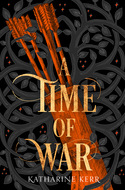
Cover design and illustration by Micaela Alcaino © HarperCollinsPublishers Ltd 2019
Katharine Kerr asserts the moral right to be identified as the author of this work
A catalogue copy of this book is available from the British Library.
This novel is entirely a work of fiction. The names, characters and incidents portrayed in it are the work of the author’s imagination. Any resemblance to actual persons, living or dead, events or localities is entirely coincidental.
All rights reserved under International and Pan–American Copyright Conventions. By payment of the required fees, you have been granted the nonexclusive, nontransferable right to access and read the text of this e-book on-screen. No part of this text may be reproduced, transmitted, downloaded, decompiled, reverse-engineered, or stored in or introduced into any information storage and retrieval system, in any form or by any means, whether electronic or mechanical, now known or hereafter invented, without the express written permission of HarperCollins e-books.
HarperCollinsPublishers has made every reasonable effort to ensure that any picture content and written content in this ebook has been included or removed in accordance with the contractual and technological constraints in operation at the time of publication.
Source ISBN: 9780586207888
Ebook Edition © AUGUST 2014 ISBN: 9780007400980
Version: 2019–10–08
MAP

DEDICATION
tibi, Dea, nominis pro gloria tuae
CONTENTS
Cover
Title Page
Copyright
Map
Dedication
Prologue: The Eldidd Border 1096
Part One: Deverry and Eldidd 718
One
Two
Part Two: The Elven Border 719–915
Part Three: Eldidd 918
One
Two
Three
Epilogue: The Elven Border Summer, 1096
Keep Reading
Appendices
Glossary
About the Author
Other Books By
About the Publisher
PROLOGUE
The Eldidd Border 1096
‘As thrifty as a dwarf’ is a common catch-phrase, and one that the Mountain People take for a compliment. Although they see no reason to waste anything, whether it’s a scrap of cloth or the heel of a loaf, they keep a particularly good watch over their gemstones and metals, though they never tell anyone outside their kin and clan just how they do it. Otho, the silver daggers’ smith down in Dun Mannannan, was no different from any other dwarven craftsman, unless he was perhaps more cautious than most. His usual customer was some hotheaded young lad who’d dishonoured himself badly enough to be forced to join the silver daggers, and you have to admit that a wandering swordsman who fights only for coin, not honour, isn’t the sort you can truly trust with either dwarven silver or magical secrets.
During his long years among humans in the kingdom of Deverry, Otho taught a few other smiths how to smelt the rare alloy for the daggers, an extremely complicated process with a number of peculiar steps, such as words to be chanted and hand gestures to be made just so. Otho would always refuse to answer questions, saying only that if his students wanted the formula to come out right they could follow his orders, and if they didn’t, they could get out of his forge right then and spare everyone trouble. All the apprentices shut their mouths and stayed; they were bright enough to realize that they were being taught magic of some sort, even if they weren’t being told what the spells accomplished. Once they opened shops of their own, they went on repeating Otho’s procedures in the exact way they’d been taught, so that every dagger made of dwarven silver in Deverry carried two kinds of dweomer.
One spell Otho would acknowledge, especially to someone that he liked and trusted; the other he would have hid from his own brother. The first produced in the metal itself an antipathy to the auric vibrations of the elven race, so that the dagger glowed brightly the moment an elf came within a few feet of it. The other, the secret spell, was its necessary opposite, producing an affinity, in this case to the dagger’s true owner, so that if lost or stolen, sooner or later the magical currents of the universe would float that dagger home. The thing was, by ‘true owner’ Otho meant himself, which meant that any lost dagger would eventually come home to him, no matter who had actually made it or how much its interim owner had paid for it. Otho justified all of this by thinking of the purchase price as mere rent, a trifling detail that he never mentioned to his customers.
Once and only once had Otho produced an exception, and that was by accident. Round about 1044, he made a dagger for Cullyn of Cerrmor, one of the few human beings he truly admired. In the course of things, that blade passed to Rhodry Maelwaedd, a young lord who was forced by political exile to join the silver daggers. As soon as Rhodry laid his hand on the dagger, it was obvious that his blood was a little rarer than merely noble – the blade blazed up and accused him of being half an elf at least. Grudgingly, and only as a favour for Cullyn of Cerrmor’s daughter, Otho took off the denouncing spell. What Otho didn’t realize, since his dweomer was a thing of rote memory rather than real understanding, was that he’d weakened the complementary magic as well. The dagger now saw Rhodry, not the dwarf, as its one true owner.
A silver dagger’s life is never easy, and Rhodry’s time on the long road was worse than most, and by one thing and another he managed to lose the blade good and proper, far away in the Bardekian archipelago across the Southern Sea, round about the year 1064. At the same time as Rhodry was killing the man who’d stolen it. the dagger itself fetched up in the marketplace of a little mountain town called Ganjalo, where it stayed for several years, stubbornly unsold. The merchant couldn’t understand – here was this beautiful and exotic item, reasonably priced, that no one ever seemed to want to buy. Finally it did catch the eye of an itinerant tinker, who knew of a rich man who collected unusual knives of all sorts. Since this rich man lived in a sea-port, the dagger allowed itself to be installed in the collection. Again, some years passed, until the collector died and his sons divided up the various blades. The youngest, who happened to be a ship’s captain, felt drawn to the dagger for some irrational reason and traded another brother an entire set of pearl-handled fish knives for it. The next time this captain went to sea, the dagger went with him.
But not to Deverry. The captain sailed back and forth from Bardek proper to the off-lying islands of Orystinna, a lucrative run, and he saw no reason to consider making the dangerous crossing to the distant barbarian kingdoms. After some years of this futile east–west travel, the dagger changed owners. While gambling, the captain had an inexplicable run of bad luck and ended up handing the dagger over to a friend to pay off his debt. The friend took it to a northern sea-port and on a sudden whim sold it to another marketplace jeweller who bought it on the same kind of impulse. There it lay again, until a young merchant passed by and happened to linger for a moment to look over the jeweller’s stock. Since this Londalo traded with Deverry on a regular basis, he was always in need of little gifts to smooth his way with customs officials and minor lords. The dagger had a barbarian look, and he bought it to take along on his next trading run.
Of course, poor Londalo didn’t realize that, in Deverry, offering a silver dagger as a gift was a horrible insult. He found out quick enough in the Eldidd town of Abernaudd, where his ill-considered gesture cost him a trading pact. As he bemoaned his bad luck in a tavern, a kindly stranger explained the problem, and Londalo nearly threw the dagger onto the nearest dung-heap then and there, which was more or less what the dagger had in mind. Yet, because he also knew a lesson when he saw one, he ended up keeping it as a reminder to never take other people’s customs for granted again. If silver could have feelings, the dagger would have been livid with rage. Back and forth it went between Bardek and the Deverry coast for some years more, while a richer, older Londalo became a respected and important member of his merchant guild, until finally, in the spring of the year 1096, he and the dagger turned up in Aberwyn, where Rhodry Maelwaedd now ruled as gwerbret. The magical currents around the dagger thickened, swirled, and grew so strong that Londalo actually felt them, as a prick of something much like anxiety.
On the morning that he was due to visit the gwerbret, Londalo stood in his chamber in the best inn Aberwyn had to offer and irritably applied his clan markings. Normally a trained slave would have painted on the pale blue stripes and red diamonds that marked him as a member of House Ondono, but it was very unwise for a thrifty man to bring his slaves when he visited the kingdom of Deverry. Surrounded by barbarians with a peculiar idea of property rights, slaves were known to take their chance at freedom and disappear. When they did, the barbarian authorities became uncooperative at best and hostile at worst. Londalo held his hand mirror at various angles to examine the paint on his pale brown skin and finally decided that his amateur job would have to do. After all, the barbarians, even an important one like the lord he was about to visit, knew nothing of the niceties of the art. Yet the anxiety remained. Something was wrong; he could just plain feel it.
There was a knock at the door, and Harmon, his young assistant, entered with a respectful bob of his head.
‘Are you ready to leave, sir?’
‘Yes. I see you have the proposed trade agreements with you. Good, good.’
With a brief smile Harmon patted the heavy leather roll of a document case that he carried tucked under one arm.
As they walked through the streets of Aberwyn, Londalo noticed his young partner looking this way and that in distaste; occasionally he lifted a perfumed handkerchief to his nose as they passed a particularly ripe dung-heap. There was no doubt that visiting Deverry was hard on a civilized man, Londalo reflected. The city seemed to have been thrown down around the harbour rather than built according to a plan. All the buildings were round and shaggy with thatch, instead of square and nicely shingled; the streets meandered randomly through and around them like the patterns of spirals and interlace the barbarians favoured as a decorative style. Everywhere was confusion: barking dogs, running children, men on horseback trotting through dangerously fast, rumbling wagons, and even the occasional staggering drunk.
‘Sir,’ Harmon said at last, ‘is this really the most important city in Eldidd?’
‘I’m afraid so. Now remember, my young friend, this man we’re going to visit will look like a crude barbarian to you, but he has the power to put us both to death if we insult him. The laws are very different here. Every ruler is judge and advocate both, as long as he’s in his own lands. And a gwerbret, like our lord here in Aberwyn, is a ruler far more powerful than one of our archons.’
In approximately the centre of town lay the palace complex, or dun as the barbarians called it, of the gwerbret. The barbarians all talked about how splendid it was, with its many-towered fortress inside the high stone walls, but the Bardekians found the stone work crude and the effect completely spoiled by the clutter of huts and sheds and pig-sties and stables all around it. As they made their way through the bustle of servants, Londalo suddenly realized that he was wearing the silver dagger on his tunic’s leather belt.
‘By the Star Goddesses! I must be growing old! I don’t even remember picking this thing up from the table.’
‘I don’t suppose it’ll matter, sir. All the men around here are absolutely bristling with knives.’
Although Londalo had never met this particular ruler before, he’d heard that Rhodry Maelwaedd, Gwerbret Aberwyn, was an honest, fair-minded man, somewhat more civilized than most of his kind. Londalo was pleased to notice that the courtyards were reasonably clean, the servants wore decent clothing, and the corpses of hanged criminals were nowhere in sight. At the door of the tallest tower, the broch proper, the aged chamberlain was waiting to greet them. In a hurried whisper Londalo reminded Harmon that a gwerbret’s servitors were all noble-born.
‘So mind your manners. No giving orders, and always say thank you when they do something for you.’
The chamberlain ushered them into a vast round room, carpeted with braided rushes and set about with long wooden tables, where at least a hundred men, all of them armed with knife and sword both, were drinking ale and nibbling on chunks of bread, while servant girls wandered around, gossiping or trading smart remarks with the men more than working. Near a carved sandstone hearth to one side, one finer table stood alone, made of ebony and polished to a shine, the gwerbret’s place of honour. Londalo was well pleased when the chamberlain seated them there and had a boy bring their ale in actual glass stoups. Londalo was also pleased to see that the tapestry he’d sent ahead as a gift was hanging on the wall near the enormous fireplace. As he absently fingered the hilt of the silver dagger, he realized that his strange anxiety had left him. Harmon, however, was nervous, glancing continually at the mob of armed men across the hall.
‘Now, now,’ Londalo whispered. ‘The rulers here do keep their men in hand, and besides, everyone honours a guest. No one’s going to kill you on the spot.’
Harmon forced out a smile, had a sip of ale, and nearly choked on the bitter, stinking stuff. Like the true merchant he was, however, he covered over his distaste with a cough and forced himself to try again. In a few minutes, two young men strode into the hall. Since their baggy trousers were woven from one of the garish plaids that marked a Deverry noble, and since the entire warband rose to bow to them, Londalo assumed that they were a pair of the gwerbret’s sons. They looked much alike, with wavy raven-dark hair and cornflower-blue eyes. By barbarian standards they were both handsome men, Londalo supposed, but he was worried about more than their appearance.
‘By the Great Wave-father himself! I was told that there was only one son visiting here! We’ll have to do something about getting a gift for the other, no matter what the cost.’
The chamberlain bustled over, motioning for them to rise, so they’d be ready to kneel at the proper moment. Having to kneel to the so-called noble-born vexed Londalo, who was used to voting his rulers into office and voting them out again, too, if they didn’t measure up to his standards. As one of the young men strolled over, the chamberlain cleared his throat.
‘Rhodry, Gwerbret Aberwyn, the Maelwaedd, and his son.’
In his confusion, Londalo almost forgot to kneel. Why, this lord could be no more than twenty-five at most! Mentally he cursed the merchant guild for giving him such faulty information for this important mission.
‘We are honoured to be in your presence, great lord, but you must forgive our intrusion in what must be a time of mourning.’
‘Mourning?’ The gwerbret frowned, puzzled.
‘Well, when we set sail for your most esteemed country, Your Grace, your father was still alive, or so I was told, the elder Rhodry of Aberwyn.’
The gwerbret burst out laughing, waving for them to rise and take their seats again.
‘I take it you’ve never seen me before, good merchant. I’ve ruled here for thirty years, and I’m four and fifty years old. I’m not having a jest on you, either.’ Absently, he looked away, and suddenly his eyes turned dark with a peculiar sadness. ‘Oh, no jest at all.’
Londalo forgot his protocol enough to stare. Not a trace of grey in the gwerbret’s hair, not one true line in his face – how could he be a man of fifty-four, old back home, ancient indeed for a barbarian warrior? Then the gwerbret turned back to him with a sunny smile.
‘But that’s of no consequence. What brings you to me, good sir?’
Londalo cleared his throat to prepare for the important matter of trading Eldidd grain for Bardekian luxuries. Just as he was about to speak, Rhodry leaned forward to stare.
‘By the gods, is that a silver dagger you’re carrying? It looks like the usual knobbed pommel.’
‘Well, it is, Your Grace.’ Mentally Londalo cursed himself all over again for bringing the wretched thing along. ‘I bought it in the islands many years ago, you see, and I keep it with me because … well, it’s rather a long story …’
‘In the islands? May I see it, good merchant, if it’s not too much trouble?’
‘Why, no trouble at all, Your Grace.’
Rhodry took it, stared for a long moment at the falcon device engraved on the blade, and burst out laughing.
‘Do you realize that this used to be mine? Years and years ago? It was stolen from me when I was in the islands.’
‘What? Really? Why, then, Your Grace absolutely must have it back! I insist, truly, I do.’
Later that afternoon, once the treaty was signed and merchant on his way, the great hall of Aberwyn fell quiet as the warband went off to exercise their horses. Although normally Rhodry would have gone with them, he lingered at the table of honour and considered the odd twist of luck, the strange coincidence, as he thought of it, that had brought his silver dagger home to him. A few serving lasses wandered around, wiping down tables with rags; a few stablehands sat near the open door and diced for coppers; a few dogs lay in the straw on the floor and snored. In a while, his eldest son came down to join him. It was hard to believe that the lad was fully grown, with two sons of his own now and the Dun Gwerbyn demesne in his hands. Rhodry could remember how happy he’d been when his first heir was born, how much he’d loved the little lad, and how much Cullyn had loved him. It hurt, now, thinking that his first-born was beginning to hate him, and all because his father refused to age and die. Not that Cullyn ever said a word, mind; it was just that a coolness was growing between them, and every now and then, Rhodry would catch him staring at the various symbols of the gwerbretal rank, the dragon banner, the ceremonial sword of justice, with a wondering sort of greed. Finally, Rhodry could stand the silence no longer.
‘Things are quiet in the tierynrhyn, then?’
‘They are, father. That’s why I thought I’d ride your way for a visit.’
Rhodry smiled and wondered if he’d come in hopes of finding him ill. He was an ambitious man, Cullyn was, because Rhodry had raised him to be so, had trained him from the time he could talk to rule the vast gwerbretrhyn of Aberwyn and to use well the riches that the growing trade with Bardek brought it. He himself had inherited the rhan half by accident, and he could remember all too well his panicked feeling of drowning in details during the first year of his rule to allow his son to go uneducated.
‘That’s an odd thing, Da, that dagger coming home.’
‘It was, truly.’ Rhodry picked it up off the table and handed it to him. ‘See the falcon on the blade? That’s the device of the man you were named for.’
‘That’s right – he told me the story. Of how he was a silver dagger once, I mean. Ye gods, I still miss Cullyn of Cerrmor, and here he’s been dead many a long year now.’
‘I miss him too, truly. You know, I think I’ll carry this dagger again, in his memory, like.’
‘Oh, here, Da, you can’t do that! It’s a shameful thing!’
‘Indeed? And who’s going to dare mock me for it?’
Cullyn looked away in an unpleasant silence, as if any possible mention of social position or standing could spoil the most innocent pleasure. With a sigh, he handed the dagger back and picked up his tankard again.
‘We could have a game of Carnoic,’ Rhodry said.
‘We could, at that.’ When Cullyn smiled at him, all his old affection shone in his dark blue eyes. ‘It’s too muggy to go out hunting this afternoon.’
They were well into their third game when Rhodry’s wife, the Lady Aedda, came down to join them at the honour table. She sat down quietly, even timidly, with a slight smile for her son. At forty-seven she had grown quite stout, and there were streaks of grey in her chestnut hair and deep lines round her mouth. Although theirs was a politically arranged marriage, and in its first years a miserable one, over time she and Rhodry had worked out a certain accommodation to each other. He felt a certain fondness for her, a gratitude that she had given him four strong heirs for Aberwyn.
‘If my lady wishes,’ Rhodry said, ‘we can end this game.’
‘No need, my lord. I can watch.’
And yet, by a common, unspoken consent they brought the game to a close and put the pieces away. Aedda had asked for so little from both of them over the years that they were inclined to give her what small concessions they could. As the afternoon wore on in small talk about the doings of the various vassals in the demesne, Rhodry drank more and more and said less and less. The heat, the long silences, the predictability of his wife’s little remarks all weighed him down until at last he got up and strode out of the hall. No one dared question him or follow.
His private chamber was on the third floor of a half-broch, a richly furnished room with Bardek carpets on the floor and glass in the windows, cushioned chairs at the hearth and a display of five beautifully worked swords on one wall. Rhodry threw open a window and leaned on the sill to look down on the ward and the garden, where the dragon of Aberwyn sported in a marble fountain far below. One old manservant ambled across the lawn on some slow errand; nothing else moved. For a moment Rhodry felt as if he couldn’t breathe. He tossed his head with an oath that was half a keening and turned away.
For over thirty years he had held power, and for most of those years he loved it all: the symbols and pageantry of his rank, the tangible power that he wielded in his court of justice and on the battlefield, the subtle but even greater power he exercised in the intrigues of the High King’s court. As he looked back, he could remember exactly when that love turned sour. He was at the royal palace in Dun Deverry, and as he entered the great hall, the chamberlain of course announced him. At the words ‘Rhodry, Gwerbret Aberwyn’, every other noble-born man there turned to look at him, some in envy of one of the king’s favourites, some in subtle calculation of what his presence would mean to their own schemes, others with simple interest in the sight of so powerful a man. All he felt in return was irritation, that they should gawk at him like a two-headed calf in the market fair. And from that day, some two years earlier, Rhodry had slowly come to wonder when he would die and be rid of everything he once had loved, free and shot of it at last.
He left the window and sat down in a half-round rosewood chair, intricately carved with interlace wound about the dragons of Aberwyn, to draw his newly returned silver dagger and study it. Although the blade looked like silver, it was harder than the best steel, and it gleamed without a trace of tarnish. When he flicked it with a thumbnail it rang.
‘Dwarven silver,’ he muttered to himself. ‘Ah, by the lord of hell, I must be going daft to wish I was out on the long road again!’
He owned another piece of dwarven silver, too, a ring he always wore on the third finger of his right hand, a simple band of elven workmanship, engraved with roses on the outside and a line of elven writing on the inside. Just as he held up his hand to look at the ring, a page opened the door.
‘Your Grace? Am I disturbing your lordship?’
‘Not truly.’
‘Well, Your Grace, there’s this shabby old herbwoman at the door, and she’s insisting on speaking to you. One of the guards was going to turn her away, but she gave us this look, Your Grace, and I … well, I was frightened of her, so I thought I’d best tell you.’
Rhodry’s heart pounded once.
‘Did she give you her name?’
‘She did, Your Grace. It’s Jill.’
‘I’ll receive her up here.’
The lad frankly stared, then bowed and trotted away.
While he waited for the woman he once had loved more than life itself, Rhodry paced back and forth from window to door. He hadn’t seen Jill in thirty years, not since the night when she left him, simply rode out of his life without a backward glance – or so he assumed – to follow a Wyrd even stranger than his own. At first, he thought of her constantly, wondered if she missed him, wondered if her studies in the strange craft of the dweomer were bringing her the happiness she sought. Yet as the years passed and his wound healed, he let her memory rest, except for an idle wondering every now and then if she were well. Although she did come to Aberwyn to tend her dying father, he was at court in Dun Deverry at the time. Once in a while, some news of her doings came his way, but never in any detail. Now she was here. He was dreading seeing her, because she was only a few years younger than himself, and he hated the thought of seeing her beauty ravaged by age. When he heard her crisp voice thanking the page, his heart pounded once again. The door opened.
‘The herbwoman, Your Grace.’
In strode a woman dressed in men’s clothing, a pair of dirty brown brigga, and a much-mended linen shirt, stained green in places from medicinal leaves and stems. Her hair, cropped like a lad’s, shone a silvery grey, and crows’ feet round her blue eyes ran deep, but she seemed neither young nor old, so full of life and vigour that it was impossible to think of her as anything other than handsome. Beautiful she wasn’t, not any longer, but as he stared at the face which coincided with the one belonging to his lovely young lass of past years, he found that it fitted her better than the beauty he was remembering. Her sudden smile could move him still.
‘Aren’t you going to say one word to me?’ she said with a laugh.
‘My apologies. It’s just a bit of a shock, having you turn up like this.’
‘No doubt. You’re in for a worse shock than that, I’m afraid.’
Without waiting to be asked she sat down in one of the chairs by the hearth. He took the other facing, and for a few moments the silence deepened around them. Then he remembered that his silver dagger must have been coming home at the same time as she was riding into Aberwyn, and he shuddered, feeling a cold touch of Wyrd that made the hairs on the nape of his neck bristle.
‘And what is this shock?’
‘Well, for starters, Nevyn’s dead.’
Rhodry grunted as if at a blow. He’d known Nevyn, her teacher and master in the craft of magic, very well indeed – in fact, Rhodry owed him his life and his rhan both.
‘May the gods give him rest in the Otherlands, then. Somehow I thought the dweomer would keep the old man alive for ever.’
‘He was beginning to wonder himself.’ She grinned so broadly that it seemed inappropriate. ‘He was glad to go, when the time came.’
‘How did it happen? Was he ill, or was there an accident?’
‘What? Oh, naught of that sort. It was time, and he went. He made his goodbyes to all of us and lay down on his bed and died. That’s all.’ Her smile faded. ‘I’ll miss him, though. Every hour of every day.’
‘My heart aches for you, truly.’
As if to share his sympathy, Wildfolk came, sprite and sylph and gnome, materializing like the fall of silent drops of rain to float down and stand around them. When a skinny grey fellow climbed into Jill’s lap and reached up to pat her cheek, she smiled again, shoving the mourning away. The sight of the Wildfolk reminded Rhodry of his own problems. Whatever else Jill might have been to him, she was a dweomermaster now, the possessor of strange powers and even stranger lore.
‘I’ve got a question for you,’ he said. ‘How long does an elven half-breed like me live, anyway?’
‘A good long while, though not so long as a true elf. I’d say you’ve got a hundred years ahead, easily, my friend. When I’m buried and gone, you’ll still look like a lad of twenty.’
‘By all the ice in all the hells! That can’t happen! How long will it be before all of Aberwyn figures out that I’m no true Maelwaedd, then?’
‘Not very, truly. The common folk are already whispering about you, wondering about dweomer and suchlike. Soon enough the noble-born will, too, and they’ll come to you with a few hard questions about exactly how much elven blood there is in the Maelwaedd clan, and whether or no those old rumours about elves living forever are true. If someone found out who your true father was, it would be a nasty blow to your clan’s honour.’
‘There’s a cursed sight more at stake than the honour of the Maelwaedds. Can’t you see, Jill? My sons disinherited, and civil war in the rhan, and –’
Aderyn laughed and held up the golden cup, made of beaten metal and decorated with a ridged pattern utterly unlike any made by human or elf. Jill found herself studying the old man; he seemed no older, no weaker than he ever had, but still she worried. He picked up her thought.
‘My time won’t be for a little while yet. I have Gavantar to train, and he’s just begun his studies.’
‘Ah. I just … well, wondered.’
‘Things have been hard for you with Nevyn gone.’ It was not a question.
‘They have. It’s not just the missing of him, though that’s bad enough. I feel so wretchedly inadequate, little more than an apprentice myself, truly, and not fit to be the Master of the Aethyr.’
‘Oh, here, we all go through that! You’ll grow into the job. It’s like becoming captain of a warband, I suppose. All that responsibility at first – why, it must overwhelm a man, thinking of all those lives that depend on his decisions.’
‘True spoken. But I’ve got Nevyn’s work to finish. I keep feeling that I’ve absolutely got to do it right for his sake.’
‘Wait a moment now! It’s not his work, any more than it’s your work. Don’t let that kind of vanity enter in, or you’ll find yourself worrying indeed. It’s all our work, and the work and will of the Great Ones. Think of it as an enormous tapestry. We each weave a little piece, what small amount we’re capable of, then hand the grand design on to the next worker. No one soul could possibly finish the entire thing by himself.’
‘You’re right enough, aren’t you?’ Jill smiled, feeling her dark mood lift. ‘I’ll drink to that! Here comes your Gavantar now.’
Carrying a leather bottle, dripping wet and smelling of Bardek cinnamon and cloves, Gavantar ducked through the flap and joined them. Once the drink was poured round, he sat down by the door on guard, and with a shy duck of his head refused to move closer even when Aderyn invited him. He was new to the dweomer, Jill supposed, and still in awe of what he considered strange and mighty powers. Soon enough, when he came to see how natural in their way Aderyn’s magicks were, he would begin to feel at ease.
‘Is Rhodry still with Calonderiel?’ she asked.
‘He is, O Wise One. The whole camp wants to meet him.’
‘Good. Then he’ll stay out of trouble for a few hours, anyway.’ She turned back to Aderyn. ‘Rhodry is one of the things that’s vexing me.’
‘Ah. He’s still in love with you?’
‘That, too, I suppose, but that’s not the important thing. I wonder what’s going to happen to him now, mostly. No, I worry about him, worry badly. We’ve snatched him away from everything he knows and loves, which is harsh enough, and then beyond that, there’s his Wyrd. For so long his whole life was ruled by that prophecy, and now he’s fulfilled it, and well, what’s going to become of him?’
‘Prophecy?’
‘The one Nevyn received all those years ago. Don’t you remember it? Rhodry’s Wyrd is Eldidd’s Wyrd, it ran.’
‘Oh, that! Of course – he became gwerbret in the nick of time, didn’t he?’
‘You seem to take it all blasted lightly, but so he did. Look, there would have been a long and ghastly war in Eldidd if Rhodry hadn’t been there to inherit the rhan.’
Aderyn merely nodded. Jill supposed that he was so old, and had seen so many wars, that one more conflict would have meant nothing to him.
‘And then there’s the rose ring, too,’ she went on. ‘I’ve been vexing myself about that bit of jewellery for months now. That’s why I want to talk to Devaberiel, you see, to ask him about it and the strange being who gave it to him. I’ll wager he wasn’t an ordinary elf.’
‘You’re right about that.’ Aderyn’s voice had gone tense and strange. ‘I’ve got my own ideas about who that mysterious benefactor was.’
‘I want to hear them. And what about that wretched inscription? If we knew what it meant, we might be able to unravel the entire mystery.’
Although she was expecting him to tell her his ideas or at least acknowledge that she’d spoken, Aderyn sat for a long time merely staring out into space. At last, though, he spoke in a voice that was half a whisper, half a sigh.
‘The ring – that cursed ring! Dwarven work, and it had a life of its own, just like their trinkets always do. Stranger than most, this one, and I’ll wager its work isn’t over yet.’ He shook his head, then went on in a normal voice. ‘But, oh yes, the prophecy … so a man of elven blood finally ruled in Eldidd! Fancy that!’
‘Well, you know, his son has a good dollop of elven blood in his veins, too. Young Cullyn.’ Jill had to smile at his expression. ‘Here, Aderyn, you look shocked to the very heart!’
The old man shrugged and looked away, and at that moment the weight and sadness of all his long years seemed to press him down. Wildfolk clustered round, patting his hands, climbing into his lap, glaring at Jill as if accusing her of causing their friend pain. In spite of his shyness Gavantar inched himself closer, looking back and forth between the two masters of his craft with a worried little frown.
‘Well, the land did belong to the People once,’ Jill went on. ‘I’d like to see them welcome there again. Or is it a wrong thing for men and elves to mix their blood like this?’
‘Not in the least.’ Aderyn threw off the mood and half the Wildfolk with a shrug and a wave of one hand. ‘And it would be splendid, in my opinion, anyway, for the People to have some say in ruling Eldidd, too. It’s just hard for me to believe, when I remember some of the things that have happened over the years. There’s been a lot of bad feeling, Jill, just a terrible lot of bad feeling between my two tribes. That’s how I always think of elves and men, you see, as both mine now, though once, truly, I hated thinking that I might still be a human being. Of course, Rhodry’s the one who’s really caught between the two worlds, isn’t he? It’s not going to be easy for him, either. I can testify to that, from my own experience.’ He paused for a long moment. ‘Well, it’s going to be much worse for him, truly. There are things that have happened to him in other lives that are bound to come to a head now. That’s one reason I made sure to be here on the border when he came.’
‘Indeed? What sort of things?’
‘Well, it’s a long and winding tale, truly, and one that runs hundreds of years, all told, though I think me that we’re about to get to the end of it at last. You do remember, don’t you, that his soul in another body was my father?’ The old man grinned. ‘If anyone can remember that far, way back in the mists of time when I was born.’
Jill smiled with him, but she felt a touch of dweomer eerily run down her back. She had, after all, in another body been his mother. Aderyn was too courteous to mention the point.
‘But Gweran – my father, that is, and Rhodry in other flesh – was the most human man I’ve ever seen.’
‘But he was a bard. You’re forgetting that. There’s a touch of … well, what? madness? the Wildlands? somewhat strange and magical and crazed and inspired, all at once, in the soul of every bard.’
‘Well, so there is. I hadn’t truly thought of it that way before. Wyrd and the tangles of Wyrd! They always say that no man can know the truth of it.’
‘Or woman either, but we’ve all got to try to untangle our own.’
‘Just so, and we were speaking of other people’s work earlier, weren’t we? But Rhodry might well be my work now – no need for you to bother and all – though I might end up needing your help one fine day. After Gweran died, I doubt me if you were involved in much of this.’ He thought hard, chin in hand. ‘You’ve always belonged to the human race, Jill, not to the Elcyion Lacar like I do – not that Rhodry’s soul was ever supposed to be so mixed up with the elves, either, truly, bard or not. It’s an odd thing, how tangled a man’s Wyrd can become, and all through muddles and blunders. But you don’t need to trouble your heart over it. Truly, I don’t think you were involved, except in the most casual way.’
And in spite of herself, Jill was vexed that there was some deep part of Rhodry’s soul and Rhodry’s Wyrd that had nothing to do with her.
PART ONE
ONE
In the cold grey morning, when the mists rose from the surface of Loc Tamig, one could understand why the local farmers thought it haunted. All Aderyn could see of the lake surface was a few patches of rippled water, broken by a drowned tree and four steel-grey rocks, while on the far shore the pine-black mountains rose up in peaks and shadows. The sound of a hundred waterfalls chattered and murmured through the mists like spirit voices. At the moment, though, Aderyn was more worried about the coming rain than possible ghosts. He was, of course, still a young man then, with his hair a nondescript brown and always hanging in an untidy lock over his forehead rather than swept up in the owl-shape it would later assume, and he was even skinnier, too, because half the time he forgot to eat when he was deep in his dweomer studies. That particular morning he was down on his knees in the tall spring grass, digging up valerian roots with a small silver spade.
Wildfolk clustered round to watch him work – two small grey gnomes, skinny and long-nosed, three blue-green sprites with pointed teeth and pretty faces. Just like children they crowded close, pointed mute questions, and generally got in the way. Aderyn named everything they pointed at and worked fast with one eye on the lowering clouds. Just as he was finishing, a gnome picked up a clod and threw it at his fellow. Snarling and baring his teeth, the sprites joined in a full-scale dirt fight.
‘Stop it! Your great lords would find this most discourteous!’
One sprite pinched him on the arm. All the Wildfolk vanished with little puffs of air and dust and a gust of smell like clean leaf-mould. Aderyn gathered up his things and ran for shelter in the spattering rain. Down among a stand of trees was the round stone hut he shared with his master in the dweomercraft. Two years before, he and Nevyn had built the hut with their own hands and made a small stable for their horses and mules. At the back was their garden, where practical food such as beans and cabbages grew as well as exotic cultivated herbs, and a flock of chickens had their own little house. Most of their food, though, came from the farming villages at the north end of the lake, where the local people were glad to trade supplies for medicine.
When Aderyn dashed into the single round room, he found Nevyn, sitting by the fire-circle in the centre and watching the play of flame. A tall man, with a thick thatch of white hair and deep-set blue eyes, Nevyn was close to a hundred years old, but he had more vigour than most men of twenty, a striding walk and the erect carriage of the great prince of the realm that once he had been.
‘Back just in time, you are. Here comes the storm.’
A gust of wind eddied smoke through the draughty hut as the drops began pattering on the roof. Nevyn got up and helped Aderyn lay the valerian to dry on clean cloths. The roots had to be sliced thin with a small silver knife, a nose-wrinkling smell, and they had to wear fine leather gloves, too, lest the strong juices poison them.
‘Nevyn? Will we be leaving Loc Tamig soon?’
‘You will.’
Aderyn sat back on his heels and stared at him.
‘It’s time for you to go off on your own. I’ve taught you all I know, and your Wyrd runs different from mine.’
Even though he’d always known this day would come, Aderyn felt close to tears. Nevyn laid down one last slice of root and turned to look at him, his piercing blue eyes unusually gentle.
‘It’ll ache my heart to see you go. I’ll miss you, lad. But it’s time. You’ve reached the third nine of your years now, and that age marks a turning-point for everybody. Come now, you know it, too. You’ve got your herbcraft to feed and clothe yourself, and I’ve opened the gates of the dweomer for you as far as I can. Now you have to walk through those gates and take up your own Wyrd.’
‘But what will my Wyrd be?’
‘Oh, that’s not for me to say. No man can see another’s Wyrd. You have the keys to open that door. It’s time for you to work a ritual and use them. The Lords of Wyrd will reveal what you need to know – and not a jot more, doubtless.’
On the morrow, when the rain stopped, Nevyn took his horse and two pack-mules and rode off to the villages to buy food. He told Aderyn that he would stay away three days to leave him alone for the working, but as to what that working would be, he said nothing at all. Only then did the apprentice realize that the most important moment of his life was strictly in his own hands. He would have to draw on all his knowledge and practice to devise a ritual that would open his Wyrd and put him in contact, at least for a few brief moments, with his secret and undying soul, the true core of his being that had invented and formed the young man known as Aderyn for this lifetime the way a potter takes clay and makes a bowl. As he stood in the doorway and watched Nevyn ride away, Aderyn felt a panic tinged with excitement, an exultation touched with dread. It was time, and he felt ready.
That first day, Aderyn did his usual chores in the garden and hut, but he kept thinking about the task ahead. He had at his disposal a vast amount of ritual lore – tables of correspondence, salutations to the gods, invocations and mighty calls to the spirit world, signs, sigils, and gestures to set in motion streams of force and direct inner energies. In his excitement, his first thought was to use them all, or at least, as many as possible, to create a ritual that would sum up and climax all rituals, as elaborately decorated, braided, laced and spiralled as a beautiful brooch fit to give a king. While he weeded cabbages, his mind raced this way and that, adding a symbol here, a prayer there, trying to fit twenty years of work into a single mighty pattern. All at once he saw the irony: here he was, grubbing in the dirt like a bondsman and making grandiose plans. He laughed aloud and contemplated his mud-stained fingers, calloused with years of menial work such as this. The Great Ones had always accepted his humble status and lowly sacrifices before. No doubt a simple ritual would be best now. With the insight came a feeling of peace, because he’d passed the first test.
But just as with a simple meal or a simple garden, every element would have to be perfect of its kind and perfectly placed. The second day, Aderyn worked furiously all morning to finish his chores by noon. He ate a light meal, then went outside to sit under a willow tree by the shore of the lake, sparkling in the soft spring sun. On the far shore, the stony hard mountains rose dark against a blue sky. He looked at them and thought over his lore, rigorously pruning instead of proliferating it. A simple approach to a central symbol – he looked at the peaks and smiled to himself. For the rest of the day he practised every word and gesture he would use, mixing up the order so no true power would run through them. In the evening, by firelight, he prepared his magical weapons – the wand, cup, dagger, and pentacle that he had made and consecrated years before. He polished each one, then performed the simple rituals of consecration again to renew their power.
On the third day, he was quiet as he went through his work. His mind seemed as still as a deep-running river, only rarely disturbed by what most men would call a thought. Yet in his heart, he renewed, over and over, the basic vows that open the secret of the dweomer: I want to know to help the world. He was remembering many things, sick children he’d helped heal children who had died because they were beyond the help from herbs, bent-back farmers who’d seen the best of their harvests taken by noble lords, the noble lords themselves, whose greed and power-lusts had driven them like spurs and made them suffer, though they called the suffering glory. Someday, far in the future, at the end of the ages of ages, all this darkness would be transmuted into light. Until that end, he would fight the darkness where he found it. The first place he would always find darkness would be in his own soul. Until the light shone there, he could do little to help other souls. For the sake of that help, he begged for the light.
At sunset, he put his magical weapons in a plain cloth sack and set off for the shore of the lake. In the twilight, he made his place of working, not a rich temple glittering with golden signs and perfumed with incenses, but a stretch of grassy ground. He used the dagger to cut a circle deosil into the turf, then laid his cloth sack down for an altar in the middle. On the sack he laid the dagger, the wand and the pentacle, then took the cup and filled it with lake water. He set the cup down among the other objects and knelt in front of the sack to face the mountains. Slowly the twilight deepened, then faded as the first few stars came out, only to fade in turn as the full moon rose, bloated and huge on a misty horizon. Aderyn sat back on his heels and raised his hands, palms flat upward, about shoulder high. As he concentrated his will, it seemed the moonlight streamed to him, tangible light for building. He thrust his hands forward and saw to the east of his rough altar two great pillars of light, one all pure moon-silver, the other as dark as black fire shining in the star-strewn night. When he lowered his hands, the pillars lived apart from his will. The temple was open.
One at a time, he picked up each weapon, the dagger for the east, the wand for the south, the cup for the west, and the pentacle for the north, and used it to trace at each cardinal point of the circle a five-pointed star. Above and below him he finished the sphere, using his human mind alone to trace the last two stars, the reconcilers of the others. When he knelt upon the ground, he saw the temple glowing with power beyond his ability to call it forth. The Lords of Light were coming to meet him. Aderyn rose and raised his hands to the east between the pillars. Utterly calm, his mind as sharp as the dagger’s point and deep as the cup, he made light gather above him, then felt and saw it descend, piercing him through like an arrow and rooting itself in the ground. His arms flung out as he felt the cross-shaft pierce him from side to side. It seemed he grew huge, towering through the universe, his head among the stars, his feet on a tiny whirling sphere of earth far below, enormous, exalted, but helpless, pinned to the cross of light, unmoving and spraddled, at the mercy of the Great Ones.
The voice came from everywhere and nowhere.
‘Why do you want knowledge?’
‘Only to serve. For myself, naught.’
With a rush like cold wind, with a dizzying spin and fall, he felt himself shrink back until he stood on the damp grass and saw the temple around him, the pillars glowing, the magical weapons streaming borrowed light, the great pentangles pulsing at their stations. He nearly fell to his knees, but he steadied himself and raised his hands in front of him. In his mind he built up the vision between the pillars – a high mountain, covered with dark trees and streaked with pale rock under a sunswept sky – until it lived apart from his mind and hung there like a painted screen. Calling on the Lords of Light, he walked forward and passed through the veil.
Pale sun glinted on flinty rock. The path wound steep between dead shrubs, twisted through leafless trees, and over everything hung the choking smell of dust. Aderyn stumbled and bruised himself on rock, but he kept climbing, his lungs burning in the thin cold air. At last he reached the top, where huge boulders pushed out from grey soil like the bones of a long-dead animal. He was afraid. He had never expected this barrenness, this smell of death as thick as the dust. Although the wind was cold, he began to sweat in great drops down his back. It seemed that little eyes peered out at him from every rock; little voices snarled in cold laughter. He could feel their hatred as they watched him.
‘Would you serve here?’ the voice said.
Aderyn had to force the words from his lips.
‘I will. I can see there’s need of me.’
There was a sound – three great claps of thunder, booming among the dead rocks. As they died away, the eyes and the voices died with them. The mountain top was lush with green grass; flowers grew, as vivid as jewels; the sun was warm.
‘Look down,’ the voice said. ‘Look west.’
Aderyn climbed to the top of a boulder and looked out, where it seemed the sun was setting on a smooth-flowing wide river. Oak forest stretched on the far bank.
‘West. Your Wyrd lies west. Go there and heal. Go there and find those you will serve. Make restitution.’
As Aderyn watched, the sun set over the river. The forest went dark, disappearing under vast shadows. Yet he could hear the water flowing. With a start he realized he was kneeling in the dew-soaked grass and hearing the hundred water-voices of Loc Tamig. In the west, the moon was setting. He rose and walked back between the pillars, then knelt again before the altar to raise his hands and prayed aloud in thanks to the Lords of Light. As he finished, the pillars disappeared, winking out like blown candles. He withdrew the five-pointed stars into himself and erased the magic circles.
‘And any spirits bound by this ceremony go free! It is over. It is finished.’
From the lake came three hollow claps of thunder in answer. Aderyn stood and stamped three times upon the ground, then fell to his knees, sweating with exhaustion, trembling so hard from the spent forces that he could do nothing but kneel and shake until the first pale grey of dawn cracked in the east and brought him some of his strength back with the sunlight. He gathered up his magical weapons, put them in the sack, then rose to see Nevyn, striding across the grass towards him.
‘Oh, here! Have you been close by all this time?’
‘Did you truly think I’d leave you to face this alone? You’ve done well, lad.’
‘I heard the voices of the Great Ones. I’ll never forget this.’
‘Don’t. It would go hard with you if you did. You’ve had your great vision, but there will be plenty of other little ones. Never forget that, either: you’ve just begun.’
Aderyn slept all that day and through most of the night. When he woke, a few hours before dawn, he knew that the hour had come for him to leave. As he lay in darkness and considered routes west, he was calm, knowing without knowing how he knew that he would see Nevyn again, no doubt many times, over the years ahead. His grief at leaving his beloved master was only another test; he’d had to believe that he would lose Nevyn in order to see if he would ride out even in grief. You’re not an apprentice any more, he thought, not a master, either, mind – but the journeyman is ready to go look for his work.
In the centre of the hut, a fire flared, revealing Nevyn beside it.
‘I figured you were awake,’ the old man said. ‘Shall we have one last meal together before you go?’
‘We will. I know I don’t need to, but I wish I could pour my heart out in thanks for all you’ve done for me.’
‘You were always a nicely-spoken lad. Well, then, in thanks, do one last thing that I charge you: go say farewell to your family before you head west. I took you from them, after all, and I feel I should send you back one last time.’
All of Aderyn’s new confidence dissolved in a sudden stab of anxiety. Nevyn grinned at him as if he knew exactly what was happening.
‘Oh, I’ll do it!’ Aderyn snapped. ‘But I’d hoped to spare them that.’
‘Spare yourself, you mean. And how can you handle the mighty forces of the universe if you can’t even face your own father?’
After they ate, Aderyn saddled his riding horse and loaded up his mule. He had only a few things of his own – a bedroll, a spare shirt, a cloak, his magical weapons, the cooking pots and implements he needed for camping by the edge of the road – but he did have a great store of herbs, roots, salves, and other such medicines, all of which needed to be carefully stowed in the canvas panniers. Nevyn also insisted on dividing their small store of coins and giving him half.
‘You’ve earned it as much as I have. Ride out in the light. We’ll meet again one of these days, and if the need is great, we can scry each other out through the fire.’
‘Well, so we can.’ Aderyn felt a definite lump in his throat. ‘But I’ll miss you anyway.’
As he rode out, leading his mule, Aderyn turned in the saddle and looked back. Nevyn was standing by the door of the hut and watching. He waved once, then turned back inside.
On a day warm with the promise of coming summer, Aderyn reached the village of Blaeddbyr and Lord Maroic’s dun, where his father, Gweran the bard, served the White Wolf clan and where Aderyn had been born and raised. To his surprise, the ward and the familiar buildings seemed much smaller than he’d remembered them. Near the broch tower he dismounted and looked round the dusty ward. A few curious servants stopped to look him over; a couple of the riders came strolling over as if to ask him his business there. All at once he heard a woman’s voice.
‘Ado, Ado, thank the gods!’
It was his mother, Lyssa, laughing and weeping at the same time as she threw herself into his arms. Close to tears himself, Aderyn hugged her tight, then set his hands on her shoulders and smiled at her. She’d grown stout but was still beautiful, her raven-dark hair barely touched with grey, her wide blue eyes bright, her cheeks barely marked with wrinkles.
‘It’s so good to see you,’ Lyssa said. ‘Truly, I was wondering if we would ever see you again. Can you stay with us a while?’
‘I will, if Lord Maroic allows. But, Mam, this is the last visit I’ll ever make. I want you to know that now.’
Lyssa caught her breath sharply, but he knew there would be no tears or recriminations. In a sweep of laughter, the rest of his family came running from the broch and clustered around him – his younger brother Acern, training to take his father’s place as bard, his sister Araena, married to the captain of Marioc’s guard and with a baby of her own, and finally his father, Gweran, as tall and imposing as always with his blond hair heavily laced with silver. In a chattering crowd they escorted him inside, where the ageing Lord Maroic rose from his carved chair and announced that Aderyn was going to take his meat and mead for as long as he wanted to stay. The dailiness, the cheer, the mundaneness of the visit broke over Aderyn like a wave, as if the dweomer were only some dream he’d once had. Being surrounded by his family made him realize why he had a lonely road ahead: the strange lore that mattered to him could never be shared. It set him apart even as he talked and gossiped and shared heavy meal after heavy meal with them all in the long drowsy days of his visit.
Gweran went out of his way to spend time with Aderyn, much more than usual. Aderyn supposed that Lyssa had told him that his first-born son would never ride home again. She’d always been the link between them, keeping them at peace, telling them things that they could never voice themselves. There was good reason for their distance. Looking at his father’s silvery hair, his straight, almost regal, bearing, his rich clothing that he wore like the honour it was, Aderyn found it hard to remember that Gweran was a murderer who had used the very law itself as a weapon. At times he wondered if Gweran even remembered the young rider, Tanyc, whom he’d so cleverly trapped twenty years before. Perhaps he did, because even though their talks rambled through Aderyn’s childhood, every time they came close to Aderyn’s seventh year, when the murder had happened, Gweran would shy away and find a distant topic to discuss. Aderyn was more than willing to let the subject stay closed. Even though he’d only been a child and spoken in all innocence, still he felt he shared his father’s blood guilt. Seven years old or not, he’d blurted out the information that had sent Gweran hunting revenge. ‘Tanyc’s always looking at Mam, Da.’ Even after this lapse of years, he could hear his small boy’s voice pronouncing an unwitting death sentence.
Since he’d done much meditation work to heal that old wound, Aderyn was surprised the way the murder rose to haunt him. Doubtless it came from being in the dun, whose walls had once displayed his private horror. He remembered it vividly: climbing out of bed on a sunny morning, throwing open the shutters at the window, and seeing, just down below his tower room, Tanyc’s body hanging by the neck from the ramparts. He was bound hand and foot, his head flopping like a rag doll’s, and already the ravens were wheeling in the sky. Aderyn could only think there’d been some ghastly accident. He started screaming for his mother, who ran to him, looked out of the window, and in a moment of horrified honesty, blurted out, ‘Your Da’s killed him!’ Later, she tried to recant, but by then, Aderyn knew that his father had goaded the young warrior into drawing a sword against him, a bard, a capital crime under Deverry laws. In his child’s way, he knew his mother had told him the truth that first time.
Aderyn wondered if Lyssa felt she shared their guilt. After all, Gweran and Tanyc had been fighting over her. During the visit, Lyssa said little, merely listening to him and his father talk while she watched Gweran with a patient devotion. Her man was a good husband who still loved her; he was famous, with young disciples clamouring to study with him; his skill kept her in comfort. Perhaps she’d carefully forgotten that he’d murdered a man for her sake. Perhaps.
‘Well, the herbman is curious enough to come with you on his own. I’m more than willing to speak to anyone who has dweomer.’
‘I can’t tell you how glad I am to hear that. It would have ached my heart to tie you up, but we couldn’t have you taking wing and flying away the minute our backs were turned.’
‘Flying? Not quite, but I have ways of moving in the dark, true enough.’
‘Ah, you’re only an apprentice then. Well, no doubt Nananna can teach you a thing or two.’
Halaberiel spoke so matter-of-factly that the implication was unmistakable. Could this Nananna fly? Did all the dweomermasters of the Westfolk have a power that was only a wistful dream for those of the human sort? Aderyn’s heart started pounding in sheer greed. If Halaberiel had somehow changed his mind and tried to keep Aderyn away, he would have had a nasty fight on his hands. Aderyn’s kidnappers-cum-escorts saddled his horse, loaded up his mule, then put out his fire and buried it for him. As the horses picked their way across the dark meadow, Halaberiel rode beside Aderyn.
‘I’ll tell Nananna tonight that we’ve found you.’
‘You can scry, I take it.’
‘I can’t. She’ll come to me in a dream, and I can tell her then.’
Just after midnight, Halaberiel ordered his men to make a rough camp by a riverbank. Aderyn judged they’d gone about ten miles. In the darkness, he could see nothing, but in the morning, he woke to the sight of a swift-flowing, broad river and, beyond on the farther bank, a primeval oak forest. He jumped up and ran to the water’s edge. It had to be – he knew it deep in his heart – it was the river of his vision. With a little yelp of sheer joy he jigged a few dancing steps there on the riverbank.
‘Is somewhat wrong?’ Halaberiel came up beside him.
‘Not in the least. Quite the contrary, in fact. You don’t need to worry about me trying to escape or suchlike, believe me.’
After a meal they forded the river and walked the horses slowly into the forest, which soon turned so thick and tangled that they had to dismount and lead their mounts along a deer-track. In a few miles the trail disappeared, leaving them to thread their own way through the trees. For three agonizing hours they picked their way west, stopping often to urge on the balky horses or deliberate on the best way to go. Finally, just when Aderyn was ready to give up in frustration, they came to a road: a proper, hard-packed, level dirt road about ten feet across, running straight as a spear through the forest.
‘Here we are,’ Halaberiel remarked. ‘Few of the Round-ears would push on long enough to find this, you see.’
‘I take it you don’t trust my kind.’
‘And how should I?’ Halaberiel considered him with cool, violet eyes. ‘No offence, good sir, to you as a man, but first we gave the Round-ears the coast; then they started pushing up the rivers; now I see them breeding like rats and swarming all over the country. Everywhere they go, they make slaves out of the Old Ones who were here before them. Where will they stop? Anywhere? Or will they keep on pushing north and west, ploughing up the grasslands for their fields and killing the grass for our horses? Are they going to look at us and covet us for slaves one fine day? They’ve already broken at least one treaty with my kind that I know of. Trust them? I think not, good sir. I think not.’
‘I assure you, those of us who serve the dweomer hate slavery as much as you do. If I could free every bondsman in the kingdom, I would.’
‘No doubt, but you can’t, can you?’ With an irritable shrug, Halaberiel turned away and called to his men. ‘Let’s get on the road. We can rest the horses when we come to the big spring.’
The spring turned out to be some two miles further west, a stone pond with a stone culvert that led the overflow down to a stream among the trees. Inside the stone wall water welled up clear and noiselessly from the sandy bottom. Before anyone drank, Halaberiel raised his hands over the water and called out a short prayer in a soft musical language to thank the god of the spring. Then they unsaddled their horses, let them roll, and watered them before sitting down to their own meal of smoked fish and soft ewe’s milk cheese. Aderyn was beginning to be able to tell the young men apart: Calonderiel, taller than the rest, Elbannodanter, as delicately handsome as a lass, Jezryaladar with a quick flash of a grin, and Albaral, who said very little and ate a lot.
‘Banadar?’ Calonderiel said. ‘Has Nananna told you where she is?’
‘Not far beyond the forest. She and her escort met up with a couple of big alarli yesterday, and they’re all camping together by the haunted pool. The rest of our warband’s on the way to join them, too. We’ll all move down to the winter camp together.’
When he finished eating, Aderyn went for a closer look at the spring. The stonework was carved with looping vines and flowers, and peering out from among them were the little faces of the Wildfolk.
‘Halaberiel?’ Aderyn said. ‘Your people do beautiful stonework.’
‘Well, they used to. This is over eight hundred years old. There’s not a man or woman alive now who could do as well.’
‘Indeed? Here, your men call you banadar. Is that like a lord or prince?’
‘In a way, but only in a way. We’ll have to start teaching you our speech, Aderyn. Most of us here in the east know a bit of the Eldidd tongue, at least, but further west the People don’t care for the barbarous languages.’
Late in the afternoon they followed a little stream out of the forest into the grasslands and made their night’s camp. As he was unloading his mule, Aderyn realized that he was completely lost, cut off from Eldidd and everything he’d ever known. Perhaps he might have been able to find his way back through the forest to the river on his own – perhaps. Later, when the others were asleep in their bedrolls, Aderyn sat by the dying campfire and thought of Nevyn. The old man’s image built up instantly, smiling at him.
‘Did I wake you?’ Aderyn thought to him.
‘Not at all. I was just sitting here wondering about you. Where are you? Still in Eldidd?’
I’m not. Strange things have been happening.’
Carefully and in some detail Aderyn told him about his forced trip to see Nananna. His eyes thoughtful, Nevyn’s image grew stronger above the fire.
‘Strange things indeed. Now fancy that – I never knew another race lived to the west. I think me that King Bran and Cadwallon the Druid led their folk to a stranger place then ever they could have guessed. I’ll have to meditate on this, but from what you say, I think that these elves originate in a different part of the Inner Lands than men do.’
‘So it would seem. I truly wonder what kind of dweomer they have.’
‘So do I. I trust you’ll tell me when you find out. It seems the Lords of Light have warned this Nananna of your coining. Interesting, all of it.’
‘I truly wish you were here to see for yourself.’
‘Well, who knows? Maybe someday I’ll ride west. Until then, be careful, will you? Don’t go rushing into anything unwise just out of lust for secret lore.’
Then he was gone, the contact broken and cold.
Towards noon on the next day they reached the camp. They came to the sheep first, a huge flock, watched over by dogs and mounted shepherds, one of which was a woman, dressed in the same leather trousers and dark blue tunic as the men, but with long hair in one thick braid hanging down to her waist. About an hour’s ride on they reached a herd of some sixty horses on long tethers, among them the rich yellow-golds with silvery manes and tails so highly prized by Eldidd men. Just beyond the herds were the tents, along a stream and among the willow trees there. Each was a swirl and splash of bright colour – animals, birds, leaves, tendrils – all intertwined but so solid and realistically painted that it seemed the birds would fly away. Out in the middle was a big cooking fire, where men and women both were working, cutting up lamb, stirring something in a big iron kettle. Other elves stood round, talking idly. When Halaberiel called out, the folk came running, all talking at once. Aderyn heard his name mentioned several times, and some of the folk openly stared at him. In a flood of laughter and talk, the men began to help them unsaddle their horses.
Off to one side Aderyn noticed a young woman, whose hair, as pale as silver, hung to her waist in two long braids. Her face was a perfect oval; her enormous eyes were as dark and grey as storm clouds; her mouth was as delicate as a child’s. When she walked over to speak to him, he felt his heart pounding like a dancing-drum.
‘Aderyn? My name is Dallandra, Nananna’s apprentice. My mistress is resting, but I’ll take you to her later. My thanks for coming to us.’
‘Most welcome, but the banadar didn’t give me much choice.’
‘What?’ Dallandra turned on the banadar. ‘What did you do, kidnap him like a lot of Round-ear bandits?’
Although Halaberiel laughed, he stepped back a pace from her anger. She’s splendid, Aderyn thought, and by every god, she must have dweomer, too! All at once he was aware of Calonderiel watching him narrow-eyed, his arms folded over his chest. Aderyn’s heart sank; he should have known that a woman like this would be long spoken for. Then he caught himself. What was he doing, him of all people, acting like some stupid young lad bent on courting? Hastily he recovered his dignity and made Dallandra a bow.
‘There’s no need to chide the banadar. I’d gladly travel a thousand miles for the sake of the dweomer. In fact, I already have.’
She smiled, well pleased by his answer.
‘Where shall we put you? You don’t have a tent of your own.’
‘I’ll take him with me,’ Halaberiel said. ‘Truly, good Aderyn, my tent is yours if it pleases you.’
The banadar’s tent, a blue and purple monster some thirty feet across, stood at the edge of the camp. Lying around on the floor were piles of blankets and saddle-bags. Halaberiel found a bare spot near the door and gestured Aderyn to lay down his bedroll.
‘The unmarried men in my warband shelter with me, but I promise you’ll find them better mannered than a Round-ear lord’s warriors.’
Jezryaladar brought in Aderyn’s mule-packs and dumped them unceremoniously on the ground near his bedroll. Apparently the elves considered this all the unpacking that was necessary; Halaberiel took his arm and led Aderyn outside to introduce him to the crowd round the cooking fire. A young woman, carrying a baby on her back in a leather and wood pack, handed Aderyn a wooden bowl of stewed vegetables and a wooden spoon, then served the banadar. They stood up to eat off to one side of the fire and watched as the young men of the warband lined up for their share.
‘That lamb will be done later, I suppose,’ Halaberiel said vaguely.
‘Oh, this is fine. I don’t eat much meat, anyway.’
As the afternoon wore on, everyone was perfectly friendly, and most of the People spoke the Eldidd tongue but, on the whole, Aderyn was ignored or, rather, taken for granted in a way that made him feel slightly dizzy. After they ate, Halaberiel sat down on the ground in front of one of the tents and started an urgent conversation in Elvish with two men. Aderyn wandered through the camp, looking at the paintings on the tents, and watched what the People were doing in a vain attempt to fit into their pattern. The People strolled around, talking to whomever they met, or perhaps taking up some task only to drop it if they felt like it. Aderyn saw Jezryaladar and another young man bringing a big kettle of water up from the stream to the fire; it sat there for a long time before Calonderiel put it on the iron tripod to heat; then it sat some more until a pair of the lads got around to washing up about half of the wooden bowls. When Aderyn wandered off, he found a young woman sitting on the ground behind one of the tents and talking to a pair of sleek brown dogs; she lay down, fell asleep, and the dogs lay down with her. Later, when he strolled back that way, they were gone.
Finally, towards twilight, the roast lamb was done. Two of the men took it off the spit and slung it down on a long wooden plank, while others kicked the various dogs away. Everyone gathered round and cut off hunks of meat, which most of them ate right there, standing up and talking. Aderyn saw Dallandra putting a few choice slices on a wooden plate and taking them away to a tent painted with vines of roses in a long, looping design.
‘Nananna must be awake,’ Halaberiel said with his mouth full. ‘She’s very old, you see, and needs her rest.’
Privately Aderyn wondered if it might be days before Nananna got around to remembering she’d had him brought here. As it grew dark, some of the elves built a second fire, then sat around it with wooden harps that looked somewhat like the ones in Deverry but which turned out to be tuned in quarter-tones; they had long wooden flutes, too, that gave out a wailing; almost unpleasant sound for a drone. They played for a few minutes, then began to sing to the harps, an intricate melody in the most peculiar harmonies Aderyn had ever heard. As he listened, trying to figure them out, Dallandra appeared.
‘She’s ready to see you. Follow me.’
They went together to the rose-painted tent. Dallandra raised the flap and motioned him to go in. When he crawled through, Aderyn came out into a soft golden light from dweomer globes hanging at the ridgepoles. All around were the Wildfolk: gnomes curled up like cats or wandering around, sprites clinging to the tent-poles, sylphs like crystal thickenings of the air. On the far side, perched like a bird on a pile of leather cushions, was a slender old woman, her head crowned with stark white braids. Aderyn could feel the power flowing from her like a breath of cool wind hitting his face, a snap and crackle in the air to match the life snapping in her violet eyes. When she gestured to him to sit down by her feet, he knelt in honest respect. Even when Dallandra joined her mistress, Aderyn couldn’t take his eyes from Nananna’s face. When she spoke, her voice was as strong and melodious as a lass’s.
‘So, you’re the dweomerman from the east, are you?’
‘Well, I’m a dweomerman from the east. I take it you had some warning of my coming.’
‘I saw somewhat in my stone.’ Nananna paused, leisurely studying his face. ‘In truth I asked for you.’
Dallandra caught her breath with a small gasp.
‘I’ll die soon,’ Nananna went on. ‘It is time, and Dallandra will have my tent, my horses, and my place among our folk.’ She laid a bony pale hand on the lass’s shoulder. ‘But I leave her a bitter legacy along with the sweet. I am old, Aderyn, and I speak bluntly. I do not like your people. I fear their greed and what it will do to us.’
‘I fear it too. Please believe me – I’d stop them if I could.’
Nananna’s eyes bored deep into his. Aderyn looked back unflinchingly and let her read the truth of what he said.
‘I have heard of the dweomer of the east,’ she said after a moment. ‘It seems to serve the Light I serve, only after its own manner.’
‘There is only one Light, but a rainbow of a thousand colours.’
Pleased by the answer, Nananna smiled, a thin twitch of bluish lips.
‘But one of those colours is the red of blood,’ she said. ‘Tell me somewhat: will your people kill mine for their land?’
‘That’s what I’m afraid of. They’ve killed others for theirs – or enslaved them.’
‘No one will ever enslave an elf,’ Dallandra broke in. ‘We’d die first, every last one of us.’
‘Hush, child!’ Nananna paused, thinking. ‘Tell me, Aderyn. What sent you to us?’
‘Just this spring I left my master and received my vision. In it I saw a river, far to the west. When Halaberiel brought me to you, I crossed that river.’
‘And do you want to go back across it to your own kind? I can have the banadar escort you.’
‘Wise One, there are some rivers that can never be recrossed.’
The old woman smiled, nodding her agreement. Aderyn felt cold with excitement, a sweet troublement. He could hear the distant singing, drifting in from the night with the wailing of flutes.
‘If you asked for me, and if I’ve been sent to you,’ Aderyn said, ‘what work do you want me to do?’
‘I’m not truly sure yet, but I do want Dallandra to have a man of your people at her side, who understands your ways as she understands ours. I see blood on the grasslands, and I hear swords and shouting. It would be a shameful thing if I didn’t even try to stop it. Will you ride with us for a while?’
‘Gladly. How can I stand by and let my folk do a murdering thing to haunt their Wyrd forever?’
‘Nicely spoken. Tell me, Dalla – can you work with this man?’
Dallandra turned her storm-cloud gaze Aderyn’s way and considered him for so long that his heart began pounding.
‘Well,’ she said at last, ‘I’d work with the Dark Fiends themselves if it would help my people. He’ll do.’
‘Well and good, then, as your folk would say.’ Nananna raised a frail hand in blessing. ‘Ride south with us, young Aderyn, and we’ll see what all our gods have in store.’
TWO
The cold autumn rains slashed down over the town of Cernmeton and sent water sheeting across the cobbles and pooling in the gutters. Wrapped in his heavy winter cloak of dark blue wool, Cinvan rode fast through the twisting streets and left it up to the few townsfolk abroad to get out of his horse’s way. He clattered through the gates of the tieryn’s dun, a walled compound centred round a stone broch, rode round to the back stables, and yelled for a groom. A stableboy came running.
‘So you’re back, are you? How was your visit home?’
‘As good as it needed to be. Did I miss any excitement?’
‘You didn’t, unless you count getting drunk in our lord’s hall as excitement.’ He sighed in a melancholy way. ‘We’ve got a Carnoic tournament going on. So far Edyl’s ahead by six games.’
‘I’ll see if I can give him a run for his coin, then.’
In the great hall smoke from the two huge hearths drifted in blue wisps across the round room. On one side the warband of thirty-five men was sitting and drinking at their tables. Up by the honour hearth, Tieryn Melaudd was slouched in his carved chair and drinking with his two sons, Waldyn and Dovyn. The tieryn was a florid-faced, raven-haired man, heavy with middle age but still capable of swinging steel. Of the sons, Waldyn, the elder, had the blond hair he’d inherited from his Deverry mother, but the younger looked much like a slender version of his father. Everyone knew that Dovyn was his father’s favourite son, too – a pity, since under the new laws he could never inherit a share of the demesne. Cinvan knelt before the tieryn, who gave him leave to speak with a wave of his hand.
‘I’ve returned to your service as I pledged you, my lord. A thousand humble thanks for giving me leave.’
‘Welcome, lad. And how fares your kin?’
‘They’re doing well, my lord.’ Cinvan was lying, but he saw no need to burden the tieryn with a problem he could do nothing about.
‘Good, good. Get yourself some ale and join your comrades.’
Cinvan rose, bowed, and made his escape from the awesome presence of the noble-born. He dipped himself a tankard of ale from the open barrel in the curve of the wall, then strolled over to join the warband. Most of the men were watching Edyl and Peddyc play Carnoic, a board game where the players moved black or white stones along a pattern of triangles in attempts to capture each other’s men. Every move the two of them made was slow, studied, and accomplished by either cheers or oaths from the rest of the warband. As Cinvan stood watching them, Garedd came over and laid a hand on his shoulder.
‘So our falcon’s flown back to the nest, has he? Pity – I was hoping you’d drown on the road.’
Cinvan threw a mock punch his way.
‘Bastard! Anything happen while I was gone?’
‘Naught. And how was Elrydd?’
‘As well as it needed to be.’
Garedd shot him a look of honest sympathy. They took their tankards and sat down at a table far from the crowd around the game.
‘And your sister?’ Garedd said.
‘That’s the cursed worst thing of all. By the hells, I was minded to beat her black-and-blue. First she has to go and get herself a bastard, and now she’s given it up.’
‘She what?’
‘Gave the babe up. To her rotten cat-eyed man. He rides in and wants the little lass – because she’ll be only a burden on our Dewigga, or so he says, and so she up and lets him take her away.’ Cinvan slammed the tankard down on the table. ‘And Da was too cursed drunk to know or care. Ah, horseshit!’
‘Now here, maybe it’s for the best. Your sister’s got a chance at a decent marriage someday now.’
‘Ah, that’s what she said, blast her! But the shame of it, my own niece, one of my blood kin, riding with the Westfolk! What’s her Da going to do, I says to Dewigga, teach her to steal? And she’s got the gall to slap me across the face and tell me to hold my tongue! Women!’
Garedd nodded in silent sympathy. Cinvan drew his dagger and began fiddling with it, just for comfort. On the hilt was graved his personal mark, the striking falcon that had earned him his nickname in the warband. He ran a heavily calloused thumb over the mark and had thoughts of slitting this Gaverenteriel’s throat for him one sweet day.
‘And you know what else Dewigga had the gall to say? She’s always known her man was going to take the babe when she was old enough. You’re cursed lucky you didn’t let me know, says I. Why do you think I held my tongue? says she. Cursed good thing, says I, and she slaps me again.’
‘Why didn’t you beat her black-and-blue?’ Garedd said.
Cinvan shrugged, laying the dagger down on the table and picking up his tankard. The truth was too bitter to tell: he’d seen too much of that already, with his father beating his mother half to death every time she looked at the old man wrong. Her sobs still echoed through his dreams.
‘Ah, wouldn’t be worth the trouble,’ Cinvan said. ‘I just tell her that if she has another bastard, don’t come running to me for coin for the midwife this time, and she flounces out of the room like a high-born lady with her nose in the air.’
‘Good for you. Women need to be kept in their place.’
‘Cursed right.’
They finished their ale in silence. At the far table, Edyl’s howl of rage – he always was a rotten loser – announced that Peddyc had won the game. Amid laughter and jests, coin changed hands all around the warband.
‘And here’s our falcon back,’ Ynryc called out, pocketing a silver piece from the defeated side. ‘Come on, Cinvan – give Peddyc here a game. You’ve got a good hand with the stones.’
‘Maybe I will, if he’ll take me on.’
‘Oh, I’m always game,’ Peddyc said, grinning. ‘Let’s see if I can keep my winnings.’
Edyl rose from his place at the board.
‘Welcome back, falcon. And has your sister given you a nephew yet? But with proper ears this time?’
The world went red. Cinvan stepped forward, hit Edyl hard in the stomach with his right and swung up to clip his jaw with his left. Edyl went down like a sack of grain as the hall exploded in shouting. Cinvan felt men grabbing his arms, heard Garedd yelling at him to calm down. Abruptly the red fog cleared. Cinvan knelt to his lord in a cold-shaking sweat.
‘And what’s all this? By the hells, you haven’t been back for one wretched hour, Cinvan.’
Cinvan nodded in dumb agreement. He was so sure that he was in for a flogging that he could already feel the whip on his back. Young Dovyn caught his father’s arm and whispered something to him.
‘Oh.’ Melaudd turned to Peddyc. ‘Did Edyl make remarks about Cinvan’s sister?’
‘He did, my lord.’
‘Well, then, he’s got what he deserved. Tell him I said so when you bring him round. But here, Cinvan, try to keep peace in my hall, will you? If you’d only ignore these stupid foul jests, they’d stop making them after a while.’
‘True spoken, my lord, and my apologies.’
Later that day, when Melaudd and Waldyn’s wives and their serving women came down from the women’s hall to sit with the noble lords at the table of honour, Dovyn came to drink with his father’s warband. Cinvan wondered if he felt more at home with the men, now that his brother had an infant son, another heir between him and Cernmeton.
‘Good to see you back, falcon.’
‘My thanks, my lord. For a lot of things.’
‘Most welcome, truly. I’ve got somewhat to ask you. I’ll be riding down to Aberwyn soon. My father’s given me leave to take some of his men along for an escort. I was thinking of you, Garedd, Peddyc, and Tauryn. Are you game for a wet ride?’
‘Gladly, my lord. Your father’s a generous man with his ale, but time hangs heavy in winter.’
‘Just that.’ Dovyn gave him a grin. ‘We might have a bit of sport in the spring though. Here, I’ll tell you the news. I’m riding to Aberwyn to lay claim to some of that empty land up by the Peddroloc. If I can gather the farmers and suchlike, by the gods, why shouldn’t I have land and a dun of my own?’
‘Why not?’ Cinvan pledged him with his tankard. ‘Good for you, my lord. I take it your father’s sponsoring you.’
‘Just that.’ Dovyn’s smile was full of boyish hopes and pride. ‘He says he’ll back me with the warband if any of the cursed Westfolk try to argue about it, too. I can fancy myself spreading the Bear clan’s name a little further west.’
‘And your clan’s glory.’ Cinvan had a swallow of ale. ‘May the Bear roam where he will.’
Two days later, when the storm eased, Lord Dovyn and his escort set out for Aberwyn. All along the way, Melaudd’s personal vassals and allies gave them a roof over their heads and ale to drink, which was all that mattered to Cinvan. Dovyn was full of his plans, chattering about them in a most unlordly manner. Since the Old Ones had already fled this part of the country, his new demesne would have to be tilled by free farmers, but there were plenty of younger sons among the Eldidd freemen. Among the commoners, a freeman could divide his property up among his heirs when he died, but who would settle for some part of a farm when he could win a whole one? With a noble lord and his warband to protect them against the Westfolk, they would be glad to move and break new land, which would become theirs in freehold in return for dues. (Back in the Homeland, the noble-born had always divided their property, too, but here in the new and hostile country, with empty land all around them, they preferred to keep holdings strong by passing them intact to one heir.) Lord Dovyn would be a poor lord at first, but his wealthy father was willing to tide him over with cattle and extra horses until the crops – and the taxes – began coming in.
About halfway through the trip, they stayed with Tieryn Braur of Belglaedd, who greeted Dovyn warmly and made sure his men had shelter in the barracks instead of the stables. At dinner that night, the four Bear riders were given decent seats at a table near the fire and all the meat and mead they wanted, though Cinvan drank little. Up at the table of honour, the young lord was talking with his host and a pretty young woman who seemed to be the tieryn’s daughter. From their long distance away, Garedd watched them with a sentimental smile.
‘I think our Dovyn’s picked out the lady of this new demesne.’
‘Huh?’ Cinvan said. ‘Who?’
‘The daughter, you dolt! Look.’
Obligingly Cinvan looked. Dovyn and the lass were smiling at each other’s every word.
‘Now, that warms a man’s heart.’ Garedd paused to belch. ‘What do you wager he had no chance of winning her before, but now he’ll have land to offer.’
‘You’re drunk.’
‘I am, but so what? It’s just like somewhat in a bard’s tale. He’ll win the land and all for her sake.’
Cinvan ignored him and had another swallow of mead.
Since the men of the Bear were direct personal vassals of the princes of Aberwyn, Dovyn and his escort sheltered in the royal dun itself, a vast many-towered broch in the middle of Aberwyn. At meals, the Bearsmen sat at one side of an enormous great hall that had room enough to seat two hundred and watched their lord, far away at the other near a hearth made of fine pale stone, all carved with the princely dragons of the rhan. During the day, they had leave to wander round the town, which with its twenty thousand inhabitants was the biggest place Cinvan had ever seen. Every morning he and Garedd walked down to the harbour, where the Prince’s four war galleys rode at anchor and merchant ships came and went. In the afternoon they would go to one of the taverns that the prince’s men recommended and pick up a couple of cheap whores, or sometimes only one to spare the extra cost. As Garedd remarked one day, life in Aberwyn was a cursed sight more amusing than playing Carnoic in Melaudd’s hall or badgering a kitchen maid into taking a tumble with them out in the hayloft.
Unfortunately, every earthly paradise comes to an end sooner or later. On their last day in Aberwyn, Cinvan and Garedd went down to their favourite tavern to say a sentimental farewell to the lasses there. As they were sitting over a couple of tankards, a stout grey-haired fellow in red and white checked brigga came into the room. Uneasily he threw his fur-lined cloak back from his shoulders and looked with disdain at the chipped tables, straw-strewn floor, and blowzy wenches.
‘Now what’s he doing in here?’ Garedd said.
‘Looking for us. See? Here he comes.’
The merchant strode over to their table with a friendly if somewhat fixed smile.
‘My name’s Namydd. I see you ride for the Bear clan.’
‘Well, so we do,’ Garedd said, and he was the one who went on talking to the merchant while Cinvan sat and glowered. ‘And what can we do for you, good sir?’
Ücretsiz ön izlemeyi tamamladınız.