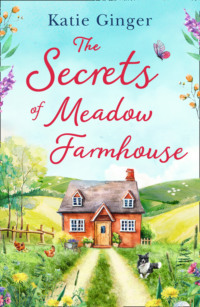
Kitabı oku: «The Secrets of Meadow Farmhouse»
About the Author
KATIE GINGER lives by the sea in the south-east of England, and apart from holidays to very hot places where you can sit by a pool and drink cocktails as big as your head, she wouldn’t really want to be anywhere else. The Secrets of Meadow Farmhouse is her seventh novel. She is also the author of the Swallowtail Bay series, Snowflakes at Mistletoe Cottage and The Little Theatre on the Seafront, which was shortlisted for the Katie Fforde Debut Novel of the Year award.
When she’s not writing, Katie spends her time with her husband and two kids, and their dogs: Wotsit, the King Charles spaniel, and Skips, the three-legged Romanian rescue dog. (And yes, they are both named after crisps!)
For more about Katie, you can visit her website: www.keginger.com, find her on Facebook: www.facebook.com/KatieGAuthor, follow her on Twitter: @KatieGAuthor or sign up to her newsletter here: http://bit.ly/3gbqMS0
Everyone LOVES Katie Ginger
‘So beautifully written. It made me want to move house right now and set up by the sea!’
Tilly Tennant
‘A delightful and delicious read for hopeful romantics everywhere’
Sandy Barker
‘Seaside, strawberries and a sexy hero – what’s not to love?’
Mandy Baggot
‘Simply delicious – summer escapes don’t come any more tasty!’
Jane Linfoot
‘A hilarious romantic comedy that left me with a big smile on my face’
Holly Martin
‘A moving, festive, absolutely gorgeous read! Perfect for curling up with this Christmas’
Samantha Tonge
‘Does jumping up and down, cuddling my Kindle and grinning from ear to ear count as a review?! … Katie writes with such warmth and humour and I could feel every word’
NetGalley reviewer
‘Loved it!’
NetGalley reviewer
‘Sweet, heart-warming, and very enjoyable. This book is like a warm chocolate chip cookie, you feel better for eating it, get a bite of exciting chocolate now and again all while just enjoying the experience. Love the book!’
NetGalley reviewer
‘The perfect book to enjoy in a few days of quiet downtime’
NetGalley reviewer
‘Absolutely loved this book. Couldn’t put it down. Wonderful uplifting storyline. Can’t wait to see what’s next’
NetGalley reviewer
Also by Katie Ginger
The Little Theatre on the Seafront
Summer Season on the Seafront
Snowflakes at Mistletoe Cottage
Spring Tides at Swallowtail Bay
Summer Strawberries at Swallowtail Bay
Winter Wishes at Swallowtail Bay
The Secrets of Meadow Farmhouse
KATIE GINGER

HQ
An imprint of HarperCollinsPublishers Ltd
1 London Bridge Street
London SE1 9GF
First published in Great Britain by
HQ, an imprint of HarperCollinsPublishers Ltd 2021
Copyright © Katie Ginger 2021
Katie Ginger asserts the moral right to be identified as the author of this work.
A catalogue record for this book is available from the British Library.
This novel is entirely a work of fiction. The names, characters and incidents portrayed in it are the work of the author’s imagination. Any resemblance to actual persons, living or dead, events or localities is entirely coincidental.
All rights reserved under International and Pan-American Copyright Conventions. By payment of the required fees, you have been granted the non-exclusive, non-transferable right to access and read the text of this e-book on-screen. No part of this text may be reproduced, transmitted, downloaded, decompiled, reverse engineered, or stored in or introduced into any information storage and retrieval system, in any form or by any means, whether electronic or mechanical, now known or hereinafter invented, without the express written permission of HarperCollins.
Source ISBN: 9780008422745
E-book Edition © ISBN: 9780008422738
Version: 2021-02-15
Table of Contents
Cover
About the Author
Everyone LOVES Katie Ginger
Also by Katie Ginger
Title Page
Copyright
Dedication
Prologue
Chapter 1
Chapter 2
Chapter 3
Chapter 4
Chapter 5
Chapter 6
Chapter 7
Chapter 8
Chapter 9
Chapter 10
Chapter 11
Chapter 12
Chapter 13
Chapter 14
Chapter 15
Chapter 16
Chapter 17
Chapter 18
Chapter 19
Chapter 20
Chapter 21
Chapter 22
Chapter 23
Chapter 24
Chapter 25
Chapter 26
Chapter 27
Chapter 28
Acknowledgements
Author’s Letter
Dear Reader …
Keep Reading …
About the Publisher
Marion Louisa Coeburn
(2nd July 1891–23rd March 1975)
and her love
William (Billy) Arthur Davis
(6th July 1893–9th April 1917)
Prologue
June 1959
The wedding dress hung in front of the wardrobe, elegant and beautiful. Premature, some might say as she wasn’t even wearing a ring. But Vera couldn’t help telling her mother about the engagement, and her mother couldn’t help but fetch it for her.
Side by side, they appraised it together, her mother giggling like a schoolgirl, Vera giddy in her excitement. Arty had asked her to keep it quiet until he’d spoken to his parents, but Vera had never been that good at keeping secrets. She was an open book as far as her thoughts and feelings were concerned, wearing her heart on her sleeve. Her half-sister always told her she should toughen up, but Vera had never seen the need, and after the events of the afternoon, when Arty had paused in the middle of the coppice where the ground was lush with green and the tall trees formed a canopy over their heads, taking her hand in his and slowly going down on one knee, it didn’t seem the right time to start now. How could she when there was little to no chance of containing her unbridled joy?
‘Will you marry me?’ he’d asked, with trembling hands and a slight shake to his voice.
As if there were any possibility she’d say no. She loved him more than anything else in the world. She’d never met anyone so kind, so funny or so handsome.
The sun had shone down on them, dappling through the leaves, causing shadows to dance on the ground. She’d replied instantly with a resounding yes that echoed around them and he’d picked her up in his strong arms and swung her about on the spot.
Replaying the moment over in her mind, she’d never felt a happiness like it. All he had to do was speak to his mother and father, which he’d do that very afternoon and who, he assured her, would approve. It didn’t bother her that he’d asked before speaking to her father. He was a good man and only wanted her to be happy.
As soon as she’d returned to the farmhouse flushed with excitement, her mother had guessed and Vera admitted the truth without a thought. Even as a child, without hesitation she’d owned up to the things she’d done, having learned early on that lies were always writ large on her face. Her mother had been over the moon. Apparently they’d been expecting it any day now, and they had celebrated with cake. Even her stepfather had raised a glass of sherry to her good fortune. ‘He’s a fine man. And rich too,’ he teased.
Vera giggled because they all knew that money meant nothing to her. It was him she loved. The shy, quiet boy she’d spotted in the fields as a young girl, then grown up with, becoming friends and now lovers. Soon they would become husband and wife, marrying at the small church in the village and picnicking on the green. Content in her plans, after the allowance of a small glass of sherry, Vera had tipsily gone to bed.
The night had been long and restless as her overactive mind refused to cease, unable to sleep for the joy and anticipation pulsing through her veins. She imagined herself in the dress, pictured herself dancing and dreamed of forever being Arty’s wife. In the half-light, she stared at the wedding dress now airing on her wardrobe door. It was, perhaps, a little old-fashioned, but she loved that it was her mother’s, and her mother wanted her to wear it. The neck was too high and would need taking down; the sleeves, too, were long with frilled cuffs, but overall, she liked it. It would be her something borrowed, or perhaps something old.
A faint tapping at the window drew her attention to the day breaking outside. At first, she’d thought it was rain, but as she listened to its rhythmless nature and growing intensity she realised it was something else. With a thrill of excitement, Vera pulled back the covers and swung her legs out of bed. The cold spring morning penetrated the thin material of her nightdress and she pulled her dressing gown on before silently padding her way to the window.
As she pulled back the curtains, the emerging white light of the sun illuminated the slowly waking world, blinding her. The sky held patches of cloud here and there, harsh and dark, threatening rain. Her eyes dropped to the ground below her window. Arty. Arty had come to see her. A shiver ran down her spine at the romantic nature of this dawn visit, and as quietly as she could, she ran down the stairs, avoiding the patches of old wood that creaked and moaned underfoot, and unlatched the heavy back door.
Vera stayed in the doorway, propriety forcing her to hide. Though her mother had always told her not to worry too much about convention, there were some things that would not be tolerated, and meeting a beau in the early hours of the morning in nothing but your night clothes was one of them. Arty stood motionless in his shirtsleeves, his arms hanging limply by his sides. Goose bumps covered his skin from the chill morning air. ‘Arty? What are you doing here?’
‘I’m sorry, Vera,’ he replied, his voice weak, almost inaudible. He’d been crying. His eyes puffy and red, bloodshot through lack of sleep and marked under with deep blue shadows. ‘I’m so sorry. I can’t marry you.’
Fear tensed her muscles and a burden of dread rested on her chest. He hadn’t said that. He couldn’t have. ‘What do you mean?’ An incredulous laugh escaped her. ‘What are you talking about?’
‘I can’t marry you, Vera. I’m so sorry.’ Tears welled in his eyes once more and with a strong sniff he attempted to force them away.
‘Why not?’ A weight pressed down, tightening her ribs. ‘You love me and I love you.’
‘You know why—’
She shook her head. ‘But you said you didn’t care. You said—’
‘I know what I said.’
Vera watched the rise and fall of his chest as he breathed heavily. Why was he hurting her like this?
‘I have to think of others, not just myself.’
He was saying words that weren’t his. He’d never have said anything like this before, when their relationship was purely friendship. It must have been his mother. She must have refused her consent. Vera felt the slow, steady tearing in her heart as it ripped so completely in two.
‘You don’t mean that,’ she whispered, tears now falling down her face. Her heart ached, slowly breaking as his words sunk in. With white knuckles, she held tight to the doorframe, her body no longer able to stay upright. All her strength had disappeared.
‘I’m sorry, Vera, but I do. I have to go.’
He turned and walked away, and as loudly as she could without waking the others, she called out to him, but apart from a slight turn of his head, he didn’t stop, or acknowledge her anguish.
Vera’s hands shook as she closed the door and leaned back against it as though it would stop her from disintegrating. Her legs gave way, unable to take the weight of her emotions. She slid down to the floor, curling her legs up and hiding her face behind them. Tears soaked through the fabric of her nightdress so it stuck to her skin. The grey clouds that had threatened only moments before let loose their burdens and as her life fell apart, the rains came.
Chapter 1
Paris
Present Day
The sights and smells of the Paris flea market were almost too much for Amelia’s hungover senses to bear. Only her excitement at living in the city she adored, and a need to be out of her apartment, led her forwards.
Though the baking emanating from the nearby shops smelled delicious, the aromas changed with every step causing her stomach to roil and calm in equal measure. The strong scents of garlic and onion were overtaken by that of sweet pastries and butter. The crowds wove around her, all heading for the farmers’ market at the bottom of the tiny street or returning up the hill with bags laden with fresh produce. In between, shopkeepers cast open their windows, displaying the eclectic range of goods they had to offer. Amelia’s eyes darted between the numerous chandeliers that hung from the ceilings of one store, onto antique vases side by side on a small side table. Traditional French furniture lined the street outside along with stacks of paintings. On the other side of the street, smaller objects like perfume bottles, vintage jewellery and trinkets glittered as the sun hit the windows.
All around, the sound of chatter penetrated her ears, resonating through her sluggish brain. Fluent in French, Amelia could make out most of what was said, but when so many voices merged and the locals spoke so quickly, she struggled to keep up. Snippets of conversation met her, forming unusual and humorous sentences. She pushed her large round sunglasses further up her nose to shield her eyes from the sun’s strong glare, and her stomach rumbled loudly.
Spring in Paris was a magical affair as flowers bloomed around the city, giving the air an overwhelmingly floral scent. She’d been there for eight years now, but the capital never failed to impress her. Each season affected the city differently, but whereas summer could sear the streets with a hazy heat, spring gave all the golden glow but with a much more temperate feel.
Pausing at her favourite café, with a mix of folding metal and wicker chairs tightly packed around small circular tables, she took a seat and ordered a café crème and a buttery, flaky croissant; the perfect thing to soak up the rest of the wine lingering in her system while she waited for Océanè to join her. She’d want to know all about her date with Bastien last night and by the time Amelia had something to eat and chatted to her friend, she’d feel well enough to look again for the perfect items to finish off the job she was working on. As an interior designer, Paris – with its chic fashions and varied shops – was ideal for her business. Could she have built this career in the tiny English village she’d grown up in? Probably not. Though regret at the way she’d left bubbled inside, causing her insides to roll again.
Twenty minutes later, Océanè arrived and ordered the same as Amelia. Amelia asked for another café crème before the waiter disappeared, knowing the questioning was soon to begin and a second caffeine hit would help her endure it. Her friend didn’t exactly mince her words.
‘So?’ Océanè asked in her heavy French accent. ‘How was your date last night? Was Bastien attentive? Did he buy you champagne? You have seen him, what? Five times now?’
‘He bought me wine. And lots of it. Too much, in fact,’ Amelia said, adjusting her sunglasses once more as the sun moved across the sky, climbing higher. The coffee was helping her headache, but she still felt a little fragile. This morning she had dived to the bathroom and hastily scraped her black hair into a chignon and swiped bold red lipstick over her lips, knowing it would give her pale complexion some colour. Over the years she had tried to absorb the Parisian style of dressing: classic, expensive pieces, simple lines, and most of the time she managed to pull it off, but there were times, like this morning, when fashion wasn’t important. She’d thrown on old loose jeans and a jumper but it only took a moment with a real Parisian to make her feel sloppy and slobbish, and as Océanè cast her eyes over her outfit, she knew she didn’t approve.
Océanè swiped her blonde hair over her shoulder. ‘You do look a little, how do you say …’
‘Under the weather?’
‘Pasty.’
‘Thanks.’ Amelia giggled.
‘Did you not have a good time? He is very handsome, non?’
‘We had a very nice time.’ For once, Amelia was grateful that she looked so ill any blushing wasn’t likely to show as thoughts of his intense and passionate kisses rang through her head. ‘And yes, he is very handsome. He wined and dined me, paid me compliments, made me laugh, but I’ve left him to make his way home while I’m out.’
‘You are avoiding him?’ Her friend’s tone was incredulous.
Bastien was almost perfect and she liked him well enough, but Amelia wasn’t very good at the small talk made the next morning. It made her uncomfortable and embarrassed and to be honest, she hadn’t had a lot of practice at it. An image of Adam flashed into her brain and she shook it away. Ever since she’d left him back home in the tiny village of Meadowbank, he’d pop up in her mind, most often when she was thinking about or trying to date someone else. No matter how much she tried, she couldn’t shake him off.
‘But you will see him again tomorrow?’ Océanè asked. ‘He is in love with you, I think.’
‘I don’t think he’s in love with me. I know he likes me, but—’ Amelia paused while the waiter delivered their drinks. She took a sip of coffee and saw the imprint of her red lipstick on the rim of the cup. ‘I don’t think it’s love.’ Sometimes, she found it hard to believe that someone would ever love her. Her life had been so destitute of it from such an early age. ‘And to be honest, I’m not sure I’m in the market for that sort of thing at the moment. I like him, but …’
The words died on her lips. What could she say? He was another man who over the years hadn’t made her feel the way Adam had? Océanè would laugh at her for thinking of a love that happened so long ago. An image of their goodbye at the train station floated before her, causing her throat to tighten. She dropped her eyes to her cup, focusing on the coffee inside it, hoping it would draw her mind and the pain away.
Océanè took a moment to understand the phrase, but realisation quickly dawned. ‘You are mad. He has everything a woman could want: money, success, good looks.’
Bastien did have all those things and he was also kind and funny, which is how they’d made it to five dates rather than just one, but despite her best efforts, he still hadn’t managed to break through to her heart.
‘You are a cold woman. You care only for your work.’
Amelia raised her head at this remark. Was she cold? She didn’t think so. She had friends and had been through some decent relationships, but they’d never felt strong enough to last. She wasn’t cold, she was just focused on living her life to the full. She’d worked hard to become one of the foremost interior designers in Paris, and she wanted more than just a man who was perfect on paper. She wasn’t prepared to invite a man into her life for the sake of it. She’d always done fine on her own and her life was far too busy for loneliness.
Océanè continued. ‘I do not know how you can be so immune to his charms. Our men – French men – Parisian men – know how to win a woman’s heart.’
‘Your French men are pretty charming, but I’m far too busy with work to worry about love.’
‘Don’t your parents want you to get married? Mine do. They say that I should marry Émile and have children before they are too old to enjoy being with them. They say my eggs will die.’
‘Your eggs?’ Amelia almost spluttered her coffee.
‘Eggs.’ Océanè motioned towards her lap. ‘Your parents do not worry about your eggs?’
A sharp pain shot into Amelia’s chest and a hurt she’d convinced herself had been dealt with stabbed anew. ‘My parents are dead. They died when I was a child.’
Océanè’s hand paused as she tore off a piece of croissant. ‘You have never told me that. We have been friends for years and yet you make no mention of this. Why not?’
Amelia shrugged one shoulder. ‘It’s never come up before.’ That was a lie and she quickly changed the subject, unsure why she had suddenly admitted it. Perhaps she was more tired than she realised. Her temples started to pound again. She’d been out with friends every night this week, and last. Maybe a decent dinner cooked by herself – something hearty and wholesome rather than tiny, minuscule restaurant portions – and a quiet night in were in order. ‘Once we’re done here, I’d like to take another look around. I’m after some special pieces for an apartment I’m working on in Montmartre.’
‘You will have to do that alone; I have to meet Émile. But you must think about Bastien. There are many women who would like to take your place in his bed.’
‘He was in my bed, actually,’ she replied, playfully eyeing Océanè over the rim of her cup.
‘You know what I mean.’ Océanè raised one perfectly shaped eyebrow. ‘You can be too hard, Amélie. Too independent.’ It always amused Amelia that Océanè called her by the French version of her name when she was being serious. ‘One day, you will push a man too far away and he will not bother coming back.’
Not if he’s the right man, Amelia thought, but didn’t bother saying so. She hadn’t planned on sleeping with Bastien last night and it had been a moment of weakness she was paying for this morning. She hoped that by spinelessly hiding out until he’d left, she’d avoid an embarrassing situation.
‘You have a great business, yes?’ Océanè said. ‘You have a great apartment, yes? But you are never alone. Always you are with friends. A person cannot exist without love. Eventually, you will have to let someone into your heart. Why not Bastien?’
Feeling the prickle of embarrassment inch its way over her skin, Amelia pulled her compact from her handbag and topped up her red lipstick. She’d been without love all her life, since her parents’ deaths but she couldn’t face talking to Océanè about that now. ‘I’ve done fine without a man so far,’ she said light-heartedly, hoping that would be the end of the conversation.
After they had finished their coffees and talked about their plans for the rest of the weekend, Océanè left and Amelia took another walk around the flea market. Temptation sat on her shoulder and whispered into her ear as her eyes fell on different objects that would suit her already overflowing apartment. Some of her clients liked a minimalist style, but when Amelia saw something she wanted, it was almost impossible to resist. As a result, her small flat was now packed with possessions and her wardrobe overflowing with clothes.
Amelia haggled with a vendor to buy an ornate perfume bottle – a finishing touch for the Montmartre apartment – and a vintage copper milk jug for her own place. She’d find somewhere for it to go later. Maybe the bathroom? And made her way back to the Metro.
As she climbed the steps from the Metro station, the cold, fresh air blew through the elaborate dark-green metal bars and under the glass ceiling. The station design was so iconic she had a picture of one in the living room of her apartment. She’d bought it shortly after moving in all those years ago, and though it had been fairly inexpensive, it was still one of her most prized possessions.
Her apartment in Saint Germain was in a typical eighteenth-century block with white shutters and decorative ironwork across the windows. On hot summer days she would cast the windows open and let the light flood her apartment. As she stepped inside the communal hallway, she gathered her post and made her way upstairs. An envelope postmarked from England caught her eye and her lungs turned to stone. It had a company name she didn’t recognise. Even worse, the town it came from was dangerously close to Meadowbank; the tiny village she’d grown up in with Great-Aunt Vera who had begrudgingly taken her in after her parents had died.
Curiosity almost forced her to open it there and then, but Amelia valued her privacy and continued upstairs. She pressed the key into the lock, hoping once more that Bastien had left by now. She really didn’t fancy talking to him. He’d try to convince her to spend the rest of the day with him and all she wanted was to nap on the sofa as the soft breeze blew over her.
With a gentle push, the door opened and all was quiet inside. No sounds of snoring, no sounds of movement, and sighing with relief, Amelia advanced down the hall and into the open-plan living room and kitchen, anchoring the milk jug under her arm so she could see the envelope again. It nestled among bills, inviting Amelia to ignore everything else and tear it open without any further delay.
‘Good morning, ma chérie.’
Glancing up, her eyes fell on Bastien, lying naked on her kitchen counter, one leg bent, the other outstretched and all of him on display. The copper milk jug fell from underneath her arm, landing on the floor with a deafening clatter. Bastien wobbled precariously and almost toppled forward onto the floor. His hand shot out, gripping the edge of the counter to steady himself. Amelia nearly dropped the pretty perfume bottle as well, but somehow managed to keep hold of it. She gazed around as if it might help her understand why he’d chosen the kitchen as the best location for his seduction.
‘Bastien!’ Her neck grew hot. ‘What are you … umm—’ So much for avoiding an embarrassing situation. Amelia decided the best thing was to pretend everything was perfectly normal, which was a bit of a stretch but doable if she kept her eyes only on his face. ‘Wh – what are you still doing here?’
‘I am waiting for you,’ he replied, regaining his balance and lowering his voice to nothing more than a seductive grumble. In the current circumstances, it didn’t really work. Bastien pinned her with his eyes, and his gaze never shifted. Of all the things she thought she might face if Bastien were still here this morning, she wasn’t quite prepared for him to be naked and spread-eagled in her kitchen, and she found herself momentarily lost for words.
Amelia placed the perfume bottle on the counter, thanking the Lord it was still intact. Unsure what else to say, she stammered, ‘I’m, umm, I’m a bit busy today, Bastien. Sorry.’
‘Too busy for love?’
The sound of the L word twice in one day stiffened her shoulders as another image of Adam shot into her brain. Bastien gave her puppy-dog eyes and Amelia’s headache intensified. How on earth was she supposed to remove him from her kitchen? It wasn’t like she could grab a fish slice and prise him off the counter. ‘Bastien, can you please put your pants on and maybe umm, get your bits off my worktop?’
He didn’t move. ‘Do I not tempt you? Come now.’ He held out his hand to her but all Amelia could do was rub her forehead.
‘Bastien, please, pants on.’
‘Let us spend the day together.’
Amelia sighed and pressed her hand harder onto her head. This was exactly why relationships weren’t a good idea. She should never have let her guard down and shared that second bottle of wine. ‘Bastien, you’re a very nice man and I had a great time last night, but I really can’t see you today. Please, I really need you to go.’
‘But—’
‘No, Bastien.’
Sheepishly, he moved. She guessed the kitchen counter had been too cold to sit on for long because his pants were lying on the floor by her feet. He must have decided to forgo them only at the very last moment for full-on seduction. At least he was committed. Amelia picked them up using the tips of her fingers and handed them to him as Bastien’s skin made a horrible squeaking sound as he pushed himself down from the counter. It looked like she’d be spending the afternoon disinfecting the kitchen before she cooked anything and seeing as his pants had been on the floor, she would have to wash that as well.
‘You really want me to go?’ Bastien tried one more time, attempting to impart some lust into his voice.
‘Yes, please. I’m sorry, but I really have work to do.’
‘But it is Saturday.’
The letter again caught her attention and curiosity built but as much as she wanted to know its contents, she couldn’t open it with Bastien around. Frowning as she placed the letters on the counter, she turned away from him and went to grab a bottle of water from the fridge, hoping he’d get the hint that it was time to leave. Océanè’s words that she was a cold woman echoed in her brain. She didn’t mean to be cold with Bastien, but how else was she to get this naked Frenchman out of her apartment? Without turning, she was aware of him heading off into the bedroom and a few moments later, he placed a gentle kiss on her cheek and said goodbye.
The cold water slid down her throat and concern mixed with anticipation sent goose bumps over her skin. She didn’t normally get letters from England and the company name sounded unnervingly formal. After spraying and wiping down the counter, she sat on a stool and opened the post, starting with the bright white envelope postmarked from England.
As soon as she pulled out the thick white paper, her eyes began to scan the words. An unexpected wave of emotion hit her, and her body shook in response. For a moment, her breathing became hard and erratic and she willed herself to calm down. Great-Aunt Vera was dead and had left her Meadow Farm: the draughty old farmhouse they’d co-existed in for ten unsentimental and lonely years, as well as the land around it. You couldn’t even really call it living together because that implied a level of fondness that had never existed as far as her aunt was concerned.
Shaking her head at the memory, Amelia was glad she’d left for university and never returned. Vera hadn’t wanted her and if it hadn’t been for Adam, the only friend she had in the village, she’d have run away long before then. He’d talked her out of it so many times when Vera had told her off for doing nothing more than being a child. Vera had always made her feel so burdensome and ultimately forgettable.
A moment’s respite from such intense emotions came as she thought of Adam again. The youthful face she remembered once more pushed its way into her brain and she swallowed hard. She’d missed him immensely over the years but had never been brave enough to contact him. He’d been her first love and she regretted that she’d left without saying a proper goodbye but there was no possible way she could have stayed in that place forever. He’d have got over it by now, Amelia reminded herself. He’d have forgotten her quickly. He’d probably been happy to be rid of her.
Swallowing down her feelings, Amelia reread the letter. As shock subsided to be replaced by grief and guilt, Amelia took another drink of water. She hadn’t even known Vera was sick. Apart from exchanging Christmas and birthday cards, they didn’t speak at all and her most recent Christmas card hadn’t mentioned anything about declining health. Had it been sudden? The solicitor’s letter didn’t mention the cause of death.
Though she regretted how their relationship had ended up, unless someone knew Vera – knew how cold and hard she was, how unloving – people didn’t understand. Some people were naturally private, and it was a behaviour Amelia herself had learned, but Vera took it to a whole new level, hating everyone. Amelia buried the turmoil threatening to rise and overtake her under the knowledge that she’d made something of herself. She took a breath in, counted to eight and let it out slowly, counting again as she did so.
Despite everything, Vera had left her Meadow Farmhouse and according to the letter, she’d made Amelia the sole heir. Amelia had always found the village hard to handle. The concern when she’d arrived and the constant reminders of why she’d ended up there had been overwhelming. Meadowbank was one of those places where everyone knew everyone else’s business and, as she’d grown, she’d longed for somewhere impersonal where no one asked her questions or reminded her of the past.
Would Adam still be there? Would anyone even remember her?
After she’d left, Amelia had never planned on going back and yet now it seemed she had no choice. She had to return to Meadow Farmhouse.
Chapter 2
Meadowbank
After hastily finishing what projects she could and rearranging others, Amelia left Paris just over a week later and made the trip to the tiny village of Meadowbank in Kent. She was unsure of how long she’d be in Meadowbank, but luckily she worked from home and didn’t have any staff to worry about except for a virtual assistant she’d hired. It was one less thing to occupy her mind, which had been full of Adam since reading the letter. How long would she be there? A few weeks maybe? Once the place was clear, the sale she could handle from Paris and, eager not to waste time, she had already booked an estate agent for three weeks away. Ever organised, Amelia had also been in contact with the solicitors and someone was going to meet her at the farmhouse with the keys.
Océanè’s use of the word cold rebounded in Amelia’s head as it had since their coffee date. Was she being cold over Vera? It was hard to be sure. It was true she hadn’t yet cried over her death, though the evening after she’d received the letter the back of her nose had stung as her brain wandered towards distant memories. Vera had never been one for praise or encouragement, but Amelia was still upset that she had gone before they could reconcile. Perhaps she should have made more effort on that front. Stupidly, she’d always assumed it would happen one day of its own accord. She’d never thought Vera would go without it ever occurring.
Since Amelia had left her apartment and made her way to the Gare du Nord, her heart had sat like a lead weight in her chest. She didn’t want to leave the safety of Paris and return to the small, suffocating village. She couldn’t say return home because Paris was her home now. Everything familiar to her was in this city, not the other side of the Channel. Would any of it be the same as the day she’d left? She’d hoped that while on the Eurostar her unease would settle, but it hadn’t. It had only intensified as the time ticked by and the distance shortened, bringing her ever closer to her old home and her old life.
Before the darkness of the tunnel, Amelia pulled out her phone and began scrolling through her social media feeds. After a few moments, her fingers twitched. Would it hurt to take a look at Adam’s Facebook page again? He wasn’t on Instagram or Twitter – she’d already checked – but he was definitely on Facebook. Not that she’d stalked him over the years. It had been a perfectly normal level of interest, but she had searched for him just to see what he looked like. Every time she did, a dull ache would throb in her heart. Adam was one of those people who didn’t use it often and of course, without being his friend she wouldn’t be able to see all that much, but curiosity forced her fingers over the keys.
Amelia’s eyes eagerly scanned the screen as a few photos popped up. There was a cute one of him with his mum, Lynne, at an event but it wasn’t clear where the event was. It didn’t look like Meadowbank. In another, which definitely hadn’t been there the last time she’d looked, he was laughing with his head thrown back wearing the tiniest swimming shorts she’d ever seen. While his choice of swimwear was dubious (Amelia had always associated budgie smugglers with middle-aged men on holiday in Greece), the physique was ridiculous. The skinny youthfulness had gone from his face and his features were more chiselled and rugged. His jaw was square and firm, and his gloriously red hair had ebbed to a less orangey hue. There were hints of brown she could see as she held the phone slightly in front of her nose, and there were toned, flat abs that made her palms a bit clammy.
How had she ever left him behind? Especially when he’d ended up looking like that. Men like that didn’t end up with pale-skinned, gothic-haired women with abandonment issues like her. They ended up with women who only had half their eyebrows and dewy complexions. Her heart gave an involuntary double beat and she took a deep breath to calm it. Just as she did, the train rocked, and her thumb slid across the screen, liking the photo.
‘Oh no. Oh, no, no, no, no, no.’ Amelia’s jaw hung loose as she realised what had happened.
Panic rose and she immediately hit the like button again to remove it but knew deep down that the notification would have been sent. Adam Noble would soon know that after ten years, Amelia Williams had creepily liked a photo of him looking particularly sexy in nothing but his Speedos. Why couldn’t it have been the one with his mum? That at least would have made her seem less like a pervert. ‘Oh God, oh God. Shit. No!’ She tried to mutter, but annoyance made her pathetic whine louder than intended and someone across the aisle tutted. ‘Sorry for swearing,’ Amelia said when she glanced over to see a middle-aged woman glowering at her. ‘But I just accidentally liked a photo of my ex. We’ve not seen each other in ten years.’ She mumbled more to herself than the other woman.
The lady softened and sucked air in through her teeth. ‘Oh dear. That sounds … embarrassing.’
Embarrassing wasn’t the word. Mortifying might hint at what she was feeling but embarrassing didn’t even come close. It was a drop in the proverbial ocean. She was quite tempted to throw herself from the train if only it didn’t have automatic doors. A wave of heat flew over her and Amelia dropped her phone into her lap before pressing her cold hands to her cheeks. Of all the photos, why did it have to be the one of him half naked?
‘I’m sure it’ll be fine,’ the woman said. ‘Do people even use Facebook these days?’
‘Some do, some don’t.’
‘Well, maybe you’ll be lucky, and he’ll be the type who doesn’t.’
‘Maybe.’ Amelia told herself to calm down. Just brush it off. The words drifted around her brain but didn’t sink in and she tried again to talk herself down. What did it matter if she’d liked a photo of Adam wearing next to nothing? He probably didn’t even live in Meadowbank anymore and as she’d unliked the post pretty quickly, maybe he wouldn’t even know. Amelia forced herself to take slow, deep breaths, even though her cheeks were still flaming.
Would he even remember who Amelia Williams was? Just because she still thought of him after all this time didn’t mean he still thought of her. Maybe he’d moved on and their years growing up together had faded from his memory. Memory, after all, was a strange thing. There were times when she could barely remember her parents now. Only vague notions of their faces, and the sound of their voices had faded completely. A surge of melancholy forced Amelia to pick up her phone and begin again on her social media feeds – work this time, rather than personal. It was safer that way.
After arriving on English soil and leaving the train station, a taxi took her on the final part of the journey to Meadow Farmhouse. The scenery blurred as they drove through the lane into the village, on towards the farmhouse she hadn’t seen in ten years. A brightly coloured ornamental sign proclaimed proudly that she was now entering the village of Meadowbank and below it was a horse and cart loaded with hay. Picturesque thatched cottages lined either side of the road with small picket fences. Everything about this place was quintessentially British from the timber-framed houses, thatched roofs and blossoming front gardens to the small, quaint bakery, butcher’s and tiny village school. Old-fashioned, Amelia thought sweetly.
A surprising feeling of nostalgia inched its way into her brain, warming her thoughts. She’d expected to see the place with the eye of a tourist, but the sense of coming home, the feeling of peace – even fondness – hadn’t been anticipated. Amelia pulled the collar of her jacket together and reminded herself that Paris was her home, silently listing all the things it had that Meadowbank didn’t. Unsurprisingly, after Bastien’s display, he hadn’t made the list.
It would only be a few more minutes before she saw the farmhouse itself and apprehension grew, mangling Amelia’s nerves. On leaving, she’d tried to imagine what it would feel like coming here and not having to see Vera. Easier perhaps but incredibly sad. She was ungrateful and had never hated Vera. She appreciated that she’d taken her in and given her a home, but it had been hard living with someone who so clearly hadn’t wanted her around. Vera had only taken her in because she was the last living relative Amelia had, and things had always been tough between them. She’d never been fond of communication and it had left Amelia feeling isolated.
When her parents died without a will and with only each other as next of kin, the police had located Vera and asked her to take in the orphan child. Though Amelia tried to think of the deeply buried memory in detached terms, it was impossible, and queasiness forced its way up. She’d been an obligation, nothing more. It was either take her in or she go into care, and Vera had thought it her duty to provide a home. At least, that’s what Amelia had always assumed because it wasn’t something they spoke about. Vera didn’t talk about feelings and, at times, Amelia hadn’t even been sure she’d had any.
Eager to see more of the village, and ignore the melancholy rising inside her, Amelia leaned further to the window, her eyes darting across the scene to take in as many details as possible. Weaving around the village green, where summer fairs and primary school sports days had taken place, and on past the bushy duck pond complete with tinkling stream, the car headed to the other end of the village. Amelia saw the nearest thing they’d had to a supermarket was still operating, looking like something from an old postcard with wicker baskets outside holding fruit and vegetables, and she wondered if it still belonged to the same family. Unlikely, after all this time, but she was glad it was still there.
One of the things she loved about Paris was the small boutique stores. It didn’t have just chains and supermarkets. Amelia firmly believed every town, village or city, needed quaint little shops like this. It gave character. The duck pond was the same as ever and she remembered feeding the ducks with Adam and his mum, tossing bread into the water for the hungry birds to chase after. Swallowing down a strange sense of wistfulness, she stared at the scenery.
Down a side road, a wooden board confirmed they now had a deli. That certainly hadn’t been there when she was younger, and with an internal chuckle she noted that it seemed Meadowbank had become gentrified over the years. It was strange to think how people and places exist when you’re not around. In her mind, it was like Meadowbank had gone into stasis and ceased to change or evolve. Such a silly point of view really. A part of her had assumed it would remain untouched, as it had seemed when she was little – caught in a time capsule – but time never stood still no matter how much you wanted it to. It always moved forward, just as she’d learned to do.
At the furthest end of the village green, the car took the still-familiar left turn and went on towards the rolling green fields. Houses became few and far between and acres of abundant green land surrounded her. The fields dipped and sloped away as far as the eye could see, cut through occasionally with tractor marks. Some were full of sheep lazily grazing, some were fallow, and squiggly lines of hedges criss-crossed the vibrant grassland, illustrating where history had marked out boundaries once upon a time. She’d forgotten how beautiful the place was when caught in the right light, and today was a perfect spring day.
The impossibly blue sky above was scattered with wispy clouds and the sun shone in through the taxi window. Amelia loosened the grey scarf worn over her black blazer and grey jeans. She’d wanted to look smart for her arrival, knowing it would give her courage to face whatever was about to befall her. Her usual red lipstick stained her lips and her hair had been tied into a high ponytail.
The country lanes swivelled left and right, and Amelia tightened her grip on her handbag. They passed over the small bridge that crossed the stream she and Adam had dipped their feet into on hot summer days and on the banks a rabbit scurried away into the undergrowth. It had been a long time since she’d seen such wildlife. It was like being a child again. A minute passed and farms began to appear on her left.
‘It’s just a little further on,’ she said, knowing the driver’s satnav would probably miss the turning. ‘It’s right here.’ The car slowed at a crooked wooden sign, the overgrown plants behind covering some of the letters, and Amelia leaned over from her seat in the back. Even though the lettering was faded and the wood rotten, the words were just about legible: Meadow Farmhouse.
She’d arrived.
Sitting back, Amelia hadn’t realised that her finger had gone to her mouth, about to chew a painted fingernail. She’d given up that nervous habit as soon as she left for university at eighteen.
The day she left, she’d assumed she’d come home for holidays, but luckily it had only been that first Christmas break she’d returned to Meadowbank for a non-celebration with Vera, who had never enjoyed Christmas. That had really been the last time she’d seen Adam Noble. When she waved goodbye at the train station, holding back sobs. She’d assumed she see him again the next holiday, but after that and for her remaining years at university, she’d stayed in shared houses sometimes on her own when everyone else returned to their families.
A dull ache in her chest lingered as she pushed her thoughts on. Océanè had been wrong. There was nothing wrong with living your life on your own. Amelia had done fine so far, and besides, she wasn’t alone, she had friends.
‘This it then, miss?’ The taxi driver’s voice cut through, bringing her back to the moment.
‘Yes. You can drop me here if you like rather than go all the way down the drive.’
‘You sure?’
‘Yes. Yes. Fine.’ She’d already begun uncoupling her seatbelt, giving the driver no choice but to stop the car. ‘It saves you time and it’s easier to turn around here than at the bottom.’ She wasn’t sure why she was rushing, but something made her want to see the place as quickly as possible. She checked the meter and found the money, handing it over with a thank you. As soon as the driver had taken it, he raced around to the back of the car and hauled out her two enormous suitcases.
Staring at the thin belt of trees to the left of the driveway and the dense wood off to the right on the edge of Meadow Farm’s land, Amelia wondered how long the trees had been there. The thick oaks were already mature when she was younger and she and Adam used to climb all around them. They’d been her own personal playground. Their long branches had recuperated from winter, covered now with blossoming green leaves. Birds darted in and out of them, though Amelia couldn’t find their nests. She heard them chirping happily and closed her eyes for a moment to meditate on the sound. Of course she’d heard birdsong in Paris, but this sounded different. Unmasked by traffic it appeared brighter and more musical.
The very first time she’d arrived it had been spring; a warm bright day when the police had delivered her to Vera’s house after they’d informed her of the car crash that had stolen her family. For all that journey, she’d sat in the back of the police car, her hands clasped tightly in her lap, knuckles white as she tried to stop the tears flowing down her face. A kind policeman – a Family Liaison Officer, she supposed – had sat in the back with her, giving caring glances and attempting to take her hand, but she couldn’t release them. The pressure between her palms had been the only thing keeping her terror and grief at bay.
The same fear threatened to climb up and spill out now, and she clenched her jaw shut. She refused to think about the solitary night in a care home while they’d located Vera. The long loneliness of the strange house full of children she didn’t know and noises she didn’t recognise. Part of her felt a failure for allowing it to distress her as much as it did. She was a grown woman now – a successful interior designer who lived in Paris – not the same scared little girl she’d been before, but the remembrance was visceral and overwhelming. With all her might Amelia pushed the memories down and her feelings with it. It was too painful to even think about. Slowly, she began her walk down to the house.
In the fields around her, daisies danced in the breeze, butterflies skimmed across the petals and bees moved efficiently from flower to flower. To her right, the wood loomed on the edge of Meadow Farm’s estate – a dense, tall patch of browns and greens. She and Adam had built camps there and played as teenagers, trying all the things the cool kids did like smoking and drinking. Neither of them had bothered with drugs. They hadn’t needed them to escape.
Instinctively, Amelia glanced around for any sign of Adam now, as though her brain was replaying it all. He was most likely married with three kids, two cars and a dog, living somewhere new. He’d always wanted that sort of life, but at eighteen, all she could think of was becoming more than the orphan child dropped here one morning by a stranger.
The wheel of her suitcase caught on a stone in the pot-holed drive and tipped to the side. ‘Oh, nuts and bolts.’ Amelia righted it, cursing as mud splattered up the back of her jeans. Dirt crept up her ballet pumps, threatening to make its way inside, and Amelia wished she’d worn something more suitable.
Around the bend in the unkept drive, the farmhouse itself came into view and shock forced Amelia’s feet to stop. The place had changed beyond anything she could have imagined. To say the farmhouse was ramshackle was far too much of a compliment. Decrepit would have been a better description. Every plant around it was overgrown, as was the ivy growing up it in veins. The tatty loose thatch probably had birds living in it by now, and here and there windows were broken, patched up with wood.
What was that noise? She spun, then cocked her head, turning her ear to the sound. ‘Chickens?’ So there were still chickens at Meadow Farm. A smile came to her face as she remembered chasing the hens around the garden as a child. She could only have been about ten at the time. Then later, she was trusted to collect the eggs for their breakfast. It had been an age since she’d had runny eggs and soldiers. Thanks to her time in France, she could whip up a decent omelette but there was something infinitely more comforting about runny eggs with salty buttered toast soldiers. Amelia frowned at the mix of emotions whirring inside her, as if she was letting Paris down by remembering so many nice things about Meadowbank. Returning home had certainly been stranger than expected.
What had happened to Vera that she stopped caring so much about the place? She’d always loved Meadow Farmhouse more than any person or thing, claiming it was a name to be proud of. So how had it gone so downhill? From the exterior, it wouldn’t be wholly unexpected to open the door and find livestock inside, all sat at the table having afternoon tea like something from Beatrix Potter. Scanning again with her eye for design, Amelia thought how good it would look if she could bring it up to scratch. It had always suited the yellow colour it had been painted, but its brightness had faded now.
It would make someone a wonderful home, but it was going to take a lot of work and more time than she’d allocated to bring it up to scratch. Her plan had been to clear the house of Vera’s belongings, spruce things up and sell quickly. She’d counted on it being structurally sound, yet at the moment it seemed anything but. With a twinge of conscience, she thought about Océanè calling her cold. Perhaps it was wrong to treat this like any other job. Though she knew she was only doing so through self-preservation. Perhaps she should invest more into what had been her childhood home. After all, it was going to be the last time she saw it.
As she was assessing the house and picturing it back to its former glory, a black-and-white collie dog bounded around the corner almost running straight into her. When it saw her, it slowed in surprise, its back legs the last part of its body to get the message as it skidded to a halt in a puddle.
‘Hello, you.’ Seeing the dog’s happy face, she let go of her suitcases and scratched him behind the ear.
A giant man with a huge bushy beard and dirty overalls tucked into socks ambled around the corner. ‘Who are you?’ he demanded. With his size and stature, he was slightly menacing but for all Vera said, Meadowbank had always been a neighbourly place.
‘I’m Amelia Williams.’ It seemed she’d been right to wonder if anyone would remember her. Seeing the dog, realisation dawned as to who the giant was. ‘It’s Mr MacMahon, isn’t it?’ Though she was an adult now, it didn’t feel right to try to call him by his first name. She wasn’t entirely sure she’d ever known what that was. ‘And this can’t be Bobby?’
‘Aye, it is.’ The man appraised her, his left eyebrow quirking as he regarded her. The dog sat with his tongue sticking out, looking almost as though he was smiling, which even Amelia, with her limited canine knowledge, knew wasn’t possible.
‘You were just a puppy when I saw you last,’ she said, stroking the dog who leaned against her legs.
‘Grown a bit, hasn’t he? So, Vera’s niece what upped and left.’ Amelia kept her eyes on the dog, feeling awkward. ‘Not to speak ill of the dead,’ Mr MacMahon said, scratching at his temple. ‘But I can see as why you would. She was a hard woman: Vera Cabot. A hard woman.’
What could she say to that? It was true, but Amelia didn’t want to speak ill of Vera either. Not to Mr MacMahon who had been their neighbour while she was growing up and still appeared to be now. ‘Do you still own Spring Farm?’ she enquired, hoping to turn the conversation away from herself.
‘I do. I’ve been checking on the place since Vera passed. Just been feeding the chickens. Sorry I didn’t recognise you at first, but you can’t be too careful these days, can you?’ He took a step forward and paused, swinging the dog’s lead by his side. ‘I still lives next door to Adam Noble. D’you remember him?’
So he was still here. Amelia wished her chest would stop constricting every time she heard his name or she might have a heart attack. The thought of the Facebook fiasco flew back into her mind. If she saw him and he mentioned it, what would he say? What would she say? Don’t panic. I’m not really a lecherous woman, it was all a mistake. That wasn’t really going to help. Or would it simply be an unspoken embarrassment sitting in the air between them? That was if he spoke to her at all. She wouldn’t blame him for blanking her entirely. Amelia cleared her throat. ‘Yes, I remember him.’
A wry smile came to Mr MacMahon’s face as he walked past her. ‘Welcome back,’ Mr MacMahon said, walking past her. ‘Come on, Bobby.’
The dog glanced at her then shot off after his master. Within minutes they’d stepped through a gap in the belt of trees on the left-hand side of the drive and disappeared.
How was Adam still here? In some ways it shouldn’t have been a surprise. He’d always loved Meadowbank. He loved the peace and quiet of being in nature and would never have survived in a cramped, impersonal city. It would have smothered him. She wondered what he’d ended up doing. At the time she left, he’d chosen not to go to university, but hadn’t found a career. He hadn’t even had a job. Had he settled on something and made something of himself? He’d always been laid-back, but she hoped he’d found a vocation that made him happy, as she had.
A silver car came slowly down the drive and Amelia watched as the solicitor climbed out. ‘Hello, there,’ he said cheerfully, hopping over muddy puddles with a briefcase in hand.
In his clean, pressed suit and tie, he was as out of place in this wilderness as she was, and she glanced again at her pretty ballet pumps. She had wellington boots in her suitcase but hadn’t wanted to wear them for travelling. She’d have looked pretty silly marching through the streets of Paris in those. God forbid Océanè had seen her; she most definitely would not have approved.
‘Crikey,’ he said, hoisting up his briefcase and leaping over a particularly deep pool. ‘You’re not dressed for farm work either, are you?’
‘No, I’m not,’ she replied with a chuckle. His kind face took away any insult from the statement. ‘I think we might be in for some rain judging by those storm clouds over there. Do you mind if we head inside?’ She pointed to the sky behind him.
‘I think you’re right. We better do this quickly then. How do you do?’ He held out his hand. ‘I’m Donald Morris from Morris, Crompton and Peel. You must be Amelia Williams.’
‘I am. Nice to meet you.’ She shook his hand, then placed her own in her pocket. It was fresher today out of the warmth of the taxi and her fingers and toes were becoming cold.
He unclipped the briefcase and took out the keys. ‘Firstly, I’m so sorry for your loss.’
‘Thank you. That’s very kind.’
‘Would you like to open the house? This is your new home after all.’
Amelia’s shoulders stiffened. ‘Oh, umm.’ She hadn’t expected to be asked that and given how emotional the journey had been, she wasn’t sure what would happen if she did. Would she burst into tears? Would the echo of teenage rows come back to her? There was also the memory of her first tentative steps over the threshold as the policeman hung back and Vera took her in. Vera had wrapped her arms around her, she remembered now, and gently shushed her tears, but how things had changed as she’d grown. Amelia wasn’t sure she trusted herself to open the door in case her fingers trembled even more than they were already. ‘No that’s fine, thank you. You may as well do it as you’ve got the key ready.’
He moved over to the heavy wooden door and pushed it to, standing aside for Amelia to walk through first.
It was so dark inside, her eyes had to adjust to the dim light and she almost stumbled, unable to confidently place her foot. A chill emanated from the stone floor, seeping into the thin leather of her shoes. The gathering breeze found its way through every gap in the old, warped windowpanes and draughts crept around her.
Everything was just as she remembered only darker and dirtier. The front door opened into an open-plan living room and kitchen that took nearly all of the ground floor. The paint on the sturdy well-crafted kitchen units had chipped and splintered over time. Already, Amelia could see what the kitchen would look like painted in a bright cream. With the large family-sized table in the middle, it would be a wonderful space for families to bond over dinner, chatting about their day. She started at the memory of quiet dinners after her arrival when the pain was fresh and raw.
The place needed more light, brighter curtains, livelier colours. On the countertops remnants of Vera’s life were still strewn around. A thick wooden cutting board and knife sat next to the sink along with earthenware pots full of rolling pins and wooden spoons. Vera had baked, jammed and pickled everything she could. It was mainly to avoid having to go into the village, but she had always seemed most contented in the kitchen. Amelia felt her face tense as grief threatened to bring tears to her eyes. Grief for Vera and, though she hated to admit it, for her parents.
Ücretsiz ön izlemeyi tamamladınız.