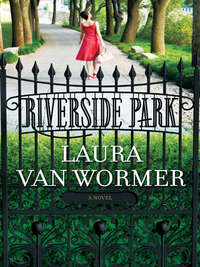
Kitabı oku: «Riverside Park»
*In which characters from RIVERSIDE PARK previously appeared.
*In which characters from RIVERSIDE PARK previously appeared.
*In which characters from RIVERSIDE PARK previously appeared.
*In which characters from RIVERSIDE PARK previously appeared.
*In which characters from RIVERSIDE PARK previously appeared.
*In which characters from RIVERSIDE PARK previously appeared.
*In which characters from RIVERSIDE PARK previously appeared.
*In which characters from RIVERSIDE PARK previously appeared.
*In which characters from RIVERSIDE PARK previously appeared.
*In which characters from RIVERSIDE PARK previously appeared.
RIVERSIDE PARK
Riverside Park
Laura Van Wormer

For
Dianne Moggy
whose gifts as a publisher are many.
And with much love and appreciation to Loretta Barrett, Nick Mullendore, Gabriel Davis and Christine Robinson.
In thy face I see the map of honor, truth, and loyalty.
—William Shakespeare,
King Henry VI
CONTENTS
THANKSGIVINGI
CHAPTER 1
CHAPTER 2
CHAPTER 3
CHAPTER 4
CHAPTER 5
CHAPTER 6
CHAPTER 7
CHAPTER 8
DECEMBERII
CHAPTER 9
CHAPTER 10
CHAPTER 11
CHAPTER 12
CHAPTER 13
CHAPTER 14
CHAPTER 15
CHAPTER 16
CHAPTER 17
CHAPTER 18
CHAPTER 19
CHAPTER 20
CHAPTER 21
JANUARYIII
CHAPTER 22
CHAPTER 23
CHAPTER 24
CHAPTER 25
CHAPTER 26
CHAPTER 27
CHAPTER 28
CHAPTER 29
CHAPTER 30
CHAPTER 31
CHAPTER 32
CHAPTER 33
CHAPTER 34
CHAPTER 35
CHAPTER 36
FEBRUARYIV
CHAPTER 37
CHAPTER 38
CHAPTER 39
CHAPTER 40
MARCHV
CHAPTER 41
CHAPTER 42
CHAPTER 43
CHAPTER 44
CHAPTER 45
CHAPTER 46
CHAPTER 47
CHAPTER 48
APRILVI
CHAPTER 49
CHAPTER 50
CHAPTER 51
CHAPTER 52
THANKSGIVING
WHILE CASSY COCHRAN wrapped her hair in a towel, she felt a kiss on the small of her back. She straightened up and smiled as arms slid around her waist to hold her from behind.
“So where do they think you are?”
“The office, to pick something up.” Cassy turned around, allowing herself to be kissed. “As soon as they take off I’ll come by to pick you up.” She wanted to say something else but was prevented from doing so. For about twenty minutes.
And then she had to shower all over again.
1
Thanksgiving Dinner at the Darenbrooks’
BEFORE DINNER CASSY asked everyone to please hold hands during grace.
“Who’s Grace?” someone said.
“Wait, wait!” pleaded a young second cousin of her husband’s. “Look, look,” she cried, jumping up to show everyone around the table the most recent issue of City Style. While Cassy exchanged looks with her husband, the fifteen guests politely admired the sight of the Darenbrooks splashed across the cover like movie stars. “Marriage of the Media,” it said above their smiling faces. “Cassy Cochran and Jackson Darenbrook,” it said below.
Their photograph might as well have been shot through linoleum for all the reality quotient it possessed. Instead of fifty-three and fifty-eight years old, the Darenbrooks looked on the far side of thirty. (There’s nothing worse, in publishers’ minds, than a life of grace, ease and luxury wasted on people readers could not imagine sleeping with.) The article was flattering, too. Cassy was billed as the stunningly good-looking woman of humble Iowa beginnings who dodged a career in front of the camera to become the founding president of the DBS Television network. Jackson was described as the brilliant Georgia heir who turned his father’s newspapers into the massive empire Darenbrook Communications was today.
The Darenbrooks, according to City Style, had the world at their feet.
The article breezed over Cassy’s divorce from producer Michael Cochran (and altogether skipped his alcoholism and how, the minute he got sober, he had dumped her), and mentioned the tragic accidental death of Jackson’s first wife, Barbara (and graciously omitted how Jackson dumped his children on his sister so he could become an international playboy).
“Perhaps we can look at it after dinner,” Cassy suggested.
The second cousin reluctantly took the hint (she did not get out much in East Binsley, Georgia), and leaned over to drop the magazine under her chair.
“Oh, Lord,” Jackson began, his drawl pulling farther South than usual, “we thank you for this food we are about to receive and we thank you for allowing us to spend this special day of Thanksgiving together.” Cassy’s husband had wonderful cornflower-blue eyes and a ready smile. He was a tall, very well built man with an enviously thick head of hair that was real. “We ask that you bless and watch over our loved ones who cannot be with us today, both in heaven and on earth.”
Jackson’s voice trailed off and everybody waited.
“Merciful God,” he continued, “please help the United States to be healed as a nation, and teach us to bring light and love to places of darkness and hate. Thank you, Lord, for your love and countless blessings for which we are so grateful. Amen.”
“Amen,” Cassy murmured, opening her eyes. “Very nice, Jack.” She pressed the button under the carpet with her foot to signal the caterers in the kitchen. The twenty-six-pound turkey came out first and was set down in front of Jackson accompanied with several ooo’s and ahhh’s. He started to carve while a detail of three out-of-work actors began the rounds with serving dishes.
Henry Cochran, Cassy’s only biological child, was seated to her immediate left. He had arrived two days earlier with his wife and young son. They were staying in the old Cochran apartment Henry had grown up in and which Cassy kept separate from the penthouse Jackson had created with the rest of the floor. Once there had been five other apartments on the top floor of 162 Riverside Drive, but one by one Jackson had acquired and added them to his new urban family manse.
At twenty-eight years old, Henry Cochran was still a good deal like his mother. He was tall, slender, blue-eyed and fair-haired (the latter, however, rapidly thinning, she noticed), but fortunately Henry had also inherited his father’s deep voice and broad shoulders so that he had not (as he had feared while growing up) turned out to be a ninety-eight-pound weakling. He was ecstatic to be a family man and doing extremely well as an architect. The only problem was the younger Cochrans were moving from Chicago to San Francisco to be near Maria’s parents, and Henry had been offered a new position that had made the move possible. Cassy felt she could not say anything because Maria was expecting another child and wanted more family around her, and living next door to the Darenbrooks in New York was not what Maria had in mind.
Cassy almost winced at the pain she felt in her heart at that moment. Having Henry living in Chicago had been hard enough; San Francisco seemed like the end of the earth.
“Good food, Mom,” Henry said.
“I’m sorry, Henry,” Cassy said, snapping out of her thoughts, “what did you say?”
“I said, ‘Great food, Mom.’”
“I’m glad you’re enjoying it,” she said automatically with a smile, but looked down at her own plate with dismay. The food her in-laws had requested—including sweet-potato pie with marshmallow topping and mushy string beans cooked with fatback pork—was severely at odds with the regime Cassy’s mother had pounded into her head as a child: six glasses of water a day and as much vegetables, fruit, fish and lean meat as she wanted. (Cassy’s mother, in her glory days, had been a beauty queen representing the great state of Iowa. That is until, as Mrs. Littlefield was always careful to phrase it, “my horribly cruel and unfortunate marriage.”)
Cassy had been blessed with beauty and a healthy body and, at fifty-three, was extremely grateful for both. She worked out with a trainer three days a week and thus far had only made some minor concessions to plastic surgery involving her face and eyes. It wasn’t that she wanted to look younger, really; she just wanted to continue resembling herself. Her face always caught her by surprise when she had a moment to study it in the mirror. When had that happened, and that and that?
She had worn her long blond hair (now with occasional silver) up on the back of her head forever. Whenever she considered cutting it everyone around her freaked out, some declaring it was who she was while others maintained it best highlighted her features. Others said it was the promise of what that hair might hold—when and if it ever came down—that still kept eyes on Cassy when younger beauty was around.
Henry leaned over to say, “I love you, Mom,” in the same way he used to as a child when he thought his mother might be upset. But Cassy wasn’t upset, just tired. And sad, already missing her son.
She reached to give Henry’s hand a squeeze. “I love you, too.”
Suddenly mashed potatoes and peas splattered over the side of Henry’s face and there was a screech of delight.
Ah, William. Cassy’s grandson. If ever someone resembled her first husband, Michael, it was he. William had the blackest hair, was built like a tank and was shy about nothing. His current vocabulary consisted of No, Mine and Rrraaarrrr (Henry and Maria had two dogs), and his favorite pastime was throwing things at people. If they didn’t sit on the child soon Cassy knew they would regret it. And as much as she loved Maria, she couldn’t help but wish she had a little more steel in her mothering. Hopefully Maria’s mother would help with that.
Cassy heard the deep laughter of her husband from the other end of the dining room table. Jackson had seen what William had done.
Sitting to Jackson’s right was his alternately anorexic and bulimic daughter, Lydia, who, like Henry, was twenty-eight. Sitting on Jackson’s left was his son, Kevin, who at twenty-six was six-foot-three and at least three hundred pounds.
After early go-rounds with Jack’s children when they were first married, Cassy had pleaded with Jackson to go into therapy with them. He never had. On the other hand, Jackson had always taken Henry’s word over that of his own children, never doubting that it was true, for example, that Kevin was stashing cocaine in Henry’s room or that Lydia tried to have sex with Henry.
While Henry and Maria tried to cope with their screeching, food-throwing son, Henry’s water glass was upended on the table. All of the out-of-work actors rushed into the kitchen and then rushed back out again with dish towels to blot up the water. William, at this point, was crying crocodile tears because his plate of ammo had been taken away.
“I would spank him,” Cordelia Darenbrook Payne, Jackson’s half sister, loudly advised from across the table.
“Right, Aunt Cordie Lou,” Lydia cried, pushing her chair back to stand up. “We all know how much good your spankings did me! Excuse me,” she added in exaggerated politeness to her father.
“Lydia,” Jackson started to say, but she ignored him and walked out of the dining room.
Then Kevin excused himself and left the dining room, as well.
William was now screaming and Maria, blushing heavily, pulled William up out of his high chair. “I’ll take him into the bedroom.”
“Why don’t you give him to me?” Cassy suggested, pushing her chair back slightly and holding out her arms. Maria seemed happy to hand him off. (At this stage of her pregnancy Cassy didn’t blame her.)
“William,” Cassy said sharply as she plopped him down in her lap. Her grandson stopped screaming to look up at her in a kind of awe. She handed him a dinner roll and picked up her fork, managing to take a few bites before she caught Maria’s bewildered expression. “At this age they’re better with anyone but their parents.”
“He gets mad because he can’t bounce on Maria’s lap anymore,” Henry explained.
If you think he’s mad now, wait until the new baby comes, Cassy thought. She used her napkin to catch drool dripping from William’s mouth as he gnawed on the roll, which killed her appetite.
Lydia reappeared and made her way to her seat smiling defiantly down the table at Cassy as Kevin came back in, as well. They were both high on something. Probably cocaine.
Jackson simply did not want to see it. Cassy supposed he was not unlike other fathers, figuring that by their late twenties it was none of his business what his kids did.
William fell asleep in Cassy’s arms, the remains of the roll clutched in his fist. When she kissed the top of his head and stood up, everyone took it as a signal that Thanksgiving was officially over and they were excused. Lydia was out the door first. Henry, Maria and William were next to leave in a car for JFK, Cassy fighting back tears. Then she hurried to help her Southern relatives organize their bags. Everyone except Cassy would board a limousine bus to take them to the Darenbrook Communications plane in Newark. They would drop Jackson and her stepson off in Savannah and then conclude their flight in their home city of Atlanta.
“I don’t know how you do it, darlin’,” Jack said under his breath to Cassy as he gave her a hug and kiss, “but we almost resembled a family today.”
Kevin kissed Cassy on the cheek. “Thanks, Cass, it was great.”
She smiled, taking Kevin’s arm and pulling him back a step. She leaned close to his ear. “If you ever bring drugs into this house again, I promise you, Kevin, you will never cross the threshold again. Have I made myself clear?”
Startled, Kevin stepped back.
“Oh, Cassy,” Cordelia Darenbrook Payne said, swooping in, “it was vunderbar, vunderbar as always. And the black-eyed peas were so good we’re taking them to eat on the airplane during the ride home.”
“Okay, guys, we gotta move,”Jack called to the group, tapping his watch.
“Mrs. Darenbrook?” The caterer appeared from the doorway. “We’re almost finished in the kitchen. I want to make sure everything is the way you want it before we leave.”
“Bye, darlin’!” Jack shouted over the crowd, waving to her.
“Safe journey, everyone!” Cassy called before closing the front door.
The kitchen looked better than it had when the caterer arrived and Cassy told him so. She gave everybody a small envelope (containing tips), and thanked them for such a lovely dinner.
“You made almost all of the food, Mrs. Darenbrook,” the caterer pointed out.
“I hope you young people are taking the leftovers home,” she said, addressing the group.
The workers held up bags of disposable food containers and thanked her.
Cassy saw the crew out the service entrance and walked down the long back hall toward the master suite, peering in at the state of the guest bedrooms, but not worrying about them since housekeeping would be back in full force in the morning. There was no trick to running any of the Darenbrook households, really. All it took was money.
The burden of Thanksgiving had been lifted and she felt her energy and spirits rising already. She vigorously brushed out her hair and then put it back up. She went into the bathroom to wash up a little and brush her teeth, then came back out to sit at the vanity to put on a little fresh makeup. She also exchanged the pearl earrings she had been wearing for two large diamond ones and took off her wedding rings. She threw a couple of things into a shoulder bag and hastily ran a lint brush over her dress. She went out to the front hall closet to retrieve a coat and suitcase and took the elevator down to the subterranean garage.
“I could have brought those down for you, Mrs. Darenbrook,” the attendant said, rushing over to take the shoulder bag and suitcase.
“No worry,” she said. She watched him put the suitcase in the trunk of her silver Jaguar. “I’m sorry you have to work today.”
“I’m not. I get double time.” He closed the trunk and hurried around to open the driver’s-side door for her. “I’m through here at eight and then we’ll have our big family dinner.”
“Oh, I’m glad.” She slipped down behind the wheel.
“So your house is finally quiet again, huh? That was a lot of people staying with you and Mr. Darenbrook.”
“Indeed,” she said, smiling.
“Mr. Darenbrook said he’s racing his boat in the Caribbean this weekend.”
“Yes, he is. With his son.”
“Think he’ll win? Oh, why do I even ask? Even when Mr. Darenbrook loses he still always seems to win somehow. Do you know what I mean?”
Cassy nodded, starting the engine. “Oh, yes, I know what you mean,” she assured him.
2
What Happened to the Darenbrook Marriage
AFTER THE HUMILIATING defeat of her first marriage, falling in love with Jackson Darenbrook had seemed close to a miracle. Cassy remembered the day Jack realized he was in love with her very well. They’d been arguing (they had always been arguing in the early days of the fledgling network), and suddenly Jackson stopped talking and stared at Cassy with a sense of dawning revelation. Cassy knew then how he felt about her. And in that moment she knew that she had been falling for him, as well.
She was forty-four when they married and Jackson forty-nine. His family and friends were astounded by the changes in him by the time he stood at the altar. “He’s a happy man, again,” Cordelia told her. “Thank God he’s a happy man again.”
Cassy took her vows as sacred. She felt blessed and reborn to have such a commitment come to her at that point in her life, and she was determined to appreciate every nuance of it. With the exception of ongoing problems with Lydia, those first couple of years were blissful. When not traveling on business—which both did rather extensively—they were together at West End (the corporate headquarters of Darenbrook Communications on the Hudson River at Sixty-fifth Street), here at home on Riverside Drive, or at the house in Litchfield. They sailed and skied and traveled continents; they worked out together and often spent downtime just lazying around, reading newspapers, watching TV or movies, eating good food and making love.
Cassy felt loved, respected and redeemed.
She never tried to compete with the memory of Barbara, Jackson’s first wife, because she knew she could never win in comparison to a saint who had died in her thirties.
Henry came home for brief periods while in college and he got on very well with Jackson. Kevin appeared erratically. They were married about two and a half years when Lydia tried to kill herself. Jack was away so Cassy hurried downtown to the emergency room of St.Vincent’s where the police told her Lydia had slit her wrists and then had been walking around Sheridan Square. The doctor said Lydia was on a combination of alcohol, painkillers and cocaine.
Lydia was crying for her dead mother when Cassy saw her. Cassy tried to soothe her, explaining her father was rushing back to New York and would be here as soon as he could, that her father loved her so much—
Something akin to The Exorcist then occurred. Lydia’s tears vanished and her eyes took on an eerie glitter while she told Cassy what a fool she was, what a stupid idiot she was. Didn’t she know that Jackson was incapable of caring for anyone except himself? That he had conned her like he conned everyone? And the only reason he had married Cassy was that Aunt Cordie Lou had thrown in the towel?
“Don’t you get it? He married you so you’d deal with me and Kev! You are so fucking stupid! You’re a glorified housekeeper, taking care of things while he runs around getting his rocks off!”
Cassy gratefully agreed with the doctor that Lydia be held in psychiatric for observation for the three days they could legally keep her. Or at least until her father arrived.
Jackson ended up not flying straight home but continued on his trip because, he said, Cassy seemed to have matters so well in hand.
In retrospect those two and a half years of marital bliss had been a gift from the heavens above. If Cassy’s world had exploded any sooner, she wasn’t sure what would have happened to her.
“I came to say goodbye,” the outgoing publisher of the Darenbrook newspaper in Charleston told Cassy, coming into her office at West End not long after Lydia’s suicide attempt. “I handed in my resignation. I’m going to be the publisher of a new magazine in D.C.”
“Well, I’m happy for you and miserable for us,” Cassy said, coming around from behind her desk, holding out her hand. “Congratulations, Sheila.”
“Thank you.” Sheila glanced back over her shoulder at the door. She was an attractive woman, in her early forties, with dark hair and green eyes. “Do you think we can talk a minute?”
“Sure,” Cassy said, going to close her office door, hoping Sheila was not going to try to pick her brain about how to effectively compete with the D.C. magazine Darenbrook Communications published.
They had scarcely sat down when Sheila burst into tears. Cassy didn’t know her very well and felt a little embarrassed for her. She got up to get Sheila some Kleenex and thought, I hope nothing’s happened to her child. Sheila had brought her little girl to West End on bring-your-child-to-work day the year before.
“I’m sorry,” Sheila said, trying to pull herself together. “It’s just been so stressful.”
“I understand. It was hard when I left my old job at WST.”
“You are such a wonderful person, Cassy,” Sheila said then, sounding miserable.
“I don’t know about that,” Cassy murmured. “Do you think you might have made the wrong decision, Sheila? That you’d like to stay on with us after all?”
Sheila looked at first stunned and then deeply pained. She brought the tissues up to press against her mouth.
“I might be able to help,” Cassy said gently.
Sheila slammed her fist on her knee. “I can’t stand it! I can’t stand by and watch how he’s deceiving you!”
It had hit her like a physical blow to the diaphragm. Cassy couldn’t breathe and then an icy fear started down her spine. She gripped the arms of the chair and forced herself to resume breathing, to sit there and breathe, and to listen.
Sheila told her. That she and Jackson had been having an affair. For a while. Since before he had married Cassy, in fact, while Sheila had still been married. She told Cassy about traveling with Jack on business trips, about meeting him once for a quick tryst in the side yard outside Cordelia’s mansion in Hilleanderville between dinner and dessert.
“For a long time I thought it was just me, and then you, too,” she told Cassy. “I finally wised up when my secretary warned me that she would probably be leaving soon because, even though she had only slept with Jackson a few times, she was sure he was the man for her. Then she asked for my opinion of how long I thought it would take for him to divorce you.”
Cassy excused herself, went in her private bathroom, quietly threw up, rinsed out her mouth and came back into her office.
“It’s almost every day,” Sheila said, starting to cry again. “He takes whatever attractive woman he can find. I don’t know, maybe he buys them off, I don’t know.”
Jackson didn’t deny a single thing Sheila had said. His eyes only took on deep, weary sadness. When Cassy had finished and was waiting for an answer, he took her hand, squeezed it and held on to it. “But it’s you I love,” he said simply. “That’s why I married you.”
She did not let herself cry. “Then why, Jack?” Oh, she had thought she knew why and it burned. He obviously found her sexually inadequate. (“How many times do you think a guy wants to screw Snow White?” Michael used to say.)
He had no explanation for his sexual exploits except to say that it had nothing to do with his love for her.
What alcohol is to the alcoholic, Cassy’s therapist told her, sex is to the sexaholic. Then she went on about endorphins and about the brain chemistry of the drinker, the drug abuser, the gambler, the bulimic—and the sexaholic.
Cassy had held her face in her lap. “You’re telling me I’ve done it again? I’ve married another addict?”
Like alcohol, the therapist told her, there was treatment for the disorder. Even rehabs specifically to treat it.
“No, I don’t think so,” Jackson said when Cassy asked him to see someone, a specialist that had been recommended. “I mean, not right now, Cass. I need to focus on this encyclopedia deal. I promise I won’t—you know—until I go.”
They continued to share the same bedroom in New York and Connecticut, and even started having sex again on the proviso he wore a condom until he was cleared of any possible sexual diseases. The encyclopedia deal had dragged on and he kept putting off going to the counselor but Cassy remained hopeful, particularly when after six months the tests came back negative. Lydia went off her rocker again in Mexico and they went there as a team this time, a united front. They resumed a more active sex life, no longer using a condom.
During this period she remembered why she had fallen in love with him. Jackson was infinitely kind and funny and endlessly interested in anything he sensed might interest her. He was also very affectionate, an element that had been sorely lacking in her first marriage, and they often held hands and almost always lay down together while reading or watching TV. He could also be extremely thoughtful about little things. He always tried to keep the newspaper fresh for her because he knew how much she liked a crisp paper. And if he had a cold and was coughing, he would quietly take himself off to a guest room in the night so as not to keep her awake.
He said he thought there was no need for them to go to counseling anymore. Didn’t she agree? That things were good? They were happy? She had hesitated but then agreed, mostly because he had said this on a Friday and she didn’t wish to ruin their weekend sailing.
When Jackson came back from a meeting in Atlanta the following week she knew. She knew because he had seemed distant and depressed and could scarcely look her in the eye. She said as much out loud while they were lying in bed, waiting to fall asleep. He said she was crazy, he hadn’t done anything and snuggled closer. Instinct prevailed and she sat bolt upright in bed and told him she did not believe him. He protested he was too tired for this tonight. Then she got out of bed, wearing one of the red (ugh) nighties he liked her to wear, and said they might as well have it out, because if he was not going to counseling then he was moving into the guest room.
“Fine,” he said in the darkness.
“Fine what?”
“Fine, believe what you want to believe, Cassy, but I don’t need a therapist so I’m not going. If you want to sue me for divorce over it, then go ahead. I’m tired and need some sleep.”
She hesitated, standing there in the dark, crossing her arms against the cold and feeling warm tears rolling down her face. (In the first years of their marriage she had only cried tears of gratitude. She had felt so good about the world, about herself, about their future. How had she not seen this side of him?)
“I mean it, Jack, if you won’t go to counseling…” She wasn’t sure how to finish the threat. She wasn’t sure how she wanted to finish it. They had already built so many things together, their families, their homes, the network. And what would she say? How would she explain? To Henry, to everybody? Oh, and would Michael ever get a good laugh out of this!
“I’m sleeping in the guest room,” Jackson announced, sighing heavily as he hauled himself out of bed.
She let him go and took a sleeping pill to knock herself out. The next morning when he came in to get dressed, she told him that if he valued their marriage at all he would at least go with her for counseling.
“I love you,” he said, frowning at her. “But I’m not going.”
“So you’re saying that our marriage is over?”
“I think that’s up to you,” he told her, walking into his dressing room.
That was where they had left it six years ago. If she hadn’t been so adverse to yet another public humiliation she would have left him then. The women, she had come to realize, had never stopped for more than three months in their entire marriage. A year later she sought the advice of a divorce attorney but then Henry announced he wanted to get married and the thought of that, of having to participate in the celebrations by herself in front of Michael and his young wife, had been too much. To his credit, Jackson had acted the role of the perfect husband to a T.
Cassy was moving toward leaving him again when Maria had announced she was pregnant. Henry was so happy and scared and elated that Cassy didn’t have the heart to do anything that would further worry him. And Henry would have worried about her. (If Henry had said one more time, “I’m so glad you have somebody, too, Mom,” she thought she’d lose her mind.) So with Jackson acting the part of devoted and attentive husband (which reassured Henry and incensed Michael, whose second marriage had since broken up), and with Cassy acting the part of devoted and attentive wife (which elated her in-laws, who also happened to make up the Board of Directors of Darenbrook Communications), Cassy didn’t know how she could ever get out of it. Or if she even really wanted to. So much, it seemed, relied on their pretense.
Perhaps the worst aspect of the situation was that their marriage was not always such a pretense. They still had their moments. Cassy wasn’t particularly proud of the fact that, on occasion, usually around some family event, they would look at each other with great fondness and sometimes, sometimes, they would make love.
With a condom, of course.
This last part, that once in a while they still had sex, remained the Darenbrooks’ special little secret, offering a little ghostly reminder of what Cassy had hoped their marriage would be.
Jack swore he still loved her more than anyone. Since there still were so many women coming and going, Cassy could not see how this could be true. She did not say the same to him, though, that she loved him best. Because she didn’t. She was very much in love with someone else, but that relationship was fraught with obstacles of its own. Still, it was wonderful to love and be loved.
Somehow Cassy was going to have to figure all of this out.
3
Amanda Miller Stewart’s Family, a Pretty Girl, and an Attentive Young Man
THE PRETTY GIRL lived in their building and came and went at odd hours. Amanda knew this because their eight-month-old precious accident, Grace, was cutting her teeth and sometimes in the wee hours Amanda would take her down to the lobby so she could talk to the concierge and the night security man while walking the baby back and forth, patting her little back. (It was best, Amanda had found, to let the children’s nanny, Madame Moliere, sleep through the night so she could get their two older children—Emily, age ten, and Teddy, age eight—organized in the morning.)
Grace had begun to fret at three-thirty in the morning on Thanksgiving, and since Amanda’s parents and Howard’s mother were staying with them, Amanda had quickly thrown on slacks and a sweater to scoop Grace up and pay a visit to the lobby. About fifteen minutes later a cab had pulled up to the entrance of the building and the pretty girl had come stumbling out of it. She had been rather astonishingly drunk. She was not as tall as Amanda, but taller than average, and had lovely dark brown hair. She also had a sleek body that only a girl in her twenties can possess. The girl had sworn under her breath as she banged her shoulder on the doorway, but did so in a manner that told Amanda the pretty girl was both well-spoken and probably well-educated.
Of course, if the girl lived in their building Amanda knew she must be a young woman of means.
The pretty girl had then almost collided with Amanda and Grace. She had reeled back, her large brown eyes trying to focus. She had looked at the baby and then back at Amanda. “You’re always stuck with the kids,” she’d said. “You should make Howard do more.”
The night security guard, who was an off-duty NYPD police officer (who once showed Amanda’s son the derringer he carried in his boot), had stepped forward to say he would see the girl upstairs to her apartment. Just as the elevator doors were closing, Amanda had heard the girl say, “Thank God I don’t have any kids.”
Amanda didn’t speak of it—the fact that the pretty girl evidently knew her husband on a first-name basis—until they had returned from the Thanksgiving Day Parade and she and Howard were in the kitchen trying to pull things together for dinner.
“That must have been Celia,” Howard said, squinting through the blast of oven heat, trying to see the meat thermometer.
“Celia who?” Amanda asked.
“Honey, I can’t read this thing.”
“Rosanne thinks we should sneak in a turkey with a whatchamacallit,” she said, looking over his shoulder into the oven, careful to hold her hair back. She still wore hers long, basically because her husband liked it that way. (Sometimes when Amanda turned around on the street or in a store she could see the surprise in people’s eyes that she was forty-four and not twenty-four. She had such beautiful hair still.)
“Fresh-killed turkeys from Ohio don’t come with whatchamacallits.”
“I know, darling,” she said. “I think Rosanne meant that, when your mother isn’t looking, we should just switch turkeys.”
“But then it wouldn’t taste awful and she’d know it wasn’t the one she brought and then she’ll start crying.”
This was not the first time they had discussed the mysterious fresh-killed turkey Mrs. Stewart insisted on bringing with her from Ohio every year, or the meat thermometer she extracted from wads of tissue paper as though it were an irreplaceable heirloom. But Amanda felt bad for Mrs. Stewart, who was a widow and lonely, and wanted to make her mother-in-law’s visits as pleasant as possible.
“Well, it is Thanksgiving,” she murmured. “We can do it once a year.”
Howard muttered something and used a dish towel to shove the turkey back into the oven and slam the door. “Okay, it’s done.”
“How can you be sure?”
“Amanda, we go through this—”
“Please just cut into it, Howard. We don’t want to poison anybody.”
They looked at each other and started to laugh. Howard slung the dish towel over his shoulder and moved over to Amanda, sliding his hands around her waist. “You must be exhausted.”
“I am tired,” she admitted, resting her head on his shoulder as he pulled her closer. She used to have such a narrow waist it was hard for Amanda to let Howard feel what she was carrying around now. She had been watching what she ate and exercised like a mad woman, but after Grace she could not seem to pull herself together like she had after Emily and Teddy. “How do you know this Celia?” she asked quietly from his shoulder.
“That girl? She’s a bartender at Captain Cook’s.”
“A bartender?” Amanda raised her head to look at him.
“Once in a while I’ll stop in and have a burger. And watch a game.”
Amanda walked over to retrieve the kettle, fill it with water and put it on a burner. She needed to warm the silver serving dishes with hot water before filling them. (She had inherited the silver from her grandmother and it made Amanda’s mother happy to see her using it.) “I didn’t realize you frequented bars while we were away.”
“Oh, that’s me all right,” Howard said, “in the bars, day and night. We’re talking maybe once in a blue moon, Amanda. It does get a little lonely around here sometimes.”
Amanda did not point out how, as a literary agent, and a very successful literary agent at that (president of Hillings & Stewart), Howard was inundated with people, phone calls and e-mail all day long. And when he did not have some professional soiree at night to attend, he always told her all he wanted to do was go home and collapse. He never said, “I’m lonely so I’m going to a bar.”
Their living arrangement was becoming an increasingly unhappy situation for Amanda. After 9/11 Emily and Teddy were frightened of tall buildings, airplanes, staircases, fires and crowds. Like so many families, the Stewarts had gone into counseling with the children, but neither parent could bear the idea of not doing everything they could to make their children feel safer. So Howard found a gorgeous house and property in Woodbury, Connecticut, and after some discussion, Amanda and the children moved out there. Before this, it had never occurred to either one of the Stewarts that they would ever live anywhere but in their beloved adopted hometown of Manhattan.
The children were enrolled in school, and Howard hoped that when Emily and Teddy were older they would attend Taft as day students. There was a wonderful horse farm next to them, Daffodil Hill, where Amanda boarded a horse for herself and a pony for the children. Madame Moliere lived with them as well (the house was huge), so that Amanda could still get some work in on a book she was under contract to write, about the court of Catherine the Great. Howard tried to come out on Thursday nights and go back into the city on Monday mornings. Amanda would bring the children into New York at the slightest excuse; she did not want them to be afraid of the place their parents loved above all others, Manhattan, and more specifically, the neighborhood of Riverside Park.
Howard grew up in Ohio, where his father had a landscaping business, and Amanda grew up in Syracuse, where her parents were still both professors at Syracuse University. Howard had attended Duke and then book publishing lured him to Manhattan; Amanda attended Amherst and her (closet) gay husband had dragged her to Manhattan.
Howard’s first wife had money, so he had not been pressed to make a lot of money while he worked his way up at Gardiner & Grayson to become an editor. He quit his job around the same time that his marriage broke up, started a literary agency, and had never looked back. It was with great pride that Howard had bought the Woodbury property on his own; Amanda knew her husband still considered this apartment as belonging to her, and that Howard wished as a family they did not still rely so heavily on the trust fund Amanda’s grandmother had left her. The money Amanda had earned (and still earned) from her first book, a biography of Catherine the Great, was different, Howard said.
Amanda was extremely proud of Howard. Men liked his well-defined masculinity and sharp, well-educated mind, and women liked his curly hair, beautiful manners, deeply expressive eyes and easy smile. And while Howard appeared to be every inch the sophisticated New Yorker, he was, at heart, still a boy from the Midwest who loved life.
The Stewarts had come a long way in their marriage. Certainly Amanda had. When she had met her future husband she could scarcely leave the neighborhood. She had suffered a complete nervous breakdown in her first marriage and had retreated into her work and this apartment. Besides her parents, there had only been two people who she trusted enough to let in. One was her housekeeper, Rosanne DiSantos, and the second, her elderly friend Mrs. Emma Goldblum, who would come for high tea. They were still very near and dear to her, and were, in fact, present this day at the Stewarts’ Thanksgiving dinner. If anyone had told Amanda that someday she would be running after three children, driving everyone all over hell and high water in a Lincoln Navigator and volunteering for The Parents and Teachers Organization in the Connecticut suburbs, she would have told them surely they were mad.
But that was exactly what she was doing.
Of course, had anyone told her she would ever agree to live apart from Howard for at least four days a week she would have said, “Never!” And lately it was more like six or seven days apart and getting worse.
“You can do whatever you like while we’re away,” Amanda said to Howard, trying to sound carefree. “I trust you completely.”
Howard looked at her from across the kitchen. “Ditto, my dear.”
Amanda only wished she knew why that pretty girl who called her husband by his first name kept parading around in her head.
Dinner finally reached the dining room table, and given the unusual collection of people they were entertaining went off rather well. Conversation with Amanda’s parents, the professors Miller, could be difficult to follow when Mother got lost in life’s metaphors and Papa wandered through lost civilizations, which is to say, to speak in their respective fields of English and history. Mother Stewart tended to talk about soap operas, so Amanda’s older friend, Mrs. Goldblum, could help out a little there. There were Emily and Teddy, of course; Grace snoozing in her carrier; Madame Moliere, and Miklov, the assistant director of the children’s soccer league in Connecticut. He was from the Czech Republic and the children called him Mickey-Luck. Also present were Rosanne DiSantos, no longer a housekeeper but a hospital LPN, Rosanne’s beau, Randy, a detective in the Bronx, and Rosanne’s seventeen-year-old son, Jason, who had to leave dinner early to go to work at Captain Cook’s. Amanda walked Jason to the door.
“The tips are really, really good on Thanksgiving,” he explained. Amanda had known this strapping young man since he was two years old. He was attending Bronx Poly Sci, hoping for early acceptance to the University of Pennsylvania to study engineering.
“Will Celia be bartending today?” Amanda casually asked.
Jason’s head jerked in her direction. “You know Celia?”
“She lives in our building.”
“Oh. Um, yeah, I guess she’ll be working,” Jason said, his face ringing with red.
Amanda returned to the dining room wondering if Jason was sweet on Celia or if he knew something about Celia he didn’t want Amanda to know. Like the fact that Howard went there while she and the children were in Connecticut.
Amanda had never entertained uncomfortable thoughts like these until Grace was born. She didn’t care what anybody said; carrying a third child at forty-three had almost finished her. Unlike her first two pregnancies, with Grace she’d been chronically tired and ill. She had also grown immensely heavy and the birth had been difficult, ending in an emergency cesarean. Mercifully Grace was fine, and after a few weeks, Amanda started feeling better. Physically anyway.
Most of the weight was off now, but Amanda’s hormones—or something—were still out of whack. Her considerable sex drive seemed to have utterly vanished. And there was no way, not with how well her husband knew her, that she could pretend otherwise. And she knew this hurt Howard’s feelings, that whatever sex life they could manage at this point was so one-sided.
Dinner flowed into dessert.
“Mickey-Luck’s going to play us tomorrow,” Teddy told Rosanne.
“He’s going to play you for a fool?” Rosanne kidded.
“No, in soccer!” Teddy said, laughing.
“Is that your real name?” Mrs. Goldblum asked the soccer coach. “Mickey-Luck?”
“Miklov,” he answered.
“Miklov,”Mrs. Goldblum rehearsed.
“I’ve got a new recipe for it,” Mother Stewart told Mrs. Goldblum. “Hot or cold, it makes no difference, it’s wonderful meat loaf. Just ask Howard.”
“With soccer and riding and music lessons,” Amanda’s mother was saying, “I’m beginning to wonder when these children have an opportunity to play.”
“I told you I didn’t like the play,” Amanda’s father said.
“Do you watch All My Children?” Mother Stewart asked Mrs. Goldblum.
“I watch all the children,” Madame Moliere answered in her heavily accented English.
“The cheeldren are great,” Miklov said, nodding. “They leesen, they practice and they do goot.”
Amanda and Howard tried not to laugh but it was difficult. There were so many conversations going on there simply was no thread to follow. Everyone seemed happy, though, which was all that really mattered. Even Miklov, who usually featured a deep sort of Slovak scowl, was smiling.
He was a good-looking young man of twenty-six whose professional career in soccer had ended in his own country with an ankle injury. Amanda never really understood how Miklov had come to their soccer league but she hoped it would lead to better things. The job did not pay well at all, which was why Howard had engaged Miklov to conduct private sessions with the children, to give him some pocket money. (Well, and to make the children better players.)
Mrs. Goldblum, Rosanne and Randy departed shortly after dessert and the wife of the building superintendent arrived to clean up. Madame Moliere prepared the children to leave for Connecticut while Amanda endeavored to sort out her parents. Mother Stewart was flying out of JFK very early in the morning so Howard was staying in the city with her tonight. After he dropped her off at the airport he would join his family and in-laws in Woodbury in time for the children’s holiday indoor soccer tournament.
Howard and Miklov took the bags down to the building’s garage and secured them under a tarp on the Navigator’s roof. Amanda’s father sat in the front seat; Amanda’s mother, Madame Moliere and Grace sat in the backseat; and poor Miklov was crammed into the rear jump seat with Teddy and Emily. Howard made sure everyone had their seat belts on and then walked to the driver’s window. “Drive carefully,” he murmured, giving Amanda a kiss on the lips.
“I shall,” she promised.
One of the greatest surprises of their marriage had been Amanda’s excellence as a driver. She loved it. Getting behind the wheel of a car gave her the same quiet thrill as when as a child, she had discovered someone had left the paddock gate open at her grandparents’ farm. It was the thrill of freedom, of suddenly having the way and the means to go wherever she wanted.
The drive to Woodbury was pleasant and the traffic not too bad. They swung into a rest stop for Emily to use the bathroom and get some gas but then everybody except Madame Moliere and Grace got out for one reason or another and it took a while to load everyone back in.
When they reached the house, Ashette, their black Labrador retriever, was overjoyed to see them. Amanda dismissed the house sitter, got her parents settled in their room and made sure Madame Moliere had her eye on the children. Then Miklov climbed into the front seat and Amanda drove him home to the Waterbury housing complex where the league had put him up. They talked a little bit about the tournament that started tomorrow. A lot of the children were away for the holidays so Emily and Teddy would probably play their whole games, which was great since Amanda wanted her parents to watch them in action.
“How are you getting on, Miklov?” Amanda asked him. She had been surprised when Miklov had accepted Howard’s offer of a bus ticket to join them for Thanksgiving dinner. Emily had not been, though. (“He’s all alone, Mommy, oh, so very, very alone!”)
“I miss my family,” he admitted, brushing his hair out of his eyes.
“Of course you do,” she said. “And I’m sure they must miss you.”
“My mother.”
She glanced over at him.
“My mother meeses me.”
“Will you go and see her? For a visit, I mean.”
“Not yet,” he said, turning to look out his window.
He probably couldn’t afford it yet. Maybe she and Howard could find some other parents who would engage him for private lessons.
While they drove through downtown Waterbury Miklov suddenly said, “This is a very happy day.” When he smiled he was very handsome, although his teeth needed some work. She had no doubt that would come in time. Perfect-looking teeth was still a very American thing.
When she pulled up in front of the dreadful-looking building where he lived she said, “Here we are.” She kept her foot on the brake, waiting for him to get out. She needed to pick up some milk on the way home. Her parents now only drank soy milk. What store would be open on Thanksgiving that would carry soy milk?
Mickey-Luck undid his seat belt and shifted to face Amanda, making the leather creak. “I will tell my mother about my American Thanksgeeving. I haf—”He looked down a moment and then raised his head to meet her eyes directly. “I say how kind you are.”
“Our family is very fond of you, Miklov. You’ve made a big difference in our children’s lives.” Because out here they miss their father terribly. So do I.
Miklov’s eyes traveled down to Amanda’s mouth for just a second and then he turned away, searching for the door handle. When he found it he stopped again and turned around. “You understand how beautiful you are, yes?”
Amanda’s eyes widened. And then she laughed a little. “Why, thank you.”
He made a fist and pounded his heart twice. “I feel it there. For you. You are so beautiful.”
Oh, save it, Mickey-Luck! she thought. It is being American that you think is beautiful, our money is beautiful, this ridiculously expensive truck is beautiful, having a family is beautiful!
“See you tomorrow,” she told him.
He looked disappointed as he got out. Then he turned around, ducking his head back into the truck. “People think I am a peasant but I am not,” he said in a rush. “My great-grandfather was a great general. My father went to school, he was a teacher. I am not a peasant, Mrs. Stewart!”
Somewhat startled, Amanda said, “Everyone knows you are a champion soccer player, Miklov, and an excellent teacher. And in America that is all that matters.”
Miklov was searching her eyes and it made Amanda uncomfortable. But then his dark mood seemed to lift and he smiled, closed the door and walked away from the truck. He did not look back.
Amanda took a deep breath and regripped the steering wheel. Miklov was very attractive.
She set out to find soy milk.
Ücretsiz ön izlemeyi tamamladınız.