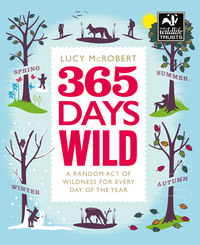
Kitabı oku: «365 Days Wild»

Copyright
William Collins
An imprint of HarperCollinsPublishers 1 London Bridge Street London SE1 9GF www.WilliamCollinsBooks.com
This eBook first published in Great Britain by 4th Estate in 2019
Copyright © Lucy McRobert 2019
Images copyright © Individual copyright holders
Cover design by Nathan Burton
Lucy McRobert asserts the moral right to be identified as the author of this work
A catalogue record for this book is available from the British Library
All rights reserved under International and Pan-American Copyright Conventions. By payment of the required fees, you have been granted the non-exclusive, non-transferable right to access and read the text of this e-book on-screen. No part of this text may be reproduced, transmitted, down-loaded, decompiled, reverse engineered, or stored in or introduced into any information storage and retrieval system, in any form or by any means, whether electronic or mechanical, now known or hereinafter invented, without the express written permission of HarperCollins
DISCLAIMER
The activities and content of this book are the author’s and do not necessarily reflect Wildlife Trust policy. The author and publisher expressly disclaim any responsibility for any effects arising in any way from the advice, information, recipes, activities or products referred to or described in this book.
Source ISBN: 9780008292423
Ebook Edition © March 2019 ISBN: 9780008292430
Version: 2019-04-22
For my mum, Alison, and my daughter, Georgiana. I wish you had met.
CONTENTS
COVER
TITLE PAGE
COPYRIGHT
DEDICATION
INTRODUCTION
HOW TO USE THIS BOOK
EARLY SPRING
1. Start a wild diary
2. Find your local patch
3. Search for mini wildness
4. Timelapse a tree
5. Lift up a log
6. Inhale a wild scent
7. Keep a window list
8. Think before you buy compost
9. Relax under a rainbow
10. Change your perspective
11. Learn a wild word: bumbarrel
12. Pick up a piece of plastic
13. Jump over puddles
14. Walk on the wild side
15. Follow a snail trail
16. Make a yummy mud pie
17. Grow some tasty cress
18. Take your time with celandine
19. Share dinner with ducks
20. Read a wild book
21. Grow your own sunflowers
22. Discover the urban jungle
23. Think before you buy baby wipes
24. Scatter seedbombs
25. Download a wild app
26. Learn a wild word: narcissus
27. Dance with grebes
28. Spy a hovering kestrel
29. Totally urban otters
30. Identify five gorgeous garden birds: blackbird
31. Identify five gorgeous garden birds: dunnock
32. Identify five gorgeous garden birds: robin
33. Identify five gorgeous garden birds: blue tit
34. Identify five gorgeous garden birds: woodpigeon
35. Discover the wide web
36. Buzz with the first bee
37. Forget everything you thought you knew about seagulls
38. Plant a gutter garden
39. Flutter with the first butterfly
40. Feed your feathered friends
41. Build a pop-up bird hide
42. Grow-your-own veggies
43. Quack over the first ducklings
44. Survey like a scientist
45. Plant a wildflower border
46. Tune in by switching off
LATE SPRING
47. Go cloud crazy
48. Spice up with wild garlic
49. Let it grow wild
50. Eat seasonally
51. Drift off (or wake up!) to wild sounds
52. Feel the sting of nettle soup
53. Hear a buzzard mew
54. Think before you buy shower gels
55. Go wild for gorse
56. Leave mud for martins
57. Learn a wild word: circinate vernation
58. Race to find a rainbow
59. Check your fishy credentials
60. Light it up with buttercups
61. Meander with a river
62. Blossom with cow parsley
63. Forge a daisy chain
64. Think before you buy bleach
65. Stretch in the garden
66. Brew a leafy tea
67. Follow a bumblebee
68. Tiptoe through the bluebells
69. Walk barefoot on grass
70. Get sole-ful on sand
71. Make a splash in a river
72. Squelch your toes in mud
73. Tread lightly on pebbles
74. Grow borage for bees
75. BioBlitz your garden
76. Keep an eye out for newborns
77. Shimmer with mayflies
78. Take part in a two-minute beach clean
79. Learn wild birdsong: use a wild app
80. Learn wild birdsong: draw what you hear
81. Learn wild birdsong: use word association
82. Learn wild birdsong: record songs to play them back
83. Learn wild birdsong: get out and practise!
84. Learn wild birdsong: finding the time
85. What’s inside cuckoo spit?
86. Scale to great heights
87. Scream with the first swifts
88. Fall in love with nature
89. Learn a wild word: crepuscular
90. Admire a wild view
91. Wild mint mojitos
92. Identify five majestic woodland trees: hazel
93. Identify five majestic woodland trees: white willow
94. Identify five majestic woodland trees: English oak
95. Identify five majestic woodland trees: ash
96. Identify five majestic woodland trees: elder
97. Spot Oxford ragwort
98. Help a caterpillar on its way
99. Forget-me-not, forget-me-nots
100. Harvest a wild salad
101. Gin three ways - part one: rhubarb
102. Dig the perfect pond
103. Soaring with swooping swallowtails
104. Create a hedgehog highway
105. Map your wild neighbourhood
106. Build with the Lego plant
EARLY SUMMER
107. Flutter with moths
108. Build a wild hideout
109. Watch a butterfly emerge
110. Try your hand at hapa zome
111. Think before you buy washing up liquid
112. Learn a wild word: petrichor
113. Decorate with nasturtiums
114. Sail downstream with an elf boat
115. Salute the shield bug
116. Identify five beautiful butterflies: brimstone
117. Identify five beautiful butterflies: comma
118. Identify five beautiful butterflies: speckled wood
119. Identify five beautiful butterflies: small white
120. Identify five beautiful butterflies: small tortoiseshell
121. Breakfast with the birds
122. Celebrate the cinnabar
123. Taste wild elderflowers
124. Find a camouflaged creature
125. Chatter with house sparrows
126. Release a muddled-up moth
127. Ring with the experts
128. Tread carefully around toads
129. Save a humble bee
130. Flap with bats in the dusk
131. Roll down a grassy green hill
132. Get crafty in the sunshine
133. Find a wild heart
134. Dance in a downpour
135. Identify five wonderful wildflowers: red campion
136. Identify five wonderful wildflowers: common poppy
137. Identify five wonderful wildflowers: oxeye daisy
138. Identify five wonderful wildflowers: foxglove
139. Identify five wonderful wildflowers: cornflower
140. Spot an ugly duckling
141. Be busy like an ant
142. Encounter a wild peacock
143. Enjoy demoiselles
144. Cook in the sunshine
145. Think before you buy a toothbrush
146. Learn a wild word: moonglade
147. Tell wild stories
148. Notice nurdles in the sand
149. Blow a dandelion clock
150. Examine an intricate lacewing
151. That badger sniffed my toe
152. Admire a noble stag
153. Find a hidden jewel
154. Skate with a pond skater
155. Play under the stars
156. Crystallise rose petals
157. Admire a beautiful orchid
158. Sample some seaweed
159. Admire blooming buddleia
160. Get stuck to stickyweed
161. Enjoy an evening picnic
162. Indulge in a natural facemask
163. Down with pesticides
164. Gin three ways - part two: elderflower
165. Build a moth trap
LATE SUMMER
166. Whirl with a whorl
167. Dip your toes in the water
168. Count the spots on a ladybird
169. Nap in nature
170. Find a chalky cuttlefish
171. Form a grass brass band
172. Make a plant pot saucer drinker
173. Enjoy a tipple in the garden
174. Think before you buy laundry powder
175. Learn a wild word: dimpsey
176. Find the biggest leaf you can
177. Hover with an emperor
178. Hide and seek in the wild
179. Press petals for decorations
180. That time I nearly weed on a natterjack toad
181. Identify five buzzing bees: buff-tailed bumblebee
182. Identify five buzzing bees: red-tailed bumblebee
183. Identify five buzzing bees: honey bee
184. Identify five buzzing bees: common carder bee
185. Identify five buzzing bees: leafcutter bee
186. Count the arms on a starfish
187. Make a wild splash
188. Build a sandy sea monster
189. Catch a crab
190. Lounge with limpets
191. Marvel at a mermaid’s purse
192. Hunt woodland beauties
193. Think before you buy kitchen sponges
194. Learn a wild world: zygodactylic
195. Lunch in the wild
196. Sweep like an entomologist
197. Sleep under the stars
198. Go organic
199. Share a tipple with insects
200. Wasp, honey bee or hoverfly?
201. Identify five flowing grasses: yorkshire fog
202. Identify five flowing grasses: smooth meadow grass
203. Identify five flowing grasses: tall fescue
204. Identify five flowing grasses: cock’s-foot
205. Identify five flowing grasses: quaking grass
206. Explore a summer orchard
207. Stalk a wild tiger
208. Forage the first wild blackberry
EARLY AUTUMN
209. Sketch a fallen feather
210. Skim pebbles across the water’s surface
211. Blackberry vodka
212. Make some funky leaf prints
213. Bug-in-a-mug hotel
214. Show off on a nature table
215. Search for sea glass
216. Put a wiggly worm in the grass
217. Bust the myth of the daddy longlegs
218. Get tipsy with boozy berries
219. Sketch a wild landscape
220. Build a bank for beetles
221. Enjoy a thunderstorm
222. Share what makes you wild
223. Think before you buy straws
224. Learn a wild word: inkcap
225. Invite a friend into nature
226. Sweeten it up with rosehip syrup
227. Be in it to win it
228. Let it rot
229. Mix up natural dyes
230. Paint some wild pebbles
231. Fly in the wind
232. Whirl with a whirligig
233. Nibbled by a squirrel
234. Track wild creatures
235. Try wild jam
236. Discover poo-dunnit?
237. Harvestman or spider?
238. Run like the wind
239. Make a magic wand
240. Save a snail
241. Wobble with a red kite
242. Search for woodlice
243. Birdwatch on your bike
244. Bathe in the woods
245. Take a shower beneath a tree
246. Identify five funky fungi: fly agaric
247. Identify five funky fungi: amethyst deceiver
248. Identify five funky fungi: collared earthstar
249. Identify five funky fungi: scarlet waxcap
250. Identify five funky fungi: beefsteak fungus
251. Tell a deer by its rear
252. Design a spore print
253. Organise a wild outing
254. Spy an incy wincy spider
255. Learn a wild world: psithurism
256. Track the autumn colours
257. Take your colours outside
258. Think before you buy bottled water
259. Eat the rainbow
260. Win at a snail race
261. Construct bug-ingham palace
262. Gin three ways - part three: sloe
263. Build a hedgehog home
LATE AUTUMN
264. Follow a nature trail
265. Make a hedgehog from a pinecone
266. Go wild at work
267. Design a leaf picture
268. Hunt for galls
269. Think before you buy shampoo and conditioner
270. Learn a wild word: smeuse
271. Learn a wild word: yaffle
272. Think before you buy over-the-counter packaging
273. Make a leaf tile
274. Spot mice on the underground
275. Decorate with a mobile
276. Identify five fiery leaves: English oak
277. Identify five fiery leaves: field maple
278. Identify five fiery leaves: ash
279. Identify five fiery leaves: horse chestnut
280. Identify five fiery leaves: rowan
281. Salute a magpie for luck
282. Leave a pile in the corner
283. Create a stained-leaf window
284. Dolphin delight
285. Eavesdrop on a tawny owl
286. Blog about the wild
287. Carve a wild pumpkin
288. Bake a gingerbread birdbox
289. Count the nests in a rookery
290. Identify five fallen seeds: conkers (horse chestnut)
291. Identify five fallen seeds: catkins (silver birch)
292. Identify five fallen seeds: acorns (oak)
293. Identify five fallen seeds: helicopters (field maple)
294. Identify five fallen seeds: cones (alder)
295. Wander through a woodland
296. Scale a wild obstacle course
297. Wear it really wild
298. Create a poppy picture
299. Enjoy nature’s fiery beauty
300. Check your bonfire for wildlife
301. Go bonkers for conkers
EARLY WINTER
302. Spot a wild mammal
303. Print your own Christmas cards
304. Make a Christmas wreath bird feeder
305. Write a wild haiku
306. Compile a wild playlist
307. Buy local produce
308. Learn a wild word: gelid
309. Leave footprints in the frost
310. Mimic a pterodactyl
311. Kiss under real mistletoe
312. Go natural when wrapping
313. Think before you buy balloons
314. Organise a work litter pick
315. Waste-not-want-not
316. Think before you buy glitter
317. Celebrate the humble stick: pooh sticks
318. Celebrate the humble stick: lightsaber or sword
319. Celebrate the humble stick: journey stick
320. Celebrate the humble stick: walking stick
321. Celebrate the humble stick: toast marshmallows
322. Revel in a raptor roost
323. Set a wild ringtone
324. Learn a wild word: murmuration
325. Create a calendar
326. Gaze at the moon
327. Make some reindeer food
328. Give a wild gift
LATE WINTER
329. Sketch a naked tree
330. Get starry-eyed
331. Dabble with ducks
332. Spot winter ghosts
333. Paint your wild photo
334. Cuddle your favourite tree
335. Ice some owl biscuits
336. Think before you buy clingfilm
337. Learn a wild word: halcyon
338. Learn a wild word: apricity
339. Think before you buy plastic cutlery
340. Find a flock of finches
341. Catch a snowflake on your fingertip
342. Make a fairy garden
343. Rise with hedgehog bread
344. Spot colourful thrushes
345. Create ice decorations
346. Enjoy an edible pond
347. Make room for birds’ nests
348. Volunteer your wild time
349. Identify five winter wildflowers: shepherd’s purse
350. Identify five winter wildflowers: snowdrop
351. Identify five winter wildflowers: chickweed
352. Identify five winter wildflowers: daisy
353. Identify five winter wildflowers: teasels
354. The humpback whale I never thought I’d see
355. Enjoy mini murmurations
356. Plant a mini nature reserve
357. Pen an acrostic poem
358. Watch a real swan lake
359. Stalk a dinosaur
360. Find the first frog spawn
361. Catkins calling
362. Become a wildlife champion
363. Build a wild snow creature
364. Admire the setting sun
365. Reflect on your wild year
CONCLUSION
ACKNOWLEDGEMENTS
INDEX
ABOUT THE AUTHOR
PICTURE CREDITS
ABOUT THE PUBLISHER

Introduction
My wild life
Growing up in rural Leicestershire, I was lucky to experience a wild childhood, scouring every tree, every park, every field and every hedgerow for adventure, running (relatively) wild and free.

As I got older, things changed; that innate love of nature faded (although it never disappeared) as I discovered boys, make-up and the shackles of modern school curriculum. When I was thirteen, my mum got very ill with cancer. She died three years later. As I’ve grown older, I’ve realised that I didn’t start to grieve properly for years: not until I was at university. I now believe that this grieving process was triggered, and ultimately overcome, by rediscovering my love of nature: a love that I’d forgotten until then.
In my twenties I began to reconnect with nature. I met my now husband, Rob Lambert, who is a hardcore birder and twitcher, inevitably falling down that rabbit hole myself. By the age of 28 I’d seen over 400 different species of bird in Britain (Rob has seen well over 500!). The more I immersed myself, the more I learned about the challenges facing our modern environment. I knew I wanted to make a difference. This sense of purpose, more time spent outdoors, a love of the natural world and an increasing knowledge of it, helped to bring the peace of mind that I had lacked since losing my mum.
Now, a handful of years later, my whole life revolves around nature. I have fallen in love with new landscapes – the Highlands and Islands of Scotland, the Isles of Scilly, the Somerset Levels, North Norfolk. And my wild life has become even more exciting with a new little traveller to share adventures with. I wrote this book while I was pregnant, and in September 2018, Rob and I welcomed Georgiana Tean Lambert into our lives. Georgie already has a wild life of her own, visiting Kent to see a beluga whale in the Thames at one week old; exploring the Isles of Scilly by land, air and sea at a month; and watching for birds and wildlife every day. She has enriched our wild experiences and lives.
I work for a wildlife charity called The Wildlife Trusts, engaging hundreds of thousands of people with wildlife and helping them to fall in love with it, too. As part of my job, I helped to set up the annual campaign 30 Days Wild to encourage people to do something wild every day for 30 days. This book takes that campaign a step further – why not live all 365 days of the year with nature in mind?
I hope that this book will give you plenty of ideas for your own wild adventures. Wildlife and wild places are much closer than you think, so have a fabulous time finding your own wild life.
The Wildlife Trusts
No matter where you are in the UK, there is a Wildlife Trust standing up for wildlife and bringing people closer to nature near you. Their work is returning wildlife to our towns and countryside and touching the lives of millions of people, young and old, from all walks of life. Each of the Wildlife Trusts believes that everyone can make a positive difference to their local environment – whether schools, councils, farmers, businesses or individuals – and that by working together we can achieve nature’s recovery on land and at sea.
Visit their website at wildlifetrusts.org.
Wildlife Watch
Wildlife Watch is the junior branch of The Wildlife Trusts and the UK’s leading environmental action club for kids. Taking part in Wildlife Watch is an exciting way to explore your surroundings and get closer to the wildlife you share it with. And the best thing about being a member is that by joining Wildlife Watch you’ll be helping your local Wildlife Trust to care for the wildlife where you live! Visit wildlifewatch.org.uk.
The 30 Days Wild Campaign
Setting up the Wildlife Trusts’ 30 Days Wild Campaign inspired me to write this book. The campaign encourages people to get outdoors every day in June by providing them with inspiring ideas: ‘Random Acts of Wildness’. Once June is over, we ask them to stay wild and The Wildlife Trusts are there to help. Put simply, The Wildlife Trusts believe that all our lives are better when they’re a bit wild.
You don’t have to do something every single day, but by becoming more aware of your natural surroundings, enjoying the wonders nature can bring and occasionally even giving it a helping hand, most people will find that they feel better. It becomes unconscious, too: people always ask me, ‘when do you find time to go birdwatching?’ The simple answer is that I am always birdwatching and enjoying wildlife: whether I’m on a train, at work, at home or spending time with friends. And it’s wonderful.

What is a Random Act of Wildness?
A Random Act of Wildness is any little thing that you can do as part of an average day, that allows you to experience, learn about or even help nature near you. It can take a few seconds – like taking a moment to smell a wildflower on the way to work; or a few hours – like creating a whole area for wildlife in your garden. Some Random Acts of Wildness don’t have to take any time at all, but instead are all about making little changes to your daily routine that will ultimately be better for wildlife, like buying a re-usable coffee cup or using products that are good for the environment. To help you, I have pulled together my top 365 Random Acts of Wildness, but that doesn’t mean you shouldn’t get creative and make up your own. The best Random Acts of Wildness immerse you (if only for a few seconds) in nature, setting your senses alight. Smelling freshly fallen rain, tasting the sweet explosion of a fresh blackberry as you pop it in your mouth, wriggling your toes in the icy waters of a stream, waking up to birdsong. It’s not just about seeing, but experiencing the wild in every way possible.

Wild, happy and free
When it comes to letting the wild into your life, a little will go a long way. That’s why Random Acts of Wildness are perfect: they’re quick and simple to do, and when put together they add up to a big change – for you and for wildlife.
We all instinctively know it: spending time outdoors is good for us. After all, we are part of nature, so it makes sense that getting your daily wildlife fix will do you the world of good. There’s lots of science out there now that underpins this, too: spending time in nature makes us happier and healthier. Just like eating a balanced diet and exercising helps our minds and bodies, wildlife and wild places help us to get active, encourage us to be more social, improve our confidence and creativity, and help us cope with stressful life events. Nature can help us recover from illnesses, cope with grief and loss, and even help people to manage mental health problems, like anxiety, stress and depression. In many ways, it’s the ultimate medicine – and it’s free.
There’s no excuse for not getting the whole family involved, too. Nature is great for all ages and can have the biggest impact on the young and the elderly, so take the kids, grandma and grandpa and anyone else you can find on this wild adventure with you.
Everyday wild
Random Acts of Wildness aren’t about trekking to distant wild lands, climbing mountains or getting lost in dense jungles – they are about the wild near you. If you want to experience nature every day, it has to be local. It’s also been proven that doing something wild every day can have a significant impact on your health and happiness: this isn’t about an annual nature fix by going on an exotic holiday, it’s about discovering how amazing the nature on your doorstep already is.
Wild places are all around us. Each one is home to very different kinds of wildlife, but all of them can be fun to explore. I want to help you make the ordinary extraordinary. As an introduction, I’ve pulled together some of my favourite wild places and I hope that as you begin your wild adventure, you’ll get to experience some (or all) of these landscapes. They can all be found right here in the UK: proof that you don’t have to look far to find your own wild life.
Wild places
Gardens
Finding the wild every day has to start close to home, and every garden has the potential to become a wild place, no matter how small. If you don’t have a garden, you could work your magic on a balcony or transform communal spaces with your neighbours. Domestic gardens in the UK are thought to take up over 430,000 hectares. Imagine the difference we could all make for wildlife if every garden was wildlife-friendly: we could create the UK’s biggest nature reserve!
There are a few key things that you can do to make sure your garden is a wild garden. Some of these are full-blown Random Acts of Wildness, so they’re covered in detail later on, but think simply about what wildlife needs to feel safe, secure and at home: food, water and shelter. A garden bursting with bugs will also attract birds and other animals. By making sure that your insects have some cover (grass, log piles or compost heaps, for example) and plenty of food (nectar- and pollen-rich plants), you’ll be encouraging other wildlife in, too. Avoid using slug pellets and pesticides. If you have room, even the smallest of ponds will bring huge diversity, and you can support wildlife by providing feeders and nest boxes.
In the spring and summer, look out for a whole range of beautiful butterflies fluttering among the flowers, like painted ladies, peacocks or small tortoiseshells. A healthy population of moths and beetles will attract bats to your garden, too. Birds like house sparrows, starlings, blackbirds, robins, wrens and dunnocks are quintessential garden species that can be seen all year round, and you might also attract a variety of tits and finches. If you’ve got a pond, common frogs and common toads might make themselves at home, and a small hole in your fence will make your garden accessible for hedgehogs.

Parks and churchyards
I’ve always loved the way that parks can bring people together. Whether a children’s play area or a vast, green common, these places can be great for getting your daily wild fix. The same can be said of churchyards. Quiet places of tranquil reflection, the peaceful atmosphere in a churchyard can help you hone in on birdsong. In the winter, scan the tops of berry-laden trees (like rowan or holly) for thrushes, which will feast on these tiny fruits: song and mistle thrushes love these areas, and redwings and fieldfares may stop over, too. An open grassy park will be great for green woodpeckers. Hedgehogs love to rummage around in fallen leaf litter, while baby rabbits might be seen taking their first unsteady steps. Even foxes and badgers use these areas to explore. A park or churchyard can be a magical place at sunrise, so wrap up warm and experience the dawn chorus, or welcome in spring by noting when you first see snowdrops or daffodils shooting up.

Towns and city centres
With so many people living or working in cities now, it’s important to be able to find the wild in the urban jungle. Surrounded by concrete, glass and high rises, it can be hard to imagine how any wild animal could find a home here, but trust me when I say that cities can be unexpected places in which to have a really wild experience. Birds will use the tall buildings as makeshift cliff faces, building their nests and raising their young high up to avoid predators. Gulls, ducks and pigeons all use this tactic, and now peregrine falcons have adapted their lifestyle, too. In many of our major cities, peregrines can be seen swooping and diving among the buildings. Foxes, deer and hedgehogs make the most of our cities, and being so used to people you can often get much closer to them. With so many towns built on rivers, otters can occasionally pop up, and cormorants and herons may choose to fish along the banks. Flowers will grow in pavement cracks and overgrown, abandoned sites (known as ‘brownfield’ sites) can become quickly colonised by a range of birds, bugs and mammals.
Woodlands and forests
I was lucky enough to grow up near to a woodland, where I was allowed to play and explore with my friends. At the time, it seemed like the biggest forest in the world, full of hiding places, trees to climb and hidden treasures. ‘My’ woodland is in fact little more than a spinney, but with its criss-crossing paths and hidden wonders it isn’t any less magical. In the spring, it’s carpeted with bluebells; the trees are covered in budburst and birds bellow out their chorus. In the summer, it’s alive with butterflies, and as the autumn sets in, fungi erupt from every tree or rotten branch, and mushrooms sprout from the leaf litter. It’s a typical broad-leafed woodland, with dappled light, lush undergrowth, a strong earthy smell and a healthy population of crows, rooks and jackdaws. Smaller birds, like finches, are regulars, along with great spotted woodpeckers, treecreepers and nuthatches. In the spring, wild garlic fills the air with a pungent smell. If you take time to explore a woodland near you, you might also spy tawny owls, jays, muntjac and other deer, as well as badger setts and fox dens.

Little copses and spinneys like this can be found all over the place, but there are of course much bigger forests to explore. Trees are either deciduous (lose their leaves in the winter) or evergreen, which hang on to their leaves or needles all year round. Depending on the kind of woodland you’re in, you’ll see different wildlife wherever you go. The Forest of Dean in the southwest is home to wild boar; while forests in the north of England and Scotland might contain red squirrels, pine martens or specialist birds, like the capercaillie of the Caledonian pine forest in Inverness-shire. Forests in the south of England can be home to beautiful butterflies like purple emperors or white admirals, and wildflowers like red campion and orchids. No matter how big or small, woodlands are perfect for a wild adventure.
The coast
Britain is a coastal country. From stretching sand dunes to pebbly beaches, foreboding tidal mudflats to rocky cliffs, as an island nation we love to be close to the sea. Living in the Midlands, I try to get to the coast as often as possible for my dose of vitamin ‘sea’. Whether it’s a gentle stroll on the sand (with a quick litter-pick thrown in), scanning out to sea for whales, dolphins or porpoises that might be seen (Britain has an amazing variety of marine species), or heading out on a boat to watch seabirds or seals, our shores offer endless possibilities for experiencing wildlife. Discover starfish, crabs and shellfish living in rockpools, wonder at wading birds like sanderling and turnstone as they scurry along the shore, and enjoy the overwhelming noise (and smell!) of a seabird colony teeming with puffins, guillemots, razorbills, gannets and gulls.
Fields, farmland and meadows
Fields and farmland are pretty much what you’ll think of when you imagine the countryside: over two-thirds of the land in the UK is farmed in one way or another. The best farmland to enjoy wildlife on is managed in a traditional way: thick hedges, smaller fields and a mix of crops or grasses. This is farmland at its best: where you’ll find barn owls, kestrels and yellowhammers; huge flocks of finches, partridges and buntings. They’re making the most of the seeds and grasses on offer, as are the many small mammals that might live here – voles, mice and shrews. The bigger fields that only have one crop growing in them, like rapeseed, aren’t as rich in wildlife, but you can still scan down the hedges for a wildlife surprise. Look for boxing brown hares in March, or skylarks singing loudly overhead. Meadows are a much rarer habitat, brimming with wildflowers, lush grasses and, in the summer, hundreds of butterflies, moths and other insects. Most meadows are protected now and carefully managed using traditional methods; flowers like poppies, oxeye daisies, bee orchids and cornflowers are particularly stunning.
Hedgerows and country lanes
Okay, so hedgerows and country lanes aren’t really wild places in themselves, but you can often find wildlife around the edges of them. I’ve included them because they’re ideal foraging spots in the spring, summer and autumn. They’re wonderful places to find edible gems like elderflowers, wild rosehips, blackberries, damsons, sloes and crab apples, and this feast will bring in great wildlife, too: birds, mammals and insects. Just make sure you have correctly identified any fruits, nuts, fungi or berries before you tuck in, as you could accidentally eat something poisonous.

Rivers, streams and ditches
Who doesn’t love Wind in the Willows? The picturesque scene of a gently meandering river, lined with lush green vegetation, overhanging willow trees and reeds sprouting along the banks. Smaller brooks babble alongside fields, canals cut straight paths through our towns and countryside, and smaller ditches might lurk beneath a hedgerow or in a woodland. All can be bursting with wildlife: a healthy river might be home to water voles, kingfishers or maybe even otters. Stately grey herons or little egrets will stand motionless in the water, and of course there may be fish, too. Rivers and streams make wonderful locations to experience wildlife; search among the reedbeds in the summer for more elusive wildlife like sedge warblers or Cetti’s warblers – even if you don’t see them, you’ll hear them! Always be wary near these waters though; some rivers and streams are perfect for a wild swim, while others may hold fast currents beneath their serene surfaces. Make sure you know the waterway well if you’re planning to do more than walk beside it.

Lakes, ponds and wetlands
Lakes and ponds are hugely diverse wild places, which offer delights all year round to any wild explorer. They vary season by season, so if there’s one near you, make sure you check back throughout the year to see how it changes. Wetlands come in all shapes and sizes; from reservoirs to old quarries; Scottish lochs to woodland ponds; marshland, bogs and fens. These places are all about the ducks, geese and swans in the winter, as well as otters and water voles. In the summer, you might get visitors like the osprey, a huge bird of prey that only eats fish. You’ll also be in for a treat with elegant dragonflies and damselflies in the summer, too. Great crested grebes perform an elaborate courtship dance in early spring, while moorhens and coots will be around all year. Wading birds like oystercatchers and redshanks might skitter around the edges looking for food in the mud. A vast wetland with plenty of reedbed might even have birds like marsh harriers or bitterns.
Mountains, moorlands and uplands
For most people living in the UK, mountains and moorlands are the settings for wild and romantic novels (Wuthering Heights, anyone?), or maybe holiday destinations. Most of us don’t live nestled among snowy peaks or on the tops of windswept hills. I’ve included them here though, because these landscapes are so different from any other and because they make up a third of our land. A walk atop the hills might bring you into contact with red grouse, wading birds that breed on the high tops (like dotterels or golden plovers) or birds of prey like peregrines, merlins or hen harriers (which are now very rare in England). You might also be lucky enough to see a mountain hare or red deer. The flowers and plants make the uplands really special; heather will look at its most beautiful in late summer, and you can also look out for wildflowers, bracken and bilberry. Sphagnum mosses make up much of the vegetation in blanket bogs (and let’s face it, ‘sphagnum’ is a great word, too).
A note on nature reserves
I haven’t included nature reserves as one of my favourite habitats because each one is unique: it’s hard to generalise and compare. The experiences you can have on them vary so much that they’re not a habitat in their own right – rather they are made up of a mosaic of ecosystems. They are of course great places to explore and discover wildlife. The Wildlife Trusts have the biggest network of nature reserves in the UK, and 93 per cent of people living in England live within six miles of one of these special wild places. They’re always carefully managed and protected for wildlife, so can be perfect if you’d like to take up volunteering in your local area. A lot of them will have ‘hides’ – special buildings, usually made from wood (glorified sheds) – that you can sit in to watch the wildlife up close. Hides are an acquired taste: most of them can be a bit draughty and you have to sit very quietly so as not to disturb the nearby wildlife. I wouldn’t recommend hides as places to inspire children; stick to the immersive experiences where they can get hands-on and run around a bit. For the seasoned wildlife-watcher, though, they can be tranquil and enjoyable. Many nature reserves have special ‘designations’ – meaning that they’re protected for a reason – and many can’t allow dogs in. When on a nature reserve, always stick to the paths; don’t pick any plants or disturb the wildlife.
Really wild life
The UK is a hugely diverse country, full of so many different animals that it would be impossible to list them all. I have pulled out the main groups of animals you might encounter on your adventures, with a few ideas on the best ways to enjoy them. Where you could have a really wild experience, it’ll be listed as a full-blown Random Act of Wildness, and I’ll give some handy hints and tips on the best ways to get up close and personal to our star species.

Fur
There are loads of different species of mammals living on land in the UK; we know most of them from children’s books – Mr Badger, Ratty and Mole from Wind in the Willows, or Beatrix Potter’s Mrs Tiggy-winkle – but in reality they’re quite difficult to see. Squirrels, rabbits and foxes might be spotted easily in towns, villages and cities, but having a wild encounter with a hedgehog, badger, water vole or otter is much trickier. There are also seventeen species of bats living in the UK, not to mention different kinds of mice, voles and shrews; a family of mammals called the ‘mustelids’ (which includes stoats and weasels); mountain and brown hares; two species of squirrel (the native red, which is now only found in the northern parts of England, Northern Ireland and Scotland; and the non-native grey, now found across much of England and Wales); and no fewer than six species of deer. Add to these, animals like beavers and wildcats, and you’ll see that there’s an awful lot of fur out there. Most mammals are highly secretive or nocturnal, and some are incredibly rare, but I’ve included several Random Acts of Wildness that will help you get a little bit closer to our furriest of neighbours. None of our mammals are dangerous or predatory to humans, but some will give you a nasty nip if you venture too close. Never try to stroke or pet wild mammals; if you find an injured mammal, phone a local wildlife rescue centre.

Feathers
There’s a reason why birdwatching is so popular in the UK, and that’s because of the sheer variety of species it’s possible to see in a day, month, year – or even a lifetime. Around 220 species breed here, but we also get lots of birds arriving in the autumn to spend the winter, jetting off to warmer climates as the weather gets colder, or just passing through on their migration. Field guides can help you identify individual species, as can birding websites. Every wild place and every part of the UK will have different kinds of birds living in it, so look out for different species wherever you go. Gardens are the best place to start practising your identification. When you see a new bird, make a note of where it is (on a bird feeder, in a field, on a lake), what it looks like (colours, size, structure), any features that make it stand out (a long, pointy bill, for example) and what it’s doing. When you get home, you’ll be able to look it up online or in a book. With so many birds to choose from, it’s best to get the hang of the common birds first before trying your hand at anything rarer.
Flippers
Marine mammals are often forgotten about when we think about British wildlife, but around the UK are many different species of whales, dolphins, porpoises and seals. Seals are the easiest to enjoy, as they come up on to beaches to breed, play in the shallows and rest. There are only two species that live here: the grey seal and the common (or harbour) seal. If in doubt about which you’re looking at, remember that greys look more like dogs, with long snouts, while common seals look more like cats, with shorter noses. To see whales, dolphins and porpoises (also known as ‘cetaceans’), your best chance is to go out on a boat. There are lots of hotspots for cetaceans around the UK that will enable you to see different species, but the most commonly sighted are harbour porpoises (which are very shy), common dolphins (which love to bow ride on the front of boats), bottlenose dolphins (big, acrobatic and dark grey) and minke whales.
Fins
Unless you’re an avid fisherman, the fish you have the best chance of seeing is the Atlantic salmon, as they leap from the water on the way to their breeding grounds upstream. Weirs and waterfalls are not going to stand in the way of this amorous beauty, as they fight their way up-river. Other species that you might see as they disappear down the gullet of a heron include trout (rainbow and brown), bream, carp, perch and pike. If you see a kingfisher beating up a tiny silver fish, you’re probably looking at a minnow.
Scales
With just six species of reptiles in the UK, snakes and lizards are an easy group to get your head around. There are three snakes – the adder, smooth snake and grass snake; the sand lizard; the common lizard; and the slow worm, which despite looking like a snake is actually a legless lizard! Only adders are venomous (though not deadly), but they’re so shy that your chances of seeing one are slim. Any encounters with these gorgeous creatures are special. They will bask on warm, sunny days, soaking up the rays, but are very easily disturbed; they will sense your footsteps as you approach, and will probably beat a hasty retreat before you get close. You might encounter grass snakes in your garden; they like to lay eggs in compost heaps. These gentle creatures are a sign of a healthy and thriving garden and are best left undisturbed.
Slime
This is a bit of an unfair title for amphibians, but let’s face it, most of them are quite slimy. Amphibians in the UK are a pretty simple bunch: two frogs, two toads and three newts. In your average garden pond, you might find the common frog, common toad or smooth or palmate newt. Frogs and toads are easy to separate: the former are smooth, shiny and hop; the latter are warty, appear dry and crawl. Newts are like tiny dragons that live in your pond, and these species are hard to separate. The rarer and protected great crested newt is larger, warty, dark along the back and with a bright orange belly, splotched with black. There are also populations of marsh frogs and natterjack toads living in very specific areas where they are protected.

Legs
Okay, I lied. Not everything in this group has legs. Invertebrates make up the biggest of the wildlife groups I’ve listed here: there are 45,000 species in the UK! These can be split into 25 major insect groups, including grasshoppers, beetles, bees, butterflies, moths and dragonflies; ‘arthropods’ like spiders and woodlice (these guys have the skeleton on the outside); and then everything else, like snails, slugs and worms. It’s easy to be a bit grossed out by bugs, but remember: life on earth as we know it depends on them. A third of what we eat is dependent on insects, including fruit, honey and chocolate. Up close and personal, bugs can be the most beautiful creatures in the UK, as well as the most helpful, and they’re literally everywhere: we just need to help you find them!
Petals
Wildflowers are often markers of the seasons: for example, snowdrops signal the coming of spring and oxeye daisies follow the summer sun across the sky. Bluebells and foxgloves will blossom in a woodland, while other species, like orchids, prefer carefully cultivated meadows. Even the seashore has wildflowers: thrift and sea holly. A wildflower meadow in full blossom will be alive with bees, butterflies and other pollinators, drinking in the sweet nectar, and is best viewed throughout the spring and in early summer. A riot of colour, wildflowers have a delicate and understated beauty; if you can make room for them in the garden, do! Don’t pick them though; instead, buy from a garden centre or cultivate your own in your garden.

Bark
There are more than 50 species of native trees and shrubs in the UK: three native conifers – yew, Scots pine and juniper; shrubs like holly and guelder rose; and also broadleaf deciduous trees, including many well-known favourites such as ash, silver birch, elm, maple and, of course, oak. Lots of trees are identified largely by their flowers, fruits or nuts, or by the shape of their leaves. Deciduous trees will drop their leaves in the winter, and this can make for one of the most spectacular times of year: watching a woodland change colour in the autumn is magical, and who doesn’t love searching around for acorns or conkers as they fall from the trees? Some trees are also fabulous for their edible bounty, with treats like elderflower, which blossoms in late spring; blackthorn (or ‘sloe’), which makes a favourite tipple, sloe gin; and crab apple. As always when foraging, enlist the help of an expert until you know what you’re doing: lots of berries in the UK are poisonous to humans.

Spores
Don’t be alarmed, but there are over 15,000 different species of fungi in the UK. Gulp (or not, as the case may be)! If nothing else, get to know some basic fungi as the names are totally enigmatic, onomatopoeic and downright fun. Some of them look really weird as well. Fly agaric is your typical toadstool: red with white spots, with fairies living underneath it. Beefsteak fungus looks like (you’ll never guess) a sirloin sticking out of the side of an oak tree. Stinkhorn is funny on all sorts of levels. Jelly ear fungus, often found on elder, looks like a human ear, and puffballs are hugely satisfying in being perfectly spherical. I’m not often going to tell you not to do things in this book, but I am making an exception in this instance: do not eat a single slither of wild fungus unless you know that it is edible. The safest way to learn is with an expert forager, and I’d absolutely urge you to do this if you’re after some food for free.
Wild kit – what do I need?
Most of the Random Acts of Wildness in the book are designed to be done with minimal equipment. There are just a few key items that will make your wild adventures even more exciting and comfortable…
Warm and waterproof clothing
Who are we kidding? Our beloved British weather is totally unpredictable, and if you’re not prepared it can put a dampener on the wildest of adventures. This is especially true if you’re getting the kids involved in your newfound love for the wild: children need to feel warm and safe to have fun and really get stuck in, so making sure they’re comfortable will make everything a lot easier.
Wellies
If you can get your hands on a good pair, do. There’s nothing worse than having cold, wet toes as you trudge through the wild, and a lovely pair of wellies coupled with cosy, thick socks will do the trick.
A thermos flask
Even in the summer, it can get a bit chilly outside, and loads of Random Acts of Wildness will be hugely enhanced with a warming mug of hot chocolate, a strong coffee or a nice cup of tea. Whatever your favourite tipple, investing in a good thermos flask for those chilly days, early mornings and late evenings will be money well spent.
Binoculars
If you’re really getting into your wild adventures, it might be time to invest in a pair of binoculars, which will help you explore wildlife and wild places in more detail, and cause the minimal amount of disturbance to sensitive wildlife. They’re not just great for birds, but will come in handy for scanning the sea for marine life and watching mammals, too. You can pick up a good pair for around £100, and as with anything, the more you spend, the better the quality. Lots of nature reserves and visitor centres have demonstrations where you can test different pairs to see which ones are best for you.
A field guide or two
As a book addict, my house is simply teeming with field guides for every different kind of animal you can think of: birds, butterflies, whales, dolphins, moths, bats, mammals, wildflowers, fungi and more. You don’t need all of these: when you’re starting out, there are loads of free websites that can help with identification. You can also download field guides as apps on to your smartphone. But if you’re like me, and love the feel of a book in your hands, buying one or two of your choice might be a good investment. Pick your favourite Random Acts of Wildness and work out which ones you need from there. If you’re getting into foraging, I would recommend buying a book that you can take with you, so you’re always aware of what you’re picking.
A smartphone or camera
This may seem counter-intuitive. After all, we’re trying to get you outside into the wild and away from all that technology. But a smartphone or camera can be very useful to document your adventures, help you with identification and, of course, take photographs. Just don’t get addicted to it and don’t let it replace your wild adventures.

How to use this book
The Random Acts of Wildness have been ordered roughly by season, although most can be done at any time of year: just do whatever takes your fancy on the day. Though most activities are great for kids, some – like the DIY gin recipes – are not, so parents, please supervise. As well as lots of really Random Acts of Wildness in the book, you’ll notice that there are some common themes that appear throughout.

Wild words
There are lots of ‘wild words’ for you to learn and try to use in everyday conversation. Words are magical things. They’re full of mischievous ideas, paint beautiful pictures, and tell us stories of the world around us. Lots of people grow up without knowing what these words are and what they really mean: are apples and blackberries fruits or phones? Are chatrooms more important than clovers, catkins and conkers? Of course not. We can all make room for a little more nature in our brains by learning some wild words, sharing them with other people and putting them into practice by having amazing wild experiences. The words scattered throughout the book are my favourites. See if you can use them. What are your favourites? You can even make up your own words – that’s how language is born!
Think before you buy
Again, there are lots of these tips included. They don’t require much effort at all – just a little bit of conscious thought when you’re out doing your regular weekly shop. Every time we clean our houses, do the dishes, take a shower, get crafty, eat takeaway food, and so on, we’re having an impact on planet Earth. Help is at hand, though – I’ve pulled together some easy switches to make in your everyday life that will allow you to do your bit for Mother Nature.
Identify a wild species
In every chapter there are examples of wild plants and animals described (with photos) that should help you feel more confident in identifying some of the most common species you might see every day. From bees to trees, grasses to fungi, there are interesting hints and tips to guide you in figuring out what species you’re looking at. Don’t worry – you don’t have to remember all of these by heart (I certainly can’t!); just keep referring to the book if you’re not sure. If you find that you really love learning about a certain group of plants or animals, think about investing in field guides for those species.

Unexpected Random Acts of Wildness
Unexpected animal enounters can happen anywhere and at any time. Some of them can be completely accidental, while others are even more magical than you expected. They can happen to anyone, too. I’ve included some of my own unexpected Random Acts of Wildness to show you how, once you begin to immerse yourself in a wild life, you can encounter unbelievable species. The eight included in this book are some of my most enchanting wildlife experiences – from bow riding dolphins to breaching humpback whales and encounters with badgers and natterjack toads. There are a lot more I could have picked from, too. Once you start your own wild life, you’ll find that you have your own moments. I’ve also included a few hints and tips to show you the best way to have a similar experience.
Staying happy and safe in the wild
I don’t want to impose lots of rules on your time in the wild: this is about what you can do, and not what you can’t. That said, being sensible and looking after nature while you’re out enjoying it will ensure it thrives for future generations. All the activities in this book are meant to be carried out responsibly, and it is your responsibility to ensure that all Random Acts of Wildness keep yourself and the natural world safe. Whether you’re climbing a tree, dipping your feet in the water or tasting a wild blackberry, take care.

The Countryside Code
There’s a simple code to follow when you’re out enjoying wild places, for the benefit of both people and wildlife. You can find a copy of the full code online at gov.uk/government/publications/the-countryside-code, but here are the key points:
Respect other people. Many people, just like you, love spending time in wild places – they live there, work there or go there for pleasure. So when you’re exploring, stick to footpaths and leave gates the way you find them (whether they’re open or closed). Climb over stiles and through gaps, never over walls or fences. Treat farm animals and vehicles with caution and respect, giving them a wide berth. If you see a problem, let the local landowner know.
Protect the natural environment. Take as many photos as you like – but never pick wildflowers or dig up trees to take home. Make sure that all litter gets collected. Don’t light fires or drop cigarette butts. Dogs must always be kept under control and cleaned up after, and make sure to respect local rules: if an area doesn’t allow dogs, it’s for a reason. There might be ground-nesting birds or a rare habitat that needs protecting, or livestock in the area. It’s your responsibility to find out what these rules are, and the internet is a great place to start.
All wild plants are protected under the Wildlife and Countryside Act (1981) and it is illegal to dig up or remove a plant without permission. Some species are specially protected (these can be found on Schedule 8 of the Wildlife and Countryside Act (1981)).
Prepare to enjoy the outdoors. Stay safe by doing a little prep if you’re going into wild areas: look up your location online or in an up-to-date guidebook. Remember, you may not have phone signal, so always let someone know where you’re going. The weather can change quickly in the uplands, so be prepared with warm clothes, waterproofs and something to eat or drink. Follow local signs and guidance.
Wild swimming
Wild swimming can be great fun, but it must be enjoyed responsibly and safely. This book gives no guidance as to locations or specific situations, so before taking a dip, make sure that you have researched your activity thoroughly, looking at local conditions, legal access and your own physical suitability for the swim. Give fishermen a wide berth and respect local landowners’ wishes. Before getting in the water, check for changing or rip tides, strong currents, weed or debris in the water, cold or deep water, or anything else that could cause harm. There are loads of online forums and websites that can provide information about the best swimming locations – these are the best place to start. Even better – join a local wild swimming group, who can offer support, activities, events and social opportunities, too!
Wild foraging
Many wildlife sites don’t allow commercial foraging, so keep your foraging for domestic use only. Some sites don’t allow foraging at all, so always check for local guidance and legal protection – it’s illegal to pick some species. Some plants and fungi are poisonous to humans, so be 100 per cent sure of identification and edibility before you eat any. Courses are a great place to start or go out with an expert to pick up top tips. Books and the internet are good resources, too, but if there are any doubts on identification, it’s best not to eat it. Only forage where there is a lot of food to be had and only take what you need. Leave plenty for local wildlife populations, which may depend on it.
Be respectful, be responsible, and have wonderful adventures!
EARLY SPRING
1. Start a wild diary
Welcome to the start of your wild adventure – 365 Days Wild! I promise, you are going to have a really wild time and you’re going to love every second. There are 365 Random Acts of Wildness here for you to try out. Every single one will encourage you to fall in love with, learn about or even help wildlife and wild places near you. So, what are you waiting for?
As you start doing more and more Random Acts of Wildness, you might forget what you’ve done already, so start a wild diary. You could either buy or make one and decorate it with drawings or sketches, or even fallen leaves and pressed petals. The most important thing about your diary is that it will help you reflect on all the different Random Acts of Wildness that you’ve already done, and plan what you might do next.
Write down everything you do and, if you’re feeling arty, you could draw little pictures or even stick in things that you find – feathers, leaves and so on. You could include notes about wildlife you’ve seen, like birds or insects; who you were with at the time; and where you went.
But that’s only the beginning – as well as what you’ve done, make a note of how those Random Acts of Wildness have made you feel. Did you feel excited, calm, relaxed, nervous, grumpy, inspired, tired, joyful? Be completely honest with yourself and make a note of anything you think or feel as you’re doing your Random Act of Wildness that day.
This will also give you a little reminder to do something wild every day, as you’ll want to write it down. If you miss a day – that’s fine. We all lead hectic lifestyles and finding that wild time can be tricky. Hopefully your diary will help you make time, no matter where you are or what you’re doing.
Finally, as you’re filling up the pages, don’t forget to look back on what you’ve been doing, and remember all the Random Acts of Wildness you’ve done. How does it make you feel when you re-live those memories? Hopefully you’ll begin to see how amazing a wild life really is.


2. Find your local patch
Wildlife and wild places are all around us. You just have to know where to look and what you’re looking for. Wildlife can find a home in the most unusual of places, so start with those you know well: your garden, your neighbourhood and any regular journeys you make, such as to work or school. Is there a park or churchyard within a mile or two? Maybe there’s even a local nature reserve. This is your ‘patch’ – a little bit of the world that you can get to know better than anyone else. Take the first step towards exploring your local wildlife and within a short space of time you’ll become a local patch expert.
To start with, you won’t need anything other than your senses. As you get more confident, you may need a website, app or book to help you identify wildlife, and perhaps a pair of binoculars, but these aren’t essential. Identify an area near you that looks promising: lush, green and with some wildlife.
Exploration is about using all your senses, so start by looking and listening for wildlife. Can you hear birds singing? Can you see different flowers? Do the leaves have different shapes? Begin by noticing one or two little things every day in your patch and make a note of them in your diary (or on a blog or calendar).
Try and get back to your patch every few days (or if you’re feeling ambitious, every day!) and build on what you’ve already noticed: what else is there? Is anything new? Is the weather changing what’s happening? Try different times of day as well, keeping notes all the time. If you’re struggling to identify wildlife while you’re there, take photos or notes or make sketches.
Keeping lists of the wildlife you’ve seen and how it’s changed over the seasons will bring a huge sense of achievement. And reflecting on your memories will bring a sense of connection with your very own wild patch.

3. Search for mini wildness
Habitats don’t have to be huge to be diverse – it’s all about your sense of perspective. Nature can find a way to flourish even in tiny spaces. See if you can spot wildflowers, dandelions or grasses sprouting out of the sides of walls, between cracks in the pavement, or even in the gutters above. You’ll see a jumble of weeds growing up near the roof of a house or an office building. That’s all part of the magic. Lichens and mosses love to grow in fresh, clean air on any available surface, on benches, trees, the sides of buildings, so open your eyes to these undiscovered wild places and see what you can spot. Remember, weeds are just plants that are growing in the ‘wrong’ place. We should be celebrating weeds, not uprooting them! Next time you see a dandelion or some daisies, before you seek vengeance, take a moment to appreciate just how pretty they are.

4. Timelapse a tree
Is there a tree you go past every day on the way to work, or one near your house, in a street or local park? This Random Act of Wildness will only take a few seconds and a camera phone, but you’ll need to go back to your tree at least twelve times over the course of a year – your 365 Days Wild. Focusing on a local tree will make this as easy for you as possible, especially if it’s a tree you pass every day. All you need to do is take a photograph. Try and get the whole tree in, from the roots to the very end of the twigs. Save the photo (you’ll need it again), then repeat as often as you can, making sure that you return to the exact same spot each time to take the photograph. You could do this once a month, once a fortnight, once a week, or even daily if you like a challenge! You’re creating a timelapse of your tree, and as you look back through your photos you’ll begin to see the subtle changes that we take for granted – when the first buds appear, when the tree is full and lush, when the leaves begin to change colour and fall, and when the branches are bare and naked. If you can keep it up all year round, you’ll get a diary for your tree. You could print your photos off and create a collage, or if you’re a techy whizz then you could create a single display or even a video of them on your computer – perfect for sharing with friends!

5. Lift up a log
Look for a log that’s been lying on the ground a good long time. This could be anywhere – in a woodland, in your garden, in the park. Carefully, using gloves if you like, lift one end and see what might be lurking in the cracks. To us, this may not look like much, but a fallen log, decaying inside, with lots of bits rotting away, creating a yummy, woody mulch, is the perfect mini ecosystem for all sorts of invertebrates, or maybe even amphibians like frogs or newts. The trick is to be gentle, and don’t pick anything that looks too heavy. Just peek underneath – what can you see? Look for brightly coloured beetles, like ladybirds, or earwigs scurrying for cover. Centipedes and millipedes will love this damp, dark hideaway, and slugs and snails might tuck themselves into the cracks. Even if you don’t know the species, see how many different creatures you can spot. When you’re finished, make sure to lay the log back down exactly where you found it. That’s somebody else’s home, after all!

6. Inhale a wild scent
Make the most of your most underappreciated sense today: smell. The natural world is bursting with gorgeous (and some not so gorgeous!) aromas, and they only take a few seconds to enjoy if you’ve got a jam-packed day. Try and find different wild smells, even if you’re in the city and think that you’re confined to fast-food joints, car emissions and whatever other unpleasantness might be lurking about.
Trees have a smell, bushes and flowers have a smell, freshly fallen rain on a hot pavement has a smell. It’s about taking a bit of time in your day to find something wild and see what it smells like. In the spring and summer, target wildflowers growing in unusual places or wild in mini meadows. In the winter, it might be more challenging, but see what you can find. My personal favourites are gorse flowers, pine needles and the dank smell of a woodland after it has rained.

7. Keep a window list
Pick a window with a view either from your house or your workplace. Make sure that it’s got a bit of variety, so overlooking a garden or your street, a park or green space, or a few trees. Keep a pen and a notebook on the windowsill. Every time you see a new animal from the window, make a note of it. You can only include wildlife that you see from that window, so other rooms in the house or workplace don’t count. Look carefully at all the different places where wildlife could be hiding – in the tops of trees, flying overhead, buried in bushes, perched in the distance. Don’t forget to check for insects crawling along the window ledge, too! Once you’ve been looking for a few days, you’ll find that you know this familiar scene much better than you did before. You’ll also become a bit obsessed. If you want to challenge yourself further, get a friend involved and ask them to do the same from a window of their choice; you can compete for the best window list!

8. Think before you buy
Peat-free compost has been around for years, and it’s a must-have for the conscientious gardener. Traditional composts contain a substance called peat, which is mined from peaty bogs around the world. It’s taken years to form and is a hugely valuable resource when left out in nature – it locks up carbon, helping to fight climate change, and is a great habitat for plants, mosses and beasties. The processes involved in extracting it are devastating huge areas of the countryside. So next time you’re shopping for compost, insist on peat-free. Even better, make your own (find out how here).

9. Relax under a rainbow
This Random Act of Wildness requires the right type of weather, but when it happens you should savour the beauty. When there is rain in the air and the sun breaks through the clouds, rainbows can form in the atmosphere, arching over the earth. This natural spectrum of light is caused by sunlight refracting and reflecting through the moisture and raindrops. We’ve all seen them, so rather than ruing the rain, take a minute to stop and relax under this natural light show. Does it get stronger or begin to fade? Is it a full arch or broken by clouds? Sit back and admire it – what’s your favourite colour shining in the sky?

10. Change your perspective
This Random Act of Wildness is simple, but surprisingly good for you! Rather than looking down at your phone, change your perspective and look up. Give your neck a rest, stretch your muscles and search for birds in unusual places, insects above you, or even just clouds racing by overhead. You might see gulls, like kittiwakes, nesting on top of buildings, or wagtails hunting on rooftops, pumping their tails as they go. Peregrine falcons love cityscapes, using the buildings like cliffs and crags. All of that looking down can’t be good for you, so eyes to the skies today and enjoy the sun, rain or wind on your face!

11. Learn a wild word
Bouncing along from tree to tree, look out for little black, white and pink bumbarrels moving through in flocks. They are, of course, long-tailed tits. Long-tailed tits stick together. In early spring, they’ll begin to build intricate, teardrop-shaped nests of moss, feathers and spider webs. You may see young, non-breeding birds helping their older relatives, getting the nest ready and ship-shape for the eggs and chicks. They huddle together at night, packed tightly on a branch. Other great nicknames for these gorgeous little fellas include prinpiddle and mumruffin.

12. Pick up a piece of plastic
Plastic can be one of the worst things for nature and our environment. Most plastics don’t break down naturally on their own, and even the biodegradable ones can take years and years. Sadly, we’re almost completely reliant on plastic products and packaging – me as much as anyone – and when discarded outside it can cause serious problems for our wildlife. It can be accidentally eaten by birds and mammals, who might mistake it for food. If it makes its way into rivers, it’ll soon be in the sea, where it can be eaten by fish, whales and dolphins. In short, there’s no place for plastic lying around on the ground.
Challenge yourself today to pick up a piece of plastic litter that’s been left on the ground. If you can, take it home and recycle it, but at the very least pop it in a bin. You might find drinks bottles, old sweet wrappers, food packets and random bits that don’t make any sense at all. If you can, use a pair of gloves and wash your hands afterwards. This little Random Act of Wildness might save a little life – that’s definitely one worth doing for today!
13. Jump over puddles (or in them!)
Any good at long-jump? No, me neither. The great thing about trying to jump over puddles is that it’s just as much fun when you end up in them. On a lush rainy day, don your wellies and unleash your inner wild child. If you’ve got little ones in your life, this is a great way to motivate them to spend some time outdoors, even in the wet weather.
Find a spot with lots of puddles – try to avoid the really muddy ones. Big brown puddles full of squelchy mud may look appetising, but be aware that it’s easy to slip and lose a welly. Have you ever got your shoe stuck in the suction of thick, oozing mud? It’s all fun and games until your foot pops out and you fall over! Once you’ve got your course, challenge everyone to jump over every puddle – start with the smallest ones and work your way up to the biggest. It’s up to you if you allow a run up or if you all go from a standing start. You can give points for the biggest jumps or the most stylish. Remember: if you’ve got to drive or have a long walk home, take some spare socks and a towel – there’s nothing worse than cold, wet feet.

14. Walk on the wild side
Walking is a good form of exercise – one that we mustn’t underestimate. When you’re tired and you’ve had a long day, it can be hard to motivate yourself to get up and out of the house to stretch your legs. I certainly struggle at times. Walking in the local area gives me a motivation and I feel much better for it. I use the step counter on my phone to set myself targets, and take the opportunity to explore some wild places that I have never been to before, even if they are only minutes away: the canal, local footpaths across fields, and longer walks along the river. I spot wildflowers, which I never notice when I’m driving or running, and because I am motivated by the step counter (and not my time, speed or distance) I’m at liberty to stop and examine them and take photos. Sometimes I borrow a dog from a neighbour (which they appreciate, too!).
This is an easy one to do and a great way to get a nature fix, whether it’s just for a few minutes at lunchtime or a longer weekend stroll. If you’ve got a packed schedule already, see where you can squeeze in a few minutes to take a nature walk, or bring a bit of nature consciously into an existing walk. On the way to school or work, try spotting birds, flowers, seeds or trees, and comparing what you experience each day. If you have a busy day, take a few minutes at lunch to explore somewhere local, and at weekends, try and prioritise a longer walk, either by yourself or with family.

15. Follow a snail trail
As they slowly slide along in their quest to get from a to b, snails leave a shiny trail behind them. This trail is a slime, excreted by the snail to help them keep moving, pushed along by one muscular foot. The slime reduces the friction between them and the ground, making it easier to lug their shell around (imagine carrying your home on your back all the time!). These trails, if undisturbed by rain or anything else, can make little treasure maps to follow and explore. Find a good long one and follow it – it might cover the pavement, trees, plants, leaves, furniture – anything that’s in its way. The snail will just keep on sliding over everything.
At the end of the trail you might find the snail itself. If you’re very gentle and very careful, lift the snail on to your hand. It will retract inside its shell at first, but if you sit patiently and quietly, it might tentatively poke its head out to inspect this new environment, waving its eyes around on long tentacles. I always think they look very inquisitive when they’re doing this. You can let your snail slide all over your hand and arm, leaving a sticky, shiny slime trail on you, too! It feels very strange, but cool and quite therapeutic. Beware – the little chap might feel so at home that he’ll go for a poo or a wee on you! When you’re finished, gently place him back where you found him, so that he can continue on his way. Give your hands a good scrub afterwards – those trails are very sticky.


16. Make a yummy mud pie
All children should be taught early on the joys of making mud pies. They’re not fancy or hard to make. You just have to accept that you’re going to get mucky and that’s the whole point. All you need is soil and water, mixed straight in the ground or in a bucket. You want a nice, gooey consistency of mud, so don’t add too much water straight away. Mixing by hand is definitely the most satisfying. Once you’re happy with the consistency, lift up huge great dollops and shape them into giant pancake shapes, slopping them on the floor with a satisfying splat. You can just let the mud ooze through your fingers or shape it with finesse. You can even add ‘toppings’ – sticks, pebbles, leaves and whatever else you find lying around. There’s no real point to this Random Act of Wildness, other than the satisfaction of re-connecting with your childhood. No adult excuses, either – mud washes off skin easily, so dive right in.
17. Grow some tasty cress
MAKE IT YOURSELF
Growing cress is a fun, easy and tasty Random Act of Wildness, especially if you don’t want to spend a long time nurturing lots of house plants. It’s a good practice run for the more serious stuff, and can be a great challenge for little ones in your life, too.
Ücretsiz ön izlemeyi tamamladınız.