Sadece Litres'te okuyun

Kitap dosya olarak indirilemez ancak uygulamamız üzerinden veya online olarak web sitemizden okunabilir.

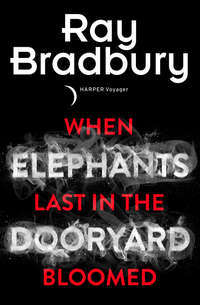
Kitabı oku: «When Elephants Last in the Dooryard Bloomed», sayfa 2

Yazı tipi:

When Elephants Last in the Dooryard Bloomed

When elephants last in the dooryard bloomed

Brought forth from dusts and airing attics where they roomed

For many a year and faded out the roses on their flanks

And sucked the dust and trod the ancient grass in ranks

Beyond our seeing, deep in jungles on our parlor floor,

These old familiar beasts we led into the light

And beat upon their pelts and hung them in the sight of sun

Which glorious made the panoplies of thread.

What grandeur here!

What pomp of Hannibal and Rome and Alps,

Egyptian cerements and tombs, Troy’s ruins, Delphic glooms—

Across such arabesques as these once walked Victoria.

Now in the lost great animal boneyard these lively skins are stretched,

Unravel, fall to pollen and to rust. Sic transit gloria.

All this has passed, is dim as ill-recalled rococo

But in my youth I stomped out cinnamons from these

God-awful paths and raised up such a flour of scents

As would reel down kings and make rise up to kingship

Lunatic lepers and foul penitents.

Old creatures, slung upon a wire in wind and light

And years’ ebbtide

I beat you gently with my howdah wire-racket beater,

Search tigers in the shade of your deep hills

And stand, a monarch made, along your blind impatient old

And slumbrous side,

And know that modern carpetings and rugs, so bland, so broad

So nothing, and so shallow

Were made for snails

And men who breakfast, lunch, and dine

Upon the safe, sure, ever-recurring marshmallow.

Still somewhere in this world

Do elephants graze yards?

In far towns toward the East and North toward Michigan

Do grandmothers and boys go forth to lawns,

And lines strummed there ’twixt oak or elm and porch,

And tie thereon great beasts of Indian grace

Loomed taller than their heads?

Still on such days do heartbeats throng the town

Where elderwitch and tads,

Where toms and great-grand-crones gone feverish with sweat

Goad Time out of the warp and weave,

The tapestry of treaded hearthwarm woolen flesh,

Beat Time into the breeze and watch the billion footfalls

Sift clouds into the greening insufferable beauty of young trees?

Do old and young still tend a common ground?

Vast panoply and firewalk spread of God’s most patient brute

Whose firecoal eyes observe and well-worn hide

Now feels the woman tire, so Boy takes up the beat:

Where one thump dies, another heart begins.

Along the cliff of dusty hide

From either end, with centuries between as well as miles,

Old looks to young, young looks to old

And, pausing with their wands,

Trade similar smiles.

Darwin, the Curious

Old Curious Charlie

He stood for hours

Benumbed,

Astonished,

Amidst the flowers;

Waiting for silence,

Waiting for motions

In seas of rye

Or oceans of weeds—

The stuff on which true astonishment feeds—

And the weeds that fed and filled his silo

With a country spread

By the pound or kilo,

Of miracles vast or microscopic,

For them, by night, was he the topic?

In conversations of rye and barley,

Did they stand astonished

By Curious Charlie?

Darwin, in the Fields

Darwin, in the fields, stood still as time

And waited for the world to now exhale and now

Take in a breath of wind from off the yield and swell

Of sea where fill the clouds with sighs;

His eyes knew what they saw but took their time to tell

This truth to him; he waited on their favor.

His nose kept worlds far larger than a goodly nose might savor

And waited for the proper place to fit the flavor in.

So eye and nose and ear and hand told mouth

What it must say;

And after a while and many and many a day

His mouth,

So full of Nature’s gifts, it trembled to express,

Began to move.

No more a statue in the field,

A honeybee come home to fill the comb,

Here Darwin hies.

Though to ordinary eyes it might appear he plods,

Victorian statue in a misty lane;

All that is lies. Listen to the gods:

“The man flies, I tell you. The man flies!”

Darwin, Wandering Home at Dawn

Darwin, wandering home at dawn,

Met foxes trotting to their lairs,

Their tattered litters following,

The first light of the blood-red sun adrip

Among their hairs.

What must they’ve thought,

The man of fox,

The fox of man found there in dusky lane;

And which had right-of-way?

Did he or they move toward or in or

On away from night?

Their probing eyes

And his

Put weights to hidden scales

In mutual assize,

In simple search all stunned

And amiable apprize.

Darwin, the rummage collector,

Longing for wisdom to clap in a box,

Such lore as already learned and put by

A billion years back in his blood by the fox.

Old summer days now gone to flies

Bestir themselves alert in vixen eyes;

Some primal cause

Twitches the old man’s human-seeming paws.

An ancient sharp surmise is melded here

And shapes all Dooms

Which look on Death and know it.

Darwin all this knows.

The fox knows he knows.

But knowing is wise not to show it.

They stand a moment more upon the uncut lawn.

Then as if by sign, quit watchfulness;

Each imitates the other’s careless yawn.

And with no wave save pluming tail of fox and kin

Away the creatures go to sleep the day,

Leaving old Charlie there in curious disarray,

His hair combed this, his wits the other way.

So off he ambles, walks, and wanders on,

Leaving an empty meadow,

A place

Where strange lives passed …

And dawn.

Evidence

Basking in sun,

Age 37, mid-Atlantic, on a ship,

And the ship sailing west,

Quite suddenly I saw it there

Upon my chest, the single one,

The lonely hair.

The ship was sailing into night.

The hair was white

The sun had set beyond the sky;

The ship was sailing west,

And suddenly, O God, why, yes,

I felt, I knew …

So was I.

Telling Where the Sweet Gums Are

Even before you opened your eyes

You knew it would be one of those days.

Tell the sky what color it must be,

And it was indeed.

Tell the sun how to crochet its way,

Pick and choose among leaves

To lay out carpetings of bright and dark

On the fresh lawn,

And pick and choose it did.

The bees have been up earliest of all;

They have already come and gone

and come and gone again

to the meadow fields

and returned

all golden fuzz upon the air

all pollen-decorated, epaulettes at the full,

nectar-dripping.

Don’t you hear them pass?

hover?

dance their language?

telling where the sweet gums are,

The syrups that make bears frolic and lumber in bulked ecstasies,

That make boys squirm with unpronounced juices,

That make girls leap out of beds to catch from the corners of their eyes

Their dolphin selves naked

aflash

on the warm air

Poised forever in one

Eternal

Glass

Wave.

Emily Dickinson, Where Are You? Herman Melville Called Your Name Last Night in His Sleep!

What did he call, and what was said?

From the sleep of the dead, from the lone white

Arctic midnight of his soul

What shy albino mole peered forth and gave a cry?

Or was it just the wind asifting through the winter screens

Upon the attic windows

Where the dust looks out at dew on empty lawns?

Or did the dawn mist find a tongue

And issue like his mystic seaport tides

From out his mouth while, all-unknowing, drowned, he slept

And dreamed on … Emily?

O what a shame, that these two wanderers

Of three A.M. did not somehow contrive

To knock each other’s elbows drifting late

On sidewalks-vast inhabited by only leaves

And mice and tracks of silver from lost hieroglyphic snails.

How sad that from a long way off these two

Did not surprise each other’s ghosts,

One sailing lawns, the other ocean storms,

Strike up a conversation out of single simple words,

Alarms repeated and re-echoed, and so make up a life

From halves which separated long before the oceans rolled

Still sought each other, but in different towns.

Un-met and doomed they went their ways

To never greet or make mere summer comment

On her attic mothball or his sea-dog days.

Death would not stop for her,

Yet White graves yawned for him,

Each loved one half of that which, grim, enticed and beckoned,

Yet neither reckoned it as half a life for each;

With sudden reach they might have found

Each other and in meld and fuse and fusion

Then beheld between the two, two halves of loving Life,

And so made one!

Two halves of sun

To burn away two halves of misery and night,

Two souls with sight instead of tapping

Long after midnight souls skinned blind with frost,

Lost minds turned round-about to flesh,

Instead of lonely flesh, for lack of company,

Alone with mind.

But, then, imagine, what does happen when some ghost

Of quiet passes and in passing nudges silence?

Does his silence know her vibrant quiet there

All drifting on the walk with leaves and dust?

It must. Or so the old religions say.

Thus forests know themselves and know the fall

Of their own timbers dropping in the unseen,

And so non-existent, wood;

Such things should hear themselves

And feel, record, and ridge them in their souls—

And yet … ?

I really wonder if some night by chance

Old Herman and that lost and somehow always old dear Emily

Out late and walked five hundred miles in dreams

Might not have made some lone collision

At a crossroads where the moon was lamp

And trees were winter sentry to their soft encounter there.

One pale gaze finds the other,

One blind hand stutters forth to reach and touch the air,

His wry hand comes the other way,

So frail the night wind trembles it,

Both shake as candles shake their fires

When old time turns ashuttle in its sleep.

The houses keep their shutters down.

The moon expires. The sidewalk ghosts remain

And, touching palms, at last walk almost but not quite

Arm in arm, soul hungering soul, away, away

Toward loss of midnight, toward gain of fog and mist

And day.

So walk they round the buried town all night.

Seeing their spectral shadows in the cold shop window glass,

Bleak mariner and odd mothball closet attic maiden lass.

No word they speak, nor whisper, nor does breath

Escape their nostrils, but they share

A strange new sense of being, everywhere they wander, go.

No thought, no word is said of dining,

Yet in the middle of a midnight pond of grass they do

Toss down their souls

And bring some wild thing up that writhes and gasps

And dances in their arms and is all shining.

Then on through night the love-drunk strangers browse

And in conniption clovers do their fevers douse.

Thus round the courthouse square

Where Civil cannons boom beneath their breath

And on to country lanes where ancient death

Keeps syllables on stones, those unseen words

That only sound from graveyard birds.

And stop at some sweet dark orchard yard

Where, panics stifled, ancient Melville skins on up

With gouty reach

To bring and offer, peel and eat

Some last lone sexual-pectin-covered farewell summer peach.

So nibbling in silence, mouths covered with gums,

Hands counting and touching and softly adding odd sums

Of affections—hips on occasion nudged in soft collisions,

They go cupping and hugging and surprised by derisions

And calamities of love, which in marrow and blood

Fix secret alarms set to waken wild needs.

And behind on the pavement leave trackings

Of seeds from apple and pear and apricot and cherry,

Wherever a farm offered food, their merry cries rose

As Emily chose and advised and sent old Ahab ashore

To come forth with his hands full of loot;

The smell from his nostrils and mouth

A whole summer of fruit.

Then at the far end of the town

They turn them round and make ready to depart forever,

She on meadow concretes where no grass

Obtrudes, seethes through,

And he upon an ocean sea of rye and late-mown hay

That takes him rudderless to break of day;

He walks out in the tides, the grass foams round his feet,

She with her skirts now glides and calmly cleans

The leaves straight down the middle of this cold town’s street.

Both turn but do not wave, look with their eyes,

A look of love, a look of mad surmise?

They cannot tell, they mirror each the other’s

Lonely statue, one in fallow moonlake meadow lost,

One like female dog who trots the night

A thing of frost and mildewed echoes

Where her feet set up a ricochet of battles

Fought for no gain from both sides of the street.

She dwindles, goes, is gone.

He slowly sinks from sight in weed and briar

And toadstool silages and dew.

All silence is.

All emptiness.

And now:

The dawn.

O Give a Fig for Newton, Praise for Him!

Mad Isaac, snoozed beneath a tree,

Was shaken by surprise;

A sneeze of happenstance and fruit

Knocked wide his eyes and sprang his wild thoughts free

To watch the Force Invisible pluck apples down.

From there, informed, he jogged about the town

And told what he was bold to tell:

Apples fall gladly, held in the spell of Force,

With neither hesitation nor remorse.

The Truth is this: They Fall.

Friends listened, looked, and they themselves saw All.

Glad Isaac, back beneath his tree

Pressing old truths to new cider myth or scientific sauce,

Hauled off and kicked to help the Yield, the Unseen Source.

That last kick shook a billion seeds to fall;

Thus Gravity, invisible till now, was found, revealed.

Within the hour, ten thousand nimble scientists

Dodged out to scowl beneath strange trees,

Through orchard field they loped to sprawl,

Waiting for ripe fruit or o’er-ripe Theory to fall.

Apple or Isaac?

Which did it matter?

But in their secret, unscientific hearts—

Preferably the latter.

I Was the Last, the Very Last

I was the last,

The very last;

You understand?

No one else in all the land saw him as then I saw.

They opened up the tomb a final time

When I was nine

And held me there and said:

Look on him dead, boy, look, oh, look you well,

So some day later on you then can tell,

Describe, remember how it was.

That’s Lincoln there,

His face, his withered jackstraw bones;

Within this case from which we lift the lid

Is that beloved man.

You be the final one,

You young and fresh

To see and memorize his ghosted flesh.

So, look, ah sweet Christ, look,

And print the backwall of your gaze

With photographs to be immersed in fluid memory,

Developed in your ancient days.

I was the last!

The very last to see him!

There in Springfield’s keep

One summer day

They tacked and hammered, grunted, groaned

To summon Lincoln from his sleep.

So many robbers had come round

To sack his soul;

Many an odd and evil mole had burrowed hard

To ransom forth his brow and beard and hand,

And kidnap him who died so long before.

So now upon this final day

Before they locked and poured the concrete round

And kept him really buried deep

In his home farm and land

A crowd had gathered to unpry his secret box of bones

And look a lingering while on greatness gone to farewell summer,

April’s promise lost in snow.

All came, all gazed, to see, to know.

I was the last to go.

They held me high, a boy, they turned my head.

I saw the man strewn lonely in his crypt.

That’s him, they whispered, he who was shot,

Old Gettysburg man, and Grant’s night-camp,

Dawn damps at Shiloh,

Gentle playmate of Tad;

Look, boy, look! Slept away! Kept in sod.

Jesus gentle his bones.

Gone to God. Gone to God.

Lincoln; what of him?

What in all of this was his cold part?

I thought I heard his icy heart start up

As if my small fists, pounding it, had knocked an echo in the tomb!

I thought I saw an old sad smile

Re-etch itself around his mouth,

A vagrant wisp, a tired nod,

Acknowledgment that funeral trains and trips

Were still ahead,

And crowds by sidings in the noon-but-now-late day.

But over all, I thought I heard him say

Less than a dozen words, no more.

Clear whispered, only I, leaned forward, heard.

The words thus softly breathed upon my cheek

Were, late remembered, funny, sad, or country-plain absurd.

He spoke! I cried.

He’s dead, the folks behind me tenderly explained,

He died some forty years ago.

Oh, no! Oh, no! He said! Not dead! Not dead!

What?! cried the stunned people round-about.

But I saw doubt in them and kept his words for me

And just myself.

I took them off and filed them on a country shelf

And only on occasion in late years

Took memory forth and heard again

The old man’s sad odd prayer and rambling refrain.

I looked a last time on his bones and parchment skin,

They nailed the box flat shut

And fixed one hundred tons of marble on his place.

We walked away.

Midnight stood amidst our unreal day.

What said? what said?! were whispers all about,

People clutching my elbows, touching my head,

But I wanted to grieve alone and know what he said

And understand; I brushed them aside and ran.

And now, very old, some sixty years on,

I sit up half the night and light a candle and look toward the tomb

And remember the words that Lincoln whispered in that dusty room:

I’m tired.

I’m tired of the infernal buttoning and unbuttoning

And the buttoning again.

That’s what he said.

An old farmer gone to law,

Just simply fed and done with getting out of bed

And washing up to start the day,

Or washing up and going to sleep.

He had had it with buttoning and unbuttoning,

He was ready for clay.

What did Lincoln say?

That was it.

To a boy in a marble tomb who was the last to see

The look and shape and size of eternity

And the man kept there.

No vast grandiloquence, no sweeping phrase,

No fourscore and seven years ago to warm my own late day

But just his old bones tired

And unslept by night prowling the White House rooms,

Searching for dawn;

An old man put out by dressing and undressing,

Done with the whole nuisance,

More than ready to be gone.

So one night not so long ago I walked through midnight Springfield

Thus to Lincoln’s tomb,

And scanned the marbled syllables and great stone words,

And took a crayon from my coat and in a scribbled trace,

Upon the wall above his place,

Where none but I might see,

Wrote his last words to a boy held high to view his drowsy face,

The last lone words that Abe would ever say:

I’m tired.

Tired of buttoning and unbuttoning

And buttoning again.

I smiled.

Then, suddenly, such mirth!

I heard his slept bones laugh,

And knock and shake warm harvest earth!

I turned.

I wept.

I walked away.

Ücretsiz ön izlemeyi tamamladınız.

₺307,76
Yaş sınırı:
0+
Litres'teki yayın tarihi:
27 aralık 2018
Hacim:
84 s. 8 illüstrasyon
ISBN:
9780007539932
Telif hakkı:
HarperCollins