Kitabı oku: «Father’s Music»

DERMOT BOLGER
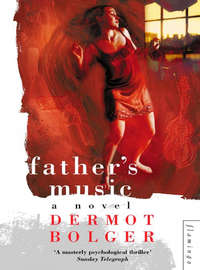
Father’s Music

Dedication
IN MEMORY
Johnny Doherty, travelling fiddle-player
from Donegal,
Seamus Ennis, Ard-Rí of Irish pipers
from Finglas, North Dublin
and
Seosamh Ó hEanaí (Joe Heaney),
Sean-nós singer from Connemara,
County Galway.
Contents
Cover
Title Page
Dedication
I: London
One
II
Two
Three
Four
Five
Six
Seven
III: Dublin
Eight
Nine
Ten
Eleven
Twelve
Thirteen
Fourteen
Fifteen
IV: London
Sixteen
Seventeen
Eighteen
Nineteen
V: Donegal
Twenty
Twenty-One
Twenty-Two
Twenty-Three
Twenty-Four
About the Author
Praise
By the Same Author
Copyright
About the Publisher
I LONDON
ONE
MY LOVER LOWERS his headphones over my hair, then enters me. He thrusts stiffly and deep. Irish music swirls into my brain, a bow pressing down across a fiddle, teasing and twisting music from taut strings. My breath comes faster as his hands grip my buttocks, managing to rub his shoulder against the walkman’s volume control. The tune rises, filling me up. I close my eyes so that I can no longer see Luke, just feel his penis arching out and in. The set of reels change and quicken. I listen to a gale blowing across a treeless landscape, see a black huddle of slanted rooftops and drenched cows dreaming of shelter. The beat is inside my head from childhood, imagining an old shoe strike the stone flags and the hush of neighbours gathered in.
Luke pulls my legs higher, positions a pillow under my tensed back. I don’t want to ever open my eyes. The music is so loud and quick it seems sweet torture. It courses through me. I can see his old face playing, that capped man with nicotined teeth and tufts of greying hairs in his nostrils. His eyes are half closed, his breathing laboured. He looks so infirm that he could hardly shuffle across the room, yet his hand flicks the bow back and forth without mercy. He squeezes the wild tune loose, an old master in utter control, coaxing out grace-notes and bending them pitilessly to his will, while the wind howls outside along sheep tracks known only to mountain foxes and to him. He is my peddler father, the wandering lone wolf tinker my mother would never speak of, whose restless soul must now be constrained in some isolated graveyard.
My lover suddenly cries. I know I have drawn blood with my nails against his back. But Luke’s voice is lost beneath the reel spinning faster and faster. And I shout too, no longer caring who hears in that cheap hotel near Edgware Road, with no will left of my own. My voice is just one more note lost in the frenzy of a Donegal gale blowing itself out among the rocks beyond the house where my father once played. Then my scream is suddenly loud, piercing the rush of white noise as the reels halt and I hear my lover come, feeling his final thrusts before I twist the headphones off to look up. The same hairline cracks are on the ceiling. A fly blunders against the damp lampshade, clinging insanely to life in late November.
‘Did you come?’ Luke asks. That’s my own business. I stare back until he looks away.
‘Does your wife like you to fuck her like this? Or is she more the country-and-western kind?’
We lie still after that. Why do I always need to hurt Luke? Is it my way of keeping any threat of tenderness at bay? In four weeks’ time it will be Christmas, with his youngest son waking him before dawn. He gets his store manager to phone the boy from his tile shop every Christmas Eve. Afterwards the child asks, ‘Why does Santa have an Irish accent?’ I am not jealous. I have no wish to make silent phone calls to eavesdrop on their puzzled tones. Luke would bring me somewhere better than this hotel if I asked. But it suits our relationship which started in the tacky Irish Centre across the road, with Luke embarrassed by his family over from Dublin, like overdressed extras in a gangster film, and me fag-hagging there by fluke with a black queen. The only point my mother and Gran seemed united on was that I would never marry an Irishman.
I listen to the Asian family being bed-and-breakfasted by the Council in the next room and think of how the envious bitch of a receptionist gawks at us each Sunday. I arrived early last week. ‘Your friend isn’t here yet,’ she said. ‘He’s not my friend.’ I eyed her coldly, raising my voice. ‘He’s my lover!’
Luke turns towards me, half asleep as always after he comes. Sometimes I claim that he calls me by his wife’s name when he wakes. It frightens him in case he’s doing the same with her. I like it when I can frighten Luke, especially as he scares me so easily. Maybe this edge of fear has held us together for all these weeks, because I know our affair cannot last.
I touch the scar below his left nipple. After all those early fights, this is the only mark on his body. The Canal Wars, he called them. I looked it up once in a book on Irish history. He laughed when I said I couldn’t find it, and spoke of rival gangs of Dublin youths fighting for possession of a canal lock where they could swim among the reeds and rusted prams in their underpants. Luke had been ten, sent out by his big brother Christy to spy on the enemy. A rival gang caught him in a laneway and stripped off his shirt before a ginger haired boy with a deformed hand slashed at Luke’s flesh with a bicycle chain. He came home with blood on his clothes. His mother sat with him in the hospital while the stitches were done. Weeks later an uncle struck him across the face in the street for allowing himself to be caught by anyone.
‘I was never caught again,’ Luke told me once. ‘The best lesson I ever learnt. Fifteen years later I glanced up in the jakes of a pub in Birmingham and recognised that deformed hand. The man grinned sheepishly. “Jaysus, they were great oul days all the same, Mr Duggan.” You couldn’t hate a man who grinned like that. I pulled his jacket over his face so as not to leave scars when I kicked his head in.’
I had liked the way Luke said that, the consideration in his voice. Why bother all those years later, I asked. What could it prove? Luke had shrugged and claimed he’d no choice. It was the least that was expected of him back then. For years Ginger’s fate had hung over him because he always knew he would meet one of the Duggans again. The man would have felt slighted if Luke hadn’t bothered beating him up.
If they met now, Luke claims he wouldn’t touch the man, having escaped from the lure of that family name, but I don’t know if I want to believe him or not. I trace my finger across Luke’s scar. He has had it so long that the stitch marks have faded into his skin. There’s something vaguely delicate about it. His eyes watch me.
‘Why are you always fidgeting with that?’
I close my eyes and see Luke diving from the rotting beams of a Dublin canal lock, his thin, eleven year old body splitting the green water apart. He sinks down, eyes opening in the fading green light. Bottles, reeds and a rusted milk churn. Something catches his ankle and he panics from memory, floundering his way to the surface to spit the oily water out. No boys are left to wage war since the accident. His cheap vest flaps alone under a stone like a flag of surrender.
‘Tell me about the canal again.’
‘No.’
‘Go on, Luke.’
He rises on one elbow. Is he angry or scared?
‘You’re one mad bitch at times,’ he says.
‘Only at times? Go on, tell me about James Kennedy.’
I know he will tell me and he knows that I know. But not for a while yet. The story must be drawn from him. Thirty years later the memory is still raw. Sixteen months ago I watched my mother die in Harrow, but I had been prepared for it, with nurses discreetly waiting in the background and the cleansing scent of disinfectant. Her death had been so prolonged I had grown almost resentful of her. But what must it have been like at eleven to see your best friend drown?
Before then Luke’s brother, Christy, was the gang’s natural leader. But, at twelve, Christy was initiating himself into the stronger currencies of adolescence; the webs of factory skylights, the nods of silent fences, the expanding limits of pubescent girls allowing themselves to be manoeuvred into alleyways. In that vacuum James Kennedy had become the Canal King, the reigning monarch of their childhood who plotted wars and conquests, with Luke happy as his lieutenant.
Somewhere in Luke’s memory it must still be that parched July day, when thirty rival youths were beaten back from the canal lock and James Kennedy’s gang danced on the rotten planks in Y-fronted celebration. They dived repeatedly from the wooden gates, raising a constant spray of foam as dogs shook themselves dry on the tow-path and an old tramp hunched down to watch, sucking on a discarded butt. What madness made Luke dive from so high up on the lock, and what choice had James but to climb even higher? The hush began before James’ body even broken the water, as each boy counted the seconds, waiting for James’ head to re-emerge. Thirteen seconds, fourteen, fifteen. Nobody wanted to admit that something was wrong. Nineteen, twenty, the sudden rush of bodies instinctively diving in.
James was still alive when they gathered around him, his foot caught in the spokes of an old wheel. Lush reeds were twisted round his ankle. Some boys claimed that the reeds were alive, wrapping themselves tightly round James’ shin no matter how often they tried to prise them away. The others were forced to surface for air, while James’ kid brother, Joe, screamed and wet his trousers on the bank. There was only James and Luke left down there, with James’ face turning blue and his eyes curiously calm as if saying; ‘you’re the new king, kiddo, it’s all on your shoulders now’. When the others dived again it was to pull their hands apart and bear Luke up into his new kingdom of barking dogs and sirens under the scorching sun.
Soon Luke will tell me this story again beneath the blankets, his voice cold and emotionless. I’ll feel his penis stiffen and know that afterwards he will turn me on my stomach, his hands merciless as he grasps my hips to drag me back and forth. I will raise my hands to pull the blankets tight, drowning under the blackness we are submerged beneath, as I listen to his hard excited breath and think of how his heart will beat, loud and fast as if scared, in the silence after we have spent.
I open my eyes, surprised that I have slept. I can hear the Asians watching a Star Trek movie. The carpet is threadbare and cold against my feet. I find my tights in the street light coming through the gaps in the blinds, hesitate and then pocket his walkman with the tape. Sean Maguire is the fiddler, he says. I think of Luke in jail that one time in Dublin, slopping out and being ridiculed for listening to bog music like that, with his family name alone protecting him. Luke claims that he has been a legitimate businessman for years now, but he never tells me why he served time and there are things that even I know not to ask.
The hotel room is freezing. I find my skirt and shoes. Luke hates me leaving without waking him. That’s why he has hidden my knickers. He will reach for them beneath the mattress in half an hour’s time, fingering them like some obscure consolation as he imagines me sitting on the swaying tube to Angel, being eyed by black youths in baseball hats. My legs will be crossed as I read the ads for fountain pens and office temps, while in my ears his tape will play like a phantom pain, bringing back all the memories I have never told him about.
The child whom I was once in my grandparents’ house in Harrow seems like a stranger now. By day she would obey her Gran’s clock-work ordinance, but alone at night she would close her eyes to imagine rooftops huddled against a Donegal hillside and neighbours gathering to hear her father play in hamlets and remote glens. I can see her still dancing barefoot, while my mother and Gran argued about her future downstairs. Swaying to tunes she could only imagine and spinning ever faster until, finally, falling on to the bed and gripping the blankets dizzily over her head, she almost believed that his fiddler’s hands were swaying in the shadow of the cherry-blossom branches against her window: my dark father secretly making music for the daughter whose existence he had never bothered to acknowledge.
II
TWO
THAT SUMMER BEFORE I had met Luke it seemed to be raining incessantly almost every Sunday when I woke. Drab light pervaded my bedsit as I lay on until noon, stranded between dreams and wakening, before dragging myself under the shower down the hallway.
Later, as winter came in, I would resent Luke for becoming the focus of my Sundays. Before I met him they never dragged in that way. I had taken a slovenly delight in them, only bothering to cook myself a leisurely dinner and eat it in my dressing gown before the television when daylight was already teetering in the sky. The payphone on the landing rarely rang on Sundays and I made certain it never rang for me. I lived my real life away from that house of cheap flats in Islington and I recognised the other tenants only by the tread of their footsteps past my door.
Since moving into that flat after my mother’s death, Sunday was the evening when, once a month or so, I allowed men to chat me up. I liked Sunday nights for that and I liked to hunt alone. The weekend was effectively over, with men less on the prowl and less in love with themselves and, on Monday morning, if they were lucky enough (few were and fewer deserved to be) I’d enjoy their predicament in trying to manoeuvre me from their beds in time to make a dash for work. Sometimes, with the more nervous types, I’d sleepily turn over, letting them stew with visions of a ransacked flat on their return and messages scrawled in lipstick for neighbours to read. Once or twice I even stayed on alone, wrapping myself in their bath robes and fingering the details of their lives after they had gone.
I always made sure they had somewhere to go, with proper jobs and nice apartments. I preferred my casual lays to be conventional. Accountants who bleated as they came and grinned uncomfortably when asked if their pure wool pullovers were purchased in Harrods or sheared off their backs by their mammies. Bitch, I heard them mutter in their minds. But they were hooked, calculating the odds and afraid to blow it. They’d rush to the bar to buy stronger drinks, hoping to catch their friends’ eyes and be rewarded with a wink.
Sex seemed easier with people I’d nothing in common with. Their dull lives were exotic really. Ordered men swallowed any lie you threw at them. They scampered off when I finally allowed them to, desperate to brag confidentially about the former nun from Bishop’s Stortford or the Leamington Spa zoologist they had picked up. Perhaps I judged some too harshly. A decent one or two probably bothered to phone the number I gave them and were hurt to find themselves speaking to the answering machine at the Battersea Dogs’ Home.
But if I reserved one life for Sundays, it was on Saturdays that I really had my fun back then, with Roxy and Honor. We toured the clubs, trying to stay together as the E took hold and we threw ourselves into the joyous wave of bodies skewed about in the strobe lights and found each other again when we were washed out the other side. Sometimes there were vans that sped for hours along motorways, crammed full of underdressed girls and lank youths with dandruff and socks that could walk home by themselves.
We always had to stop to allow someone to get sick and stood about, arguing with the spaced out driver who swore blind that he wasn’t lost. When we finally arrived, the raves were never as good as the expectations built up on those journeys. We would find ourselves in a field at dawn with damp grass and sheep shite trampled underfoot. There was a manic blankness in people’s eyes as they danced like their movements were a nervous twitch they couldn’t shake off. Even when their eyes closed as if asleep, their legs wouldn’t stop moving. Music pulsed inside them like an orgasm they couldn’t be released from, the pleasure of which paled and pained but continued on. Finally, when legs shuffled to a halt by themselves, a thirst remained like a purgatory which no Christ in no desert ever endured. By the time the local police arrived, the vans that had brought us there were gone. I hated the journeys where they herded us back to London and I’d finally unlock my flat door, too tired to open a window and release the odour of trapped heat and sour milk.
Those burnt out evenings were to be avoided. That was why Roxy and Honor and I fell out from those dance clubs most Saturday nights before the temptations of vague location maps and offers of lifts were passed around. Sometimes, giggling and swaying about the after-hours streets, we would stumble across a gig in some fire-trap basement club. If the band were inexcusably chronic we’d push our way up to the stage, dancing and screaming our adoration at the acne-scarred singer, puffing him up to more ludicrous posing. We’d cluster at his feet, shouting between songs that we would wait outside for him to take all three of us in the one bed later that night. Rather than fight among ourselves we had decided to share his body.
If the bouncers hadn’t already cottoned on to us, we’d point towards the exit and blow kisses at him, before staggering out to laugh and fall against the shop windows, imagining him rushing to finish the gig. We’d play our favourite game of trying to out-stare the mannequins, shrieking over which shop dummy had winked back first. Then we’d order kebabs in some dingy restaurant, taking turns to trip down to the ladies and put our mouths under the tap. We’d sit, trying to cajole a smile from the sullen waitresses. I was happy there, loved by my friends and loving them back. Nothing could ever come between us. My life in Harrow had vanished and my future would have to wait because the present seemed so immaculate.
But eventually, when chairs were being piled onto the formica tables, we were forced on to the streets again. It would be nearly dawn and we’d stumble into Tower Records where serious night owls with horn-rimmed glasses scoured through the back catalogues of Gerry’s Left Testicle or other punk bands from Papua New Guinea. We never lasted long there before we were thrown out. But sometimes, as the first ache of sobriety turned my stomach sour, I’d find myself flicking through the Irish section. The foreign names were unpronounceable, crammed with Os and Macs and crooked accents. I’d stare at the high cheekbones and bony elongated fingers of old pipers on sepia covers. There was even a tiny section reserved for sean-nós singing: a solitary, indecipherable wailing without any musical backing at all.
My mother once told me that my father, Frank Sweeney, sang as well as played the fiddle. He had reined in his wanderlust long enough to witness my birth before deserting us to return to Ireland. That was all I knew. I rarely thought about him or cared if he might still be alive. But sometimes during those raids on Tower Records I was glad that Roxy and Honor were goading a nerd as I searched in vain for what my mother once told me was his favourite tune, Last Night’s Joy. I’d take the earphones from a listening post and select a disc at random. A grainy dawn would have broken with traffic easing off, leaving only black taxis speeding to catch the lights. I’d close my eyes, listening to the ebb of that impenetrable music and think of my mother dying in Northwick Park Hospital a year before. I didn’t know what those tunes meant, each one sounding the same, only faster. Even their names gave no clue: The Frost is All Over, Jenny Picking Cockles, The Pigeon on the Gate.
They should have conjured up images of hillsides of barley shaken by the wind, or hares bounding through the winter dark as boots crunched ice on potholes along a lane. Instead I saw my mother’s face on a hospital pillow and thought of how I had never heard her listen to that music which, Grandad told me, my father had played in the back bedroom. My father’s music and my mother’s pain. Their daughter’s futile regrets after the bird had flown. The music gave way to white static and suddenly it was Bessie Smith I wanted to hear, her pain resonating in the heavy pausing as she sang, Sometimes I feel like a motherless child.
I should be over her death by now, but too much guilt seemed involved to properly mourn her. I’d listen to the clamour as another reel began, knowing that two hysterical girls were about to grab the headphones and shriek with laughter at what was playing. ‘Now that’s what I call jungle music,’ Honor would mock in her London accent laced with a Jamaican twang. What could I do, except pretend to share their mirth as the guard threw us out and we walked the streets until a taxi was found?
That was how, at six o’clock most Sunday mornings, I’d lean against my bedsit door, knowing the same memories were waiting to entrap me. I would be dejected and hungover, filled with regret for the passing of something I’d never properly known. I’d shut my eyes and see the swings in Cunningham Park in Harrow at dawn that previous August. For once the bowling greens had been without their flock of white-clad pensioners, but a group of teenagers still huddled around a ghetto-blaster, like zombies in a bad B-movie, as I had passed.
I hadn’t even found somewhere private to say goodbye to my mother back then. But there had been no special places for the pair of us, no woodlands where mother and daughter had run through a riot of spring flowers or avenues of autumnal leaves. I hadn’t even the memory of sharing a garden bench with her some summer night when she might have put names on to the scattered map of the stars. Maybe I had blocked such memories out that morning, because her death left a numb sensation. But, throughout her cremation, all I had kept remembering was a swing creaking in Cunningham Park, and my eight year old voice afraid to repeat the questions about whether I’d once had a daddy and where he might be. I could recall pain lining her face as, distractedly, she pushed me higher into the air than it felt safe to go, and the sense of being punished for saying something wrong.
Those swings were broken last August when I had knelt to scatter her ashes on the grass. She had always liked that view sweeping up to the public school on the hill. There was heavy rain forecast. I remember wondering if the teenagers had sat there all night. They finally lifted their heads indifferently to watch me open the urn. What did I expect to happen? That her ashes might dissolve with the dew or there would be a sign she was finally at peace? I felt foolish kneeling there. I rose and looked down. I had no God to pray to and I knew she couldn’t really hear, but inside my head I spoke, if not to her spirit then to the ache she had left behind.
My mother was always crippled with doubt, imprisoned all her life by walls. Not just the walls of Gran’s house from which she fled at twenty-two and to which my presence in her womb had forced her to return, or, later on, the walls of mental hospitals with bright day-rooms and discreet gates. It was the invisible walls of Gran’s ambitions which corralled her in, the tyranny of Gran’s dreams about how our lives should be led. She was their only child and now, with her death, I had been all they had left. But really Gran had abandoned Mammy for me long before she died, almost from the day she arrived home pregnant, in fact. The life they planned for me was plotted in a drawer of gilded photograph frames their own daughter had left blank. Their grandchild in a graduation gown, their grandchild smiling beneath her wedding veil, their great grandchildren playing in the cobbled drive of some house in Gerrards Cross which they had skimped all their lives to pay the deposit on.
Gran would have made careful plans about what to do with Mammy’s ashes, like she made plans for everything. Yet it wasn’t for revenge that I had stolen the urn that morning, but from an obscure desire to set my mother free. I had felt nothing except numb indifference towards Gran when I packed my suitcase as they slept, taking whatever cash I could find, and left without leaving a note.
The first trains would be running soon. I had bent down, wanting to touch the ashes but lacking the courage. I climbed the railings at Hindes Road and jumped. I hadn’t meant to look back, but when I did a dog was sniffing at the ashes, his owner fifty yards away as he cocked his leg. There was nothing I could do. I watched as he pawed them, then bounded away. Tears only came months later. Just then I had only felt a hollow sense of relief as I pushed the urn into a bin. I grabbed my bag and raced down Roxborough Road, towards the airless warmth of an early morning train and towards this bedsit where I had hoped to start a life I could finally call my own.
THREE
WHAT WAS IT THAT made me agree to accompany Honor’s brother, Garth, to that Irish Centre off Edgware Road one Sunday evening in September? I had been his alibi, playing at being a fag-hag as he marauded down from the gay bars of Islington into uncharted territory. Roxy and Honor had rolled four joints before we left and teased him about setting off on mission impossible, claiming that he would never turn the baby-faced singer who was due to croon Irish ballads there. But Garth liked challenges and I liked him so much that I would have agreed to go anywhere.
The Irish Centre was packed when we arrived. We drank sitting at the bar. I watched the singer strut about, awkward in a white shiny suit that was as tight around the bum as a toy sailor’s. The boy wasn’t even cute. He had no technique and little sense of how to deliver a song, except with the wooden voice of an altar boy. I wondered if Garth could really have seen him peering hesitantly through the doorway of an Islington bar as if the entire clientele were about to devour him? But Garth swore that it was the same face which he had spied by chance on a poster advertising Liam Darcy, ‘Drogheda’s Own Singing Sensation’, appearing at the Irish Centre.
There had been some sort of football final across in Dublin that day, relayed on a big screen at the bar. The centre was still packed with women and men mingling together in gaudy team colours. The singer’s face jerked around like a wind-up doll, trained to make eye contact with every corner of the room. Each time he reached us Garth was waiting to catch his gaze and wink. Grannies wandered up to the stage to leave requests for him. One left a present of a heart shaped tart. The singer had become aware of Garth and now avoided our part of the bar. His head would stop rotating just before it reached us, but each time his cheeks reddened slightly as they jerked back.
‘You haven’t a hope, Garth,’ I laughed. ‘Come on, let’s get out of this dive and go to a club or something.’
Garth just laughed back. He was a handsome, well built man. I had already felt the envious glances of several women along the bar.
‘I’m having a ball,’ he replied. ‘Sure the kid was as pale as a ghost before we came in. Now look at his cheeks. Here, grab a beer mat and take a request up to him.’
‘I will not.’
‘Go on,’ Garth teased. ‘The Nolan Sisters. Weren’t they half Irish? Slip up to the stage and tell him Garth wants their old standard, Let’s pull ourselves together.’
I laughed again and began to peel the back off a beer mat. I remembered the envy I had felt for Honor on the first evening when I’d gone back to her flat and seen Garth teasing her while their mother kept putting on more toast for anyone who casually called in. He looked over my shoulder, joining in my laughter as I wrote.
‘Hey,’ he said, ‘remember that last song he dedicated to everyone present with a little bit of Irish inside them. You tell him to sing the next one for anyone who fancies another little bit of Irish inside them.’
I was drunk enough to bring it up. When I turned a tall Irishman stood right behind us at the bar. I had noticed him already with a large family group who were growing increasingly rowdy. Often men his age made fools of themselves trying to look young, but from his suit I actually thought he was far older until I looked at his face. He was obviously well known at the bar, to which he had been coming up every twenty minutes to buy another round of drinks. He seemed to pay for everything and yet he stood out from the family gathering as much as Garth and I stood out from the ordinary punters at the counter.
‘Share the joke,’ he said and I stopped laughing.
‘What’s it to you?’ I asked.
‘Maybe I could use a laugh.’
‘Well, it’s private between me and my boy-friend here.’
‘I hope your boy-friend’s boy-friend doesn’t get jealous so.’
Garth stood up. They were shoulder to shoulder, both an inch either side of six foot. If the Irishman was into his forties then he wasn’t irredeemably so. Garth would probably be a match for him alone, but not for his family. I was frightened. I had never liked Irish people anyway, because your upbringing doesn’t go away. But the stand off between them was so subtle that not even those people beside us seemed aware of it.
‘He’s cute,’ the Irishman said and Garth’s eyes flicked briefly towards the stage. ‘And you’re everything an Irish mother would love her son to bring home: black, six foot tall and male.’
Garth continued staring ever so casually into the Irishman’s eyes. There was something boyish about his face, yet also something I didn’t quite trust. His voice was so low I could hardly hear it.
‘I hear he goes walkabout, our little altar boy. He’s a bit of a night bird, inclined to roam about like he doesn’t quite know which way to go. Personally I think it’s those apple tarts he has to take back to his room. I mean could you sleep, never knowing if some granny with no teeth and a black bra was going to jump out from inside one of them?’
‘I’ve never heard nobody sing with that accent before,’ Garth said.
‘It’s pure Drogheda,’ the Irishman said. ‘A class of knacker accent. You know knackers … cream crackers … tinkers? Travellers is the term we’re meant to use now. God looks down when a knacker is born and says: “I ordained that this child be born on the side of the road in a freezing trailer that will be burnt out by the locals before Christmas is over, but just in case he survives I’ll give him a Drogheda accent as well”’.
‘And is he one?’ I nodded towards the singer who had started an embarrassing line dancing routine while the crowd cheered. The Irishman laughed and used the opportunity to place his fingers for a second on my shoulder as if I were a child.
‘They wouldn’t let him through this door if he was,’ he said. ‘If he sneaked in they’d smash the glass he drank from before anyone here would use it. He’s from a wee house in Drogheda.’ He nodded to the barman who had assembled the massive round of drinks, then looked at Garth. ‘Our singer friend always stays at the Irish Club in Eaton Square. There’s an all night coffee shop across from the tube station in Sloane Square. I’ve come across him there at three in the morning. A man passing might do the same himself.’
‘I’ll bear that in mind.’ Garth’s tone was guarded. The barman stood, waiting to be paid.
‘Bring lots of whipped cream.’ The Irishman reached for his wallet. ‘Apple tarts need a little extra something to help them go down.’
He handed a fistful of notes to the barman who began to pass the drinks across. Garth sat back. The Irishman ignored us as he relayed pints and shorts into the willing hands of family members who came forward to help. The table where his family sat was crammed with stacked glasses and crumpled cigarette packets. They were obviously the rump left over from a wedding reception. He rejoined them and bent to say something with his back to us. People laughed and some glanced in our direction. The Irishman didn’t look back but I felt nervous. Nobody talked to total strangers like that. Was he winding us up or setting us up? Garth had turned to the bar, nodding at the barman to fetch us two more drinks.
‘I hope I’m wrong,’ I said quietly, ‘but I get this feeling you’re going to walk out the door and have your head kicked in.’
‘Sweetheart, I have that feeling every morning I go to buy a newspaper,’ Garth replied. ‘I get that feeling so often that I stopped noticing years ago I ever had it. If you’re worried, Tracey, just take your coat and go.’
‘Don’t be silly. I’m not leaving you.’
‘I don’t need no babysitting from here on in. The dude seems a bit odd but all right. Still you never can tell.’ Garth tossed a fiver on to the counter. ‘It’s my round, but I’ve got to shake hands with the unemployed.’
The encounter had left me agitated, but it wasn’t just concern about Garth. The man’s words made me feel uneasy about myself. If they knew that my father had been a tinker they wouldn’t use this glass again. I hated them and their half-assed sentimental music. I’d only come for a laugh but it didn’t feel right being here. We were drinking doubles but I got the barman to put an extra vodka into my glass. The Irishman peeled off from his family. I might have been nervous but I wasn’t going to show it when he approached again.
‘Luke is my name,’ he said. ‘I’ve been watching you.
‘So?’
‘All evening just watching and sitting there thinking.’
‘Thinking what?’
‘That if pigs could fly.’
He had eyes which demanded you stare back into them. They were salesman’s eyes, I thought, and I wasn’t buying.
‘Pigs can’t,’ I said.
‘If they could,’ he replied, ‘your black friend might get an early tube to Sloane Square and leave you sitting here alone.’
‘What’s it to you if he did?’
‘I’ve been watching ever since you came in. I can’t stop. You hate this place more than I do.’
‘Why are you here then?’
‘Duty, guilt, habit.’ He glanced back. ‘You know yourself, family life is never easy.’
I followed his glance. It was obviously a rare coming together of relations, animated and yet fitting uneasily together.
‘When was the wedding?’
‘Yesterday morning,’ he said. ‘Yesterday evening was the family fight and tonight is the kiss and make up.’
‘Do they ever change their clothes?’
‘That’s tomorrow when they keel over and are carried home,’ he said. ‘To Dublin mainly, although a few have flung themselves as far as Coventry and Birmingham. The blonde girl in the blue outfit, she’s the bride. You’d think she’d feck off on her honeymoon, but there’s no fear of her letting us off the hook. She’s heading back to America on Tuesday, where she’s after getting born again. The first time was because of an accident down a lane off Camden Street. You’d think that second time around she might have got it right.’
The reference to hair wasn’t much of a guide because there seemed hardly a woman in his family not bleached blonde. But the bride stood out, beaming with zest and vitamins. She seemed as incapable of being quiet as she was oblivious to the irritation she caused around her.
‘She’s after getting hitched to some lad from Blackheath she met in Houston and nothing would do her but to be married in London so her new in-laws could meet her old out-laws.’ He laughed at his own joke. ‘I don’t think she informed them in advance that her grandfather Kevin was the biggest thug in the Animal Gang in Dublin.’
There was a family resemblance within some of them. The man who dominated the circle seemed a stockier version of Luke, like a crude police photo-fit. Squeezed into a dress suit, he looked dangerous and comic. He snapped at the bride who went quiet, as if struck. The conversation abated, then resumed as an older woman took her hand. The man who’d ferried most of the drinks passed behind the bride to ruffle her hair, coaxing a smile from her as he made peace all round. He was well into his thirties yet there was something baby-faced about him. As he passed us, heading for the gents, I knew he was another brother. He nodded.
‘All right, Luke?’
‘Hanging in there, Shane.’
He walked on with a glance at me.
‘They’re a surly-looking bunch,’ I sneered, hoping Luke would follow his brother.
‘Unpredictable too.’ He played up the insult. ‘Still you can’t swap your family after the January sales. You only get born with one, you have to love them and get on with it.’
But he showed no interest in rejoining them. I took a sip of vodka and wished Garth would return. I liked to choose my Sunday night men, not the other way round. Yet this Irishman had a come on I’d never encountered before. He seemed almost anxious to sell himself short. I revised his age to thirty eight and tried to decide if he was utterly drunk or sober.
‘Seeing as you love your family don’t let me detain you from them,’ I snorted, hoping to blow him off.
‘Like most families, you’d sooner love them from a distance.’
The way he said it made me laugh. For all his physical strength and expensive clothes, as he smiled wryly he suddenly seemed the most miserable trapped son of a bitch I’d seen in years. He looked like Burt Lancaster staring out in The Birdman of Alcatraz. The thought made me wish I was at home alone, watching some black and white video and drinking cheap wine. The Irishman looked like he wouldn’t mind being anywhere else either. I told him so and he laughed. Garth returned and ignored us. The singer finished a big number. A woman came forward to hand him a rose.
‘You don’t need to stay for your black friend’s sake,’ Luke said. ‘It’s All Ireland Final night and if anyone’s paying him any heed they’re only wondering if his granny was Irish and he fancies playing soccer for us. So, say you wanted, you could pick up your coat and walk out of here.’
‘I’m sure I could, but I don’t. Maybe I fancy the singer too.’
‘You don’t cradle-snatch.’
‘But you do, is it?’ Making men feel old normally worked but he refused to be fazed.
‘This isn’t like me,’ he said. ‘But all evening I’ve wondered what you’d do if I asked you to walk out of here with me.’
His voice was calm. I don’t know where the image came from, but I could imagine him soothing terrified animals in that tone, leading them tamely into an abattoir. I should have told him to get lost, but I didn’t just yet, because something about him intrigued me, although I didn’t like myself for responding to it.
‘I suppose you’re going to tell me you just happen to live in some flash apartment around the corner’
‘I live in a boring suburb a long way from here and, besides, my wife wouldn’t fancy three of us in the bed. I’m sorry, I was thinking more along the lines of a cheap hotel.’
It seemed the ultimate black joke. For once a single man was chatting me up by pretending to be married. Maybe Luke was bisexual and hoped to rope Garth into the bargain. How many vodkas had I had? I started laughing out loud and he had to point out his wife before I realised with a curious chill that he was serious.
‘What does she think you’re doing talking to me?’
‘Selling wall tiles,’ Luke said. ‘That’s how I make my living. Should you want wall tiles I’m definitely your man. I said to her, “That girl with the black leather queen owns three dance clubs. I’m going to tout for business. Say what you like about dykes but they always have money to burn”’.
It wasn’t funny, but Christ how I laughed. I could see some women in his family glancing over. I held the gaze of one of them, a tough-looking black haired girl around nineteen, the only female who wasn’t blonde apart from Luke’s wife. She looked away self-consciously and when she looked back I winked. I drained my glass. Garth had another round set up. Luke watched me with that half-smile. I shifted his age to forty one and suddenly wondered what he looked like naked.
‘Why don’t you fuck off before I throw this drink over you,’ I said, deciding I’d had enough of him.
He momentarily fingered a wisp of my hair. ‘That would look much nicer dyed blonde,’ he said. ‘You’re young, you’re lucky, you’ve still got time for the fairytales men tell you. But I’m being straight. I’ve watched all night and I’ve decided I’d give five years of my life for one hour with you. See if you’re big enough for a gamble or still just a little girl. There’s a doorway beside the shops across the road. I can’t leave with you, but wait five minutes and I’ll be there.’
Then he was gone before I’d time to tell him what to do with himself. I tried to pay Garth for the drinks but he shook his head, distracted now, weighing hope against disbelief. I noticed the singer glance towards us, taking in Garth’s bowed head and I knew Garth would be sitting in that cafe. But I’d no idea if the singer had ever been there. There seemed no reason to trust a word Luke said.
I wondered if I had knowingly slept with a married man. There were occasions where signs pointed to conclusions I hadn’t wished to draw. The rotten cheating bastard, I thought, looking at him sitting beside the woman he claimed was his wife, while his family argued above the strains of that country-and-western din. His older brother was locked into a serious argument. But Luke ignored it, as if he’d withdrawn into a world of his own. I knew he was acutely aware of every movement I made.
Those Sunday night men had fed me whatever lies I needed to hear. Was Luke worse for telling the truth? His need seemed raw and uncompromising. Maybe it was the vodkas mixed with the dope and wine in Honor’s flat, but suddenly I found that exciting. Just once, what was to stop me doing something truly illicit, something I knew was wrong? Luke had given me the freedom of a role and now I began to play with it, almost seeing myself as that confident, hard-edged club owner. I stared at the black-haired girl in a predatory fashion. If I had been a man she would have blown me away but I sensed her blush instead, then stare back with sudden cold hatred.
That sobered me. I was tired of these games, I wasn’t going to be manipulated into feeling emotions that weren’t there. It was time to leave if I wanted to get a tube that wasn’t crammed with annoying drunks. That was why I was leaving alone I told myself, anything else was too bizarre. I sensed Luke watching. He was clever as well as manipulative. He knew I would say nothing to his wife which might put Garth in danger. A bar full of drunken Irishmen seemed the perfect place for a queer-bashing.
Yet it was his wife I kept watching. For no reason I hated her. Sitting there, plump and content with permed hair and hick clothes that were aeons out of fashion. She was in her late thirties but dressed like someone entering a glamorous granny contest. If Luke’s family began to swipe each other with switch-blades, she would simply lift her Pimms and chat away, oblivious to them. But my hatred had nothing to do with her personally, I was uneasy around all happily married couples. If I felt I would become like her, I’d have smashed that vodka glass in the ladies and slashed my wrists.
Screw her anyway, I thought. All my life I’d had that future hammered into me, but I wasn’t living by Gran’s rules any more. Why not fuck a married man under his family’s nose? That would be one for Roxy and Honor, although, even in my drunken state, I knew I’d never tell them. If Luke hadn’t attracted me I would never have let him talk for so long. His desire attracted me too, at odds with most men’s surface pretence. I wasn’t bound by vows I’d no intention of ever getting roped into. Besides, for all his talk, he wouldn’t dare. He wanted me here to eyeball. Once I stepped off this stool I would discover him to be all bull-shit, like most men.
I tapped Garth’s shoulder and he patted my arm. I didn’t look back. Eight vodkas or was it nine? Only when I hit the cold air did I count seriously again. The street was silent before closing time. It was three minutes’ walk to the tube. I made a mental note of danger points. But I didn’t go that way. Instead I stood in the doorway beside the shuttered shops and fixed my coat, then unbuttoned it again. One minute passed, maybe two. I was going nowhere with Luke but I was curious to see if he dared appear. If he did, I could slip away into the shadows.
Four minutes passed, I couldn’t believe I was still there. He hadn’t the balls. It was cold. I buttoned my coat again. I found I was excited. How many weeks was it since I’d slept with a man? The air smelt like there would be heavy rain soon. Five minutes turned into six, twice the time it would have taken to walk to the tube. I’d have to hurry now. Luke was just another manipulator, a cheat who ran scared. You could expect no better from the Irish. I remembered Gran repeating the phrase every time there was a bomb on the news. If she saw me now her worst fears would be confirmed, standing like a cheap tart waiting for an Irishman. When would I lose this hatred every time I thought of her, or was hatred a mechanism to keep guilt at bay? In thirteen months I’d never phoned. I should write but what could I say? I had decided to put my past behind me. At that moment I felt removed from everything, consumed by an old ache which I knew neither sex or drink could fill. I felt outside myself, watching this girl who was clearly drunk because she took forever to button her coat. Why had she spent a decade being addicted to crazy notions? I willed myself to move and finally I did so. But I had only walked a dozen paces when I felt Luke take my arm.
‘That’s the problem with you dykes,’ he said quietly. ‘Hard-nosed businesswomen always demanding attention now.’
This was when I stopped pretending. The role-playing, the danger of discovery, everything about this situation made me as horny as hell. It was no big deal for a man to feel this way, so why should I be different? I was glad the hotel was only three doors down. I might have felt cheap in reception, except that it felt too much like a game. The bed hadn’t been made up, but we didn’t get that far. We never even turned the light on. We did it once for Luke, standing up, with sweat on my neck turning cold against the damp wallpaper, and then a second time, more slowly for me, with him sitting on a hard chair. I liked that better, not having to look at him, just rocking back and forth on his knee as I tried to guess at the lives behind curtained windows across the street. I heard muffled calls for an encore at the Irish Centre. Luke withdrew hurriedly before he came and I heard him finish the business with his hand. Even with a condom he was a cautious man. I pulled my dress down between his knees and my buttocks, but it was so soaked with sweat that the sensation remained of naked flesh upon flesh.
Time was against us. They would be clearing the bar in the Irish Centre. But we stayed perfectly still, like children bewitched in a fairytale. There were raised voices below, but the street seemed distant. I heard the condom slip to the floor. Some men often made a joke while others were quiet and tender. Luke did nothing until I felt his cold hands toying with my shoulders.
‘Tell me about wall tiles,’ I said.
‘They’re smooth.’ His hands moved to my neck. ‘You take your time and lay them right until even the joins are smooth. That is unless you make a mistake and they crack.’
There was no force in his hands and nothing in his voice to suggest menace, but I was suddenly scared and he knew it. The room was cheap and my unease made me feel cheap too. Luke must have been crazy to take this risk. How crazy was he and what danger had I placed myself in? I sensed him staring at my neck.
‘Shouldn’t you head back to your flabby wife?’ I wanted to break the spell and control my fear with the insult, but Luke’s voice maintained its methodical calm.
‘It so happens I love her.’
‘Is that meant to be a joke?’
‘No. But it doesn’t mean I don’t enjoy fucking other girls either.’ A hint of apology entered his tone. ‘You’re not just some girl. I don’t do this often. Seven times in twenty two years. That’s faithful enough as marriages go.’
‘That’s my age,’ I said. ‘Twenty two. You must like us young.’
‘I’ve only had one girl younger than you.’
‘Flirting with innocence, were you?’
‘She was the most deadly of the lot.’
I didn’t want a litany. I felt cold and started shivering. Tomorrow I’d wake hungover, trying to convince myself this had never happened. But I’d know that physically it had felt truly good.
‘It didn’t work, you know,’ he said.
‘What?’
‘Facing away from me. For all your attempts to hide it, I could still tell both times you came.’
I felt vulnerable and wanted to be out of that room. His fingers retreated from my neck to glide slowly along my backbone. When he lifted them away my inability to track their movements made them more menacing. Luke wasn’t the first Irishman to touch me. I had fooled myself into thinking I could banish such memories.
‘I suppose you’re going to say you love me next,’ I said.
‘No,’ he replied. ‘I haven’t room to love anyone else. But I loved fucking you.’ Somehow the inflection he invested in the word stripped it of vulgarity. ‘Next Sunday night I can make sure we get this same room. You enjoyed it here, don’t say you didn’t. Think about it, eh?’
‘So much for champagne and flowers,’ I mocked.
‘I haven’t time for that stuff any more and, be honest, you don’t want it either. There’s a fight brewing out there. I’ve got to get down. Next Sunday night, around half past nine.’
‘Bring a copy of Penthouse and a hanky,’ I said. ‘I’d hate to have you going home frustrated.’
‘Half nine,’ Luke repeated. ‘Ten at the latest. I warn you, I won’t wait all night.’
I stood up. My knickers lay a few feet away. I didn’t want to put them on with him watching. But when I bent to pick them up he covered them with his foot.
‘Pirate’s loot,’ he said. ‘Be a good girl and you’ll get them back next week.’
I didn’t argue or tell him what to do with those panties alone by himself here next Sunday and every Sunday until he went blind. I held my tongue, sobering up rapidly. I had broken every rule I ever taught myself for protection against this self-destructive urge. I simply wanted to get safely out that door. Only when I had it open did I glance back. Luke was slumped on that chair with his trousers still bunched around his ankles. Something about him, in the light from the hallway, suggested the sight which must greet night porters who enter hotel rooms to find that a murder has occurred. Then he turned his head.
‘I couldn’t stop looking at you,’ he said, as if amazed to find himself there. ‘You don’t know how desperately I want you to come.’
I ran downstairs, past reception and only stopped when I found myself among the crowds from the Irish Centre. Luke was right, an argument was developing among his family. If his wife saw me leave the hotel she gave no sign, but one or two heads turned when I passed. There was no sign of Garth. The black haired girl stared at me coldly and almost defiantly now. I felt naked as if she had understood Luke’s game all along. She could even be his daughter. I pushed my way through the crowd, sensing her eyes still watching me. I felt a chill beneath my skirt as I ran, watching for danger from the shadows. I didn’t care now what cranks might be on the train. I was just thankful to have got safely away and to know that I would never see Luke again.
Ücretsiz ön izlemeyi tamamladınız.