Kitap dosya olarak indirilemez ancak uygulamamız üzerinden veya online olarak web sitemizden okunabilir.
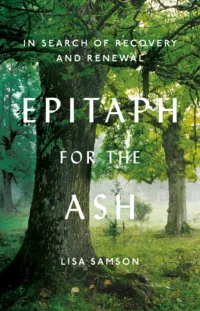
Kitabı oku: «Epitaph for the Ash: In Search of Recovery and Renewal»

Copyright
4th Estate
An imprint of HarperCollinsPublishers
1 London Bridge Street
London SE1 9GF
This eBook first published in Great Britain by 4th Estate in 2018
Copyright © Lisa Samson 2018
Cover photograph © plainpicture/Bildhuset/Bengt Olof Olsson
Design: Ben Gardiner
From Swimming in the Flood by John Burnside published by Jonathan Cape, reprinted by permission of The Random House Group Limited © 1995.
While every effort has been made to obtain permission to use copyrighted material reproduced herein, the publishers will be glad to rectify any omissions in future editions.
Lisa Samson asserts the moral right to be identified as the author of this work
A catalogue record for this book is available from the British Library
All rights reserved under International and Pan-American Copyright Conventions. By payment of the required fees, you have been granted the non-exclusive, non-transferable right to access and read the text of this e-book on-screen. No part of this text may be reproduced, transmitted, down-loaded, decompiled, reverse engineered, or stored in or introduced into any information storage and retrieval system, in any form or by any means, whether electronic or mechanical, now known or hereinafter invented, without the express written permission of HarperCollins.
Source ISBN: 9780007544615
Ebook edition: March 2018 ISBN: 9780007544622
Version: 2018-02-15
Dedication
For Mike, without whom this book
wouldn’t have been possible
Contents
Cover
Title Page
Copyright
Dedication
Introduction
The Blight of Ashwellthorpe
The Science behind Ash Dieback
Secrets
Bread
Ancestors
Ash Fires
Life Cycle
Spring
Isolation
Shadows
Shelter
Resistance
Notes
Acknowledgements
About the Author
About the Publisher
Introduction
You may walk past the ash – its slenderness and height blend easily into any wood or hedgerow – but in spring you’ll stop to admire the bluebells shimmering in the light that filters through its foliage. The continued existence of the ash tree is under threat from Ash Dieback, a disease that has spread from the Continent and is threatening ash trees in Britain. During the research and writing for this book, I was diagnosed with a benign brain tumour, which changed my life irrevocably, never to be the same again. Epitaph for the Ash is a celebration of the ash and an account of my personal journey as I recorded its decline over the last few years, taking the reader from the lowlands of Norfolk to the uplands of Yorkshire, and from Devon to the northernmost reaches of the British Isles. The book explores the cultural significance of the ash tree, tracing its mythology in Norse culture and through some of the literature on and history of woodlands in Britain.
The ancient woodlands of today are a fraction of the size they were in Anglo-Saxon Britain, as agriculture and industry have gradually encroached on the forests. During the post-war years thousands of acres of woodland were given over to agricultural production or buildings to accommodate a burgeoning population. As the elms were ravaged by Dutch Elm Disease in the latter half of the twentieth century, the importance of the ash as a habitat for rare flora and fauna increased. Trees, like any living organism, have always suffered from blight and disease, but the loss of most of our elms, and now the danger to the ash poses a serious environmental threat.
In May 1978, I clearly recall my mother bristling with pride as she showed me a copy of the Sunday Times Magazine, which featured my uncle’s new book, Epitaph for the Elm. Gerald Wilkinson was her older brother, the eccentric tree expert. We saw little of him, but occasionally he would stop by in his old Volkswagen camper-van on his way to or from one of his extended research trips in the woodlands of Britain. To a town child like me, with a yearning for the open countryside, this seemed the most romantic way to spend your life, and I’m sure I begged him to take me with him.
I’ve been communing with trees since I was young and sometimes fancy they are aware of me. The brightest days of my childhood were when my family and I got onto a bus into the countryside, then walked through the woods and fields, picnicking under a tree. I’d roam away from the others and listen to the trees whispering. I never wandered too far because I was afraid of my own shadow and would imagine danger lurking behind hedgerows and in the depths of the dark wood. I’ve always loved trees for their swaying limbs and shady canopies, so easy to draw, but it is only as an adult that I have learned to regard them as friends. They’re good company and they do talk if you stop to listen.
I was too young to understand the full impact of Dutch Elm Disease, but as I grew up and my own interest in trees deepened, I often referred to Gerald’s books. His death in a car crash in 1988 fuelled my intention to learn more about his obsession with them. Now, nearly three decades later, it is predicted that Chalara fraxinea, the fungus that causes Hymenoscyphus fraxineus or Hymenoscyphus pseudoalbidus – Ash Dieback – will ravage the ash trees, again changing Britain’s landscape. It was found in the wild in Britain in 2012, in Ashwellthorpe, Norfolk, and since then it has spread relatively quickly, with new cases reported often in the press. My home county of Yorkshire will seem barren without the ancient ashes protruding from limestone scars and chalky cliff faces, or spreading their fine canopies over the hedgerows.
The ash’s status as a ‘magic’ tree with healing properties gives it a fascinating history. Gerald suggests that in Neolithic times ‘the Ash may have been sacred’. Druids regard it as such, and in Norse mythology the ash was the Tree of Life, the most important living thing besides humans. It is one of our strongest trees, used for framework in vehicles and tool handles, but craftspeople and manufacturers are already using other materials.
Across the length and breadth of Britain place names are associated with the ash – Ash, Ashburton, Ashby-de-la-Zouch, Ashbourne, Ash-cum-Ridley, Ashover, Ashwater, Ashtead, Ashkirk, Ashcot, Ashwell – anthropological mnemonics linking people to their places. Some will have been named after self-sown ash seeds that blew on the wind, others for the ash their inhabitants cultivated, but all bear testimony to the part the ash has played in our civilization.
The Blight of Ashwellthorpe
My first view of Ashwellthorpe is of a bright yellow rape field where poppies blush under a louring sky, June, 2013. The wood comes into view, ‘a darker green than usual’, like the Enchanted Wood of Enid Blyton’s books. It is dense with many species of tree. In rich full leaf, they nod and sway in the dull light, waiting for the rain. They beckon to me over the hedgerows and houses, but the road running straight through the village leads me past. I nearly hit the kerb as I try to glimpse the ashes I’ve come all this way to see. An elderly cyclist ahead of me pauses to let me pass, perhaps to save himself or to stare at me, a stranger in this sleepy village. I pass the hall and the church, the rows of plain houses and cottages that line the road: a barrier obstructing my view of the wood.
The village sweeps by and I pull up in the lane beside three ashes that all have the characteristic antlers of leafless upper branches, like oak trees widening their canopy as they mature. Crown dieback is a symptom of Chalara fraxinea’s presence and these trees remind me of photos I’ve seen of diseased trees in Poland. It could be part of a natural process … or signs of Ash Dieback. Naturally, I go for the latter theory since I know it has spread widely across the Norfolk Broads.
I climb out of my car and look back at the village and the wood. It is low-lying, cradled in the embrace of the fields and village that have depended on it for centuries. There is a gap between a larger and smaller patch of woodland, mown through as straight as a Roman road. The smaller wood is Upper Wood and the larger is Lower Wood. They are believed to have been separated during the Napoleonic Wars in the early 1800s, when a perfectly straight line of vision was required between London and the Norfolk coast for semaphore messages to be relayed as part of an early-warning system. Apparently it took only half an hour to relay the message of an approaching ship near Great Yarmouth all the way to London. Upper Wood is now privately owned and is a jealously guarded pheasant-shoot, but Lower Wood is managed by the Norfolk Wildlife Trust and is a site of designated specific interest. It is also the first place in Britain where symptoms of Ash Dieback were discovered in the wild.
The woods are beckoning to me. I fancy I can hear them whispering their secrets, like the trees in The Magic Faraway Tree. Blyton’s enchanted tree is huge and guarded by fairy folk, its branches reaching into different magical worlds. Its roots stretch far into the earth and it represents a complete entity, both admired and feared by the woodland folk who live nearby. Although the Faraway Tree is of an unspecified type, Blyton was perhaps aware of the ash’s magical properties and its powers of protection. It bears some resemblance to Yggdrasil, a huge tree that was at the centre of the Norse universe. Its roots were so abundant and so long that they reached into the underworld, and its trunk was so tall that its branches stretched to Heaven. Yggdrasil was the giver of life, at the beginning of all creation.
I drag myself back into my car and drive on to Norwich, knowing I will return in the late afternoon. Being among green things, in nature, is almost as essential to me as breathing: I cannot go too long without it. I need to feel the air, sun and rain on my face, to hear the wind blowing through the trees and grass. With a pang, I watch the woods receding from view and just refrain from stopping the car to go back.
It’s pouring with rain when I turn into the tiny Rosemary Meadow car park in the late afternoon. Steve Collin, head forester with the Norfolk Wildlife Trust, has to flag me down. No bigger than a garden, it backs onto the Wildlife Trust Meadow that skirts the south side of the wood. It is bright with Greater Spearwort, like large buttercups, and tightly clustered Red Clover, but today the grasses hang their heads, beaten down by the rain, which has been gathering force all afternoon. Steve seems not to notice it as he squelches towards the wood, with me slithering behind. He is at home here and strides with an air of propriety, accustomed to leading people round the wood that has received so much media attention in recent months.
The dripping trees enfold us in their shadows, sheltering us from the worst of the downpour. Fat raindrops splay on my glasses and blur my vision as I look up to the top of the canopy to see the tall ashes that have shot above the roof of the wood in their eagerness to reach the light. At my level, five feet four from the ground, it would be easy to walk past the trunks of the young ash without noticing what they are, since their bark is darkened with damp. They sway in the gloom of the wet wood, their leaves rustling, sweeping away the rain.
Twigs snap underfoot as branches of alder and ash brush our legs and reach out to touch our shoulders. A short way into the woods, we stop by what is probably the most photographed tree of 2012: the ash sapling on which Steve first noticed signs of disease in October that year. It has a diamond-shaped lesion close to a shoot some way up its thin trunk, which is seeping resin, like congealed blood from an open wound. Unlike human flesh, though, the tree bark cannot heal. Steve breaks off a dead shoot to show me how brittle it is. The effects of Chalara are easier to spot on a thin young tree because the diseased girdle that forms around the trunk is visible and everything above it dies. Leaves have blackened and twigs have wilted, ready to fall to the ground, no use to anyone. Most of the dead leaves and wood are removed once they’ve fallen, as instructed by the Forestry Commission.
On the day they first spotted the disease, Steve Collin and Dr Anne Edwards, the volunteer warden at Ashwellthorpe Woods, were looking at the coppicing that had been done. After twenty years, they had finally brought the cycle of coppicing into a regular rotation and the woods were responding to their care, with an annual increase in the numbers of bluebells and wild orchids that would not thrive as well without the light exposed by coppicing. Steve and Anne noticed that some of the trees appeared to be dead and reported it to the Forestry Commission, suspecting an invasion of Chalara fraxinea. Meanwhile Anne, a scientist, took samples back to the John Innes Centre where she works and alerted her colleagues to the potential danger lurking in their own backyard. Within weeks Chalara was confirmed but they knew they wouldn’t be able to gauge the real level of damage until the autumn leaves had fallen and the new buds had unfurled on the trees in spring. We discuss whether the fungus was blown in spores across the sea from Denmark, and Steve notes that the wind has been blowing easterly for a few years. In addition, the heavy rains in recent summers made perfect breeding ground for the fungus, although the ashes themselves can thrive in wet conditions.
An area of saplings holds yellowed shoots that have been drained of life. A bright yellow one is still sprouting from the base, though most of the tree above the infected girdle is dead. It hides behind a group of healthy green shoots. The saplings’ bark is slick with rain that trickles over a purplish gash, the mark of disease. Most of the signs of Ash Dieback in Ashwellthorpe are in the coppice growth, but the big ashes at the back of the coppice have Ash Dieback at the top and have probably had it for two or three years at least. The rooks perched on the uppermost branches are oblivious, croaking to one another in the dark heart of the wood.
Ash is the predominant species here but it is a mixed coppice of hazel, ash, hawthorn, alder and sallow. Ash, closely followed by alder, was possibly the commonest tree to make up the forests of the Neolithic wildwood that covered the Broadlands when the sheep of Neolithic peoples began to nibble at the tasty bark and seeds, turning the woods to scrub. Much of the woodland would have been felled to make way for farming and building. By the time the Anglo-Saxons, and later the Vikings, arrived, the woods were shrinking, with fields taking over. The Domesday Book of 1081 makes reference to a large tract of woodland here, and the present day Ashwellthorpe Woods are the last vestige of its former dimensions. The woods have retained their current size since about the 1830s. Seen from above on aerial photos, they form two darker blocks of green among the patches of yellow cereals, pale green wheat and brown ploughed land.
Behind Ashwellthorpe Hall, to the east of the wood, the remains of an Anglo-Saxon burial site were found, so it is safe to assume that there has been a settlement here since the early Anglo-Saxons arrived between AD 500 and 700. The Angles, Saxons and Jutes, who came to East Anglia in search of a better life, would in all probability have approached Ashwellthorpe (then unnamed) from one of the tributaries of the Waveney river, which then reached nearly to the sea in the south. The dark ash wood would have risen from the lush marshlands and mud banks, a welcome sight on the terraqueous landscape, providing shelter and respite from the sun. Anglo-Saxons tended to live in isolated farmsteads of one or two family groupings, eschewing the larger towns and fortresses founded by the Romans in favour of a simple rural life.
Lower Ashwellthorpe Wood has an industrial history that dates back centuries, serving the local communities with faggots, hurdles and poles. We pass a group of ash that has grown in straight lines and would make strong, flexible poles, essential if you were going to build a structure of any kind. The Farming Journal of Randall Burroughs provides evidence of the various uses made of Ashwellthorpe Wood. Burroughs was a gentleman farmer from Wymondham who maintained a log of his daily business that is of little literary interest but of great historical value. We can connect the ash trees of Ashwellthorpe Woods with Burroughs’s regular acquisition of hurdles. On Monday, 21 February 1796 he states: ‘Fetched a load of hurdles from Ashwellthorpe Wood for Wm Gray.’ Gray was clearly a local veterinary surgeon, or someone who assumed the function of one, because on Sunday, 24 February 1799, Burroughs wrote:
On Wednesday Nelson went to Ashwellthorpe Wood for a load of hurdles namely 3 dozen & deposited them in the 12 Acre. On Thursday to Wicklewood & borrow’d 3 doz gate hurdles of Mr Bernard. On Friday the ewes and lambs viz 46 ewes, 49 lambs & 21 wethers were hurdled upon the 12 Acre. The lambs had been gelt on Tuesday by Wm Gray. The night was very rainy but they all recovered without ointment.
Ücretsiz ön izlemeyi tamamladınız.