Kitabı oku: «Thriller: Stories To Keep You Up All Night»
Thriller: Stories To Keep You Up All Night
Various Authors

www.mirabooks.co.uk
Introduction
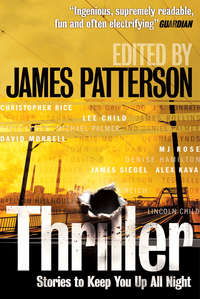
This book is a trailblazer on two counts. It’s the first short-story anthology of thrillers ever done, and it’s the first publication of a new professional organization: International Thriller Writers, Inc.
By nature writers tend to be loners, happy with their work, their families and a few close friends. But we also yearn occasionally for collegiality. For years we’ve all said to one another, “Why don’t we organize?” Then in June 2004, Barbara Peters, of the legendary Poisoned Pen bookstore in Scottsdale, Arizona, held the first-ever thriller conference in the United States. She invited six writers—Lee Child, Vince Flynn, Steve Hamilton, Gayle Lynds, David Morrell and Kathy Reichs—and one editor, Keith Kahla, of St. Martin’s Press, to give presentations about the various aspects of writing and publishing thrillers. Clive Cussler spoke at the luncheon.
With only two weeks to publicize the event, Barbara thought she’d be lucky if a hundred people registered. In the end some 125 attended and, to everyone’s surprise, not all were there to learn about writing. Many were readers who wanted to meet some of their favorite thriller authors. Here for the first time was concrete evidence of what most of us had long suspected: there was a demand among fans for a thriller writers’ organization, too. If we held conventions, readers would likely attend, as well as us. And if we awarded prizes—there have never been awards specifically for thriller books, stories and films in the English language—that interest would only grow.
On the last day of the conference, in the sunny restaurant at the Biltmore Hotel in Scottsdale, several of the attendees stood around talking. Gayle Lynds, a highly accomplished thriller writer, mentioned that she thought the conference indicated the time had come to create an association for thriller writers. Adrian Muller, a journalist and freelance conference organizer, pointed out that the association should not be limited to the United States. Barbara Peters said she’d be willing to hold another, larger convention. Realizing that she’d almost committed herself, Gayle quickly announced, “I can’t organize this alone, though.” Her husband, the incomparable Dennis Lynds, added, “She’s right. She can’t.” Barbara merely smiled and said, “Pull in David Morrell. He’s perfect.”
And that’s what happened.
Adrian Muller volunteered to send out e-mails to every thriller author he could find to see if there was enough interest among writers to form a group. A few days later, Gayle and David had a long telephone call, discussing their workloads and a potential thriller organization that would be international in scope. They agreed to jointly head the effort, and over the summer of 2004 Adrian, David and Gayle talked and exchanged e-mails. Adrian arranged with Al Navis, who was orchestrating Bouchercon 2004, the great congregation of mystery readers and writers, to assign a room in which the thriller authors could meet.
The response to Adrian’s e-mail was impressive. Author after author said that an association was a great idea. A meeting was held on October 9 in the Metro Toronto Convention Centre and, after many discussions, International Thriller Writers, Inc. was born. In November 2004, members were solicited. That response was likewise incredible. Currently there are over four hundred members, with combined sales exceeding 1,600,000,000 books.
This is all quite astonishing, and fitting because thrillers provide such a rich literary feast. There are all kinds. The legal thriller, spy thriller, action-adventure thriller, medical thriller, police thriller, romantic thriller, historical thriller, political thriller, religious thriller, high-tech thriller, military thriller. The list goes go on and on, with new variations constantly being invented. In fact, this openness to expansion is one of the genre’s most enduring characteristics. But what gives the variety of thrillers a common ground is the intensity of emotions they create, particularly those of apprehension and exhilaration, of excitement and breathlessness, all designed to generate that all-important thrill. By definition, if a thriller doesn’t thrill, it’s not doing its job.
Thrillers, though, are also known for their pace, and the force with which they hurtle the reader along. They’re an obstacle race in which an objective is achieved at some heroic cost. The goal can be personal (trying to save a spouse or a long-lost relative) or global (trying to avert a world war) but often it’s both. Perhaps there’s a time limit imposed, perhaps not. Sometimes they build rhythmically to rousing climaxes that peak with a cathartic, explosive ending. Other times they start at top speed and never ease off. At their best, thrillers use scrupulous research and accurate details to create environments in which meaningful characters teach us about our world. When readers finish a thriller, they should feel not only emotionally satisfied but also better informed—and hungry for the next riveting tale.
Henry James once wrote, “The house of fiction has many windows.” That observation certainly applies to thrillers, and this anthology is an excellent example. When Gayle Lynds suggested producing it, International Thriller Writers, Inc. sent out a call to its members for stories. Many replied, and thirty were ultimately selected for inclusion. I was contacted about acting as editor and readily agreed, while Steve Berry, another ITW member and thriller author, took on the responsibility of managing director. When the book proposal was finally shopped by agent Richard Pine, himself an ITW member, several publishers expressed interest and, after a bidding war, MIRA Books acquired the rights.
Generously, each of the contributors to this book donated his or her story. Only ITW will share in the royalties, the proceeds earned going into the corporate treasury to fund the expansion of this worthwhile organization. The theme of this anthology is simple. Each writer has used a familiar character or plotline from their body of work and crafted an original story. So you have something known, along with something new. As you’ll see, the variations are captivating, as the writers’ imaginations soared. Each story is prefaced by an introduction from me that sets up the writer, his or her work and the story. At the book’s end, there are short biographies of each contributor. What a pleasure it was to read the stories as they came in, and it’s my hope that you’ll likewise relish the tales.
So prepare to be thrilled.
And enjoy the experience.
—James Patterson
June 2006
P.S. More can be learned about ITW through its Web site at www.internationalthrillerwriters.com. Check it out.
Lee Child
Lee Child’s debut novel was Killing Floor, a first-person narrative introducing his series character Jack Reacher, and although clearly a fast-paced thriller it shared characteristics with the classic limited-universe Western. At the time Child was also an experienced media professional, aware that his second book had to be written before significant reaction to his first had even been received. To avoid stereotyping—which can affect a writer as much as any performer—Child determined to make his second book, Die Trying, as different as possible, albeit part of the same series. His plan was to stake out a wide “left field, right field” territorial span between books one and two, one in which the rest of the series could happily roam. Therefore Die Trying featured third-person narration and a classic high-stakes, multistrand thriller structure. But, in its first draft, that structure went one strand too far. There was a character—James Penney—who had an appealing introduction and backstory, but who clearly didn’t have any valid place to go. So Penney wasn’t featured in the completed novel. Instead, he languished on Child’s hard drive until a request came from an obscure British anthology for a short story. Child repackaged Penney’s narrative and added a prequel-style ending, featuring a brief glimpse of Jack Reacher’s early career. The story was published, but with limited distribution. Now it comes to life again, revised and renewed, in hopes of reaching a wider audience.
James Penney’s New Identity
The process that turned James Penney into a completely different person began thirteen years ago, at one in the afternoon on a Monday in the middle of June, in Laney, California. A hot time of day, at a hot time of year, in a hot part of the country. The town squats on the shoulder of the road from Mojave to L.A. Due west, the southern rump of the Coastal Range Mountains is visible. Due east, the Mojave Desert disappears into the haze. Very little happens in Laney. After that Monday in the middle of June thirteen years ago, even less ever did.
There was one industry in Laney. One factory. A big spread of a place. Weathered metal siding, built in the sixties. Office accommodations at the north end, in the shade. The first floor was low grade. Clerical functions took place there. Billing and accounting and telephone calling. The second story was high grade. Managers. The corner office on the right used to be the personnel manager’s place. Now it was the human resources manager’s place. Same guy, new title on his door.
Outside that door in the long second-floor corridor was a line of chairs. The human resources manager’s secretary had rustled them up and placed them there that Monday morning. The line of chairs was occupied by a line of men and women. They were silent. Every five minutes the person at the head of the line would be called into the office. The rest of them would shuffle up one place. They didn’t speak. They didn’t need to. They knew what was happening.
Just before one o’clock, James Penney shuffled up one space to the head of the line. He waited five long minutes and stood up when he was called. Stepped into the office. Closed the door behind him. The human resources manager was a guy called Odell. Odell hadn’t been long out of diapers when James Penney started work at the Laney plant.
“Mr. Penney,” Odell said.
Penney said nothing, but sat down and nodded in a guarded way.
“We need to share some information with you,” Odell said.
Penney shrugged at him. He knew what was coming. He heard things, same as anybody else.
“Just give me the short version, okay?” he said.
Odell nodded. “We’re laying you off.”
“For the summer?” Penney asked him.
Odell shook his head.
“For good,” he said.
Penney took a second to get over the sound of the words. He’d known they were coming, but they hit him like they were the last words he ever expected Odell to say.
“Why?” he asked.
Odell shrugged. He didn’t look as if he was enjoying this. But on the other hand, he didn’t look as if it was upsetting him much, either.
“Downsizing,” he said. “No option. Only way we can go.”
“Why?” Penney said again.
Odell leaned back in his chair and folded his hands behind his head. Started the speech he’d already made many times that day.
“We need to cut costs,” he said. “This is an expensive operation. Small margin. Shrinking market. You know that.”
Penney stared into space and listened to the silence breaking through from the factory floor. “So you’re closing the plant?”
Odell shook his head again. “We’re downsizing, is all. The plant will stay open. There’ll be some maintenance. Some repairs, overhauls. But not like it used to be.”
“The plant will stay open?” Penney said. “So how come you’re letting me go?”
Odell shifted in his chair. Pulled his hands from behind his head and folded his arms across his chest defensively. He had reached the tricky part of the interview.
“It’s a question of the skills mix,” he said. “We had to pick a team with the correct blend. We put a lot of work into the decision. And I’m afraid you didn’t make the cut.”
“What’s wrong with my skills?” Penney asked. “I got skills. I’ve worked here seventeen years. What’s wrong with my damn skills?”
“Nothing at all,” Odell said. “But other people are better. We have to look at the big picture. It’s going to be a skeleton crew, so we need the best skills, the fastest learners, good attendance records, you know how it is.”
“Attendance records?” Penney said. “What’s wrong with my attendance record? I’ve worked here seventeen years. You saying I’m not a reliable worker?”
Odell touched the brown file folder in front of him.
“You’ve had a lot of time out sick,” he said. “Absentee rate just above eight percent.”
Penney looked at him incredulously.
“Sick?” he said. “I wasn’t sick. I was post-traumatic. From Vietnam.”
Odell shook his head again. He was too young.
“Whatever,” he said. “That’s still a big absentee rate.”
James Penney just sat there, stunned. He felt like he’d been hit by a train.
“We looked for the correct blend,” Odell said again. “We put a lot of management time into the process. We’re confident we made the right decisions. You’re not being singled out. We’re losing eighty percent of our people.”
Penney stared across at him. “You staying?”
Odell nodded and tried to hide a smile but couldn’t.
“There’s still a business to run,” he said. “We still need management.”
There was silence in the corner office. Outside, the hot breeze stirred off the desert and blew a listless eddy over the metal building. Odell opened the brown folder and pulled out a blue envelope. Handed it across the desk.
“You’re paid up to the end of July,” he said. “Money went in the bank this morning. Good luck, Mr. Penney.”
The five-minute interview was over. Odell’s secretary appeared and opened the door to the corridor. Penney walked out. The secretary called the next man in. Penney walked past the long quiet row of people and made it to the parking lot. Slid into his car. It was a red Firebird, a year and a half old, and it wasn’t paid for yet. He started it up and drove the mile to his house. Eased to a stop in his driveway and sat there, thinking, in a daze, with the engine running.
He was imagining the repo men coming for his car. The only damn thing in his whole life he’d ever really wanted. He remembered the exquisite joy of buying it. After his divorce. Waking up and realizing he could just go to the dealer, sign the papers and have it. No discussions. No arguing. He’d gone down to the dealer and chopped in his old clunker and signed up for that Firebird and driven it home in a state of total joy. He’d washed it every week. He’d watched the infomercials and tried every miracle polish on the market. The car had sat every day outside the Laney factory like a bright red badge of achievement. Like a shiny consolation for the shit and the drudgery. Whatever else he didn’t have, he had a Firebird.
He felt a desperate fury building inside him. He got out of the car and ran to the garage and grabbed his spare can of gasoline. Ran back to the house. Opened the door. Emptied the can over the sofa. He couldn’t find a match, so he lit the gas stove in the kitchen and unwound a roll of paper towels. Put one end on the stove top and ran the rest through to the living room. When his makeshift fuse was well alight, he skipped out to his car and started it up. Turned north toward Mojave.
His neighbor noticed the fire when the flames started coming through the roof. She called the Laney fire department. The firefighters didn’t respond. It was a volunteer department, and all the volunteers were in line inside the factory, upstairs in the narrow corridor. Then the warm air moving off the Mojave Desert freshened up into a hot breeze, and by the time James Penney was thirty miles away the flames from his house had set fire to the dried scrub that had been his lawn. By the time he was in the town of Mojave itself, cashing his last paycheck at the bank, the flames had spread across his lawn and his neighbor’s and were licking at the base of her back porch.
Like any California boomtown, Laney had grown in a hurry. The factory had been thrown up around the start of Nixon’s first term. A hundred acres of orange groves had been bulldozed and five hundred frame houses had quadrupled the population in a year. There was nothing really wrong with the houses, but they’d seen rain less than a dozen times in the thirty-one years they’d been standing, and they were about as dry as houses can get. Their timbers had sat and baked in the sun and been scoured by the dry desert winds. There were no hydrants built into the streets. The houses were close together, and there were no windbreaks. But there had never been a serious fire in Laney. Not until that Monday in June.
James Penney’s neighbor called the fire department for the second time after her back porch disappeared in flames. The fire department was in disarray. The dispatcher advised her to get out of her house and just wait for their arrival. By the time the fire truck got there, her house was destroyed. And the next house in line was destroyed, too. The desert breeze had blown the fire on across the second narrow gap and sent the old couple living there scuttling into the street for safety. Then Laney called in the fire departments from Lancaster and Glendale and Bakersfield, and they arrived with proper equipment and saved the day. They hosed the scrub between the houses and the blaze went no farther. Just three houses destroyed, Penney’s and his two downwind neighbors. Within two hours the panic was over, and by the time Penney himself was fifty miles north of Mojave, Laney’s sheriff was working with the fire investigators to piece together what had happened.
They started with Penney’s place, which was the upwind house, and the first to burn, and therefore the coolest. It had just about burned down to the floor slab, but the layout was still clear. And the evidence was there to see. There was tremendous scorching on one side of where the living room had been. The Glendale investigator recognized it as something he’d seen many times before. It was what is left when a foam-filled sofa or armchair is doused with gasoline and set afire. As clear a case of arson as he had ever seen. The unfortunate wild cards had been the stiffening desert breeze and the proximity of the other houses.
Then the sheriff had gone looking for James Penney, to tell him somebody had burned his house down, and his neighbors’. He drove his black-and-white to the factory and walked upstairs, past the long line of people and into Odell’s corner office. Odell told him what had happened in the five-minute interview just after one o’clock. Then the sheriff had driven back to the Laney station house, steering with one hand and rubbing his chin with the other.
And by the time James Penney was driving along the towering eastern flank of Mount Whitney, a hundred and fifty miles from home, there was an all-points-bulletin out on him, suspicion of deliberate arson, which in the dry desert heat of southern California was a big, big deal.
The next morning’s sun woke James Penney by coming in through a hole in his motel-room blind and playing a bright beam across his face. He stirred and lay in the warmth of the rented bed, watching the dust motes dancing.
He was still in California, up near Yosemite, in a place just far enough from the park to be cheap. He had six weeks’ pay in his billfold, which was hidden under the center of his mattress. Six weeks’ pay, less a tank and a half of gas, a cheeseburger and twenty-seven-fifty for the room. Hidden under the mattress, because twenty-seven-fifty doesn’t get you a space in a top-notch place. His door was locked, but the desk guy would have a passkey, and he wouldn’t be the first desk guy in the world to rent out his passkey by the hour to somebody looking to make a little extra money during the night.
But nothing bad had happened. The mattress was so thin he could feel the billfold right there, under his kidney. Still there, still bulging. A good feeling. He lay watching the sunbeam, struggling with mental arithmetic, spreading six weeks’ pay out over the foreseeable future. With nothing to worry about except cheap food, cheap motels and the Firebird’s gas, he figured he had no problems at all. The Firebird had a modern engine, twenty-four valves, tuned for a blend of power and economy. He could get far away and have enough money left to take his time looking around.
After that, he wasn’t so sure. But there would be a call for something. He was sure of that. Even if it was menial. He was a worker. Maybe he’d find something outdoors, might be a refreshing thing. Might have some kind of dignity to it. Some kind of simple work, for simple honest folks, a lot different than slaving for that grinning weasel Odell.
He watched the sunbeam travel across the counterpane for a while. Then he flung the cover aside and swung himself out of bed. Used the john, rinsed his face and mouth at the sink and untangled his clothes from the pile he’d dropped them in. He’d need more clothes. He only had the things he stood up in. Everything else he’d burned along with his house. He shrugged and reran his calculations to allow for some new pants and work shirts. Maybe some heavy boots, if he was going to be laboring outside. The six weeks’ pay was going to have to stretch a little thinner. He decided to drive slow, to save gas and maybe eat less. Or maybe not less, just cheaper. He’d use truck stops, not tourist diners. More calories, less money.
He figured today he’d put in some serious miles before stopping for breakfast. He jingled the car keys in his pocket and opened his cabin door. Then he stopped. His heart thumped. The blacktop rectangle outside his cabin was empty. Just old oil stains staring up at him. He glanced desperately left and right along the row. No red Firebird. He staggered back into the room and sat down heavily on the bed. Just sat there in a daze, thinking about what to do.
He decided he wouldn’t bother with the desk guy. He was pretty certain the desk guy was responsible. He could just about see it. The guy had waited an hour and then called some buddies who had come over and hot-wired his car. Eased it out of the motel lot and away down the road. A conspiracy, feeding off unsuspecting motel traffic. Feeding off suckers dumb enough to pay twenty-seven-fifty for the privilege of getting their prize possession stolen. He was numb. Suspended somewhere between sick and raging. His red Firebird. Gone. Stolen. No repo men involved. Just thieves.
The nearest police station was two miles south. He had seen it the previous night, heading north past it. It was small but crowded. He stood in line behind five other people. There was an officer behind the counter, taking details, taking complaints, writing slow. Penney felt like every minute was vital. He felt like his Firebird was racing down to the border. Maybe this guy could radio ahead and get it stopped. He hopped from foot to foot in frustration. Gazed wildly around him. There were notices stuck on a board behind the officer’s head. Blurred Xeroxes of telexes and faxes. U.S. Marshal notices. A mass of stuff. His eyes flicked absently across it all.
Then they snapped back. His photograph was staring out at him. The photograph from his own driver’s license, Xeroxed in black and white, enlarged, grainy. His name underneath, in big printed letters. JAMES PENNEY. From Laney, California. A description of his car. Red Firebird. The plate number. James Penney. Wanted for arson and criminal damage. He stared at the bulletin. It grew larger and larger. It grew life-size. His face stared back at him like he was looking in a mirror. James Penney. Arson. Criminal damage. All-points-bulletin. The woman in front of him finished her business and he stepped forward to the head of the line. The desk sergeant looked up at him.
“Can I help you, sir?” he said.
Penney shook his head. Peeled off left and walked away. Stepped calmly outside into the bright morning sun and ran back north like a madman. He made about a hundred yards before the heat slowed him to a gasping walk. Then he did the instinctive thing, which was to duck off the blacktop and take cover in a wild-birch grove. He pushed through the brush until he was out of sight and collapsed into a sitting position, back against a thin rough trunk, legs splayed out straight, chest heaving, hands clamped against his head like he was trying to stop it from exploding.
Arson and criminal damage. He knew what the words meant. But he couldn’t square them with what he had actually done. It was his own damn house to burn. Like he was burning his trash. He was entitled. How could that be arson? And he could explain, anyway. He’d been upset. He sat slumped against the birch trunk and breathed easier. But only for a moment. Because then he started thinking about lawyers. He’d had personal experience. His divorce had cost him plenty in lawyer bills. He knew what lawyers were like. Lawyers were the problem. Even if it wasn’t arson, it was going to cost plenty in lawyer bills to start proving it. It was going to cost a steady torrent of dollars, pouring out for years. Dollars he didn’t have, and never would have again. He sat there on the hard, dry ground and realized that absolutely everything he had in the whole world was right then in direct contact with his body. One pair of shoes, one pair of socks, one pair of boxers, Levi’s, cotton shirt, leather jacket. And his billfold. He put his hand down and touched its bulk in his pocket. Six weeks’ pay, less yesterday’s spending.
He got to his feet in the clearing. His legs were weak from the unaccustomed running. His heart was thumping. He leaned up against a birch trunk and took a deep breath. Swallowed. He pushed back through the brush to the road. Turned north and started walking. He walked for a half hour, hands in his pockets, maybe a mile and three-quarters, and then his muscles eased off and his breathing calmed down. He began to see things clearly. He began to appreciate the power of labels. He was a realistic guy, and he always told himself the truth. He was an arsonist because they said he was. The angry phase was over. Now it was about making sensible decisions, one after the other. Clearing up the confusion was beyond his resources. So he had to stay out of their reach. That was his first decision. That was the starting point. That was the strategy. The other decisions would flow out of that. They were tactical.
He could be traced three ways. By his name, by his face, by his car. He ducked sideways off the road again into the trees. Pushed twenty yards into the woods. Kicked a shallow hole in the leaf mold and stripped out of his billfold everything with his name on. He buried it all in the hole and stamped the earth flat. Then he took his beloved Firebird keys from his pocket and hurled them far into the trees. He didn’t see where they fell.
The car itself was gone. Under the circumstances, that was good. But it had left a trail. It might have been seen in Mojave, outside the bank. It might have been seen at the gas stations where he filled it. And its plate number was on the motel form from last night. With his name. A trail, arrowing north through California in neat little increments.
He remembered his training from Vietnam. He remembered the tricks. If you wanted to move east from your foxhole, first you moved west. You moved west for a couple hundred yards, stepping on the occasional twig, brushing the occasional bush, until you had convinced Charlie you were moving west, as quietly as you could, but not quietly enough. Then you turned around and came back east, really quietly, doing it right, past your original starting point and away. He’d done it a dozen times. His original plan had been to head north for a spell, maybe into Oregon. He’d gotten a few hours into that plan. Therefore, the red Firebird had laid a modest trail north. So now he was going to turn south for a while and disappear. He walked back out of the woods, into the dust on the near side of the road, and started walking back the way he had come.
His face he couldn’t change. It was right there on all the posters. He remembered it staring out at him from the bulletin board in the police building. The neat side-parting, the sunken gray cheeks. He ran his hands through his hair, vigorously, backward and forward, until it stuck out every which way. No more neat side-parting. He ran his palms over twenty-four hours of stubble. Decided to grow a big beard. No option, really. He didn’t have a razor, and he wasn’t about to spend any money on one. He walked on through the dust, heading south, with Excelsior Mountain towering on his right. Then he came to the turn dodging west toward San Francisco, through Tioga Pass, before Mount Dana reared up even higher. He stopped in the dust on the side of the road and pondered. Keeping on south would take him nearly all the way back to Mojave. Too close to home. Way too close. He wasn’t comfortable about that. Not comfortable at all. So he figured a new move. He’d hitch a ride west, and then decide.
Late in the afternoon he got out of some old hippie’s open Jeep on the southern edge of Sacramento. He stood by the side of the road and waved and watched the guy go. Then he looked around in the sudden silence and got his bearings. All the way up and down the drag he could see a forest of signs, bright colors, neon, advertising motels, air and pool and cable, burger places, eateries of every description, supermarkets, auto parts. Looked like the kind of place a guy could get lost in, no trouble at all. Big choice of motels, all side by side, all competing, all offering the lowest prices in town. He figured he’d hole up in one of them and plan ahead. After eating. He was hungry. He chose a burger chain he’d never used before and sat in the window, idly watching the traffic. The waitress came over and he ordered a cheeseburger and two Cokes. He was dry from the dust on the road.
The Laney sheriff opened a map. Thought hard. Penney wouldn’t be aiming to stay in California. He’d be moving on. Probably up to the wilds of Oregon or Washington State. Or Idaho or Montana. But not due north. Penney was a veteran. He knew how to feint. He would head west first. He would aim to get out through Sacramento. But Sacramento was a city with an ocean not too far away to the left, and high mountains to the right. Fundamentally six roads out, was all. So six roadblocks would do it, maybe on a ten-mile radius so the local commuters wouldn’t get snarled up. The sheriff nodded to himself and picked up the phone.
Penney walked north for an hour. It started raining at dusk. Steady, wetting rain. Northern California, near the mountains, very different from what Penney was used to. He was hunched in his jacket, head down, tired and demoralized and alone. And wet. And conspicuous. Nobody walked anywhere in California. He glanced over his shoulder at the traffic stream and saw a dull olive Chevrolet sedan slowing behind him. It came to a stop and a long arm stretched across and opened the passenger door. The dome light clicked on and shone out on the soaked roadway.
“Want a ride?” the driver called.
Penney ducked down and glanced inside. The driver was a very tall man, about thirty, muscular, built like a regular weight lifter. Short fair hair, rugged open face. Dressed in uniform. Army uniform. Penney read the insignia and registered: military police captain. He glanced at the dull olive paint on the car and saw a white serial number stenciled on the flank.
“I don’t know,” he said.
“Get in out of the rain,” the driver said. “A vet like you knows better than to be walking in the rain.”
Penney slid inside. Closed the door.
“How do you know I’m a vet?” he asked.
“The way you walk,” the driver said. “And your age, and the way you look. Guy your age looking like you look and walking in the rain didn’t beat the draft for college, that’s for damn sure.”
Penney nodded.
“No, I didn’t,” he said. “I did a jungle tour.”
“So let me give you a ride,” the driver said. “A favor, one soldier to another. Consider it a veteran’s benefit.”
“Okay,” Penney said.
“Where you headed?” the driver asked.
“I don’t know,” Penney said. “North, I guess.”
“Okay, north it is,” the driver said. “I’m Jack Reacher. Pleased to make your acquaintance.”
Penney said nothing.
“You got a name?” the guy called Reacher asked.
Penney hesitated.
“I don’t know,” he said.
Reacher put the car in drive and glanced over his shoulder. Eased back into the traffic stream. Clicked the switch and locked the doors.
“What did you do?” he asked.
“Do?” Penney repeated.
“You’re running,” Reacher said. “Heading out of town, walking in the rain, head down, no bag, don’t know what your name is. I’ve seen a lot of people running, and you’re one of them.”
“You going to turn me in?”
“I’m a military cop,” Reacher said. “You done anything to hurt the army?”
“The army?” Penney said. “No, I was a good soldier.”
“So why would I turn you in?”
Penney looked blank.
“What did you do to the civilians?” Reacher asked.
“You’re going to turn me in,” Penney said helplessly.
Reacher shrugged at the wheel. “That depends. What did you do?”
Penney said nothing. Reacher turned his head and looked straight at him. A powerful, silent stare, hypnotic intensity in his eyes, held for a hundred yards of road. Penney couldn’t look away. He took a breath.
“I burned my house,” he said. “Near Mojave. I worked seventeen years and got canned yesterday and I got all upset because they were going to take my car away so I burned my house. They’re calling it arson.”
“Near Mojave?” Reacher said. “They would. They don’t like fires down there.”
Penney nodded. “I was real mad. Seventeen years, and suddenly I’m shit on their shoe. And my car got stolen anyway, first night I’m away.”
“There are roadblocks all around here,” Reacher said. “I came through one south of the city.”
“For me?” Penney asked.
“Could be,” Reacher said. “They don’t like fires down there.”
“You going to turn me in?”
Reacher looked at him again, hard and silent. “Is that all you did?”
Penney nodded. “Yes, sir, that’s all I did.”
There was silence for a beat. Just the sound of the wet pavement under the tires.
“I don’t have a problem with it,” Reacher said. “A guy does a jungle tour, works seventeen years and gets canned, I guess he’s entitled to get a little mad.”
“So what should I do?”
“Start over, someplace else.”
“They’ll find me,” Penney said.
“You’re already thinking about changing your name,” Reacher said.
Penney nodded. “I junked all my ID. Buried it in the woods.”
“So get new paper. That’s all anybody cares about. Pieces of paper.”
“How?”
Reacher was quiet another beat, thinking hard. “Classic way is find some cemetery, find a kid who died as a child, get a copy of the birth certificate, start from there. Get a social security number, a passport, credit cards, and you’re a new person.”
Penney shrugged. “I can’t do all that. Too difficult. And I don’t have time. According to you, there’s a roadblock up ahead. How am I going to do all of that stuff before we get there?”
“There are other ways,” Reacher said.
“Like what?”
“Find some guy who’s already created false ID for himself, and take it away from him.”
Penney shook his head. “You’re crazy. How am I going to do that?”
“Maybe you don’t need to do that. Maybe I already did it for you.”
“You got false ID?”
“Not me,” Reacher said. “Guy I was looking for.”
“What guy?”
Reacher drove one-handed and pulled a sheaf of official paper from his inside jacket pocket.
“Arrest warrant,” he said. “Army liaison officer at a weapons plant outside of Fresno, peddling blueprints. Turns out to have three separate sets of ID, all perfect, all completely backed up with everything from elementary school onward. Which makes it likely they’re Soviet, which means they can’t be beat. I’m on my way back from talking to him right now. He was running, too, already on his second set of papers. I took them. They’re clean. They’re in the trunk of this car, in a wallet.”
Traffic was slowing ahead. There was red glare visible through the streaming windshield. Flashing blue lights. Yellow flashlight beams waving, side to side.
“Roadblock,” Reacher said.
“So can I use this guy’s ID?” Penney asked urgently.
“Sure you can,” Reacher said. “Hop out and get it. Bring the wallet from the jacket in the trunk.”
He slowed and stopped on the shoulder. Penney got out. Ducked away to the back of the car and lifted the trunk lid. Came back a long moment later, white in the face. Held up the wallet.
“It’s all in there,” Reacher said. “Everything anybody needs.”
Penney nodded.
“So put it in your pocket,” Reacher said.
Penney slipped the wallet into his inside jacket pocket. Reacher’s right hand came up. There was a gun in it. And a pair of handcuffs in his left.
“Now sit still,” he said quietly.
He leaned over and snapped the cuffs on Penney’s wrists, one handed. Put the car back into drive and crawled forward.
“What’s this for?” Penney asked.
“Be quiet,” Reacher said.
They were two cars away from the checkpoint. Three highway patrolmen in rain capes were directing traffic into a corral formed by parked cruisers. Their light bars were flashing bright in the shiny dark.
“What?” Penney said again.
Reacher said nothing. Just stopped where the cop told him and wound his window down. The night air blew in, cold and wet. The cop bent down. Reacher handed him his military ID. The cop played his flashlight over it and handed it back.
“Who’s your passenger?” he asked.
“My prisoner,” Reacher said. He handed over the arrest warrant.
“He got ID?” the cop asked.
Reacher leaned over and slipped the wallet out from inside Penney’s jacket, two-fingered like a pickpocket. Flipped it open and passed it through the window. A second cop stood in Reacher’s headlight beams and copied the plate number onto a clipboard. Stepped around the hood and joined the first guy.
“Captain Reacher of the military police,” the first cop said.
The second cop wrote it down.
“With a prisoner name of Edward Hendricks,” the first cop said.
The second cop wrote it down.
“Thank you, sir,” the first cop said. “You drive safe, now.”
Reacher eased out from between the cruisers. Accelerated away into the rain. A mile later, he stopped again on the shoulder. Leaned over and unlocked Penney’s handcuffs. Put them back in his pocket. Penney rubbed his wrists.
“I thought you were going to turn me in,” he said.
Reacher shook his head. “Looked better for me that way. I wanted a prisoner in the car for everybody to see.”
Reacher handed the wallet back.
“Keep it,” he said.
“Really?”
“Edward Hendricks,” Reacher said. “That’s who you are now. It’s clean ID, and it’ll work. Think of it like a veteran’s benefit. One soldier to another.”
Edward Hendricks looked at him and nodded and opened his door. Got out into the rain and turned up the collar of his leather jacket and started walking north. Reacher watched him until he was out of sight and then pulled away and took the next turn west. Turned north and stopped again where the road was lonely and ran close to the ocean. There was a wide gravel shoulder and a low barrier and a steep cliff with the Pacific tide boiling and foaming fifty feet below it.
He got out of the car and opened the trunk and grasped the lapels of the jacket he had told Penney about. Took a deep breath and heaved. The corpse was heavy. Reacher wrestled it up out of the trunk and jacked it onto his shoulder and staggered with it to the barrier. Bent his knees and dropped it over the edge. The rocky cliff caught it and it spun and the arms and legs flailed limply. Then it hit the surf with a faint splash and was gone.
James Grippando
It’s no accident that five of James Grippando’s ten thrillers are legal thrillers featuring Jack Swyteck, an explosive criminal defense lawyer. Grippando is a lawyer himself, though fortunately with far fewer demons than Jack. What’s it like to be Jack? Simply imagine that your father is Florida’s governor, your best friend was once on death row and your love life could fill an entire chapter in Cupid’s Rules of Love and War (Idiot’s Edition). Throw in an indictment for murder and a litany of lesser charges, and you’ll begin to get the picture.
Readers of the Swyteck series know that Jack is a self-described half-Cuban boy trapped in the body of a gringo. That’s a glib way of saying that Jack’s Cuban-born mother died in childbirth, and Jack was raised by his father and stepmother, with no link whatsoever to his Cuban heritage. Grippando is not Cuban, but he considers himself an “honorary Cuban” of sorts. His best friend since college was Cuban born and that family dubbed him their otro hijo, other son. Quite remarkable, considering that Grippando grew up in rural Illinois and spoke only “classroom” Spanish. When he first arrived in Florida, he had no idea that Cubans made better rice than the Chinese, or that a jolt of Cuban coffee was as much a part of midafternoon in Miami as thunderclouds over the Everglades. He’d yet to learn that if you ask a nice Cuban girl on a date, the entire family would be waiting at the front door to meet you when you picked her up. In short, Grippando—like Jack Swyteck—was the gringo who found himself immersed in Cuban culture.
In Hear No Evil, the fourth book in the Swyteck series, Jack Swyteck travels back to Cuba to discover his roots. Naturally, he runs into a mess of trouble, all stemming from a murder on the U.S. naval base at Guantanamo Bay. Grippando prides himself on his research, and threw himself into all things Cuban when researching the thriller. At the time it was impossible to speak to anyone about the U.S. naval base at Guantanamo Bay without the problem of the detainees dominating the conversation. It was then that Grippando came across a forty-year-old plan—Operation Northwoods—which, in the hands of someone with an extremely devious mind, could cause a mountain of trouble.
So was born this story.
In Operation Northwoods, Jack and his colorful sidekick, Theo Knight, find themselves in the heat of a controversy after an explosion at the U.S. naval base at Guantanamo Bay, Cuba—an explosion that rocks the world.
Operation Northwoods
6:20 a.m., Miami, Florida
Jack Swyteck swatted the alarm clock, but even the subtle green glow of liquid-crystal digits was an assault on his eyes. The ringing continued. He raked his hand across the nightstand, grabbed the telephone and answered in a voice that dripped with a hangover. It was Theo.
“Theo who?” said Jack.
“Theo Knight, moron.”
Jack’s brain was obviously still asleep. Theo was Jack’s best friend and “investigator,” for lack of a better term. Whatever Jack needed, Theo found, whether it was the last prop plane out of Africa or an explanation for a naked corpse in Jack’s bathtub. Jack never stopped wondering how Theo came up with these things. Sometimes he asked; more often, he simply didn’t want to know. Theirs was not exactly a textbook friendship, the Ivy League son of a governor meets the black high-school dropout from Liberty City. But they got on just fine for two guys who’d met on death row, Jack the lawyer and Theo the inmate. Jack’s persistence had delayed Theo’s date with the electric chair long enough for DNA evidence to come into vogue and prove him innocent. It wasn’t the original plan, but Jack ended up a part of Theo’s new life, sometimes going along for the ride, other times just watching with amazement as Theo made up for lost time.
“Dude, turn on your TV,” said Theo. “CNN.”
There was an urgency in Theo’s voice, and Jack was too disoriented to mount an argument. He found the remote and switched on the set, watching from the foot of his bed.
A grainy image filled the screen, like bad footage from one of those media helicopters covering a police car chase. It was an aerial shot of a compound of some sort. Scores of small dwellings and other, larger buildings dotted the windswept landscape. There were patches of green, but overall the terrain had an arid quality, perfect for iguanas and banana rats—except for all the fences. Jack noticed miles of them. One-and two-lane roads cut across the topography like tiny scars, and a slew of vehicles seemed to be moving at high speed, though they looked like matchbox cars from this vantage point. In the background, a huge, black plume of smoke was rising like a menacing funnel cloud.
“What’s going on?” he said into the phone.
“They’re at the naval base in Guantanamo Bay. It’s about your client.”
“My client? Which one?”
“The crazy one.”
“That doesn’t exactly narrow things down,” said Jack.
“You know, the Haitian saint,” said Theo.
Jack didn’t bother to tell him that he wasn’t actually a saint. “You mean Jean Saint Preux? What did he do?”
“What did he do?” said Theo, scoffing. “He set the fucking naval base on fire.”
6:35 a.m., Guantanamo Bay, Cuba
Camp Delta was a huge, glowing ember on the horizon, like the second rising of the sun. The towering plume of black smoke rose ever higher, fed feverishly by the raging furnace below. A gentle breeze from the Windward Passage only seemed to worsen matters—too weak to clear the smoke, just strong enough to spread a gloomy haze across the entire southeastern corner of the U.S. Naval Station at Guantanamo Bay, Cuba.
Major Frost Jorgenson was speeding due south in the passenger seat of a U.S. marine Humvee. Even with the windows shut tight, the seeping smoke was making his eyes water.
“Unbelievable,” he said as they drew closer to the camp.
“Yes, sir,” said his driver. “Biggest fire I’ve ever seen.”
Major Jorgenson was relatively new to “Gitmo,” part of the stepped-up presence of U.S. Marines that had come with the creation of a permanent detention facility at Camp Delta for “enemy combatants”—suspected terrorists who had never been charged formally with a crime. Jorgenson was a bruiser even by marine standards. Four years of college football at Grambling University had prepared him well for a life of discipline, and old habits die hard. Before sunrise, he’d already run two miles and peeled off two hundred sit-ups. He was stepping out of the shower, dripping wet, when the telephone call had come from Fire Station No. 1. An explosion at Camp Delta. Possible casualties. Fire/Rescue dispatched. No details as yet. Almost immediately, he was fielding calls from his senior officers, including the brigadier general in charge of the entire detainee program, all of whom were demanding a situation report, pronto.
A guard waved them through the Camp Delta checkpoint.
“Unbelievable.” The major was slightly embarrassed for having repeated himself, but it was involuntary, the only word that seemed to fit.
The Humvee stopped, and the soldiers rushed to strap on their gas masks as they jumped out of the vehicle. A wave of heat assaulted the major immediately, a stifling blow, as if he’d carelessly tossed a match onto a pile of oversoaked charcoal briquettes. Instinctively he brought a hand to his face, even though he was protected by the mask. After a few moments, the burning sensation subsided, but the visibility was only getting worse. Depending on the wind, it was like stepping into a foggy twilight, the low morning sun unable to penetrate the smoke. He grabbed a flashlight from the glove compartment.
Major Jorgenson walked briskly, stepping over rock-hard fire hoses and fallen debris, eventually finding himself in the staging area for the firefighting team from Fire Station No. 2. Thick, noxious smoke made it impossible to see beyond the three nearest fire trucks, though he was sure there were more, somewhere in the darkness. At least he hoped there were more. Once again, the heat was on him like a blanket, but even more stifling was the noise all around him—radios crackling, sirens blaring, men shouting. Loudest of all was the inferno itself, an endless surge of flames emitting a noise that was peculiar to fires this overwhelming, a strange cross between a roaring tidal wave and a gigantic wet bedsheet flapping in the breeze.
“Watch it!”
Directly overhead, a stream of water arched from the turret of a massive, yellow truck. It was one of several three-thousand-gallon airport rescue and firefighting machines on the base, capable of dousing flames with 165 gallons of water per minute. It wasn’t even close to being enough.
“Coming through!” A team of stretcher bearers streaked past. Major Jorgenson caught a glimpse of the blackened shell of a man on the gurney, his arms and legs twisted and shriveled like melted plastic. On impulse, he ran alongside and then took up the rear position, relieving one of the stretcher bearers who seemed to be on the verge of collapse.
“Dear God,” he said. But his heart sank even further as the lead man guided the stretcher right past the ambulance to a line of human remains behind the emergency vehicles. The line was already too long to bear. They rolled the charred body onto the pavement.
“Major, in here!”
He turned and saw the fire chief waving him toward the side of the fire truck. An enlisted man stepped in to relieve his commanding officer of stretcher duty. The major commended him and then hurried over to join the chief inside the cab, pulling off his mask as the door closed behind him.
The fire chief was covered with soot, his expression incredulous. “With all due respect, sir, what are you doing out here?”
“Same as you,” said the major. “Is it as bad as it looks?”
“Maybe worse, sir.”
“How many casualties?”
“Six marines unaccounted for so far. Eleven injured.”
“What about detainees?”
“Easier to count survivors at this point.”
“How many?”
“So far, none.”
The major felt his gut tighten. None. No survivors. A horrible result—even worse when you had to explain it to the rest of the world.
The fire chief picked a flake of ash from his eye and said, “Sir, we’re doing our best to fight this monster. But any insight you can give me as to how this started could be a big help.”
“Plane crash,” the major reported. “That’s all we know now. Civilian craft. Cessna.”
Just then, a team of F-16s roared across the skies overhead. Navy fighter jets had been circling the base since the invasion of airspace.
“Civilian plane, huh? It may not be my place to ask, but how did that happen?”
“You’re right. It’s not your place to ask.”
“Yes, sir. But for the safety of my own men, I guess what I’m getting at is this: if there’s something inside this facility that we should know about…I mean something of an explosive or incendiary nature—”
“This is a detention facility. Nothing more.”
“One heck of a blaze for a small civilian aircraft that crashed into nothing more than a detention facility.”
The major took another look through the windshield. He couldn’t argue.
The chief said, “I may look like an old geezer, but I know a thing or two about fires. A little private plane crashing into a building doesn’t carry near enough fuel to start a fire like this. These bodies we’re pulling out of here, we’re not talking third-degree burns. Upward of eighty-five, ninety percent of them, it’s fourth- and even fifth-degree, some of them cooked right down to the bone. And that smell in the air, benzene all the way.”
“What is it you’re trying to tell me?”
“I know napalm when I see it.”
The major turned his gaze back toward the fire, then pulled his encrypted cellular phone from his pocket and dialed the naval station command suite.
7:02 a.m., Miami, Florida
Jack increased the volume to hear the rapid-fire cadence of an anchorwoman struggling to make sense of the image on the TV screen.
“You are looking at a live scene at the U.S. naval base in Guantanamo Bay,” said the newswoman. “We have no official confirmation, but CNN has obtained unofficial reports that, just after sunrise, there was an explosion on the base. A large and intense fire is still burning, but because both the United States and the Cuban military enforce a buffer zone around the base, we cannot send in our own camera crew for a closer look.
“Joining me now live by telephone is CNN military analyst David Polk, a retired naval officer who once served as base commander at Guantanamo. Mr. Polk, as you watch the television screen along with us, can you tell us anything that might help us better understand what we’re viewing?”
“As you can see, Deborah, the base is quite large, covering about forty-five square miles on the far southeastern tip of Cuba, about four hundred air miles from Miami. To give you a little history, the U.S. has controlled this territory since the Spanish American War, and the very existence of a military base there has been a source of friction in U.S./Cuba relations since Fidel Castro took power. There is no denying that this is Cuban soil. However, for strategic reasons, the U.S. has clung to this very valuable turf, relying on a seventy-year-old treaty that essentially allows the United States to stay as long as it wishes.”
“We’ve heard reports of an explosion. Has anything of this nature ever happened before at Guantanamo?”
“No. Tensions have certainly run high over the years, spiking in the early sixties with the Bay of Pigs and Cuban Missile Crisis, and spiking again in 1994 when sixty-thousand Cuban and Haitian refugees were detained at Guantanamo. But never anything like this.”
“What might cause an explosion and fire like this at the base?”
“That would be pure speculation at this juncture. We’ll have to wait and see.”
“Can you pinpoint the location of the fire for me? What part of the base appears to be affected?”
“It’s the main base. What I mean by that is that Guantanamo is a bifurcated base. The airstrip is on the western or leeward side. The main base is to the east, across the two-and-a-half-mile stretch of water that is Guantanamo Bay. You can see part of the bay in the upper left-hand corner of your television screen.”
“What part of the main base is burning?”
“It’s the southern tip, which is known as Radio Range because of the towering radio antennae that you can see in your picture. Interestingly enough, the fire is concentrated in what appears to be Camp Delta, which is the new high-security detention facility.”
“Camp Delta was built to house suspected terrorists, am I right?”
“The official terminology is ‘enemy combatant.’ Originally, the only detainees there were the alleged members of the al-Qaeda terrorist network. In recent months, however, the United States has broadened the definition of ‘enemy combatant.’ As a result, Camp Delta now houses drug lords and rebels from South America, suspected war criminals from Chechnya, kidnappers and thugs from Cambodia and a host of others who meet the Defense Department’s definition of ‘enemy combatant’ in the ever-widening war on terrorism.”
“This whole issue of detainees—this has become quite an international sore spot for President Howe, has it not?”
“That’s an understatement. You have to remember that none of the detainees at this facility has ever been charged with a crime. This all goes back to what I said earlier—the base is on Cuban soil. The Department of Defense has successfully argued in the U.S. federal courts that the base is not ‘sovereign’ territory and that inmates therefore have no due-process rights under the U.S. Constitution. The White House has taken the position that the military can hold the prisoners indefinitely. But pressure has steadily risen in the international community to force the U.S. either to charge the detainees with specific crimes or release them.”
“Some of these detainees are quite dangerous, I’m sure.”
“Even the president’s toughest antiterrorism experts are beginning to worry about the growing clamor over holding prisoners indefinitely without formal charges. On the other hand, you could probably make a pretty strong case that some of these guys are among the most dangerous men in the world. So Camp Delta is a bit of a steaming political hot potato.”
“Which has just burst into flames—literally.”
“I think this is on the verge of becoming one of the toughest issues President Howe will face in his second term—What should be done with all these enemy combatants that we’ve rounded up and put into detention without formal charges?”
“From the looks of things, someone may have come up with a solution.”
“I wasn’t suggesting that at all, but—”
“Mr. Polk, thank you for joining us. CNN will return with more live coverage of the fire at the U.S. naval base in Guantanamo Bay, Cuba, after these commercial messages.”
Jack hit the mute button on the remote. “You still there?” he asked over the phone.
“Yeah,” said Theo. “Can you believe he did it?”
“Did what?”
“They said it was a Cessna. Wake up, dude. It’s Operation Northwoods.”
There was a pounding on the door. It had that certain thud of authority—law enforcement. “Open up. FBI!”
Jack gripped the phone. “Theo, I think this lawyer may need a lawyer.”
There was a crash at the front door, and it took Jack only a moment to realize that a SWAT team had breached his house. Jack could hear them coming down the hall, see them burst through the bedroom door. “Down, down, on the floor!” someone shouted, and Jack instinctively obeyed. He had never claimed to be the world’s smartest lawyer, but he was sharp enough to realize that when six guys come running into your bedroom in full SWAT regalia before dawn, generally they mean business. He decided to save the soapbox speech on civil liberties for another day, perhaps when his face wasn’t buried in the carpet and the automatic rifles weren’t aimed at the back of his skull.
“Where’s Jack Swyteck?” one of the men barked at him.
“I’m Jack Swyteck.”
There was silence, and it appeared that the team leader was checking a photograph to confirm Jack’s claim. The man said, “Let him up, boys.”
Jack rose and sat on the edge of the bed. He was wearing gym shorts and a Miami Dolphins jersey, his version of pajamas. The SWAT team backed away. The team leader pointed his gun at the floor and introduced himself as Agent Matta, FBI.
“Sorry about the entrance,” Matta said. “We got a tip that you were in danger.”
“A tip? From who?”
“Anonymous.”
Jack was somewhat skeptical. He was, after all, a criminal defense lawyer.
“We need to talk to you about your client, Jean Saint Preux. Did he act alone?”
“I don’t even know if he’s done anything yet.”
“Save it for the courtroom,” Matta said. “I need to know if there are more planes on the way.”
Jack suddenly understood the guns-drawn entrance. “What are you talking about?”
“Your client has been flying in the Windward Passage for some time now, hasn’t he?”
“Yeah. He’s Haitian. People are dying on the seas trying to flee the island. He’s been flying humanitarian missions to spot rafters lost at sea.”
“How well do you know him?”
“He’s just a client. Met him on a pro bono immigration case I did ten years ago. Look, you probably know more than I do. Are you sure it was him?”
“I think you can confirm that much for us with the air traffic control recordings.” He pulled a CD from inside his pocket, then said, “It’s been edited down to compress the time frame of the engagement, but it’s still highly informative.”
Jack was as curious as anyone to know if his client was involved—if he was alive or dead. “Let’s hear it,” he said.
Matta inserted the CD into the player on Jack’s credenza. There were several seconds of dead air. Finally a voice crackled over the speakers: “This is approach control, U.S. Naval Air Station, Guantanamo Bay, Cuba. Unidentified aircraft heading one-eight-five at one-five knots, identify yourself.”
Another stretch of silence followed. The control tower repeated its transmission. Finally, a man replied, his voice barely audible, but his Creole accent was still detectable. “Copy that.”
Jack said, “That’s Jean.”
The recorded voice of the controller continued, “You are entering unauthorized airspace. Please identify.”
No response.
“Fighter planes have been dispatched. Please identify.”
Jack moved closer to hear. It sounded as though his client was having trouble breathing.
The controller’s voice took on a certain urgency. “Unidentified aircraft, your transponder is emitting code seven-seven-hundred. Do you have an emergency?”
Again there was silence, and then a new voice emerged. “Yeah, Guantanamo, this is Mustang.”
Matta leaned across the desk and paused the CD just long enough to explain, “That’s the navy fighter pilot.”
The recording continued: “We have a visual. White Cessna one-eighty-two with blue stripes. N-number—November two six Golf Mike. One pilot aboard. No passengers.”
The controller said, “November two six Golf Mike, please confirm the code seven-seven-hundred. Are you in distress?”
“Affirmative.”
“Identify yourself.”
“Jean Saint Preux.”
“What is the nature of your distress?”
“I…I think I’m having a heart attack.”
The controller said, “Mustang, do you still have a visual?”
“Affirmative. The pilot appears to be slumped over the yoke. He’s flying on automatic.”
“November two six Golf Mike, you have entered unauthorized airspace. Do you read?”
He did not reply.
“This is Mustang. MiGs on the way. Got a pair of them approaching at two-hundred-forty degrees, west-northwest.”
Matta looked at Jack and said, “Those are the Cuban jets. They don’t take kindly to private craft in Cuban airspace.”
The recorded voice of the controller said, “November two six Golf Mike, do you request permission to land?”
“Yes,” he said, his voice straining. “Can’t go back.”
The next voice was in Spanish, and the words gave Jack chills. “Attention. You have breached the sovereign airspace of the Republic of Cuba. This will be your only warning. Reverse course immediately, or you will be fired upon as hostile aircraft.”
The controller said, “November two six Golf Mike, you must alter course to two-twenty, south-southwest. Exit Cuban airspace and enter the U.S. corridor. Do you read?”
Matta paused the recording and said, “There’s a narrow corridor that U.S. planes can use to come and go from the base. He’s trying to get Saint Preux into the safety zone.”
The recording continued, “November two six Golf Mike, do you read?”
Before Saint Preux could reply, the Cubans issued another warning in Spanish. “Reverse course immediately, or you will be fired upon as hostile aircraft.”
“November two six Golf Mike, do you read?”
“He’s hand signaling,” said Mustang. “I think he’s unable to talk.”
The controller said, “November two six Golf Mike, steer two-twenty, south-southwest. Align yourself with the lead navy F-16 and you will be escorted to landing. Permission to land at Guantanamo Bay has been granted.”
Jack’s gaze drifted off toward the window, the drama in the Cuban skies playing out in his mind.
“Mustang, what’s your status?” asked the controller.
“We’re in the corridor. Target is back on automatic pilot.”
“Do you have the craft in sight?”
“Yes. I’m on his wing now. That maneuver away from the MiGs really took it out of him. Pilot looks to be barely conscious. Dangerous situation here.”
“November two six Golf Mike, please hand signal our pilot if you are conscious and able to hear this transmission.”
After a long stretch of silence, Mustang said, “Got it. He just signaled.”
The controller said, “Permission has been granted to land on runway one. You are surrounded by four F-16s, and they are authorized to fire immediately upon any deviation from the proper course. Do you read?”
There was silence, then a response from Mustang. “He’s got it.”
“Roger. Mustang, lead the way.”
After thirty seconds of dead air, the controller returned. “Mustang, what’s your unaided visibility?”
“Our friend should be seeing fine. Approaching the south end of the main base.”
Matta used another stretch of silence to explain, saying, “The main base is to the east of the landing strip. They have to pass over the main base, and then fly across the bay in order to land.”
“Whoa!” shouted Mustang. “Target is in a nosedive!”
“November two six Golf Mike, pull up!”
“Still in a nosedive,” shouted Mustang, his voice racing.
“Pull up immediately!”
“No change,” said Mustang.
“November two six Golf Mike, final warning. Regain control of your craft or you will be fired upon.”
“He’s headed straight for Camp Delta.”
“Fire at will!”
A shrill, screeching noise came over the speakers. Then silence.
Matta hit the STOP button. “That’s it,” he said in a matter-of-fact tone. Slowly, he walked around the desk and returned to his seat in the wing chair.
Jack was stone silent. He wasn’t particularly close to Saint Preux, but it was still unnerving to think of what had just happened to him.
Matta said, “Did Mr. Saint Preux have heart trouble?”
“Not to my knowledge. But he had pancreatic cancer. The doctors gave him only a few months to live.”
“Did he ever talk of suicide?”
“Not to me.”
“Was he depressed, angry?”
“Who wouldn’t be? The guy was only sixty-three years old. But that doesn’t mean he deliberately crashed his plane into Camp Delta.”
Matta said, “Do you know of any reason he might have to hate the U.S. government?”
Jack hesitated.
Matta said, “Look, I understand that you’re his lawyer and you have confidentiality issues. But your client’s dead, and so are six U.S. Marines, not to mention scores of detainees. We need to understand what happened.”
“All I can tell you is that he wasn’t happy about the way the government treats refugees from Haiti. Thinks we have a double standard for people of color. I’m not trying to slap a Jesse Jackson rhyme on you, but as the saying goes—If you’re black, you go back.”
“Was he unhappy enough to blow up a naval base?”
“I don’t know.”
“I think you do know,” said Matta, his voice taking on an edge. He was suddenly invading Jack’s space, getting right in his face. “I believe that the heart attack was a ruse. I think this was a planned and deliberate suicide attack by a man who had less than six months to live. And I suspect the logistical support and financial backing for an organization that only you can help us identify.”
“That’s ridiculous,” said Jack.
“Are you going to sit there and pretend that he didn’t mention any plans to you, any organizations?”
Jack was about to tell him that he couldn’t answer that even if he’d wanted to, that conversations with his client—even a dead client—were privileged and confidential. But one thing did come to mind, and it wasn’t privileged. Jean had said it in front of Jack, in front of Theo and in front of about a half-dozen other drunks at Theo’s tavern. Jack could share it freely.
“He mentioned something called Operation Northwoods.”
Matta went ash-white. He turned, walked into the next room, and was immediately talking on his encrypted cell phone.
7:40 p.m., Two Weeks Later
Sparky’s Tavern was on U.S. 1 south of Homestead, one of the last watering holes before a landscape that still bore the scars of a direct hit from Hurricane Andrew in 1992 gave way to the splendor of the Florida Keys. It was a converted old gas station with floors so stained from tipped drinks that not even the Environmental Protection Agency could have determined if more flammable liquids had spilled before or after the conversion. The grease pit was gone but the garage doors were still in place. There was a long, wooden bar, a TV permanently tuned to ESPN, and a never-ending stack of quarters on the pool table. Beer was served in cans, and the empties were crushed in true Sparky’s style at the old tire vise that still sat on the workbench. It was the kind of dive that Jack would have visited if it were in his own neighborhood, but he made the forty-minute trip for one reason only: the bartender was Theo Knight.
“Another one, buddy?”
He was serving Jack shots of tequila. “No thanks,” said Jack.
“Come on. Try just one without training wheels,” he said as he cleared the lemons and saltshaker from the bar top.
Jack’s thoughts were elsewhere. “I met with a former military guy today,” said Jack. “Says he knows all about Operation Northwoods.”
“Does he also know all about the tooth fairy and the Easter Bunny?”
“He worked in the Pentagon under the Kennedy administration.”
Theo poured another shot, but Jack didn’t touch it. “Talk to me,” said Theo.
“He showed me a memo that was top secret for years. It was declassified a few years ago, but somehow it never got much press, even though it was titled ‘Justification for U.S. Military Intervention in Cuba.’ The Joint Chiefs of Staff submitted it to the Defense Department a few months after the Bay of Pigs invasion. No one denies that the memo existed, though former Secretary of Defense McNamara has gone on record saying he never saw it. Anyway, it outlines a plan called Operation Northwoods.”
“So there really was an Operation Northwoods? Pope Paul wasn’t just high on painkillers?”
“His name was Saint Preux, moron. And it was just a memo, not an actual operation. The idea was for the U.S. military to stage terrorist activities at Guantanamo and blame them on Cuba, which would draw the United States into war with Cuba.”
“Get out.”
“Seriously. The first wave was to have friendly Cubans dressed in Cuban military uniforms start riots at the base, blow up ammunition at the base, start fires, burn aircraft, sabotage a ship in the harbor and sink a ship near the harbor entrance.”
“Sounds like a plot for a bad movie.”
“It gets better—or worse, depending on your perspective. They talked about having a ‘Remember the Maine’ incident where the U.S. would blow up one of its own ships in Guantanamo Bay and blame Cuba.”
“But how could they do that without hurting their own men?”
“They couldn’t. And this was actually in the memo—I couldn’t believe what I was reading. It said, ‘Casualty lists in U.S. newspapers would cause a healthy wave of national indignation.’”
Theo winced, but it might have been the tequila. “They didn’t actually do any of this shit, did they?”
“Nah. Somebody in the Pentagon came to their senses. But still, it makes you wonder if Jean was trying to tell us something about a twenty-first-century Operation Northwoods.”
Theo nodded, seeming to follow his logic. “A plane crash on the base, a few U.S. casualties, and voilà! The burning question of what to do with six hundred terrorists is finally resolved. Could never happen, right?”
“Nah. Could never—” Jack stopped himself. President Lincoln Howe was on television. “Turn that up, buddy.”
Theo climbed atop a bar stool and adjusted the volume. On screen, President Lincoln Howe was delivering a prime-time message with his broad shoulders squared to the microphone, his forceful tone conveying the full weight of his office. The world could only admire the presidential resolve of a former general in the United States Army.
“The FBI and Justice Department have worked tirelessly and swiftly on this investigation,” said the president. “It is our very firm conclusion that Mr. Saint Preux acted alone. He filled a civilian aircraft with highly explosive materials to create the equivalent of a flying eight-hundred-pound napalm bomb. Through means of deception, which included a fake medical emergency, he gained permission to land at the U.S. Naval Air Station in Guantanamo. In accordance with his premeditated scheme, the plane exploded and created a rain of fire over Camp Delta, killing six U.S. Marines and over six hundred detainees, and injuring many others.
“Naturally, our prayers and sympathies go out to the victims and their families. But I wish to emphasize that the speed with which we addressed this incident demonstrates that we will pursue terrorists and terrorist groups in whatever criminal guise they take, irrespective of whether they target American soldiers, innocent civilians or even foreign enemy combatants whom the United States has lawfully detained and taken into custody.”
The president paused, as if giving his sound bite time to gel, then narrowed his eyes for a final comment. “Make no mistake about it. Although most of the victims were detained enemy combatants, this attack at Guantanamo was an attack on democracy and the United States of America. With Mr. Saint Preux’s death, however, justice has been done. Good night, thank you, and may God bless America.”
Jack remained glued to the television as the president stepped away from the podium. Reporters sprang from their seats and started firing questions, but the president simply waved and turned away. The network commentators jumped in with their recap and analysis, but Jack’s mind was awhirl with his own thoughts. Was Operation Northwoods for real? Did Jack’s client do this as a favor to the U.S. government? Or did he do it to embarrass the Howe administration, as a way to make the world think that the president had put him up to this? None of those questions had been answered.
Or maybe they had.
Theo switched off the television. “Guess that settles it,” he said, laying on a little more than his usual sarcasm. “Just another pissed-off Haitian crashing his airplane into a naval base to protest U.S. immigration policy.”
Jack lifted his shot glass of tequila. “I’m ready.”
“For what?”
He glanced at the lemon and saltshaker, then stiffened his resolve. “I’m losing the training wheels.”
J.A. Konrath
J. A. Konrath is relatively new to the thriller scene. The Lieutenant Jacqueline “Jack” Daniels series features a forty-something Chicago cop who chases serial killers. Konrath’s debut, Whiskey Sour, was a unique combination of creepy chills and laugh-out-loud moments. Bloody Mary and Rusty Nail used the same giggle-then-cringe formula—likable heroes in scary situations. Konrath believes that a lot of the fun in writing a thriller series comes from the supporting characters. People are defined by the company they keep. Jack has a handful of sidekicks who both help and hinder her murder investigations.
Phineas Troutt is one of the helpful ones.
Introduced in Whiskey Sour, Phin operates outside the law as a problem solver—someone who takes illegal jobs for big paydays. Jack is never quite sure what Phin does to earn a living. Konrath himself didn’t know, but thought it would be fun to find out.
Forsaking the cannibals, necrophiles, snuff filmers and serial killers of his Jack Daniels books, Epitaph revolves around a more familiar and accessible evil—street gangs. The result is something grittier, darker and more intimately violent than the series that spawned Phin. No tongue in cheek here. No goofy one-liners. Konrath has always enjoyed exploring where shadows hide when the sun goes down, but this time there’s no humorous safety net. What motivates a man to drop out of society and kill for money? Is there a tie between morality and dignity? And most important of all, what is Phin loading into the shells of that modified Mossberg shotgun?
Let the body count begin.
Epitaph
There’s an art to getting your ass kicked.
Guys on either side held my arms, stretching me out crucifixion style. The joker who worked me over swung wildly, without planting his feet or putting his body into it. He spent most of his energy swearing and screaming when he should have been focusing on inflicting maximum damage.
Amateur.
Not that I was complaining. What he lacked in professionalism, he made up for in mean.
He moved in and rabbit-punched me in the side. I flexed my abs and tried to shift to take the blow in the center of my stomach, rather than the more vulnerable kidneys.
I exhaled hard when his fist landed. Saw stars.
He stepped away to pop me in the face. Rather than tense up, I relaxed, trying to absorb the contact by letting my neck snap back.
It still hurt like hell.
I tasted blood, wasn’t sure if it came from my nose or my mouth. Probably both. My left eye had already swollen shut.
“Hijo calvo de una perra!”
You bald son of a bitch. Real original. His breath was ragged now, shoulders slumping, face glowing with sweat.
Gangbangers these days aren’t in very good shape. I blame TV and junk food.
One final punch—a halfhearted smack to my broken nose—and then I was released.
I collapsed face-first in a puddle that smelled like urine. The three Latin Kings each took the time to spit on me. Then they strolled out of the alley, laughing and giving each other high fives.
When they got a good distance away, I crawled over to a Dumpster and pulled myself to my feet. The alley was dark, quiet. I felt something scurry over my foot.
Rats, licking up my dripping blood.
Nice neighborhood.
I hurt a lot, but pain and I were old acquaintances. I took a deep breath, let it out slow, did some poking and prodding. Nothing seemed seriously damaged.
I’d been lucky.
I spat. The bloody saliva clung to my swollen lower lip and dribbled onto my T-shirt. I tried a few steps forward, managed to keep my balance, and continued to walk out of the alley, onto the sidewalk, and to the corner bus stop.
I sat.
The Kings took my wallet, which had no ID or credit cards, but did have a few hundred in cash. I kept an emergency fiver in my shoe. The bus arrived, and the portly driver raised an eyebrow at my appearance.
“Do you need a doctor, buddy?”
“I’ve got plenty of doctors.”
He shrugged and took my money.
On the ride back, my fellow passengers made heroic efforts to avoid looking at me. I leaned forward, so the blood pooled between my feet rather than stained my clothing any further. These were my good jeans.
When my stop came up, I gave everyone a cheery wave goodbye and stumbled out of the bus.
The corner of State and Cermak was all lit up, twinkling in both English and Chinese. Unlike NYC and L.A., each of which had sprawling Chinatowns, Chicago has more of a Chinablock. Blink while you’re driving west on Twenty-second and you’ll miss it.
Though Caucasian, I found a kind of peace in Chinatown that I didn’t find among the Anglos. Since my diagnosis, I’ve pretty much disowned society. Living here was like living in a foreign country—or a least a square block of a foreign country.
I kept a room at the Lucky Lucky Hotel, tucked between a crumbling apartment building and a Chinese butcher shop, on State and Twenty-fifth. The hotel did most of its business at an hourly rate, though I couldn’t think of a more repulsive place to take a woman, even if you were renting her as well as the room. The halls stank like mildew and worse, the plaster snowed on you when you climbed the stairs, obscene graffiti lined the halls and the whole building leaned slightly to the right.
I got a decent rent: free—as long as I kept out the drug dealers. Which I did, except for the ones who dealt to me.
I nodded at the proprietor, Kenny-Jen-Bang-Ko, and asked for my key. Kenny was three times my age, clean-shaven save for several black moles on his cheeks that sprouted long, white hairs. He tugged at these hairs while contemplating me.
“How is other guy?” Kenny asked.
“Drinking a forty of malt liquor that he bought with my money.”
He nodded, as if that was the answer he’d been expecting. “You want pizza?”
Kenny gestured to a box on the counter. The slices were so old and shrunken they looked like Doritos.
“I thought the Chinese hated fast food.”
“Pizza not fast. Took thirty minutes. Anchovy and red pepper.”
I declined.
My room was one squeaky stair flight up. I unlocked the door and lumbered over to the bathroom, looking into the cracked mirror above the sink.
Ouch.
My left eye had completely closed, and the surrounding tissue bulged out like a peach. Purple bruising competed with angry red swelling along my cheeks and forehead. My nose was a glob of strawberry jelly, and blood had crusted black along my lips and down my neck.
It looked like Jackson Pollock had kicked my ass.
I stripped off the T-shirt, peeled off my shoes and jeans, and turned the shower up to scald.
It hurt but got most of the crap off.
After the shower I popped five Tylenol, chased them with a shot of tequila and spent ten minutes in front of the mirror, tears streaming down my face, forcing my nose back into place.
I had some coke, but wouldn’t be able to sniff anything with my sniffer all clotted up, and I was too exhausted to shoot any. I made do with the tequila, thinking that tomorrow I’d have that codeine prescription refilled.
Since the pain wouldn’t let me sleep, I decided to do a little work.
Using a dirty fork, I pried up the floorboards near the radiator and took out a plastic bag full of what appeared to be little gray stones. The granules were the size and consistency of aquarium gravel.
I placed the bag on the floor, then removed the Lee Load-All, the scale, a container of gunpowder, some wads and a box of empty 12-gauge shells.
Everything went over to my kitchen table. I snapped on a fresh pair of latex gloves, clamped the loader onto my countertop and spent an hour carefully filling ten shells. When I finished, I loaded five of them into my Mossberg 935, the barrel and stock of which had been cut down for easier concealment.
I liked shotguns—you had more leeway when aiming, the cops couldn’t trace them like they could trace bullets, and nothing put the fear of God into a guy like the sound of racking a shell into the chamber.
For this job, I didn’t have a choice.
By the time I was done, my nose had taken the gold medal in throbbing, with my eye coming close with the silver. I swallowed five more Tylenol and four shots of tequila, then lay down on my cot and fell asleep.
With sleep came the dream.
It happened every night, so vivid I could smell Donna’s perfume. We were still together, living in the suburbs. She was smiling at me, running her fingers through my hair.
“Phin, the caterer wants to know if we’re going with the split-pea or the wedding-ball soup.”
“Explain the wedding-ball soup to me again.”
“It’s a chicken stock with tiny veal meatballs in it.”
“That sounds good to you?”
“It’s very good. I’ve had it before.”
“Then let’s go with that.”
She kissed me; playful, loving.
I woke up drenched in sweat.
If someone had told me that happy memories would one day be a source of incredible pain, I wouldn’t have believed it.
Things change.
Sun peeked in through my dirty window, making me squint. I stretched, wincing because my whole body hurt—my whole body except for my left side, where a team of doctors had severed the nerves during an operation called a chordotomy. The surgery had been purely palliative. The area felt dead, even though the cancer still thrived inside my pancreas. And elsewhere, by now.
The chordotomy offered enough pain relief to allow me to function, and tequila, cocaine and codeine made up for the remainder.
I dressed in some baggy sweatpants, my bloody gym shoes (with a new five-dollar bill in the sole) and a clean white T-shirt. I strapped my leather shotgun sling under my armpits and placed the Mossberg in the holster. It hung directly between my shoulder blades, barrel up, and could be freed by reaching my right hand behind me at waist level.
A baggy black trench coat went on over the rig, concealing the shotgun and the leather straps that held it in place.
I pocketed the five extra shells, the bag of gray granules, a Glock 21 with two extra clips of .45 rounds and a six-inch butterfly knife. Then I hung an iron crowbar on an extra strap sewn into the lining of my coat, and headed out to greet the morning.
Chinatown smelled like a combination of soy sauce and garbage. It was worse in the summer, when stenches seemed to settle in and stick to your clothes. Though not yet seven in the morning, the temperature already hovered in the low nineties. The sun made my face hurt.
I walked up State, past Cermak, and headed east. The Sing Lung Bakery had opened for business an hour earlier. The manager, a squat Mandarin Chinese named Ti, did a double take when I entered.
“Phin! Your face is horrible!” He rushed around the counter to meet me, hands and shirt dusty with flour.
“My mom liked it okay.”
Ti’s features twisted in concern. “Was it them? The ones who butchered my daughter?”
I gave him a brief nod.
Ti hung his head. “I am sorry to bring this suffering upon you. They are very bad men.”
I shrugged, which hurt. “It was my fault. I got careless.”
That was an understatement. After combing Chicago for almost a week, I’d discovered the bangers had gone underground. I got one guy to talk, and after a bit of friendly persuasion he gladly offered some vital info; Sunny’s killers were due to appear in court on an unrelated charge.
I’d gone to the Daly Center, where the prelim hearing was being held, and watched from the sidelines. After matching their names to faces, I followed them back to their hidey-hole.
My mistake had been to stick around. A white guy in a Hispanic neighborhood tends to stand out. Having just been to court, which required walking through a metal detector, I had no weapons on me.
Stupid. Ti and Sunny deserved someone smarter.
Ti had found me through the grapevine, where I got most of my business. Phineas Troutt, Problem Solver. No job too dirty, no fee too high.
I’d met him in a parking lot across the street, and he laid out the whole sad, sick story of what these animals had done to his little girl.
“Cops do nothing. Sunny’s friend too scared to press charges.”
Sunny’s friend had managed to escape with only ten missing teeth, six stab wounds and a torn rectum. Sunny hadn’t been as lucky.
Ti agreed to my price without question. Not too many people haggled with paid killers.
“You finish job today?” Ti asked, reaching into his glass display counter for a pastry.
“Yeah.”
“In the way we talk about?”
“In the way we talked about.”
Ti bowed and thanked me. Then he stuffed two pastries into a bag and held them out.
“Duck egg moon cake, and red bean ball with sesame. Please take.”
I took.
“Tell me when you find them.”
“I’ll be back later today. Keep an eye on the news. You might see something you’ll like.”
I left the bakery and headed for the bus. Ti had paid me enough to afford a cab, or even a limo, but cabs and limos kept records. Besides, I preferred to save my money for more important things, like drugs and hookers. I try to live every day as if it’s my last.
After all, it very well might be.
The bus arrived, and again everyone took great pains not to stare. The trip was short, only about two miles, taking me to a neighborhood known as Pilsen, on Racine and Eighteenth.
I left my duck egg moon cake and my red bean ball on the bus for some other lucky passenger to enjoy, then stepped out into Little Mexico.
It smelled like a combination of salsa and garbage.
There weren’t many people out—too early for shoppers and commuters. The stores had Spanish signs, not bothering with English translations: zapatos, ropa, restaurante, tiendas de comestibles, bancos, teléfonos de la célula. I passed the alley where I’d gotten the shit kicked out of me, kept heading north, and located the apartment building where my three amigos were staying. I tried the front door.
They hadn’t left it open for me.
Though the gray paint was faded and peeling, the door was heavy aluminum and the lock solid. But the jamb, as I’d remembered from yesterday’s visit, was old wood. I removed the crowbar from my jacket lining, gave a discreet look in either direction and pried open the door in less time than it took to open it with a key, the frame splintering and cracking.
The Kings occupied the basement apartment to the left of the entrance, facing the street. Last night I’d counted seven—five men and two women—including my three targets. Of course, there may be other people inside that I’d missed.
This was going to be interesting.
Unlike the front door, their apartment door was a joke. They apparently thought being gang members meant they didn’t need decent security.
They thought wrong.
I took out my Glock and tried to stop hyperventilating. Breaking into someone’s place is scary as hell. It always is.
One hard kick and the door burst inward.
A guy on the couch, sleeping in front of the TV. Not one of my marks. He woke up and stared at me. It took a millisecond to register the gang tattoo, a five-pointed crown, on the back of his hand.
Ücretsiz ön izlemeyi tamamladınız.