Kitabı oku: «The Dressmaker’s Daughter»
The Dressmaker’s Daughter
Nancy Carson

Copyright
MAZE
HarperCollinsPublishers Ltd
1 London Bridge Street
London, SE1 9GF
www.harpercollins.co.uk
First published in Great Britain by HarperCollinsPublishers 2015
Previously published as Eve’s Daughter by Hodder and Stoughton 2002
Copyright © Nancy Carson 2015
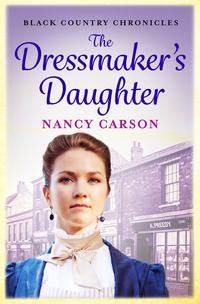
Cover images © Kateryna Yakovlieva/ Shutterstock 2015
Cover design © Lizzie Gardner
Nancy Carson asserts the moral right to be identified as the author of this work.
A catalogue record of this book is available from the British Library.
This novel is entirely a work of fiction. The names, characters and incidents portrayed in it are the work of the author’s imagination. Any resemblance to actual persons, living or dead, events or localities is entirely coincidental.
All rights reserved under International and Pan-American Copyright Conventions. By payment of the required fees, you have been granted the non-exclusive, non-transferable right to access and read the text of this e-book on screen. No part of this text may be reproduced, transmitted, down-loaded, decompiled, reverse engineered, or stored in or introduced into any information storage and retrieval system, in any form or by any means, whether electronic or mechanical, now known or hereinafter invented, without the express written permission of HarperCollins.
Ebook Edition © April 2015 ISBN: 9780008134815
Version: 2015–04–23
Contents
Cover
Title Page
Copyright
Chapter 1
Chapter 2
Chapter 3
Chapter 4
Chapter 5
Chapter 6
Chapter 7
Chapter 8
Chapter 9
Chapter 10
Chapter 11
Chapter 12
Chapter 13
Chapter 14
Chapter 15
Chapter 16
Chapter 17
Chapter 18
Chapter 19
Chapter 20
Chapter 21
Chapter 22
Chapter 23
Chapter 24
Chapter 25
Chapter 26
Chapter 27
Chapter 28
Chapter 29
About the Author
About the Publisher
Chapter 1
When he was alive many decent folk had wished him dead. Now, Isaac Bishop lay on his back, silent, unmoving, at last obliging them. His head was a gory mess of dark, red blood, drying, matted into his grey hair. The dented, old bowler hat he wore for work, Tom Dando had placed appropriately on his crippled chest like a black cairn. Elderly Doctor Clark had been summoned to the scene of the accident to attend Isaac as he lay in a heap at the crossroads where two public houses and the Bethel Chapel outfaced each other. And some would say it was poetic justice, profoundly ironic, that being hurled against the stout iron railings of the chapel should have ensured Isaac’s death.
Tom Dando pushed Isaac homewards on a squeaking handcart the greengrocer had lent, keeping behind the doctor, who headed the procession through the narrow terraced streets on his antiquated dog-cart. A growing band of morbidly inquisitive children drew up the rear in instinctive silence.
Tom Dando had always felt obliged to make sure that Isaac, his cousin and workmate, got home if they’d been drinking together; for Eve’s sake. Usually, the fool ended up draped across somebody’s wheelbarrow, incapable of remaining upright, comatose, snuffling contentedly like God’s dog. Tom regretted making that promise to Eve all those years ago. He would happily have left Isaac anywhere, at any time, to sort out his own salvation, for he respected Isaac even less than everybody else did. At least this time would be the last, Tom pondered, not without some satisfaction.
When they arrived at the house, the doctor insisted on breaking the news to Eve himself, and to Lizzie, Isaac’s doting youngest daughter. He’d had greater experience of such things. He knew how best to convey news of sudden death. And he would do it without Tom’s help, despite Tom’s assertion that it might be better coming from him. So Doctor Clark hobbled up the entry alone. Holding on to his hat with cantankerous defiance lest the ferocious March wind took it, he braced himself for the barrage of grief he imagined would ensue.
Tom waited apprehensively in the horse road with the hushed entourage, watching for Eve. A minute or two later she scurried down the entry, already pale and in a daze. Young Lizzie, equally bewildered, clutched her mother’s billowing, long skirt. Wife and daughter stopped by the handcart and remained still, like two shrubs frozen in midwinter. They stared incredulously at the bloody corpse that had been husband to one and father to the other, while the growing crowd of onlookers shuffled in respectful silence, waiting for somebody to speak.
First to do so was Tom. ‘Eve, my flower, I’m that sorry.’ Eve instinctively cupped her right hand to her better ear and leaned towards him. ‘Beccy Crump witnessed it all. I knew nothin’ about it till they fetched me out o’ the Loving Lamb. Did the doctor tell yer as it was Jack Clancey’s hoss what bolted and smashed him into the railin’s at the Bethel?’
Eve nodded, sighing gravely. ‘He told me … But does Jack Clancey know?’
‘He knows now. He was in The Four Ways having a drink. Sammy Hudson fetched him out.’
‘And what did he say, Tom? Did he say anything?’
Tom sighed, not knowing whether he should tell Eve what Jack had said. But he’d never tried to hide anything from her before, and now would be an inappropriate time to begin. ‘He said as how sorry he was. That he’d pay you his respects later … But he said as he wouldn’t grieve over Isaac …’
‘Like as not.’ Eve looked at her husband’s broken corpse and shook her head. ‘Best bring him in the house, Tom. I’ll see if I can open the front door.’
A few seconds later, they could hear the key turning inside, and reluctant bolts being coaxed to slide on their layers of rust. It seemed to Eve that the only times this door was opened was to let a coffin out … or a corpse in.
Motionless, Lizzie looked on at her poor father, at first unable to accept that he was dead; that the man lying on the handcart was no longer the father she knew and adored, but just a heap of dead flesh and broken bones. She drifted behind the random cortege as it contrived to station his body in the house, her adolescent mind in turmoil. She wanted to cry, but she dare not yet, not while there was a chance that this was simply some terrible nightmare from which she would be released in a minute or two.
But this was no nightmare. It was happening now.
People were beginning to speak more freely; quietly giving instructions to each other on how best to manoeuvre the handcart; to shift the rag-filled stocking that kept the draught out; for somebody to put their foot on the oil-cloth to hold it down; to prise the door open wider. But the handcart could not go through the door. Tom and the doctor would have to carry poor Isaac.
‘Eve, where’s your screwdriver, my flower?’ Tom asked. ‘I’ll get the middle door off to lay him on. I’ve already sent for Annie Soap to come and lay him out.’
Eve hesitated, perplexed, unable to contemplate the whereabouts of a screwdriver. When she’d collected her thoughts she went to the brewhouse, ignoring a hen that was strutting the back yard with defiant composure. She returned clutching a screwdriver.
While Tom Dando was inside, removing the door between the whitewashed scullery and the seldom-used front room from its hinges, Lizzie gazed into the open, unseeing eyes of her father. The thought of him dying had never crossed her mind. She at least did not want him dead. She wanted him alive. She wanted him to call her on a Sunday morning to get ready for church; to bring her toffee apples on Friday evenings when he returned from work. She wanted him to ruffle her nut-brown hair whenever he walked past her, even though it always infuriated her. She wanted his fatherly squeeze from time to time. Now all that was gone; gone forever. Nobody could ever take his place. Nobody could ever be to her what he had been. Never again would she see his hearty, laughing face, or hear his hoarse chuckles. Never again would she see him enjoy a meal, then fall asleep in his chair. Eve moved to Lizzie’s side and wrapped her arms about her and held her tight, reading her daughter’s thoughts. Lizzie turned and buried her face in Eve’s ample bosom. Tears stung her eyes, and she let out an involuntary whimper, then a great angry scream of grief that seemed to gush out of her in frantic escape.
Her father was dead, and Jack Clancey’s horse had killed him. It was Jack Clancey’s fault. If he had driven the milk float into her father deliberately it would have been no greater murder. Where was Jack Clancey when it happened? Why wasn’t he looking after the animal? It was Jack Clancey who deserved to be knocked down, not her poor unsuspecting father. It was Jack Clancey who should be lying lifeless, laid out on a door.
*
That was four years ago. Lizzie Bishop still resented Jack Clancey. But four years is a quarter of a lifetime to a young lady of sixteen. And in a quarter of a lifetime, many of the prejudices that are diligently nurtured by refusing to forget the wrongdoing that once hurt you, can be conveniently shifted or overlooked when nature diverts your attention. Thus it was one summer Sunday in 1906.
Lizzie Bishop’s thoughts were much removed from her father. Her self esteem was high. With her white leather-bound prayer book clasped demurely in front of her she felt special, and knew she looked her best. Love, she was certain, could not be long coming. She had begun dreaming of love, and longed to taste it; to experience the potent emotions that drove others to behave in ways that ordinarily seemed totally out of character.
She stole another glance at Jesse Clancey, Jack’s only son. He was tall and fair, with a lovely drooping moustache that widened enormously when he smiled, which was often, and his steel-blue eyes radiated sincerity and compassion. He was amiable, unassuming and well liked. The low sun behind him glinted off his blond hair, and Lizzie contemplated how magnificent he looked. Her own dancing hazel eyes, if only he were perceptive enough to read their expression, hinted at a stimulating inner turbulence, a vivacious adolescent desire. Jesse was standing just a few feet from her; close enough for her to touch, close enough for her to hold. But so maddeningly out of her reach.
Lizzie could feel Jesse’s eyes on her as she swayed her shoulders to and fro self-consciously. She ought not to, but she glanced at him from under her long lashes because she could not help it. It taxed her diminishing willpower too much not to admire him and, as she returned his hopeful smile, she felt herself blush. With a casualness she did not feel she turned away and, to hide her blushes, looked down with contrived composure at her best shoes. Why did she have to colour up so vividly? Why did she have to show her partiality by blushing?
He smiled again. ‘Nice outfit, Lizzie,’ he said privately, so that nobody else could hear. ‘Suits you.’
She sensed his shyness, and understood the courage he’d had to summon to say it. ‘Thank you,’ she replied with equal diffidence, but retaining her smile.
Her outfit was in the Gibson Girl style. It used to belong to her older sister, Lucy, and was a bit out of date, but that was forgivable: there was no money these days for new, more fashionable clothes. Besides, Eve had altered it to fit, and it fitted perfectly. It fitted so well that Lizzie hoped it would turn not just Jesse’s head; Stanley Dando was equally desirable. The long, navy skirt with the belt drawn in tight, accentuated her small waist, and neatly tucked in it was the white striped shirt that emphasised her firm, young bosom, gently rising and falling with each smiling, eager breath. The girlish set of her head was enhanced by a tilted, straw boater with navy hatband that sat on top of a mound of lush, piled-up hair, an errant wisp of which contrived to caress her elegant neck.
Jesse’s mother, Ezme, overhearing her son’s compliment, scornfully gave Lizzie the once-over, scrutinising her lovely second-hand outfit for faults, mismatched seams, an uneven hem, poor finishing; anything to decry Eve’s handiwork. But she would find no such fault. Eve was Ezme’s rival and equal when it came to mending and dressmaking. The Clanceys lived near the Bishops in Cromwell Street, but neither Ezme nor Eve ever had a kind word to say about each other, even before Jack’s horse caused Isaac’s death.
Lizzie was convinced that the dressmaking was the cause of this acute rivalry. Ezme was an adept seamstress and supplemented the family’s income by it. And, although she was no better at it than Eve, she certainly believed she was. It galled Ezme that Eve did not do it for money; that she did it out of kindness. So they sustained a senseless antagonism; antagonism that had pervaded even Lizzie’s own easy-going attitude. It was all the more difficult therefore, all the more futile, to respond in the way she would dearly love to respond to Jesse, should he ever pluck up the courage to defy his mother and the prejudice invoked by that fatal accident four years ago. What a dilemma it would create! But it was a dilemma she would welcome with all her heart.
Ezme was a big, intimidating woman, almost masculine, though it was said she had not always been so. As a young woman, when she moved to Dudley from Darlaston to marry, she was said to have possessed striking looks. She was also headstrong. Certainly she was too much of a match for Jack, who hovered about her like a mere accessory.
The group, conscious of the ever-present tension between Eve and Ezme, were conversing blandly, discussing the imminent departure of the vicar, the Reverend Mr Nelson Crowshaw, and wondering whether they would approve of the new incumbent.
Beccy Crump, Eve’s next door neighbour, said, ‘I hear as old Doctor Clark’s about to retire, an’ all.’
‘Fancy,’ Eve replied with interest, her hand to her ear.
‘They say as he’s handing over his practice to his son.’
Eve sighed her approval. ‘To Donald? Oh, bless him. He’s a lovely lad, is Donald. A good doctor, an’ all, or so I heard.’
Jesse Clancey, meanwhile, could not take his eyes off Lizzie. She was as exquisite as a young princess and frisky as a foal, but he was painfully aware she was nine years his junior. Nine years that he perceived as an obstacle. Nine years that were inhibiting him from making a fool of himself. The family dairy business depended on the goodwill of its customers, so any disparagement through foolish encounters with girls, who were dangerously young, would be unprofitable. More significantly, this nine year age gap forestalled any wrath and derision from his mother, for he, too, was aware that she held Eve, and thus Lizzie, in huge contempt.
Lizzie discovered Jesse’s age by casually asking neighbours. Socialising was not encouraged, so she could never ask him directly, of course, even though they lived so close. But she could dream of him, yearn for him; and they could exchange secret smiles. Lizzie was flattered to receive the admiring glances of a man so much older. It somehow confirmed her own womanhood, her own desirability. If only he would pluck up the courage to ask her out.
Church on a Sunday evening was more of a social than a religious affair, and it wanted at least five minutes yet before they would go inside. So Lizzie, not harkening to the soft Sunday voices of her mother and the others as they stood gossiping, tilted her face towards the sun’s deepening, yellow glow, which was falling warm on her face. Momentarily, she closed her eyes, savouring the pleasure of it. Silver birches were casting long, cool shadows over the monolithic graves of wealthier families, and the doves that dwelt in the bell tower flapped fussily as they vied for best roosts. A bee, hindered in its flight home by its own diligence, hummed with optimism around a final bunch of tulips on one of the lesser graves. Lizzie imagined herself standing outside some country church immersed in rural stillness. But, tomorrow, the forge close by would violate this enviable peace. The ground would tremble to the thud, thud of massive board hammers, as if a giant’s heart were pounding beneath your feet. In adjacent streets, the cupolas of hot, sulphurous foundries would roar more terrifyingly than the furnaces of Bedlam. Pit heads with their big, rumbling wheels, and the clanking, hissing steam engines that powered them, were also within sight and earshot; and men would be calling to each other over the din of it all.
Yet all was so serene now.
Aunt Sarah Dando arrived at last, with Sylvia and Stanley. Sylvia was quite the young lady now, twenty years old with dark, wavy hair, and an inch or two taller than Lizzie; her face was thinner, but her eyes were bright. She walked and stood proudly, and when she smiled she revealed a lovely set of even teeth. Lizzie noticed how she, too, kept glancing at Jesse, smiling coquettishly when he chose to look her way.
Lizzie calculatingly detached herself from the group, which by now had granted token observance to the perennial walnut of women’s suffrage, and was discussing Bella Dowty’s ulcerated legs. One sure way to divert Jesse’s interest away from Sylvia, she reckoned, was to make him jealous. A ploy she’d learned some time ago. So she moved to talk to Stanley, her second cousin, with whom she enjoyed an easy friendship. She flirted openly with him, touching his arm with agonising familiarity when she spoke, tormenting Jesse.
Stanley was eighteen, tall and wiry, with dark curly hair. He had a clear complexion, a pretty face for a lad – even prettier than his sister – and a mouth that Lizzie increasingly considered was extraordinarily kissable. As children they used to play games that involved stealing a kiss or two. But now she was older and growing inexorably more interested in kissing, the notion of doing it properly had appealed for some time, but with increasing intensity lately. And if she could not be kissed by Jesse Clancey with his lovely moustache, who better than Stanley?
Stanley, for his part, was entertaining similar fantasies about Lizzie. Six months ago he wouldn’t have given her a second thought; after all, they were so familiar; like brother and sister almost. But, lately, she’d blossomed into such a desirable young woman, and he regarded her now in a different light. He’d not met any girl he would rather see undressed. Her beautiful eyes seemed to sparkle with vitality, and always with a taunting frolicsome look, and he was sure she was thinking thoughts as impious as his own. It was certain she would allow him to undress her if he applied himself sensitively.
‘Where’s Uncle Tom, Stanley?’ Lizzie enquired.
‘In The Freebodies. He wanted a quick pint before the service. Said he was thirsty.’
She felt Jesse’s eyes on her again, but she could afford to disregard his admiring stares now she’d found less controversial company in Stanley. She said: ‘We’ll see the new vicar tonight, Stanley. That’s why a lot have come, I daresay. There’s folk here I haven’t seen for ages. If ours don’t hurry up and finish their chin-wagging, we’ll never get a seat.’
‘How about me and you going in now, Lizzie? We could sit by ourselves. We needn’t wait for them. We needn’t sit near ’em, come to that.’
‘Oh, I don’t know,’ she answered, in two minds. ‘I shouldn’t leave my mother.’
‘Aunt Eve’ll be all right. My folks’ll keep her company. Hang on, I’ll tell ’em we’m going in without ’em.’
Lizzie smiled and said all right, then turned away self-consciously. It all seemed to be happening tonight. The two men she was most interested in were as good as dangling on her string. The realisation excited her. She fancied Stanley more each time she saw him, and it was just as easy to turn to him as to Jesse. Probably easier; at least he was attainable without controversy. A bird in the hand and all that.
As Lizzie moved away she turned to make sure that Jesse Clancey had noticed. He had, but concealed the fact, striking a casual pose and laughing extra-heartily at something Sylvia had said. Lizzie smiled contentedly. Two men patently interested in her; two gorgeous, dashing men. If only she could have both. She had the capacity to handle both until she finally decided which one to marry.
But who to choose? It was so confusing.
Now, with Stanley’s hand in the small of her back guiding her into church, she felt another flush of excitement at the thought of sitting with one admirer while the other yearned jealously for her. She allowed Stanley to lead her into the back pew, the prime location for courting couples. They would have it all to themselves, for it wasn’t a full length pew; one of the massive columns supporting the vaulted roof occupied much of it.
Stanley gallantly opened her Hymns Ancient and Modern and found the first hymn for her. ‘I’ve wanted just the two of us to sit together for ages.’ His smile was devastating. ‘I’ve never been able to pluck up the courage before to ask you. I thought you might laugh at me … being second cousins and all that.’
Lizzie hunched her shoulders with delight, and an exhilarating warmth surged through her at the prospect of a romance so unexpected. ‘Being second cousins doesn’t matter, Stanley. I’m glad you did.’
‘Even first cousins can marry, you know, Lizzie.’
His very words made her hot. Funny how romance could be so spontaneous.
Their folks walked down the centre aisle. Tom Dando, back from The Freebodies, acknowledged Lizzie and Stanley with a nod, and courteously allowed Eve to enter the pew before him. When the women had settled their long skirts and taken off their gloves, and the men had placed their best hats under the pew, they all knelt down and prayed. Lizzie smiled at Stanley over the success of their spontaneous assignation, and with increasing regularity as the service progressed. During the sermons – for there were two; the first, a valediction from the exiting Mr Crowshaw; the second, a greeting from the new vicar – Stanley shuffled close and shamelessly took her hand. Lizzie felt her heart start pounding at the contact, and she blushed once more, in half a mind to withdraw. It was, after all, a liberty and, besides, it could surely never be proper to hold hands in church. But she brazenly allowed her hand to remain in Stanley’s, and a dangerous glow of pleasure enveloped her.
After the service, everyone filed out through the main door. While Mr Crowshaw thanked all for their support in the past, the Reverend Mr John Mainwaring and his wife met his parishioners for the first time, shaking their hands warmly. Many lingered in the churchyard afterwards, chatting, saying what a nice man the new vicar seemed. Since Ezme Clancey was the relief organist, she, Jack and Jesse were expected at a welcoming party at the vicarage, along with other church dignitaries, as were Beccy and Albert Crump. Albert had taken the pledge years ago and was secretary of the Band of Hope in the St. John’s Church of England Temperance Society. Despite Albert, however, Tom Dando claimed defiantly that he and his family were going for a drink or two at The Shoulder of Mutton.
‘Why not come with us, Eve, and bring young Lizzie?’ Sarah suggested. ‘It’ll be a bit o’ company.’
Eve automatically cupped her hand to her good ear.
‘I daresay Eve’s got other things to do, Sarah,’ Tom chided. ‘Leave her be.’
Eve glanced at Tom. She had not caught his words, but his expression alone forbade her accepting. It was unlike him.
‘No, we’ll go home, Sarah. Our Joe and May’ll be expecting their suppers.’
‘Let ’em get their own suppers,’ Sarah scoffed.
‘And I’ve gotta be up early to light the fire under the wash boiler … Anyway, while I’m here I want to tidy up Isaac’s grave.’
Albert and Beccy bid them goodnight and joined the other group that included Ezme and Jack Clancey, ready to leave to attend the welcoming party at the vicarage.
Lizzie and Stanley deliberately lingered by the lych gate meanwhile, teasing each other and laughing in their new-found understanding that had transmuted them into another kind of relationship; more adult; more thrilling; where emotions could suddenly run amok; where your heart thumped ever so often, and for a long time.
‘Shall you come to our house with your mother and father on Wednesday night?’ Lizzie asked him, her eyes alight.
‘I don’t know,’ he teased. ‘Think I should?’
‘’Course. Why not?’ Her enthusiasm was fuelled by the witnessing of Jesse’s apparent shift of interest twenty or so yards away. He was talking intently to Sylvia again, and Sylvia was laughing coyly. ‘We could go for a walk. We could go for a walk over Oakham fields. To the Dingle.’
As they drifted out into the street through the lych gate Stanley foresaw the possibilities …
They made their way over to the rest of the group standing on the pavement outside. Lizzie felt quite breathless after her encounter. Eve was saying her goodbyes to Tom and Sarah, when Sylvia came flouncing towards them. As she approached in the reddening light she tried to act normally, but there was no hiding the self-satisfied look on her flushed face. She smiled self-consciously and, despite Stanley, Lizzie felt acutely aggrieved that one of her admirers might have defected to her pretty cousin.
*
‘You’d best go and fetch some fresh water from the butt for these flowers, our Lizzie,’ Eve said, and poured what remained of the stale water out of the enamelled grave vase onto the ground. ‘They could do with a drink, it strikes me.’
She handed Lizzie the vase and watched her step back towards the church up the steep slope, picking her way between the other gravestones in the lengthening shadows, lifting the hem of her skirt to avoid getting it dirty. A blackbird swooped down and perched on the arm of a stone cross surmounting another grave, and began its persistent song.
Eve contemplated Isaac. His grave lay on the north side of St. John’s church. Every time Eve visited it she had vivid recollections of the funeral more than four years ago that sometimes stayed with her for days afterwards. On the day of the funeral the wind had freshened, blowing in rain from the west, rustling the tops of the hawthorn trees and the bright bunches of daffodils that had been lovingly arranged on surrounding graves. Family and friends had stood around the hole in the lee of the church, each thinking their own thoughts, she reckoned, each recalling some moment of pleasure or pain Isaac had brought.
She’d tried hard to shed tears that day, for she felt she ought; but no tears would come. God knew she’d spilled enough already over the others. Nearly thirty years ago her second son had died of peritonitis at only five years old. Helplessness and grief had sickened her then. Why her child? The anger and frustration she’d felt was overwhelming, as was the seeming futility of loving and caring for a life that was tenuous and so easily snuffed out. Fifteen years ago her eldest son died at the age of twenty-one in a preventable pit accident at the Bunns Lane Colliery; another cherished life wasted. Two years later, her eldest daughter, unmarried, died in childbirth, and refused to name the man who devised her ruination. Another son died of typhoid in a field hospital in South Africa barely six years ago, his tragic reward for volunteering to aid queen and country in the Boer War. Had he died in battle, she could have accepted it more readily. And then there was the daughter she carried full term but was still-born.
Eve resented more than anything this useless waste of life; those sudden, unexpected ends that had made a nonsense of all her striving. Little wonder she had not been able to weep for Isaac.
Eve recalled that as the funeral service drew to a close she at last felt a tear roll down her cheek. But it was not a tear for Isaac; it was for herself. It was for all the doubts, the misgivings, the love she’d been prepared to give him which so often had been spurned. Yet in more recent years, since the birth of Lizzie, he had mellowed. He became more attentive, more appreciative of her efforts; life with him became easier and more agreeable, as if he was finally repenting of his waywardness. She was glad of the change in him, and had embraced it with all her heart.
Now she looked across the valley towards the castle on the next hill, as she had done that grey, gusting March day in 1902. A billowing cloud of white steam, spouting from a locomotive as it emerged from the Blowers Green tunnel in the middle distance, was instantly dispersed in the wind. So, too, was life itself dependent on the unpredictable consequences of other peoples’ whims, Eve pondered; and on events that do whatever they like with us.
Lizzie returned with the vase filled with fresh water. ‘Is it true that cousins can marry, Mother?’
Eve put her hand to her ear. ‘What say, our Lizzie?’
‘I said, is it true that cousins can marry? I mean, for instance, Stanley and me might start courting by the looks of it. Could we marry? He says we could.’
‘Our Stanley?’ Eve’s expression was one of concern. ‘Stanley Dando?’
Lizzie nodded.
‘Oh, I wouldn’t want you to marry Stanley, our Lizzie. I definitely wouldn’t want you to marry him. You can do much better for yourself than Stanley.’
Lizzie was disappointed at her mother’s response, so decided it best to say nothing more. At least not yet. She picked up a flower and broke an inch off the bottom of its stem before stooping to replace it in the vase. She did another. Then another. Thinking about Stanley and what might come of a romantic interlude with him, it was some time before she stood up and spoke again to her mother.
She said, ‘Why did we come here to Father’s grave so soon? It was only Friday after tea we came last time and put some flowers on.’
‘I didn’t fancy going to The Shoulder of Mutton with your Uncle Tom and Aunt Sarah.’
‘Oh.’ Lizzie pondered the lost opportunity with bitter regret. ‘I’d have liked to have gone,’ she pouted. ‘I’d have loved to have gone.’
Eve did not hear, but she saw the disappointment in Lizzie’s eyes. Silently, between them, they rearranged the carnations and Lizzie picked up the ends of the stems she’d broken off, then stood up again. She read to herself the inscription on her father’s headstone; an inscription she knew by heart.
‘In loving remembrance of Isaac Bishop who died tragically and unexpectedly 15th March 1902, aged 59 years. They have sown the wind. Thy Will be done.’
Chapter 2
Sunday’s fine weather continued into Monday. Lizzie Bishop walked to work without her coat, her head swimming with dreams and fantasies. The brief, romantic adventure last evening with Stanley Dando was devouring her. It had been so unexpected, but she had relished every minute. In a flash, her emotions had been relentlessly stirred like leaves in a gale, and it was heart-stopping. Now she could hardly wait to see him again, especially after they’d been so abruptly parted when the families went their separate ways. If only she could summon the patience to wait till Wednesday, when they would walk together across the fields by the Oakham farms to the Dingle, where it would be quiet and secluded. She hoped more than anything that he would have the courage to kiss her.
Stanley had set something in train that excited her beyond all expectations. Now she was determined that nothing could stop them or divert them. Strange, she thought, how she’d known Stanley all her life; but not until recently had she thought of him as anything other than family. His dark curls, his even teeth, and his lovely, lovely lips would surely break the hearts of a good many girls. It was up to her to make sure no one else had a chance. Stanley was drawn to her, too, just as surely as a buck is drawn to a doe; that much was obvious. And her eager appetite had been whetted enough.
The clatter and whine of an electric tram travelling through the Market Place roused Lizzie from her daydreams. Stall-holders were loading their trestles beneath the red and white awnings with everything from fruit, vegetables and rolls of velvet, to brass fenders, lamp oil and crockery. Horses clip-clopped over the cobblestones, drawing rumbling carts, and a motor car spluttered as it passed circumspectly in the direction of St. Thomas’ tall spire at the top of the town. A man riding to work on a bicycle took pains to avoid getting his narrow wheels caught in the tramlines. Already, awnings were out over many of the shop fronts and Lizzie could see others being drawn down. A hawker was selling fly papers outside the front door of E. C. Theedham’s, Ironmongers and Cutlers, where she worked, and bid her good morning.
She saw May Bradley walking towards her from the opposite direction, and waited. They entered the shop together and headed for the passageway at the rear where they generally hung their coats. Today, they had only their baskets to deposit before entering the small back-room to titivate their hair. May looked at herself in the mirror and rearranged a wayward wisp. Despite their age difference the girls got on well. They first met when Lizzie started this job, some couple of years ago, and soon they began to meet socially.
May was down-to-earth, with a ready smile, and a wit that was at first beyond Lizzie. She was an attractive girl with a slender waist and an ample bosom, and she had an abundance of dark, wavy hair that framed a pleasant but hardly striking face. When Lizzie invited May home to tea one Sunday afternoon to meet her mother, it was Joe Bishop, her brother, then twenty-two and looking more like his late father every day, who monopolised the conversation, amusing May with his humorous quips. Later, when it was time for May to leave, Joe offered to escort her home, since it was dark. He insisted there was no need for Lizzie to trouble herself accompanying her friend. May accepted bashfully, thanked Eve for her hospitality, and that was the beginning of their courtship. Eve was hopeful that Joe had found himself a nice, homely girl, at last.
May turned away from the mirror to speak to Lizzie. ‘When you was at church last night with your mother, me and Joe went for a drink in The Junction, and while we was in there, we saw Arthur Dowty, your next door neighbour. He says as how him and Bella am flittin’. He says it’s ’cause of Jack Hardwick’s pigs. Anyroad, when we got back I said to Joe as we ought to think about rentin’ that house ourselves. If we could have it, we’d get married. That way, we’d still be close to your mother.’
Lizzie fastened the ties of her pinafore behind her. ‘Wouldn’t the pigs bother you as well?’
‘Oh, I’m used to pigs. Me father always kept pigs. He’s a pig himself. Anyroad, if the pigs was there afore we, we couldn’t rightly complain.’
Lizzie shrugged. ‘I suppose not. But how soon are Bella and Arthur flitting?’
‘As soon as they find somethin’ else, they said.’ May continued to fiddle with her hair in the mirror. ‘There’s plenty houses to rent. It shouldn’t be long.’
Lizzie’s smiling eyes lit up her face. ‘Another wedding to look forward to. Oh, I’m that happy for you, May. I’m sure that our Joe’ll make you a lovely husband, though I say it myself.’
‘Yes, and if you get him a big enough piece of wood, I daresay he’ll make you one, Lizzie.’ May tried to keep a straight face.
‘Oh, I think I’m a bit too young yet, May,’ Lizzie replied innocently, not having caught the humour in May’s comment. Then she said coyly, ‘I think me and Stanley Dando might start courting, though.’
‘Oh, young Stanley, eh? What’s brought that on?’
Lizzie sat down and explained excitedly how Stanley had all but abducted her to the back pew in church, even held her hand, and told her that cousins could marry. But she failed to say that her mother seemed not to approve.
‘Well, he seems a pleasant enough lad. He’s nice lookin’, an’ all, there’s no two ways. But remember you’m only sixteen, Lizzie. It’s no good courtin’ serious at sixteen.’
‘I know that. But when I’m eighteen, I’ll be old enough to get wed. That’s less than two years off. A good many girls get wed at eighteen.’
‘Not if they’ve got any sense they don’t. It’s generally ’cause they’ve got to if they’m that young. You’d break your mother’s heart if that happened, you know. Just remember she’s been through all that before with your sister Maude. And look what happened to her.’
‘Oh, May, I wouldn’t do anything like that. What sort of girl d’you think I am?’
‘Like any other, I daresay, so liable to get carried away.’
When Lizzie left school at twelve years old she had found a job at the Dudley Bucket and Fender Co-operative and made a friend of another girl, roughly the same age, called Daisy Foster. They soon bettered themselves at another firm, operating small guillotines, cutting coils of brass into lengths ready to be pressed into parts for paraffin lamps. They stayed for two years, not just learning the job, but learning about life, listening to the other women gossiping over the hollow rattle and thumps of hand presses, and the fatty smell of tallow. Most of the girls they worked with were older, and Lizzie was amazed at the unbelievable things some of them used to tell her about their men, the amazing antics they performed with them and, most surprisingly, how often. Lizzie didn’t know such things were possible, but it all sounded intriguing. Those girls told her things she would never have known about had she stayed at home. By autumn, however, the two girls had tired of the oil lamp factory, and found jobs at Chambers Saddlery in Hall Street. Lizzie, however, did not take to working with leather and its dark, sickly odour, whereas Daisy did. Thus they split up when Lizzie left to seek other employment.
‘I know a lot of girls do do it, May … you know? … before they get wed I mean … But I wouldn’t, even if I wanted to. I’d be too afeared of getting caught.’
‘Yes, well … It’s somethin’ you need to bear in mind, Lizzie.’
‘Do you and our Joe do it, May?’
May registered no outward change in her expression, continuing to preen herself. ‘That’s between Joe and me.’
‘Well, have you ever done it? With anybody, I mean?’
‘Lizzie! Honestly!’
‘It isn’t that I’m being nosy,’ Lizzie persisted, trying to justify her questioning, ‘but I can talk to you about things. I’ve got nobody else to talk to, and I want to know about things like that. I want to know what it’s like, and everything. I need to talk to somebody about it.’
May turned round and grabbed her pinafore from the hook on the back of the door. ‘You’ll learn soon enough when you do get wed, Lizzie, and not before if you want my advice. There’s no rush … Tell me about Stanley, eh?’
Lizzie smiled again, modestly. ‘I keep thinking about his lips, May … and how much I want him to kiss me. I only have to think about him and my legs go all wobbly. D’you think I’m falling in love?’
May shrugged. ‘So you’m not interested in Jesse Clancey any more?’
‘Well I would be if he’d asked me out. But he seems more interested in our Sylvia.’
*
Kates Hill lay about a mile south east of Dudley town centre, overlooked only by the old Norman castle on the next high ridge. It was a warren of narrow cobbled and muddy streets, each like a gorge, lined with rows of red brick terraced houses and little shops. Some of the streets were steep, others only gently inclined. Not one could you claim was flat, and few failed to host at least one public house. The houses, many of them back-to-back, were built during the early part of the nineteenth century to house the influx of workers who came seeking jobs in the burgeoning foundries, forges, coal mines and ironworks. There were many other factories tucked away, small concerns, some squeezed between houses, some crammed at the back of them, or down alley-ways that the ever-present wind funnelled heedlessly through. Most were concerned with the shaping of metal. Furnaces still glowed in many streets after dark as workers toiled on, striving to earn a few pence extra to bring some comfort to their spartan lives. Three brass foundries and a forge all stood within shouting distance of each other, so there was always the sound of hard work within earshot; the ringing of metal; the steady, reassuring gasps of Boulton and Watt steam engines built practically next door in Handsworth. Everywhere a great confusion of chimney stacks volleyed columns of grey smoke up into the obliging sky.
The Bishops’ house was roughly in the middle of an unbroken terrace that ran the whole length of Cromwell Street on one side. It was not a regular terrace, though. Some houses, those inhabited by better off families, stood further back from the horse road than others, with iron railings at the front and long flights of stone steps up to the painted gates of their entries. The Bishops’, however, was none such; their front doorstep directly met the footpath with its criss-crossed, blue, paving bricks.
There were three bedrooms. Two were on the front, one of which was a box-room where Lizzie slept. At one time she and her sister Lucy used to share it, till Lucy found a job at the Station Hotel which meant her living-in. Her three brothers used to share the bed in the other little front bedroom, to raucous guffaws and irreverent cursing, especially at bed time in winter if they were arguing over who should warm his feet first on the wrapped fire brick. She could hear just about everything through the thin wall of wooden laths that separated her from them. But, nowadays, all was quiet. Ted and Grenville had wed and moved out, which meant that Joe had the bed to himself.
When she parted her curtains in a morning, Lizzie could see St. John’s church in the middle distance through the gap between The Sailor’s Return public house and the brass foundry opposite. Beyond the church was the castle keep, looming grey over the trees at the top of its steep, wooded hill.
To Lizzie, the castle seemed no higher than Cromwell Street. Indeed, tradition had it that Oliver Cromwell himself had supervised the castle’s destruction from that very spot, because of its elevation; hence the street’s name. Certainly, Cromwell’s forces besieged it from these heights.
The back bedroom, overlooking the yard, was where Eve slept in her big, brass bed. The scrubbed, wooden stairs rose directly from the scullery into that bedroom, so access to the others was through it. When Isaac, their father, was alive they all had to be home and in bed before it was time for him to retire. If any of them came home after he went to bed, they were condemned to sleep all night on a chair in the scullery, or face the verbal equivalent of a firing squad for disturbing him.
Downstairs, the scullery seemed all cupboards and doors, from floor to ceiling, of brown varnished wood; a door to the stairs with a single stair jutting out, and next to it the cellar door. There was the middle door as well, to the front room that seemed only ever to be used for weddings, for funerals, or at Christmas time. A chenille fringe adorned the edge of the mantel shelf, and Eve laid a matching cloth on the table every Sunday, without fail.
Isaac had always ruled the roost. Because he was the main breadwinner, his needs and desires came first, though none of the family ever wanted for anything. His job had always paid a steady wage, and with other sons working many neighbours envied their standard of living. Meals were regular and substantial, and they always had good clothes and stout shoes to wear, even if they were shared from time to time.
It was not until some time after her father’s funeral that Lizzie began to miss him and his death started to have any real meaning. The evenings at home in their small house were quiet as she and her mother sat companionably in front of the coal fire that burned agreeably. Joe, her youngest brother, was nineteen then and, whilst he had a steady job in a forge and handed over his money every Friday night, it was hard work, and to relax he was out drinking with his friends most evenings. Lizzie missed her father’s wit. She missed his presence; the little things, like his cursing if anyone accidentally nudged him while he was shaving with his cut-throat razor in front of the fire, and his mug on the mantelpiece. She missed the aroma of Turner’s Brass Foundry that used to linger on him when he came in from work. She missed him polishing her boots at night. She missed all sorts of things.
After the funeral she would daydream, reading by candle light in the prevailing silence but, when she glanced at her mother sitting quietly in her high-backed chair, she would sometimes see the firelight reflected in tears rolling down her cheeks. She would watch Eve lift her spectacles without a murmur and wipe her eyes with a dainty handkerchief, then return to her newspaper, which she always scoured from front to back, whispering every word she read. Lizzie began to understand even then that those tears were not just for her father; they were for all the other loved ones lost, perhaps for opportunities lost. Sometimes, she was moved to weep herself, but she would stifle the tears and put on a brave smile, then go over to her mother and give her a hug.
Lizzie had been confused by her mother’s reaction, though. She had grieved more at the loss of Major, the son who died of enteric fever in a field hospital in Bloemfontein during the Boer War.
*
On the Wednesday, May came to tea, as was lately her custom. She arrived with Lizzie during the afternoon, since every Wednesday they were both given a half day off. May liked to spend time with Eve, black-leading the fire grate for her before lighting the fire, and sitting out on the yard in the sunshine on chairs taken from the scullery, peeling potatoes. When Joe returned from his chainmaking, Eve served up liver faggots and grey peas with boiled potatoes. When they had finished eating and everything had been cleared away, they informed Eve that the Dowtys’ house might become vacant over the next week or two.
‘If the landlord agrees to rent us the house next door, we’ll do it up and get married. What d’you say to that, Mother?’
Eve smiled, a self-satisfied smile. ‘It’s about time, our Joe. And you won’t find e’er a nicer wench, either.’
He looked proudly at May. ‘So we’ve got your blessing?’
‘Yes, you’ve got me blessing. Be sure to look after her.’
Lizzie looked at the clock on the mantelpiece. It was just after eight. If the Dandos were coming they should arrive at any minute.
‘Well, one thing about it – we shan’t be a million miles away so, if I don’t look after her, you can always come round and give me a good hiding.’
Eve caught every word. ‘And you can be sure as I would. There’s ne’er a chap living that’s too big for a good hiding off his mother, specially if he knows he deserves it. Anyroad, I’ll have a word with the landlord for you.’
‘You’ll be needing some furniture,’ Lizzie suggested.
‘Yes, and I’ve been thinkin’,’ May said, ‘our Travis has got a table and chairs he wants to get shut of. It’ll be all right to start off with.’
‘You’ll get a few things as wedding presents,’ Lizzie said. ‘I’ll buy you something nice if you tell me what you want.’
Joe got up from his chair to poke the fire. ‘Don’t go spending your money on us, our Lizzie. You’ll need all you can get for yourselves, you and mother. We can fend for ourselves. We’ll pick up a bargain or two at any decent pawnshop.’
‘Pawn shop? I don’t want other folks’s left-offs, Joe. I’d rather have new.’
‘We’ll buy some new things, May. We’ll buy a new bed. But as regards the rest, we’ll have to see how we’m fixed for the old spondulicks.’ He peered into the coal scuttle as an afterthought. ‘Bugger me, this blasted thing’s empty again. Every time I look it’s soddin’ empty. Our Lizzie, fetch some coal up, my wench, and I’ll give yer a silver threepenny bit.’
‘Go yourself and keep your silver threepenny bit.’ There was sisterly contempt in her voice. ‘Why should I get all mucked up? Aunt Sarah and Uncle Tom will be here in a minute.’
May raised an eyebrow. ‘Not to mention Stanley.’
Lizzie glanced guiltily at her mother, but Eve had heard nothing. It was then that they heard footsteps in the entry, and Lizzie’s heart started to pound.
‘Aye up. Sounds like they’m here now,’ Joe said, disappearing into the cellar with the coal bucket.
The back door opened and in walked Tom and Sarah. Tom sat himself in the armchair and Sarah sat on its arm, her back towards her husband while they talked. Joe returned from the cellar, heaving the bucket of coal. He set it down on the hearth and made up the fire while Lizzie waited for Stanley to come in. But there were no more footsteps in the entry. No more opening of the back door. The flutter of excitement under her rib cage became an ache. Usually, either Stanley or Sylvia accompanied their mother and father. Tonight, there was neither. Lizzie felt a fervent desire to cry out. Where was Stanley? Why hadn’t he come? But conversation about May’s and Joe’s plans was already in full spate, so she let it be.
‘Well, I reckon as we should go and have a drink on it,’ Tom suggested. ‘Let’s pop up The Junction and celebrate.’
‘That’s all you think about,’ Sarah complained. ‘Beer, beer, beer. I wonder as you don’t drown in it.’
‘No, that’s a bostin’ idea, Tom,’ Joe agreed. ‘Gi’ me a minute to wash me hands. Come on, Mother. Get your lid on. We’m off for a drink to celebrate.’
So everybody, except Lizzie, began sprucing themselves up and smoothing the creases from their clothes. When they were about to leave, Tom asked her why she wasn’t joining them.
‘I’m not old enough to sit drinking in public houses.’ She felt desperately sorry for herself.
‘You can sit in the children’s room, my darlin’. I’ll bring you some pop.’
‘The children’s room? No thanks, Uncle Tom.’
‘But it’s a celebration.’
Lizzie preferred to stay at home. Stanley was sure to arrive sooner or later. After all, he’d promised. She would wait, and be alone with him when he did arrive.
*
But Stanley broke his promise. He did not come to see her that evening; nor the following Sunday evening at church; nor on the Wednesday after that when his parents came visiting again. Stanley wasn’t even mentioned. His continued absence stung Lizzie. If he cared anything at all he would surely have appeared by this time and apologised for not being able to see her before. His feelings on that first Sunday evening of July were too obvious for her to be mistaken. And yet she must have been mistaken. She must have misinterpreted his signals. Something did not add up. Something was wrong, and she couldn’t fathom it out. Had he been merely stringing her along? Was he practising on the nearest girl to see how she might respond to his advances? Perhaps he was. But she could have sworn …
Lizzie decided that next Wednesday when the Dandos came round she would be out. She would be out returning the compliment, visiting their house in the hope that Stanley would be at home. She had to see him; this not knowing was driving her mad. The least she deserved was an explanation. Besides, she knew Stanley well enough to be able to visit him uninvited.
Or did she? This intimacy, which had befallen them so easily, had changed everything. Somehow, it complicated their accessibility to each other, which they could have freely enjoyed before. Lizzie was no longer sure of her ground. But she just had to know whether he loved her.
By the time Wednesday came round again, the weather was uncomfortably hot and humid. The whole country was sweltering in the grip of an intense heat-wave. Lizzie wore a cotton shirt and light cotton skirt. Her long underskirt seemed to stick to her moist, bare legs in the heat, and she wished the day would come when cooler, shorter skirts might be considered seemly. In this sort of weather they would certainly be more comfortable. She stood talking to Gert Hudson and Ida Wassall in Cromwell Street, her hair elegantly done, while she discreetly awaited the arrival of Tom and Sarah. When she saw them she waved but, as she’d anticipated, neither Stanley nor Sylvia accompanied them. So she took her leave of Gert and Ida, and made her way to the Dando’s house.
Certain that this contrived meeting would sort things out and thus settle her mind, Lizzie strode purposefully on. As she turned into Pitfield Street, where Phyllis Fat lived, half a dozen small children were playing in the gutter, throwing stones at a passing cat. One of them was naked, the rest in rags, their faces grubby, their hair matted with filth. The street was long and narrow, with a long line of crumbling back-to-back terraced houses on each side. Chimneys leaned precariously, slates were missing from the roofs, and paint peeled from faded front doors and window frames. A few people, mostly elderly, sat on the steps of their open front doors in open-mouthed, toothless silence. In some houses the floor was dirt – no quarries, no floorboards, no linoleum. Coal was heaped under the table in those houses that had a table. Often, Eve had warned Lizzie not to venture down Pitfield Street alone, but no ill had ever befallen her. It cheered her to see the occasional house with sparkling windows bedecked with pretty curtains and a bunch of fresh flowers, and a front step conscientiously whitened at those houses where respectability defied poverty.
As she left it all behind her and walked on to Dixons Green Road, the contrast was marked. Dixons Green was where the well-to-do merchants of the town had established substantial homes. And, although there was a malthouse opposite The Shoulder of Mutton, it did not intrude.
Lizzie walked on, past The Bush Inn, an old public house with a wooden porch on the front that reminded her of a pigeon loft. Men wearing collarless shirts and braces were leaning against the wall and railings outside, drinking beer, laughing, swearing, enjoying the warm weather, and several of them whistled and hooted after her. From here you could look west and, on a clear day, see the green Clent Hills, but the humidity and stillness of the last few days meant that the atmosphere was thick and hazy now. You could see no further than the old mine workings and pit mounds of Mudhall Colliery, grey and foreboding against the reddening sky; and the old Buffery Clay Pit at the bottom of the hill. And this scarred and barren landscape, relieved only by the tower of St. Peter’s church, a hazy silhouette in distant Netherton, was overlooked by the Dandos.
As she turned into Grainger Street, Lizzie’s pulse was racing. She had arrived. The Dando’s home was fairly new, built only in 1903. The windows gleamed and an aspidistra sat majestically in a shining, brass pot in the centre of the front room window. They had their own gate at the top of the entry and a private back yard, too, with a garden and flowers that Sarah tended with loving care. Nervously, Lizzie tip-toed through the entry, quietly opened the gate on the right, and walked onto the foreyard. She tapped tentatively on the back door, feeling weak at the knees, wishing now she hadn’t come and hoping that even though she had, Stanley would not after all be at home. After all, there was still Jesse Clancey. She could always turn her attentions to Jesse.
She waited, and was just about to turn tail and run, when the door opened a fraction. Sylvia’s flushed face appeared, bearing a sheen of perspiration.
‘Lizzie!’ She stepped outside and Lizzie could see that her hair was untypically ruffled. She held her stomach in to tuck her blouse into her skirt. ‘What brings you here? Mother and Father have gone up to your house. Is there anything wrong, Lizzie? D’you want to come in?’
‘No, no, Sylvia.’ She was retreating backwards slowly down the entry. ‘I … I just thought I might see Stanley, that’s all … If he’s not in, it doesn’t matter.’
‘Our Stanley went out, Lizzie. I expect he’s out with his mates for a last drink. Can I give him a message?’
Still retreating, Lizzie shook her head. ‘No, it’s all right, Sylvia …’
At that moment, a man appeared at Sylvia’s side, and peered intently into the entry. Lizzie gasped. It was Jesse Clancey. His blonde hair was tousled also, his shirt crumpled. As soon as he could make out Lizzie in the dimness of the entry, he ran his fingers through his hair to try and smarten it up.
‘Oh, it’s Lizzie Bishop,’ he said. ‘How are you, Lizzie?’
‘I’m all right, Jesse, thank you.’ She was bitterly disappointed to see him there. She noticed he had no shoes on.
‘Good. Fancy a glass of beer with us?’
‘No, Jesse … Thank you. I’d best be getting back.’
She made the conscious decision then to turn and walk away with as much dignity as she could muster. The sound of her own footsteps seemed deafening as they echoed through the entry. Now her frustration was complete. Not only had she failed to see Stanley, and broadcast to his sister and to Jesse Clancey that she was actively seeking him, but she had also discovered that Jesse was intimately involved with Sylvia. What could he possibly see in her? He couldn’t possibly be in love with her.
Lizzie felt foolish. It was evident now to even a blind man that Stanley was not interested in her. She had made a big mistake by allowing herself to be enticed by his insincere show of interest in the first place. And what did Sylvia mean by saying that Stanley was out having a last drink?
What if she’d been just a bit more responsive to Jesse that Sunday evening? What if she’d plucked up the courage to actually strike up a conversation with him instead of smiling coquettishly and making stupid cow eyes at him? Would he have asked her out, even though she was so much younger? Or would he still have arranged to see Sylvia? But he had not asked her, so it hardly mattered. In any case he could never really be a serious contender since his father was indirectly responsible for her own father’s death. She could never justify it. And their mothers, with their insane rivalry, would never allow it anyway. Nobody would condone it. There were just too many impediments.
She climbed Buffery Road’s steep incline, feeling hot, uncomfortable and miserable. She felt like crying when she arrived home, fraught and in despair. Her skin was clammy, sticky with the humidity, and she wanted to lie in a bath-tub full of cool water. She hoped that Sarah and Tom might have taken her mother to The Junction, so she could have some time to herself for a while, to cry, to think, to calm down, to sort out her bewilderment. But, as she opened the back door, she could hear her Uncle Tom’s booming voice. She groaned inwardly, but forced a smile.
‘Oh, I’m that hot,’ she declared flatly, trying to hide the turmoil inside her. ‘I’d give anything to stand in the cut for half an hour.’
‘Where’ve you been?’ Eve asked. ‘We was wondering what had happened to you?’
Ücretsiz ön izlemeyi tamamladınız.