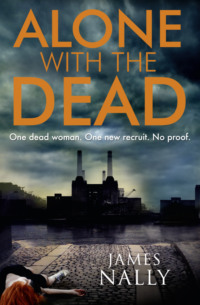
Kitabı oku: «Alone with the Dead: A PC Donal Lynch Thriller»
JAMES NALLY
Alone With the Dead

Published by Avon
An imprint of HarperCollinsPublishers Ltd
The News Building
1 London Bridge Street
London SE1 9GF
www.harpercollins.co.uk
First published in Great Britain by HarperCollins 2015
Copyright © James Nally 2015
Cover Design © Jem Butcher 2015
James Nally asserts the moral right to be identified as the author of this work.
A catalogue copy of this book is available from the British Library.
This novel is entirely a work of fiction. The names, characters and incidents portrayed in it are the work of the author’s imagination. Any resemblance to actual persons, living or dead, events or localities is entirely coincidental.
All rights reserved under International and Pan-American Copyright Conventions. By payment of the required fees, you have been granted the non-exclusive, non-transferable right to access and read the text of this e-book on screen. No part of this text may be reproduced, transmitted, down-loaded, decompiled, reverse engineered, or stored in or introduced into any information storage and retrieval system, in any form or by any means, whether electronic or mechanical, now known or hereinafter invented, without the express written permission of HarperCollins.
HarperCollinsPublishers has made every reasonable effort to ensure that any picture content and written content in this ebook has been included or removed in accordance with the contractual and technological constraints in operation at the time of publication
Source ISBN: 9780008139506
Ebook Edition © August 2015 ISBN: 9780008139513
Version: 2018-07-24
For Bridget, James and Emma
Epigraph
Who looks outside, dreams;
Who looks inside, awakes.
CARL JUNG
Contents
Cover
Title Page
Copyright
Dedication
Epigraph
Prologue
Chapter 1
Chapter 2
Chapter 3
Chapter 4
Chapter 5
Chapter 6
Chapter 7
Chapter 8
Chapter 9
Chapter 10
Chapter 11
Chapter 12
Chapter 13
Chapter 14
Chapter 15
Chapter 16
Chapter 17
Chapter 18
Chapter 19
Chapter 20
Chapter 21
Chapter 22
Chapter 23
Chapter 24
Chapter 25
Chapter 26
Chapter 27
Chapter 28
Chapter 29
Chapter 30
Chapter 31
Chapter 32
Chapter 33
Chapter 34
Chapter 35
Chapter 36
Chapter 37
Chapter 38
Chapter 39
Chapter 40
Chapter 41
Chapter 42
Chapter 43
Chapter 44
Chapter 45
Chapter 46
Chapter 47
Acknowledgements
About the Author
About the Publisher
Prologue
Occasionally, we experience things that make no sense.
You hum an old song, only to hear it moments later on the radio. You think of someone out of the blue and they call. You get the feeling you’re being watched, turn and meet the stare you’d somehow felt.
Sometimes, it’s life changing. A driver swerves to avoid a pedestrian. He doesn’t remember reacting. A firefighter pulls his team out of a burning building. Seconds later, it collapses. Two strangers’ eyes meet over a crowded room. Somehow, right away, both know the other is THE ONE.
Some credit these experiences to extra-sensory perception – our so-called sixth sense. Others put it down to gut instinct, animal intuition. The point is, we know things but we don’t know why we know them.
I don’t know why the recent dead come to me, or if the things they show me are clues as to how they died. I don’t know why it happens, but it must be the reason I became a murder detective. That – and what happened to Eve.
It’s my unconscious mind, of course, piecing together fragments of information and presenting answers to me in a novel way. Isn’t it?
‘I See Dead People,’ says the creepy little boy in The Sixth Sense. Cole Sear he’s called. Cole Queer, my brother calls me. That and ‘Hormonal Donal’.
I don’t care. I’ve got more important things to worry about, now I’m the go-to guy for the recently murdered.
Chapter 1
Clapham Junction, London
Monday, July 1, 1991; 21:14
‘It’s a bit like taking a shit, when you think about it,’ said Clive, his mouth grinding away on a Wimpy quarter pounder.
Flanked by over-lit pastel walls and screwed-down metal seats, we could have been in the canteen of a children’s correctional centre. Welcome to the Wimpy burger bar – the British McDonald’s but with a unique selling point: table service.
‘Thank you garçon,’ I said, as I watched my order slide from stained tray to half-wiped melamine.
‘Bon appetit,’ he grunted and I silently congratulated acne for turning his face to pizza.
A quick glance at my chicken burger revealed it to be simply that: no sauce, no salad – just cartoon-flattened white meat clamped between two constipating white buns.
‘Hard to imagine that pecking in the yard,’ I said, ‘landing on this table is probably the furthest it ever flew.’
‘Isn’t it though, Donal?’ said PC Clive Hunt, my forty-something beat partner who came from one of those Northern English towns that begins with either B or W and all sound alike.
Incredibly – at least to me – we’d walked past a McDonald’s to get here. Clive’s nostalgic bond to Wimpy once again had proved unshakeable. This was one of the countless things I failed to understand about the English – they get nostalgic about things that were crap in their time: TV shows with shaky sets like Dr Who and Crossroads; British-made cars that always broke down; the Second World War, for Christ’s sake.
McDonald’s might have been wiping Wimpy off the face of the earth, but it would never get Clive’s custom. You see, no one lamented London’s lack of chips-based meals more than Clive. How many times had I heard how, up North, you can get gravy with your chips, curry with your chips, mushy peas with your chips.
The moment a McDonald’s worker cheerfully informed Clive that they didn’t stock vinegar, his Golden Arches crumbled and fell. After several wordless seconds, he calmly placed his tray back on the counter, turned and marched out, never to return.
I relented. ‘What’s like taking a shit?’
‘Eating burger and chips,’ he said, chewing, his mouth a toothy cement mixer.
Clive swallowed hard, burped urgently into his hand, desperate to enlighten: ‘You eat some chips, then you eat all of the burger, then you finish off yer chips.’
He could see I wasn’t getting it.
‘It’s like you piss a bit, then you take your dump, then you piss again to finish.’ He beamed in satisfaction.
My radio scrambled, its frenzied fuzz cutting short Clive’s scatological musings.
It was a T call demanding immediate response to an incident on Sangora Road, just round the corner. I almost had to beat the burger out of Clive’s hand.
We were the first uniforms on the scene. A young woman with dark curly hair was going bonkers in the street. A crowd had gathered, some panicking, some nosy, some trying to comfort Ms Hysteria. When she saw us, she pointed at a house and gasped in a nasal South East London accent: ‘My friend Marion’s inside. I think she’s dead.’
A surge of adrenaline slowed the world down to a hi-definition dream. The front door to number 21 hung open, but there were no signs of a forced entry. I noticed two buzzers: the property had been divided into flats. Inside the communal hallway, a chiselled, red-haired man in his twenties looked ashen. ‘I don’t know what happened,’ he said in a remarkably high-pitched Irish accent, pointing to a door.
‘I don’t know what happened,’ he squeaked again.
‘Well you’ll know soon enough,’ mumbled Clive.
The door was on the latch. I pulled it open. The door fought back, forcing me to use both hands. I planted an elbow against its over-sprung resistance so Clive could follow me in.
‘Try not to touch anything,’ hissed Clive, and I thought about letting the door slam into his thick head.
I floated up the stairs towards the first floor flat, adrenaline numbing my feet to the carpet beneath.
She lay on the landing, on her side, an untamed red mane of hair sprawled almost ceremonially across the carpet. Her moon-white face lay awkwardly on her outstretched arm; her bloodshot blue eyes staring into nothingness. She looked no more than twenty-five, probably younger.
Her sad mouth had cried blood. One trail made it all the way down to her slender white throat. Her flowery summer dress was laddered with stab wounds – still fresh. My head swooned. I leaned back against the wall of the landing, exhaled hard.
Clive bent down and placed a reluctant finger to her porcelain neck.
‘She put up a hell of a fight,’ he said flatly, ‘but she’s dead.’
He backed away apologetically. My eyes fastened upon her limp hand, focusing upon the nail hanging from her little finger which had almost been completely ripped off. Sadness flooded me. My stinging eyes blinked and shifted to the floor next to her: a set of keys, a handbag, her jacket, some post.
‘She must have let her killer in,’ I squeaked, sounding every bit as shocked as I felt.
‘Looks like it,’ said Clive, reassuringly unmoved.
‘Right,’ he added brightly, ‘best get back downstairs. We don’t want to contaminate the crime scene.’
A cold breath chilled the right side of my face. I turned to see a small window on the landing, slightly open. ‘Fuck,’ I said. All this time, I’d been standing between her newly dead body and an open window. Where I came from, this spelt doom. I shivered, then snapped myself out of it. There was work to be done.
I’d never understood officers who said that, in really stressful situations, ‘your training kicks in’. I did now. Clive started questioning Chiselled Ginge and taking notes. His name was Peter Ryan. He was twenty-eight. The dead woman was his wife of thirteen months, Marion, aged twenty-three. She usually got home before six. He and Karen – a colleague from work – got back just after nine and found her like that on the landing. Police officers and forensics were wandering in, so I went outside to find Karen.
In the darkening, humming summer night, Sangora Road flashed blue and red, a grotesque carnival of morbid curiosity. Neighbours who’d never shared a word before chatted intently: lots of ‘apparently’ and ‘oh my God’. The petite, curly-haired brunette I assumed to be Karen was being comforted by a group of middle-aged men. One edgy-looking sleaze ball in a wife-beater vest and school-shooter combats rubbed her upper arm vigorously. He looked like a man who spent his life hunting down any kind of a leg-over whatsoever.
‘Karen?’ I asked. She looked up sharply, surprised by the sound of her own name. ‘PC Donal Lynch. Sorry, but I’m going to have to ask you a few questions.’ Her arm rubber – a Poster Boy for Families Need Fathers – glared at me, ready to back up his potential new squeeze against the filth.
Karen took a long deep breath and nodded. Instead of structured questions, I let her ramble. In a quivering, child-like, barely audible voice, she told me the following: her name was Karen Foster, twenty-five, from Lee in South East London, a colleague of Pete’s at the Pines old people’s home in Lambeth. She told me Pete was the gardener there. She’d given him a lift back to his flat tonight to pick up some heavy pots to take back to the home, where she lived in staff accommodation. They’d got here just after nine. He had unlocked the front door, then the door to their flat and went in first. Pete had stopped suddenly on the stairs and screamed, ‘Marion, Marion!’ He went to her. Karen had followed and saw Marion lying there. She checked for signs of life.
She shivered. Arm Rubber gave me a look that said: ‘C’mon mate, I think she’s had enough’, but I hadn’t. I may have been new to murder, but I understood the value of first-hand, untainted, lawyer-free testimony.
‘Go on,’ I demanded.
‘I got her blood on my hands, so I washed them. Then I had to get out of there.’
A shiver rattled her entire frame.
‘Did Pete definitely unlock both doors?’ I asked. She nodded and bowed her head. Her centre parting wobbled and so did I.
‘Look, Karen, I’m sorry, I have to ask … we need to find whoever did this.’
She sniffed hard at the pavement, and I lamented yet another failure to channel my inner bad cop. I fought the urge to place a comforting hand on her quivering shoulder and walked away.
I joined Clive inside the front door just as three hotshot detectives swaggered in. The senior of the trio wore the hangdog expression of a man put out by life. ‘Detective Superintendent Glenn,’ he barked. Clive unloaded the basic detail while DS Glenn nodded impatiently. As I took up the slack, he fixed me with a scowl. Clearly, I was way too excited for his deadpan taste.
They made what seemed to me a cursory inspection of the crime scene: skirting around it as you might a dead bird on the pavement, or a splatter of puke. Then DS Glenn stomped off outside.
‘Is that it?’ I asked Clive.
‘It’s not Magnum P.I.,’ he laughed, ‘they’ll wait for forensics and statements, then they’ll decide what lines of enquiry to take.’
One of Hangdog Glenn’s bitches stopped by on his way out to treat us to a condescending glare: ‘What time do you go off duty, lads?’
‘We finished almost an hour ago at nine,’ said Clive, all chipper, just so he’d know we didn’t mind the inconvenience one bit.
‘Okay, call Clapham. Get them to send an officer to guard the door overnight and an unmarked car to take the husband and woman in to make a statement.’
‘Right now?’ I asked.
‘Of course right now,’ he spat, ‘and we’ll need statements from you two before you start your shifts tomorrow.’ He scuttled off down the garden steps, his gumshoe mac flapping in the summer breeze. At the gate, he turned. ‘Make sure you get the front door keys off the husband,’ he shouted, not realising that said husband was stood right there.
As Peter fished around for his keys, Clive and I descended the steps towards him. A sickening dread tugged at my guts. What could I possibly say to him now? I thought back to all those funerals in Ireland, how we always spouted the same stock phrases to mourners. ‘Doesn’t he look peaceful?’ was a classic. I mean what did we expect? Signs of a struggle? Fingernail scratch marks down the side of the coffin?
Then I remembered the one cover-all stock phrase, used by everyone when coming face-to-face with the principal mourners: ‘I’m sorry for your trouble.’ That line always seemed so anodyne, so emotionally detached, so generic. My brother Fintan and I used to dream up equivalents. ‘Oh dear,’ was his favourite. I liked: ‘Sure, it could be worse.’
Clive took Peter’s keys and spoke first. ‘Who else has a set?’
‘Just me and … Marion,’ said Peter, his voice cracking at the mention of her name.
‘We’re fetching a car for you and your colleague. I’m afraid we need statements from both of you tonight.’
Peter just stared into space.
‘Where can you go after the police station?’ asked Clive. ‘Have you got family near here?’
Peter shook his pale face mournfully. ‘The only place I can go is to Marion’s mum and dad up in Enfield.’
Clive and I exchanged frowns.
‘Do you think that’s wise, son?’ asked Clive. Peter looked at him blankly.
‘Okay,’ said Clive, ‘first I’ve got to get officers round there to tell them the news.’
‘Oh Jesus,’ Peter gasped and we all baulked. Every parent’s worst nightmare: the death knock. Peter walked slowly away from us but I could hear every word. ‘Oh Jesus, Jesus,’ he muttered, over and over.
A sudden deafening bellow made us jump. Peter’s wails were primeval, from the very core of his being. My mind flashed back to the time the Dalys’ prize-winning cow died howling in their shed. I’m sure their mother said she’d developed gangrenous teats. I couldn’t drink milk for a month after.
I turned to Clive: ‘If he did it, he surely wouldn’t go and stay with her family.’
‘He’s either innocent or one hell of an actor,’ said Clive, ‘I mean look at him, he’s shivering like a shitting dog.’
‘Maybe he’s racked with guilt. She must have known her killer. She let him in.’
‘And it must have been a man,’ said Clive, ‘I mean, just from the point of view of strength. It’s always the man, isn’t it?’
‘They were only married thirteen months,’ I said, ‘I just don’t see it.’
‘Neither did she,’ deadpanned Clive, chuckling as he set off across the road. I wondered if that’s what happened to all cops, in the end.
I couldn’t just leave Peter like that, bent double, bawling at the pavement. I walked over and put a hand on his heaving shoulders. He calmed almost instantly. I couldn’t think of a thing to say, so I said: ‘I’m sorry for your trouble.’
He breathed in deeply.
‘Thank you, Officer,’ he blurted, and I could tell he meant it, before the spasms of grief swept him away once more.
As the car taking Peter and Karen to Clapham police station moved off, a flash of streetlight illuminated the interior. Freeze-framed in the back seat, Peter’s ghostly white face stared straight ahead, as if into an abyss. How I longed for a glimpse inside that mind. On the far side of him, two large teary eyes gazed into his. Then, for a nanosecond, the eyes of Karen Foster locked onto mine, glinting wounded confusion.
The murder scene buzz snapped off like a light. A sense of helplessness gnawed away at my red-raw nerves.
‘Go home, son, you look shattered,’ said Clive, and I lacked the will to argue.
It was less than a mile to the flat I shared with Aidan, an old friend from back home.
Aidan was a psychiatric nurse at the Maudsley hospital, and on ‘earlies’ that week. But I guessed he’d still be up, chain-smoking his Marlboro Reds, noodling on his guitar, crafting a ballad to the latest random woman he’d fallen in love with at the bus stop or in some supermarket queue, the soft eejit.
Like so many gifted musicians I’d known, Aidan existed in a perpetual emotional state of either unrequited love or rejection. It was as if he’d absorbed the lyrics of all the epic love songs he’d ever learned so that they became his doomed emotional landscape. Any girl he got off with instantly became ‘the one’ – cue a week of Van Morrison (early era), Stone Roses, The Sugarcubes. Then his intensity would scare her off, making her ‘the one who got away’ – cue a week of Van Morrison (late era), Nick Cave and Tom Waits in his locked smoky bedroom. If music be the food of love, Aidan ate only sweet ’n sour.
His self-inflicted lovelorn existence, coupled with the fact he didn’t drink or take an interest in sport, outcast Aidan from the rest of our circle. But his tendency to get depressed worried me, so I’d always kept in touch. When the cash-in-hand, hard-drinking madness of the North London Irish scene became too much, I ‘retired’ to South London and Aidan’s calm exile. ‘Be good training for when you move in with a woman,’ the lads joked.
Aidan’s emotional pogo would be too much for me tonight. I elected to walk home, nice and steady, so he’d be asleep by the time I got there.
The lightest of rain filled the air, cool and gentle, as if a weary cloud had sunk upon the road. ‘Soft rain, thank God,’ the old boys back home would say. The streets went slick. Car wheels sizzled like frying pans. The night buses groaned and closing time laughs rang hollow.
A lonely phone box cast piss-green light upon the wet pavement. I stared through the scratched glass at the grubby phone inside. I wanted to call her right now, badly. But how could I, at this time of night, after two long years?
I walked on, unable to fathom why seeing Marion’s body had affected me so much. God knows, like any young Irish adult, I’d seen more dead bodies than Ted Bundy’s chest freezer. It’s nothing sinister – at least not to us. It comes down to one stubbornly lingering Irish tradition: the Wake.
I remembered comedian Dave Allen’s line: In Ireland, death is a way of life. Whenever someone dies, we lay them out in their coffin and look at them for a few days. Tradition demands that the body is accompanied at all times until its ‘removal’ to the church. Cue an endless stream of relatives and neighbours through the house, a reservoir of tea, a landfill of sandwiches. From the age of seven or eight, every time a relative croaked it – and my extended clan was massive – you were hauled along to the Wake to say goodbye to someone you didn’t know who was already dead.
Before the corpse is displayed to all and sundry – usually in a bedroom or the sitting room of their home – some poor soul has to wrestle them into their Sunday best, wrench their eyes and mouth shut, apply make-up, and discreetly stuff cotton wool up their nostrils so that they don’t cave in. You never seemed to meet an embalmer socially.
In some homes, clocks are stopped at the time of death and all mirrors turned to the wall. Once the coffin is hauled into its display position, the family opens the window, to allow the deceased person’s spirit to leave. After two hours, they close the window, to ensure that the spirit doesn’t return. If you stand between the window and the body during this time, then God help you.
I shuddered at the memory of that open landing window tonight. Did Marion’s spirit pass through me?
I scolded myself for entertaining such superstitious nonsense. My thoughts turned instead to Marion. I knew that every square inch of her body would be poked and prodded, then photographed, scraped, swabbed or cut open. Body fluids, fingernail dirt and pubic hair would be sealed in plastic or glass and then passed, hand to hand, along the evidential chain; from pathologist to the laboratory, to the prosecution, to the court and to the jury. When you become the central piece of evidence in your own murder, there’s no dignity. Poor Marion – probably worrying about what to make for tea when she got to her front door. I tried to block out how she must have felt the moment she saw the knife. How could someone she knew do this to her?
Then I thought about Eve. Another blazing redhead ambushed by evil.
I rubbed my eyes. The soft rain had made my face all wet.
Eve Daly was more Irish-looking than any woman has a right to be: mischievous green eyes; a pale, sculpted face with just enough freckles; wild hair as red as the flesh of a blood orange. Sexy, curvy, five foot five in heels, her nose crinkled when she laughed, she smelled of pine needles and, when she came, her lips felt as cold and soft as fresh snow. And she was mine.
Eve’s daddy, Philandering Frank, had fled to London with his secretary three years earlier in a scandal that had seemed to delight everyone except his family.
Before his midnight flit, Frank had painstakingly stashed his fortune into a myriad of untraceable off-shore accounts, leaving the family penniless and saddled with a sprawling, heavily mortgaged bungalow. In an effort to save their home – and face – Eve’s mum, Mad Mo, and her two older brothers moved to New York. Once her clan had split, Eve felt like she was in Ireland on borrowed time, which is exactly how I felt. She was going to New York; I was bound for London – neither of us really belonged anymore. And so we became an island. Our romance flourished on a shared musical snobbery and a mutual disdain for pretty much everything and everyone around us.
On Saturday nights, we cemented our superiority at Rocky’s in Tullamore – ‘the Midlands’ hottest nightspot’ – where we perfected our disaffection and snorted with laughter and contempt at the music, the dancing and the fashion.
The girls sat on one side of the empty dance floor, dressed to repel adverse weather and stray hands. The DJ never warned them of ‘a slow set’ in case they scattered to the toilets. We’d watch in horrified fascination as local men walked the line in vain, seemingly immune to serial rejection.
On the other side of the dance floor, we identified two clear tribes of men: the Posers and the Poodles. The motto of the Posers seemed to be: if a piece of clothing rolls, then roll it. They wore Miami Vice-style pastel suit jackets (sleeves rolledup to the elbow), pink or blue t-shirts (arm sleeves rolled up to the pit), pegged jeans (scrunched up at the bottom, then rolled up: always twice), slip-on shoes (Oxblood moccasins with the natty little tassels), no socks (inexplicably spurning two glorious rolling opportunities) and mullet hair-dos.
On the other end of the scale: the heavy rocker types known as the ‘hard chaws’ who rode Honda 50s, head-banged (even during slow sets) and preferred to end the evening with a brawl. The Chaws had wholeheartedly embraced American Poodle Rock, which involved wearing your hair big and your denim bleached. The jeans were so tight they required zips in the lower leg to get on, or off, while the denim jackets were oversized, with obligatory rolled-up sleeves and US band badges on the back: Van Halen, Bon Jovi, Guns N’ Roses.
At the end of the night, we’d dare each other to order curry chips from Mrs Maguire’s rancid van: baulking at the peeled spuds in the rusty sink, her crusted black fingernails and the ringworm on her grease-creased forehead. But at two a.m., nothing in the world tasted better and, as exhaustive research had taught me, no one ever hits you when you’re holding a punnet of chips.
We’d walk back to hers, singing ‘Stand By Me’ and ‘I Just Died in Your Arms Tonight’ while checking out the big sky for shooting stars. I didn’t know if I loved Eve, or if she loved me. But I loved life with her in it.
Before it all went so horribly wrong.
I got home just after eleven p.m., registered Aidan’s closed bedroom door with a silent fist pump and uncorked a bottle of red.
I flopped onto the couch without even switching on a lamp. My mood deserved the streetlight’s soothing amber gloom. I knew I’d have to ration my Shiraz and my irrational emotions for a longer stretch than usual tonight.
The worst part about insomnia is all the empty time you have to fill. I’m awake four or five hours longer than you each day – up to thirty-five hours every week: that’s twenty-three soccer matches, twelve The Godfathers, an entire French working week. Each year, I’ve got seventy-six extra days to kill when hardly anyone else is awake and nothing is open. These stats alone prove that I’ve far too much time on my hands.
When an inability to ‘drop off’ first struck me three years ago, I was scorching through three books a week. I read everything I could lay my hands on about sleep, dreams, insomnia. All I learned was how little we know about any of it: the scientific world has yet to even figure out why we dream.
Just because you can’t sleep doesn’t mean you don’t need sleep and little by little my ability to concentrate ebbed away, leaving me with just the one trusty sedative. Someone clever once said: ‘Time, Motion and Wine Cause Sleep.’ I could rely only on the latter. I opted for Shiraz – that charred fruit flavour making it the hardest to drink fast – and I tried to limit my intake to two bottles a night. That might sound excessive but, spread normally over eight hours – eight p.m. until four a.m. – it’s less than a glass an hour. Trust me, it felt moderate. More often than not, I dropped off somewhere between three and four a.m., congratulating myself on the quarter of a bottle left.
Some nights, regardless of grape intake, I knew sleep wouldn’t take me. This would be one of those nights.
‘Well, Van Winkle, how are they hanging?’ Aidan’s voice startled me.
‘Before you display the deep personal concern typical of you,’ he added, sitting beside me on the couch, ‘you didn’t wake me up. I just can’t seem to nod off tonight. It must be catching.’
After a while, he spoke again. ‘Why don’t you watch telly? That’d help pass the time.’
‘Have you seen late-night TV? Their target audience must be Travis Bickle. You have to like your rock soft and your porn hard.’
‘And your university open. Speaking of which, what happened to that home course you were doing?’
‘I’m still dipping in and out of it,’ I lied, ‘struggling a bit to concentrate at the moment.’
‘Criminology eh? But you just can’t do the time.’
‘Ha, yeah. Very good.’
‘Of course you could try history, but there’s no future in it.’
He did one of those comedy drum flourishes while racking his brain for more.
‘Theology’s another option, but I suspect you lack the belief.’
‘We got called to a house tonight.’
‘I’d recommend French but, to be frank, I’d say you lack that certain – oh how can I say it – je ne sais quoi?’
‘A girl stabbed to death, twenty-three.’
‘Oh Christ,’ said Aidan.
‘Nothing taken, so it must have been domestic, her husband, or a spurned ex. God knows.’
‘Or maybe a random nutter. Some of the loons on my ward are capable of anything.’
‘She let whoever it was in. She knew him.’
‘Jesus. And he stabbed her?’
‘Loads of times, multiple wounds. It looked frenzied.’
‘He must have been in a rage. Why would someone who knew her be so … angry?’
I shrugged.
Aidan was obviously bursting to know more, but had the good grace to park it for now.
‘I’ll leave you to it so,’ he said, skulking back to his room.
The wine slipped down like water. Halfway through the second bottle, I panicked that I’d run out early. I was pondering a trip to the all-night off-licence in Clapham Junction when a slither of cold air wormed its way around my neck, causing me to shudder.
Unease twanged at my gut. I squinted hard into the other side of the room, beyond the amber gloom, and sensed someone there. I shuffled in my seat: ‘Aid?’
The air crackled with intent.
‘Who’s there?’ I called out.
I squinted harder, then stiffened. A figure stood just inside the sitting room door, head bowed.
‘Aidan?’ I shouted, my heart revving like a getaway car.
Somehow, soundlessly, this fucker had got into the flat. Now he just stood there, still but poised. He’d come to hurt me. I knew it.
‘What the fuck …’ I said, trying to rouse myself. But I couldn’t move a muscle. My body had frozen to ice, but my heart thrashed inside my chest like a trapped bird.
Head still bowed, the figure started inching towards me. I sat there paralysed, powerless, as he got closer and closer; steady, unflinching, fearless. He grew bigger, until his black frame filled my vision. I realised that it had to be him. After all these years, Meehan had found me. Now he was going to finish the job.
Inches from my face, he raised his head. Fuck, no. I recognised those staring bloodshot blue eyes, that bleeding mouth. Marion Ryan glared at me with murderous rage.
Unblinking, deranged, Marion pushed her grotesquely distorted, milk-white face into mine. I screamed, but nothing came out. She smiled a malevolent smile that said: ‘You’re mine now.’
A loud bang made me jump. Suddenly she stood by the door, violently slamming it shut, over and over. Boom. Boom. Boom. I put my hands over my ringing ears and screamed.
In a flash, everything turned yellow. My squinting eyes finally made out Aidan’s horrified face in the house lights.
‘What the fuck?’ he cried, surveying me in undisguised disgust.
I could smell and feel warm puke on my chest.
‘It’s wine, just red wine,’ I gasped.
‘Jesus, I thought you’d been stabbed or something. What the fuck was all that about?’
I turned to the flat door: it was closed.
‘Just a nightmare.’
‘Jesus,’ he said again, and headed to the kitchen. I heard water pouring out of the tap. I took the glass of water and tea towel from him and wiped my mouth. I realised how grotesque I must have looked and smiled. It was the sheer relief of being alive.
‘It’s no fucking laughing matter,’ he snapped, ‘you’ve got to see someone about this shit. Oh Christ, the smell, get that shirt off, for fuck’s sake.’
As I unbuttoned I tried to convince myself that it really had been a nightmare. But I felt sure I’d been awake the whole time. Sitting here on the couch, everything around Marion in that streetlight orange glow – the lamp, the posters, the table, my jacket on the back of the chair. It had been real.
Aidan returned to the kitchen door, where he stood in judgement for fully three minutes.
‘You have to see someone, Donal. Not sleeping is one thing, but this …’
‘It was Marion, the girl from tonight.’
‘What?’
‘She appeared to me. I thought she was going to kill me. She seemed so angry. Did you hear the door slamming?’
‘All I heard was you howling at the fucking moon.’
‘I thought it was Meehan.’
‘What?’
‘I thought it was Tony Meehan, coming to finish me off.’
‘You’re raving now, Donal. Jesus. That guy’s long gone.’
‘I’ve been expecting him for three fucking years. Every night.’
‘What are you talking about? Why would he be wanting to finish you off?’
‘It’s why I can’t sleep.’
Aidan couldn’t have looked more bewildered.
‘Something weird happened that night, Aidan. Honestly, I don’t think I’ll ever get over it. I’ve never told anyone. You’ll think I’m insane.’
‘What with some of the people I deal with? I doubt it,’ Aidan laughed, but kindly. ‘Try me.’
Chapter 2
The Irish Midlands
Thursday, August 18, 1988
I last clapped eyes on Tony Meehan three years ago at Tullamore General Hospital in rural Ireland.
He’d put me there.
We, the class of ’88, had completed the Leaving Cert exams. It was late summer and tomorrow I’d be flying to London, with Eve. Before the exams, I’d asked her to change her plans and come to England with me. After a few days, she had agreed. She told me that her dad, Frank, would put down a deposit on a flat for her in Camden, where we could both live. She’d work for his construction company and, hopefully, so would I. She was waiting for the right time to tell her mum, Mad Mo.
I would have jumped on the next flight out after the exams. But for Eve, this felt too sudden; too final.
‘We have the rest of our lives to work and pay bills,’ she reasoned, ‘let’s spend one last carefree summer at home, with our friends.’ One last carefree summer. How that statement haunts me still.
I had conceded to her demands, as usual, but on the condition that we draw a line at the Leaving Cert results.
And now, finally, we were nearly there. There was just one last hurdle before our flight tomorrow. Never one to knowingly shun a pun, Eve had arranged ‘The Eve of Results Fancy Dress Party’, to be hosted at her sprawling family bungalow.
Eve loved fancy dress as much as I loathed it. Whoever said that sarcasm is the lowest form of wit hadn’t seen people over the age of ten dressed up as Disney characters, pop stars or zombies.
This party’s theme: heroes. I could hear myself now: ‘Hang on a minute, you’re a woman dressed as a male singer. You’re blowing my mind. Tell me you don’t have a lightning bolt on the other side of your face? Oh you do! Holy shit, you’re David Bowie – and you’re mad and funny and not remotely tragic.’
I appealed to Eve: ‘Don’t you trust us to get drunk and have fun in normal clothes?’
She was having none of it: ‘Would you not just dress up and have a laugh? What’s wrong with you?’
‘I’m just saying it’s a big occasion. We don’t need props.’
Her response stunned me: ‘Jesus, Donal, for once in your life can you stop being so … aloof? You think you’re so above it all, don’t you? Just put in some effort and have some fun and don’t be so fucking up yourself.’
She gave the door a Force 10 slam that caused the lights to flicker.
Charitably, I put it down to insecurity. Fancy dress would force people to have fun, thereby guaranteeing a night to remember. And saying a final farewell to lifelong friends would surely be less upsetting when we were all dressed up like eejits.
The day came and, after thirty seconds of deliberation, I opted for Hunter S. Thompson. For one thing, the Doc is easy: all you need are shades, a pork pie hat and a Hawaiian shirt. Like most men, I’d been storing a Hawaiian shirt in my closet for years, unable to offer a single good reason why until that very moment. Mum dug out the rest, somehow even exhuming a plastic cigarette holder.
Hunter got the nod for another reason. It was thanks to the Doc that I first struck up a conversation with Eve Daly.
Having lusted after her for two years, I’d all but given up hope of ever uttering a single word to Eve Daly. Then, in the school library one day, I heard her faux-Dublin accent say: ‘A bit of cult reading then?’
I turned to see her nodding towards the book, already slippery in my quivering hand.
I’d only read about twenty pages of Fear and Loathing in Las Vegas because it scared me and I hated it. But I wasn’t about to tell her that. So I just stood there, reddening, while failing to think of a single thing to say, until I wanted to die of awkwardness.
‘You must be Fintan’s little brother,’ she purred, eyeing me playfully, as a cat might a wounded mouse.
My face was toast now but, somehow, I managed to nod nonchalantly.
‘Yeah, not so little actually.’
For months after, she never missed an opportunity to mock me mercilessly over that line. It became our secret catchphrase. I hoped that my homage to Hunter tonight would propel her back to those giddy early days of illicit cider and snogging; the first sweet breaths of our awakening love. In fact, I was counting on it: things had grown strained between us lately. Waiting didn’t agree with me.
Before I set off, Mum felt compelled to issue those classic Irish maternal warnings.
‘Don’t drink too much now,’ was self-explanatory. ‘No messing,’ she said, which meant no fighting. ‘And no carrying on,’ she added, which meant no shagging.
She cupped my chin: ‘Think once, think twice, then think M-A-M-M-Y.’
I nodded and smiled. I couldn’t believe I was hearing this for the last time.
‘Be good now, and be careful,’ she concluded.
‘Oh I’ll be good, Mammy,’ I quipped, setting off on the bike, ‘it’s up to her to be careful.’
Where the bungalows ceased between Clara and Tullamore, a blood-red sun sank behind the cooling fields, turning sleepy cows into steaming silhouettes. Chirpy birds made their racket on the crooked black power lines, distant African heat urging them onwards. I felt strangely gloomy, unsettled.
Discontented air nibbled at my skin; that damp heavy Midlands air that slides inside your clothes and your bed sheets and chills your bones. I squinted at the winking downtown lights in the distance, trying to picture where Eve’s bungalow sat in the Tullamore ground mist. But the drifting white steam kept deceiving me.
As I dumped the bike behind the tree in her front garden, I assumed she was still waiting for the right opportunity to break the news to her mum. This, surely, could be the only remaining obstacle to our new life together.
Eve answered her front door, a knockout in a Viking helmet, tiny animal-skin mini dress, fishnets, a leather hip holster sporting a shiny little prop dagger and a whale bone on a string around her neck.
‘We can’t stop here, this is bat country,’ I said, in my best American accent.
The Viking heroine looked me up and down, her face crumpling in disdain.
‘You know who I am, right?’ I pleaded.
‘James Joyce?’ she ventured, her top lip curled in disgust.
‘James Joyce? What, on a Caribbean cruise?’
She looked set to burst into tears.
‘Hunter S. Thompson,’ I announced, OD’ing on indignation.
‘Jesus, Donal, you could’ve made a bit more effort,’ she said, shaking her head, then stomping back into the house.
I hauled myself through the front door, wincing at the Dire Straits track booming out of the sitting room to my right. Someone must have commandeered the hi-fi. ‘Twisting by the Pool’? Twisting by the fucking neck would be preferable. I couldn’t resist a smirk of superiority, watching these musically illiterate morons bouncing around the room to this shite. I walked on into the hallway, soothingly dark save for some randomly-draped strings of white fairy lights, giving it a grotto vibe.
‘Good,’ I thought; easier to hide.
The dressing down I’d just received for not dressing up had stripped me of party spirit.
But guilt soon burrowed its way to my frazzled nerve endings: Eve was right, I should have made more of an effort. I thought about going to find her, to say sorry. But, recently, her hair-trigger outbursts were taking longer to pass. I decided to beg for forgiveness later, when the party would be jumping and she’d be less stressed.
I headed to the refuge of the kitchen at the back of the house. To my horror, it was packed too, everyone yelling at the same time. The smug Uni-bound crowd were enjoying one last gleeful blast of ‘points’, ‘grades’, ‘retakes’, and ‘grants’ before tomorrow’s life-defining results. A bottle of gin grinned at me from the top of the fridge. I snaffled it all for myself and headed to the little utility room, tucked away next to the back door. I kept the light off and poured a kamikaze measure. ‘Make it better, Beefeater,’ I demanded, downing it in one.
Sometime later, with Beefy half-empty and me half-cut, a pair of disconnected white eyes suddenly sprang through the doorway. I recoiled. My eyes adjusted to take in a trilby, a checked dickie-bow and pristine white gloves. My brain finally made sense of it: Choker, the mad bastard, being so politically incorrect that it surely constituted a hate crime.
Tony ‘Choker’ Meehan, blacked up as a minstrel. Or was it Al Jolson? Either way, he’d somehow transcended gloriously offensive. As he wallowed in near-the-knuckle notoriety, I pulled a mug off the shelf and poured him a large one. Better to appease him, a fact I knew only too well …
Choker had been brought up by the Jesuit Brothers in the town’s orphanage – as it was still called. Legend has it that, aged four, he saw his dad murder his mum with his bare hands. That’d certainly explain his penchant for strangulation. In primary school, he used to sneak up behind kids and wordlessly throttle them. Some of his victims actually passed out. He even got hold of a pair of black leather gloves, which he touchingly christened his ‘stranglers’ – a development that spread mild alarm through the entire town.
Unchecked, his levels of violence spiralled. A few months ago, he jumped off a stage at the local community hall disco and scissor-kicked a complete stranger in the head. The victim spent three months in hospital, two of them on a liquid diet. Meehan’s solicitor played the ‘poor orphan’ card in court and the judge acquitted him of GBH.
We should have universally ostracised him after that, but we didn’t. We couldn’t. Any group of Irish male teens needed a psycho to call on occasionally, either on the Gaelic football pitch or outside the chippie.
Even the Gardai seemed wary of him, and turned a blind eye to his pot dealing. Some put this down to Choker’s close relationship with Father Devlin, a senior Jesuit who trained the college football team and, reputedly, liked a fiddle with teenage boys. Acutely aware of this, none of his players ever went down injured.
Eve, a true crime nut, was obsessed with the murder of Meehan’s mother. She asked my brother Fintan – a newspaper reporter in Dublin – to get cuttings on the case. I refused to read them. It was difficult enough facing Choker without knowing about his homicidal genetic disposition.
‘Mr Aaaal Jolson,’ he sang, to the tune of ‘Mr Bojangles’ while jazz-wafting his enormous white hands. I stared speechlessly, trying to decide if it would be safer to join in or just carry on feigning delight.
‘Who are you supposed to be?’ he demanded accusingly.
‘James Joyce,’ I said, wanting to keep it simple.
He shook his head mournfully: ‘Jeez, you could have made some effort.’
Then, seemingly out of nowhere, he produced a bottle with no label.
‘I was gonna save this for later,’ said Choker, ‘but I bet you’d like some right now.’ His tone suggested that I should like some, right now.
As the Incredible Hulk-hued green liquid glugged into my glass for way too long, I heard myself warble: ‘What is it?’
‘Absinthe makes the heart grow fonder,’ smiled Choker, sounding like Shank would, if he’d been brought up in a bog.
I took a sip and fought back tears. Choker nodded, so I took another.
‘The really fit birds love fancy dress, don’t they?’ declared Choker. ‘Gives them a chance to strut their stuff. Put those swotty heifer lumps back in their hay boxes, what?’
He could tell I didn’t follow.
‘All those chubby bitches banging on about their As and Bs and which Uni they’re going to? When they see a woman like Eve in an outfit like that, puts them right back in their place, doesn’t it?’
He grimaced at my confused face, strutted towards the door, then turned.
‘You need to keep an eye on that one.’ Choker smiled to reveal his blinding white teeth, then jazz-wafted his huge white hands again, lingering just a bit too long, like a baddie in a B-movie.
I gulped hard: so hard I could hear it. In my mind flashed Choker’s big white hands, closing in on Eve’s pale and oh-so-thin and snappable neck. My heart felt too big for my chest. My temples throbbed sweat.
I should definitely go and find Eve.
As I turned into the hallway, Dinosaur Jr.’s ‘Freak Scene’ skidded into life. Eve had clearly re-appropriated the hi-fi. I was halfway to the sitting room pondering what, if anything, I could do if the orphan got frisky with the Viking, when my legs started to lose their feeling. With every step, they got heavier and heavier. This rattled me. I’d been pissed before, often enough. This felt different, like my legs were dying.
‘So fucked I can’t believe it,’ drawled J Mascis and he wasn’t wrong. I felt dead-legged, sweat-soaked and zoned-out, as if life itself was leaking out of my feet. Vanity prevented me raising the alarm. I needed Eve not to see me like this. I needed Tullamore’s teen population not to see me like this; not on my final public appearance. I had to get outside. My only hope was the back door.
It took some sort of indefinable judo throw to uproot my dead legs and hoist them around, so that they now faced the rear of the house. I set off in a straight-legged goose-step towards the back door, holding my arms ahead of me in case I fell.
I couldn’t feel my feet or legs now at all. I actually wondered if I was dying. I couldn’t help thinking how gloriously rock ’n’ roll it would be if I dropped dead right here and now, Eve cradling my head, kissing me one last time, Yoko to my John Lennon.
Suddenly one of the closed bedroom doors creaked open. Out of it came a meek-looking Tara Molloy. In the dark behind her, some fella was struggling to get his trousers back on. She stood and stared but said nothing of my dead-legged, metronomic stomp. What did she think I was doing? My own Thriller tribute?
I goose-stepped on like a Nazi on acid. I only had to make it past the kitchen now and the back door was right there.
As the kitchen clatter came into range, I kept my eyes fixed straight ahead. It seemed to take an age. Please don’t anyone look. Please don’t anyone see. I got past. Then – dread – footsteps sounded behind me. I stopped, waited, breathing hard. The footsteps went away. Thank Christ. I leaned my raging forehead against the back door’s cold glass. Relief.
I slipped the door open. The damp cold jolted me, injecting fresh will into my knotted veins. I dragged the two leaden hunks of meat, formerly known as legs, outside and closed the door quietly. I performed my paralytic can-can across the well-lit crazy paving, towards the lonely black shed, now looking a long thirty feet away. If I could just get to the shed, then round the corner into the black, no one would be able to see me. I could talk myself through this. Get my head together.
I made it to the middle of the crazy paving, then I couldn’t move my legs another inch. The paralysis had crept up to my hips. I was stuck, stranded under the hottest part of the outside security light, lucid but unable to walk. I felt real fear now. What was wrong with me? But I had to keep going. I couldn’t let anyone see me. Whatever was going on inside my head and body would pass. If I could just make it to that dark shed.
There was only one thing for it. I went all Sergeant Elias out of Platoon and dropped melodramatically to my knees, then frontwards onto my arms. Somehow, elbow after concrete-grinding elbow, I wormed my way across the dewy patio. I hoped to Christ no one was seeing this. I’d never, ever live it down.
I got to the shed and dragged myself to sitting, my elbows burning.
I bum-shuffled sideways into the shadows and sat there for I don’t know how long, frozen to the spot, crazy scenes unfolding in my mind. At one stage, I was running away from my own home, where I’d just stabbed someone. I felt myself run. I heard people coming after me, shouting, screaming, a flashing blue light, a police siren. Then, relief when I saw myself still rooted to the same spot, my hands planted against the shed wall.
I don’t know how long I’d been there when a blinding light criss-crossed my vision, scoring my sight. Next thing I knew, I was floating through a drifting starscape, arse-first like a breeched baby, slowly and in total silence. I found myself inside Eve’s bedroom, but somehow I was hovering a foot off the floor. I saw clearly the details of the room I knew so well. Across from me, illuminated light from the hallway lit the cracks around the closed bedroom door. Beside it, Eve’s clothes sat in a heap on the chair. I could see the top she wore that morning; the bank of photos of Philandering Frank on the wall; the headboard; the garish scarlet duvet cover; the bedside tables. On my side, the ashtray from Majorca, next to the lamp that refused to break no matter how many times we knocked it to the floor. On the far side of the bed blinked the clock radio. It read 01.09. My God, had I been outside for three hours?
The hallway door opened. Something glinted. It was Eve in her Viking outfit. ‘This is live!’ I thought. She pushed the door shut, placed her helmet and sword on the bedside table next to the clock radio and collapsed dramatically onto the bed. I realised all this was happening in total silence, yet I could tell she was crying.
I felt this overwhelming urge to go to her, to touch her, to put my arm around her shoulder. To say sorry. Are you okay, Eve? I said, but nothing came out. I knew it was hopeless, that I was trapped in some sort of sensory vacuum, there but not there. Here, but only in spirit.
The door to the hallway opened very slowly. First came yellow light, then a silhouetted head. I couldn’t make out who it belonged to.
Eve sat up on the bed with a start. I could tell she was asking who was there. She was telling the person to get out, leave her alone. I couldn’t hear her speak, but I could clearly read her body language.
The unidentified person didn’t leave, but shut the door carefully behind him and walked to the bed. I knew that strut, that side profile, that trilby hat. It was Choker Meehan.
Eve sat bolt upright on the bed, as still as a statue.
Choker gently took hold of her hands, sliding his right knee, then his left, onto the bed, so that they were planted between her pale, outstretched legs. He whipped off his hat, tossing it away like a frisbee towards the window. I was bursting to do something, but it was hopeless. Eve pushed back against the headboard defensively. Choker leaned forward, so he was nose to nose with Eve, his hands smothering hers.
He was saying something. Eve remained still, poised, defiant.
He placed his right hand on her left shoulder. ‘Eve,’ my shout was swallowed by black. I tried to lunge, but I was a fly trapped in an invisible web.
Now his right hand moved from her shoulder to the base of her skull, then to her pale neck. His other hand moved in under her cheek. His fingers spread round the back of her neck so that his thumbs sat twitching on her windpipe. ‘Eve, Eve, for fuck’s sake, Eve,’ I cried, but only my guts thrashed about.
Look after Eve for me, Mo had pleaded into my eyes before she left.
Eve tried to turn her head away. He wouldn’t let her. She wriggled hard. He easily pushed her back on the bed underneath him, his left hand now moving up to cover her mouth, dwarfing her face.
I’m counting on you, Donal.
I went apeshit; screaming, thrashing, fighting with all my might. But no one could hear me. She had lost her fight and just lay there, her skirt above her waist, her white panties yanked to one side. He fiddled furiously with his trousers while I just hovered, in hell.
Of course, Mrs Daly.
He pounded now, rhythmically. His downward motion revealed the clock radio on the far side of the bed, its luminous green digits flipping casually to 01.13.
Except all our lives stopped dead right then, never to be the same again.
I woke to my own screaming voice, loud, desperate, primeval. I saw blood glistening on the pebbledash, the skin on my hands, minced. I was breathing hard but I still couldn’t lift my feet. Slowly, sounds formed. The nearby church bells clanged twelve times.
But it’s after one a.m. right? Why are they chiming midnight?
Trapped birds flapped and flailed inside my skull. A ball of nausea inflated my chest. I still had time to get back inside, to save Eve. I went to move but my legs stuck to the earth. I refused to believe I was gravity’s prisoner. I lurched forward; determined, incensed, but went into free fall through cold, streaking lights into dark, darker black.
I woke up in darkness, to an unfamiliar bed, my guts clanking like an out-of-tune bass.
Flash-frame images of Meehan forcing himself upon Eve flipped through my mind, a rolodex of horrors. I fought an aching neck to sit up. All hopes that it had been some sort of horrific nightmare fled when I saw my bandaged hands, remembering how I’d minced them against the shed’s pebbledash wall.
Far away, I could hear the click-clack of retreating footsteps and a swinging door. Shapes formed in the gloom. Weird patterns became curtains, closed around beds opposite. I hadn’t spent a night in hospital since I was a kid.
They’d left the curtains around my bed open, presumably to keep me under observation. I sensed someone watching me. Sure enough, a silhouette stood beyond the end of my metal bed, in the middle of the ward, as still as a corpse. I strained to see the face, but it was too dark.
‘Who are you?’ I said. The person didn’t move a muscle.
A current of unease zapped through me.
‘What do you want?’ I called.
The figure started moving towards me, slowly, silently, with intent.
I backed up against the metal frame of the bed, the cold steel reminding me I was awake. Still he came, steady, unflinching, unstoppable.
‘What do you want?’ I shouted.
The head tilted up to reveal coal-black pupils glistening inside caked white spots. Meehan’s bloodshot eyes glared hate.
I scrambled to get up, to fight. But I was frozen, helpless.
Those unblinking murderous eyes kept coming, closer, closer, until we were nose to nose. I felt his gloved hands on my throat, his putrid breath on my face.
He leaned all his weight on my neck until my chest caved in and my eyes bulged. My head pounded as dots bounced off the edges of my fading vision. My head drifted, I was floating off.
I knew this was it. I wanted the end. Sorry, Eve.
Then screaming white light gored at my clenched eyelids. I thought: ‘Christ no, don’t tell me all that shit about God and heaven is true.’
Something made me defy the hot white needles and haul my eyelids open. Shapes formed. A face swooned and flickered, eventually settling to reveal Mum’s fretting smile. It was morning and I was alive. Relief overwhelmed me. Someone must have caught him, stopped him, in the nick of time.
‘Meehan tried to kill me,’ I croaked.
She tiptoed slowly to my left side, warily, uncertain. She squeezed my shoulder so hard it hurt.
‘Shhh, don’t get yourself upset now, Donal. Try to relax,’ she said.
I defied her Vulcan death grip to sit up. I didn’t know who the man was to my right, but his snow-white, side-parted hair, fuzzy eyebrows, formal grey suit and hooked nose screamed cop, doc, lawyer; professional busybody.
My neck hurt and my throat burned when I swallowed. I wondered how close Meehan had come to finishing me off.
‘Eve?’ I gasped at Mum, desperate to know if she was okay; desperate to hear that what I’d seen last night wasn’t real, but some sort of absinthe-induced hallucination.
‘Take it easy,’ said Mum, shoulder-crushing again, ‘everything’s okay, love.’ I pulled away before she snapped my collarbone.
‘Everything’s far from okay.’ I jumped at the man’s guttural, knowing voice. I turned to him, confused.
His piercing blue eyes seemed to be searching inside my face: a cop, for sure. ‘We found you unconscious, having imbibed some sort of substance, no doubt illicit,’ he snapped. ‘I trust you won’t object to answering a few questions.’
‘Substance?’ I rasped. ‘What are you on about?’
As I spoke, the pieces clicked together. Absinthe alone couldn’t have done that to me. Choker, the fucker, had spiked me.
I told the cop about the weird green drink, the dead legs, the shed.
I sensed Mum shaking her head sadly. I couldn’t bear to look her way. Instead, my eyes met the nurse’s disgusted glare. What was her problem? Unwelcome, my eyes drifted back to the cop’s piercing blue sparklers.
Ücretsiz ön izlemeyi tamamladınız.