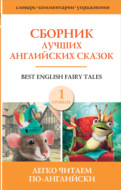
Kitabı oku: «Сборник лучших английских сказок. Уровень 1»
© С.А. Матвеев, В. В. Ганненко, К. Г. Дмитриева, Д. Л. Абрагин, Е. В. Лаптева, адаптация текста, комментарии и словарь, 2021
© ООО «Издательство, АСТ», 2021
English fairy tales
by Joseph Jacobs
Fairy Ointment1
Dame Goody was a nurse that looked after2 sick people, and minded babies. One night she woke up at midnight, and when she went downstairs, she saw a strange squinny-eyed3, little ugly old fellow, who asked her to come to his wife who was too ill to mind her baby. Dame Goody didn’t like the look of the old fellow, but business is business; so she popped on4 her things, and went down to him. And when she got down to him, he whisked her up on to a large coal-black5 horse with fiery eyes, that stood at the door; and soon they were going at a rare pace, Dame Goody holding on to the old fellow like grim death6.
They rode, and they rode, till at last7 they stopped before a cottage door. So they got down and went in and found the good woman abed with the children playing about; and the babe, a fine bouncing boy, beside her.
Dame Goody took the babe, which was a fine baby boy. The mother, when she handed the baby to Dame Goody to mind, gave her a box of ointment, and told her to stroke the baby’s eyes with it as soon as it opened them. After a while it began to open its eyes. Dame Goody saw that it had squinny eyes just like its father. So she took the box of ointment and stroked its two eyelids with it. But she wondered what it was for, as she had never seen such a thing before. So she looked to see if the others were looking, and, when they were not noticing, she stroked her own right eyelid with the ointment.
No sooner had she done so, than8 everything seemed changed about her. The cottage became elegantly furnished. The mother in the bed was a beautiful lady, dressed up in white silk. The little baby was still more beautiful then before, and its clothes were made of a sort of silvery cloth. Its little brothers and sisters around the bed were flat-nosed imps with pointed ears, who made faces at9 one another, and scratched their heads. Sometimes they pulled the sick lady’s ears with their long and hairy paws. In fact, they were up to all kinds of mischief; and Dame Goody knew that she was in a house of pixies. But she said nothing to nobody, and as soon as the lady was well enough to mind the baby, she asked the old fellow to take her back home. So he came round to the door with the coal-black horse with eyes of fire, and off they went as fast as before, or perhaps a little faster, till they came to Dame Goody’s cottage, where the squinny-eyed old fellow lifted her down and left her, thanking her civilly, and paying her more than she had ever been paid before for such service.
Next day happened to be market-day, and as Dame Goody had been away from home, she wanted many things in the house, and trudged10 off to get them at the market. As she was buying the things she wanted, who should she see but the squinny-eyed old fellow who had taken her on the coal-black horse. And what do you think he was doing? He went about from stall to stall taking things from each, here some fruit, and there some eggs, and so on11; and no one seemed to take any notice.
Now Dame Goody did not think it her business to interfere, but she thought she ought not to let so good a customer pass without speaking. So she went to him and said: ‘Good day, sir, I hope as how your good lady and the little one are as well as – ’
But she couldn’t finish what she was saying, for the funny old fellow started back in surprise, and he says to her:
‘What! Do you see me today?’
‘See you,’ says she, ‘why, of course I do, as plain as the sun in the skies, and what’s more,’ says she, ‘I see you are busy, too, into the bargain.’
‘Ah, you see too much,’ said he; ‘now, with which eye do you see all this?’
‘With the right eye to be sure12,’ said she, as proud as can be to find him out.
‘The ointment! The ointment!’ cried the old pixy thief. ‘Don’t meddle13 with what don’t concern you:you shall see me no more.’ And with that he struck her on the right eye, and she couldn’t see him any more; and, what was worse, she was blind on the right side from that hour till the day of her death.
EXERCISES
1) True of false?
1. Dame Goody was a doctor.
2. A strange old fellow came to Dame Goody at midnight.
3. The mother gave Dame Goody a box of ointment.
4. Dame Goody stroked baby‘s nose with ointment.
5. Dame Goody knew that she was in a house of pixies.
6. Next day Dame Goody stayed at home.
7. Dame Goody was blind on the left side.
2) Fill in the gaps with the following words:
hold on like grim death; make faces at; look after; and so on; to be sure
1. He stayed a little longer to…children.
2. She always drives the bike and I sit behind her, trying to…
3. This is not his best book,…, but it is still good.
4. My little brothers always… at each other when mom doesn’t look.
5. He took some fruit from one stall, some eggs from another, some bread from the third and…
3) Fill in the gaps using words in brackets.
1. One night she… (to be) woke up at midnight, and when she… (to go) downstairs, she… (to see) a strange old fellow.
2. They… (to ride) till at last they… (to stop) before a cottage door.
3. So she… (to take) the box of ointment and… (to stroke) its two eyelids with it.
4. The cottage… (to become) elegantly furnished.
4) Translate the following sentences:
1. Мать была красивой леди, одетой в белый шёлк.
2. Но она ничего никому не сказала.
3. Она поплелась на рынок, чтобы купить нужные вещи.
4. Он ходил от прилавка к прилавку, забирая что-нибудь с каждого.
5. Вот тебе за то, что суёшь нос в не своё дело!
5) Retell the fairy-tale.
The Pied14 Piper15
Newtown is a sleepy little town that was once noisy enough, and what made the noise was – rats. They ate their way into every barn16, store-room17 and a cupboard. Even beer in the barrels was not safe from them.
Why didn’t the good people of the town have cats? Well, they did, and there was a fair fight, but in the end the rats were too many, and the pussies were defeated. Poison, I hear you say? They poisoned so many that it nearly caused a plague. Ratcatchers? Many of them tried their luck but there seemed to be more rats than ever.
The Mayor18 and the town council were desperate. As they were sitting one day in the town hall trying to figure up what to do, the town messenger run in. ‘Please your Honour19,’ he said, ‘here is one fellow come to town. I don’t know what to think of him.’ ‘Show him in20,’ said the Mayor, and he stepped in. He was tall and thin, and had piercing eyes21. His clothes was painted in all colours of the rainbow.
‘I’m called the Pied Piper,’ he said. ‘What will you pay me if I free your town of every single rat?’
Fifty pounds22 were promised him (and it meant a lot of money in those days) as soon as not a rat was left in Newtown.
The Piper laid his pipe to his lips and started playing it. Every rat came out from its hole and followed the sound of his pipe.
The Piper went through town to the harbour23, and when he was at the water’s edge he stepped into a boat, and all of the rats followed him. On and on he played and played until each rat sank.
The townsfolk had been throwing up their caps and hurrahing24, but when the Piper stepped ashore25, the Mayor said ‘you see what poor folk we are; how can we manage to pay you fifty pounds? Will you not take twenty?’
‘Fifty pounds was what I was promised,’ said the Piper shortly; ‘and if I were you I‘d pay it quickly. Because I can pipe many kinds of tunes, as folk sometimes find to their cost26.’
‘Would you threaten us, tramp27?’ shrieked the Mayor, and at the same time he winked to the council; ‘the rats are all dead and drowned,’ said he; and so ‘You may do your worst, my good man,’ and with that he turned short upon his heel.
‘Very well,’ said the Piper, and he smiled a quiet smile. With that he laid his pipe to his lips again, but now there came another tunes. And as he went down the streets from school-room and playroom, from nursery and workshop, children ran, following the Piper to the cool green forest full of oaks and wide-spreading28 beeches. In and out among the oak trees was heard the laughter of the children break and fade as deeper and deeper into the green wood.
All the while29, the elders watched and waited. They mocked no longer now. And never saw they the Piper in his pied coat again. The Mayor sent his men to look for the Piper and bring the children back but none could find the lost children.
EXERCISES
1) True or false?
1. Newtown was full of rats.
2. The Mayor and the town council desided to hunt rats.
3. The Piper was tall and thin.
4. Piper’s clothes was all black.
5. The Mayor promised to pay Piper twenty pounds.
6. The Piper led children to the forest.
2) Fill in the gaps using words in brackets.
1. Even beer in the barrels… (to be) not safe from them.
2. The Mayor and the town council… (to be) desperate.
3. They were… (to sit) one day in the town hall… (to try) to figure up what to do.
4. His clothes… (to be painted) in all colours of the rainbow.
5. The Piper… (to lay) his pipe to his lips and started… (to play) it.
6. In and out among the oak trees… (to be heard) the laughter of the children.
3) Write down a plural form:
Example: dog – dogs
cat – ____________________
mouse – ____________________
rat – ____________________
horse – ____________________
pig – ____________________
chicken – ____________________
bird – ____________________
goose – ____________________
fish – ____________________
4) Translate the following sentences:
1. На свою беду он узнал, что обещания надо выполнять.
2. У дудочника был пронзительный взгляд и пёстрая куртка.
3. Всё то время, что дети были в доме, она пряталась в кладовой.
4. Мэр разрешил провести дудочника внутрь.
5. Вокруг амбара росли дубы и широко раскинувшиеся буки.
6. В порту живёт много бродяг.
7. Эта дудка стоит десять фунтов.
5) Retell the fairy-tale.
Princess of Canterbury
There lived formerly in the County of Cumberland a nobleman who had three sons, two of whom were clever, but the third one a natural fool, named Jack, who was a shepherd. The King of Canterbury had a beautiful daughter, who was also very clever. The King proclaimed that whoever30 should answer three questions put to him by the princess should marry her, and take the crown when her father dies. Soon news of it reached the ears of31 the nobleman’s sons, and the two clever ones desided to have a trial32. They didn’t want their idiot brother to go with them, but they could not get rid of him. They had not gone far, before Jack shrieked with laughter, saying ‘I’ve found an egg.’ ‘Put it in your pocket,’ said the brothers. A little while afterwards, again he laughted because he found a crooked hazel stick, which he also put in his pocket; and a third time he again laughed because he found a nut. That also was put with his other treasures.
When they arrived at the palace, they were immediately shown into a room where the princess and her suite33 were sitting. Jack, who never stood on ceremony, cried, ‘What a troop34 of fair ladies we’ve got here!’
‘Yes,’ said the princess, ‘we are fair ladies, for we carry fire in our bosoms35.’
‘Do you?’ said Jack. ‘Then roast me an egg,’ pulling out36 the egg from his pocket.
‘How will you get it out again?’ said the princess.
‘With a crooked stick,’ replied Jack, producing37 the hazel.
‘Where did that come from?’ said the princess.
‘From a nut,’ answered Jack, pulling out the nut from his pocket. ‘I’ve answered the three questions, and now I’ll have the lady.’ ‘No, no,’ said the king, ‘not so fast. You have still a test to go through. You must come here in a week’s time and watch for one whole night with the princess, my daughter. If you can manage to keep awake the whole night long you shall marry her next day.’
‘But if I can’t?’ said Jack.
‘Then off goes your head,’ said the king. ‘But you need not try unless you like.’
Well, Jack went back home for a week, and thought over38 whether he should try to win the princess. At last he made up his mind. ‘Well,’ said Jack, ‘I’ll have a try; so now for the king’s daughter, or a headless shepherd!’
He took his bottle and bag and went to the court. In his way he had to cross a river and he saw several pretty fish swimming there, so he caught some and put them into his pocket. When he reached the palace he knocked at the gate loudly with his crook. He was immediately led to the hall where the king’s daughter sat ready to see her lovers. He was placed in a luxurious39 chair, and rich wines and spices were set before him, and all sorts of delicate meats. Jack, unused to such feast, ate and drank, so that he was nearly dozing40 before midnight.
‘Oh, shepherd,’ said the lady, ‘I have caught you napping41!’
‘No, my lady, I was fishing.’
‘Fishing,’ said the princess in the astonishment: ‘But, shepherd, there is no fish-pond in the hall.’
‘I have been fishing in my pocket, and have just caught one.’
‘Oh!’ said she, ‘let me see it.’
The shepherd pulled the fish out of his pocket and showed it her, and she said it was the finest she ever saw.
About half an hour afterwards, she said, ‘Shepherd, do you think you could get me one more?’
He replied, ‘I may, when I have baited42 my hook’; and after a little while he brought out another, which was finer than the first, and the princess was so delighted that she gave him leave to go to sleep, and promised to excuse him to her father.
In the morning the princess told the king, to his great astonishment, that Jack must not be beheaded, for he had been fishing in the hall all night; but when he heard how Jack had caught such beautiful fish out of his pocket, he asked him to catch one in his own. Jack readily undertook the task, and told to the king to lie down. Than Jack pretended to fish in his pocket, having another fish concealed43 ready in his hand, and pricking44 him with a needle, he held up the fish, and showed it to the king.
His majesty was surprised, and the princess and Jack were married the same day, and lived for many years in happiness and prosperity45.
EXERCISES
1) True or false?
1. A nobleman had two sons.
2. On his way to princess Jack found an egg, a stick and a nut.
3. After answering the three questions Jack was married to the princess immediately.
4. Jack said that he was hunting in his pocket.
5. Jack was a shepherd.
6. Jack pulled three fish out of his pocket.
2) Fill in the gaps using words in brackets.
1. The nobleman… (to have) three sons, two of whom… (to be) clever, but the third one… (to be) a fool.
2. ‘Where… (to do) that come from?’… (to say) the princess.
3. He… (to take) his bottle and bag and… (to go) to the court.
4. In his way he had… (to cross) a river and he… (to see) several pretty fish swimming there.
5. Jack… (to catch) some and… (to put) them into his pocket.
6. He was immediately… (to lead) to the hall where the king’s daughter… (to sit) ready to see her lovers.
7. The shepherd… (to pull) the fish out of his pocket and… (to show) it her, and she… (to say) it… (to be) the finest she ever… (to see).
3) Translate the following sentences:
1. У аристократа было три сына: два умных, а третий – дурак.
2. Джек снова засмеялся, когда нашёл изогнутую ореховую палочку.
3. Что за отряд хорошеньких дам у нас тут?
4. Дошли слухи, что кто угодно может попробовать сразиться за женитьбу на принцессе.
5. Джек вытащил из кармана и предъявил принцессе яйцо, изогнутую ореховую палочку и орех.
6. Тот, кто сможет продержаться без сна целую ночь, женится на принцессе.
7. Джек насадил приманку на крючок и поймал рыбку у себя в кармане и в кармане у короля.
4) Match the synonyms. Sometimes there can be more than one synonym to each word:
doze ____________________
tell
hide ____________________
shriek ____________________
say ____________________
show ____________________
nap ____________________
cry ____________________
conceal ____________________
sleep ____________________
produce ____________________
5) Retell the fairy-tale.
Three Feathers
Once upon a time there was a girl who was married to a husband that she never saw. And the way this was, was that he was only at home at night, and would never have any light in the house. The girl thought that was funny, and all her friends told her there must be something wrong with her husband, some great deformity46 that made him want not to be seen.
Well, one night when he came home she suddenly lit a candle and saw him. He was handsome enough to make all the women of the world fall in love with him. But scarcely47 had she seen him when he began to change into a bird, and then he said: ‘Now you have seen me, you shall see me no more, unless you are willing to serve seven years and a day for me, so that I may become a man once more.’ Then he told her to take three feathers from under his side, and whatever she wished through them would come to pass48. Then he left her at a great house to be laundry-maid49 for seven years and a day.
And the girl used to take the feathers and say: ‘By power of my three feathers may the copper50 be lit, and the clothes washed, and ironed, and folded, and put away to the missis’s satisfaction.’
And then she had no more care about it. The feathers did the rest51, and the lady had never had a better laundress52. Well, one day the butler53, who decided to have the pretty laundry-maid for his wife, said to her, he should have spoken before but he did not want to annoy her. ‘Why should it when we work together?’ the girl said. And then he felt free to go on54, and explain his master is to pay him seventy pounds, and how would she like him for a husband.
And the girl told him to bring her the money, and he asked his master for it, and brought it to her. But as they were going upstairs, she cried ‘O John, I must go back, sure I’ve left my shutters55 undone, and they’ll be slashing and banging all night.’
The butler said, ‘Never you trouble, I’ll put them right’, and he ran back, while she took her feathers, and said: ‘By power of my three feathers may the shutters slash and bang till morning, and John neither be able to fasten56 them nor get his fingers free from them.’
And so it was. The butler neither could leave the shutters, nor57 keep the shutters from opening as he closed them. And he was angry, but could not help himself, and he did not care to tell of it and get the laugh on him, so no one knew.
Then after a bit the coachman58 began to notice her, and she found he had forty pounds with the master, and he said she might have it if she would take him with it.
So after the laundry-maid had his money in her apron59 as they went together, she stopped, exclaiming: ‘My clothes are left outside, I must run back and bring them in.’ ‘Stop for me while I go; it is a cold frosty night,’ said William, ‘you’d be catching your death.’ So the girl waited long enough to take her feathers out and say, ‘By power of my three feathers may the clothes slash and blow about till morning, and may William neither be able to take his hand from them nor gather them up60.’ And then she was away to bed and to sleep.
The coachman did not want to be laughed at, and he said nothing. So after a while, the footman61 comes to her and said: ‘I have been with my master for years and have saved up62 a good bit, and you have been three years here, and must have saved up as well. Let us put it together, and make us a home or else stay on at service as you wish.’ Well, she got him to bring the savings to her as the others had, and then she pretended she was faint, and said to him: ‘James, I don’t feel well, run down for me and fetch me up a drop of brandy.’ Now no sooner had he started than she said: ‘By power of my three feathers may there be slashing and spilling, and James neither be able to pour the brandy straight nor take his hand from it until morning.’
And so it was. James could not get his glass filled, and there was slashing and spilling, and also down came the master to know what it meant! So James told him he could not make it out, but he could not get the drop of brandy the laundry-maid had asked for, and his hand would shake and spill everything.
When the master got back to his wife he said: ‘What has come over63 the men, they were all right until that laundry-maid came. Something is up now. They have all drawn out64 their pay, and yet they don’t leave, and what can it be anyway?’
But his wife said she could not hear of the laundry-maid being blamed, for she was the best servant she had and worth all the rest put together.
So it went on until one day as the girl stood in the hall door, the coachman happened to say to the footman: ‘Do you know how that girl served me, James?’ And then William told about the clothes. The butler put in, ‘That was nothing to what she served me,’ and he told of the shutters clapping all night.
Just then the master came through the hall, and the girl said: ‘By power of my three feathers may there be slashing and striving65 between master and men, and may all get splashed in the pond.’
And so it was, the men argued which had suffered the most by her, and when the master came up all would be heard at once and none listened to him, and they had shoved66 one another into the pond.
When the girl thought they had had enough she took the spell off, and the master asked her what had begun the fight, for he had not heard in the confusion67.
And the girl said: ‘They were ready to fall on68 anyone; they’d have beat me if you had not come by.’
So it went on, and through her feathers she made the best laundress ever known. But to make a long story short, when the seven years and a day were up, the bird-husband, who had known her doings all along, came after her, restored to his own shape again. And he told her mistress he had come to take her from being a servant, and that she should have servants under her. But he did not tell of the feathers.
And then he bade69 her give the men back their savings.
‘That was a rare game you had with them,’ said he, ‘but now you are going where there is plenty, leave them each their own.’ So she did; and they went to their castle, where they lived happy ever after.
EXERCISES
1) True or false?
1. The girl’s husband had a deformity.
2. After the girl saw her husband, he changed into a bird.
3. The girl had to work for ten years as a laundry-maid.
4. The girl’s husband gave her three magic feathers.
5. The butler, the coachman and the cook wanted to marry the girl.
2) Fill in the gaps using words in brackets.
1. The girl… (to think) that was funny, and all her friends… (to tell) her there must be something wrong with her husband.
2. One night when he… (to come) home she suddenly… (to lit) a candle and… (to see) him.
3. And the girl… (to tell) him to bring her the money, and he… (to ask) his master for it, and… (to bring) it to her.
4. The men… (to argue) which… (to suffer) the most by her.
5. When the girl… (to think) they… (to have) enough she… (to take) the spell off.
6. The bird-husband… (to come) after her and… (to restore) to his own shape again.
7. They… (to go) to their castle, where they… (to live) happy ever after.
3) Translate the following sentences using ‘neither… nor…’ construction:
1. Дворецкий не мог ни оставить жалюзи, ни сделать так, чтобы они не открывались.
2. Пусть Уильям не сможет ни оторвать руки от одежды, ни подобрать её.
3. Пусть Джеймс не сможет ни налить бренди, ни убрать руку с бутылки.
4. Я не могу ни прочесть этот текст, ни перевести его.
4) Translate the following sentences:
1. Что бы прачка ни загадала на перья, всё исполнялось.
2. Прачка попросила дворецкого закрепить жалюзи.
3. Она положила в фартук деньги, которые она получила от кучера.
4. Лакей скопил десять фунтов.
5. Дворецкий, лакей и кучер стали бороться и столкнули друг друга в пруд.
6. Господин закричал: «Что на вас нашло?»
7. В этой неразберихе они были готовы наброситься на кого угодно.
5) Retell the fairy-tale.
The Three Cows
There was a farmer, and he had three cows, fine fat cows. One was called Facey, the other Diamond, and the third Beauty. One morning he went into his cowshed70, and there he found Facey so thin that the wind would have blown her away. Her skin hung loose71 about her, all her flesh was gone, and she stared out of her great eyes as though she’d seen a ghost; and what was more, the fireplace in the kitchen was one great pile of wood-ash. Well, he was bothered with it; he could not see how all this could happen.
Next morning his wife went out to the shed, and saw that Diamond became as thin as Facey – nothing but a bag of bones, all the flesh gone, and half a rick72 of wood was gone, too; but the fireplace was full of white wood ashes. The farmer decided to watch the third night; so he hid in a closet next to the kitchen, and he left the door slightly open, that he might see what happened.
Tick, tick, went the clock, and the farmer was nearly tired of waiting; he had to bite his little finger to keep himself awake, when suddenly the door of his house opened, and in rushed73 maybe a thousand pixies, laughing and dancing and pulling Beauty’s rope till they had brought the cow into the middle of the kitchen.
Tick, tick, went the clock, but he did not hear it now. He was staring at the pixies and his last beautiful cow. He saw them throw her down, fall on her, and kill her; and then with their knives they ripped her open, and cut off all the meat. Then out ran some of the little people and brought in firewood and made a roaring fire on the hearth74, and there they cooked the flesh of the cow – they baked and they boiled, they stewed and they fried.
‘Take care,’ cried one, who seemed to be the king, ‘let no bone be broken.’
Well, when they had all eaten, they began playing games with the bones, tossing them one to another. One little leg-bone fell close to the closet door, and the farmer was so afraid that the pixies should come there and find him in their search for the bone, that he put out his hand and picked it up. Then he saw the king stand on the table and say, ‘Gather the bones!’
Round and round flew the imps, picking up the bones. ‘Arrange them,’ said the king; and they placed them all in their proper positions in the hide75 of the cow. Then they folded the skin over them, and the king struck the pile of bone and skin with his rod. Whisht! Up sprang the cow and lowed dismally76. It was alive again; but alas! as the pixies dragged it back to the cowshed, it halted77, because a bone was missing. The cock crew78, away they flew, and the farmer went trembling to bed.
EXERCISES
1) True or false?
1. The farmer had three cows.
2. The first cow who became thin was Diamond.
3. In the morning the fireplace was full of white wood ashes.
4. The farmer decided to watch the third night.
5. The farmer hid in a cowshed.
6. When the door of his house opened, three witches rushed in.
7. The last cow started to halt.
2) Fill in the gaps using words in brackets.
1. One morning he… (to go) into his cowshed, and there he… (to find) Facey to be very thin.
2. Next morning his wife… (to go) out to the shed, and… (to see) that Diamond… (to become) as thin as Facey.
3. The farmer… (to decide) to watch the third night, so he… (to hide) in a closet next to the kitchen.
4. Suddenly the door of his house… (to open), and… (to rush in) maybe a thousand pixies,… (to laugh) and… (to dance).
5. They… (to cook) the flesh of the cow – they… (to bake) and they… (to boil), they… (to stew) and they… (to fry).
6. They… (to begin) playing games with the bones,… (to toss) them one to another.
7. He… (to put) out his hand and… (to pick) the little leg-bone up.
3) Translate the following sentences:
1. Кожа свободно болталась на корове.
2. Половина поленницы дров пропала.
3. В хлев ворвалась тысяча эльфов.
4. В очаге на кухне лежала груда пепла от дров.
5. Эльфы варили, жарили, пекли и тушили мясо коровы.
6. Косточка из ноги упала рядом с дверью чулана.
7. Корова начала хромать, потому что у неё не было одной косточки.
4) Put the following words in lines. Some of them can belong to more than one line:
cake, food, bacon, chicken, egg, biscuits, bread, potatoes, pumpkin, vegetables, meat, diner
to bake ____________________
to cook ____________________
to fry ____________________
to toast ____________________
to stew ____________________
5) Retell the fairy-tale.
Gobborn Seer
Once there was a man, Gobborn Seer, and he had a son called Jack.
One day he sent him out to sell a sheepskin, and Gobborn said, ‘You must bring me back the skin and the value of it as well.’
So Jack started, but he could not find any who would leave him the skin and give him its price too. So he came home discouraged79.
But Gobborn Seer said, ‘Never mind, you must take another turn at it tomorrow.’
So he tried again, and nobody wished to buy the skin on those terms80.
When he came home his father said, ‘You must go and try your luck tomorrow,’ and the third day it seemed as if it would be the same thing over again81. And he had half a mind not to go back at all, his father would be so angry. As he came to a bridge he leaned82 on the parapet thinking of his trouble, and that perhaps it would be foolish to run away from home, but he could not tell which to do; when he saw a girl washing her clothes on the bank below. She looked up and said: ‘If it may be no offence83 asking, what is it you feel so badly about?’
‘My father has given me this skin, and I am to fetch it back and the price of it beside.’
‘Is that all? Give it here, and it’s easy done.’
So the girl washed the skin in the stream, took the wool from it, and paid him the value of it, and gave him the skin to carry back.
His father was well pleased, and said to Jack, ‘That was a witty84 woman; she would make you a good wife. Do you think you could tell her again?’
Jack thought he could, so his father told him to go by and by to the bridge, and see if she was there, and if so ask her come home to take tea with them.
And Jack spied her and told her how his old father had a wish to meet her, and would she be pleased to drink tea with them.
The girl thanked him kindly, and said she could come the next day; she was too busy at the moment.
‘All the better,’ said Jack, ‘I’ll have time to make ready.’
So when she came Gobborn Seer could see she was a witty woman, and he asked her if she would marry his Jack. She said ‘Yes,’ and they were married.
Not long after, Jack’s father told him he must come with him and build the finest castle that ever was seen.
And as they went to lay the foundation-stone, Gobborn Seer said to Jack, ‘Can’t you shorten the way85 for me?’
But Jack looked ahead and there was a long road before them, and he said, ‘I don’t see, father, how I could break a bit off86.’
‘You’re no good to me, then, and had best be off home.’
So poor Jack turned back, and when he came in his wife said, ‘Why, how’s this you’ve come alone?’ and he told her what his father had said and his answer.
‘You stupid,’ said his witty wife, ‘if you had told a tale you would have shortened the road! Now listen till I tell you a story, and then catch up with87 Gobborn Seer and begin it at once. He will like hearing it, and by the time you are done you will have reached the foundation-stone.’
So Jack catched up with his father. Gobborn Seer said never a word, but Jack began his story, and the road was shortened as his wife had said.
When they came to the end of their journey, they started building of this castle which was to outshine88 all others. Now the wife had advised them to be intimate89 with the servants, and so they did as she said, and they said ‘Good morning’ and ‘Good day to you’ to everyone.
Now at the end of a year, Gobborn, the wise man, had built such a castle thousands were gathered90 to admire it.
And the king said: ‘The castle is done. I shall return tomorrow and pay you all.’
‘I have just a ceiling to finish in an upper lobby91,’ said Gobborn.
But after the king was gone off, the housekeeper sent for Gobborn and Jack, and told them that she had watched for a chance to warn them, for the king was so afraid they should carry their art away and build some other king a castle, he meant to take their lives tomorrow. Gobborn told Jack to keep a good heart, and they would come off92 all right.
When the king had come back Gobborn told him he had been unable to complete the job for lack93 of a tool left at home, and he should like to send Jack after it.
‘No, no,’ said the king, ‘cannot one of the men do it?’
‘No, they could not make themselves understood,’ said the Seer, ‘but Jack could bring it.’
‘You and your son are to stay here. But how will it do if I send my own son?’
‘That will do.’
So Gobborn sent by him a message to Jack’s wife. ‘Give him Crooked and straight!’
Now there was a little hole in the wall rather high up, and Jack’s wife tried to reach up94 into a chest there after ‘crooked and straight’, but at last she asked the king’s son to help her, because his arms were longest.
But when he was leaning over the chest she caught him by the two heels, and threw him into the chest, and locked it. So there he was, both ‘crooked and straight’!
Then he begged for pen and ink, which she brought him, but he was not allowed out.
When his letter came, telling the king, his father, he was to be let free when Gobborn and Jack were safe home, the king saw he must let them go away.
As they left Gobborn told him: now that Jack was done with this work, he should soon build a castle for his witty wife far superior to the king’s, which he did, and they lived there happily ever after.
EXERCISES
1) True or false?
1. Gobborn Seer had three sons.
2. Jack had to bring his father the skin and the value of it as well.
3. The girl washed the skin in the stream and took the wool from it.
4. Jack knew how to shorten the way.
5. Gobborn Seer and his son were building a castle.
6. The king wanted to trick Gobborn Seer and Jack.
7. Gobborn asked Jack’s wife for a screwdriver.
2) Fill in the gaps using words in brackets.
1. One day he… (to send) his son out to sell a sheepskin.
2. So he… (to try) again, and nobody… (to wish) to buy the skin on those terms.
3. The girl… (to wash) the skin in the stream,… (to take) the wool from it, and… (to pay) him the value of it, and… (to give) him the skin to carry back.
4. Jack… (to spy) her and… (to tell) her how his old father… (to have) a wish to meet her.
5. King… (to be) so afraid they should build some other king a castle, he… (to want) to take their lives tomorrow.
6. She… (to catch) him by the two heels and… (to throw) him into the chest.
3) Fill in the gaps with the following words:
reach up, catch up, outshine, shorten the way, come off
1. It’s dangerous,… the roof immediately!
2. This castle should… all the others in beauty.
3. He… with his father an hour ago.
4. This road is too long, we must… somehow.
5. Jack’s wife tried to… into a chest after a tool.
4) Translate the following sentences:
1. Никто не хотел покупать овечью шкуру на этих условиях.
2. Остроумная жена рассказала Джеку как сократить путь.
3. Джек снова нагнал своего отца.
4. Отец и сын начали строить замок, который должен затмить все остальные.
5. Близкие друзья собрались в вестибюле.
6. Они не могли закончить работу из-за отсутствия одного инструмента.
5) Retell the fairy-tale.
The Hobyahs
Once there was an old man and woman and a little girl, and they all lived in a house made of hempstalks. Now the old man had a little dog named Turpie and one night the Hobyahs came and said, ‘Hobyah! Hobyah! Hobyah! Tear down the hempstalks, eat up the old man and woman, and carry off the little girl!’ But little dog Turpie barked so that the Hobyahs ran off; and the old man said, ‘Little dog Turpie barks so that I cannot sleep nor slumber, and if I live till morning I will cut off his tail.’ So in the morning the old man cut off little dog Turpie’s tail.
The next night the Hobyahs came again, and said, ‘Hobyah! Hobyah! Hobyah! Tear down the hempstalks, eat up the old man and woman, and carry off the little girl!’ But little dog Turpie barked so that the Hobyahs ran off; and the old man said, ‘Little dog Turpie barks so that I cannot sleep nor slumber, and if I live till morning I will cut off one of his legs.’ So in the morning the old man cut off one of little dog Turpie’s legs.
The next night the Hobyahs came again, and said, ‘Hobyah! Hobyah! Hobyah! Tear down the hempstalks, eat up the old man and woman, and carry off the little girl!’ But little dog Turpie barked so that the Hobyahs ran off; and the old man said, ‘Little dog Turpie barks so that I cannot sleep nor slumber, and if I live till morning I will cut off another of his legs.’ So in the morning the old man cut off another of little dog Turpie’s legs.
The next night the Hobyahs came again, and said ‘Hobyah! Hobyah! Hobyah! Tear down the hempstalks, eat up the old man and woman, and carry off the little girl!’ But little dog Turpie barked so that the Hobyahs ran off; and the old man said, ‘Little dog Turpie barks so that I cannot sleep nor slumber, and if I live till morning I will cut off another of his legs.’ So in the morning the old man cut off another of little dog Turpie’s legs.
The next night the Hobyahs came again, and said ‘Hobyah! Hobyah! Hobyah! Tear down the hempstalks, eat up the old man and woman, and carry off the little girl!’ But little dog Turpie barked so that the Hobyahs ran off; and the old man said, ‘Little dog Turpie barks so that I cannot sleep nor slumber, and if I live till morning I will cut off another of his legs.’ So in the morning the old man cut off another of little dog Turpie’s legs.
The next night the Hobyahs came again, and said ‘Hobyah! Hobyah! Hobyah! Tear down the hempstalks, eat up the old man and woman, and carry off the little girl!’ But little dog Turpie barked so that the Hobyahs ran off; and the old man said, ‘Little dog Turpie barks so that I cannot sleep nor slumber, and if I live till morning I will cut off little dog Turpie’s head.’ So in the morning the old man cut off little dog Turpie’s head.
The next night the Hobyahs came again, and said ‘Hobyah! Hobyah! Hobyah! Tear down the hempstalks, eat up the old man and woman, and carry off the little girl!’ And when the Hobyahs found that little dog Turpie’s head was off they tore down hempstalks, ate up the old man and the woman, and carried the girl in a bag.’
And when the Hobyahs came to their home they hung up the bag with the little girl in it, and every Hobyah knocked on the top of the bag and said, ‘Look me! look me!’ And then they went to sleep until the next night, for the Hobyahs slept in the daytime.
The little girl cried a great deal, and a man with a big dog came that way and heard her crying. When he asked her how she came there and she told him, he put the dog in the bag and took the little girl to his home.
The next night the Hobyahs took down the bag and knocked at the top of it, and said ‘Look me, look me!’ and when they opened the bag the big dog jumped out and ate them all up; so there are no Hobyahs now.
EXERCISES
1) True or false?
1. An old man and an woman had a little boy.
2. Turpie was a little dog.
3. In the morning the old man cut off little dog Turpie's tail.
4. The Hobyahs came to the old man’s house ten times.
5. The Hobyahs sleep at night.
6. A man with a big dog put the dog in a bag and took the girl.
7. The big dog ate all of the Hobyahs.
2) Fill in the gaps using words in brackets.
1. When the Hobyahs… (to find) that little dog Turpie’s… (to be) there they… (to tear) down hempstalks,… (to eat) up the old man and the woman, and… (to carry) the girl in a bag.
2. They… (to go) to sleep until the next night, for the Hobyahs… (to sleep) in the daytime.
3. The little girl… (to cry) a great deal, and a man with a big dog… (to come) that way and… (to hear) her crying.
4. He… (to ask) her how she… (to come) there and she… (to tell) him.
5. When they… (to open) the bag the big dog… (to jump) out and… (to eat) them all up.
3) Translate the following sentences:
1. Жили-были старик со старухой в доме из стеблей конопли.
2. Старик сказал: «Пёсик лает так громко, что я не могу ни спать, ни дремать».
3. Хобья! Съедим старика со старухой и утащим девочку!
4. Когда хобьи пришли к себе домой, они повесили сумку с девочкой и легли спать до следующей ночи.
5. Девочка плакала изо всех сил.
6. Когда хобьи сняли сумку и стали по ней стучать, из неё выпрыгнула большая собака и съела их всех.
4) Answer the following questions:
1. Why are there no Hobyahs now?
2. Who heard the little girl crying?
3. How many times did the Hobyahs come to the old man’s house?
4. What happened to the girl at Hobyahs home?
5) Retell the fairy-tale.
English fairy tales about Jack and others
Tom Tit Tot
Once upon a time, there was a woman95, and she baked five pies. And when they came out of the oven, they were very hard to eat. So she says to her daughter:
“Daughter, put the pies on the shelf and leave them there a little, and they will come again96.” That is97, the crust will become softer.
But the girl says to herself, “Well, if they come again, I will eat them now.” And she ate them all.
Well, when supper-time came, the woman said, “Go and get one of the pies. I think they came again now.”
The girl went and looked, and there were only dishes. So she comes back and says, “No, they did not come again.”
“No?” says the mother.
“No,” says the daughter.
“Well,” said the woman, “I’ll98 eat one for supper.”
“But you can’t99 if they didn’t100 come,” said the girl.
“But I can,” says she. “Go you and bring the best pie.”
“Best or worst,” says the girl, “I ate them all, and you can’t eat the pie till it comes again.”
Well, the woman was very angry, and she took her spinning to the door, and she began to sing:
“My daughter ate five, five pies today.
My daughter ate five, five pies today.”
The king was coming down the street, and he heard her song. So he stopped and said, “What were you singing, my good woman?”
The woman told him these other words instead of that101:
“My daughter span five, five skeins today.
My daughter span five, five skeins today.”
“Oh!” said the king, “I never heard of anyone who could do that.” Then he said, “Listen, I want a wife, and I’ll marry your daughter. During eleven months of the year, she will have everything that she wants; but the last month of the year she will spin five skeins every day, and if she can’t, I shall kill her.”
“All right,” says the woman; she thought only about a grand marriage. Her daughter was very happy. “I’ll marry a king!” she thought. “And in eleven months the king will forget about skeins.”
Well, so they were married. And for eleven months the girl had all she liked to eat, all the dresses she liked to wear, and all the friends she liked.
When the time came, she began to think about the skeins. But the king did not say any word about them, and she decided that he forgot them.
Ücretsiz ön izlemeyi tamamladınız.