Sadece Litres'te okuyun

Kitap dosya olarak indirilemez ancak uygulamamız üzerinden veya online olarak web sitemizden okunabilir.

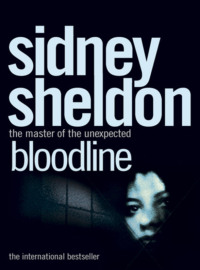
Kitabı oku: «Bloodline», sayfa 5

Yazı tipi:

Chapter Five
London Monday, September 7 2 p.m.

White’s Club was situated at the top of St James’s Street, near Piccadilly. Built as a gambling club in the eighteenth century, White’s was one of the oldest clubs in England, and the most exclusive. Members put their sons’ names down for membership at birth, for there was a thirty-year waiting list.

The façade of White’s was the epitome of discretion. The wide bow-windows looking out on St James’s Street were meant to accommodate those within rather than to satisfy the curiosity of the outsiders passing by. A short flight of steps led to the entrance but, aside from members and their guests, few people ever got past the door. The rooms in the club were large and impressive, burnished with the dark, rich patina of time. The furniture was old and comfortable – leather couches, newspaper racks, priceless antique tables and deep, stuffed armchairs that had held the posteriors of half a dozen Prime Ministers. There was a backgammon room with a large, open fireplace behind a bronze-covered rail, and a formal curved staircase led to the dining-room upstairs. The dining-room ran across the entire breadth of the house, and contained one huge mahogany table which seated thirty persons, and five side tables. At any luncheon or dinner the room contained some of the most influential men in the world.

Sir Alec Nichols, Member of Parliament, was seated at one of the small corner tables, having lunch with a guest, Jon Swinton. Sir Alec’s father had been a baronet, and his father and grandfather before him. They had all belonged to White’s. Sir Alec was a thin, pale man in his late forties, with a sensitive aristocratic face and an engaging smile. He had just motored in from his country estate in Gloucestershire, and was dressed in a tweed sports jacket and slacks, with loafers. His guest wore a pin-stripe suit with a loud, checked shirt and a red tie, and seemed out of place in this quiet, rich atmosphere.

‘They really do you proud here,’ Jon Swinton said, his mouth full, as he chewed the remains of a large veal chop on his plate.

Sir Alec nodded. ‘Yes. Things have changed since Voltaire said, “The British have a hundred religions and only one sauce.”’

Jon Swinton looked up. ‘Who’s Voltaire?’

Sir Alec said, embarrassed, ‘A – a French chap.’

‘Oh.’ Jon Swinton washed his food down with a swallow of wine. He laid down his knife and fork and wiped a napkin across his mouth. ‘Well, now, Sir Alec. Time for you and I to talk a little business.’

Alec Nichols said softly, ‘I told you two weeks ago I’m working everything out, Mr Swinton. I need a bit more time.’

A waiter walked over to the table, balancing a high stack of wooden cigar boxes. He skilfully set them down on the table.

‘Don’t mind if I do,’ Jon Swinton said. He examined the labels on the boxes, whistled in admiration, pulled out several cigars which he put in his breast-pocket, then lit one. Neither the waiter nor Sir Alec showed any reaction to this breach of manners. The waiter nodded to Sir Alec, and carried the cigars to another table.

‘My employers have been very lenient with you, Sir Alec. Now, I’m afraid, they’ve got impatient.’ He picked up the burned match, leaned forward and dropped it into Sir Alec’s glass of wine. ‘Between you and I, they’re not nice people when they’re upset. You don’t want to get them down on you, you know what I mean?’

‘I simply don’t have the money right now.’

Jon Swinton laughed loudly. ‘Come off it, chum. Your mum was a Roffe, right? You’ve got a thousand-acre farm, a posh town house in Knightsbridge, a Rolls-Royce and a bloody Bentley. You’re not exactly on the dole then, are you?’

Sir Alec looked around, pained, and said quietly, ‘None of them is a liquid asset. I can’t –’

Swinton winked and said, ‘I’ll bet that sweet little wife of yours, Vivian, is a liquid asset, eh? She’s got a great pair of Bristols.’

Sir Alec flushed. Vivian’s name on this man’s lips was a sacrilege. Alec thought of Vivian as he had left her that morning, still sweetly asleep. They had separate bedrooms, and one of Alec Nichols’s great joys was to go into Vivian’s room for one of his ‘visits’. Some times, when Alec awakened early, he would walk into Vivian’s bedroom while she was asleep and simply stare at her. Awake or asleep, she was the most beautiful girl he had ever seen. She slept in the nude, and her soft, curved body would be half exposed as she curled into the sheets. She was blonde, with wide, pale blue eyes and skin like cream. Vivian had been a minor actress when Sir Alec had first met her at a charity ball. He had been enchanted by her looks, but what had drawn him to her was her easy, outgoing personality. She was twenty years younger than Alec, and filled with a zest for living. Where Alec was shy and introverted, Vivian was gregarious and vivacious. Alec had been unable to get her out of his mind, but it had taken him two weeks to summon up nerve enough to telephone her. To his surprise and delight Vivian had accepted his invitation. Alec had taken her to a play at the Old Vic, and then to dinner at the Mirabelle. Vivian lived in a dreary little basement flat in Notting Hill, and when Alec had brought her home, she had said, ‘Would you like to come in then?’ He had stayed the night, and it had changed his whole life. It was the first time that any woman had been able to bring him to a climax. He had never experienced anything like Vivian. She was velvet tongue and trailing golden hair and moist, pulsing, demanding depths that Alec explored until he was drained. He could become aroused simply thinking about her.

There was something else. She made him laugh, she made him come alive. She poked fun at Alec because he was shy and a bit stodgy, and he adored it. He was with her as often as Vivian would permit it. When Alec took Vivian to a party, she was always the centre of attention. Alec was proud of that, but jealous of the young men gathered around her, and he could not help wondering how many of them she had been to bed with.

On the nights when Vivian could not see him because she had another engagement, Alec was frantic with jealousy. He would drive to her flat and park down the block, to see what time she came home, and whom she was with. Alec knew that he was behaving like a fool, and yet he could not help himself. He was in the grip of something too strong to break.

He realized that Vivian was wrong for him, that it was out of the question for him to marry her. He was a respected Member of Parliament, with a brilliant future. He was part of the Roffe dynasty, on the board of directors of the company. Vivian had no background to help her cope with Alec’s world. Her mother and father had been second-rate music-hall artists, playing the provincial circuit. Vivian had had no education except for what she had picked up in the streets, or backstage. Alec knew that she was promiscuous and superficial. She was shrewd but not particularly intelligent. And yet Alec was obsessed with her. He fought it. He tried to stop seeing her, but it was no use. He was happy when he was with her, and he was miserable when he was without her. In the end he proposed to her because he had to, and when Vivian accepted, Sir Alec Nichols was ecstatic.

His new bride moved into the family home, a beautiful old Robert Adam house in Gloucestershire, a Georgian mansion with Doric columns and a long sweeping driveway. It was set amid the green of a thousand acres of lush farmland, with its own private shooting, and running streams to fish. At the back of the house was a park that had been laid out by ‘Capability Brown’.

The interior of the house was stunning. The large front hall had a stone floor and walls of painted wood. There were pairs of old lanterns and marble-topped Adam gilt-wood tables and mahogany chairs. The library had original eighteenth-century built-in bookcases, and a pair of pedestal tables by Henry Holland, and chairs designed by Thomas Hope. The drawing-room was a mixture of Hepplewhite and Chippendale, with a Wilton carpet, and a pair of Waterford glass chandeliers. There was a huge dining-room that could seat forty guests, and a smoking-room. On the second floor were six bedrooms, each with an Adam fireplace, and on the third floor were the servants’ quarters.

Six weeks after she had moved into the house, Vivian said, ‘Let’s get out of this place. Alec.’

He looked at her, puzzled. ‘You mean you’d like to go up to London for a few days?’

‘I mean I want to move back to London.’

Alec looked out of the window at the emerald-green meadows, where he had played as a child, and at the giant sycamore and oak trees, and he said hesitantly, ‘Vivian, it’s so peaceful here. I –’

And she said, ‘I know, luv. That’s what I can’t stand – the fucking peace!’

They moved to London the following week.

Alec had an elegant four-storey town house in Wilton Crescent, off Knightsbridge, with a lovely drawing-room, a study, a large dining-room, and at the back of the house, a picture window that overlooked a grotto, with a waterfall and statues and white benches set amid a beautiful formal garden. Upstairs were a magnificent master suite and four smaller bedrooms.

Vivian and Alec shared the master suite for two weeks, until one morning Vivian said, ‘I love you, Alec, but you do snore, you know.’ Alec had not known. ‘I really must sleep alone, luv. You don’t mind, do you?’

Alec minded deeply. He loved the feel of her soft body in bed, warm against him. But deep inside, Alec knew that he did not excite Vivian sexually the way other men excited her. That was why she did not want him in her bed. So now he said, ‘Of course I understand, darling.’

At Alec’s insistence, Vivian kept the master suite, and he moved into one of the small guest bedrooms.

In the beginning, Vivian had gone to the House of Commons and had sat in the Visitors’ Gallery on days when Alec was to speak. He would look up at her and be filled with a deep, ineffable pride. She was undoubtedly the most beautiful woman there. And then came the day when Alec finished his speech and looking up for Vivian’s approval, saw only an empty seat.

Alec blamed himself for the fact that Vivian was restless. His friends were older than Vivian, too conservative for her. He encouraged her to invite her young companions to the house, and brought them together with his friends. The results were disastrous.

Alec kept telling himself that when Vivian had a child, she would settle down and change. But one day, somehow – and Alec could not bear to know how – she picked up a vaginal infection and had to have a hysterectomy. Alec had longed for a son. The news had shattered him, but Vivian was unperturbed.

‘Don’t worry, luv,’ she said, smiling. ‘They took out the nursery, but they left in the playpen.’

He looked at her for a long moment, then turned and walked away.

Vivian loved to go on buying sprees. She spent money indiscriminately, recklessly, on clothes and jewellery and cars, and Alec did not have the heart to stop her. He told himself that she had grown up in poverty, hungry for beautiful things. He wanted to buy them for her. Unfortunately, he could not afford it. His salary was consumed by taxes. His fortune lay in his shares of stock in Roffe and Sons but those shares were restricted. He tried to explain that to Vivian but she was not interested. Business discussions bored her. And so Alec let her carry on.

He had first learned of her gambling when Tod Michaels, the owner of Tod’s Club, a disreputable gambling place in Soho, had dropped in to see him.

‘I have your wife’s IOUs here for a thousand pounds, Sir Alec. She had a rotten run at roulette.’

Alec had been shocked. He had paid off the IOUs and had had a confrontation with Vivian that evening. ‘We simply can’t afford it,’ he had told her. ‘You’re spending more than I’m making.’

She had been very contrite. ‘I’m sorry, angel. Baby’s been bad.’

And she had walked over to him and put her arms around him and pressed her body against his, and he had forgotten his anger.

Alec had spent a memorable night in her bed. He was sure now that there would be no more problems.

Two weeks later Tod Michaels had come to visit Alec again. This time Vivian’s IOUs were five thousand pounds. Alec was furious. ‘Why did you let her have credit?’ he demanded.

‘She’s your wife, Sir Alec,’ Michaels had replied blandly. ‘How would it look if we refused her?’

‘I’ll – I’ll have to get the money,’ Alec had said. ‘I don’t have that much cash at the moment.’

‘Please! Consider it a loan. Pay it back when you can.’

Alec had been greatly relieved. ‘That’s very generous of you, Mr Michaels.’

It was not until a month later that Alec learned that Vivian had gambled away another twenty-five thousand pounds, and that he was being charged interest at the rate of ten per cent a week. He was horrified. There was no way he could raise that much cash. There was nothing that he could even sell. The houses, the beautiful antiques, the cars, all belonged to Roffe and Sons. His anger frightened Vivian enough so that she promised not to gamble any more. But it was too late. Alec found himself in the hands of loan sharks. No matter how much Alec gave them, he could not manage to pay off the debt. It kept mounting each month, instead of getting smaller, and it had been going on for almost a year.

When Tod Michael’s hoodlums first began to press him for the money, Alec had threatened to go to the police commissioner. ‘I have connections in the highest quarters,’ Alec had said.

The man had grinned. ‘I got connections in the lowest.’ Now Sir Alec found himself sitting here at White’s with this dreadful man, having to contain his pride, and beg for a little more time.

‘I’ve already paid them back more than the money I borrowed. They can’t –’

Swinton replied, ‘That was just on the interest, Sir Alec. You still haven’t paid the principal.’

‘It’s extortion,’ Alec said.

Swinton’s eyes darkened. ‘I’ll give the boss your message.’ He started to rise.

Alec said quickly, ‘No! Sit down. Please.’

Slowly Swinton sat down again. ‘Don’t use words like that,’ he warned. ‘The last chap who talked like that had both his knees nailed to the floor.’

Alec had read about it. The Kray brothers had invented the punishment for their victims. And the people Alec was dealing with were just as bad, just as ruthless. He could feel the bile rising in his throat. ‘I didn’t mean that,’ Alec said. ‘It’s just that I – I don’t have any more cash.’

Swinton flicked the ash from his cigar into Alec’s glass of wine, and said, ‘You have a big bundle of stock in Roffe and Sons, don’t you, Alec baby?’

‘Yes,’ Alec replied, ‘but it’s non-saleable and non-transferable. It’s no good to anyone unless Roffe and Sons goes public.’

Swinton took a puff on his cigar. ‘And is it going public?’

‘That’s up to Sam Roffe. I’ve – I’ve been trying to persuade him.’

‘Try harder.’

‘Tell Mr Michaels he’ll get his money,’ Alec said. ‘But please stop hounding me.’

Swinton stared. ‘Hounding you? Why, Sir Alec, you little cocksucker, you’ll know when we start hounding you. Your fucking stables will burn down, and you’ll be eating roast horsemeat. Then your house will burn. And maybe your wife.’ He smiled, and Alec wished he had not. ‘Have you ever eaten cooked pussy?’

Alec had turned pale. ‘For God’s sake –’

Swinton said soothingly, ‘I’m kidding. Tod Michaels is your friend. And friends help each other, right? We were talking about you at our meeting this morning. And do you know what the boss said? He said, “Sir Alec’s a good sort. If he hasn’t got the money, I’m sure he’ll think of some other way to take care of us.”’

Alec frowned. ‘What other way?’

‘Well, it’s not hard for a bright chap like you to work something out, is it? You’re running a big drug company, right? You make things like cocaine, for example. Just between you and I, who’d ever know if you happened to accidentally misplace a few shipments here and there?’

Alec stared at him. ‘You’re insane,’ he said. ‘I – I couldn’t do that.’

‘It’s amazing what people can do when they have to,’ Swinton said genially. He rose to his feet. ‘You either have our money for us, or we’ll tell you where to deliver the merchandise.’

He ground his cigar out on Alec’s butter plate. ‘Give my regards to Vivian, Sir Alec. Ta.’

And Jon Swinton was gone.

Sir Alec sat there alone, unseeing, surrounded by all the familiar, comfortable things that were so much a part of his past life, that were now threatened. The only alien thing was the obscene, wet, cigar butt on the plate. How had he ever allowed them to come into his life? He had permitted himself to be manoeuvred into a position where he was in the hands of the underworld. And now he knew that they wanted more than money from him. The money was merely the bait with which they had trapped him. They were after his connections with the drug company. They were going to try to force him to work with them. If it became known he was in their power, the Opposition would not hesitate to make capital of it. His own party would probably ask him to resign. It would be done tactfully and quietly. They would probably exert pressure on him to apply for the Chiltern Hundreds, a post that paid a nominal salary of a hundred pounds a year from the Crown. The one barrier to being an MP was that you could not be in receipt of pay from the Crown or the Government. So Alec would no longer be allowed to serve in Parliament. The reason could not be kept secret, of course. He would be in disgrace. Unless he could come up with a large sum of money. He had talked to Sam Roffe again and again, asking him to let the company go public, to let the shares of stock be marketed.

‘Forget it,’ Sam had told him. ‘The minute we let outsiders in, we have a lot of strangers telling us how to run our business. Before you know it, they’ll take over the board, and then the company. What’s the difference to you, Alec? You have a big salary, an unlimited expense account. You don’t need the money.’

For a moment Alec had been tempted to tell Sam how desperately he needed it. But he knew it would do no good. Sam Roffe was a company man, a man without compassion. If he knew that Alec had in any way compromised Roffe and Sons, he would have dismissed him without a moment’s hesitation. No, Sam Roffe was the last person to whom he could turn.

Alec was facing ruin.

The reception porter at White’s walked towards Sir Alec’s table with a man dressed in a messenger’s uniform, carrying a sealed manila envelope.

‘Excuse me, Sir Alec,’ the porter apologized, ‘but this man insists that he has instructions to deliver something to you personally.’

‘Thank you,’ Sir Alec said. The messenger handed him the envelope, and the porter led him back to the door.

Alec sat there a long time before he reached for the envelope and opened it. He read the message through three times, then he slowly crumpled the paper in his fist, and his eyes began to fill with tears.

Chapter Six
New York Monday, September 7 11 a.m.

The private Boeing 707–320 was making its final approach to Kennedy Airport, gliding out of the stacked-up traffic pattern. It had been a long, tedious flight and Rhys Williams was exhausted, but he had been unable to sleep during the night. He had ridden in this plane too often with Sam Roffe. His presence still filled it.

Elizabeth Roffe was expecting him. Rhys had sent her a cable from Istanbul, merely announcing that he would arrive the following day. He could have broken the news of her father’s death over the telephone but she deserved more than that.

The plane was on the ground now, taxiing towards the terminal. Rhys carried very little luggage, and he was quickly ushered through Customs. Outside, the sky was grey and bleak, a foretaste of the winter to come. A limousine was waiting at the side entrance to drive him to Sam Roffe’s Long Island estate, where Elizabeth would be waiting.

During the drive Rhys tried to rehearse the words that he would say to her to try to soften the blow, but the moment Elizabeth opened the front door to greet him the words flew out of his head. Each time Rhys saw Elizabeth her beauty caught him by surprise. She had inherited her mother’s looks, the same patrician features, midnight black eyes framed by long, heavy lashes. Her skin was white and soft, her hair a shiny black. Her figure was rich and firm. She was wearing an open-necked, creamy silk blouse and a pleated grey-flannel skirt and fawn-coloured pumps. There was no sign of the awkward little girl Rhys had first met nine years earlier. She had become a woman, intelligent and warm and completely unselfconscious about her beauty. She was smiling at him now, pleased to see him. She took his hand and said, ‘Come in, Rhys,’ and led him into the large oak-panelled library. ‘Did Sam fly in with you?’

There was no way to break it gently. Rhys took a deep breath and said, ‘Sam had a bad accident, Liz.’ He watched the colour drain from her face. She waited for him to go on. ‘He was killed.’

She stood there frozen. When she finally spoke, Rhys could barely hear her. ‘What – what happened?’

‘We don’t have any of the details yet. He was climbing Mont Blanc. A rope broke. He fell into a crevasse.’

‘Did they find –’

She closed her eyes for a moment, then opened them.

‘A bottomless crevasse.’

Her face had turned white. Rhys felt a quick sense of alarm. ‘Are you all right?’

She smiled brightly, and said, ‘Of course. I’m fine, thank you. Would you like some tea or something to eat?’

He looked at her in surprise and started to speak, and then he understood. She was in shock. She was rattling on, making no sense, her eyes unnaturally bright, her smile fixed.

‘Sam was such a great athlete,’ Elizabeth was saying. ‘You’ve seen his trophies. He always won, didn’t he? Did you know he climbed Mont Blanc before?’

‘Liz –’

‘Of course you did. You went with him once, didn’t you, Rhys?’

Rhys let her talk, anaesthetizing herself against the pain, trying to build an armour of words to ward off the moment when she would have to face her own anguish. For an instant, as he listened to her, he was reminded of the vulnerable little girl he had first known, too sensitive and shy to have any protection against brutal reality. She was dangerously wound up now, tense and brittle, and there was a fragility about her that worried Rhys.

‘Let me call a doctor,’ he said. ‘He can give you something to –’

‘Oh, no. I’m really quite all right. If you don’t mind, I think I’ll lie down for a while. I’m feeling a bit tired.’

‘Would you like me to stay?’

‘Thank you. That won’t be necessary.’

She walked him to the door, and as he started to get into the car Elizabeth called, ‘Rhys!’

He turned.

‘Thank you for coming.’

Jesus Christ.

Long hours after Rhys Williams had gone, Elizabeth Roffe lay in her bed, staring at the ceiling, watching the shifting patterns painted by the pale September sun.

And the pain came. She had not taken a sedative, because she wanted the pain. She owed that to Sam. She would be able to bear it, because she was his daughter. And so she lay there, all day and all night, thinking of nothing, thinking of everything, remembering, feeling. She laughed, and she cried, and she supposed that she was in a state of hysteria. It did not matter. There was no one to hear her. In the middle of the night, she suddenly became ravenously hungry and went down into the kitchen and devoured a large sandwich and then threw it up. She felt no better. Nothing could ease the pain that filled her. Her mind kept going back, back over the years with her father. Through her bedroom window she watched the sun rise. Some time later, one of the servants knocked at the door, and Elizabeth sent her away. Once the phone rang, and her heart leaped and she reached for it, thinking, It’s Sam! Then she remembered, and snatched her hand away.

He would never call her again. She would never hear his voice again. She would never see him again.

A bottomless crevasse.

Bottomless.

Elizabeth lay there, letting the past wash over her, remembering, remembering it all.

Ücretsiz ön izlemeyi tamamladınız.