Kitabı oku: «Lord of the Beasts»

Praise for Susan Krinard
and her books
“A poignant tale of redemption”
—Booklist on To Tame a Wolf
“Its compelling characters and the universal nature of their
underlying conflicts should guarantee an across-the-board
appeal to general fantasy fans and other readers.”
—Library Journal on The Forest Lord
“A master of atmosphere and description”
—Library Journal
“Readers … will be pleasantly surprised at the depth and
breadth of this novel. Character-driven, enhanced by plenty
of adventure, it encompasses a far wider scope than a romance.”
—Romantic Times BOOKclub on Shield of the Sky
“The standard for today’s fantasy romance.”
—Affaire de Coeur on Shield of the Sky
“Krinard is a bestselling, highly regarded writer who is
deservedly carving out a niche in the romance arena.”
—Library Journal
“Susan Krinard was born to write romance”
—New York Times bestselling author Amanda Quick
Also available from Susan Krinard
HALFWAY TO DAWN
BRIDE OF THE WOLF
LUCK OF THE WOLF
CODE OF THE WOLF
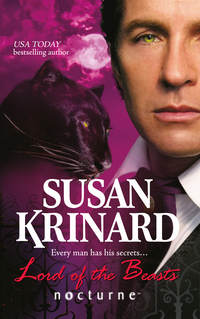
Lord of the Beasts
Susan
Krinard

www.millsandboon.co.uk
To the Animals
‘I think I could turn and live with animals, they
are so placid and self-contain’d,
I stand and look at them long and long.’
—Walt Whitman
Acknowledgement
Thanks to Kathy Flake, who hosted my first trip to the
beautiful Cotswolds. She is a true friend to the animals.
CHAPTER ONE
London, 1847
THE WOMAN WAS BEAUTIFUL as no earthly creature could be, flawless in form and carriage, her hair cascading over her shoulders like Fane gold spun by a master weaver. The world of men had names for her kind: Fairy and Daoine Sidhe and Fair Folk among them—but no such description could begin to capture her radiant perfection. Her ivory face shone with a stern radiance that no mortal could gaze upon without recognizing that he was nothing but a low, wretched brute in the presence of divinity.
Donal wasn’t afraid, though Da had left him alone with the Queen of Tir-na-Nog. The man known by humans as Hartley Shaw—the Forest Lord, stag-horned master of the northern forests—had been cast out of the Blessed Land, driven away by his own mother because he would not give up his love for the mortal Eden Fleming. But now Queen Titania gazed down at her grandson and spoke, smothering the little spark of defiance Donal nursed in his six-year-old heart.
“Your father has made his choice,” she said, her voice sweeping over Donal like a blast of cold north wind. “But you are young, and your blood may yet serve your people.”
Donal had heard those same words a hundred times before, and always he gave the same answer. “I want to go home, with Da.”
“Home.” Titania flicked her slender fingers, and silver leaves shook loose from the stately tree beneath which she stood. “The vile sty mortals have made of the good, green earth. That is what you return to, child.”
Though Donal knew there were many bad things in the world, he knew it was not as terrible as his grandmother said. Animals still ran free in the forest beyond the Gate. Ma and Da had seen to that. No matter what happened anywhere else in the land called England, Hartsmere would always be safe.
“But not for you,” Titania said. “Never for you, grandson. You will find no peace at your mother’s hearth. You will always be torn between two worlds, and your father’s choice will haunt you for as long as you live among mortals.” Her lovely face darkened as if a cloud had passed over the ever-shining sun of Tir-na-Nog. “Hear me, and remember. If ever you should love as my son loves … if ever you fall into the snare of a mortal female’s wiles … you will lose the gift that lifts you above the People of Iron. The voices of the beasts will vanish, and you will be alone. You will have nothing … nothing….
DONAL FLEMING WOKE with a start. The voice in his mind faded, and in its place rose the clamor and din of morning at the Covent Garden market.
Only a dream, he thought. Not a memory, real as it seemed … at least not his own. But Tod had been there on that terrible day twenty-five years ago, and the hob had told Donal the story so many times that Titania’s threat had become unquestionable fact.
Donal flung aside the coverlet and swung his legs over the side of the bed. He massaged his temples, seeking in vain to quiet the incessant noise that was inescapable in the vast metropolis called London. With a groan he set his bare feet on the faded carpet and staggered to the washbasin to splash his face with the tepid water that remained from the night before. The few drops that passed his lips tasted of the smoke and coal dust and grime that hung in the London air. He scrubbed his skin with the towel so thoughtfully provided by the hotel staff, but no amount of washing would remove the city’s taint.
He draped the towel over the back of his neck and went to the window overlooking the square below. The competing cries of vendors—sellers of vegetables and fruit, meat pies and bread and sausages, flowers of every variety—mingled with the clatter of cartwheels and hoofbeats, penetrating the thin glass as if it were tissue. Swarming humanity ebbed and flowed between the stalls and shops, kitchen maids bumping elbows with waifs buying violets to sell on street corners and bleary-eyed dandies gulping coffee after a night of theater and tavern.
It was an alien world to Donal. He closed his eyes and thought of the moors with their deep silences and broad, clean skies. At this hour, the farmers would have long since been up milking cows, feeding chickens and mending walls, going about the same business they did every spring morning. And he would be out visiting Eliza’s new litter or helping Mr. Codling and his fellow farmers through the lambing season. He might not utter a word all day, for the taciturn husbandmen of the Dales had little use for idle chatter, and the beasts spoke without need of human language.
With a sigh of resignation, Donal selected an oft-mended shirt and his second-best coat from among the few garments he’d brought from Yorkshire. He was aware that his clothes were sadly out of date, if only because his mother had brought it to his attention on more than one occasion. Lady Eden laughingly despaired of her eldest son, and of his ever finding a wife who could overlook his stubborn refusal to accept his proper station in life.
The station of the bastard child who had been given everything the son of an earl could desire, and cast it all aside. All but his love for his parents and brothers, his memories of Hartsmere and the distant family connections that brought him so far from home.
Donal replaced the towel around his neck with a slightly frayed cravat and worked it into a simple knot at his throat. He glanced in the mirror just long enough to run dampened fingers through the unruly waves of his hair. Surely the August Fellows of the Zoological Society of London had better things to do than critique the appearance of a country veterinarian.
He considered and discarded the notion of a visit to the hotel dining room before setting out for Regent’s Park. He doubted his stomach would tolerate even his usual light breakfast, and he had no desire to see greedy, overfed tourists stuffing their mouths with slabs of beef and rashers of bacon. Instead, Donal unwrapped a hard roll left over from yesterday’s journey and broke it into small bits, wishing he had a friend to share it with.
As if in answer to his thoughts, someone scratched at his sitting room door. The sound came from very near the floor. Donal hurried to the door and opened it, meeting the bright brown eyes of his unexpected visitor.
“Well, now,” he said, squatting to offer his hand. “Have you come to share my bread?”
The parti-colored spaniel cocked his head and gravely regarded Donal’s crumb-dusted fingers. He was no street cur to go begging for his meals; his red and white coat gleamed with the luster of frequent grooming and good health, and he wore his handsome, studded collar as if it were the crown of the Cavalier King who had given his breed its name.
Donal set the roll on the ground and listened. For all his well-bred dignity, the spaniel’s thoughts were clear and honest in the way of his kind, and he gazed at Donal with absolute trust. The dog’s natural intelligence had warned him that something was amiss when his human would not rise from his bed to take him for his morning walk. When his friend only groaned at the patting of a paw and an encouraging lick, he had set aside good manners and barked until another human had come to investigate the uproar. Then he had dashed between the startled woman’s feet and run as fast as his legs would carry him, straight to the one place in all London where he knew he would be understood.
“I see,” Donal said, resting his hand gently on the spaniel’s broad forehead. “Of course I’ll do what I can.” He stuffed the roll in his pocket, rose and followed the dog into the hallway and around two corners to a door indistinguishable from his own. He knocked, but there was no answer. The spaniel whined anxiously.
Donal turned the knob, and the door gave at his push. Immediately his nostrils were assaulted by the smell of sickness. The sitting room was far more luxurious than his own modest suite, with thick Oriental carpets and furnishings that a wealthy nabob might find acceptable.
Donal strode to the bedchamber, took one glance at the rumpled bed’s motionless occupant and gave a sigh of relief. For all the signs of recent illness, the spaniel’s master was neither near death nor in urgent need of a physician’s care.
He dampened a towel at the washstand and sat beside the stout, middle-aged object of the canine’s adoration. The man had the look of prosperity about him, but he had clearly behaved with intemperance and paid the consequences. He mumbled an irritable query under his breath and subsided back into sleep.
“It’s nothing to worry about, Sir Reginald,” Donal said to the dog as he bathed the florid, mottled face and listened to the steady pulse beating in the man’s bejowled throat. “He’s only drunk more than is good for him.”
The spaniel jumped onto the bed and intently studied his master’s face, silky ears lifted.
“What he needs now is rest,” Donal said, rinsing the towel and laying it across the man’s forehead. “He’ll wake when he’s ready.”
Sir Reginald hesitantly wagged his tail. Donal tucked the bed’s coverlet under his master’s chin and clucked his tongue in invitation. After a last glance at his human, Sir Reginald followed Donal from the room.
No one paid any heed to a respectable guest and his dog as they strolled casually from the hotel lobby. Sir Reginald liked the hubbub of the market no better than Donal, so they beat a hasty retreat to the dining room, where Donal ordered steak and water for the dog and plain eggs and toast for himself. A pair of severe business men at a nearby table cast disapproving glares at the spaniel, who crouched patiently between Donal’s boots.
The waiter returned a few minutes later with a harried-looking young man whose high collar points had scratched red welts into his cheeks. The young man scurried about Donal’s table, craning his neck to see under it, and came to a nervous halt just out of arms’ reach.
“I beg your pardon, sir,” he said, jerking his head very high, “but I have had complaints … it is my understanding that you have brought an animal into the dining room.”
Sir Reginald cringed, his naturally ebullient nature suppressed by the uneasy hostility in the young man’s approach. Donal quieted him with a quick pat and got to his feet.
“I have brought a friend to dine with me,” he said quietly, meeting the young man’s eyes. “I’m sure you can see that he is not inconveniencing anyone.”
The fellow looked pointedly toward the businessmen. “Are you a guest at this establishment, sir?”
“I am.”
“Then surely you will agree that it is our duty to see that respectable standards of decency and cleanliness are upheld. If you will kindly provide the direction of your room, I will send a porter to return the beast—”
A low-pitched growl sounded from under the table, and the young man shuffled a few steps back. Donal smiled. “Sir Reginald prefers not to be disturbed,” he said, “but I will personally attest to his good behavior.”
“You refuse to remove the animal?”
In answer, Donal resumed his seat and pretended interest in a neatly mended tear on his coat sleeve. The young man sputtered. “You leave me no choice then, sir.” He signaled to a waiter, who scurried off toward the kitchen doors.
By now the scene of dispute had attracted the attention of the other diners, who shook their heads as they continued to gorge themselves from overflowing plates. A waiter with a thatch of bright red hair sidled up to Donal and leaned close under the pretense of delivering a copy of the morning paper.
“I likes dogs, sir,” he whispered, smoothing the paper as he laid it on Donal’s table. “Thought you should know that they’ve sent for the constable.” He passed a wrapped bundle into Donal’s hand. “This’ll do for the little mite. You’d best make yerself scarce, sir.”
Donal concealed his surprise and accepted the package with a nod. Sir Reginald emerged from beneath the table and politely wagged his tail at the waiter, then set off at a purposeful trot for the door to the street.
Donal casually rose and followed the spaniel, ignoring the critical gazes of the men who awaited the drama’s denouement. He reached the door and opened it, admitting a rush of noise, dust and pungent odors from the market. He closed his eyes and cast his thoughts outward like a net. Here and there, like drifting bits of flotsam in an ocean of humankind, the questing sparks of intelligent animal minds searched for the means to survive another day.
Donal called out an invitation, and they answered. Sir Reginald fidgeted on his haunches and pricked his ears toward the silent tide gathering from every quarter of Covent Garden. The wave was lapping at the very shores of Old Hummums Hotel when the officious young waiter reemerged from the rear entrance with a tail-coated constable.
By then it was too late. Donal scooped Sir Reginald into his arms and stepped out of the doorway just as the first hungry mongrel skittered into the dining room. The head waiter stopped in his tracks, open-mouthed, and one of the businessmen rose to his feet. But the flood could not be stemmed. As the dog on point skirmished toward the nearest table, his company surged in after him, a wash of furry projectiles, large and small, in every imaginable color of dusty white, brown, red, black and yellow. Yapping with the joy of sinners facing the promise of salvation, the dogs leaped upon the feast—the largest hounds planting enormous paws on table tops as they wolfed steaks and loafs of bread with equal fervor, the smallest dashing beneath to collect the fallen scraps. Not one was left wanting.
There were no ladies present in this honorable bachelor establishment to swoon at the terrifying sight of filthy beasts pilfering meals intended for their betters. Most of the men had the sense to get out of the way. One fat gentleman struggled over a roast chicken leg with an equally stubborn mastiff, whose jaws proved more effective than plump fingers accustomed to counting money and lifting nothing heavier than a silver spoon.
In a matter of minutes it was over. The constable was vastly outnumbered, and had better sense than to try to control a score of overexcited canines whose only goal was to fill their empty bellies. No human being was injured in the melee. And when the dogs had cleared every plate and licked up every crumb from the floor, they took Donal’s advice and raced back out the door to scatter and lose themselves again among the two-legged folk who could not be bothered to take an interest in their welfare.
Sir Reginald squirmed with delight and licked Donal’s chin. Donal slipped out the door on the heels of the last stragglers. Someone shouted behind him. He closed the door and strode briskly into the milling crowds of the marketplace, losing himself as thoroughly as the four-legged thieves.
He knew he could find a way back to his rooms without attracting undue attention, and certainly no rational man could suggest that he’d had anything to do with an unprecedented invasion of street curs. Nevertheless, the waiter’s advice to “make himself scarce” seemed very sound at the moment, and once Donal had restored Sir Reginald to his human, he would lose no more time in visiting his mother’s acquaintance in Regent’s Park.
The hallway leading to his rooms was deserted. He went on to Sir Reginald’s lodgings and knocked on the door, hardly expecting a response. But the door opened to the sober face of a tall man in well-cut but modest garments who raised an inquiring brow and kept the door half shut against any intrusion.
“I beg your pardon,” Donal said. “I am seeking the gentleman who has engaged these rooms. I’ve been looking after his dog and wish to return him.”
The tall man glanced at Sir Reginald, comfortably ensconced in Donal’s arms, and shook his head. “I fear that will be impossible, sir,” he said. “Mr. Churchill has but recently passed beyond this mortal coil.”
“He’s dead?” Donal asked, stunned. “I saw him only an hour past, and he …”
“It was very sudden, I believe.” He bowed his head for a moment of respectful silence. “I am Doctor Tomkinson. The maid summoned me when she found Mr. Churchill fallen on the floor.” He frowned into Donal’s face. “You say you saw him alive?”
“He was indisposed, to be sure, but with a strong pulse and no indication of severe illness.”
“His death was due to complications of dropsy, a weakness in the heart. Are you a physician yourself, sir?”
“I am Dr. Fleming, a practitioner of animal medicine.”
“I see. Then you were a friend of the deceased?”
“We were never acquainted. His dog came to me in some distress, sensing his master’s illness.” Donal held the little dog more tightly, knowing the animal had not yet recognized his loss.
“A clever beast,” Tomkinson said without inflection. “Unfortunately, there is no one to care for it here. I understand that Mr. Churchill was a bachelor with no relations who might take the animal. You must have the means to see it humanely destroyed….”
With a wail as wrenching as any child’s cry, Sir Reginald launched himself from Donal’s arms and dashed between Tomkinson’s legs into the room. Donal didn’t hesitate to follow the spaniel to the sheet-draped form on the bed.
Sir Reginald crept onto his master’s motionless chest, rested his head on his paws and whined piteously.
“This is hardly appropriate …” Tomkinson began. Donal turned, silenced the man with a look and knelt beside the bed.
“He is gone,” he said gently. “I failed you, my friend.”
The spaniel made no response. Donal knew Sir Reginald would remain here with the body until he pined away from thirst and starvation, but neither Tomkinson nor the hotel staff would permit such a display of self-sacrifice. They would turn him over to the dog-catchers or put him out on the street to fend for himself.
Donal gathered the limp dog in his arms and tucked Sir Reginald beneath his coat. “Tomorrow we’ll leave London,” he said. “I have one obligation to fulfill, but if you wait for me, I’ll take you to a place that I believe will be to your liking.”
Sir Reginald sighed and closed his eyes. He would not be comforted now, but he was a dog; in time he would accept and find joy again. That was the way of the animals … to live fully in the moment instead of wasting the gift of life in regret, resentment and fear of the future.
It was not so unlike life in Tir-na-Nog.
Donal walked past Tomkinson to the door and paused when the physician cleared his throat.
“You don’t really believe that beast understands you?” Tomkinson asked.
“He understands far more than you can imagine. And he very much fears that if you continue to overindulge in hard drink, you will meet the same fate as Mr. Churchill.”
Tomkinson might have managed some affronted response, but Donal didn’t wait to hear it. He returned to his room, made a nest of blankets and pillows on the floor in a corner tucked behind the bed, and left the steak and a tin of fresh water for Sir Reginald. Once he was satisfied that the spaniel would at least be comfortable in his grief, Donal gave the dog a final pat and collected his bag.
He was almost out the door when a rush of warmth and unrestrained love washed over him like summer sunlight. It was enough to carry him through the grim, unhappy streets of London, and nearly enough to make him glad that he was half-human.
CHAPTER TWO
“IT IS QUITE BEYOND ANYTHING I had imagined,” Theodora said, brown eyes sparkling in her plain and honest face.
Cordelia Hardcastle squeezed her cousin’s arm and smiled, though she could not entirely share Theodora’s fascination with the many diversions available to the privileged visitors of the Zoological Gardens in Regent’s Park. She, Theodora and their friend Bennett Wintour, Viscount Inglesham—who had so amiably escorted the ladies on this sojourn to London—had already viewed the museum with its collection of stuffed birds, exotic skins and every conceivable sort of animal horn and tusk; admired the pleasingly arranged gardens and buildings; delighted in the antics of the beavers in their ponds and marveled at the Australian kangaroos, African zebras and South American llamas.
But perhaps Cordelia had not marveled quite so much as Theodora and the other men and women who strolled about the grounds on this bright spring morning. For she, like a few of the Zoological Society Fellows who had established this impressive display in the very heart of the world’s greatest city, had actually seen many of these beasts in their natural habitats. And the sight of such creatures displayed for the general amusement of the Fellows’ guests filled her with a certain discomfort.
“You can’t expect Cordelia to be impressed, Theodora,” Inglesham said, flashing his easy smile. “She has been twice around the world with Sir Geoffrey and has a menagerie of her own. I fear she may be finding this excursion rather tedious.”
Theodora searched Cordelia’s face. “Is it all frightfully dull for you, my dear? Shall we return to the house?”
“Certainly not.” Cordelia cast Inglesham a reproving glance and tucked her cousin’s arm through her own. “It was I who suggested this visit, after all.”
“And have you found the answers you sought?” Inglesham asked.
Cordelia suppressed a sigh and steered Theodora toward a bench under the spreading shade of an elm. “Lord Pettigrew was most generous with his time and advice,” she said. “But even he cannot suggest a reason for my animals’ malaise.”
“I do not see why they are unhappy,” Theodora offered shyly. “Edgecott is a most beautiful estate, and they have pens of ample size. No one could care for them more conscientiously than you, Cordelia.”
“One might even say that you devote far more attention to those beasts than you do your friends,” Inglesham said with a teasing grin. “A husband might object to such neglect.”
“Then it is fortunate that I have never remarried,” Cordelia said, folding her parasol with a snap. It was an old game between them, this sparring over his lazy but persistent courtship and her polite but firm rejections. They had been friends since childhood, and in spite of the game there had always been an unspoken understanding that one day the refusals might become acceptance. They got on tolerably well together, the viscount would never think of forbidding his prospective wife to make use of her fortune as she saw fit, and her father thoroughly approved of the match.
But Cordelia wasn’t ready to assume the duties of wedlock, however light they might be. She had loved her first husband with a young woman’s passion in the few brief months of their marriage. Such passion was no longer a part of her plans for the future, and she would have to accept the conjugal responsibilities of marriage even if Inglesham demanded little else of her.
She would know when the time was right. Until then, she had more than enough interests and responsibilities to keep her heart and mind thoroughly occupied.
“We have not yet seen the elephants,” she said briskly. “Unless you would prefer to rest a little longer, Theo?”
“I am quite ready,” Theodora said, adjusting her bonnet. “If it is not too inconvenient, perhaps we might also see the chimpanzee? I have heard … Oh!”
Theodora’s faint gasp called Cordelia’s attention to the broad avenue that ran through the center of the gardens. Top-hatted gentlemen and ladies in bell-shaped skirts suddenly scattered away from a high wrought-iron gate, abandoning parcels and parasols, and the breeze carried faint cries of alarm and shouts of warning.
The cause of the disturbance was not far to seek. Through the open gate charged a great gray behemoth, an ivory-tusked colossus flapping large ears like wings and moving with amazing rapidity as it bore down on the crowd.
Theodora clapped her hands to her mouth. “What is it?” she whispered.
“That, my dear, is your elephant,” Inglesham said, shading his eyes for a better look. “Gone rogue, from the look of it. And coming this direction.”
“Of the African species,” Cordelia added, her mind crystal clear in spite of the danger. “They are said to be far more aggressive than the Indian.”
Even as she spoke, the elephant paused, swung toward a nearby bench and upended it with a flip of its powerful trunk. A woman shrieked in terror.
“Perhaps it’s best if we move out of its way,” Inglesham said. He took Theodora’s elbow in one hand and Cordelia’s in the other. “If you’ll permit me, ladies …”
Cordelia planted her feet. “The animal has obviously been mistreated,” she said, “or it would not behave in this fashion. No matter its origin, any creature, when handled with firmness and compassion, must ultimately respond to—”
“Your theories are all very well, Delia, but now is not the time—”
Cordelia gently worked her arm free of Inglesham’s grip, set down her parasol and started up the avenue.
“Delia!” Inglesham shouted. Theodora echoed his cry. Cordelia continued forward, her eyes fixed on the elephant. The beast was still moving at a fast pace, but she was not afraid. Enraged the animal might be, but even it was not beyond the reach of sympathy, kindliness and reason.
The pleas of her companions faded to a rush of incomprehensible sound. Cordelia was vaguely aware of white, staring faces to either side of the lane, but they held no reality for her. The elephant barreled toward her, broke stride as it noticed the obstacle in its path and began to slow.
Cordelia smiled. That’s it, my friend, she thought. You need have no fear of me.
The elephant shook its head from side to side and blew gusts of air from its trunk. The small, intelligent eyes seemed to blink in understanding. The space between beast and woman shrank from yards to mere feet, and Cordelia drew in a deep breath.
She had scarcely let it out again when a blurred shape passed in front of her and set itself almost under the pachyderm’s broad feet. Cordelia came to a startled halt, and the elephant did likewise. The shape resolved into a man, hatless and slightly above average height. He placed one hand on the elephant’s trunk and stood absolutely still.
Cordelia’s heart descended from her mouth and settled into a quick, angry drumming. “I beg your pardon,” she said, “but I believe it is generally considered dangerous to step in front of a charging elephant.”
Still maintaining his light hold on the pachyderm, the man half turned. She caught a glimpse of raised brows and vivid green eyes in the instant before he spoke.
“And yet you apparently believed you could stop her, madame,” he said, his words crisp and patrician in spite of his slightly shabby coat and scuffed boots. “Did you perhaps believe that the thickness of your petticoats would protect you?”
Cordelia found that her mouth hung open in a most vulgar fashion. She closed it with a snap and looked the fellow up and down with a cool, imperious gaze.
“Were you under the impression, sir, that you were protecting me?”
A mischievous glint flared in his emerald eyes. “I have no doubt that you could bring an entire army to a halt, madame, but this lady—” he scratched its leathery skin “—requires rather more delicate handling.”
Turning his back on Cordelia, the ill-mannered rogue leaned against the elephant’s leg and whispered to the animal. The beast curled its trunk around his neck in something very like an embrace and gave a low, pitiful squeak.
Cordelia took firm hold of her patience and carefully moved closer. “You seem to be familiar with this animal,” she said.
“We have never met before today.”
“Yet she trusts you.”
He didn’t answer but continued to stroke the pachyderm’s trunk as delicately as he might caress a newborn baby’s skin. Cordelia took another step. “Is she hurt?” she asked.
Once more the man glanced over his shoulder, as if he found her question remarkable. “You seem more concerned for Sheba than any men she might have injured.”
“She would not have acted so without reason.” Cordelia frowned. “If you have never seen her before, how do you know her name?”
“She told me.”
“Indeed. And what else has she confided to you, pray tell?”
He turned fully and stood tucked beneath Sheba’s head, careless of her sheer weight and impressive tusks. “She has been mistreated in the past,” he said with perfect seriousness. “She was taken from her home as a child, and the men who bought her believed that only force and cruelty could compel her to obey.”
A look of black and bitter rage crossed his face, so intense that Cordelia almost retreated before the menace so thinly held in check. But then he smiled, and it was as if the sun had burst gloriously through the clouds.
“Sheba knows you mean well,” he said. “She would not have hurt you, and thanks you for your kindness.”
For a moment Cordelia was mute with consternation, torn between judging the fellow mad as a hatter or simply addled by some harmless delusion. Certainly he appeared sane in every other respect. His clothing, while worn and several years out of fashion, was clean and neat. His voice was cultured, his language educated and his manner—though it more than verged on the impertinent—was that of a man raised in a respectable household.
As for his face … Cordelia’s gaze drifted over the shock of russet-brown hair, its waves barely contained and in need of cutting, followed the intelligent line of his brow, paused at those startling eyes and continued over a strong, aristocratic nose to mobile, masculine lips and a firm, slightly dimpled chin.
His was a face most would call handsome, even if he lacked the artful curls and long side-whiskers favored by the most stylish gentlemen. At first blush, she would have thought him the son of some hearty country squire, well accustomed to brisk rural air, a horse between his knees and the feel of good English earth sifting through his fingers.
She emerged from her study to find him regarding her with the same bold stare, noting her well-cut but sensible gown, her plain bonnet and simply-dressed hair. What he thought of her features it was impossible to discern.
“Can it be, sir,” she asked, “that in spite of your intimate acquaintance with elephants, you have never observed a female of the species Homo sapiens?”
That imp of mischief snapped again in his eyes. “I have had occasion to examine a few in their natural habitats, but seldom have I had the privilege of beholding such an extraordinary specimen.”
“Extraordinary because I do not swoon at the first sight of danger?”
His face grew serious again. “Extraordinarily foolish,” he said. “If I had not—” He broke off, his gaze focusing on something behind Cordelia. A moment later she heard the tread of boots and Inglesham’s familiar stride.
“Cordelia! Are you all right?” He stopped beside her and took her arm in a protective grip. “The brute didn’t touch you? I came as quickly as I could, but when I saw you had the beast under control, I thought it best …” He paused as if noticing the stranger for the first time, and Cordelia sensed his confusion.
“I fear I cannot take credit for calming Sheba,” she said a little stiffly. “This gentleman reached her before me.”
“Indeed.” Inglesham gave the other man a swift examination and assigned him to a station somewhat beneath his own. “In that case, my good fellow, I owe you a debt of gratitude. Are you an employee of the Zoological Society? I will see that your courage is properly rewarded. If you’ll remove the animal to a place where it can do no further harm …” He favored Cordelia with a look of somewhat overtaxed tolerance. “Miss Shipp is quite beside herself. She feared for your life.”
Cordelia suffered a pang of guilt and glanced down the avenue. “I’ll go to her as soon as I’ve had another word with—”
She stopped with chagrin as she realized she had never learned her would-be savior’s name. When she turned to remedy the oversight, she found that man and elephant had already moved away, about to be intercepted by a small herd of uniformed keepers who carried various prods and manacles designed to subdue and restrain.
Whatever they might have intended, the auburn-haired gentleman clearly had the upper hand. The keepers kept their distance, and Sheba continued on her majestic way unhindered.
Cordelia considered it beneath her dignity to run after a man who so clearly had no desire to further their acquaintance, so she accompanied Inglesham back to the bench and spent several minutes reassuring Theodora that she had never been in any real danger. But even after they returned to the townhouse and enjoyed a soothing cup of tea, Cordelia could not pry thoughts of the stranger from her mind.
It was true that he had not done anything she hadn’t been prepared to do herself. But the casual ease with which he approached and touched the elephant, the manner in which it responded to him … all suggested a man with considerable experience in the area of animal care and behavior.
Unlike Inglesham, however, she was not convinced that he was merely a Zoological Society employee. It had occurred to her that he might even be one of the Fellows, a scientist in his own right. Her father was a cogent example of a titled gentleman who often dressed and sometimes behaved with no more sophistication than a common farmer.
So the green-eyed stranger remained a mystery. In a brief moment of fanciful abandon, Cordelia christened him Lord Enkidu after the legendary companion of Gilgamesh, who had been raised by animals and could speak their language. Several times during their last few days in London, Cordelia considered writing to Lord Pettigrew and asking him if he knew Enkidu’s name and direction. Each time she remembered his hauteur, and how he had simply walked away without as much as a goodbye.
In the end she allowed Inglesham to distract her with a few more London entertainments and resolved to dispense with all further speculation about Lord Enkidu. But when she retired to her bed in the pleasant comfort of her father’s townhouse on Charles Street, she was troubled by the strangely stimulating notion that she and Lord Enkidu were destined to meet again.
THE DREARY STREETS of London seemed to echo Donal’s mood as he made his way back to the hotel. The fine spring morning had lapsed into an evening thick with choking fog, a miasma that left Donal wondering how any creature could long survive with such foul stuff constantly seeping into its lungs.
But he had learned that the mere act of fighting for life was far more cruel in the city than in the countryside, where struggle was a natural and accepted fact of existence. Here he had seen ragged children selling wilted flowers for a few pennies, and hollow-eyed women selling their bodies for only a pittance more. Men beat their children and their wives and each other, their breath and clothes stinking of liquor. Starving dogs and starving humans scuffled over refuse even the hungriest wild scavenger would disdain to touch.
Donal could not hear the silent cries of the men, women and children in their daily suffering, but he heard the animals. He strode along broad avenues where the carriages of fine ladies and gentleman dashed from one amusement to the next, attempting to shield his mind from the wretched travails of overworked cart horses who might be fortunate enough to live a year or two before they broke down and were sent off to the knackers. The contented thoughts of pampered lap dogs, safe in their protector’s arms, slipped past his defenses, but he could not warn them that a dismal life on the street was only a stroke of misfortune away.
Once again his thoughts turned to last night’s dream of Tir-na-Nog. In the Land of the Young there was no stench, no starvation, no drunken violence. What men called hatred did not exist. Anger, like joy and thanksgiving and affection, was the work of a moment, quickly forgotten.
At times such as these he could almost forget why he had chosen to throw in his lot with mankind.
He stopped at a street corner to take his bearings, blinking as a lamplighter lit a gas lamp overhead. Behind lay Regent’s Park and Tottenham Court Road, and between him and his hotel at Covent Garden stood the filthy warren of tumbledown houses and bitter poverty known as Seven Dials. He had been warned by the staff at Hummums to avoid the rookeries at all costs, but he had little concern for his life or scant property. The wilderness of his own heart was a far more frightening place.
When he had traveled up to London at the request of Lord Thomas Pettigrew, an old acquaintance of his mother’s and Fellow of the Zoological Society, Donal hadn’t expected to face anything more arduous than the work of healing he was accustomed to doing in his Yorkshire practice. Certainly he had never before been asked to examine an exotic beast from beyond England’s shores; he had been content to limit his sphere to the common animals he had known all his life. But Lady Eden Fleming had too much pride in her children to hide their lights under a bushel, and so Lord Pettigrew had been convinced that her gifted son must give his expert opinion on several difficult cases that had defied solution by the usual string of local experts.
That was how Donal had come to see the tiger. She had been refusing food since her delivery at Regent’s Park, and her keepers feared she might starve herself to death. So Donal had sent all the other men away and listened to a mind unlike any he had touched before.
It was not that he had never entered the thoughts of creatures that survived by taking the lives of others. He had run with foxes on the moors, hunted with badgers among limestone grykes and ridden the wings of soaring falcons. But those familiar souls were simple and mild compared to that of a beast who had stalked swift deer in the teeming forests of India, undisputed mistress of all she surveyed.
Donal had shared the tiger’s memories and her deep, inconsolable grief for what she had lost forever. That joining had left its mark on him, but he might have come away unchanged if not for the others: the giraffes and zebras with their dreams of running on the vast African plain; the chimpanzees whose seemingly humorous antics had meaning no ordinary human could understand; and Sheba, who remembered what it was to bask in the mud with her kin and glory in a world of which she was an irreplaceable part.
The sights and smells and sensations of those “uncivilized” lands had reduced England to a narrow cage of ordered fields and hedgerows, shaped by man for mankind’s sole purpose, and the animals’ wild souls had awakened a yearning within Donal that hearkened back to his father’s ancient and unearthly heritage … feral blood that recoiled at the thought of returning to the sheltered, safe existence that Dr. Donal Fleming had believed would content him for the rest of his life.
He shivered and continued on his way toward the hotel, stepping into Crown Street with little awareness of the changing scene around him. In his imagination he crept through a dense and dripping jungle where only a few men had ever walked, breathing air untainted by civilization’s belching chimneys and grinding machines. His fingers sought purchase on the sheer side of a mountain peak while pristine snow lashed his face. His legs carried him at a flying run over a plain where the only obstacles were scattered trees, and the horizon swept on forever.
And sometimes, in the visions of freedom that possessed him, a nameless figure walked at his side. A woman with bold gray eyes, severe brown hair and a foolhardy fearlessness she wore as if it were a medieval suit of armor. A female of the type he thought he despised: meddlesome, supremely well-bred and absolutely convinced of her own infallibility.
But he couldn’t drive her from his thoughts, so he accepted her presence and set off across a sun-scorched desert, searching for the life that lay hidden just beyond his reach….
The scream shattered his pleasant illusion. He jerked upright, letting his eyes adjust to the darkness of the narrow, lampless street. The half moon crept behind him like a timid beggar, offering only the faintest illumination, but it was just enough to show Donal how far he had gone astray.
The rookeries of Seven Dials rose around him, unglazed windows and empty doors glaring like hollow eye-sockets and toothless mouths. The air was still and heavy, poised as if awaiting a single misstep from an unwelcome visitor.
Donal had no memory of how he had come to be in the very heart of the slum. Ordinarily he would have simply turned and walked away. But the cry of one in deathly fear still quivered in the silence, and he could not pretend he hadn’t heard. He listened, breathing shallowly against the stink of raw sewage and rotten food. There was no second scream.
The sagging walls of cramped tenements seemed to press in on him with the sheer weight of the misery they contained, and he almost chose flight over intervention. But he continued to linger, casting for the thoughts of the stray dogs that knew each corner of every maze of alleys and crumbling shacks.
Almost at once he found the source of the trouble. He unbuttoned his coat and followed the agitated stream of images that flowed through his mind like water over jagged stones, abandoning the illusory safety of the street for a dank, noisome passage between two dilapidated buildings. Slurred laughter floated out from an open doorway, and a man’s voice uttered a stream of curses in a hopeless monotone. Donal felt the dogs’ excitement increase and broke into a run.
The passage ended in a high stone wall. The sound of coarse, mocking voices reached Donal’s ears. He turned to the right, where the wall and two houses formed a blind alley, a perfect trap for the unwary. And this trap had caught a victim.
A child crouched amid a year’s worth of discarded refuse, her back pressed to the splintered wood of a featureless house. The dress she wore was no more than an assemblage of rags held together with a length of rope, and the color of her long, matted hair was impossible to determine. It concealed all of her thin, dirty face except for a pair of frightened blue eyes.
A trio of nondescript dogs stalked the space directly in front of the girl, facing an equal number of men whose manner was anything but friendly. It was their voices Donal had heard, and they were far too intent on their prey to notice Donal’s arrival.
“’ere, now,” a fair-haired giant said, wiggling his blunt fingers in a gesture of false entreaty. “Don’t be so shy, love. We only wants to show you a good toim. Ain’t that roight, boys?”
“’at’s roight,” said the giant’s companion, a skinny youth whose jutting teeth were black with decay. “Yer first toim should be wiv true gents like us. We won’t disappoint you.”
“Maybe you’ll even be able t’ walk when we’re done,” the third man said, wiping the mucus from his nose with the back of his sleeve. All three broke into raucous laughter, and the girl shrank deeper into the rubbish while the dogs bared their teeth and pressed their tails between skinny flanks.
“You come wiv us now,” the first man said, “and maybe we’ll let yer doggies go. ‘R else—” He nodded to Rotten Teeth, who drew a knife and slashed toward one of the dogs. The animal darted back, shivering in terror but unwilling to abandon the girl.
Donal set down his bag and stepped forward. The dogs pricked their ears, and the girl’s eyes found him through the barrier of her tormenter’s legs. Her cracked lips parted. Fair-Hair’s shoulders hunched, and he began to turn.
With a flurry of silent calls, Donal shrugged out of his coat and tossed it on a slightly less filthy patch of ground.
“I regret to interrupt your sport, gentlemen,” he said softly, “but I fear I must ask you to let the child go.”
Ücretsiz ön izlemeyi tamamladınız.