Kitabı oku: «In Sheep's Clothing»
Praise for Christy Award® Finalist SUSAN MAY WARREN
“Susie writes a delightful story…. A few hours of reading doesn’t get better.”
—Dee Henderson, CBA bestselling author of the O’Malley series
“Susan Warren is definitely a writer to watch!”
—Deborah Raney, RITA® Award-winning author of A Vow To Cherish and Over the Waters
“Susan May Warren is an exciting new writer whose delightful stories weave the joy of romantic devotion together with the truth of God’s love.”
—Catherine Palmer, Christy Award®-winning author of Love’s Haven
“Nadia blended heart-stopping romantic suspense with authentic detail that plunked me into Russian life. The result was a dynamic read!”
—Colleen Coble, bestselling author of Distant Echoes and Black Sands
“Get ready for an exhilarating adventure through modern-day Russia. International intrigue and a handsome stranger combine in this moving romance.”
—Jefferson Scott, bestselling author of the Operation Firebrand series on Ekaterina
For Your glory, Lord
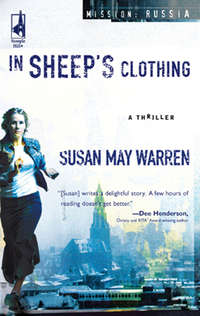
In Sheep’s Clothing
Susan May Warren

www.millsandboon.co.uk
A NOTE FROM THE AUTHOR
King David is one of my favorite biblical heroes. Throughout the Psalms and through his mistakes and victories, he displays emotions I can embrace. And, whether he is dancing (half-naked!) or moaning that his heart has turned to wax, he displays a faith in God that surprises me. David made no bones about it—he needed God. God was his entire life, and he had no problem saying, “God, I’m your guy…so please come and help me!”
I have to admit, David’s brazen faith astounds me. It wasn’t that he was without sin (murder and adultery come immediately to mind). So where did this confidence come from?
His confidence comes from God’s unfailing love—which He proves to David, and to His chosen people. Psalm 22, verse 24, gives me hope that this confidence can be mine, also. “For He has not despised or disdained His afflicted one; He has not hidden His face from him but has listened to his cry for help.”
David didn’t deserve God’s love. He didn’t earn it. He simply needed it…and received it.
I wrote In Sheep’s Clothing in Russia, back in 1998 when we were missionaries there. At the time, I had four children under the age of seven, was homeschooling and lived on the ninth floor of a high-rise apartment that had water pressure only from midnight to 4:00 a.m. (Which meant I did my laundry and dishes in the middle of the night.) I had no telephone (no e-mail!), no car, and my husband worked over an hour away in a tiny village. I felt a little…um…overwhelmed.
I’ll never forget the day my husband came home, weariness and distress in his eyes. He told me a horrific tale of espionage and a KGB plant in the church where he’d been working. Right then, the seeds for In Sheep’s Clothing were sown, along with a deep grief over what the members of that church had suffered at the hands of their so-called pastor.
Also living in Russia at the time were two other missionaries. Not long after we moved there, they were murdered. This rocked my world. Here I was, “suffering” for the Gospel, and everything I’d counted on (namely, the safety of my family in this foreign land) seemed to crumble.
I was tired and afraid. And, like Gracie, or Vicktor, I had my own gaggle of “demons” whispering lies into my ears. Like “You were foolish to bring your children so far overseas.” Or “What do you hope to accomplish?”
Truly, I was in a place of need. What could I do to make my family safe and leave a lasting impression on my world, when it seemed that darkness stalked me on all sides?
Nothing—except trust the Lord. Writing this book became a catharsis for me. I learned, as Gracie and Vicktor do, that God’s favor (or His forgiveness) can’t be earned. It’s a gift. And in order to receive it, all I have to do is need Him. I learned that God was my strength when life felt too big, or too dark. And I learned that with God there is always hope.
That’s the secret David had. The belief that when he got on his knees and asked, God would provide.
God provided in so many ways as I wrote. I am deeply grateful for the support and encouragement of the following people:
Karen Solem—for finding a home for In Sheep’s Clothing! Thank you for your part in making this dream possible.
Krista Stroever and Joan Marlow Golan—for your enthusiasm and for believing in me. Krista, your letter (even without the stickers!) is one of my all-time favorites!
Constantine Utuzh—Now in Heaven. A man of conviction and passion, he made me realize how important small acts of kindness can be.
The Far East Russia CoMission teams from 1994-1998. (Especially the ladies!)—The friendships forged during these times made living in Russia a billion times easier.
Alexi and Cindy Kalinin—I can’t help but think of you when I read Gracie and Vicktor’s story. Your friendship is among my most cherished.
Ellen Tarver (and Daniel and Tom!)—Thank you for reading In Sheep’s Clothing, and later for saving me from being locked in my room all day. Your friendship is such a blessing.
David Lund—Thank you for reading In Sheep’s Clothing, and for believing in me even when I had my doubts. You’re such a blessing to me.
Andrew and my sweet children—For all those moments when I read aloud over dinner, or shooed you away with a death-glare, or talked plot endlessly…thank you for listening politely, for understanding and most of all for believing in my dreams. I’m so grateful for you.
Contents
Prologue
Chapter One
Chapter Two
Chapter Three
Chapter Four
Chapter Five
Chapter Six
Chapter Seven
Chapter Eight
Chapter Nine
Chapter Ten
Chapter Eleven
Chapter Twelve
Chapter Thirteen
Chapter Fourteen
Chapter Fifteen
Chapter Sixteen
Chapter Seventeen
Chapter Eighteen
Chapter Nineteen
Chapter Twenty
Chapter Twenty-One
Chapter Twenty-Two
Chapter Twenty-Three
Chapter Twenty-Four
Chapter Twenty-Five
Chapter Twenty-Six
Chapter Twenty-Seven
Chapter Twenty-Eight
Chapter Twenty-Nine
Chapter Thirty
Discussion Questions
Prologue
If the train trudged any slower into the station, American missionary Gracie Benson would be dead by sunset. Five minutes. Twenty steps. Then she’d be safely aboard.
God obviously wasn’t on her side. Not today, at least.
Then again, He certainly didn’t owe her any favors. Not after her fruitless two years serving as a missionary in Russia.
Gracie purposely kept her gaze off heaven as she hunched her shoulders and pulled the woolly brown scarf over her forehead. Please, please let this Russian peasant guise work. The train huffed its last, then belched, and Gracie jumped. Hold it together, Grace. Long enough to fool the conductor, and find her berth on the train for Vladivostok. Then she could finally slam the compartment door on this horrific day—no, on this entire abysmal chapter of her life. So much for finding redemption as a missionary in Russia. She’d settle for getting out of the country alive.
She tensed, watching an elderly man dressed in the typical Russian garb of worn, fake leather jacket, wool pants and a fraying beret gather his two canvas duffels and shuffle across the cement platform. Would he recognize her and scream, “Foreigner!” in the tongue that now drove fear into her bones?
Without a glance at her, he joined the throng of other passengers moving toward the forest-green passenger cars. A younger man, dressed mafia-style in a crisp black leather jacket and suit pants, fell in behind the old man. Gracie stiffened. Had he looked her way? Help me, Lord!
Just because God wasn’t listening didn’t mean she couldn’t ask. The irony pricked her eyes with tears. This morning’s events had whittled down her list of trustworthy souls in Russia to a fine point. She’d give all the rubles in her pocket for someone like her cousin, Chet, FBI agent extraordinaire, to yank her out of this nightmare into safety.
Not that she should give any man a chance to introduce himself before decking him. She’d been down that road once. Never was too soon to trust another man within arm’s distance.
Gracie shuffled forward, in keeping with her disguise of tired village maiden. She clutched a worn nylon bag in one hand—her black satchel safely tucked inside—and fisted the folds of her headscarf with the other. As the smell of diesel fuel and dust soured the breathable air and cries of goodbye from well-wishing relatives, grief pooled in Gracie’s chest. Poor Evelyn.
Biting it back, Gracie cast a furtive glance beyond the crowd and caught sight of a militia officer. The soldier, dressed in muddy green fatigues, an AK-47 hung over his shoulder like a fishing basket, leaned lazily against a cement column, paying her no mind.
Hope lit inside her. Freedom beckoned from the open train door.
Stepping up to the conductor, she handed the woman her wadded ticket. The conductor glared at her as she unfolded the slip of paper. Gracie dropped her gaze and acted servile, her heart in her throat. Please, please. The conductor paused only a moment before punching the ticket and moving aside.
The train resonated with age in the smell of hot vinyl and polished wood. The body odor of previous passengers clung to the walls, and grime crusted the edges of a brown linoleum floor. Gracie bumped along the narrow corridor until she found her compartment. She’d purchased a private berth with the intent of slamming the door, locking it from inside and not cracking it open until she reached Vladivostok. The U.S. Consulate, only ten minutes from the train station, meant safety and escape from the nightmare.
Escape from the memories. Surely Evelyn’s killer wouldn’t follow Gracie to America.
Tossing her satchel onto the lower bunk, Gracie untied the headscarf and shook out her shoulder-length damp hair. Blowing out a deep, shuddering breath she willed her pulse to its regular rhythm.
So maybe she’d been too hard on God. He had gotten her this far. Perhaps He hadn’t turned his back, completely, on Gracie Benson, a.k.a. foreign-missionary-flop-turned-fugitive.
Gracie grabbed the handle and began to roll the door shut.
A man’s black shoe jammed into the crack.
“No!” Grace stomped on it with her hiking boot. The assailant grunted and yanked his foot back. She threw all her weight into the door. “Get away!”
An arm snaked through the opening and slammed the door back, nearly ripping off Gracie’s hands. She stumbled back onto the bunk, fumbled for her bag.
How had he found her? “Get out!”
Gracie’s heart lodged in her throat. The man was huge. Dark eyes, knotted brow, muscles and menace in a tweed jacket, he stomped into her compartment.
She screamed and flung her bag at him with all her five-foot-two-inch, one-hundred-and-twenty-pound strength.
He sidestepped and caught it.
God, help me please, now. Gracie scuttled to the farthest end of the berth. “Get out!”
He reached inside his jacket—for a knife? She kicked at him, panic blurring her vision, and pain stabbed her foot as she connected with his shin.
He winced. “Calm down!”
English? The accent still sounded Russian.
She jerked. Sucked in a breath. “Get away from me.” She hated the shakiness in her voice. What had happened to six months’ worth of self-defense classes?
“Are you Grace Benson?”
He knew her name. Every muscle turned to liquid. She pushed against the far wall, vowing that this time it would be different. If he touched her, she’d go down bruised and kicking and clawing his eyes out.
“I’ll take your silence as a ‘yes.’”
Was that a smile on his face? She calculated the distance to the door. Trample over him. Run!
“I’ve been searching all over for you,” he said, with a sigh of exasperation.
I’ll bet you have. Had he taunted Evelyn before he slit her neck, too? Her breath left her.
His blue eyes glinted, as if in victory.
Where was the scream that filled her throat? Why, oh why, in times of terror, did she go into lockdown? She shot a glance into the hall.
Where was the conductor?
Her assailant turned and slammed the door closed, cutting off her escape.
Gracie went cold. Oh God, this is it! Please help me!
She watched the man drag a hand through his hair as if contemplating her demise. Would he slit her throat? Or did he have different plans? Not again.
She erupted like a woman possessed and dove at him. “Get away from me!”
He grabbed her forearms in an iron grip. “Stop it! Please. I’m not going to hurt you, trust me!”
She wrenched away from him. Fell back onto the bench seat. Her breath burned her lungs.
“Perestan!” He shook his head as her roaring pulse filled her ears. “My name’s Vicktor. I’m with the KGB and I’m trying to help you.”
Chapter One
Twenty-four hours earlier
Khabarovsk, Siberia
Nickolai Shubnikov knew how to whittle away his son Vicktor’s pride with the skill of Michelangelo—one agonizing chip at a time.
“Whoa, Alfred! Slow down.” Vicktor Shubnikov wound the leather leash twice around his grip and dug in, hoping to slow his father’s Great Dane/Clydesdale. The animal dragged him like a nuisance as he plowed through the row of street vendors, chasing an errant smell.
Two years ago Vicktor might have labeled vet duty sweet revenge. Today he called it atonement.
Vicktor dodged a babushka hawking a bouquet of lilacs, jumped another pedaling sunflower seeds, and skidded to a halt before the metal canister belonging to a wrinkled woman selling peroshke. The fried sandwiches laced the air with the odor of grease and liver. Alfred shoved his wide Dane snout into the sandwich bag.
“Get your beast out of here!” the woman cried. She whacked at Alfred, who didn’t even flinch. Vicktor, however, felt her land a hearty blow on his shoulder.
“C’mon, you mutt.” Vicktor grabbed Alfred’s fraying collar and yanked him away. He thrust the woman a ten-ruble note. She swiped it from his hand.
“Why do you do that to me?” They half trotted down the sidewalk, Vicktor hunched over at the waist and trying to match Alfred’s gait. The dog’s black jowls flopped and his saggy eyes gave no indication of remorse.
Penance. He cursed the impetuousness that had led to this moment. If only he’d been smarter, faster, wiser, he’d be in Lenin Park on this sunny Sunday, slapping shots against Roman, outscoring the former wing. Or maybe he’d be at Yanna’s volleyball game. The Khabarovsk Amur volleyball team didn’t need help from their fans to bury their opponents—he went for the pure joy of watching Yanna’s power spike.
If only David could see her now.
He checked his watch. Noon. Hopefully Evgeny would be in the office. He hadn’t called ahead, but the vet kept normal business hours, and Sunday had been a working day since Stalin outlawed the religious day of rest some sixty years earlier.
He muscled the Dane toward the dirt path that led to Evgeny’s office. Vicktor had to admire his friend for carving out his dreams into a private practice. He and Vicktor had chewed away long hours in high school, concocting ways to free the laboratory mice from Tatiana Ivanovka’s biology classroom. Between the pranks, however, Evgeny had revealed the love of medicine inherent to true physicians. Why he had gone into animal medicine still baffled Vicktor. Then again, Vicktor had sworn he’d never join the militia, and look where he had ended up.
Evgeny’s office, a tiny green log house, sat lopsided and forlorn in the shadowy cover of three nine-story concrete high-rises. Vicktor turned up the dirt path and shivered as the sun passed behind a building. He shoved his free hand into his leather jacket pocket, wishing he hadn’t taken out the lining. That morning, during his run, the wink of the sun against a cloudless sky and the fresh breeze smelling of lilac had lulled him into believing winter had finally surrendered to spring in Siberia. He’d jogged home, unzipped the wool lining from his jacket, thrown his shopka on the top shelf and kissed winter goodbye. Now, as he approached the office, his lips felt parched from the cold, and a faint musty odor curled his nose, like the smell of moldy clothes sitting in old snow.
The Dane jerked out of Vicktor’s grip and he tripped, glared at the animal and picked up his pace. Of course Alfred would be anxious to see Evgeny; the vet had treated him for nearly ten years.
Two paces before the door, Alfred skidded to a halt, sat on his haunches and growled.
“It’s just a checkup, pal. Cool it.” He patted the dog’s head. Still, the way the door hung ajar raised the fine hairs on the back of Vicktor’s neck. “What do you see?”
Alfred growled again, a threatening rattle in his ancient throat, and curled his lips, showing canines.
“Tiha. Quiet, boy,” Vicktor commanded. He paused, took a step toward the door and pushed. The door groaned, as if in warning.
Vicktor recoiled as the smell of rotting flesh hit him. He covered his nose.
Alfred whined.
“Stay,” Vicktor rasped, and looped the leash around the door handle. Gulping a breath, he stepped across the threshold. It took all his military training not to gag at the odor that poured from the room.
“Evgeny?” Vicktor surveyed the reception area. Broken glass from the smashed display case crunched under his feet, a cash register lay overturned on a ripped vinyl chair. Whipping out a handkerchief, Vicktor cupped it over his nose and tiptoed around broken vials of animal narcotics on his way to the examination room.
“Evgeny? It’s Vicktor.”
Silence.
In the examination room, the leather bench where Evgeny examined Alfred on occasion had been slashed, the stuffing pushing through the cut like a festering wound. A jumble of medical utensils gleamed like weapons of war where the sun licked the wooden floor.
He backed out, a sick feeling welling in his gut. He crept toward Evgeny’s office, rueing the creak of floorboards. When he swung the door open, Vicktor’s blood ran cold.
Shards from the ruined glass cabinet littered the carpet. An emptied drawer lay upturned over its contents, a foot-size crater in the middle. Notebooks and ledgers, slashed into pieces, were strewn like stripped leaves. The squash-yellow area rug bled with the black and red dye of crushed pens.
Vicktor ducked back into the hall. “Evgeny?” He heard panic in his voice. He purposely kept few friends, but Chief Veterinarian Evgeny Lakarstin was one of them. With the exception of Roman and Yanna, and two Americans he didn’t acknowledge to his coworkers, he depended on Evgeny. He counted him as the type of paren with whom he could share a sauna and shed a few secrets while he sweated.
And in Vicktor’s world, trust wasn’t an easily acquired commodity.
Vicktor headed for the back door leading to the kennels. Even from the hall, the eerie silence gave him chills—no dogs barking, no plaintive mewing.
Two steps before the back entrance, he spied another door to his left. He’d thought it a closet before, had even asked Evgeny about it once. The tall vet had shrugged and said, “Supplies.”
Vicktor’s eyes narrowed, instincts firing. He grabbed the handle. With a squeak the door opened.
He grabbed the door frame and hung on with a white fist as he tore his gaze away, wincing.
Etched in his mind, however, was the image of Evgeny lying in a pool of his own russet-colored blood.
Three hundred people clapping, cheering, for her, Gracie Benson. It just might have been the worst moment of her life.
How she longed to find a safe place and hide from tomorrow.
Gracie stood on the platform in front of the church, listening to the congregation applaud her for two years of missionary work, and felt like a sham. She was a joke, an embarrassment, a failure, and no amount of applause or kind words from Pastor Yuri Mikhailovich could erase that fact. She swallowed hard. She just hoped God wasn’t watching.
She’d had her second chance. And had blown it.
Maybe she could get her job back at Starbucks. She made a mean mocha latte. Her unfinished English degree felt light-years away. She probably couldn’t recite a Robert Frost poem even if the KGB—no, the FSB; wasn’t that their new name?—put her under the bright lights and stuck needles under her toes.
Pastor Yuri shook her hand, his meaty grip slightly sweaty in hers. “Thank you, Gracie, for your hard work. We won’t soon forget it.” His brown eyes, deep and holding a lifetime of spiritual wisdom, settled on her.
She chilled. No, they would forget the vacation Bible school, the children’s bell choir, the Sunday School classes she taught. Despite her two years serving as a short-term missionary in Far East Russia, as soon as her replacement flew in, they would erase Gracie Benson from their minds.
Whereas she would cling to them forever.
Maybe not all of them, but certainly Evelyn and Dr. Willie Young, her coworkers, and definitely Andrei Tallin, the sweet man with nearly palpable affection staring at her from the front row. She tried to ignore the ache in his chestnut-brown eyes. She’d turned down his proposal for marriage only a week ago, and felt like a jerk. The guy had gone above and beyond his job as her chauffeur these past two years—translator, bodyguard, friend. She’d nearly given her heart to him.
Nearly.
It would be a long time before she trusted a man again. A lifetime, perhaps.
Of all her friends, she would definitely remember Larissa. Larissa Tallin, with honey-sweet brown eyes, tawny hair cut like a man’s, a smile so warm it made Gracie reevaluate every friendship she’d had back in America. The woman had even been thrilled with the cross pendant Gracie had given her, despite Larissa’s atheism. Larissa may have been ten years her senior, but Gracie knew she’d never forget the woman who’d become as close as a sister.
It was because of Larissa that Gracie wept into her pillow every night. What was wrong with her that she couldn’t even lead her best friend to salvation?
Pastor Yuri finished his farewell speech and again reached for her hand, and Gracie thanked the Lord for making her from stoic Scandinavian stock. She managed a convincing smile.
Why, oh why, did Russia have to obey their visa laws? It wasn’t like they took any other laws seriously.
The clapping died as she found her seat next to Dr. Willie and Evelyn, career missionaries and the lucky ones who got to stay. The successful missionaries who changed lives and made a furrow in the eternal landscape of the soul.
Gracie’s heart felt like it weighed a million pounds and sweat beaded her brow as she stood for Yuri’s presermon prayer. The sun poured through the lace curtains of the log church, heating the room like a sauna, despite the lingering chill outside. Still, most babushkas huddled under three layers of wool and headscarves, relying on the masses of clothing as a bulwark against an early death. Gracie shifted in her denim dress, feeling rumpled, hot and empty. She’d leave more than her emotions flopping and bleeding in the former Soviet Union. She’d leave her hopes for a new Gracie. Her dream for a fresh start.
She sat, and Pastor Yuri began his sermon. Yuri’s venerable presence on the podium as he gripped the lectern and moved into his impassioned speech reminded her that he had been her champion. He’d stood up for her a year ago when her one-year visa expired, working some behind-the-scenes magic that allowed her to stay. He’d been encouraging, and, although she couldn’t understand everything he said, she felt as if he somehow appreciated her. His handshake and solemn eyes had to mean something.
She might have impressed the pastor, but he didn’t know the truth. Unless over the next five days before her departure her ministry took a hundred-and-eighty-degree about-face and she turned into Billy Graham or D. L. Moody, she’d be returning to the States the same scarred failure she was when she left it. Only this time, she’d be out of second chances.
As if reading her thoughts, Evelyn reached out and wrapped her soft, wrinkled hand around Gracie’s. “You’ll be okay, honey,” she whispered.
Gracie looked away, blinked tears.
Unless she figured out a way to stay and keep fighting for redemption, not likely.
The fact the militia had sent Chief Arkady Sturnin in response to Vicktor’s call meant two things. Either they’d forgiven Vicktor for the past, or the chief was the only one in the office.
Yeah, like Vicktor had to guess at the right answer.
“He was a friend of yours?” Arkady’s cigarette bobbed between his lips as he talked. The ash dropped onto the linoleum and sizzled in a muddy puddle.
Scowling, Vicktor waved the smoke away and watched the forensics team prepare Dr. Evgeny Lakarstin’s remains for the morgue. Although every door in the clinic had been propped open, the odor from the wreckage of medicines embedded the blue walls, the muddy wooden floor, the cracked plaster ceiling. Nausea dogged him as Vicktor watched the mortal remains of his friend manhandled.
“Yeah.”
“Funny no one found him before this.” Arkady’s bulldog face jiggled when he spoke. “Did you have an appointment?”
Vicktor worked a nagging muscle in the back of his neck. “No, I just stopped by. My father said Alfred’s been a bit droopy.”
“With a mug like that, doesn’t he always look droopy?” Arkady guffawed at his joke.
Vicktor clenched his jaw.
“Have you been to the kennels?” Arkady asked, his laughter dying.
“Yeah. Right after I called you. It’s not pretty. Every animal has been gutted.”
Arkady toyed with his Bond cigarette, squashing fuzzy eyebrows into one wide brush as he scanned the small clinic.
“What do you suppose this is?” The old man bent over to finger a wad of soggy papers, grunting as he went down, sounding every bit of his nearly sixty years.
Vicktor winced with remorse. Arkady had aged a century since the Wolf incident. Another residual casualty, another cop paying for Vicktor’s impulsiveness and reckless pride.
“I don’t know,” Vicktor answered thinly as he stalked back to the lab.
A fog of saline and alcohol hung low and heavy. Vicktor put a hand to his nose as he stood in the doorway watching technicians gather evidence from the black lab table and smearing it on glass slides. Every vial had been smashed, and a gooey amber liquid covered the table like syrup. What had Evgeny been cooking up in here?
“Vicktor Nickolaiovich.” Thankfully, the technicians still gave him respect, using his full name to address him. The technician motioned to him, then crouched behind the lab door.
Vicktor crossed the room and knelt beside him, arms hanging over his knees. The man peered into a thin metal bucket.
“What are we looking at?”
“Ashes.” The tech wiggled the can. The orange peels at the bottom shifted and Vicktor made out a thin layer of charred paper, curled as if peeled from a block of chocolate.
“What is it?”
“Looks like the remnants of a tetrad, the kind professors use to record lab data.”
A notebook. For experiments? Vicktor rubbed his chin and rose. Why would Evgeny burn his lab notes? Turning, he glimpsed another tech slip something into his pocket. “What are you doing?”
The man whirled. Reed thin, with bloodshot eyes and scaly skin, he blanched. Vicktor grabbed him by the collar and shoved the tech against the sticky lab table. Glaring into his eyes an inch from his nose, Vicktor reached into the man’s pocket and pulled out an unbroken vial. Novocain.
“Zdraztvootya? I believe that’s called stealing.”
The tech’s Adam’s apple dipped twice in his neck. “He doesn’t need it anymore.”
The room went quiet. Vicktor let the kid go and blew out a hot breath. The tech’s mottled face, glistening with a scrim of sweaty fear, told Vicktor he wore what Roman would call his “tiger” face. Great. Just when he thought he had a clamp on his emotions.
Good thing Roman wasn’t here. Though perhaps, if he were, Vicktor wouldn’t feel like the only uninvited guest at a birthday party. The militia stepped up and took notice whenever a COBRA walked into the room—the training the FSB received to become the special agents who fought the mafia guaranteed respect.
Or better yet, the entrance of David Curtiss, Green Beret and Delta Force captain, would get their attention. Only, he couldn’t shout that little alliance across the room, could he? Sometimes Vicktor felt like David, better known as Preach, was in his head, his little voice of reason, and he would admit, only to himself, that he needed Preach’s words of wisdom way more than he’d thought ten years ago.
Who knew that a pickup game of hockey, a fistfight and an American-style pizza would lead to friendships that felt tethered to Vicktor’s very soul?
Sometimes he wondered if Roman and David had planned it that way.
Vicktor set the vial in a tray on the examining table and shot the tech a scalding look. “Get to work.”
Stepping into the hall, he fielded a frown from the Bulldog.
“Spequietsye, Vicktor. This isn’t America. Loosen up.”
Arkady’s voice, although low, tightened Vicktor’s gut. He swallowed a retort, closed his eyes and sighed. “Sorry.”
Arkady was right. He didn’t need a new generation of enemies in the militia, and another stunt like that could route his next urgent phone call straight to the morgue.
Arkady tapped his cigarette. The ash died to gray before it hit the floor. “Your shirt is too tight, Vicktor. You’ve changed. Ever since you got back from that stint in America, nothing is good enough for you. You see everything through American eyes…American cop eyes. Black and white. Don’t forget you are Russian. The law has shades of gray here.”
A muscle tensed in Vicktor’s jaw. Arkady was from the old school, the days of propaganda and the Cold War, the easy days when the bad guys were easily identifiable—they wore red, white and blue.
It hadn’t helped his relationship with his former chief when he had accepted the six-month internship in America. The friendship had taken further serious hits when he defected to the FSB, a.k.a. the former KGB, six months ago. The chief just didn’t get it—after the Wolf incident, the blunder of Vicktor’s militia career, Vicktor had to rescue himself from early retirement. Besides, the FSB had been chasing him like a hound since his training in the States, and after Roman had smoothed over the incident, they’d practically thrown him a welcome bash.
“We’re on the same side, you know,” Vicktor said.
Arkady drew on his cigarette as if he didn’t hear him.
Vicktor suddenly wanted to dump this entire thing in Arkady’s lap. A lifetime of chasing the scum of society had left an ugly pit in his stomach. He preferred the intellectual sparring of the international crimes unit where he now worked. But the memory of Evgeny, all smiles and jokes, stripped his anger, leaving only aching.
He needed answers. He wasn’t about to disappoint another person he cared about, especially posthumously. He’d find Evgeny’s killer even if he had to wrestle his pride into hard little knots.
Vicktor dredged up a respectful tone. “Yes, sir.”
Chapter Two
Vicktor banged out of his apartment building and spied Roman leaning back against his building, arms akimbo, wearing a stocking cap, a running suit and a smile.
“Missed you last night.”
“I had to work.” The last thing Vicktor wanted to remember was the fact he’d missed out on a group chat. Like he had friends to spare. Vicktor made a face at him and began stretching from side to side. “I found Evgeny Lakarstin dead in his lab yesterday.”
Roman went silent at that, his mouth in an O.
“I was up until midnight answering questions and writing reports.”
“Fun. Well, then I hate to be the one to tell you Mae’s in town. She’s pulling transportation duty for some army brass. She told me to say hi to ‘Stripes.’”
Okay, that hurt more than he would have expected, even with Roman’s warning. “Oh, really?” Just what he needed to make his day—the memory of Mae Lund, her right hook against his chin, the fact that she was over him enough to say hello, and the knowledge that she probably looked better than he had a right to imagine. Only she knew how much he needed her opinion, how he’d relished the nickname she gave him.
“She made captain, by the way. She’s flying DC-10s.”
Good girl. Mae had earned her stripes through grit and spunk, and in the active, objective part of his brain, he couldn’t blame her for not falling for the first Russian to flex his muscles. Even if he had done it saving her life.
“I thought she was on Search and Rescue.”
“Not when she can speak Russian. They have her translating, too. By the way, David was online, as well.”
The rising sun peeked through gaps in the tall buildings. It turned crisp, slightly frozen street puddles bright platinum and hinted at a beautiful spring day.
“Let’s run,” Vicktor snapped. He didn’t know what irritated him more. That he’d been up until all hours describing Evgeny’s death scene for his old militia cohorts, that he’d slept with one-hundred and thirty pounds of Great Dane on his face, or that he’d missed a chance to check in with the only people who knew the nightmares that haunted him.
Especially after a day when those nightmares seemed particularly fresh and brutal.
Roman scrambled to keep up as Vicktor shot down the sidewalk toward the wide greening boulevard between Karl Marx Street and Lenin Street. Roman, of course, wouldn’t think of asking him to slow down, and that fact kept Vicktor at a speed that pushed his heart rate into overdrive.
He didn’t care. Two weeks into his summer running habit, he needed an intense workout to drive Evgeny’s corpse from his mind. Internal snapshots of Evgeny had pushed sleep into the folds of eternity.
He hardly noticed Roman behind him the entire kilometer to the river.
The Amur River pushed yellow foam and brown ice in thick currents north to its Pacific mouth. Vicktor let the snappy wind comb his hatless head and chill the sweat on his brow. Next to him, Roman gripped his knees and gulped frosty breaths. Remorse speared Vicktor. He shouldn’t wrestle his grief during Roman’s workout time.
“Sorry, Roma,” he muttered, stopping and leaning against a stone wall that separated the beach from the boardwalk.
Roman straightened, his forgiveness written in his signature lopsided grin. “Kak Dela, Vita? I’d say from this morning’s sprint we aren’t simply stretching our muscles. You trying to exorcise some personal demons?”
Vicktor looked away from Roman’s intuitive blue eyes. “You’re starting to sound like Preach.”
“I’ll take that as a compliment. Tell me what’s up.”
Vicktor turned, braced himself on the fence and leaned in, forcing screams up his calf muscles. “It’s nothing. I’m just tired.”
Roman crossed his arms and propped a hip on the stone. Wind whistled down the boardwalk, sifting through Vicktor’s Seattle PD sweatshirt. He shivered.
“Tired?” Roman echoed after a bit. “Tired of what? Grieving your mother? Trying to make things right with your pop?”
Vicktor tossed him a frown. “You are definitely sounding like Preach, or maybe Mae. Stop psychoanalyzing my life. I’m just…tired.” He stared at the dirty Amur. “Sometimes I just wonder if it wouldn’t have been better if it had been me who’d been shot instead of my father.”
“You gotta go forward, pal.”
“Yeah. Well, Evgeny sure isn’t going forward. I’m going to find his killer.”
Roman nodded. “I know. But when you do, you’re still going to be exhausted.”
Vicktor shook his head. “I know where you’re going with this, and I’m telling you before you start, ditch the God-talk. I’m not interested. You know God and I have issues. The bottom line is God isn’t going to solve my problems. Ever.”
“Calm down, Stripes.” Roman held up his hands in surrender. “As your friend, I get to say that you’re wrong, but I’m on your side anyway.”
“Let’s run.” Vicktor jogged back to the boulevard. He heard Roman fall in beside him and set a reasonable pace. They ran in silence, listening to the wind rustle through the trees and traffic fill the streets.
It was just like Roman to foist his religion into Vicktor’s problems. He and David had been systematically ambushing him for years.
They just didn’t know how it felt to experience God’s cold shoulder. He’d tried the God route, once upon a time, and sorry, no thanks. Not that he’d ever mentioned his trial run with God to Roman or David. He’d rather have his tongue skewered slowly.
He was going to find Evgeny’s killer without God’s help. It just mattered too much to trust to a fickle God who did…or didn’t…come through.
They ran in rhythm, vaulting in one accord the craters in the broken sidewalk and murky puddles of mud. Crumpled paper cups and refuse frozen by winter’s embrace edged the path. Vicktor wondered if their national disregard for cleanliness irked Roman as much as it did him. Roman, too, had been to America, and Europe and even Japan once, and had seen the swept streets, the manicured lawns and the lush gardens. Nevertheless, Roman was forever flinging an easygoing smile into his assessment of life in Russia. Vicktor wondered if anything ever stymied his optimistic friend. Roman and Yanna were always telling Vicktor to loosen up, as if, somehow, that would help him find a new life for his handicapped father. Or help him wrestle the guilt of knowing he’d condemned the man to his threadbare armchair.
So maybe his run was about more than exorcising Evgeny’s ghost from his mind. “Tell me about your latest love, Roma.”
“Oh yeah, it’s hot. I spent yesterday at the gym, arguing with the dead weights, and the night before having a long and personal chat with a bowl of ramen noodles. I’m the man.” He shook his head. “Sorry. My long run as a single guy is in no imminent danger of ending.”
“You expect too much, Romeo.” Having stood on the sidelines watching Roman trot through numerous short-lived relationships, he knew his friend wouldn’t stay single long. The man was a sponge for women, with his tousled brown hair, thick muscles and easy laughter. It was Roman who couldn’t seem to figure out what he wanted.
“All I expect is a woman who cares about honesty and living a life for God.”
“I’m not sure, but I think there is a rule about nuns getting married.”
Roman elbowed him, and Vicktor dodged a puddle, laughing.
“I’m serious. Those types of women don’t exist. Sure, you might find a Godly woman—look at Mae. How about Sarai? You had a good thing going with her back in college. But even those women have their hidden agendas. In general, women can’t be trusted.”
“Ouch. That’s a pretty cynical statement, considering two of your best friends are women.” Roman veered around a meteorsize crater in the middle of the sidewalk. “Seriously, though, you don’t trust women? Mae, Yanna?”
“I’m not dating Mae or Yanna. Nor will I. I learned from Mae that dating warps friendship. Love is a game for a woman—one designed to confuse and decimate men.” He gave a mock shudder.
Roman didn’t laugh. “Nice. You’re a real walking Don Juan. I’ll bet the ladies love hanging around you.”
Vicktor ignored him and he went on. “Sorry, but that’s the truth. Remember what Sarai did to you? She led you on, then blink, walked out of your life without even a goodbye. I’d think you’d be my champion.”
Roman’s hand clamped on his shoulder, yanking him to a halt. His friend’s eyes sparked, and Vicktor recoiled, suddenly aware he’d pushed Roman too far.
“You couldn’t be more wrong, Vicktor. About God. About women. About Sarai. I regret losing her more than you can guess. But I don’t blame the entire female population for my broken heart.”
“Sorry.” Vicktor shrugged off Roman’s grip, feeling like a jerk for mentioning Roman’s first love.
Roman inhaled an unsteady breath, his blue eyes scrutinizing his friend. “I don’t know what happened to you yesterday, but you need to get a hold of your fear of trusting people. Trust is a choice, pal. No man is an island, and, unless you choose to believe in people, you’re going to live a pretty chilly and barren life.”
Roman’s words felt like a sucker punch. Vicktor already lived a desolate life, his best friends being attached to a modem. Yes, he had Roman and Yanna, but more often than not he poured out his frustration to a dog he didn’t even like. “That’s not fair. I trust you.” He broke their gaze.
“And I trust you, my friend. But you need more than me and Yanna, Mae and David. You need the Savior. And you need the love of a good woman.”
“Just like you do?”
Roman smiled. It eased the moment, as well as the band around Vicktor’s chest. “Da.”
Roman released his grip and they fell into step, cooling down from their run with a brisk walk. The winking sun had skimmed the tops of the apartment buildings and the wind was dissected by the wad of budding trees along the boulevard. The smell of freshly baked bread swirled on the crisp air. Vicktor’s stomach roared.
“That animal sounds hungry.” Roman smirked.
Vicktor ignored him, cut off the path and tramped across the stiff grass toward the Svezhee Bread Factory.
Five minutes later, two loaves of bread tucked under his arm, he rejoined Roman, who waited on the sidewalk, eyebrows high, tapping his foot.
“Gotta feed Alfred,” he mumbled.
Roman laughed. “By the way, I found a woman for you. Someone honest and not confusing in the least.”
“What?” Vicktor frowned.
Roman jerked his head, indicating a blonde heading in their direction. Her hands were fisted in her coat pockets, her legs, pulling against the hem of her denim skirt as she strode. Her vivid scowl and blazing eyes broadcast her fury as she stalked toward them.
“Just your type, Vicktor,” Roman said, voice low, teasing.
Vicktor’s eyes roamed over the lady, for some reason empathizing with the frustration written on her face.
Five steps away, she glanced up and met his eyes. Green. Intense. Vulnerable. His heart caught at that last impression and he barely remembered to stumble backward to let her pass.
“Da. Just my type,” he echoed as he watched her march down the sidewalk.
Gracie felt the man’s stare on the back of her neck and picked up her pace. Way to go, Gracie. Ex-pat rule number one—don’t make eye contact with a man in Russia. Or anywhere, for that matter.
She distanced herself from the gawker on the sidewalk, her heartbeat slowing. Poor guy did look frayed. His pensive blue eyes, a furrowed brow, his black hair in spikes and perspiration running down his unshaven jaw. Her heart twisted in response. She knew all about feeling frayed, worn down, defeated.
A frosty wind gusted through her thin raincoat and she shivered.
The smell of fresh bread wafted after her as she beelined to the bus stop. She would have dearly loved to pick up a fresh loaf for Evelyn, but thanks to Leonid, her absent chauffeur, she was hoofing it all over Khabarovsk. Leonid had better have a wallop of a reason for being late three times in a row. She once again wished for Andrei, but he was already assigned a new post somewhere. Thank the Lord for Larissa, who had come into work at Aeroflot Travel early to meet her. Her travel agent friend even bumped her into first class.
“Your flight is at four p.m. Be there by one p.m. and don’t be late,” Larissa had said, melancholy in her eyes. “There’s only one flight a month out of here now, and it’s packed.”
Friends like Larissa, and her cousin, Andrei, would be difficult to replace.
Especially since she was leaving, forever.
Gracie’s throat closed and she didn’t dare look at heaven. She knew she’d blown it. The reality was mortifying—a missionary who had never led someone to the Lord. Why, she couldn’t even convince her best friend, let alone the masses. Larissa’s heart was as hardened to the gospel as a rock on the Lake Superior shoreline.
With five days left, the time bomb of a ticket in Gracie’s pocket ticked away.
She joined a handful of old women waiting for the bus, their wide faces peeking out from fuzzy gray scarves wound twice around their heads. Their desolate eyes matched their headgear. Life took all the guts the elderly could muster, especially on gray spring days.
As a grimy orange bus chugged up to the curb and coughed exhaust, Gracie fished around in her coat pocket and unearthed five rubles for fare. She climbed aboard and squeezed in beside a grizzled old man. The vodka on his breath nearly knocked her to her knees as she snared an overhead bar.
She hoped Evelyn was still home. Her boss wasn’t expecting her, but Gracie dearly needed a fresh e-mail from her mother to ward of the feeling of dread that hovered over the morning. She gritted her teeth against the breath of the toothless rummy, and hung on while the bus lurched toward Victory Square. The bust of Lenin towered over the cobblestone parade grounds, a heap of bouquets wilting at the base. Only four days earlier she had shivered on the balcony of the Youngs’ sixth-floor apartment and watched Russia revel in the old days of the might and power of the Cold War. They’d pushed out the old arsenal, including tanks and Katusha rocket launchers, and had assembled them in the square, crushing the stones to dirt. She had to admit the sound of a thousand or so male soldiers singing the Russian national anthem had sent pangs of patriotism through her. Indeed, there were times she dearly missed America.
Ten minutes later, she felt nearly soused herself, courtesy of the wino beside her. She gulped fresh air as she stumbled off the bus. Approaching the Youngs’ building, she noticed Leonid’s blue Zhiguli was not parked in front. She’d held out a slim hope he’d actually check in with Evelyn, not relishing the day hiking around town. Still, as much as she needed a lift she had to admit to some relief. The guy gave her the creeps. He ogled her like a starved lion. Her irritation died in the face of the alternative. Hoofing was definitely safer.
Gracie shuffled into the dank corridor and called the Youngs’ lift. It wheezed to life and lumbered down six floors. Shivering, she wondered why someone didn’t clean the cobwebs, hanging Spanish-moss–fashion from the dark corners. A pile of old cigarette butts, crushed juice boxes and plastic bags added a musty odor to the shadows. She smirked as she read the new chalk graffiti on the already well-decorated walls—“Natasha loves Slava.” Some things were the same throughout the world.
The elevator doors wrenched open and a buzzing fluorescent light beckoned her to enter. Gracie hesitated and waged her familiar self-debate. She’d been imprisoned twice in an elevator in Russia and the experience had left scars on her psyche, not to mention her olfactory glands. Still, six flights of stairs waged a compelling case. She pushed the sixth-floor button, charred black from a vandal’s lighter, and ascended in the tiny box sticking of dog urine. Perhaps she would walk back down.
The lift stopped on the sixth floor. Gracie stepped out and froze.
The black metal door protecting the Youngs’ flat, a standard for foreigners, hung slightly ajar. Talk about creepy—it groaned as Gracie eased it open. “Evelyn?”
The inner wooden door gave easily. Gracie stood there, her stomach coiling into a cold knot. Evelyn was a zealot about locked doors.
“Dr. Willie?”
Silence oozed from the apartment. Gooseflesh rose, pricked her neck.
“Evelyn? Dr. Willie?” Alarm pitched her voice high and it added to the gnawing fear in her gut. Stop. It. She took a deep breath. There were simple explanations. Like, they’d gone out shopping and forgotten to lock the door.
She nearly jumped through her skin when she closed the door and found the Youngs’ coats neatly hung on the hallway hooks. From the kitchen, the refrigerator clicked on and buzzed.
She startled, turned and braced her hand on the wall. Stupid girl. Maybe they were next door. Gracie stepped into the kitchen. A fresh, wet rag dripped into the sink next to the drying rack, which held the clean breakfast dishes. Bacon grease glistened in a cast-iron pan on the stove. On the ledge, an African violet sparkled, freshly sprayed.
“Evelyn?” Maybe she was in the bathroom.
Gracie stalked down the hallway, noticing the French doors to the family room were closed. If Dr. Willie was studying, he wasn’t answering. A light streaming from the bathroom urged her down the hall. Gracie stuck her head in, a smile on her face, ready to catch Evelyn hanging laundry. A stepladder and a fresh batch of laundry drying from a line above the bathtub cast gloomy shadows on the white tile.
No Evelyn. Gracie flicked the light off and stood in the hall, listening to her heart beat.
Stop. Gracie held up her hands as if to halt the ridiculous fear cascading over her. She would not let the unknown push her beyond the cradle of common sense. Evelyn and Dr. Willie had obviously left and forgotten to lock their door. Odd, but not impossible. Besides, weren’t they safely tucked under the protective wing of her Heavenly Father? Gracie bowed her head, shame dissolving her fear. Forgive me for my lack of faith, Lord.
Gracie checked her watch. She still had time to download her mail and send her mother a note. She headed for the bedroom office.
Knocking on the bedroom door, she laughed at her silliness. If Evelyn were in the bedroom, she would have heard her long before Gracie’s timid rap.
As she pushed open the door, the moment slowed like an old movie on creased film. Horror filled her—starting at her gut and building until it emerged in an all-out howl. Her bones turned to rubber. Gracie collapsed to her knees and fought for breath.
No, no!
She whimpered as she pulled herself across the bloody floor toward Evelyn’s unmoving body.
Ücretsiz ön izlemeyi tamamladınız.