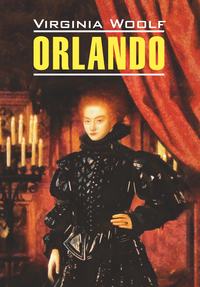
Kitabı oku: «Orlando / Орландо. Книга для чтения на английском языке»
Комментарии и словарь Е. Г. Тигонен
© КАРО, 2016
A Biography to V. Sackville-West.
Preface
Many friends have helped me in writing this book. Some are dead and so illustrious that I scarcely dare name them, yet no one can read or write without being perpetually in the debt of Defoe, Sir Thomas Browne, Sterne, Sir Walter Scott, Lord Macaulay, Emily Brontё, De Quincey, and Walter Pater, – to name the first that come to mind. Others are alive, and though perhaps as illustrious in their own way, are less formidable for that very reason. I am specially indebted to Mr C.P. Sanger, without whose knowledge of the law of real property this book could never have been written. Mr Sydney-Turner’s wide and peculiar erudition has saved me, I hope, some lamentable blunders. I have had the advantage – how great I alone can estimate – of Mr Arthur Waley’s knowledge of Chinese. Madame Lopokova (Mrs J.M. Keynes) has been at hand to correct my Russian. To the unrivalled sympathy and imagination of Mr Roger Fry I owe whatever understanding of the art of painting I may possess. I have, I hope, profited in another department by the singularly penetrating, if severe, criticism of my nephew Mr Julian Bell. Miss M.K. Snowdon’s indefatigable researches in the archives of Harrogate and Cheltenham were none the less arduous for being vain. Other friends have helped me in ways too various to specify. I must content myself with naming Mr Angus Davidson; Mrs Cartwright; Miss Janet Case; Lord Berners (whose knowledge of Elizabethan music has proved invaluable); Mr Francis Birrell; my brother, Dr Adrian Stephen; Mr F.L. Lucas; Mr and Mrs Desmond Maccarthy; that most inspiriting of critics, my brother-in-law, Mr Clive Bell; Mr G.H. Rylands; Lady Colefax; Miss Nellie Boxall; Mr J.M. Keynes; Mr Hugh Walpole; Miss Violet Dickinson; the Hon. Edward Sackville-West; Mr and Mrs St. John Hutchinson; Mr Duncan Grant; Mr and Mrs Stephen Tomlin; Mr and Lady Ottoline Morrell; my mother-in-law, Mrs Sydney Woolf; Mr Osbert Sitwell; Madame Jacques Raverat; Colonel Cory Bell; Miss Valerie Taylor; Mr J.T. Sheppard; Mr and Mrs T.S. Eliot; Miss Ethel Sands; Miss Nan Hudson; my nephew Mr Quentin Bell (an old and valued collaborator in fiction); Mr Raymond Mortimer; Lady Gerald Wellesley; Mr Lytton Strachey; the Viscountess Cecil; Miss Hope Mirrlees; Mr E.M. Forster; the Hon. Harold Nicolson; and my sister, Vanessa Bell – but the list threatens to grow too long and is already far too distinguished. For while it rouses in me memories of the pleasantest kind it will inevitably wake expectations in the reader which the book itself can only disappoint. Therefore I will conclude by thanking the officials of the British Museum and Record Office1 for their wonted courtesy; my niece Miss Angelica Bell, for a service which none but she could have rendered; and my husband for the patience with which he has invariably helped my researches and for the profound historical knowledge to which these pages owe whatever degree of accuracy they may attain. Finally, I would thank, had I not lost his name and address, a gentleman in America, who has generously and gratuitously corrected the punctuation, the botany, the entomology, the geography, and the chronology of previous works of mine and will, I hope, not spare his services on the present occasion.
Chapter 1
He – for there could be no doubt of his sex, though the fashion of the time did something to disguise it – was in the act of slicing at the head of a Moor which swung from the rafters. It was the colour of an old football, and more or less the shape of one, save for the sunken cheeks and a strand or two of coarse, dry hair, like the hair on a cocoanut. Orlando’s father, or perhaps his grandfather, had struck it from the shoulders of a vast Pagan who had started up under the moon in the barbarian fields of Africa; and now it swung, gently, perpetually, in the breeze which never ceased blowing through the attic rooms of the gigantic house of the lord who had slain him.
Orlando’s fathers had ridden in fields of asphodel, and stony fields, and fields watered by strange rivers, and they had struck many heads of many colours off many shoulders, and brought them back to hang from the rafters. So too would Orlando, he vowed. But since he was sixteen only, and too young to ride with them in Africa or France, he would steal away from his mother and the peacocks in the garden and go to his attic room and there lunge and plunge and slice the air with his blade. Sometimes he cut the cord so that the skull bumped on the floor and he had to string it up again, fastening it with some chivalry almost out of reach so that his enemy grinned at him through shrunk, black lips triumphantly. The skull swung to and fro, for the house, at the top of which he lived, was so vast that there seemed trapped in it the wind itself, blowing this way, blowing that way, winter and summer. The green arras with the hunters on it moved perpetually. His fathers had been noble since they had been at all. They came out of the northern mists wearing coronets on their heads. Were not the bars of darkness in the room, and the yellow pools which chequered the floor, made by the sun falling through the stained glass of a vast coat of arms in the window? Orlando stood now in the midst of the yellow body of an heraldic leopard. When he put his hand on the window-sill to push the window open, it was instantly coloured red, blue, and yellow like a butterfly’s wing. Thus, those who like symbols, and have a turn for2 the deciphering of them, might observe that though the shapely legs, the handsome body, and the well-set shoulders were all of them decorated with various tints of heraldic light, Orlando’s face, as he threw the window open, was lit solely by the sun itself. A more candid, sullen face it would be impossible to find. Happy the mother who bears, happier still the biographer who records the life of such a one! Never need she vex herself, nor he invoke the help of novelist or poet. From deed to deed, from glory to glory, from office to office he must go, his scribe following after, till they reach whatever seat it may be that is the height of their desire. Orlando, to look at, was cut out precisely for some such career. The red of the cheeks was covered with peach down; the down on the lips was only a little thicker than the down on the cheeks. The lips themselves were short and slightly drawn back over teeth of an exquisite and almond whiteness. Nothing disturbed the arrowy nose in its short, tense flight; the hair was dark, the ears small, and fitted closely to the head. But, alas, that these catalogues of youthful beauty cannot end without mentioning forehead and eyes. Alas, that people are seldom born devoid of all three; for directly we glance at Orlando standing by the window, we must admit that he had eyes like drenched violets, so large that the water seemed to have brimmed in them and widened them; and a brow like the swelling of a marble dome pressed between the two blank medallions which were his temples. Directly we glance at eyes and forehead, thus do we rhapsodize. Directly we glance at eyes and forehead, we have to admit a thousand disagreeables which it is the aim of every good biographer to ignore. Sights disturbed him, like that of his mother, a very beautiful lady in green walking out to feed the peacocks with Twitchett, her maid, behind her; sights exalted him – the birds and the trees; and made him in love with death – the evening sky, the homing rooks; and so, mounting up the spiral stairway into his brain – which was a roomy one – all these sights, and the garden sounds too, the hammer beating, the wood chopping, began that riot and confusion of the passions and emotions which every good biographer detests. But to continue – Orlando slowly drew in his head, sat down at the table, and, with the half-conscious air of one doing what they do every day of their lives at this hour, took out a writing book labelled Aethelbert3: A Tragedy in Five Acts, and dipped an old stained goose quill in the ink.
Soon he had covered ten pages and more with poetry. He was fluent, evidently, but he was abstract. Vice, Crime, Misery were the personages of his drama; there were Kings and Queens of impossible territories; horrid plots confounded them; noble sentiments suffused them; there was never a word said as he himself would have said it, but all was turned with a fluency and sweetness which, considering his age – he was not yet seventeen – and that the sixteenth century had still some years of its course to run, were remarkable enough. At last, however, he came to a halt. He was describing, as all young poets are for ever describing, nature, and in order to match the shade of green precisely he looked (and here he showed more audacity than most) at the thing itself, which happened to be a laurel bush growing beneath the window. After that, of course, he could write no more. Green in nature is one thing, green in literature another. Nature and letters seem to have a natural antipathy; bring them together and they tear each other to pieces. The shade of green Orlando now saw spoilt his rhyme and split his metre. Moreover, nature has tricks of her own. Once look out of a window at bees among flowers, at a yawning dog, at the sun setting, once think “how many more suns shall I see set”, etc., etc. (the thought is too well known to be worth writing out) and one drops the pen, takes one’s cloak, strides out of the room, and catches one’s foot on a painted chest4 as one does so. For Orlando was a trifle clumsy.
He was careful to avoid meeting anyone. There was Stubbs, the gardener, coming along the path. He hid behind a tree till he had passed. He let himself out at a little gate in the garden wall. He skirted all stables, kennels, breweries, carpenters’ shops, washhouses, places where they make tallow candles, kill oxen, forge horse-shoes, stitch jerkins – for the house was a town ringing with men at work at their various crafts – and gained the ferny path leading uphill through the park unseen. There is perhaps a kinship among qualities; one draws another along with it; and the biographer should here call attention to the fact that this clumsiness is often mated with a love of solitude. Having stumbled over a chest, Orlando naturally loved solitary places, vast views, and to feel himself for ever and ever and ever alone.
So, after a long silence, “I am alone”, he breathed at last, opening his lips for the first time in this record. He had walked very quickly uphill through ferns and hawthorn bushes, startling deer and wild birds, to a place crowned by a single oak-tree. It was very high, so high indeed that nineteen English counties could be seen beneath; and on clear days thirty or perhaps forty, if the weather was very fine. Sometimes one could see the English Channel, wave reiterating upon wave. Rivers could be seen and pleasure boats gliding on them; and galleons setting out to sea; and armadas with puffs of smoke from which came the dull thud of cannon firing; and forts on the coast; and castles among the meadows; and here a watch tower; and there a fortress; and again some vast mansion like that of Orlando’s father, massed like a town in the valley circled by walls. To the east there were the spires of London and the smoke of the city; and perhaps on the very sky line, when the wind was in the right quarter, the craggy top and serrated edges of Snowdon herself showed mountainous among the clouds. For a moment Orlando stood counting, gazing, recognizing. That was his father’s house; that his uncle’s. His aunt owned those three great turrets among the trees there. The heath was theirs and the forest; the pheasant and the deer, the fox, the badger, and the butterfly.
He sighed profoundly, and flung himself – there was a passion in his movements which deserves the word – on the earth at the foot of the oak-tree. He loved, beneath all this summer transiency, to feel the earth’s spine beneath him; for such he took the hard root of the oak-tree to be; or, for image followed image, it was the back of a great horse that he was riding, or the deck of a tumbling ship – it was anything indeed, so long as it was hard, for he felt the need of something which he could attach his floating heart to; the heart that tugged at his side; the heart that seemed filled with spiced and amorous gales every evening about this time when he walked out. To the oak-tree he tied it and as he lay there, gradually the flutter in and about him stilled itself; the little leaves hung, the deer stopped; the pale summer clouds stayed; his limbs grew heavy on the ground; and he lay so still that by degrees the deer stepped nearer and the rooks wheeled round him and the swallows dipped and circled and the dragonflies shot past, as if all the fertility and amorous activity of a summer’s evening were woven web-like about his body.
After an hour or so – the sun was rapidly sinking, the white clouds had turned red, the hills were violet, the woods purple, the valleys black – a trumpet sounded. Orlando leapt to his feet. The shrill sound came from the valley. It came from a dark spot down there; a spot compact and mapped out; a maze; a town, yet girt about with walls; it came from the heart of his own great house in the valley, which, dark before, even as he looked and the single trumpet duplicated and reduplicated itself with other shriller sounds, lost its darkness and became pierced with lights. Some were small hurrying lights, as if servants dashed along corridors to answer summonses; others were high and lustrous lights, as if they burnt in empty banqueting-halls made ready to receive guests who had not come; and others dipped and waved and sank and rose, as if held in the hands of troops of serving men, bending, kneeling, rising, receiving, guarding, and escorting with all dignity indoors a great Princess alighting from her chariot. Coaches turned and wheeled in the courtyard. Horses tossed their plumes. The Queen5 had come.
Orlando looked no more. He dashed downhill. He let himself in at a wicket gate. He tore up the winding staircase. He reached his room. He tossed his stockings to one side of the room, his jerkin to the other. He dipped his head. He scoured his hands. He pared his finger nails. With no more than six inches of looking-glass and a pair of old candles to help him, he had thrust on crimson breeches, lace collar, waistcoat of taffeta, and shoes with rosettes on them as big as double dahlias in less than ten minutes by the stable clock. He was ready. He was flushed. He was excited. But he was terribly late.
By short cuts known to him, he made his way now through the vast congeries of rooms and staircases to the banqueting-hall, five acres distant on the other side of the house. But half-way there, in the back quarters where the servants lived, he stopped. The door of Mrs Stewkley’s sitting-room stood open – she was gone, doubtless, with all her keys to wait upon her mistress. But there, sitting at the servant’s dinner table with a tankard beside him and paper in front of him, sat a rather fat, shabby man, whose ruff was a thought dirty, and whose clothes were of hodden brown. He held a pen in his hand, but he was not writing. He seemed in the act of rolling some thought up and down, to and fro in his mind till it gathered shape or momentum to his liking. His eyes, globed and clouded like some green stone of curious texture, were fixed. He did not see Orlando. For all his hurry, Orlando stopped dead. Was this a poet? Was he writing poetry? “Tell me”, he wanted to say, “everything in the whole world” – for he had the wildest, most absurd, extravagant ideas about poets and poetry – but how speak to a man who does not see you? who sees ogres, satyrs, perhaps the depths of the sea instead? So Orlando stood gazing while the man turned his pen in his fingers, this way and that way; and gazed and mused; and then, very quickly, wrote half-a-dozen lines and looked up. Whereupon Orlando, overcome with shyness, darted off and reached the banqueting-hall only just in time to sink upon his knees and, hanging his head in confusion, to offer a bowl of rose water to the great Queen herself.
Such was his shyness that he saw no more of her than her ringed hands in water; but it was enough. It was a memorable hand; a thin hand with long fingers always curling as if round orb or sceptre; a nervous, crabbed, sickly hand; a commanding hand too; a hand that had only to raise itself for a head to fall; a hand, he guessed, attached to an old body that smelt like a cupboard in which furs are kept in camphor; which body was yet caparisoned in all sorts of brocades and gems; and held itself very upright though perhaps in pain from sciatica; and never flinched though strung together by a thousand fears; and the Queen’s eyes were light yellow. All this he felt as the great rings flashed in the water and then something pressed his hair – which, perhaps, accounts for his seeing nothing more likely to be of use to a historian. And in truth, his mind was such a welter of opposites – of the night and the blazing candles, of the shabby poet and the great Queen, of silent fields and the clatter of serving men – that he could see nothing; or only a hand.
By the same showing, the Queen herself can have seen only a head. But if it is possible from a hand to deduce a body, informed with all the attributes of a great Queen, her crabbedness, courage, frailty, and terror, surely a head can be as fertile, looked down upon from a chair of state by a lady whose eyes were always, if the waxworks at the Abbey are to be trusted, wide open. The long, curled hair, the dark head bent so reverently, so innocently before her, implied a pair of the finest legs that a young nobleman has ever stood upright upon; and violet eyes; and a heart of gold; and loyalty and manly charm – all qualities which the old woman loved the more the more they failed her. For she was growing old and worn and bent before her time. The sound of cannon was always in her ears. She saw always the glistening poison drop and the long stiletto. As she sat at table she listened; she heard the guns in the Channel; she dreaded – was that a curse, was that a whisper? Innocence, simplicity, were all the more dear to her for the dark background she set them against. And it was that same night, so tradition has it, when Orlando was sound asleep, that she made over formally, putting her hand and seal finally to the parchment, the gift of the great monastic house that had been the Archbishop’s and then the King’s to Orlando’s father.
Orlando slept all night in ignorance. He had been kissed by a queen without knowing it. And perhaps, for women’s hearts are intricate, it was his ignorance and the start he gave when her lips touched him that kept the memory of her young cousin (for they had blood in common) green in her mind6. At any rate, two years of this quiet country life had not passed, and Orlando had written no more perhaps than twenty tragedies and a dozen histories and a score of sonnets when a message came that he was to attend the Queen at Whitehall.
“Here”, she said, watching him advance down the long gallery towards her, “comes my innocent!” (There was a serenity about him always which had the look of innocence when, technically, the word was no longer applicable.)
“Come!” she said. She was sitting bolt upright beside the fire. And she held him a foot’s pace from her and looked him up and down. Was she matching her speculations the other night with the truth now visible? Did she find her guesses justified? Eyes, mouth, nose, breast, hips, hands – she ran them over; her lips twitched visibly as she looked; but when she saw his legs she laughed out loud. He was the very image of a noble gentleman. But inwardly? She flashed her yellow hawk’s eyes upon him as if she would pierce his soul. The young man withstood her gaze blushing only a damask rose as became him. Strength, grace, romance, folly, poetry, youth – she read him like a page. Instantly she plucked a ring from her finger (the joint was swollen rather) and as she fitted it to his, named him her Treasurer and Steward; next hung about him chains of office; and bidding him bend his knee, tied round it at the slenderest part the jewelled Order of the Garter7. Nothing after that was denied him.8 When she drove in state he rode at her carriage door. She sent him to Scotland on a sad embassy to the unhappy Queen. He was about to sail for the Polish wars when she recalled him. For how could she bear to think of that tender flesh torn and that curly head rolled in the dust? She kept him with her. At the height of her triumph when the guns were booming at the Tower and the air was thick enough with gunpowder to make one sneeze and the huzzas of the people rang beneath the windows, she pulled him down among the cushions where her women had laid her (she was so worn and old) and made him bury his face in that astonishing composition – she had not changed her dress for a month – which smelt for all the world, he thought, recalling his boyish memory, like some old cabinet at home where his mother’s furs were stored. He rose, half suffocated from the embrace. “This”, she breathed, “is my victory!” – even as a rocket roared up and dyed her cheeks scarlet.
For the old woman loved him. And the Queen, who knew a man when she saw one, though not, it is said, in the usual way, plotted for him a splendid ambitious career. Lands were given him, houses assigned him. He was to be the son of her old age; the limb of her infirmity; the oak-tree on which she leant her degradation. She croaked out these promises and strange domineering tendernesses (they were at Richmond now) sitting bolt upright in her stiff brocades by the fire which, however high they piled it, never kept her warm.
Meanwhile, the long winter months drew on. Every tree in the Park was lined with frost. The river ran sluggishly. One day when the snow was on the ground and the dark panelled rooms were full of shadows and the stags were barking in the Park, she saw in the mirror, which she kept for fear of spies always by her, through the door, which she kept for fear of murderers always open, a boy – could it be Orlando? – kissing a girl – who in the Devil’s name was the brazen hussy? Snatching at her golden-hilted sword she struck violently at the mirror. The glass crashed; people came running; she was lifted and set in her chair again; but she was stricken after that and groaned much, as her days wore to an end, of man’s treachery.
It was Orlando’s fault perhaps; yet, after all, are we to blame Orlando? The age was the Elizabethan; their morals were not ours; nor their poets; nor their climate; nor their vegetables even. Everything was different. The weather itself, the heat and cold of summer and winter, was, we may believe, of another temper altogether. The brilliant amorous day was divided as sheerly from the night as land from water. Sunsets were redder and more intense; dawns were whiter and more auroral. Of our crepuscular half-lights and lingering twilights they knew nothing. The rain fell vehemently, or not at all. The sun blazed or there was darkness. Translating this to the spiritual regions as their wont is, the poets sang beautifully how roses fade and petals fall. The moment is brief they sang; the moment is over; one long night is then to be slept by all. As for using the artifices of the greenhouse or conservatory to prolong or preserve these fresh pinks and roses, that was not their way. The withered intricacies and ambiguities of our more gradual and doubtful age were unknown to them. Violence was all. The flower bloomed and faded. The sun rose and sank. The lover loved and went. And what the poets said in rhyme, the young translated into practice. Girls were roses, and their seasons were short as the flowers’. Plucked they must be before nightfall; for the day was brief and the day was all. Thus, if Orlando followed the leading of the climate, of the poets, of the age itself, and plucked his flower in the window-seat even with the snow on the ground and the Queen vigilant in the corridor we can scarcely bring ourselves to blame him. He was young; he was boyish; he did but as nature bade him do. As for the girl, we know no more than Queen Elizabeth herself did what her name was. It may have been Doris, Chloris, Delia, or Diana, for he made rhymes to them all in turn; equally, she may have been a court lady, or some serving maid. For Orlando’s taste was broad; he was no lover of garden flowers only; the wild and the weeds even had always a fascination for him.
Here, indeed, we lay bare rudely, as a biographer may, a curious trait in him, to be accounted for, perhaps, by the fact that a certain grandmother of his had worn a smock and carried milkpails9. Some grains of the Kentish or Sussex earth were mixed with the thin, fine fluid which came to him from Normandy. He held that the mixture of brown earth and blue blood was a good one. Certain it is that he had always a liking for low company, especially for that of lettered people whose wits so often keep them under, as if there were the sympathy of blood between them. At this season of his life, when his head brimmed with rhymes and he never went to bed without striking off some conceit, the cheek of an innkeeper’s daughter seemed fresher and the wit of a gamekeeper’s niece seemed quicker than those of the ladies at Court. Hence, he began going frequently to Wapping Old Stairs and the beer gardens at night, wrapped in a grey cloak to hide the star at his neck and the garter at his knee. There, with a mug before him, among the sanded alleys and bowling greens and all the simple architecture of such places, he listened to sailors’ stories of hardship and horror and cruelty on the Spanish main10; how some had lost their toes, others their noses – for the spoken story was never so rounded or so finely coloured as the written. Especially he loved to hear them volley forth their songs of the Azores, while the parrakeets, which they had brought from those parts, pecked at the rings in their ears, tapped with their hard acquisitive beaks at the rubies on their fingers, and swore as vilely as their masters. The women were scarcely less bold in their speech and less free in their manner than the birds. They perched on his knee, flung their arms round his neck and, guessing that something out of the common lay hid beneath his duffle cloak, were quite as eager to come at the truth of the matter as Orlando himself.
Nor was opportunity lacking. The river was astir early and late with barges, wherries, and craft of all description. Every day sailed to sea some fine ship bound for the Indies; now and again another blackened and ragged with hairy men on board crept painfully to anchor. No one missed a boy or girl if they dallied a little on the water after sunset; or raised an eyebrow if gossip had seen them sleeping soundly among the treasure sacks safe in each other’s arms. Such indeed was the adventure that befel Orlando, Sukey, and the Earl of Cumberland. The day was hot; their loves had been active; they had fallen asleep among the rubies. Late that night the Earl, whose fortunes were much bound up in the Spanish ventures, came to check the booty alone with a lantern. He flashed the light on a barrel. He started back with an oath. Twined about the cask two spirits lay sleeping. Superstitious by nature, and his conscience laden with many a crime, the Earl took the couple – they were wrapped in a red cloak, and Sukey’s bosom was almost as white as the eternal snows of Orlando’s poetry – for a phantom sprung from the graves of drowned sailors to upbraid him. He crossed himself. He vowed repentance. The row of alms houses still standing in the Sheen Road is the visible fruit of that moment’s panic. Twelve poor old women of the parish today drink tea and tonight bless his Lordship for a roof above their heads; so that illicit love in a treasure ship – but we omit the moral11.
Soon, however, Orlando grew tired, not only of the discomfort of this way of life, and of the crabbed streets of the neighbourhood, but of the primitive manner of the people. For it has to be remembered that crime and poverty had none of the attraction for the Elizabethans that they have for us. They had none of our modern shame of book learning; none of our belief that to be born the son of a butcher is a blessing and to be unable to read a virtue; no fancy that what we call “life” and “reality” are somehow connected with ignorance and brutality; nor, indeed, any equivalent for these two words at all. It was not to seek “life” that Orlando went among them; not in quest of “reality” that he left them. But when he had heard a score of times how Jakes had lost his nose and Sukey her honour – and they told the stories admirably, it must be admitted – he began to be a little weary of the repetition, for a nose can only be cut off in one way and maidenhood lost in another – or so it seemed to him – whereas the arts and the sciences had a diversity about them which stirred his curiosity profoundly. So, always keeping them in happy memory, he left off frequenting the beer gardens and the skittle alleys, hung his grey cloak in his wardrobe, let his star shine at his neck and his garter twinkle at his knee, and appeared once more at the Court of King James12. He was young, he was rich, he was handsome. No one could have been received with greater acclamation than he was.
It is certain indeed that many ladies were ready to show him their favours. The names of three at least were freely coupled with his in marriage – Clorinda, Favilla, Euphrosyne – so he called them in his sonnets.
To take them in order; Clorinda was a sweet-mannered gentle lady enough; – indeed Orlando was greatly taken with her for six months and a half; but she had white eyelashes and could not bear the sight of blood. A hare brought up roasted at her father’s table turned her faint. She was much under the influence of the Priests too, and stinted her underlinen13 in order to give to the poor. She took it on her to reform Orlando of his sins, which sickened him, so that he drew back from the marriage, and did not much regret it when she died soon after of the small-pox.
Sasha, as if to reassure him, was tenderer than usual and even more delightful. Seldom would she talk about her past life, but now she told him how, in winter in Russia, she would listen to the wolves howling across the steppes, and thrice, to show him, she barked like a wolf. Upon which he told her of the stags in the snow at home, and how they would stray into the great hall for warmth and be fed by an old man with porridge from a bucket. And then she praised him; for his love of beasts; for his gallantry; for his legs. Ravished with her praises and shamed to think how he had maligned her by fancying her on the knees of a common sailor and grown fat and lethargic at forty, he told her that he could find no words to praise her; yet instantly bethought him how she was like the spring and green grass and rushing waters, and seizing her more tightly than ever, he swung her with him half across the river so that the gulls and the cormorants swung too. And halting at length, out of breath, she said, panting slightly, that he was like a million-candled Christmas tree (such as they have in Russia) hung with yellow globes; incandescent; enough to light a whole street by; (so one might translate it) for what with his glowing cheeks, his dark curls, his black and crimson cloak, he looked as if he were burning with his own radiance, from a lamp lit within.
All the colour, save the red of Orlando’s cheeks, soon faded. Night came on. As the orange light of sunset vanished it was succeeded by an astonishing white glare from the torches, bonfires, flaming cressets, and other devices by which the river was lit up and the strangest transformation took place. Various churches and noblemen’s palaces, whose fronts were of white stone showed in streaks and patches as if floating on the air. Of St Paul’s, in particular, nothing was left but a gilt cross. The Abbey appeared like the grey skeleton of a leaf. Everything suffered emaciation and transformation. As they approached the carnival, they heard a deep note like that struck on a tuning-fork which boomed louder and louder until it became an uproar. Every now and then a great shout followed a rocket into the air. Gradually they could discern little figures breaking off from the vast crowd and spinning hither and thither like gnats on the surface of a river. Above and around this brilliant circle like a bowl of darkness pressed the deep black of a winter’s night. And then into this darkness there began to rise with pauses, which kept the expectation alert and the mouth open, flowering rockets; crescents; serpents; a crown. At one moment the woods and distant hills showed green as on a summer’s day; the next all was winter and blackness again.
By this time Orlando and the Princess were close to the Royal enclosure and found their way barred by a great crowd of the common people, who were pressing as near to the silken rope as they dared. Loth to end their privacy and encounter the sharp eyes that were on the watch for them, the couple lingered there, shouldered by apprentices; tailors; fishwives; horse dealers, cony catchers; starving scholars; maid-servants in their whimples; orange girls; ostlers; sober citizens; bawdy tapsters; and a crowd of little ragamuffins such as always haunt the outskirts of a crowd, screaming and scrambling among people’s feet – all the riff-raff of the London streets indeed was there, jesting and jostling, here casting dice, telling fortunes, shoving, tickling, pinching; here uproarious, there glum; some of them with mouths gaping a yard wide; others as little reverent as daws on a house-top; all as variously rigged out as their purse or stations allowed; here in fur and broadcloth; there in tatters with their feet kept from the ice only by a dishclout bound about them. The main press of people, it appeared, stood opposite a booth or stage something like our Punch and Judy show28 upon which some kind of theatrical performance was going forward. A black man was waving his arms and vociferating. There was a woman in white laid upon a bed. Rough though the staging was, the actors running up and down a pair of steps and sometimes tripping, and the crowd stamping their feet and whistling, or when they were bored, tossing a piece of orange peel on to the ice which a dog would scramble for, still the astonishing, sinuous melody of the words stirred Orlando like music. Spoken with extreme speed and a daring agility of tongue which reminded him of the sailors singing in the beer gardens at Wapping, the words even without meaning were as wine to him. But now and again a single phrase would come to him over the ice which was as if torn from the depths of his heart. The frenzy of the Moor seemed to him his own frenzy, and when the Moor suffocated the woman in her bed it was Sasha he killed with his own hands.
At last the play was ended. All had grown dark. The tears streamed down his face. Looking up into the sky there was nothing but blackness there too. Ruin and death, he thought, cover all. The life of man ends in the grave. Worms devour us.
Methinks it should be now a huge eclipse
Of sun and moon, and that the affrighted globe
Should yawn —29
Even as he said this a star of some pallor rose in his memory. The night was dark; it was pitch dark; but it was such a night as this that they had waited for; it was on such a night as this that they had planned to fly. He remembered everything. The time had come. With a burst of passion he snatched Sasha to him, and hissed in her ear “Jour de ma vie!30” It was their signal. At midnight they would meet at an inn near Blackfriars. Horses waited there. Everything was in readiness for their flight. So they parted, she to her tent, he to his. It still wanted an hour of the time.
Long before midnight Orlando was in waiting. The night was of so inky a blackness that a man was on you before he could be seen, which was all to the good, but it was also of the most solemn stillness so that a horse’s hoof, or a child’s cry, could be heard at a distance of half a mile. Many a time did Orlando, pacing the little courtyard, hold his heart at the sound of some nag’s steady footfall on the cobbles, or at the rustle of a woman’s dress. But the traveller was only some merchant, making home belated; or some woman of the quarter whose errand was nothing so innocent. They passed, and the street was quieter than before. Then those lights which burnt downstairs in the small, huddled quarters where the poor of the city lived moved up to the sleeping-rooms, and then, one by one, were extinguished. The street lanterns in these purlieus were few at most; and the negligence of the night watchman often suffered them to expire long before dawn. The darkness then became even deeper than before. Orlando looked to the wicks of his lantern, saw to the saddle girths31; primed his pistols; examined his holsters; and did all these things a dozen times at least till he could find nothing more needing his attention. Though it still lacked some twenty minutes to midnight, he could not bring himself to go indoors to the inn parlour, where the hostess was still serving sack and the cheaper sort of canary wine to a few seafaring men, who would sit there trolling their ditties, and telling their stories of Drake32, Hawkins33, and Grenville34, till they toppled off the benches and rolled asleep on the sanded floor. The darkness was more compassionate to his swollen and violent heart. He listened to every footfall; speculated on every sound. Each drunken shout and each wail from some poor wretch laid in the straw or in other distress cut his heart to the quick, as if it boded ill omen to his venture. Yet, he had no fear for Sasha. Her courage made nothing of the adventure. She would come alone, in her cloak and trousers, booted like a man. Light as her footfall was, it would hardly be heard, even in this silence.
So he waited in the darkness. Suddenly he was struck in the face by a blow, soft, yet heavy, on the side of his cheek. So strung with expectation was he, that he started and put his hand to his sword. The blow was repeated a dozen times on forehead and cheek. The dry frost had lasted so long that it took him a minute to realize that these were raindrops falling; the blows were the blows of the rain. At first, they fell slowly, deliberately, one by one. But soon the six drops became sixty; then six hundred; then ran themselves together in a steady spout of water. It was as if the hard and consolidated sky poured itself forth in one profuse fountain. In the space of five minutes Orlando was soaked to the skin.
Hastily putting the horses under cover, he sought shelter beneath the lintel of the door whence he could still observe the courtyard. The air was thicker now than ever, and such a steaming and droning rose from the downpour that no footfall of man or beast could be heard above it. The roads, pitted as they were with great holes, would be under water and perhaps impassable. But of what effect this would have upon their flight he scarcely thought. All his senses were bent upon gazing along the cobbled pathway – gleaming in the light of the lantern – for Sasha’s coming. Sometimes, in the darkness, he seemed to see her wrapped about with rain strokes. But the phantom vanished. Suddenly, with an awful and ominous voice, a voice full of horror and alarm which raised every hair of anguish in Orlando’s soul, St Paul’s struck the first stroke of midnight. Four times more it struck remorselessly. With the superstition of a lover, Orlando had made out that it was on the sixth stroke that she would come. But the sixth stroke echoed away, and the seventh came and the eighth, and to his apprehensive mind they seemed notes first heralding and then proclaiming death and disaster. When the twelfth struck he knew that his doom was sealed35. It was useless for the rational part of him to reason; she might be late; she might be prevented; she might have missed her way. The passionate and feeling heart of Orlando knew the truth. Other clocks struck, jangling one after another. The whole world seemed to ring with the news of her deceit and his derision. The old suspicions subterraneously at work in him rushed forth from concealment openly. He was bitten by a swarm of snakes, each more poisonous than the last. He stood in the doorway in the tremendous rain without moving. As the minutes passed, he sagged a little at the knees. The downpour rushed on. In the thick of it, great guns seemed to boom. Huge noises as of the tearing and rending of oak-trees could be heard. There were also wild cries and terrible inhuman groanings. But Orlando stood there immovable till Paul’s clock struck two, and then, crying aloud with an awful irony, and all his teeth showing, “Jour de ma vie!” he dashed the lantern to the ground, mounted his horse and galloped he knew not where.
Some blind instinct, for he was past reasoning36, must have driven him to take the river bank in the direction of the sea. For when the dawn broke, which it did with unusual suddenness, the sky turning a pale yellow and the rain almost ceasing, he found himself on the banks of the Thames off Wapping. Now a sight of the most extraordinary nature met his eyes. Where, for three months and more, there had been solid ice of such thickness that it seemed permanent as stone, and a whole gay city had been stood on its pavement, was now a race of turbulent yellow waters. The river had gained its freedom in the night. It was as if a sulphur spring (to which view many philosophers inclined) had risen from the volcanic regions beneath and burst the ice asunder with such vehemence that it swept the huge and massy fragments furiously apart. The mere look of the water was enough to turn one giddy. All was riot and confusion. The river was strewn with icebergs. Some of these were as broad as a bowling green and as high as a house; others no bigger than a man’s hat, but most fantastically twisted. Now would come down a whole convoy of ice blocks sinking everything that stood in their way. Now, eddying and swirling like a tortured serpent, the river would seem to be hurtling itself between the fragments and tossing them from bank to bank, so that they could be heard smashing against the piers and pillars. But what was the most awful and inspiring of terror was the sight of the human creatures who had been trapped in the night and now paced their twisting and precarious islands in the utmost agony of spirit. Whether they jumped into the flood or stayed on the ice their doom was certain. Sometimes quite a cluster of these poor creatures would come down together, some on their knees, others suckling their babies. One old man seemed to be reading aloud from a Holy book. At other times, and his fate perhaps was the most dreadful, a solitary wretch would stride his narrow tenement alone. As they swept out to sea, some could be heard crying vainly for help, making wild promises to amend their ways, confessing their sins and vowing altars and wealth if God would hear their prayers. Others were so dazed with terror that they sat immovable and silent looking steadfastly before them. One crew of young watermen or post-boys, to judge by their liveries, roared and shouted the lewdest tavern songs, as if in bravado, and were dashed against a tree and sunk with blasphemies on their lips. An old nobleman – for such his furred gown and golden chain proclaimed him – went down not far from where Orlando stood, calling vengeance upon the Irish rebels, who, he cried with his last breath, had plotted this devilry. Many perished clasping some silver pot or other treasure to their breasts; and at least a score of poor wretches were drowned by their own cupidity, hurling themselves from the bank into the flood rather than let a gold goblet escape them, or see before their eyes the disappearance of some furred gown. For furniture, valuables, possessions of all sorts were carried away on the icebergs. Among other strange sights was to be seen a cat suckling its young; a table laid sumptuously for a supper of twenty; a couple in bed; together with an extraordinary number of cooking utensils.
Dazed and astounded, Orlando could do nothing for some time but watch the appalling race of waters as it hurled itself past him. At last, seeming to recollect himself, he clapped spurs to his horse and galloped hard along the river bank in the direction of the sea. Rounding a bend of the river, he came opposite that reach where, not two days ago, the ships of the Ambassadors had seemed immovably frozen. Hastily, he made count of them all; the French; the Spanish; the Austrian; the Turk. All still floated, though the French had broken loose from her moorings, and the Turkish vessel had taken a great rent in her side and was fast filling with water. But the Russian ship was nowhere to be seen. For one moment Orlando thought it must have foundered; but, raising himself in his stirrups and shading his eyes, which had the sight of a hawk’s, he could just make out the shape of a ship on the horizon. The black eagles were flying from the mast head. The ship of the Muscovite Embassy was standing out to sea37.
Flinging himself from his horse, he made, in his rage, as if he would breast the flood. Standing knee-deep in water he hurled at the faithless woman all the insults that have ever been the lot of her sex. Faithless, mutable, fickle, he called her; devil, adulteress, deceiver; and the swirling waters took his words, and tossed at his feet a broken pot and a little straw.
Chapter 2
The biographer is now faced with a difficulty which it is better perhaps to confess than to gloss over. Up to this point in telling the story of Orlando’s life, documents, both private and historical, have made it possible to fulfil the first duty of a biographer, which is to plod, without looking to right or left, in the indelible footprints of truth; unenticed by flowers; regardless of shade; on and on methodically till we fall plump into the grave and write finis38 on the tombstone above our heads. But now we come to an episode which lies right across our path, so that there is no ignoring it. Yet it is dark, mysterious, and undocumented; so that there is no explaining it. Volumes might be written in interpretation of it; whole religious systems founded upon the signification of it. Our simple duty is to state the facts as far as they are known, and so let the reader make of them what he may.
In the summer of that disastrous winter which saw the frost, the flood, the deaths of many thousands, and the complete downfall of Orlando’s hopes – for he was exiled from Court; in deep disgrace with the most powerful nobles of his time; the Irish house of Desmond was justly enraged; the King had already trouble enough with the Irish not to relish this further addition – in that summer Orlando retired to his great house in the country and there lived in complete solitude. One June morning – it was Saturday the 18th – he failed to rise at his usual hour, and when his groom went to call him he was found fast asleep. Nor could he be awakened. He lay as if in a trance, without perceptible breathing; and though dogs were set to bark under his window; cymbals, drums, bones beaten perpetually in his room; a gorse bush put under his pillow; and mustard plasters applied to his feet, still he did not wake, take food, or show any sign of life for seven whole days. On the seventh day he woke at his usual time (a quarter before eight, precisely) and turned the whole posse of caterwauling wives and village soothsayers out of his room, which was natural enough; but what was strange was that he showed no consciousness of any such trance, but dressed himself and sent for his horse as if he had woken from a single night’s slumber39. Yet some change, it was suspected, must have taken place in the chambers of his brain, for though he was perfectly rational and seemed graver and more sedate in his ways than before, he appeared to have an imperfect recollection of his past life. He would listen when people spoke of the great frost or the skating or the carnival, but he never gave any sign, except by passing his hand across his brow as if to wipe away some cloud, of having witnessed them himself. When the events of the past six months were discussed, he seemed not so much distressed as puzzled, as if he were troubled by confused memories of some time long gone or were trying to recall stories told him by another. It was observed that if Russia was mentioned or Princesses or ships, he would fall into a gloom of an uneasy kind and get up and look out of the window or call one of the dogs to him, or take a knife and carve a piece of cedar wood. But the doctors were hardly wiser then than they are now, and after prescribing rest and exercise, starvation and nourishment, society and solitude, that he should lie in bed all day and ride forty miles between lunch and dinner, together with the usual sedatives and irritants, diversified, as the fancy took them, with possets of newt’s slobber on rising, and draughts of peacock’s gall on going to bed, they left him to himself, and gave it as their opinion that he had been asleep for a week.
But if sleep it was, of what nature, we can scarcely refrain from asking, are such sleeps as these? Are they remedial measures – trances in which the most galling memories, events that seem likely to cripple life for ever, are brushed with a dark wing which rubs their harshness off and gilds them, even the ugliest and basest, with a lustre, an incandescence? Has the finger of death to be laid on the tumult of life from time to time lest it rend us asunder? Are we so made that we have to take death in small doses daily or we could not go on with the business of living? And then what strange powers are these that penetrate our most secret ways and change our most treasured possessions without our willing it? Had Orlando, worn out by the extremity of his suffering, died for a week, and then come to life again? And if so, of what nature is death and of what nature life? Having waited well over half an hour for an answer to these questions, and none coming, let us get on with the story.
Now Orlando gave himself up to a life of extreme solitude. His disgrace at Court and the violence of his grief were partly the reason of it, but as he made no effort to defend himself and seldom invited anyone to visit him (though he had many friends who would willingly have done so) it appeared as if to be alone in the great house of his fathers suited his temper. Solitude was his choice. How he spent his time, nobody quite knew. The servants, of whom he kept a full retinue, though much of their business was to dust empty rooms and to smooth the coverlets of beds that were never slept in, watched, in the dark of the evening, as they sat over their cakes and ale, a light passing along the galleries, through the banqueting-halls, up the staircase, into the bedrooms, and knew that their master was perambulating the house alone. None dared follow him, for the house was haunted by a great variety of ghosts, and the extent of it made it easy to lose one’s way and either fall down some hidden staircase or open a door which, should the wind blow it to, would shut upon one for ever – accidents of no uncommon occurrence40, as the frequent discovery of the skeletons of men and animals in attitudes of great agony made evident. Then the light would be lost altogether, and Mrs Grimsditch, the housekeeper, would say to Mr Dupper, the chaplain, how she hoped his Lordship had not met with some bad accident. Mr Dupper would opine that his Lordship was on his knees, no doubt, among the tombs of his ancestors in the Chapel, which was in the Billiard Table Court, half a mile away on the south side. For he had sins on his conscience, Mr Dupper was afraid; upon which Mrs Grimsditch would retort, rather sharply, that so had most of us; and Mrs Stewkley and Mrs Field and old Nurse Carpenter would all raise their voices in his Lordship’s praise; and the grooms and the stewards would swear that it was a thousand pities to see so fine a nobleman moping about the house when he might be hunting the fox or chasing the deer; and even the little laundry maids and scullery maids, the Judys and the Faiths, who were handing round the tankards and cakes, would pipe up their testimony to his Lordship’s gallantry; for never was there a kinder gentleman, or one more free with those little pieces of silver which serve to buy a knot of ribbon or put a posy in one’s hair; until even the Blackamoor whom they called Grace Robinson by way of making a Christian woman of her, understood what they were at, and agreed that his Lordship was a handsome, pleasant, darling gentleman in the only way she could, that is to say by showing all her teeth at once in a broad grin. In short, all his serving men and women held him in high respect, and cursed the foreign Princess (but they called her by a coarser name than that) who had brought him to this pass.
But though it was probably cowardice, or love of hot ale, that led Mr Dupper to imagine his Lordship safe among the tombs so that he need not go in search of him, it may well have been that Mr Dupper was right. Orlando now took a strange delight in thoughts of death and decay, and, after pacing the long galleries and ballrooms with a taper in his hand, looking at picture after picture as if he sought the likeness of somebody whom he could not find, would mount into the family pew and sit for hours watching the banners stir and the moonlight waver with a bat or death’s head moth to keep him company. Even this was not enough for him, but he must descend into the crypt where his ancestors lay, coffin piled upon coffin, for ten generations together. The place was so seldom visited that the rats made free with the lead work, and now a thigh bone would catch at his cloak as he passed, or he would crack the skull of some old Sir Malise as it rolled beneath his foot. It was a ghastly sepulchre; dug deep beneath the foundations of the house as if the first Lord of the family, who had come from France with the Conqueror, had wished to testify how all pomp is built upon corruption; how the skeleton lies beneath the flesh: how we that dance and sing above must lie below; how the crimson velvet turns to dust; how the ring (here Orlando, stooping his lantern, would pick up a gold circle lacking a stone, that had rolled into a corner) loses its ruby and the eye which was so lustrous shines no more. “Nothing remains of all these Princes”, Orlando would say, indulging in some pardonable exaggeration of their rank, “except one digit,” and he would take a skeleton hand in his and bend the joints this way and that. “Whose hand was it?” he went on to ask. “The right or the left? The hand of man or woman, of age or youth? Had it urged the war horse, or plied the needle? Had it plucked the rose, or grasped cold steel? Had it —” but here either his invention failed him or, what is more likely, provided him with so many instances of what a hand can do that he shrank, as his wont was, from the cardinal labour of composition, which is excision, and he put it with the other bones, thinking how there was a writer called Thomas Browne41, a Doctor of Norwich, whose writing upon such subjects took his fancy amazingly.
So, taking his lantern and seeing that the bones were in order, for though romantic, he was singularly methodical and detested nothing so much as a ball of string on the floor, let alone the skull of an ancestor, he returned to that curious, moody pacing down the galleries, looking for something among the pictures, which was interrupted at length by a veritable spasm of sobbing, at the sight of a Dutch snow scene by an unknown artist. Then it seemed to him that life was not worth living any more. Forgetting the bones of his ancestors and how life is founded on a grave, he stood there shaken with sobs, all for the desire of a woman in Russian trousers, with slanting eyes, a pouting mouth and pearls about her neck. She had gone. She had left him. He was never to see her again. And so he sobbed. And so he found his way back to his own rooms; and Mrs Grimsditch, seeing the light in the window, put the tankard from her lips and said Praise be to God, his Lordship was safe in his room again; for she had been thinking all this while that he was foully murdered.
Orlando now drew his chair up to the table; opened the works of Sir Thomas Browne and proceeded to investigate the delicate articulation of one of the doctor’s longest and most marvellously contorted cogitations.
For though these are not matters on which a biographer can profitably enlarge it is plain enough to those who have done a reader’s part in making up from bare hints dropped here and there the whole boundary and circumference of a living person; can hear in what we only whisper a living voice; can see, often when we say nothing about it, exactly what he looked like; know without a word to guide them precisely what he thought – and it is for readers such as these that we write – it is plain then to such a reader that Orlando was strangely compounded of many humours – of melancholy, of indolence, of passion, of love of solitude, to say nothing of all those contortions and subtleties of temper which were indicated on the first page, when he slashed at a dead nigger’s head; cut it down; hung it chivalrously out of his reach again and then betook himself to the windowseat with a book. The taste for books was an early one. As a child he was sometimes found at midnight by a page still reading. They took his taper away, and he bred glow-worms to serve his purpose. They took the glow-worms away, and he almost burnt the house down with a tinder. To put it in a nutshell42, leaving the novelist to smooth out the crumpled silk and all its implications, he was a nobleman aflicted with a love of literature. Many people of his time, still more of his rank, escaped the infection and were thus free to run or ride or make love at their own sweet will. But some were early infected by a germ said to be bred of the pollen of the asphodel and to be blown out of Greece and Italy, which was of so deadly a nature that it would shake the hand as it was raised to strike, and cloud the eye as it sought its prey, and make the tongue stammer as it declared its love. It was the fatal nature of this disease to substitute a phantom for reality, so that Orlando, to whom fortune had given every gift – plate, linen, houses, menservants, carpets, beds in profusion – had only to open a book for the whole vast accumulation to turn to mist. The nine acres of stone which were his house vanished; one hundred and fifty indoor servants disappeared; his eighty riding horses became invisible; it would take too long to count the carpets, sofas, trappings, china, plate, cruets, chafing dishes and other movables often of beaten gold, which evaporated like so much sea mist under the miasma. So it was, and Orlando would sit by himself, reading, a naked man.
The disease gained rapidly upon him now in his solitude. He would read often six hours into the night; and when they came to him for orders about the slaughtering of cattle or the harvesting of wheat, he would push away his folio and look as if he did not understand what was said to him. This was bad enough and wrung the hearts of Hall, the falconer, of Giles, the groom, of Mrs Grimsditch, the housekeeper, of Mr Dupper, the chaplain. A fine gentleman like that, they said, had no need of books. Let him leave books, they said, to the palsied or the dying. But worse was to come. For once the disease of reading has laid upon the system it weakens it so that it falls an easy prey to that other scourge which dwells in the inkpot and festers in the quill. The wretch takes to writing. And while this is bad enough in a poor man, whose only property is a chair and a table set beneath a leaky roof – for he has not much to lose, after all – the plight of a rich man, who has houses and cattle, maidservants, asses and linen, and yet writes books, is pitiable in the extreme. The flavour of it all goes out of him; he is riddled by hot irons; gnawed by vermin. He would give every penny he has (such is the malignity of the germ) to write one little book and become famous; yet all the gold in Peru will not buy him the treasure of a well-turned line. So he falls into consumption and sickness, blows his brains out, turns his face to the wall. It matters not in what attitude they find him. He has passed through the gates of Death and known the flames of Hell.
Record Office – Государственный архив
[Закрыть]
have a turn for – (разг.) имеют склонность, расположены к чему-л.
[Закрыть]
Aethelbert – Этельберт (552–616), король Кента
[Закрыть]
catches one’s foot on a painted chest – (разг.) зацепляется ногой о раскрашенный сундук
[Закрыть]
The Queen – королева Англии Елизавета I (1533–1603)
[Закрыть]
the memory … green in her mind – (разг.) воспоминания … были еще свежи
[Закрыть]
Order of the Garter – орден Подвязки, награда, присуждаемая за достижения, дает право называться «сэр»
[Закрыть]
Nothing after that was denied him. – (разг.) Теперь ему дозволялось всё.
[Закрыть]
a certain grandmother of his had worn a smock and carried milkpails – (ирон.) одна из его прабабушек доила коров
[Закрыть]
the Spanish main – область вокруг северного побережья Южной Америки, откуда испанские корабли везли сокровища в Испанию в XVI и XVII вв., сражаясь с пиратами
[Закрыть]
but we omit the moral – (ирон.) но мы воздержимся от осуждения
[Закрыть]
King James – король Яков I (1566–1625), король Англии с 1603 г., сын Марии Стюарт
[Закрыть]
stinted her underlinen – (разг.) экономила на нижнем белье
[Закрыть]
Punch and Judy show – герои кукольного представления для детей, в котором мистер Панч постоянно ссорится со своей женой Джуди (юмористические сценки)
[Закрыть]
Какой доселе небывалый час!Как будто в мире страшное затменье,Луны и солнца нет, земля во тьмеИ все колеблется от потрясенья. Шекспир, «Отелло», акт V, сцена 2. Пер. Б. Пастернака
[Закрыть]
Jour de ma vie! – (фр.) Мой день настал!
[Закрыть]
saw to the saddle girths – (уст.) проверил подпругу на седле
[Закрыть]
Drake – сэр Френсис Дрейк (1540–1596), моряк, исследователь, флотоводец, в 1588 г. победил Испанскую Армаду
[Закрыть]
Hawkins – сэр Джон Хокинс (1532–1595), английский адмирал
[Закрыть]
Grenville – сэр Ричард Гренвилл (1542–1591), английский флотоводец
[Закрыть]
his doom was sealed – (уст.) судьба его решена
[Закрыть]
was past reasoning – (разг.) был уже не в состоянии рассуждать
[Закрыть]
was standing out to sea – (уст.) удалялся в открытое море
[Закрыть]
finis – (лат.) конец
[Закрыть]
as if he had woken from a single night’s slumber – (уст.) как если бы проснулся после обычного ночного отдыха
[Закрыть]
accidents of no uncommon occurrence – (уст.) такое частенько случалось
[Закрыть]
Thomas Browne – сэр Томас Браун (1605–1682), английский врач, писатель
[Закрыть]
To put it in a nutshell – (уст.) Короче говоря
[Закрыть]
Ücretsiz ön izlemeyi tamamladınız.