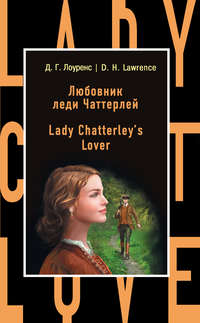
«Любовник леди Чаттерлей / Lady Chatterley's Lover» kitabından alıntılar, sayfa 36

Конни, как и все молодые,
считала: всё самое-самое
происходит сию минуту. А
минуты, увы, быстротечны,
и они подчас не являют
непрерывную цепочку
Жизнь мыслителей цветёт
прекрасным цветом, а корнями-
то уходит в злобу, в бездонную,
чудовищную злобу И так
испокон веков ! Вспомните
Сократа, его ученика Платона и
сравните со всех их окружением
Сколько в них злобы, как рады
они растерзать кого-либо,
например Протагора, если мне
не изменяет память Или взять
Алкивиада и всех мелких
учеников Как упоенно травят
они учителей !Поневоле
обратишь взгляд на Будду,
смиренно сидящего под
священным деревом, или на
Христа: в Его притчах ученикам
столько любви, покоя и никакой
мишурной зауми Нет, что-то в
корне неверно в том, как живёт
и развивается мысль
Женщина хочет, чтобы ее любили. чтобы с ней говорили и чтобы одновременно сгорали от страсти к ней.
Ours is essentially a tragic age, so we refuse to take it tragically.
Он хоть и почувствовал в себе ахилловы силы, все ж ахиллесова пята оказалась и у него.
Anyhow, nobody knows what should be done in spite of all the talk, the young ones get mad because they've no money to spend. Their whole life depends on spending money, and now they've got none to spend. That's our civilization and our education: bring up the masses to depend entirely on spending money, and then the money gives out.
The moon wouldn't be far enough, because even there you could look back and see the earth, dirty, beastly, unsavoury among all the stars: made foul by men. Then I feel I've swallowed gall, and it's eating my inside out, and nowhere's far enough away to get away. But when I get a turn, I forget it all again. Though it's a shame, what's been done to people these last hundred years: men turned into nothing but labour-insects, and all their manhood taken away, and all their real life. I'd wipe the machines off the face of the earth again, and end the industrial epoch absolutely, like a black mistake. But since I can't, an' nobody can, I'd better hold my peace, an' try an' live my own life: if I've got one to live, which I rather doubt.
Let's not live ter make money, neither for us-selves nor for anybody else. Now we're forced to. We're forced to make a bit for us-selves, an' a fair lot for th' bosses. Let's stop it! Bit by bit, let's stop it. We needn't rant an' rave. Bit by bit, let's drop the whole industrial life an' go back. The least little bit o' money'll do. For everybody, me an' you, bosses an' masters, even th' king. The least little bit o' money'll really do. Just make up your mind to it, an' you've got out o' th' mess.
To contemplate the extermination of the human species and the long pause that follows before some other species crops up, it calms you more than anything else. And if we go on in this way, with everybody, intellectuals, artists, government, industrialists and workers all frantically killing off the last human feeling, the last bit of their intuition, the last healthy instinct; if it goes on in algebraical progression, as it is going on: then ta-tah! to the human species! Goodbye! darling! the serpent swallows itself and leaves a void, considerably messed up, but not hopeless. Very nice!
After all, one may hear the most private affairs of other people, but only in a spirit of respect for the struggling, battered thing which any human soul is, and in a spirit of fine, discriminative sympathy. For even satire is a form of sympathy. It is the way our sympathy flows and recoils that really determines our lives. And here lies the vast importance of the novel, properly handled. It can inform and lead into new places the flow of our sympathetic consciousness, and it can lead our sympathy away in recoil from things gone dead. Therefore, the novel, properly handled, can reveal the most secret places of life: for it is in the passional secret places of life, above all, that the tide of sensitive awareness needs to ebb and flow, cleansing and freshening.